65 900 ₽
We use cookies to improve the site and give you more options. By continuing to use the site, you agree to cookie usage terms.We use cookies. Learn more


By popularity
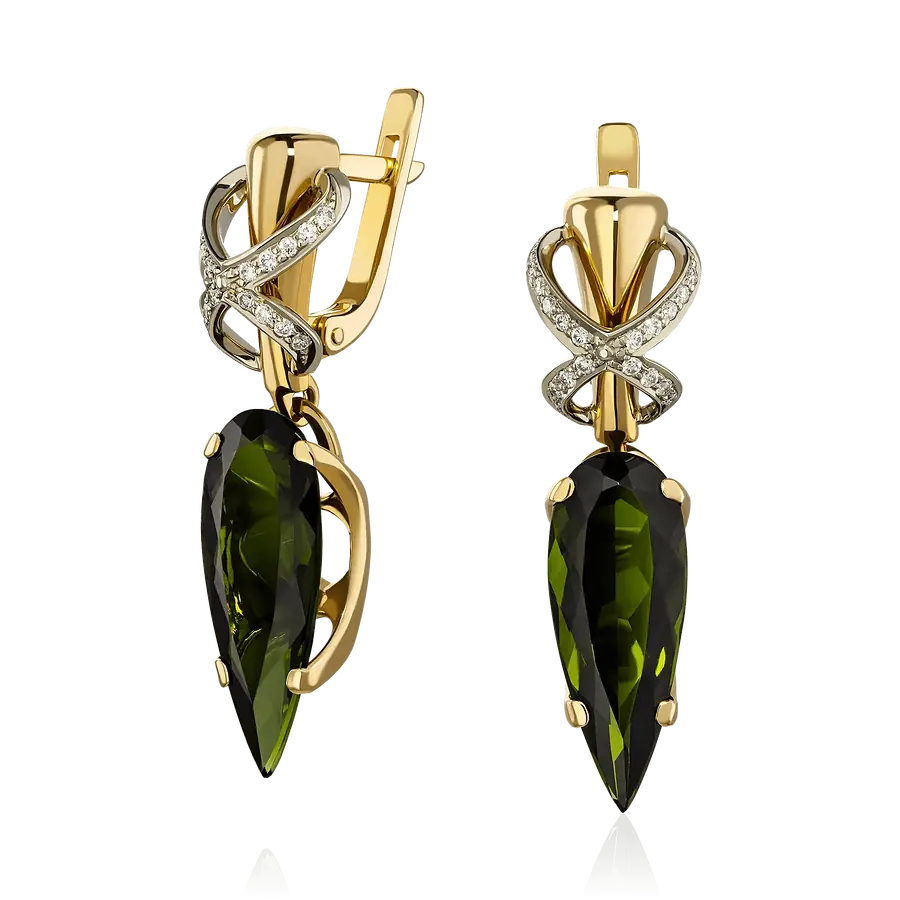
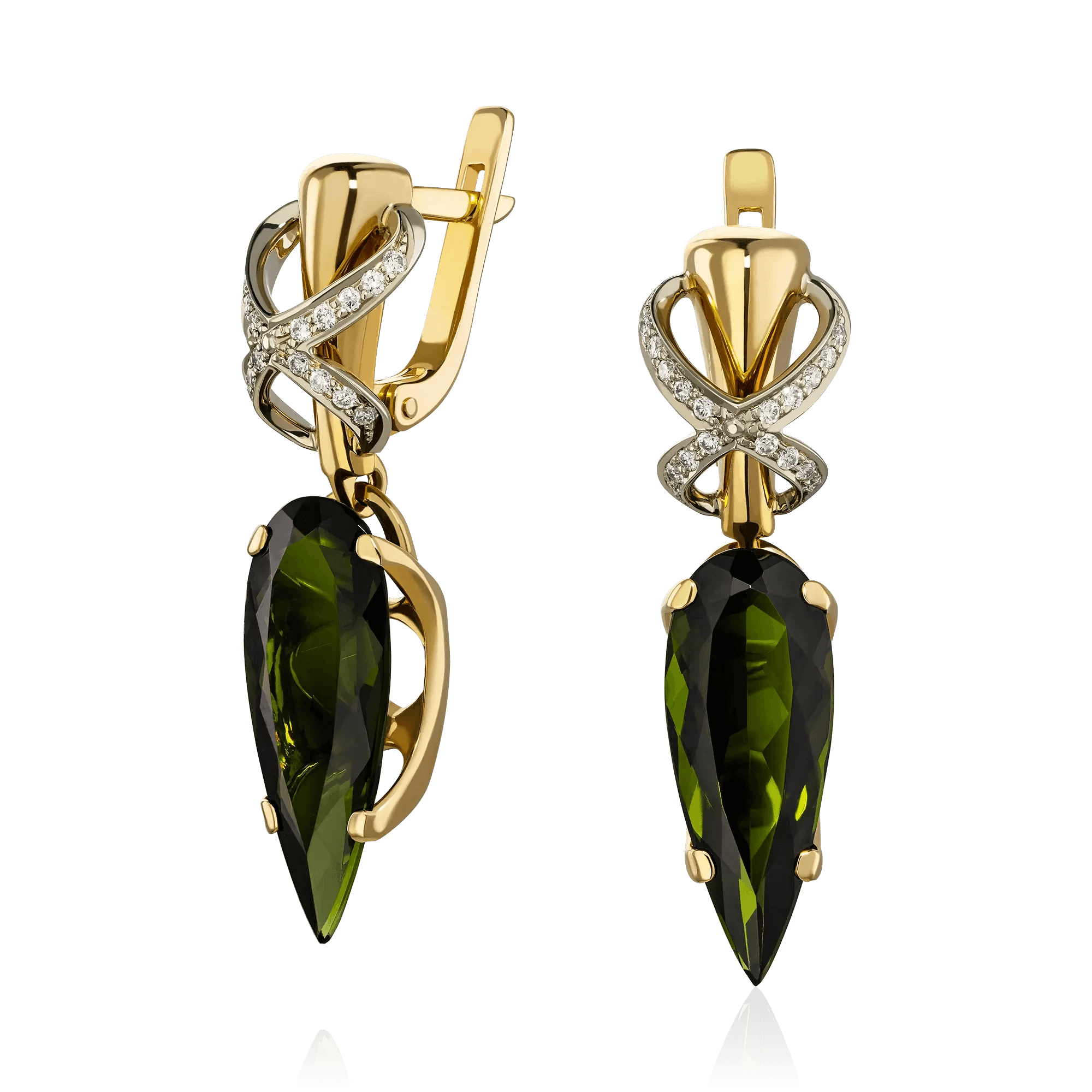
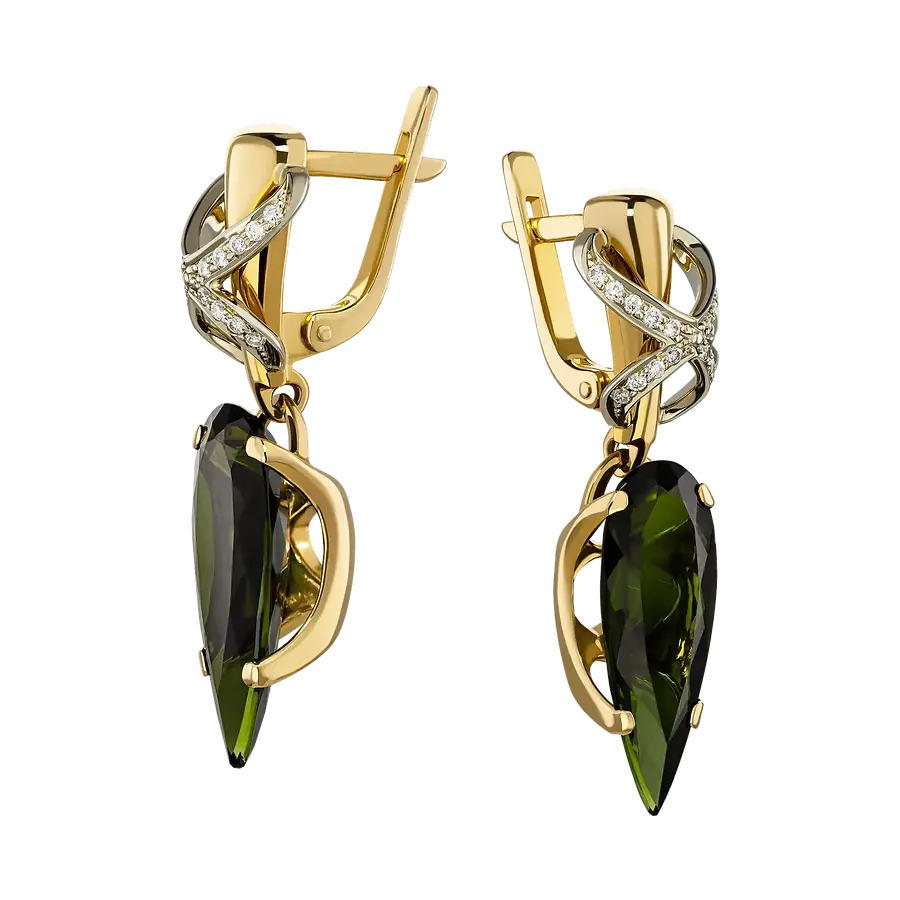
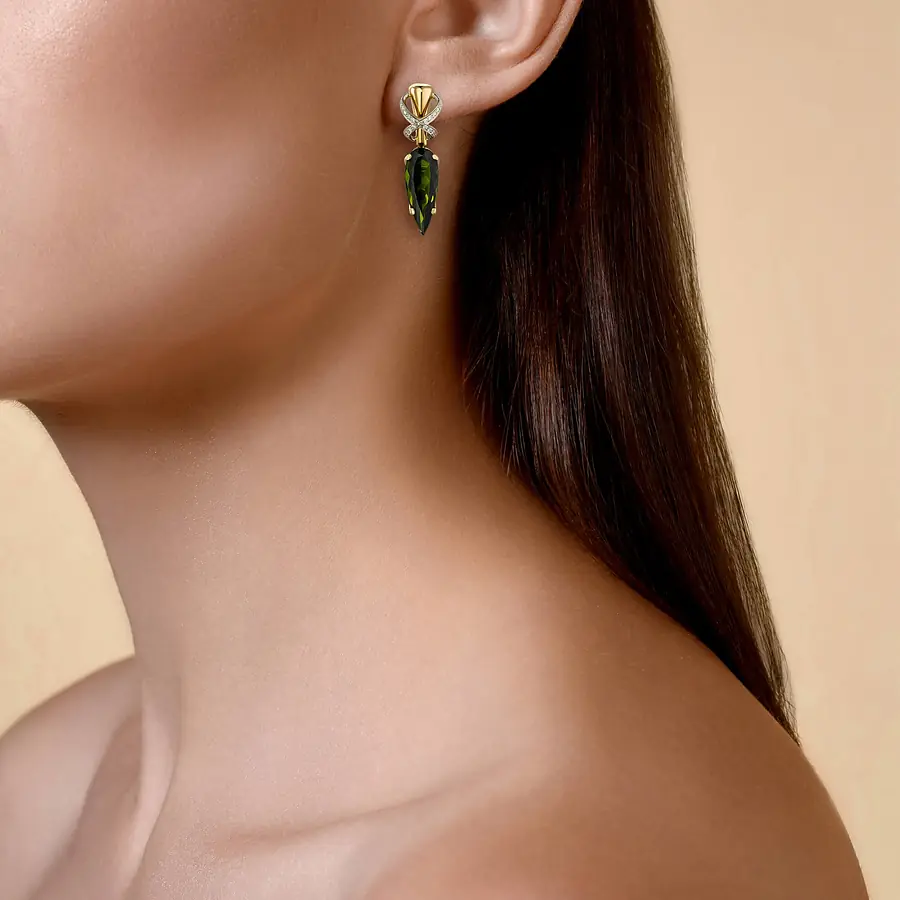
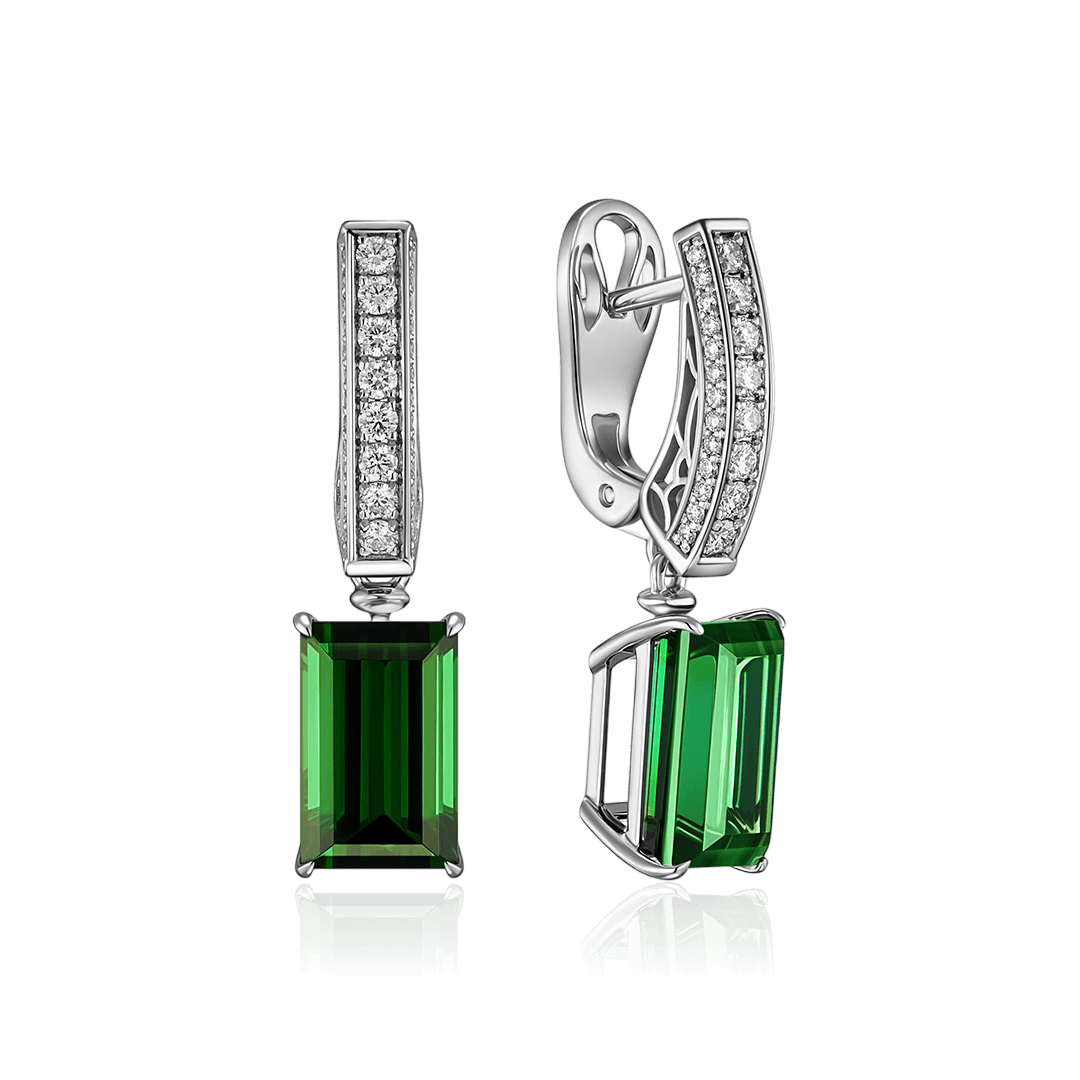
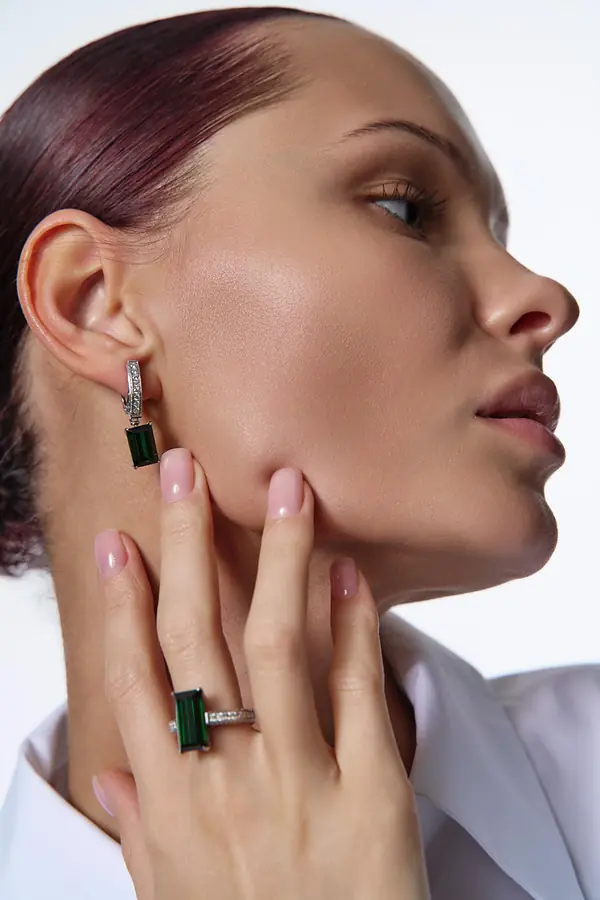
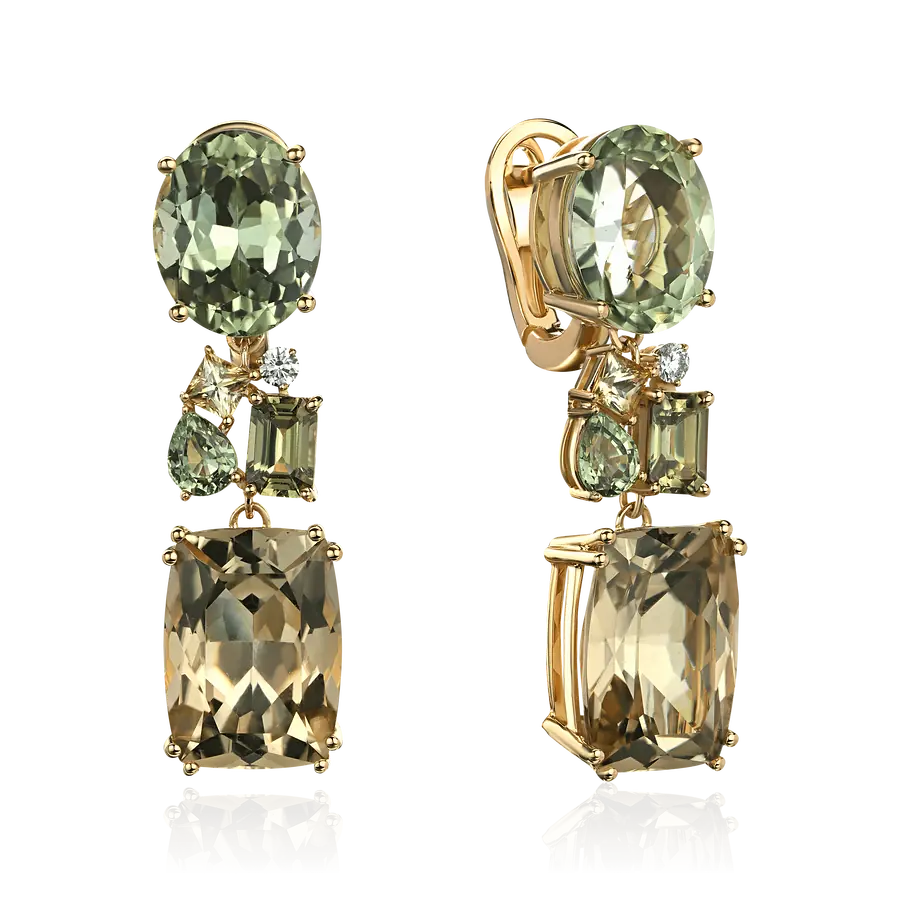


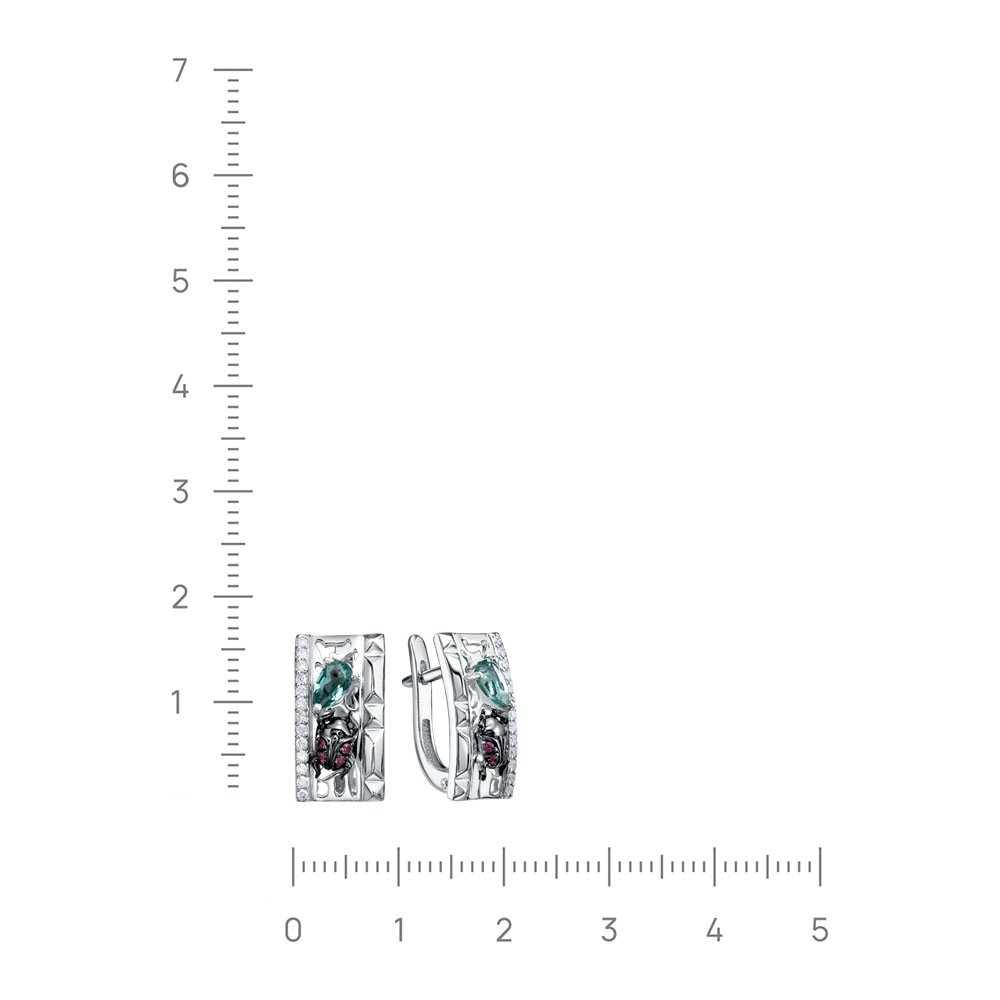
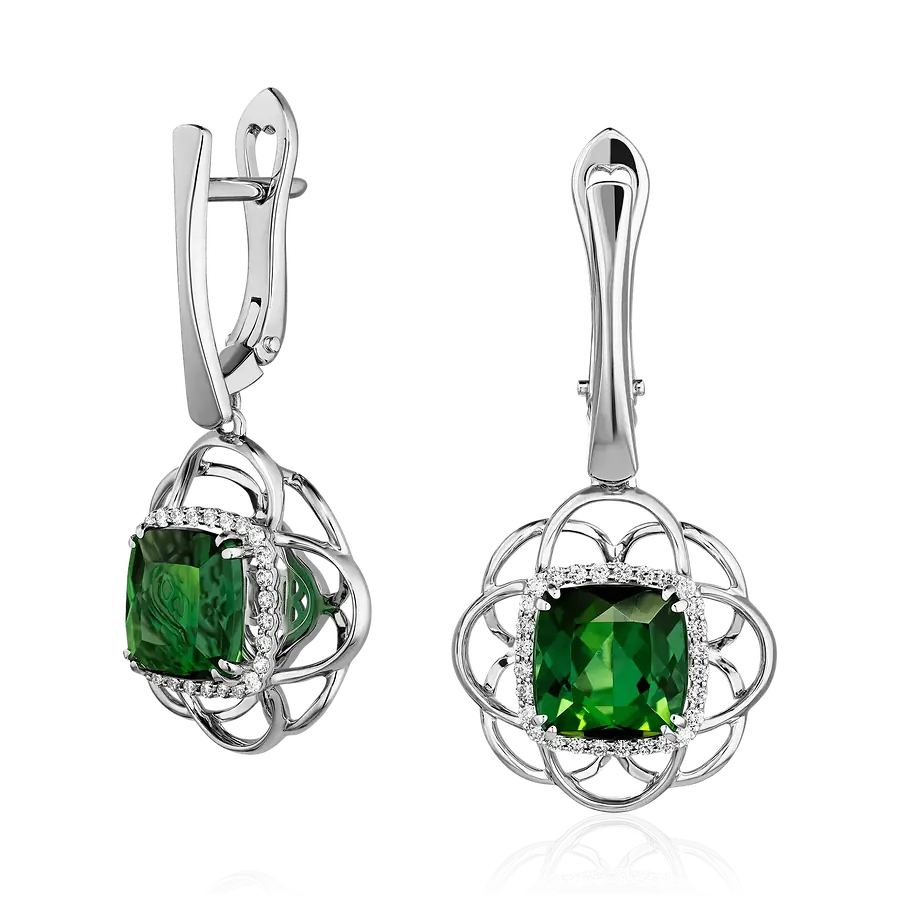

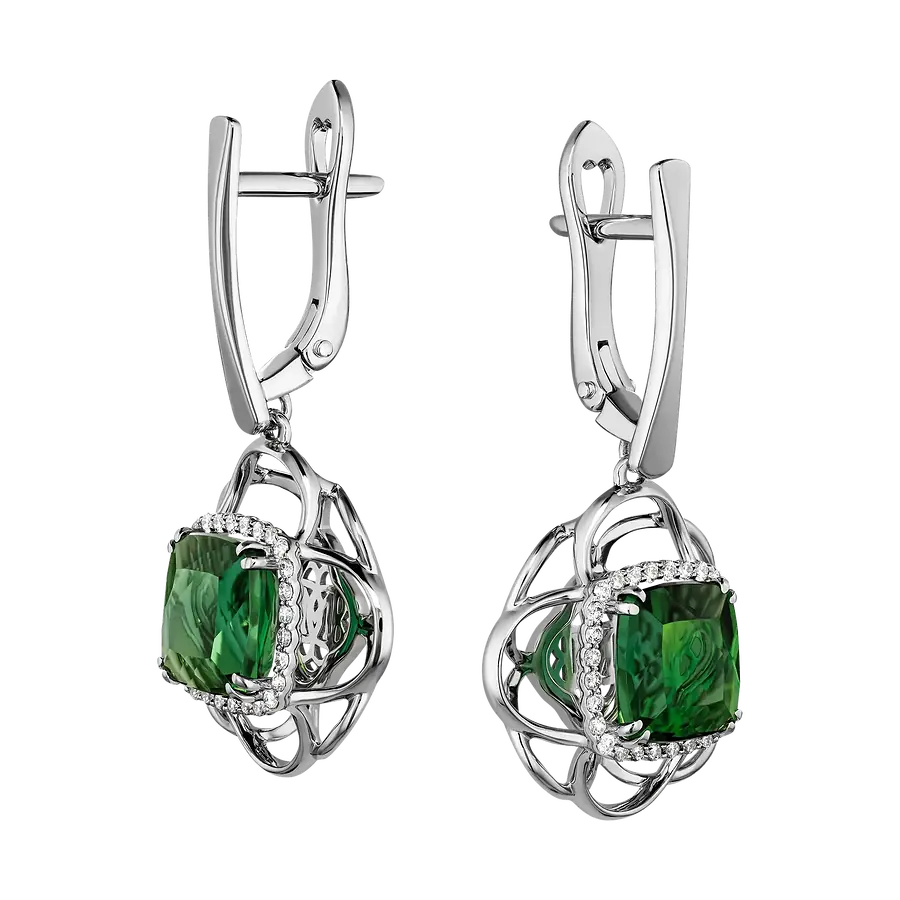
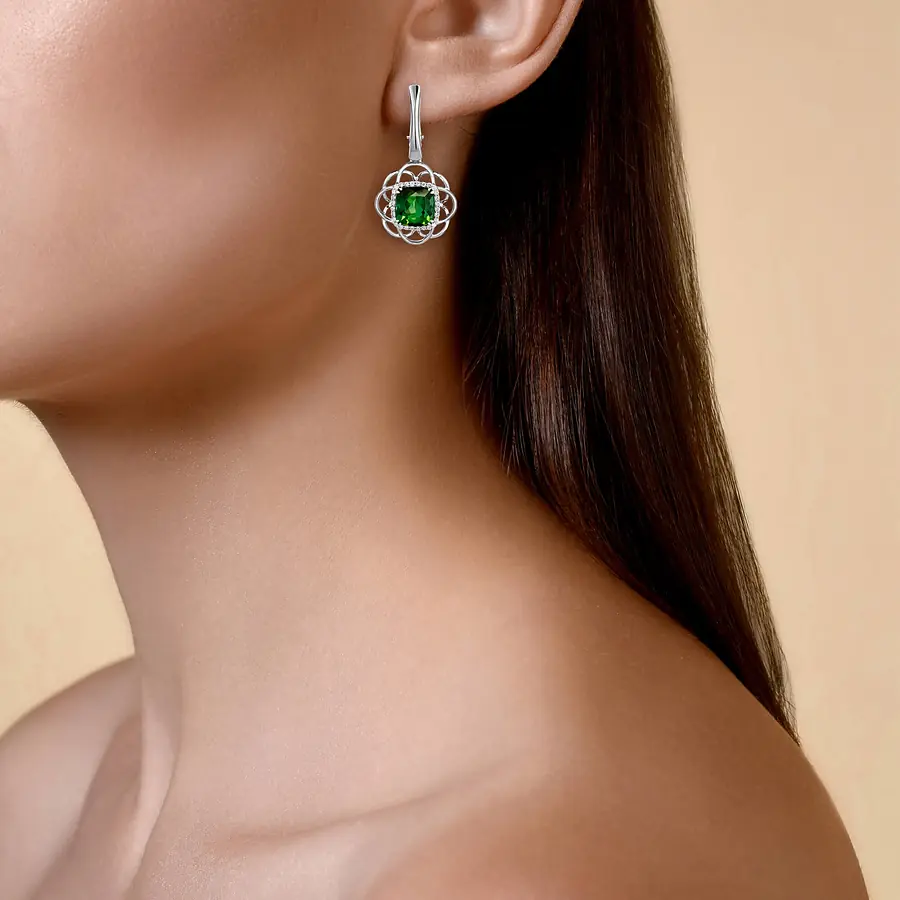

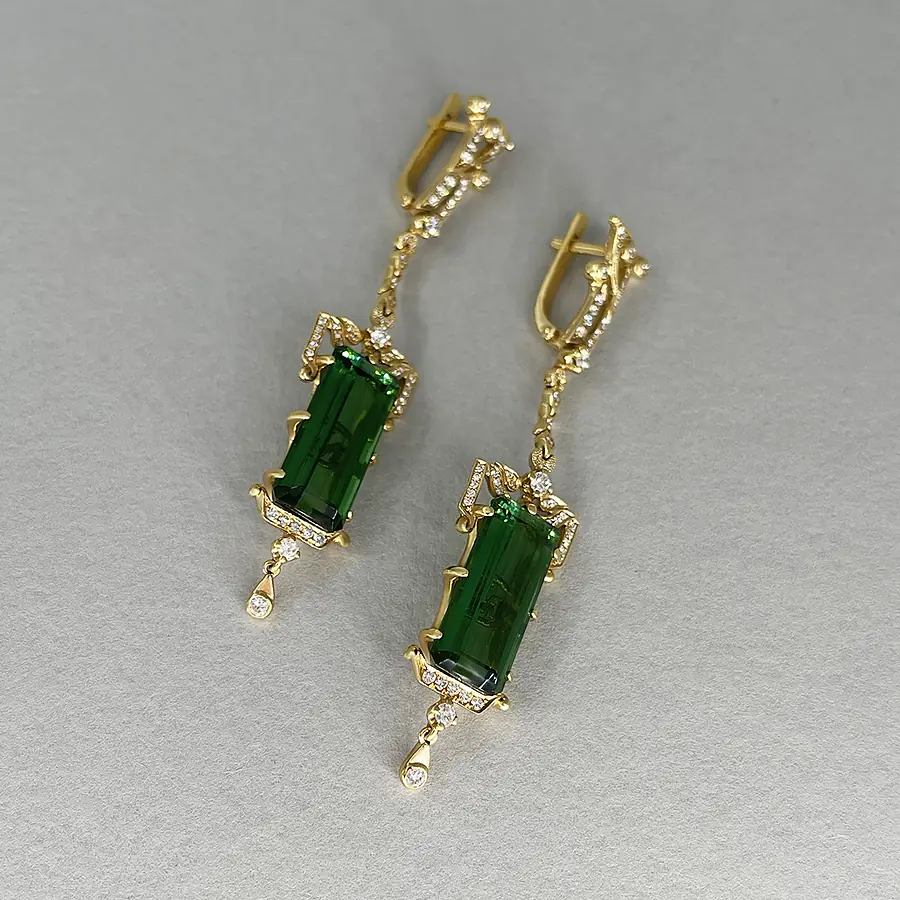
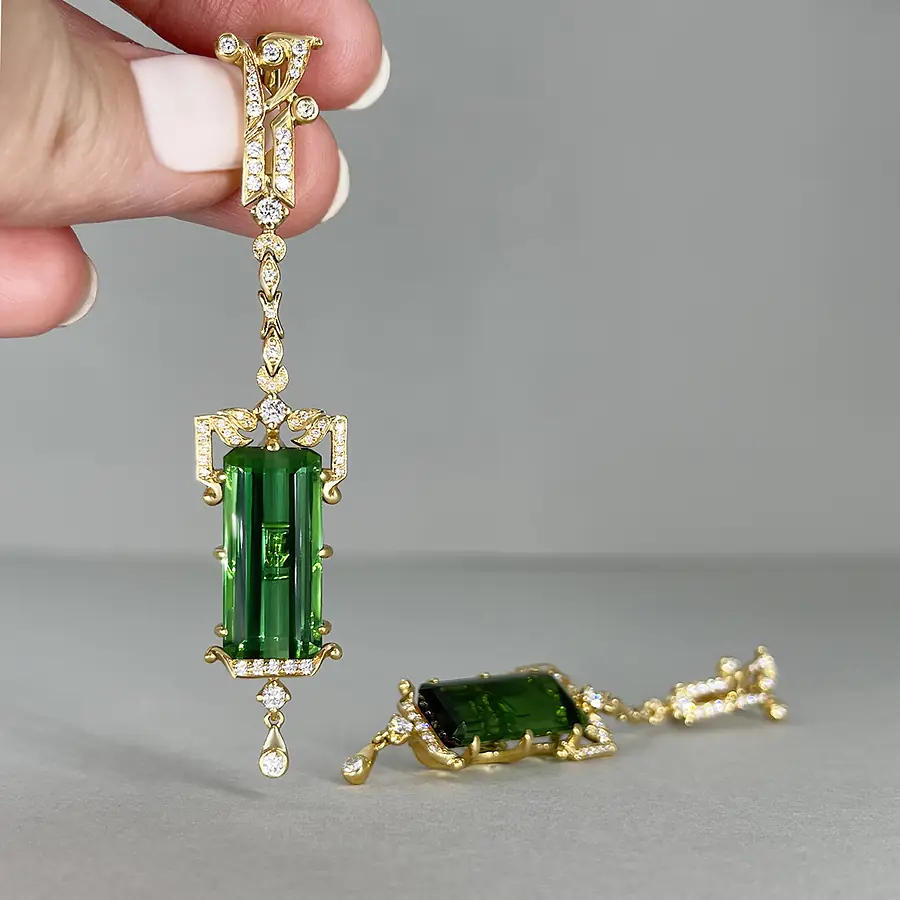
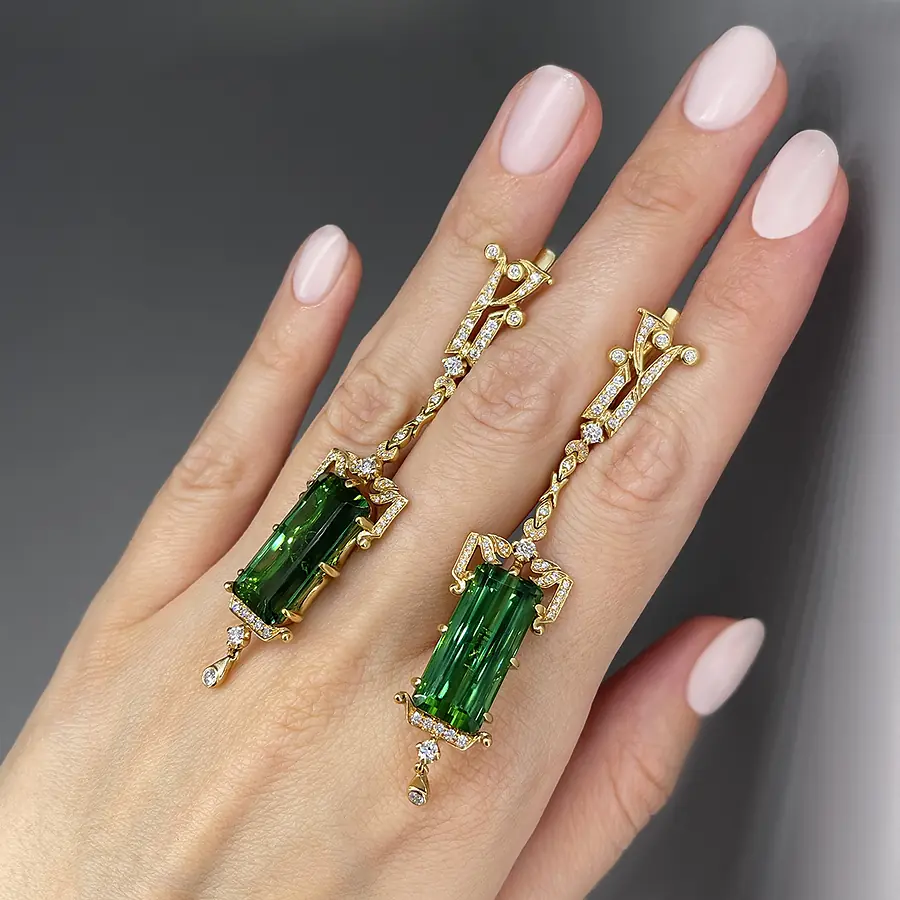

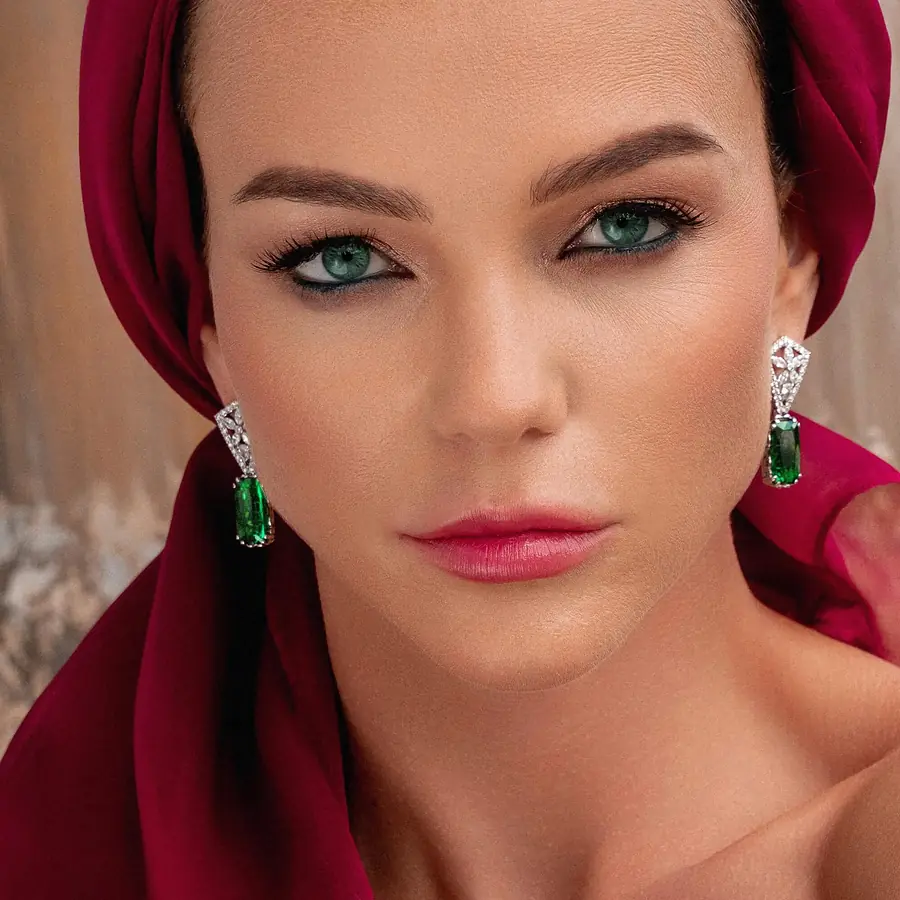
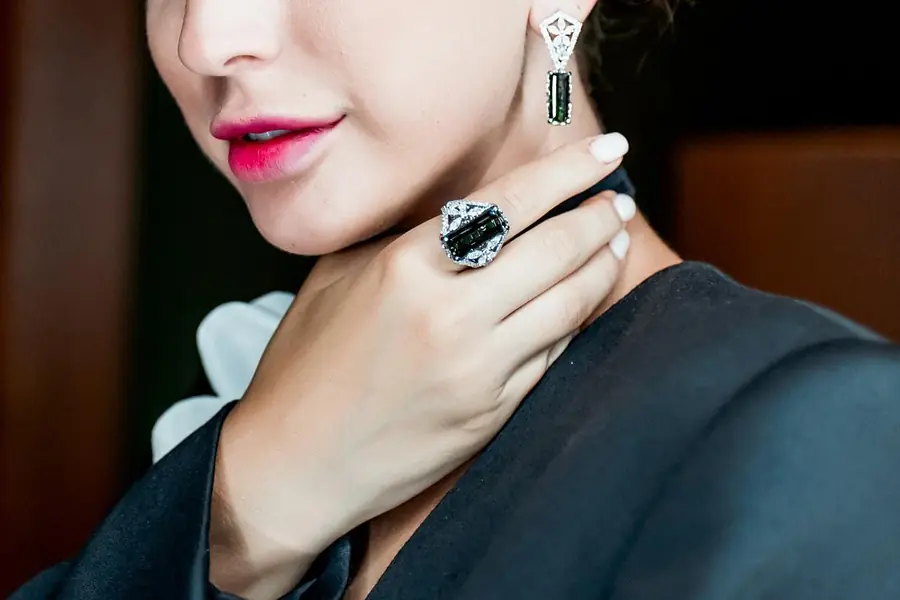
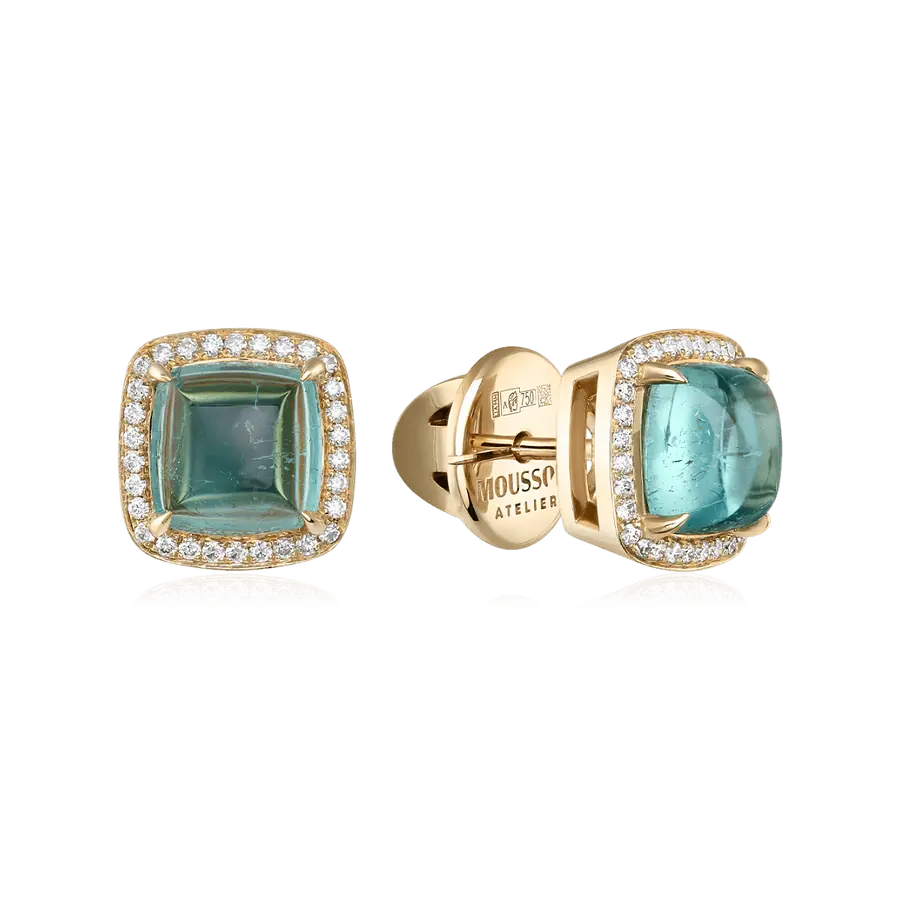
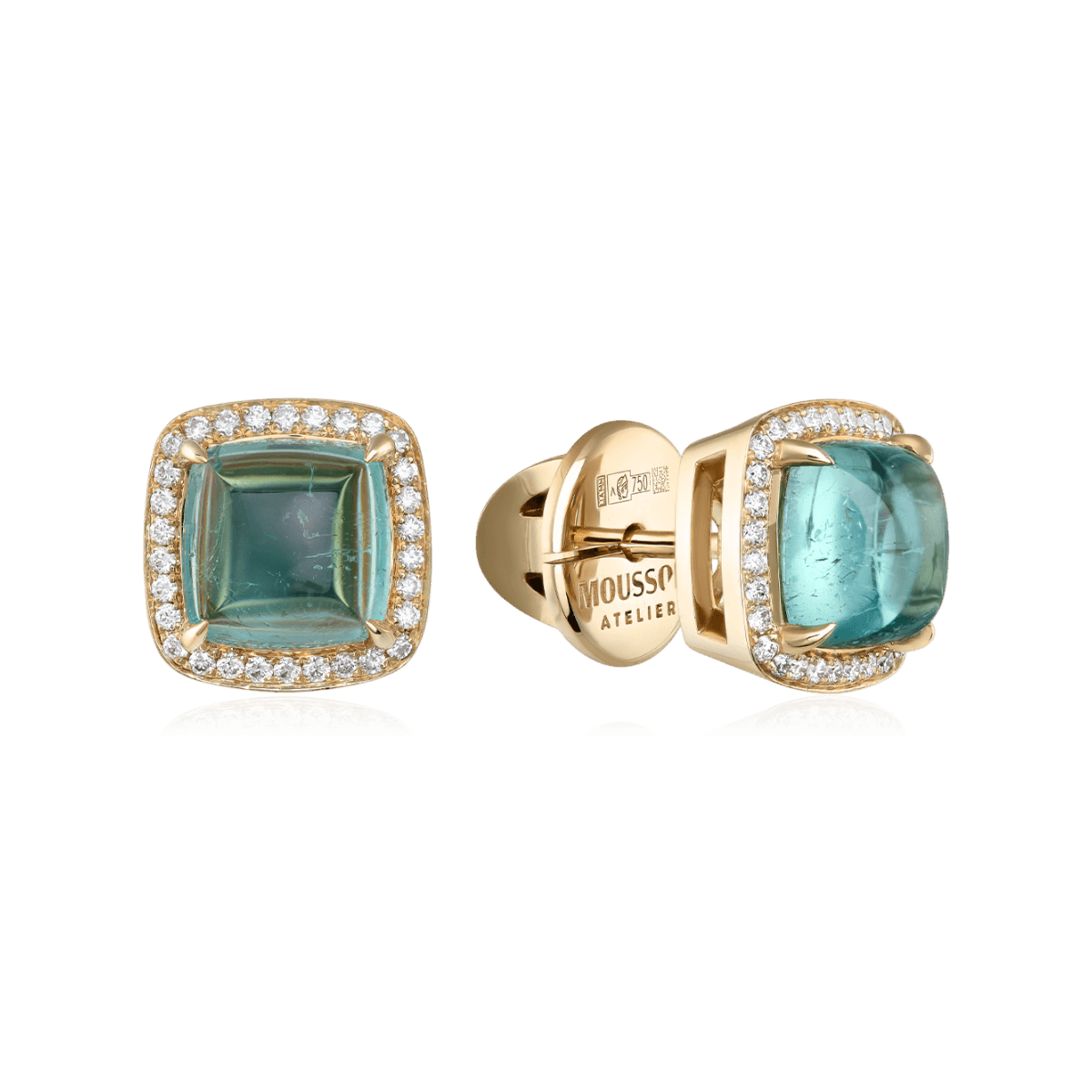
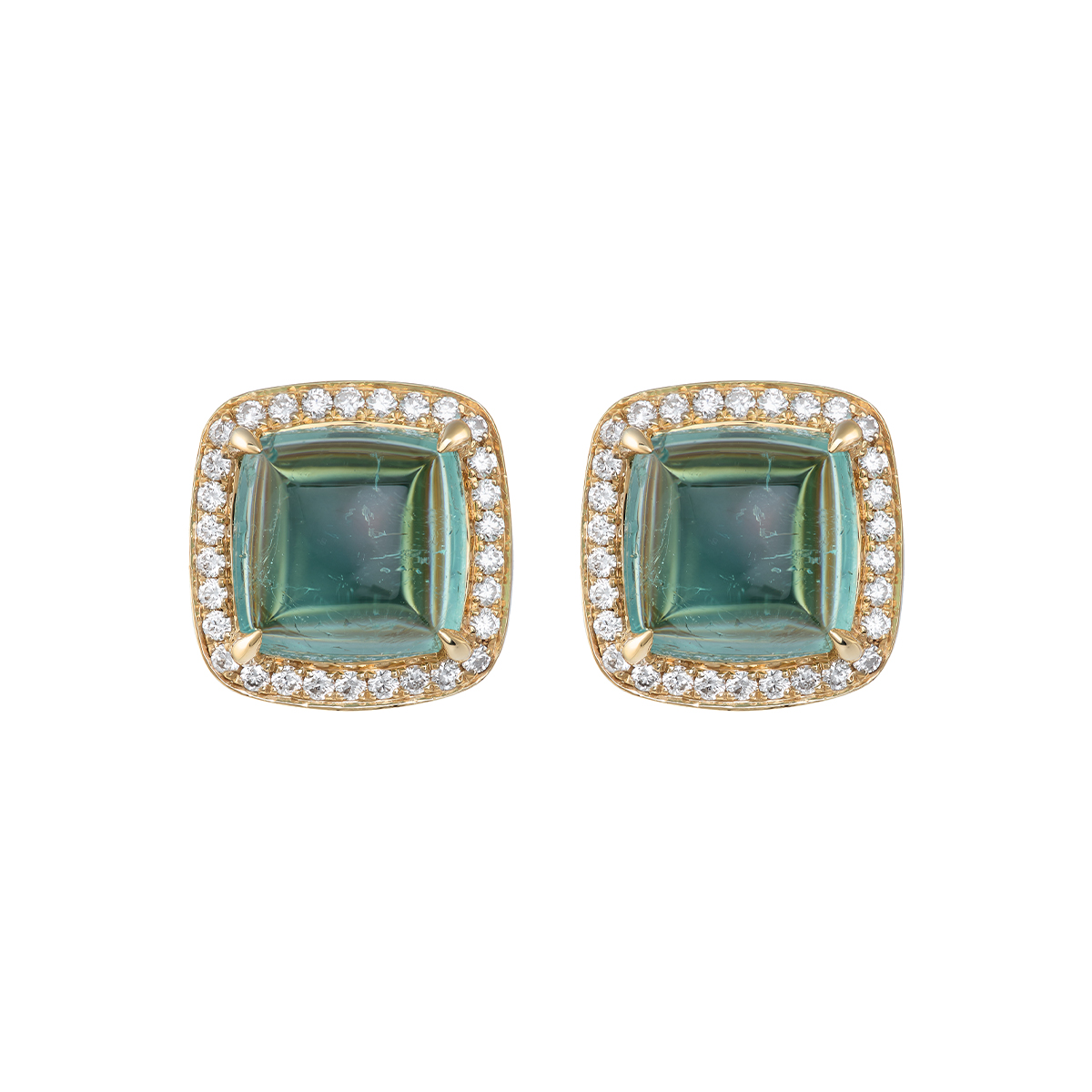
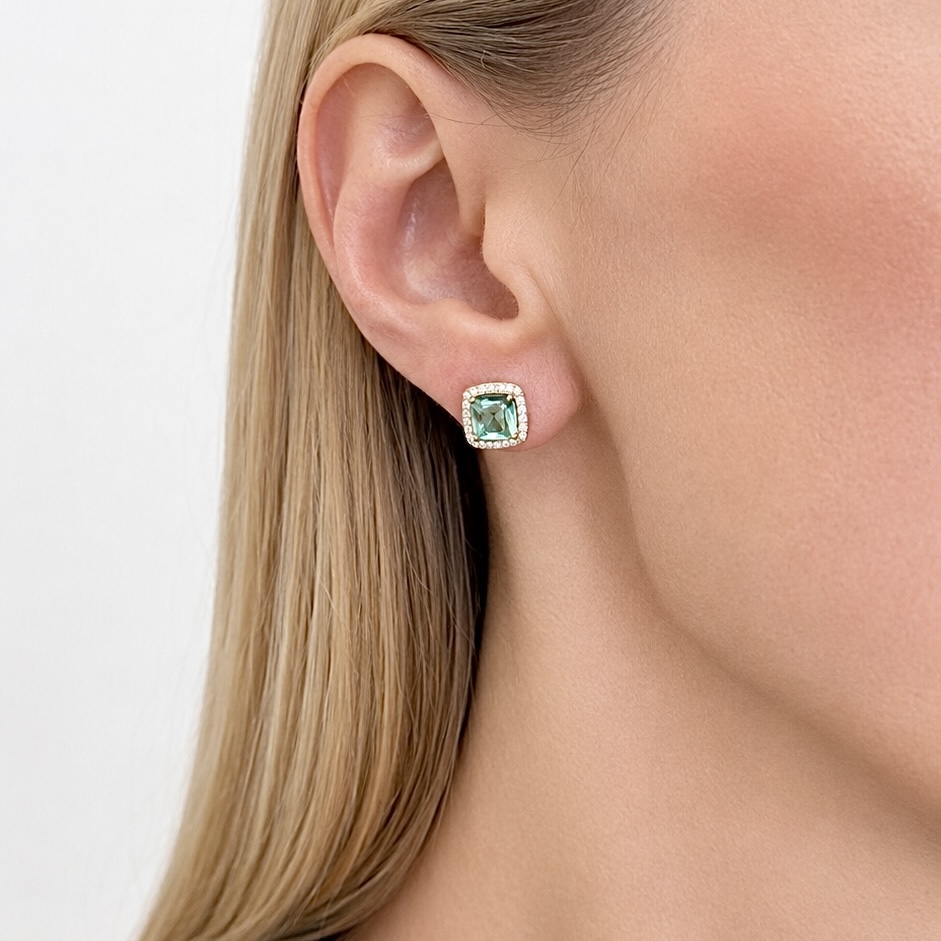



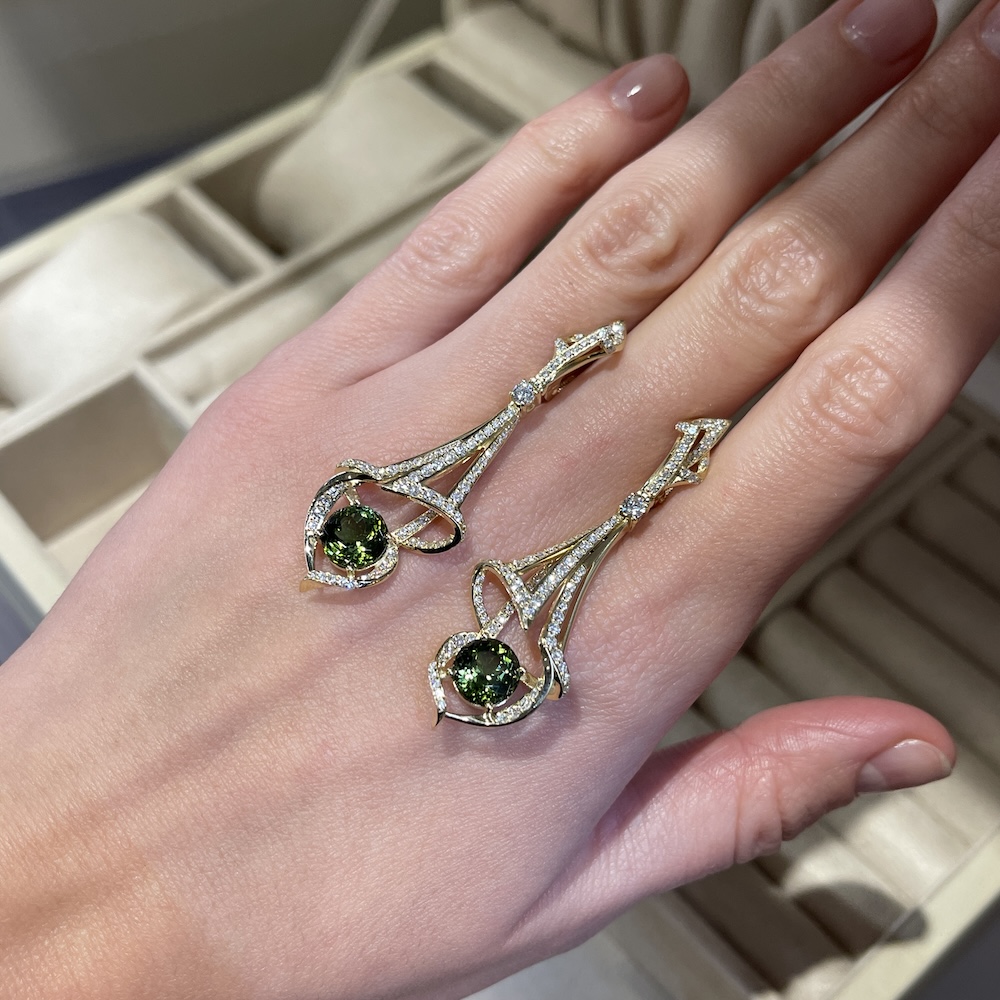

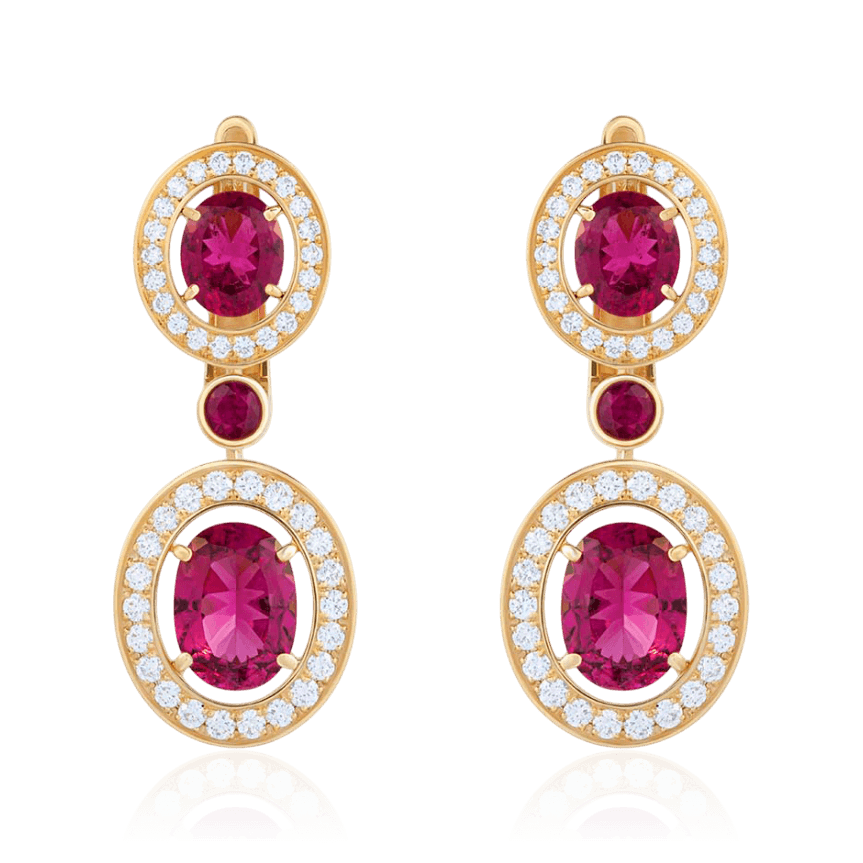
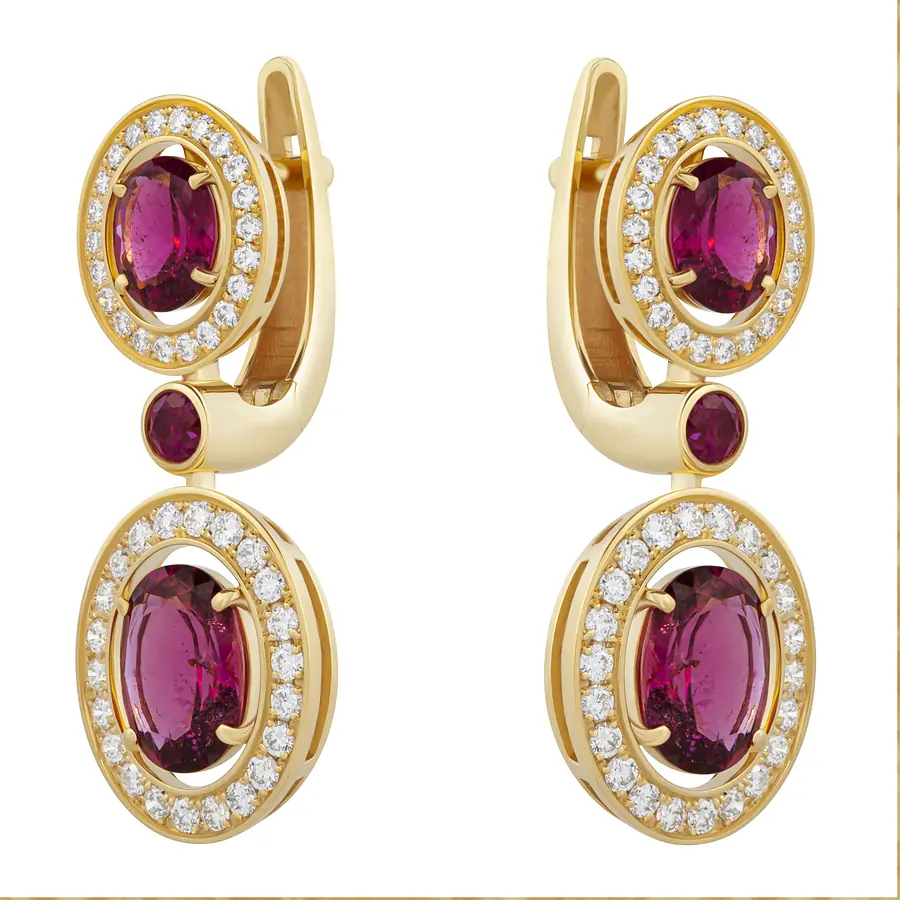
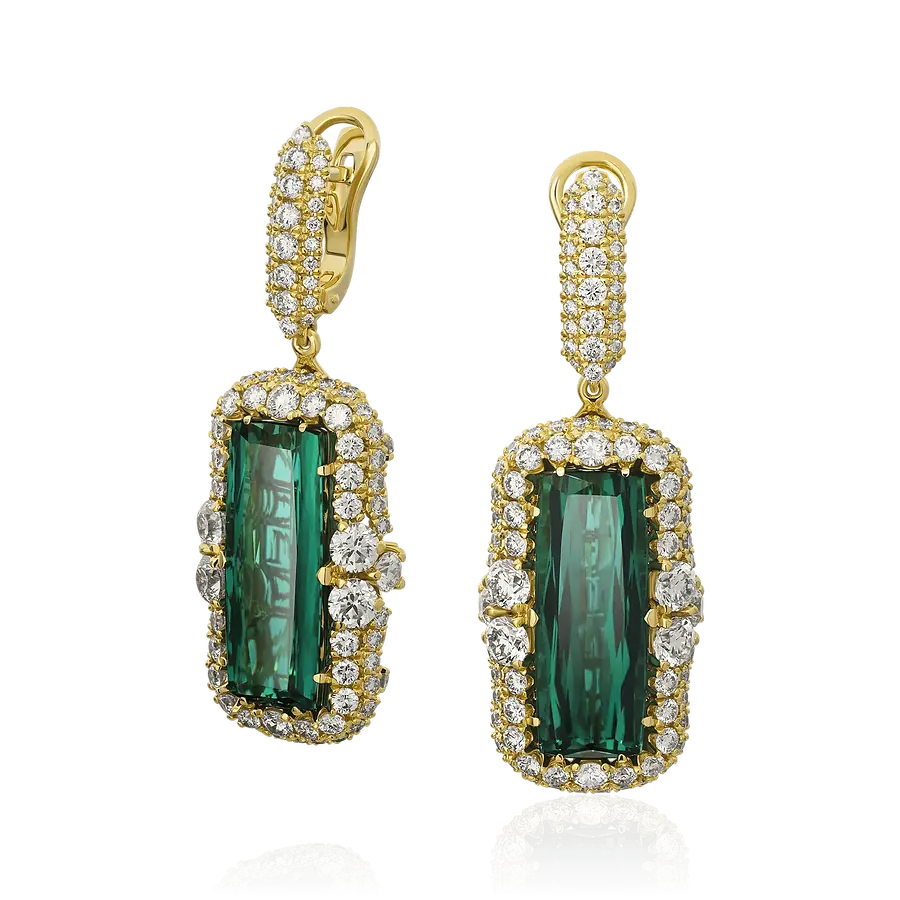

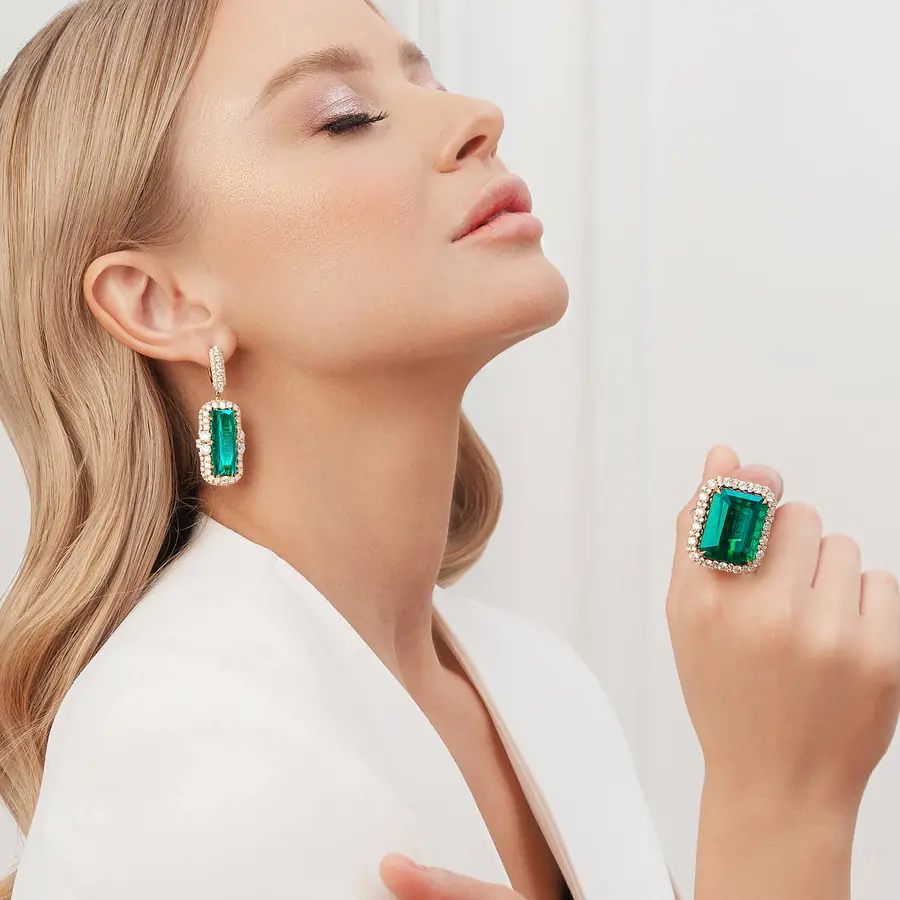


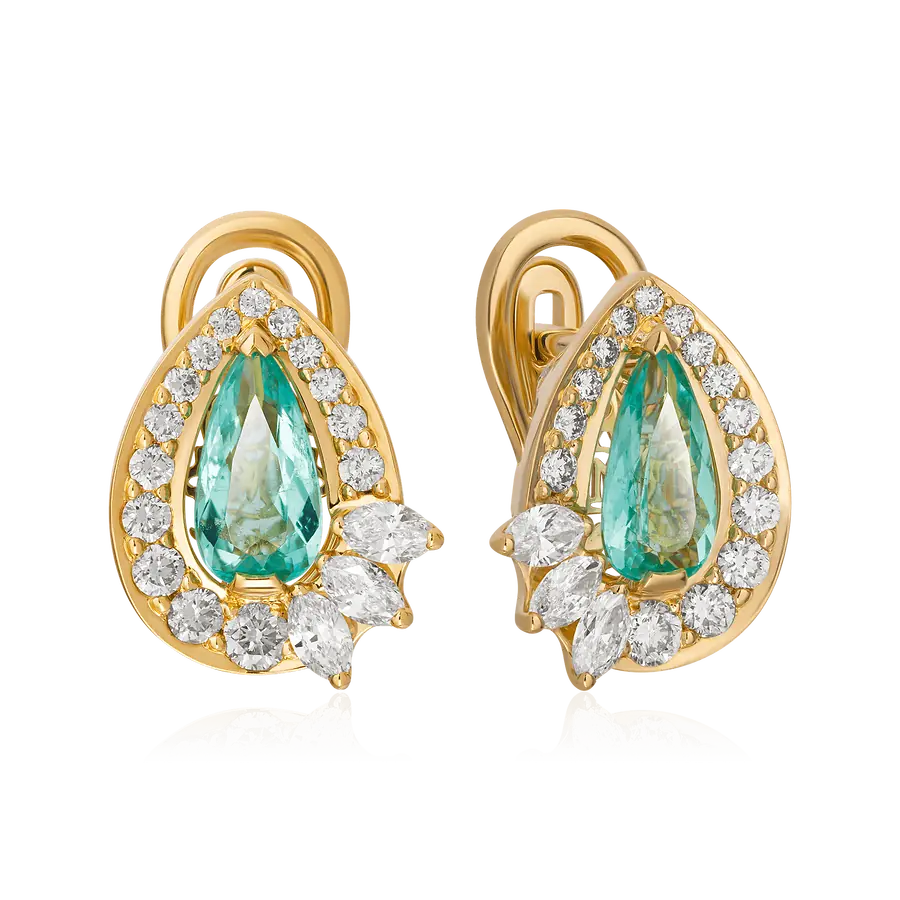

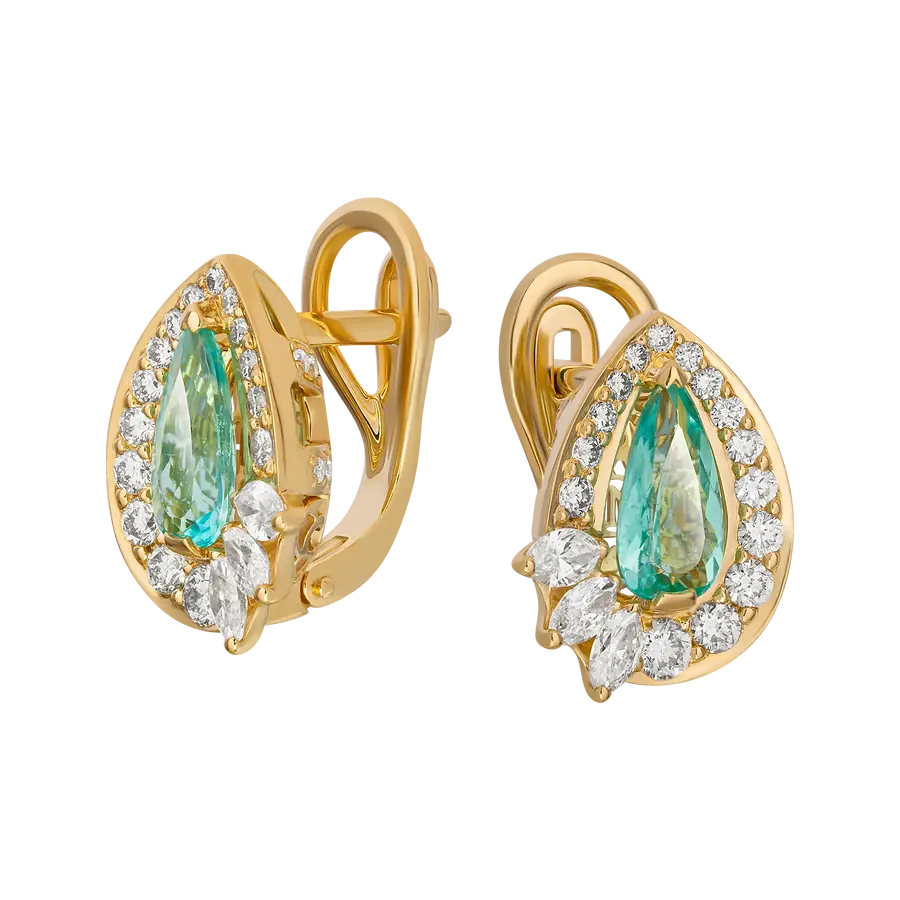
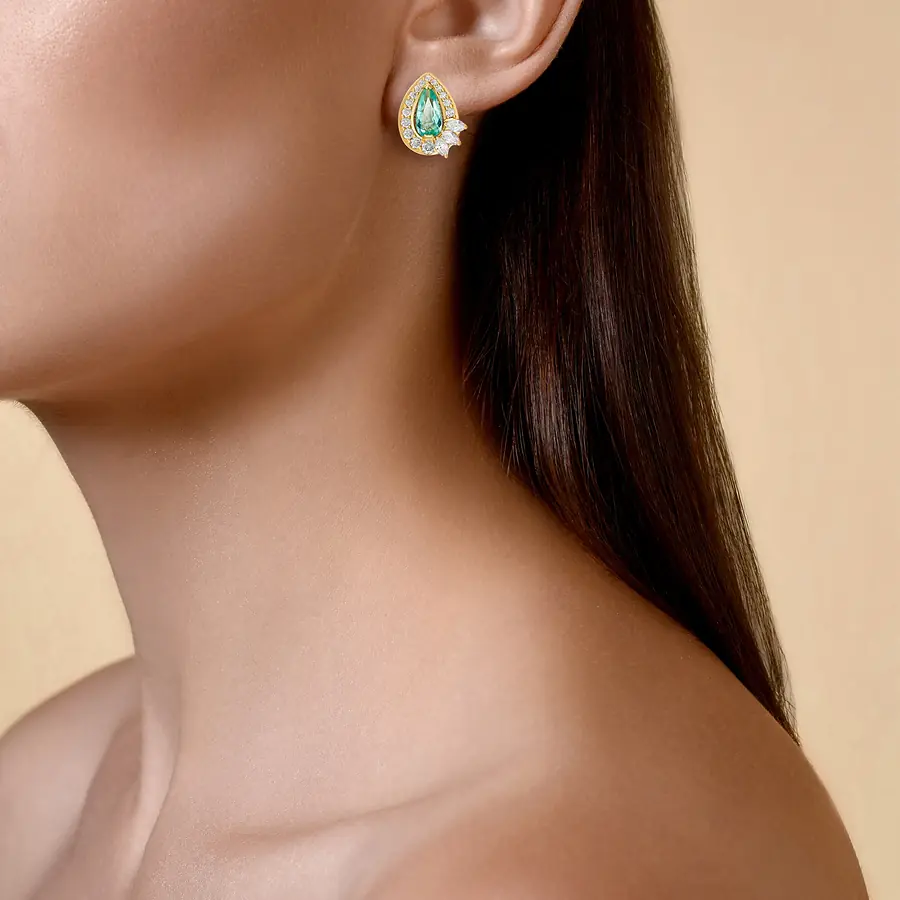


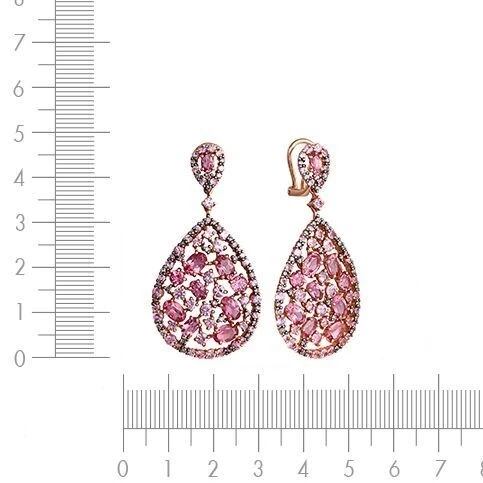
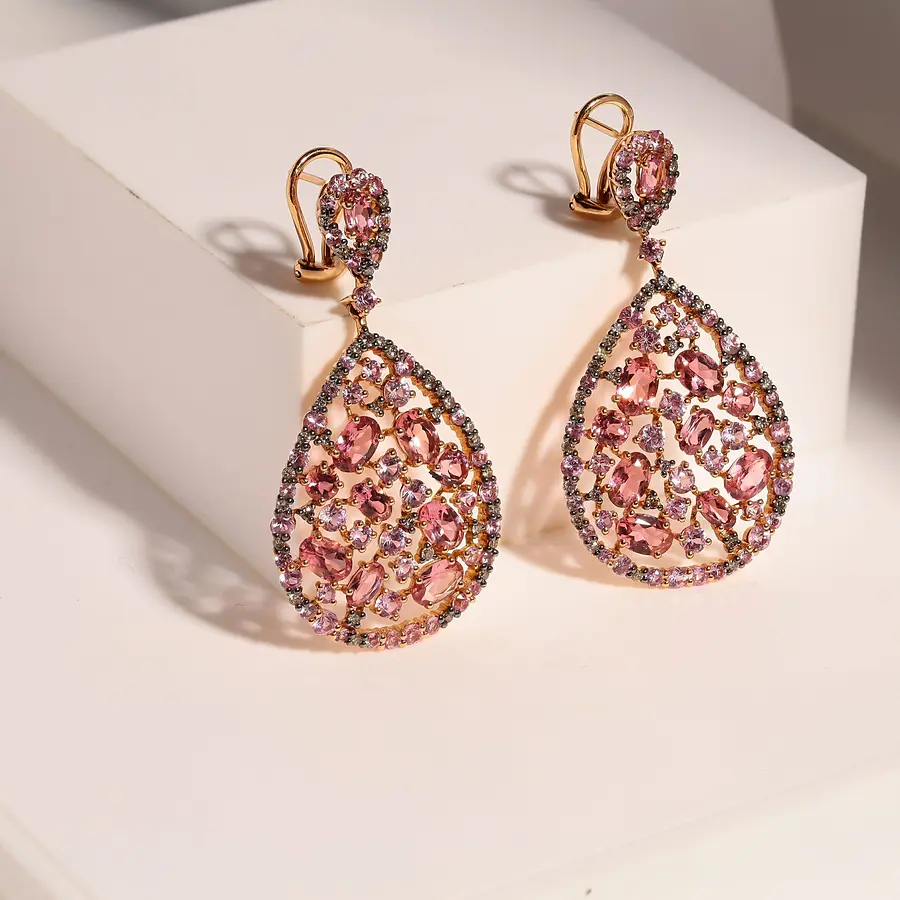
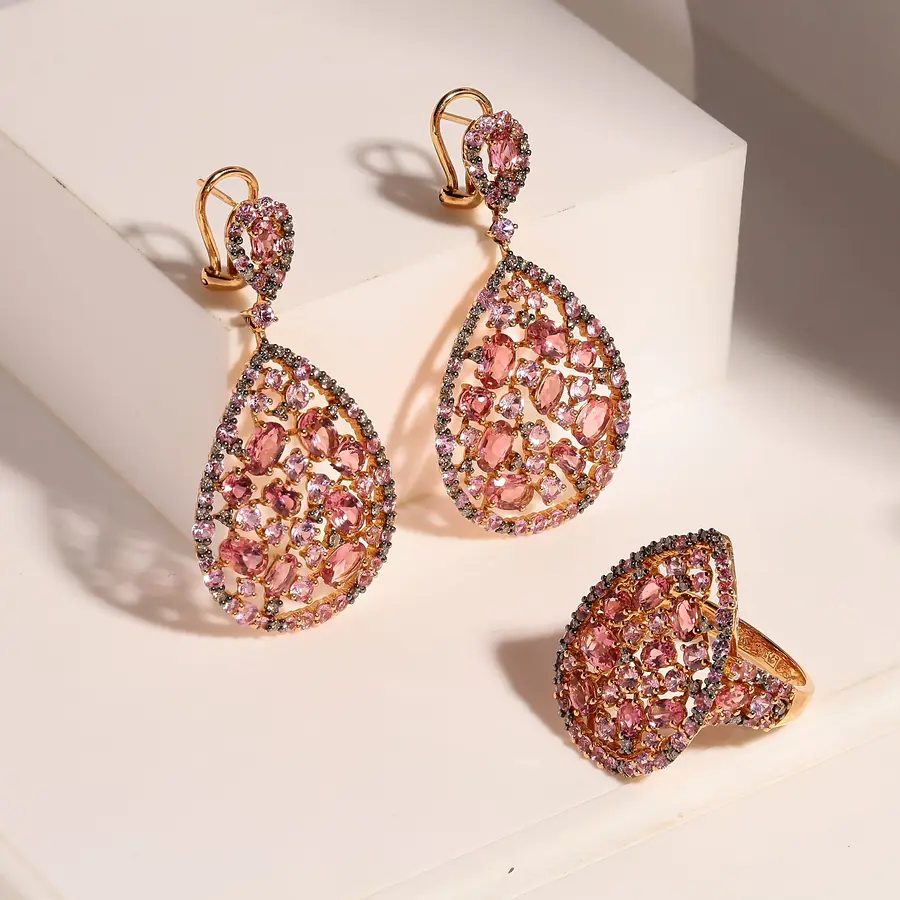
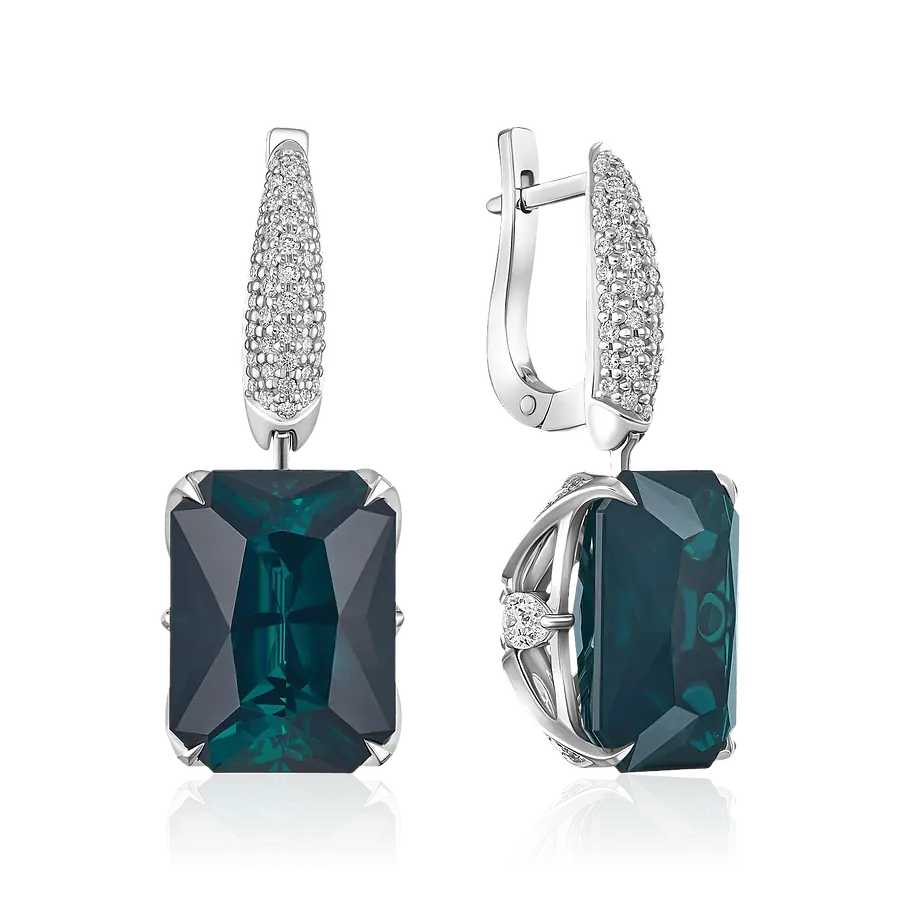
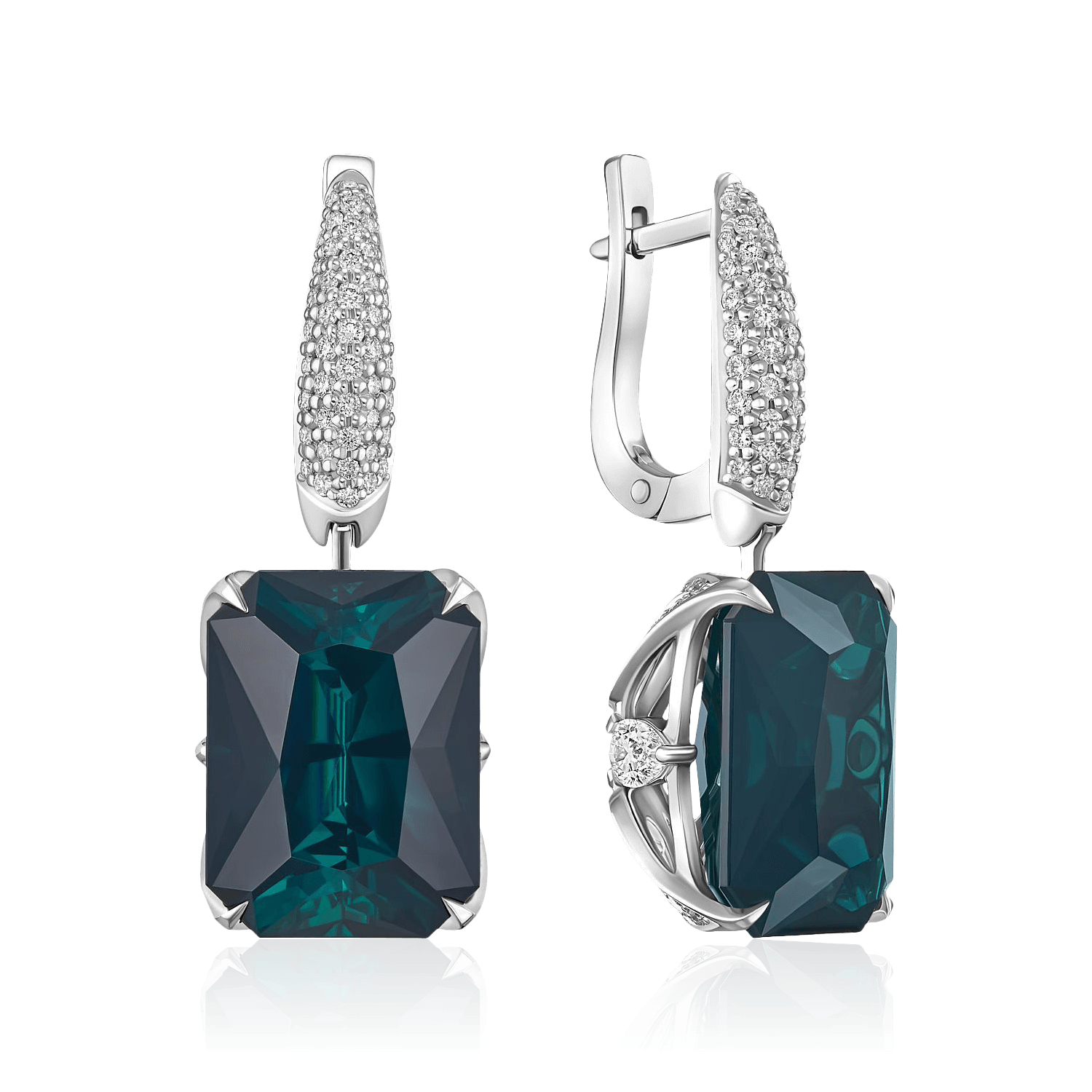
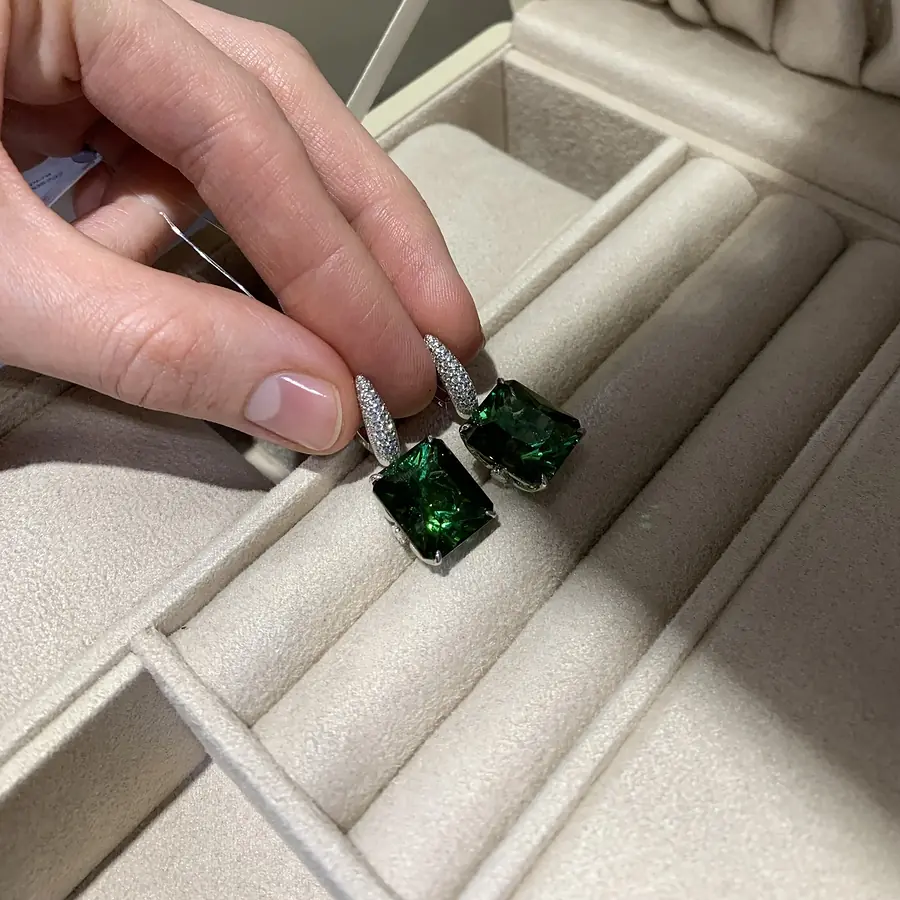

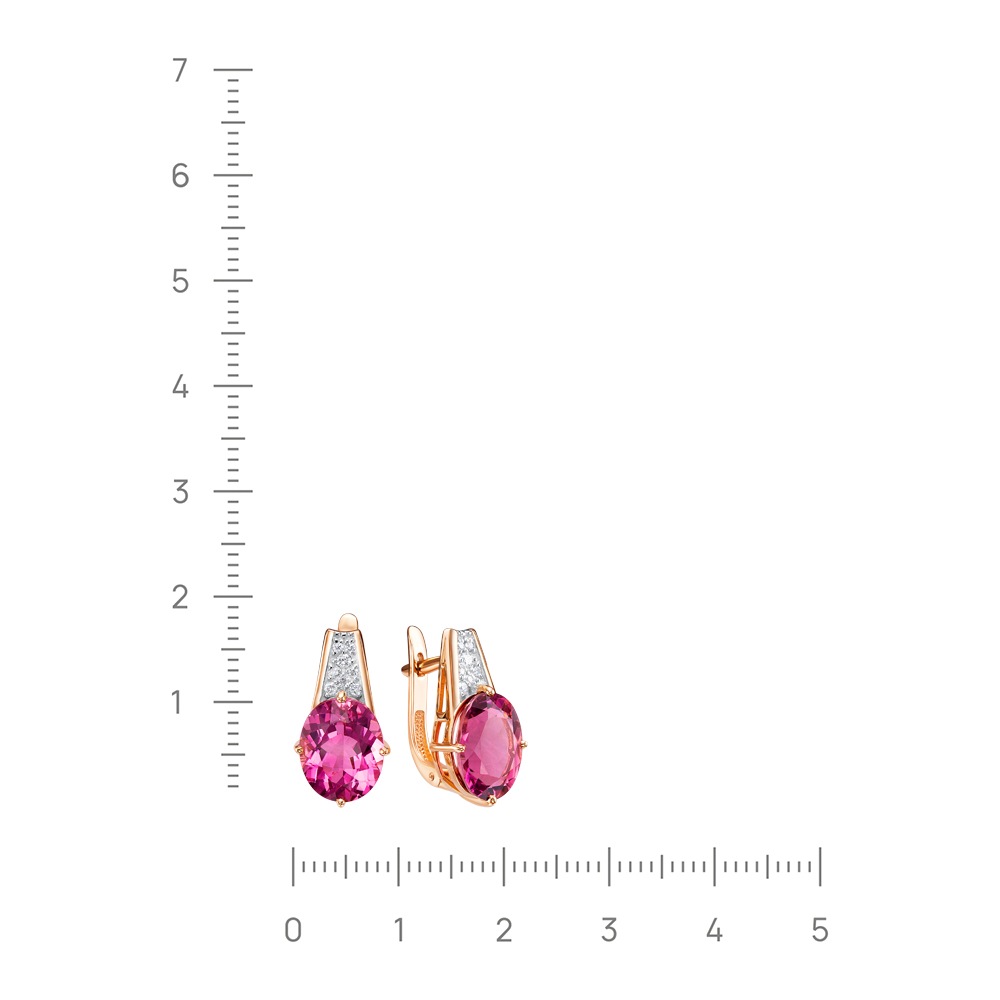
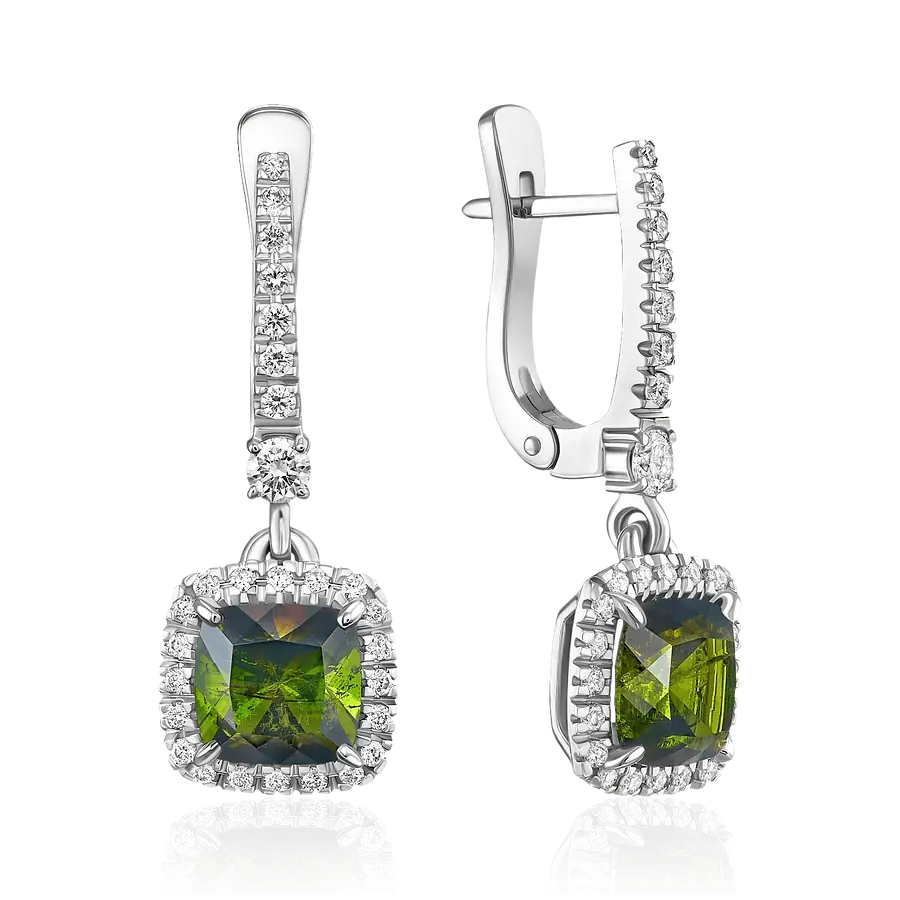

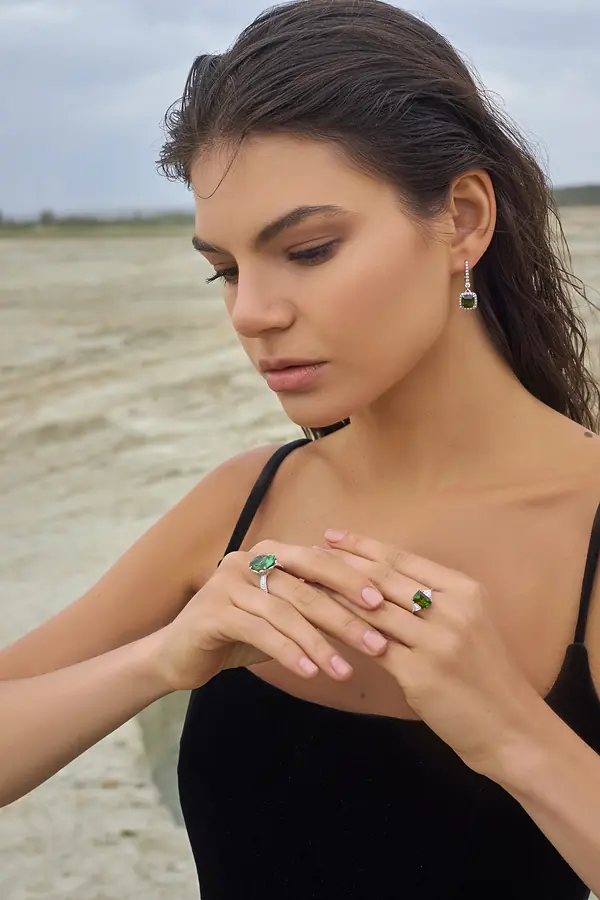
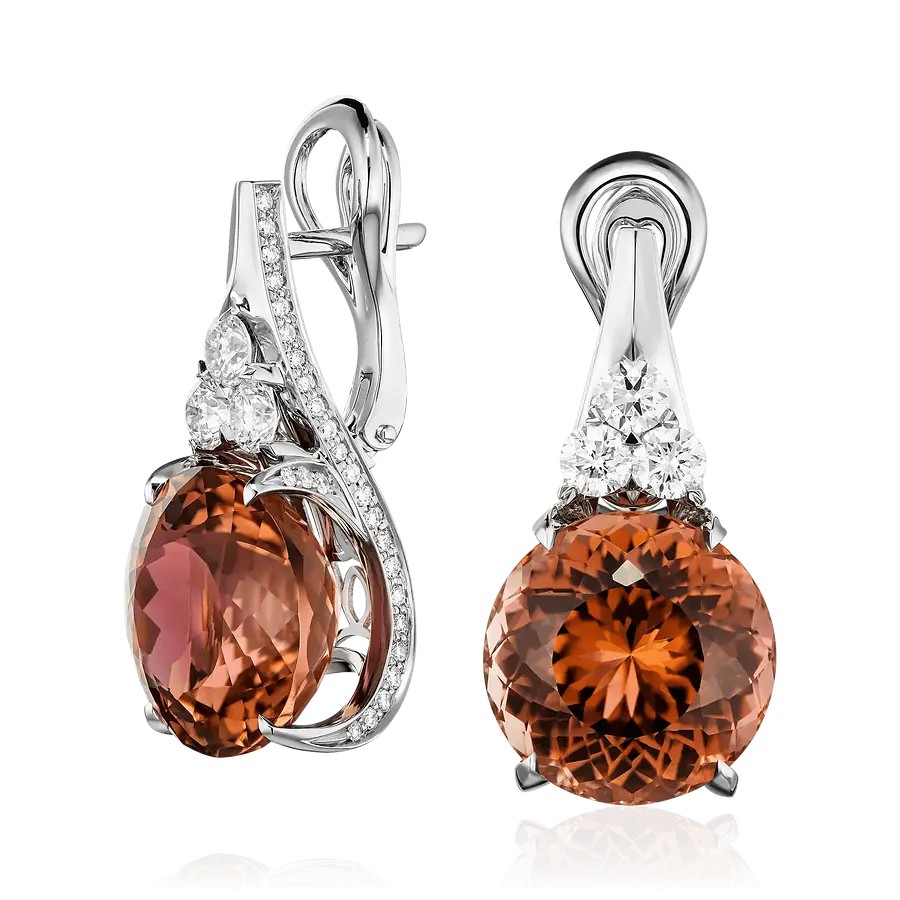

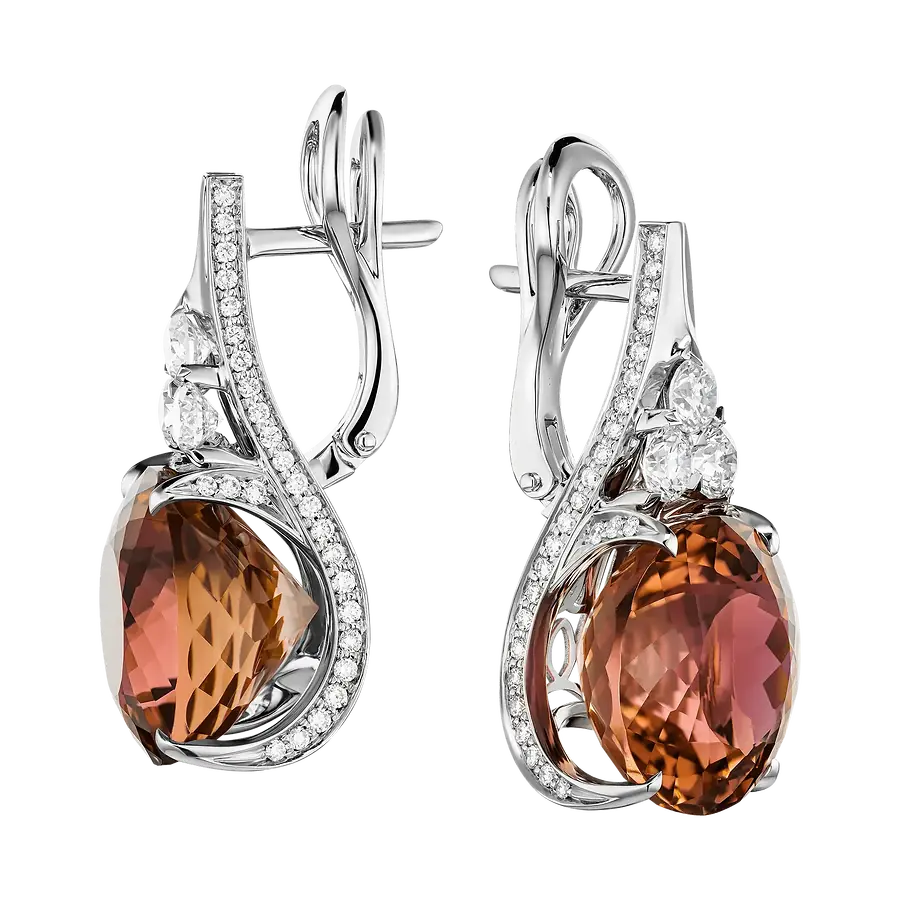
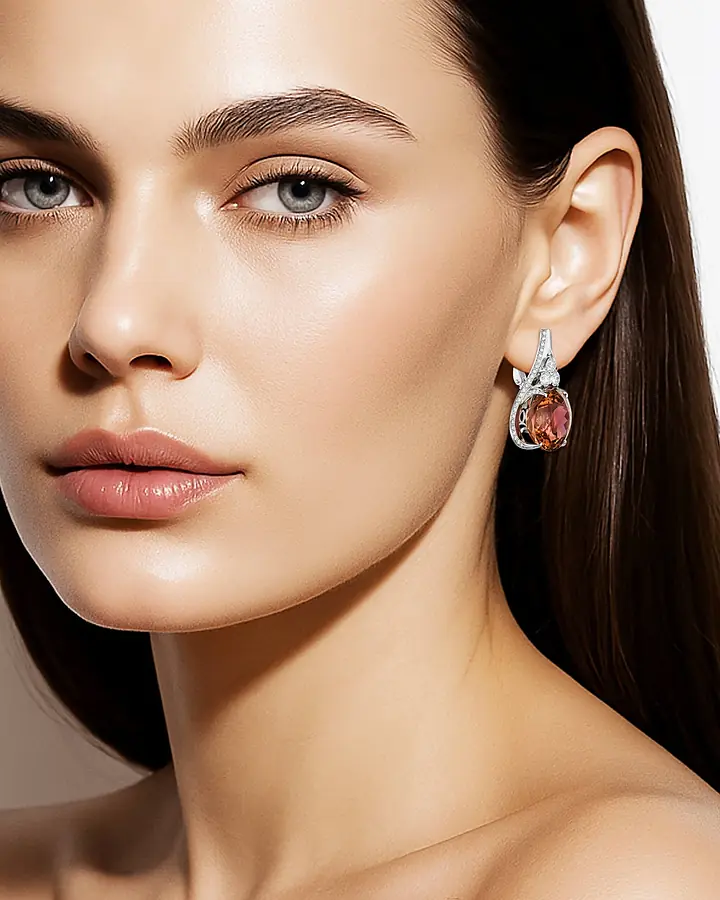


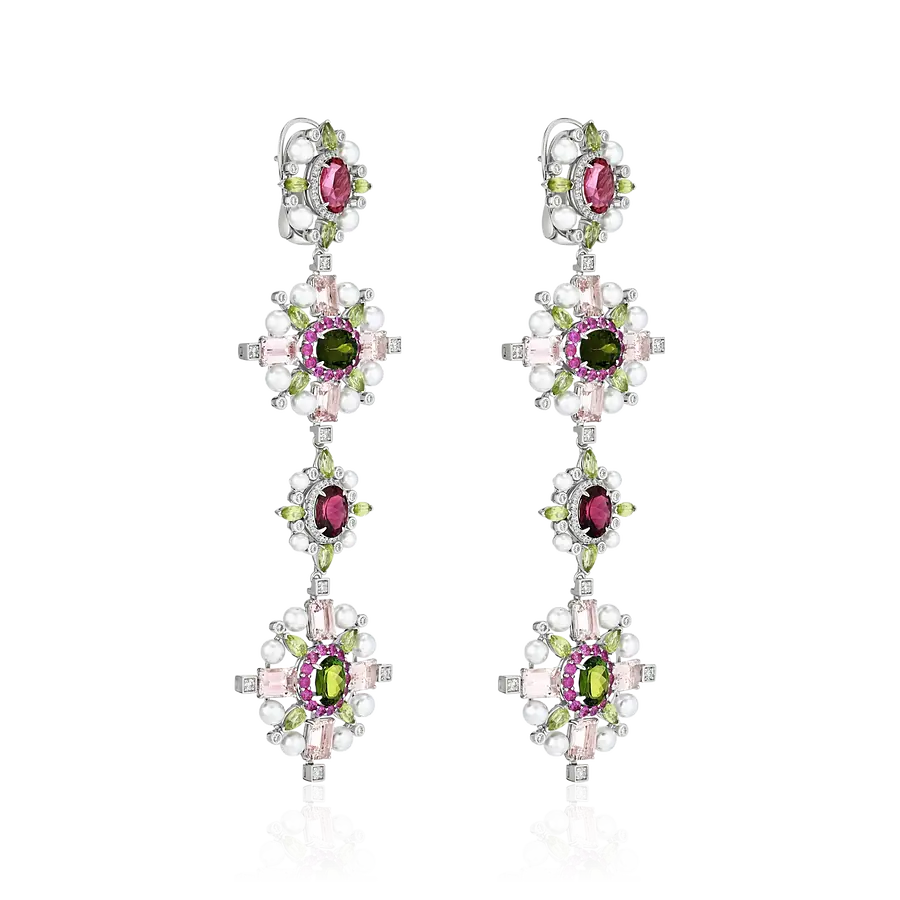
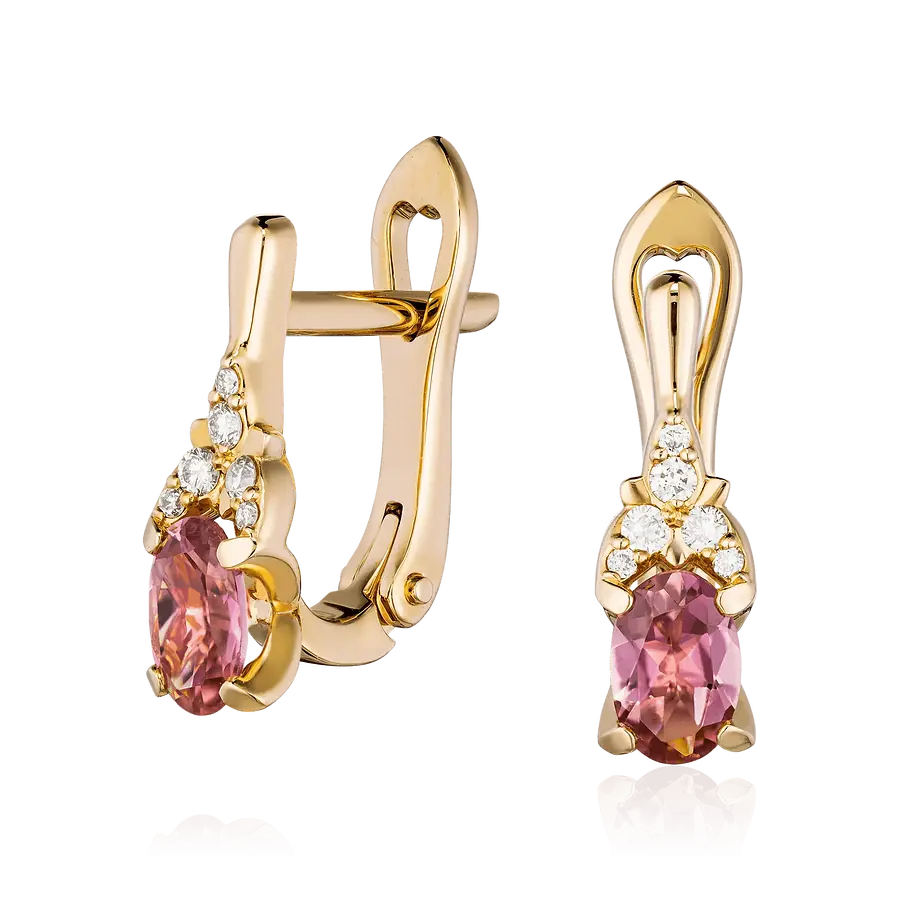
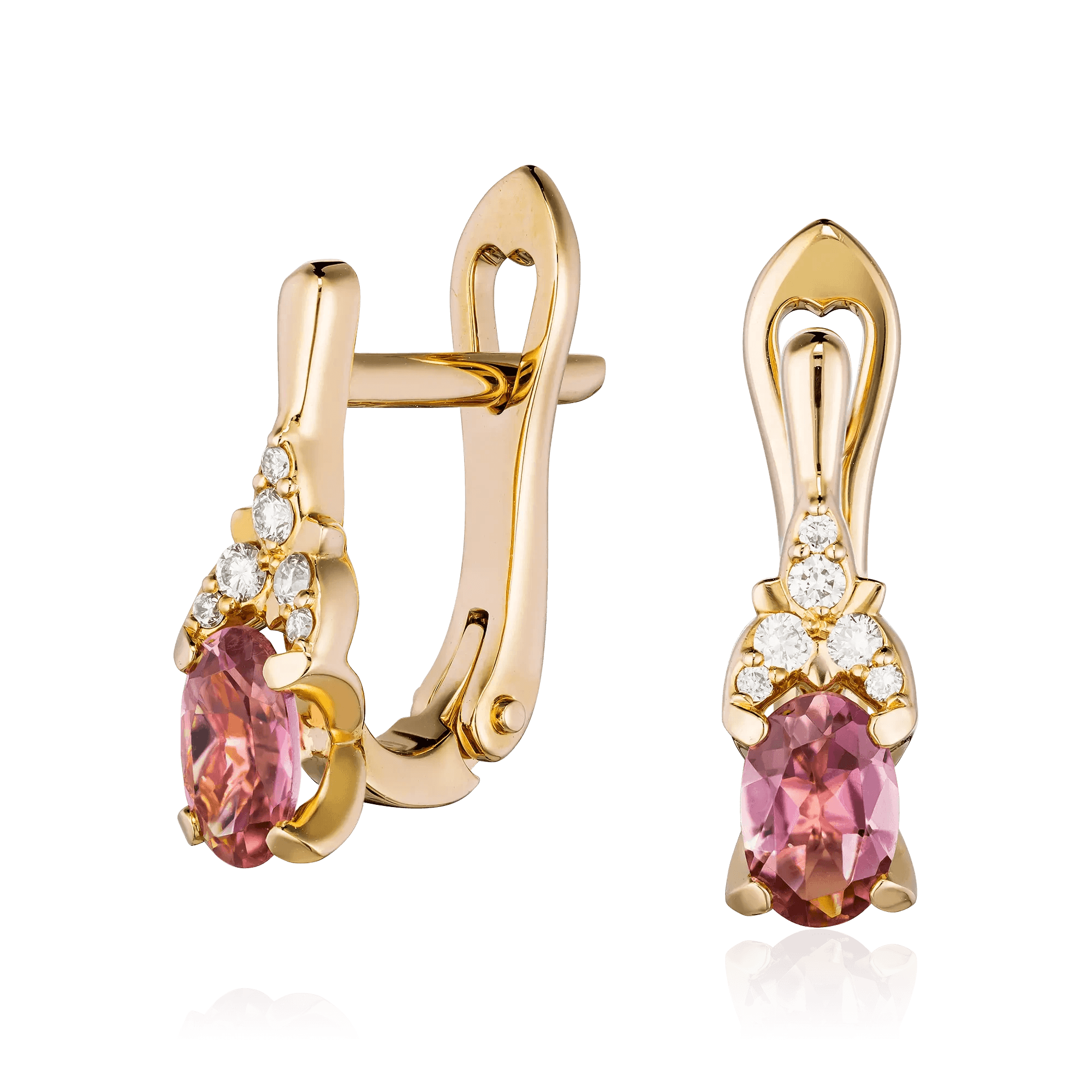



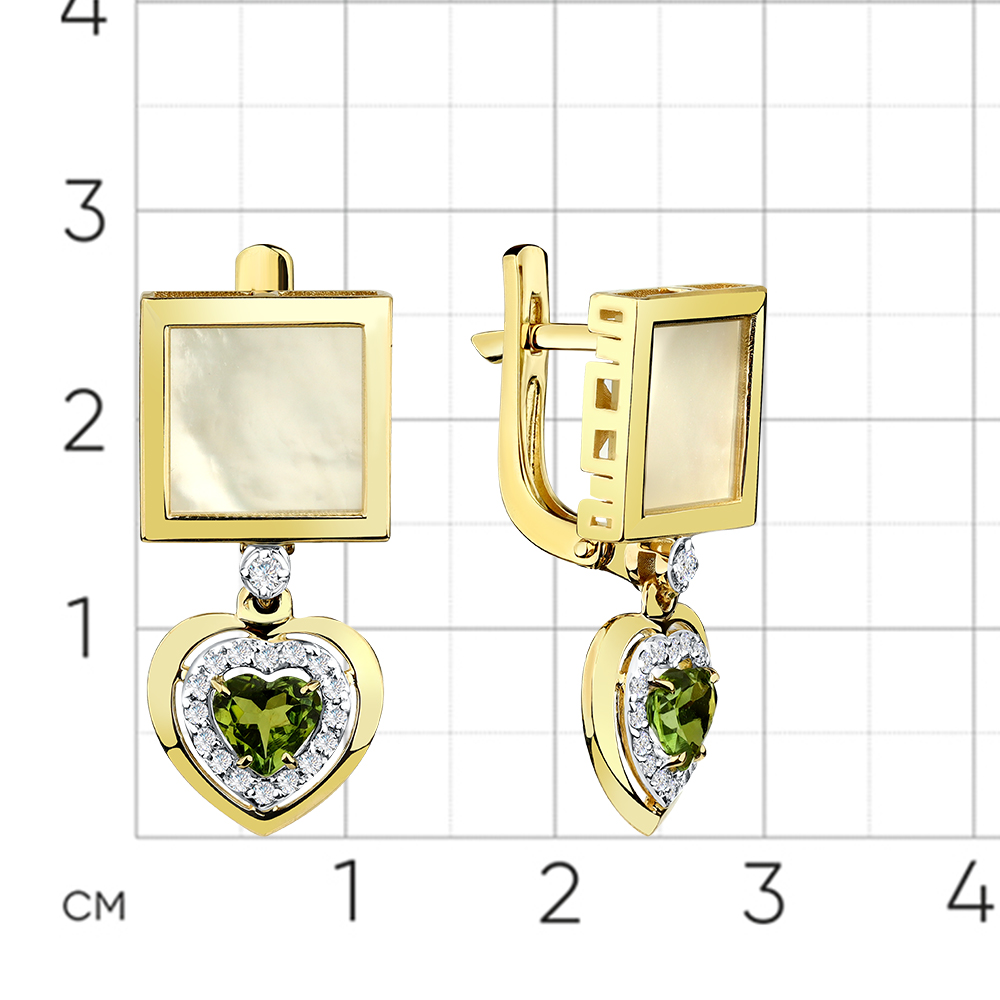
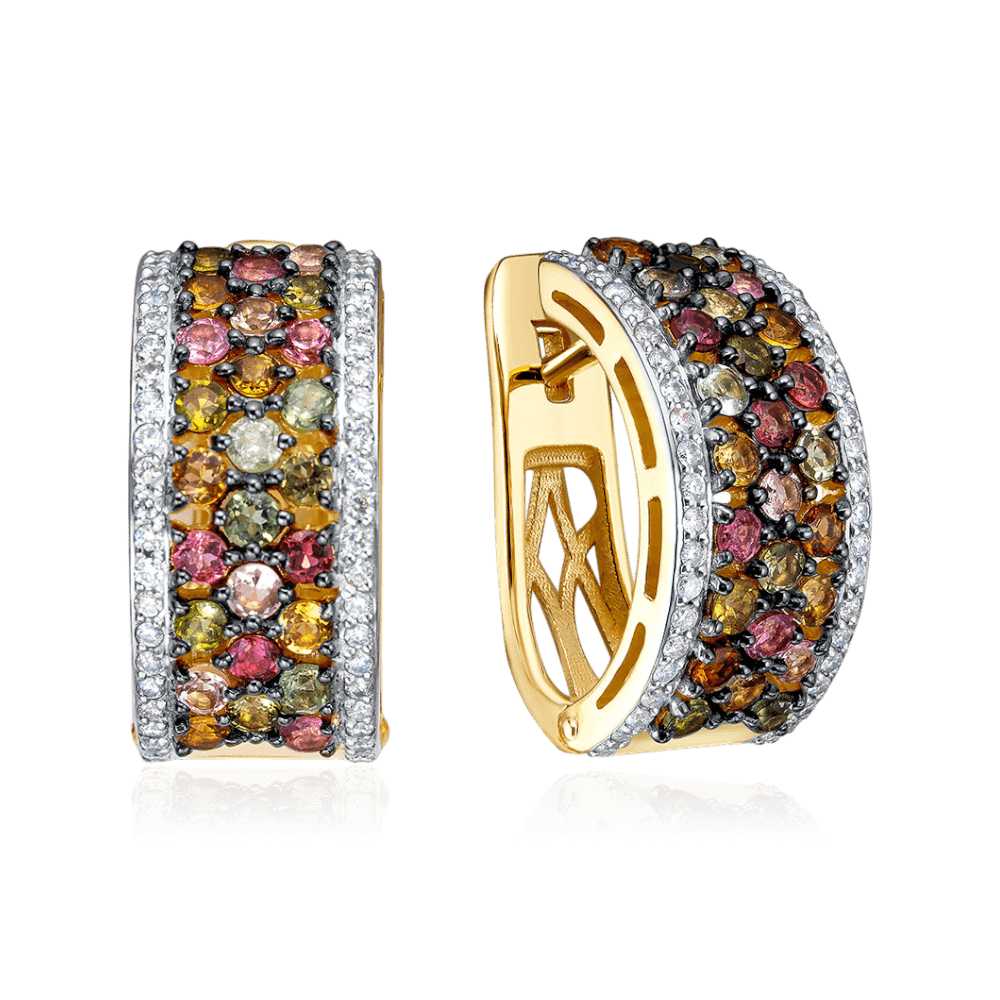
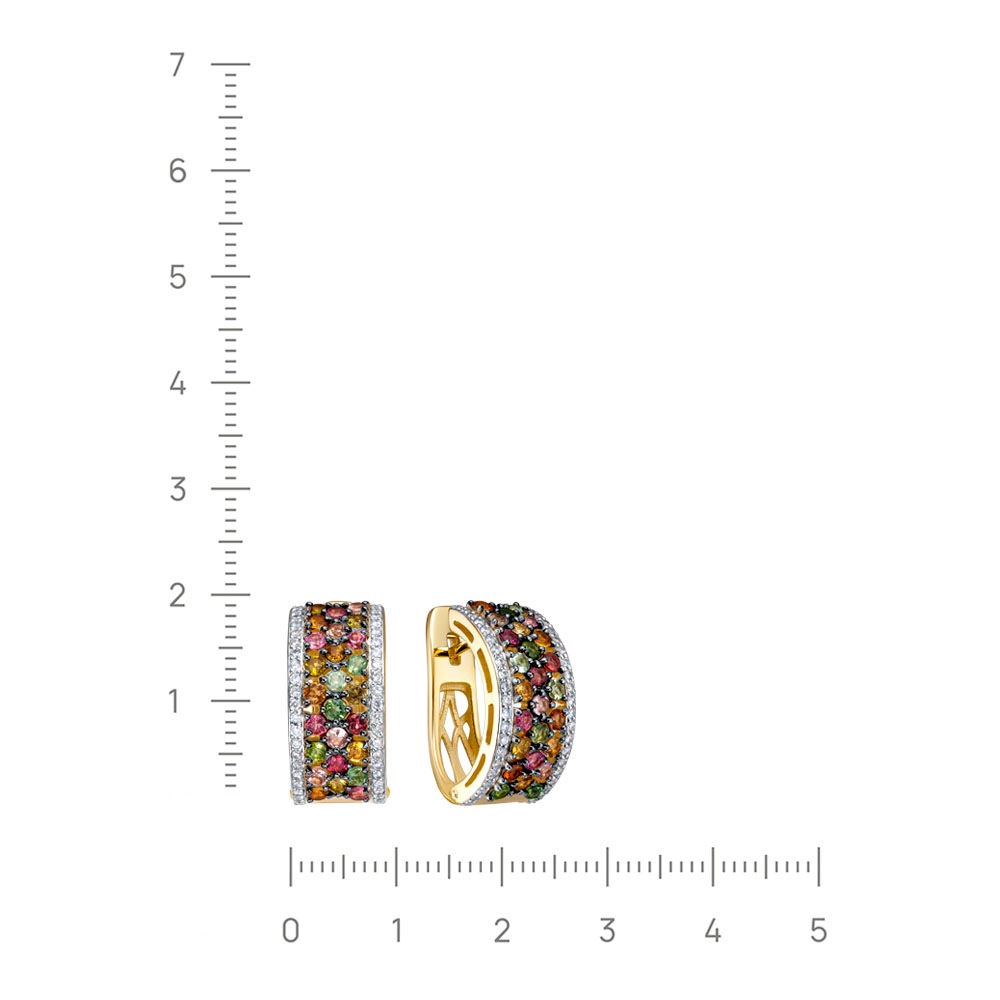
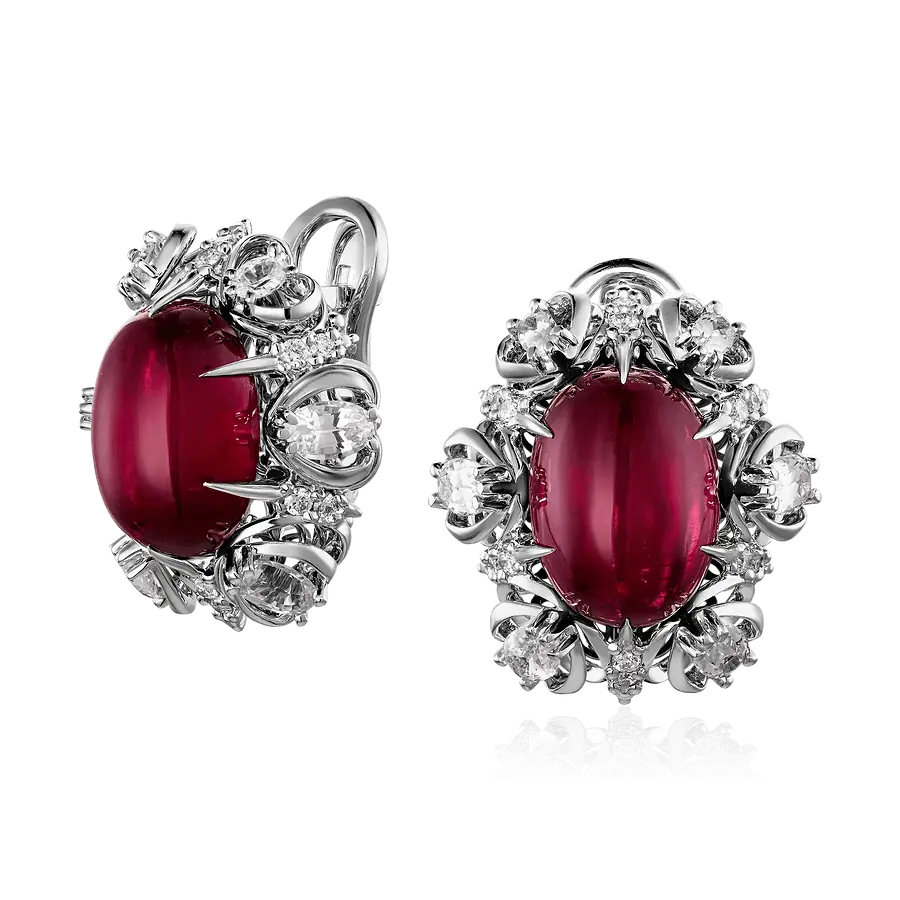
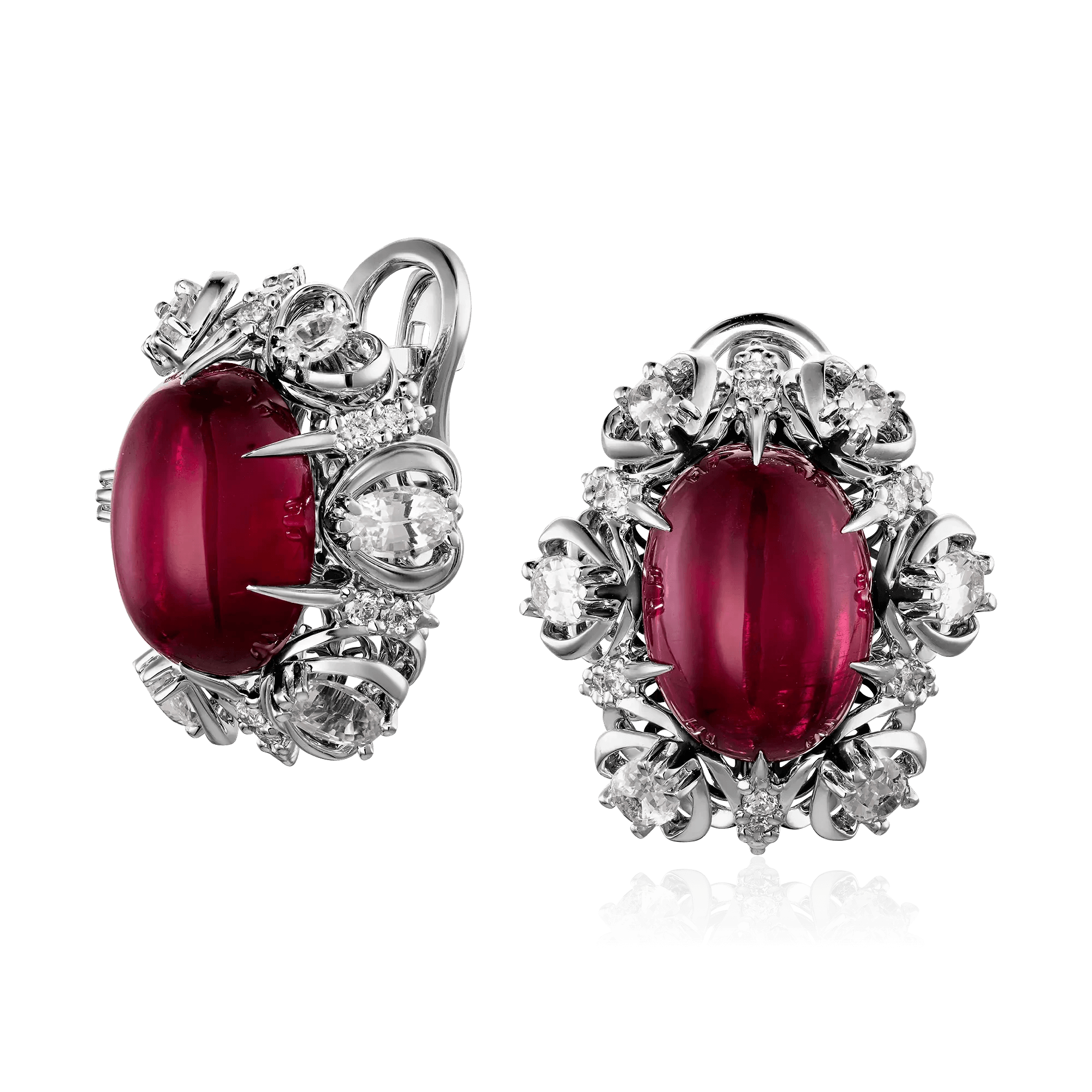
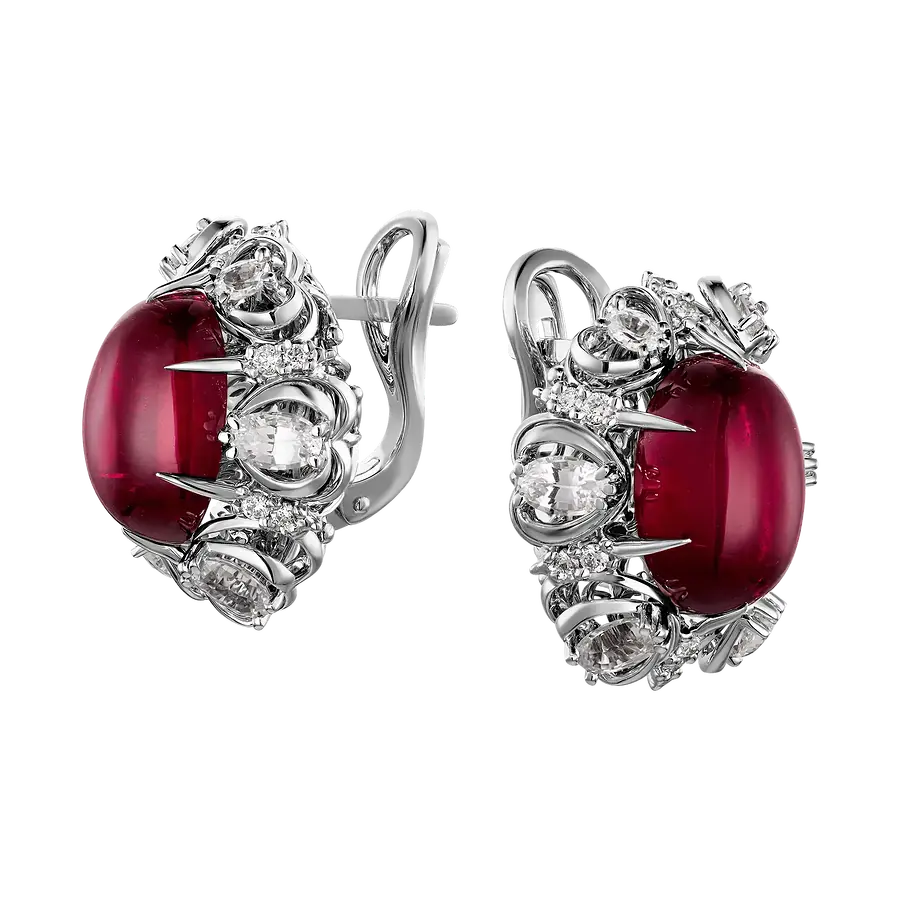
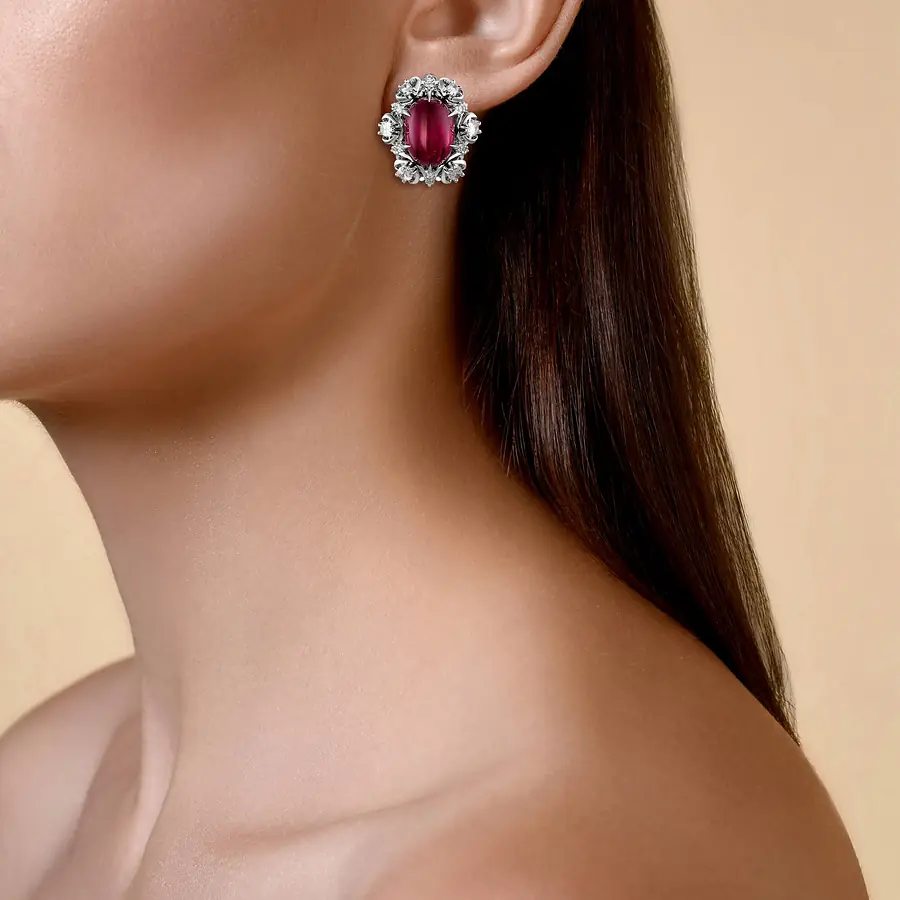

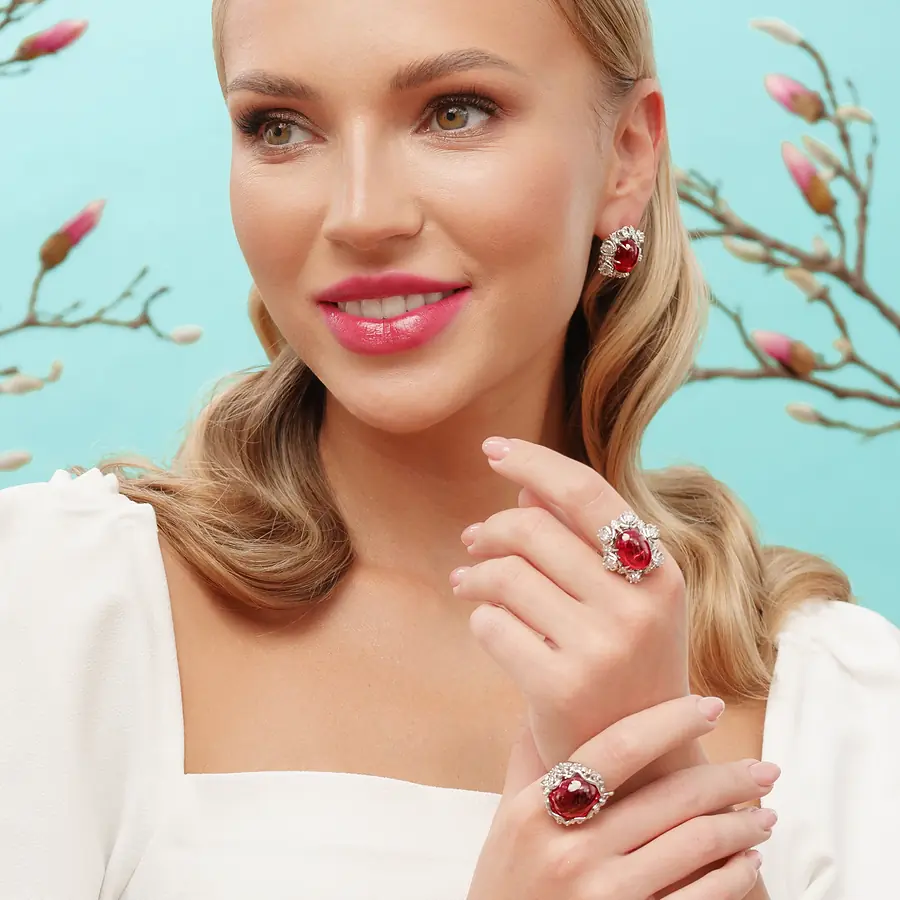


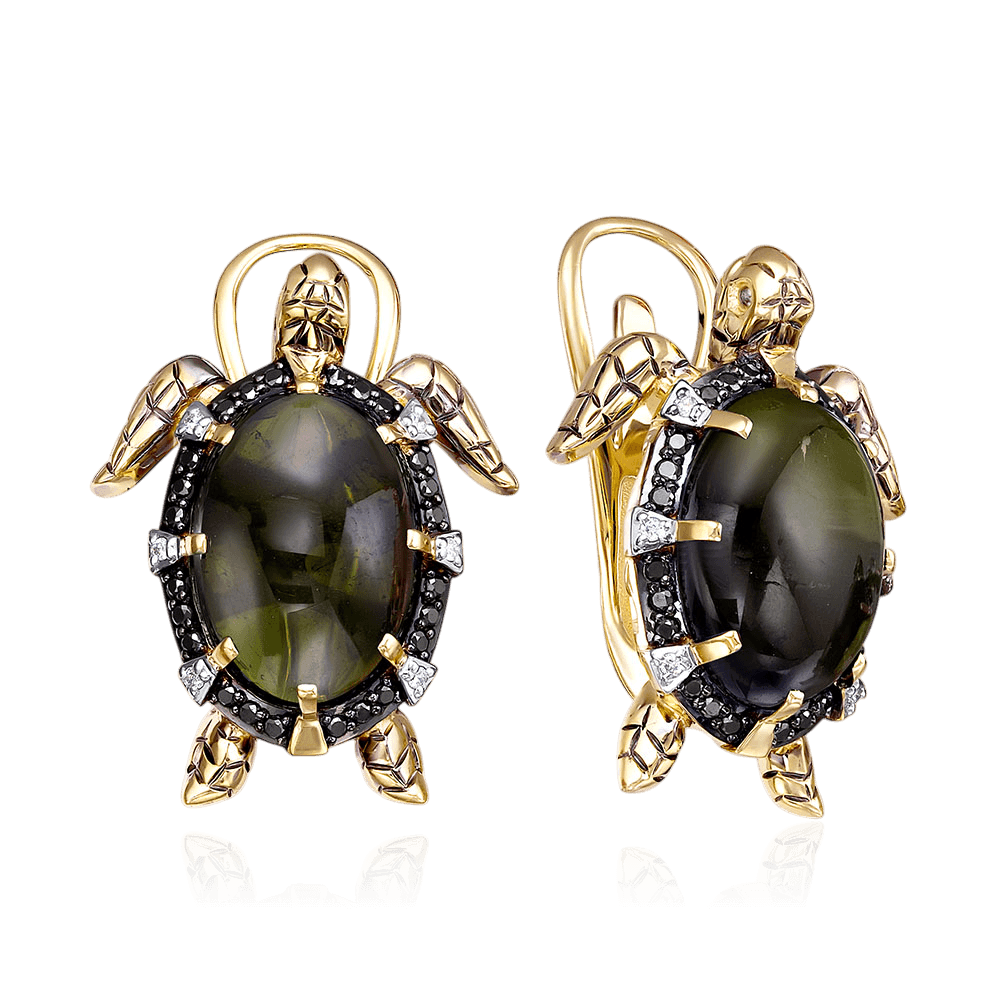
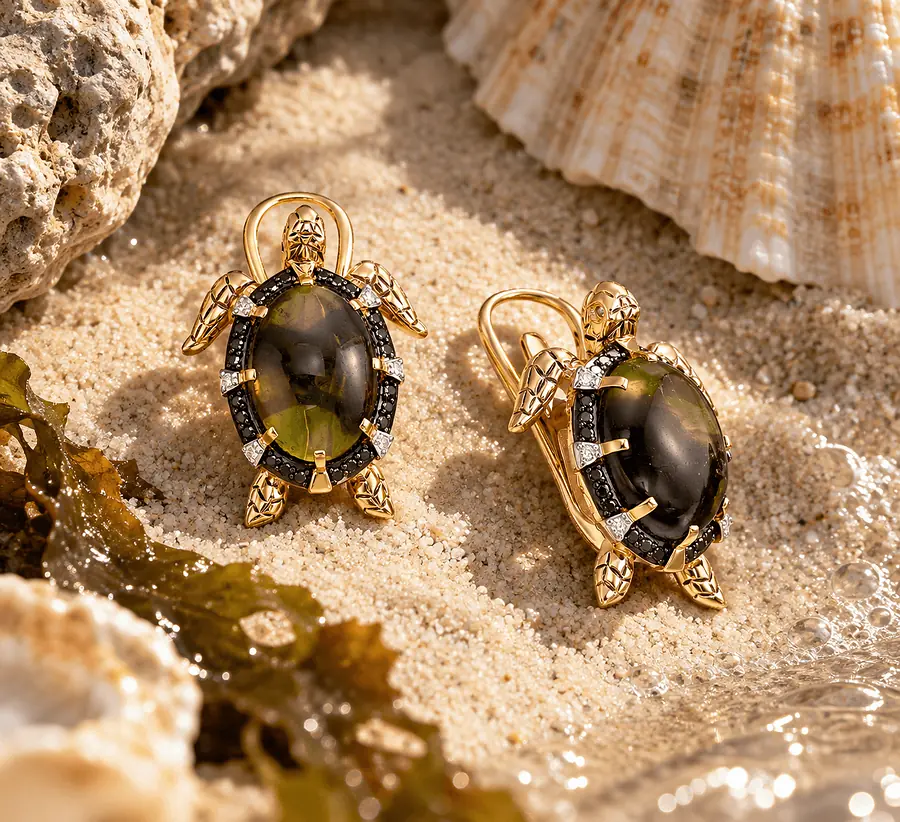

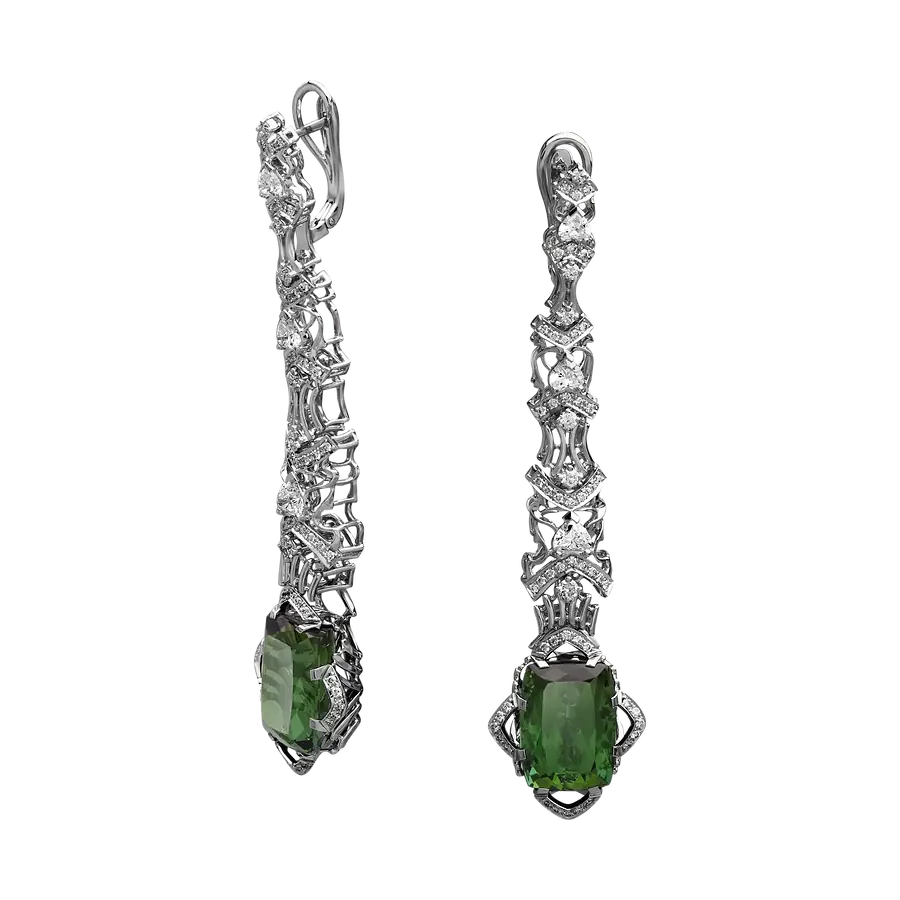
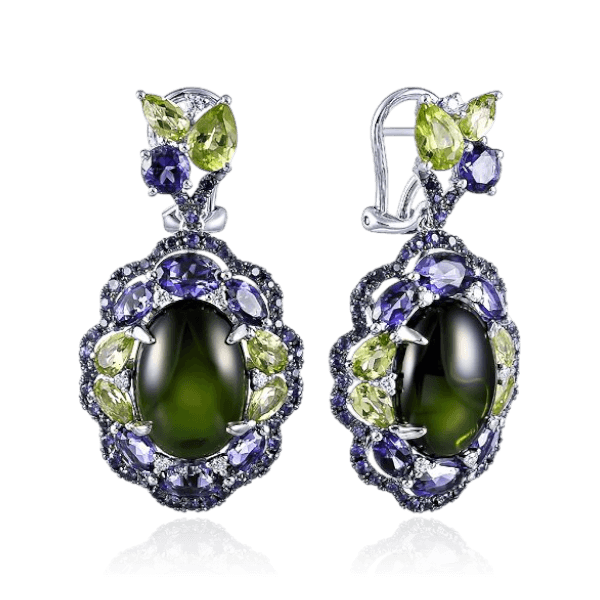
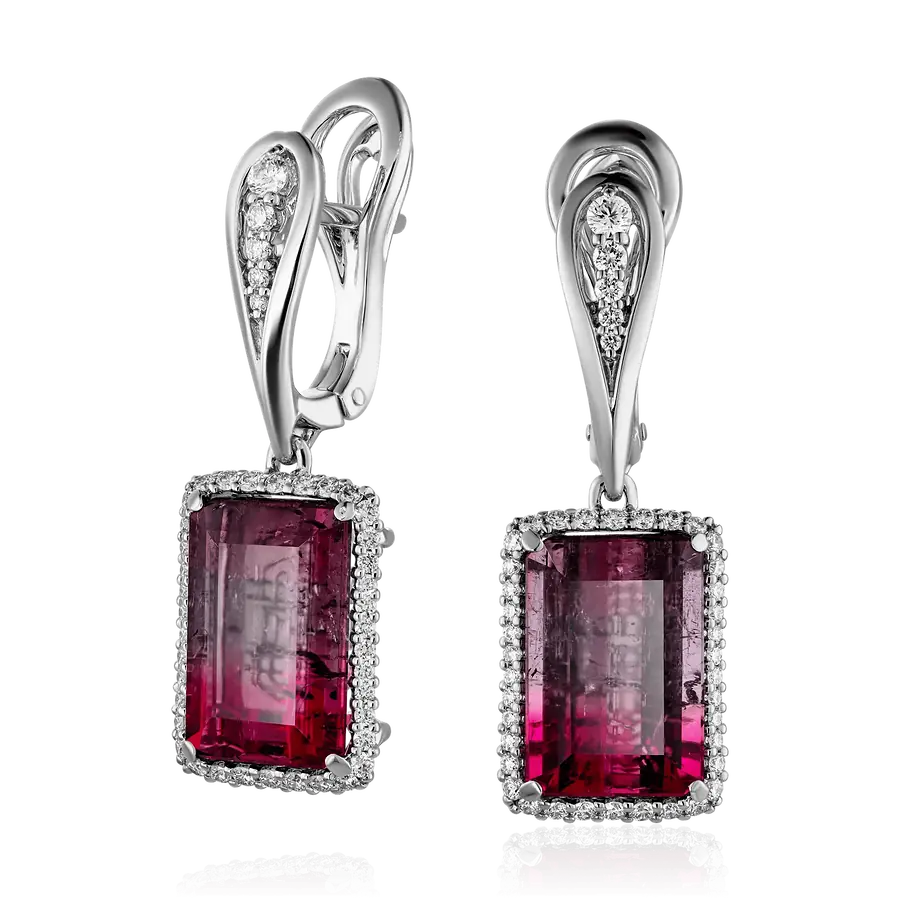
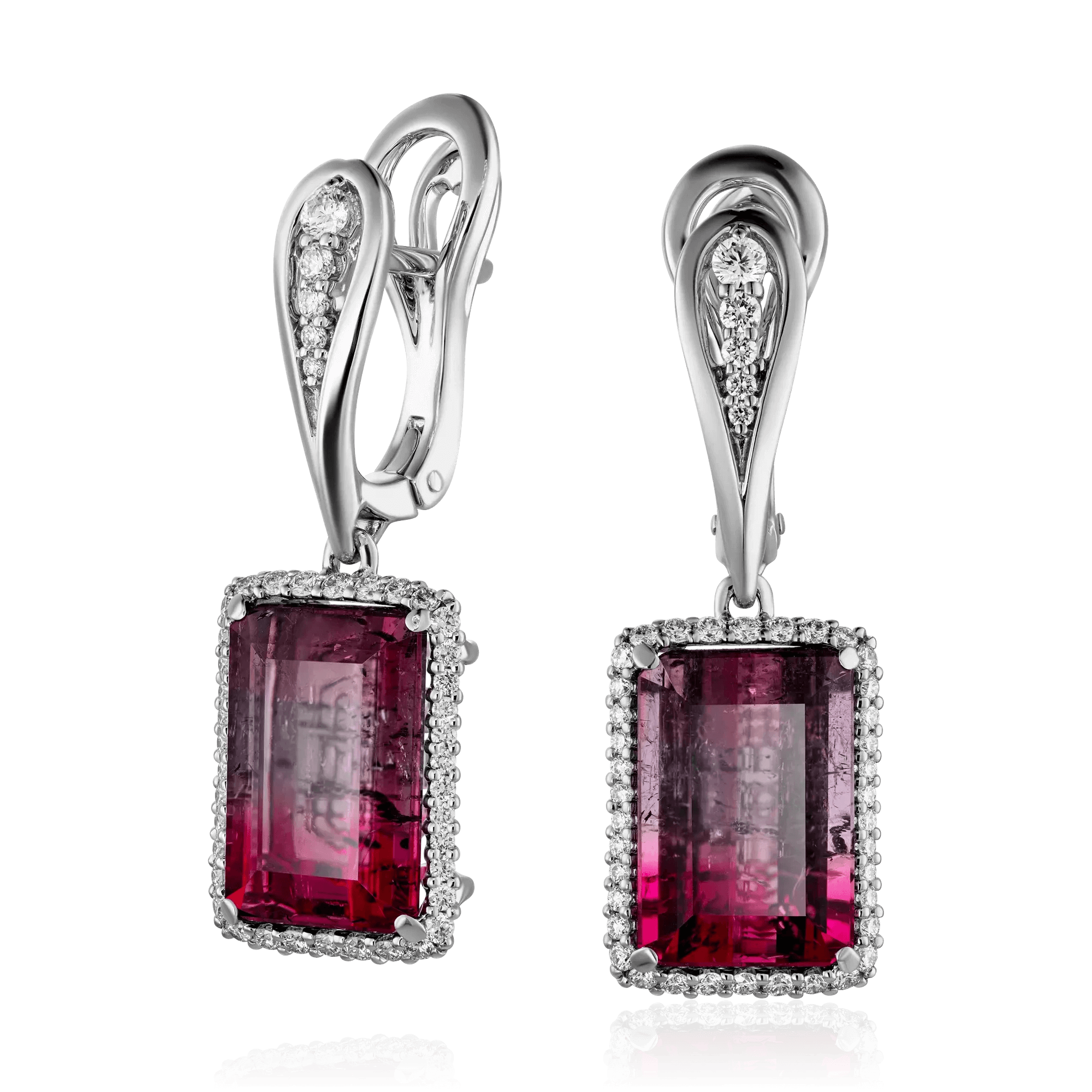
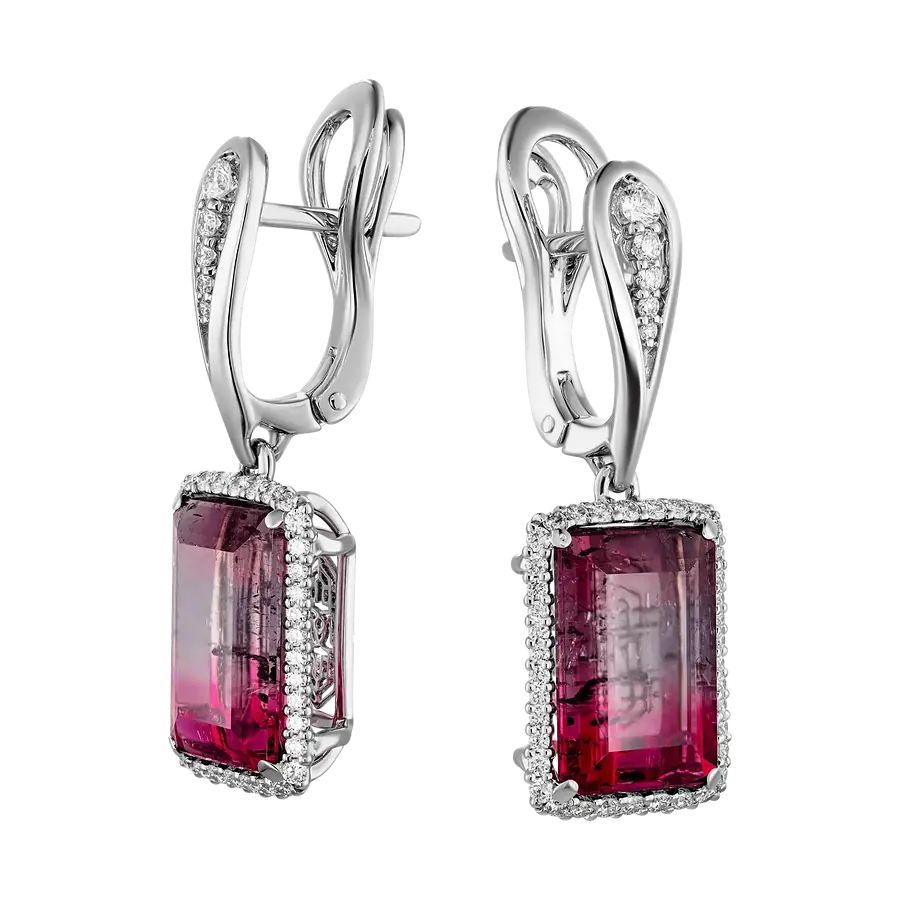
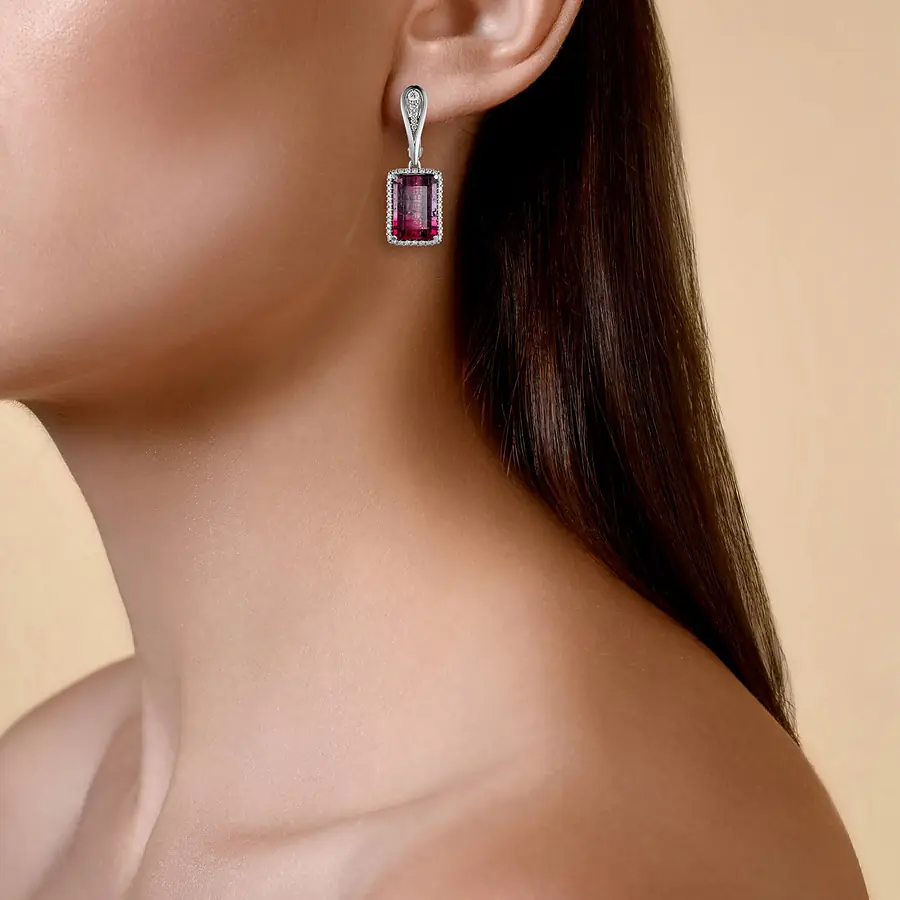
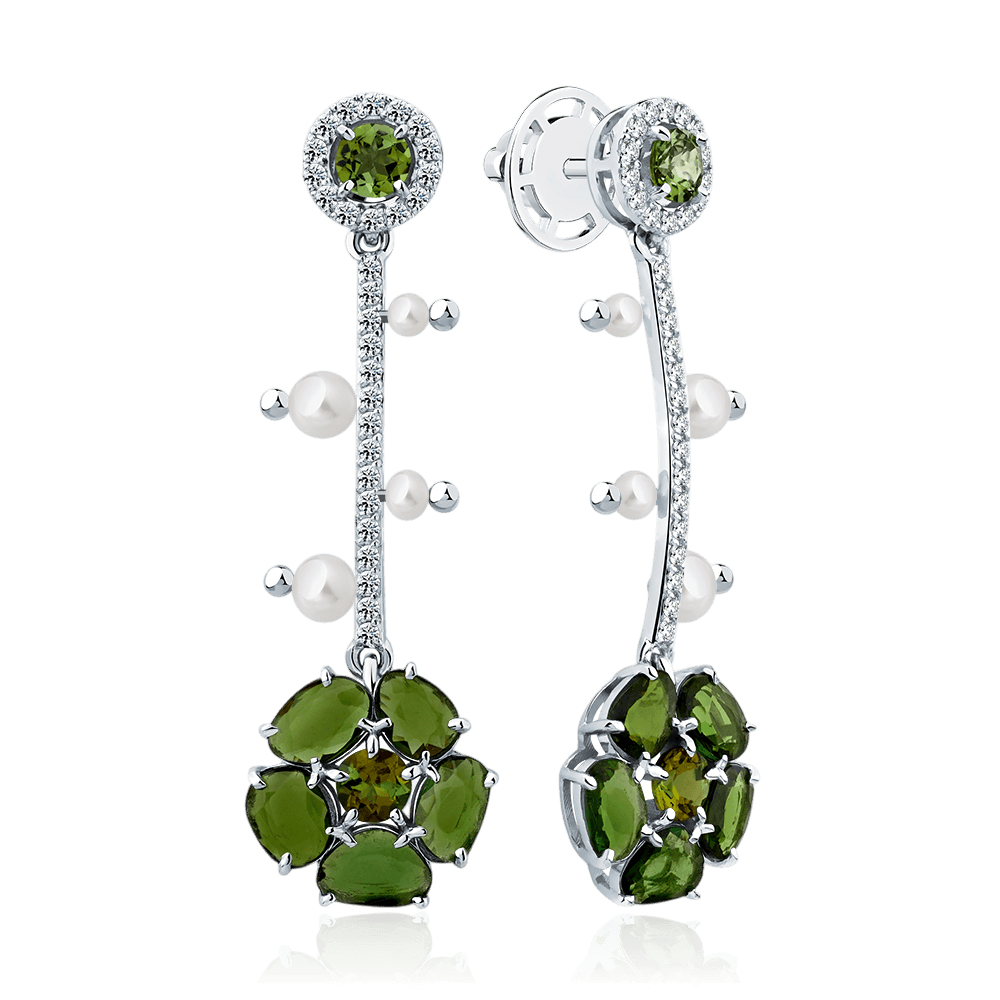
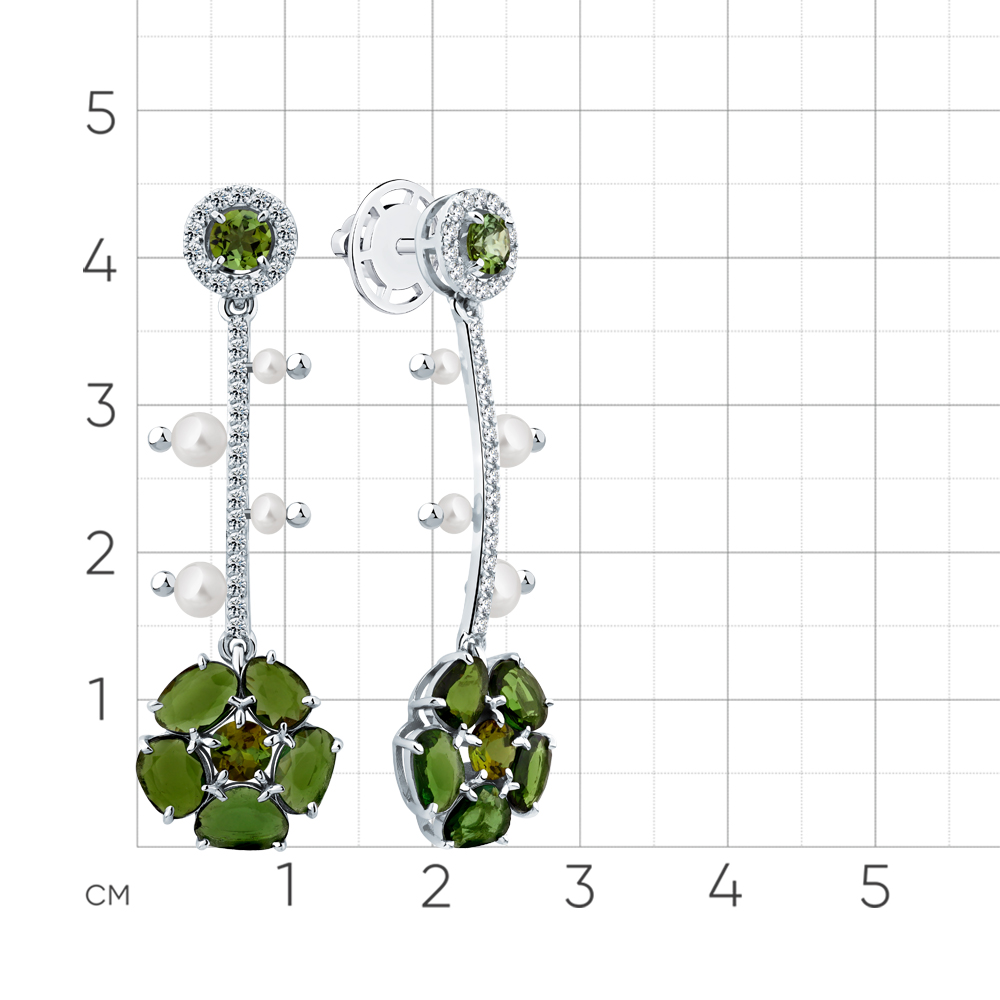
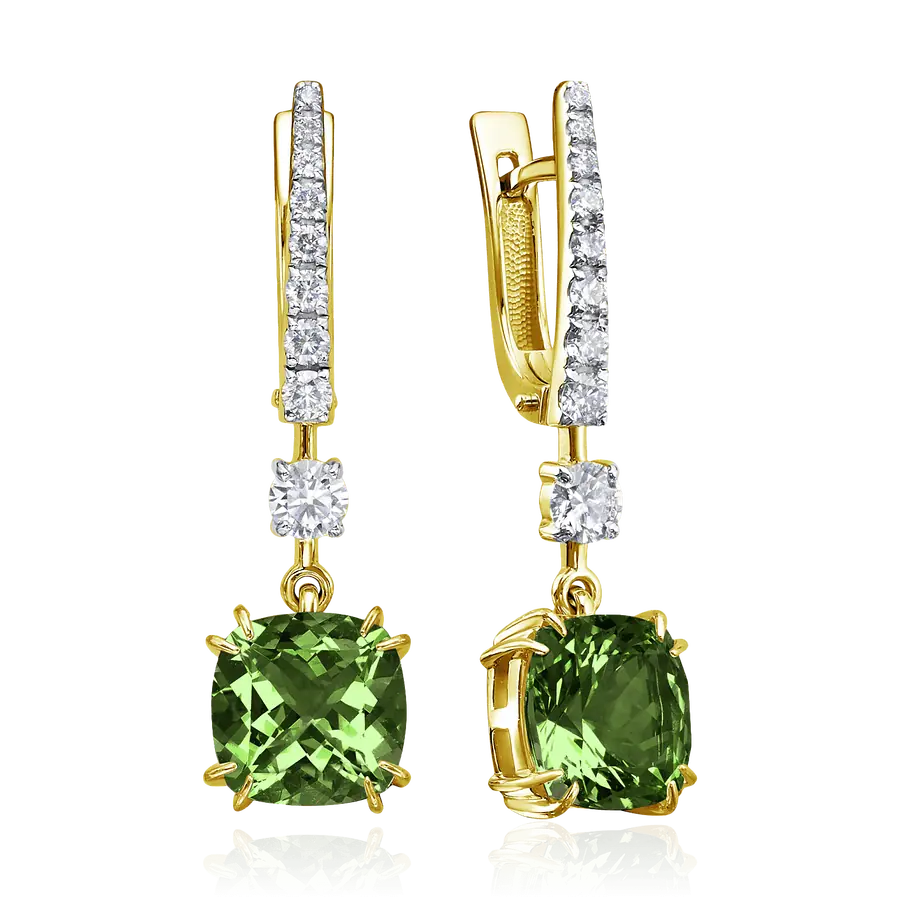

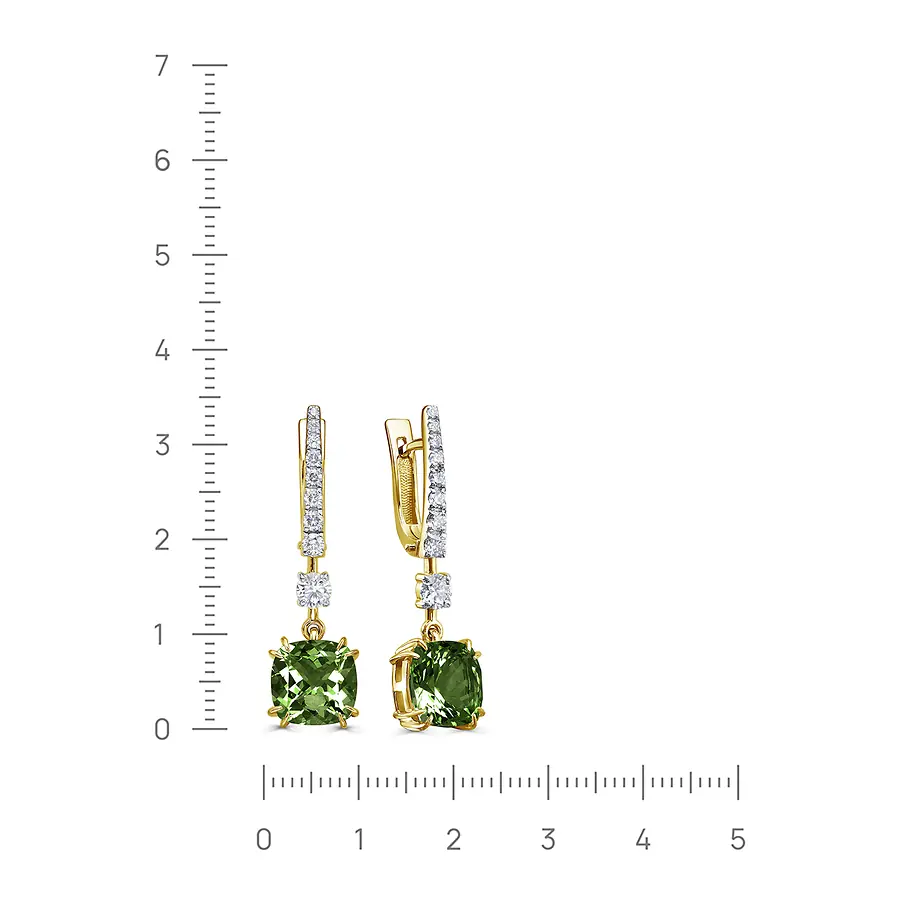
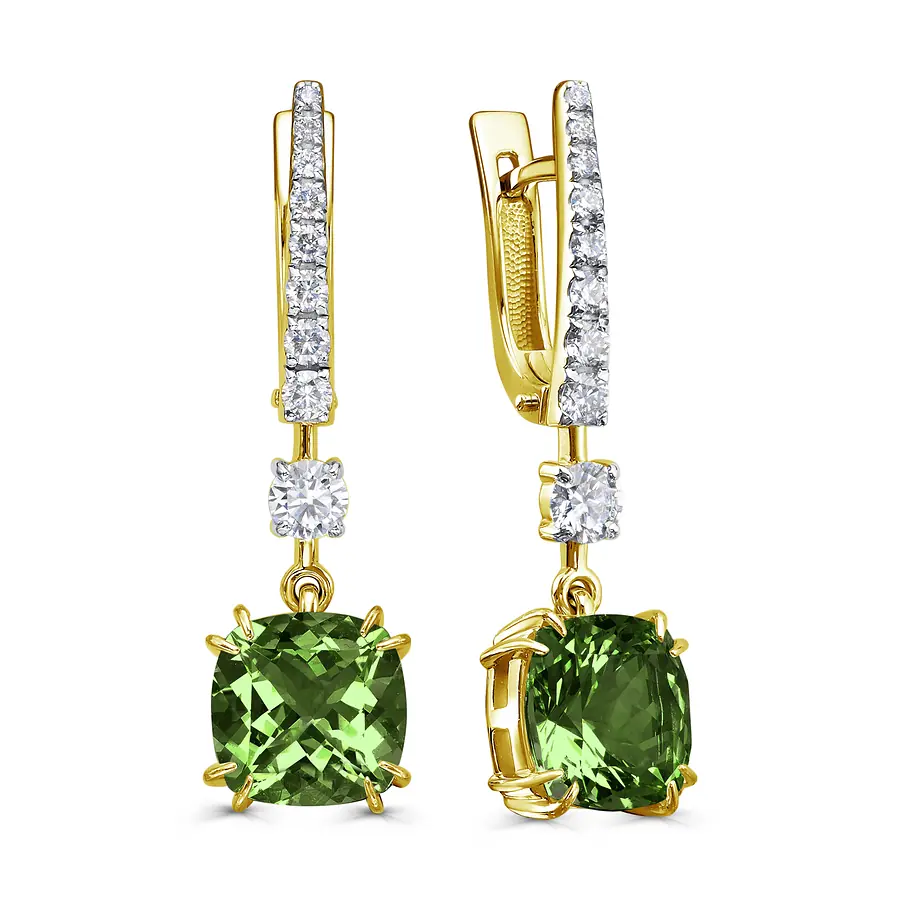


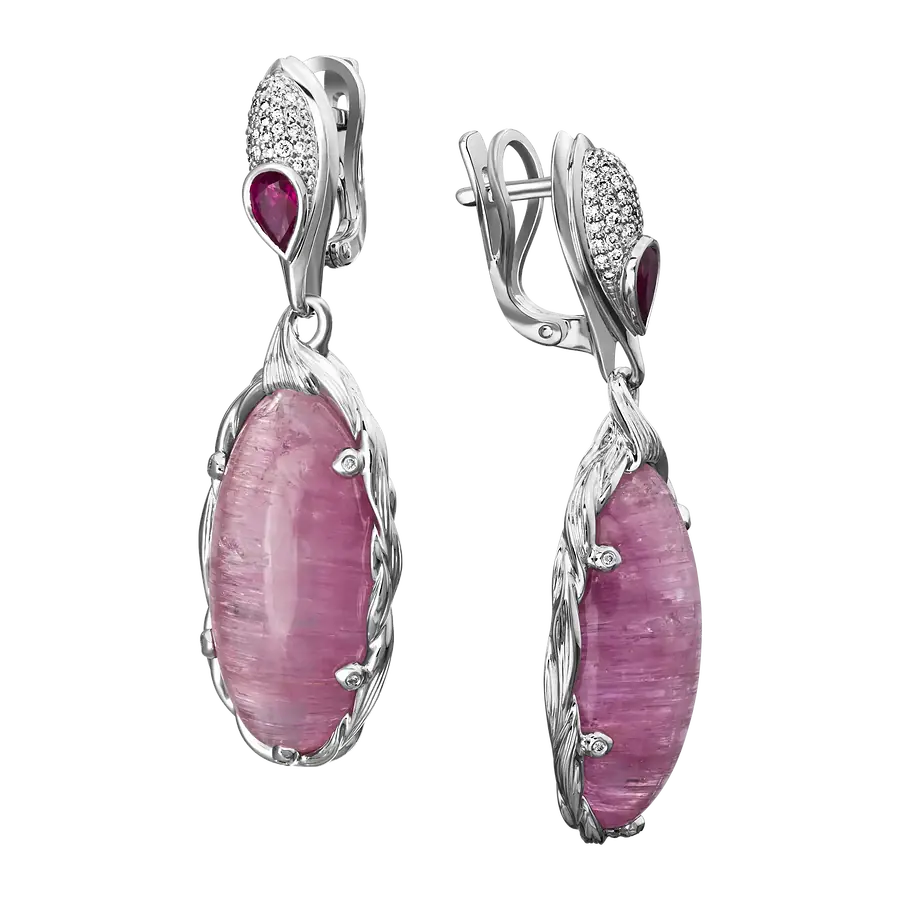

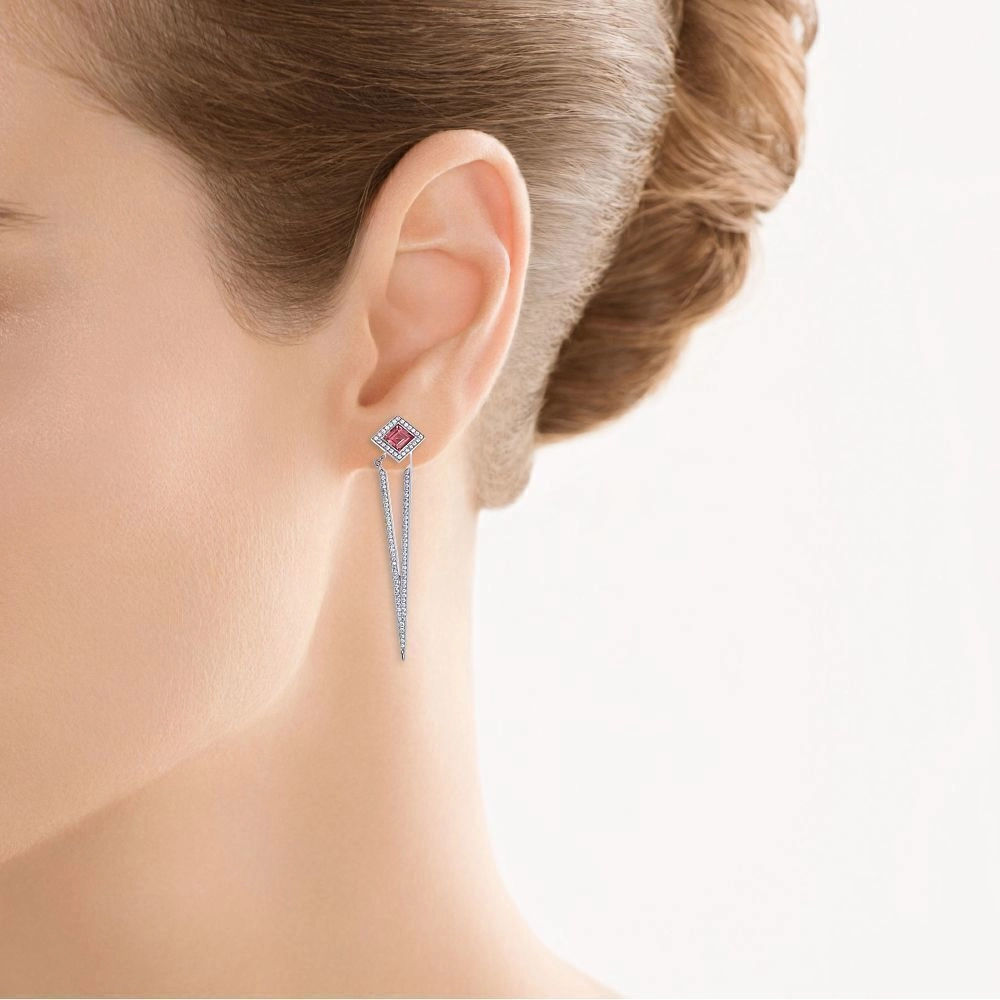
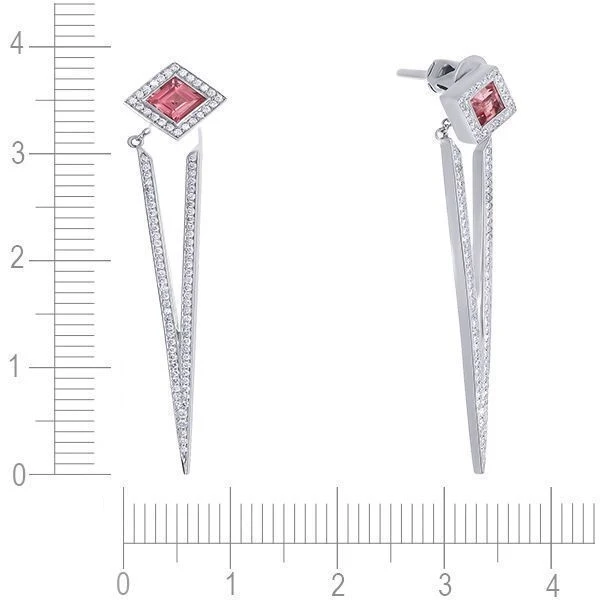


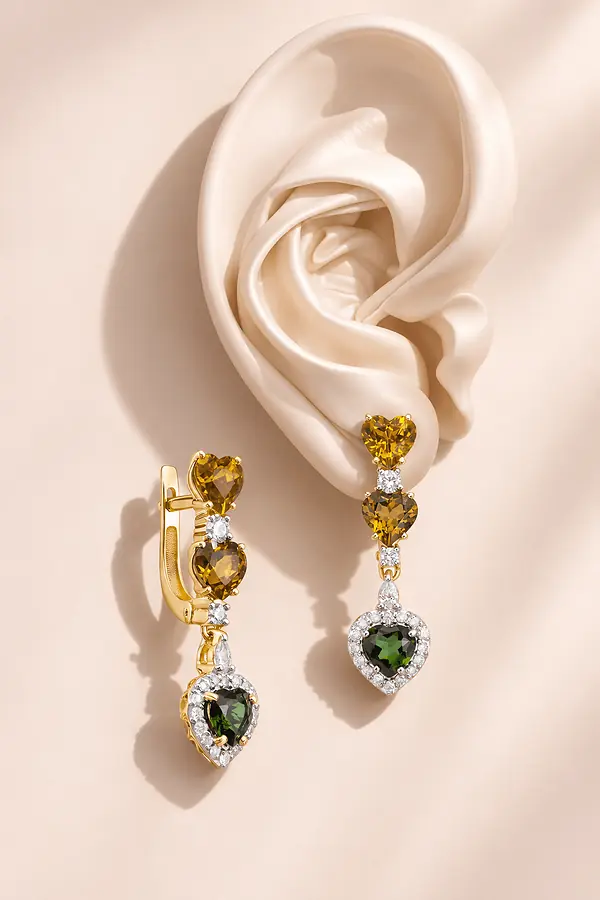
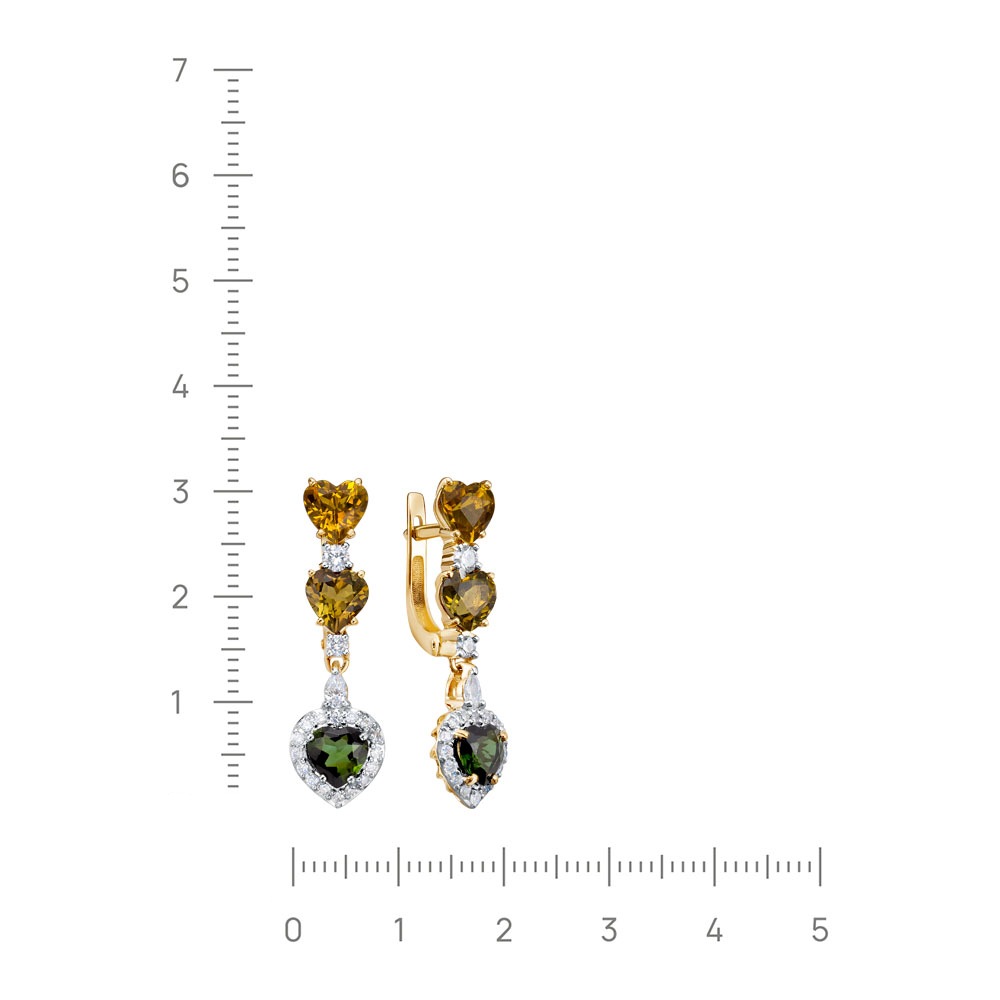

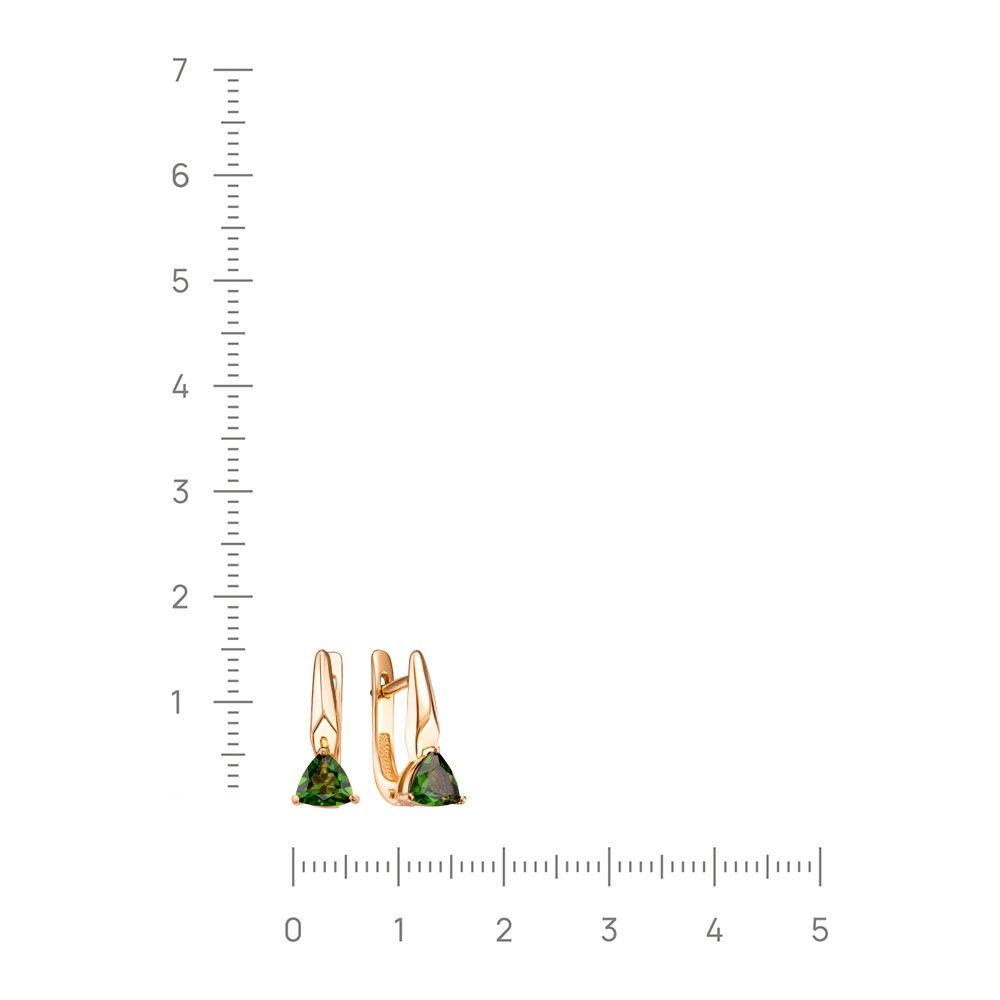

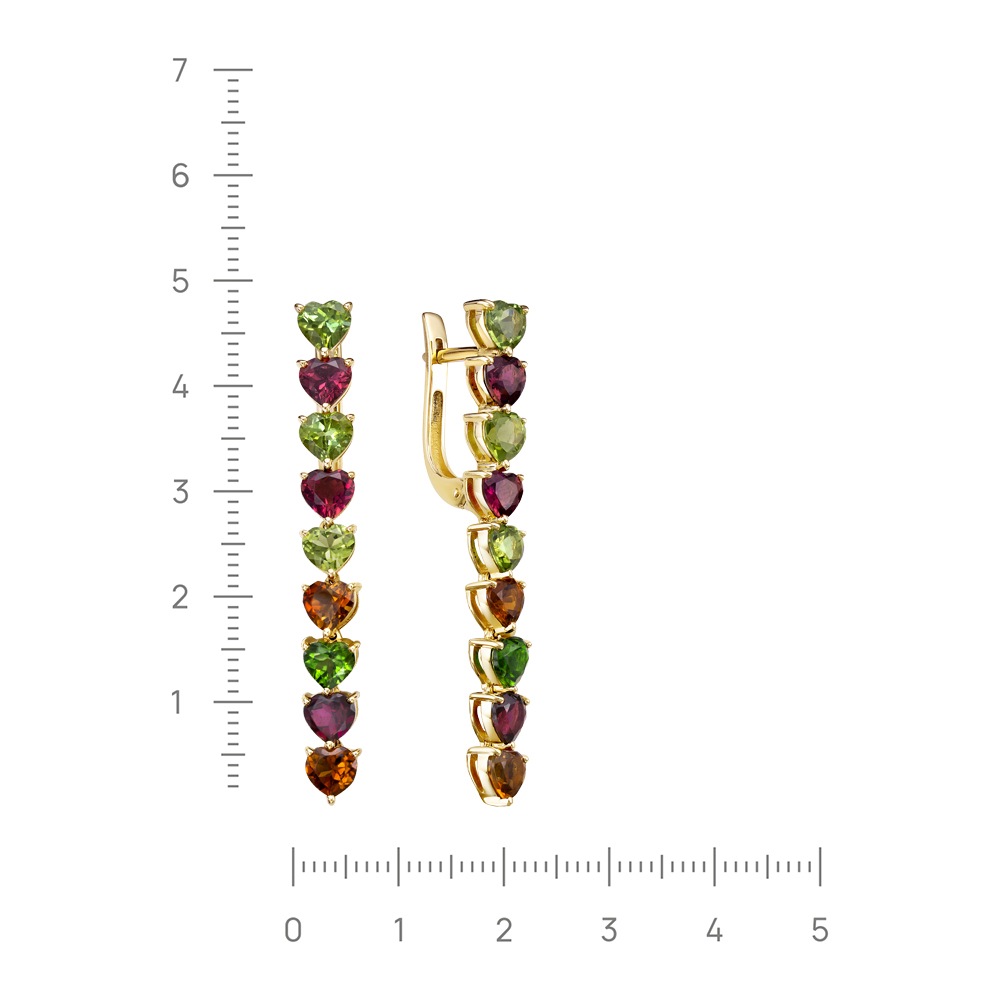
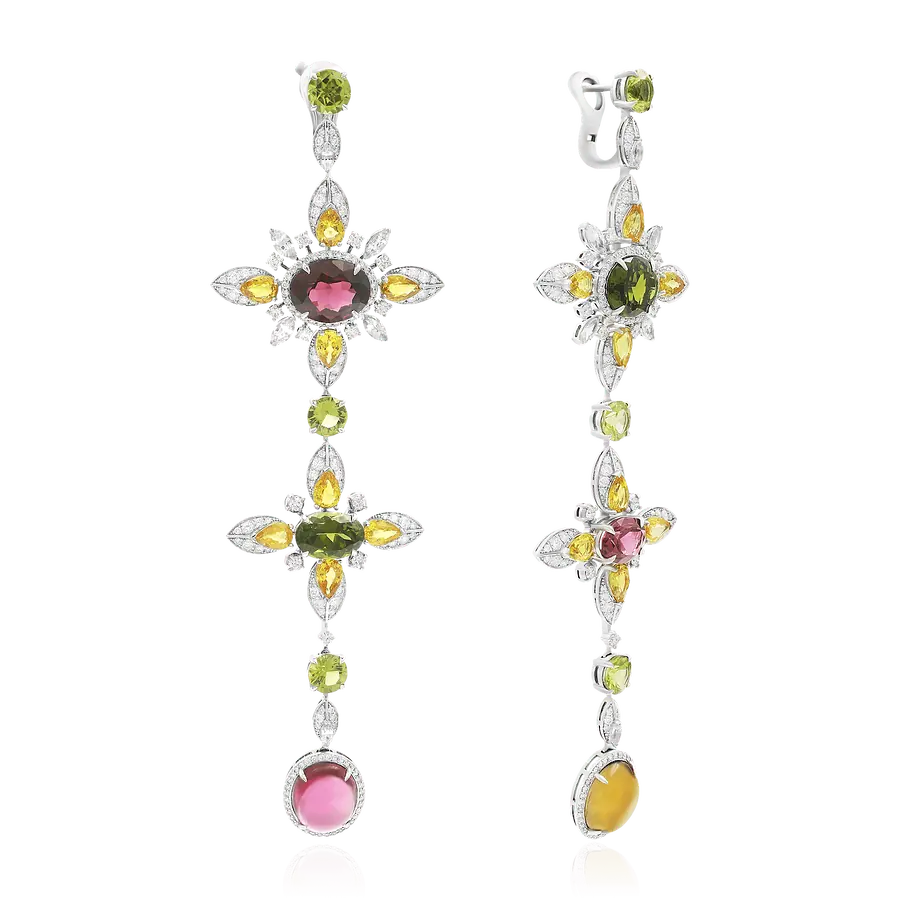
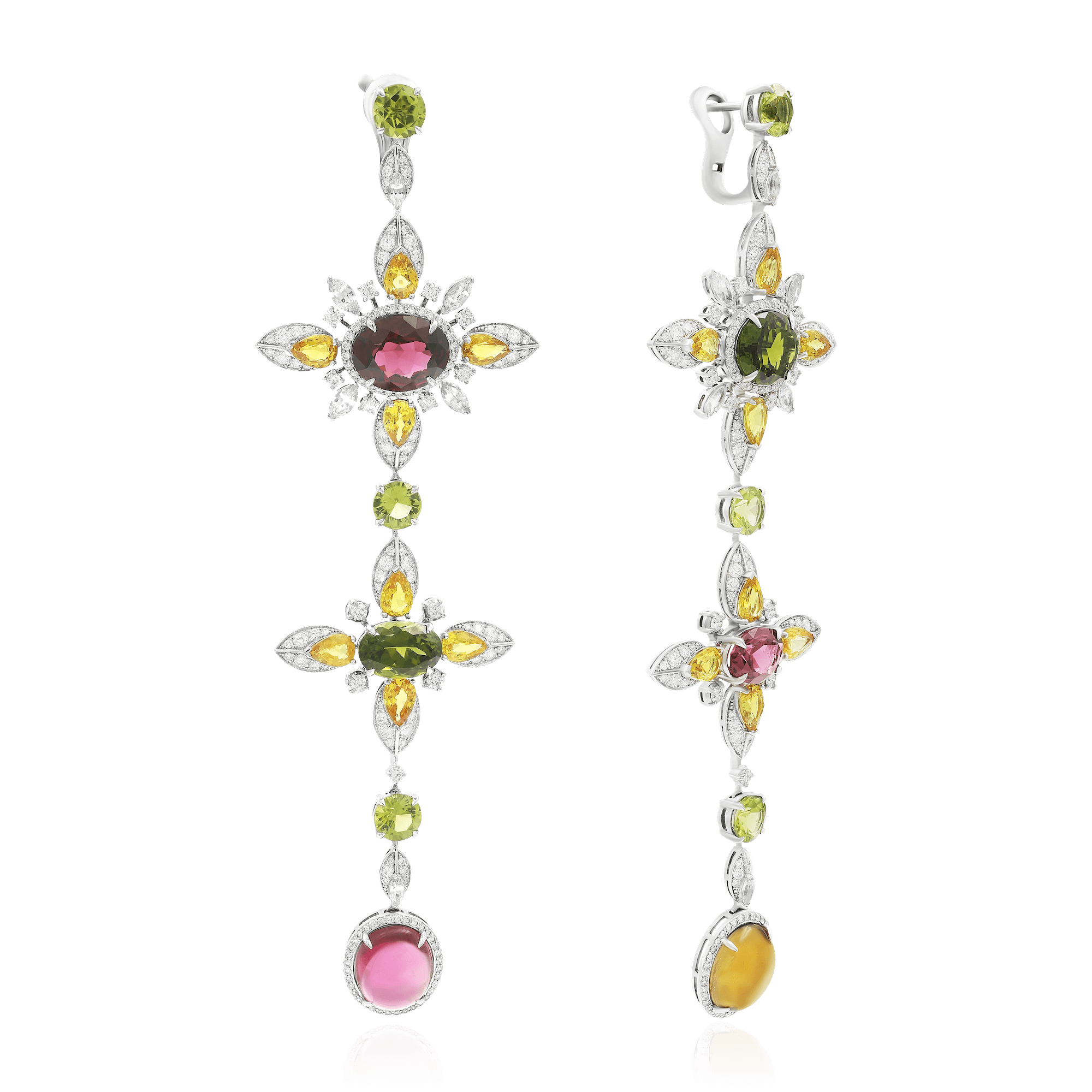

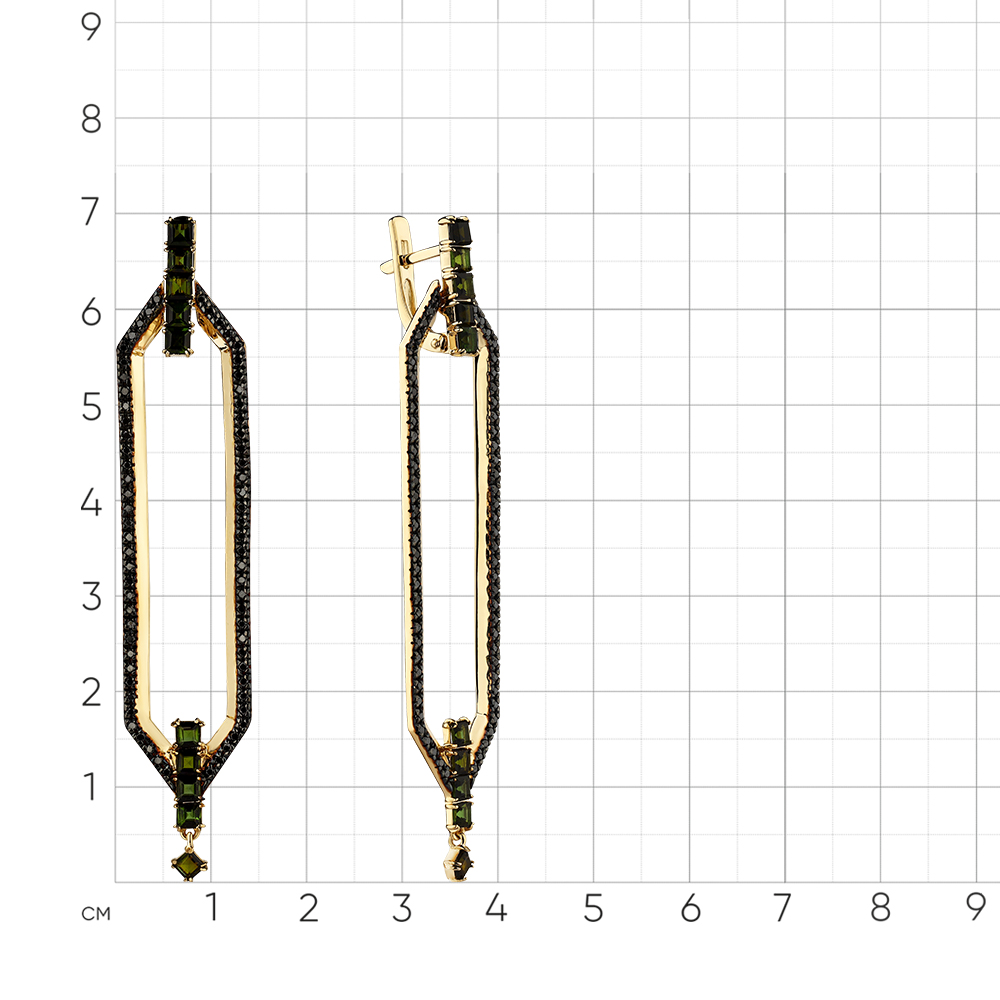
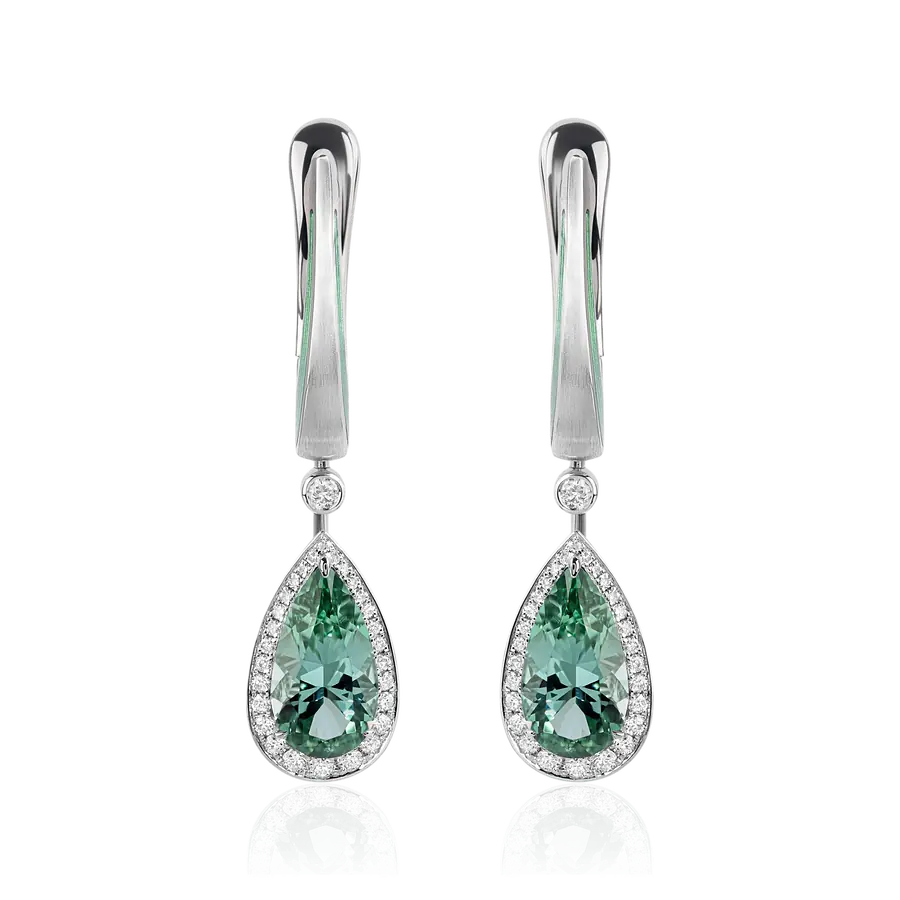
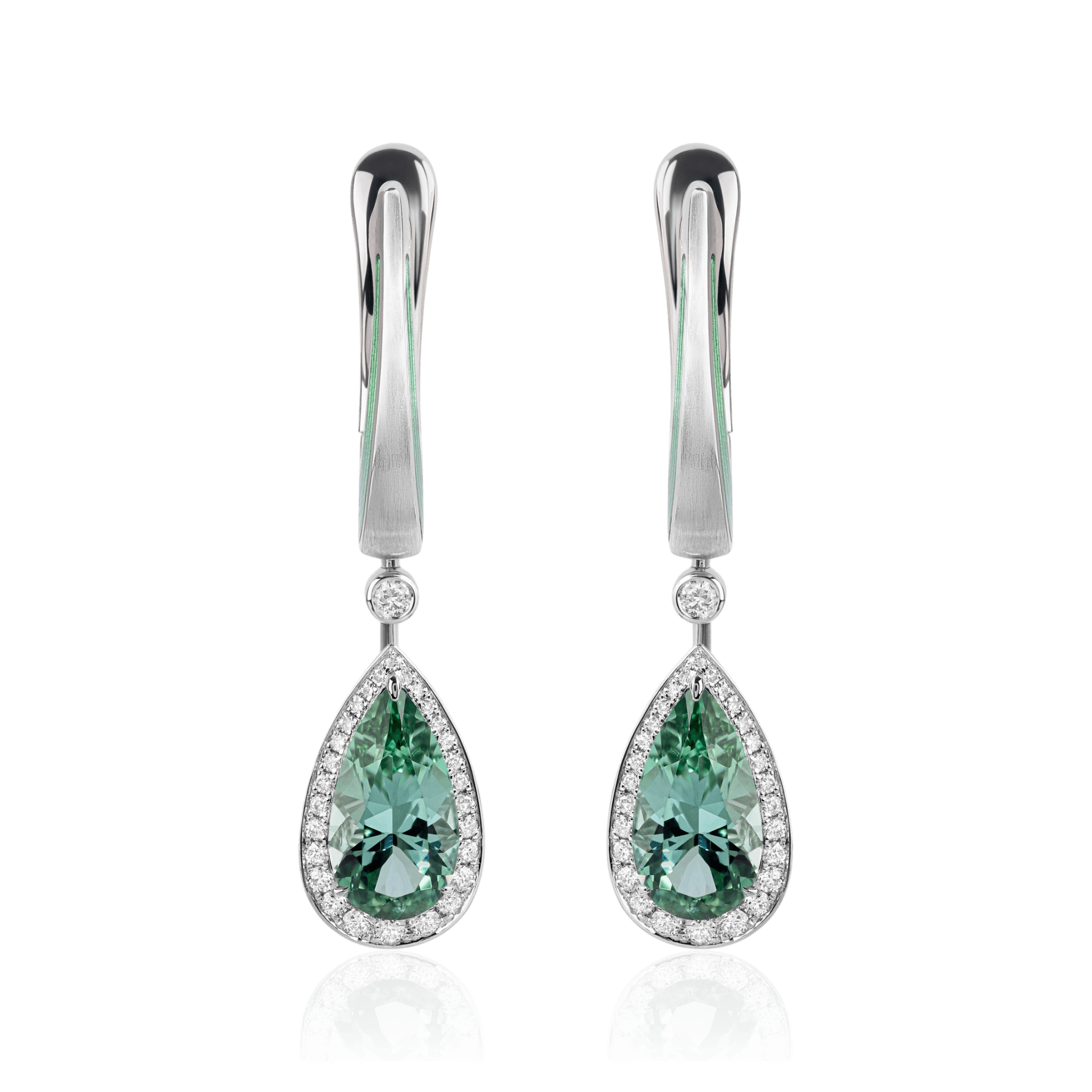


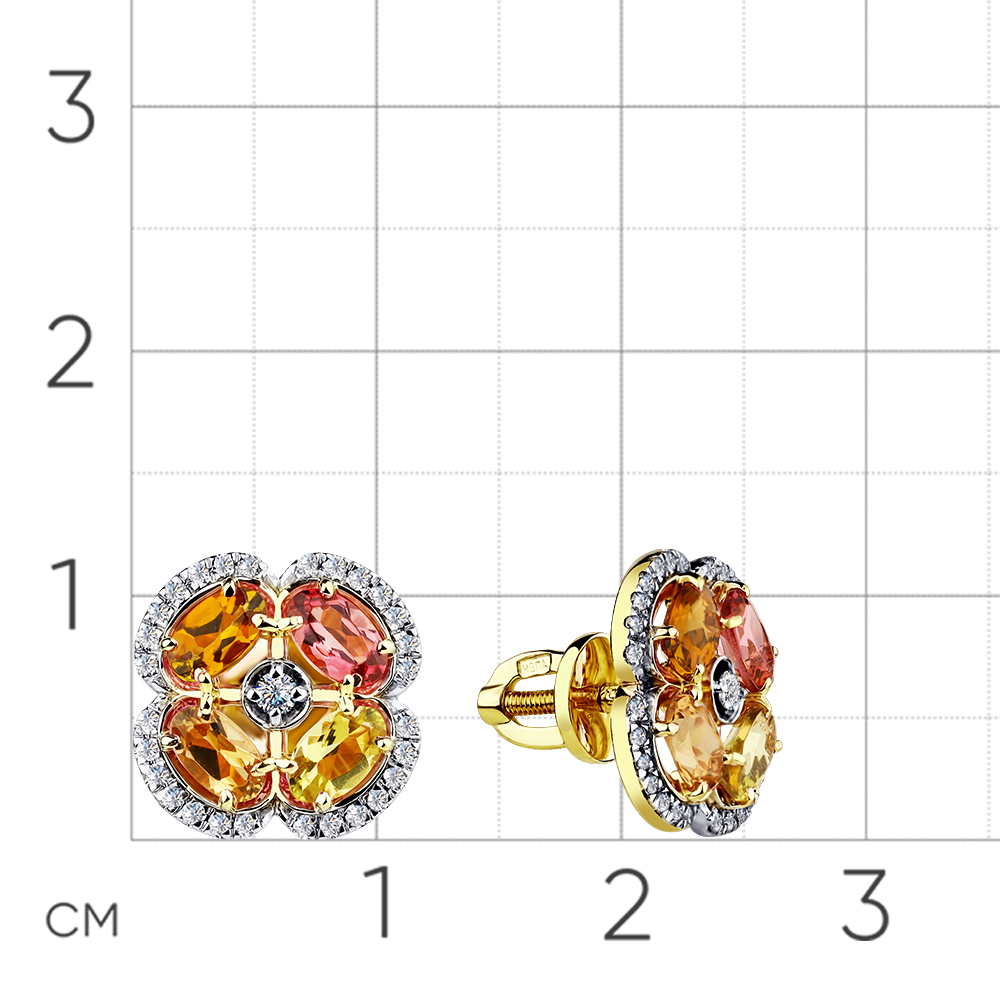

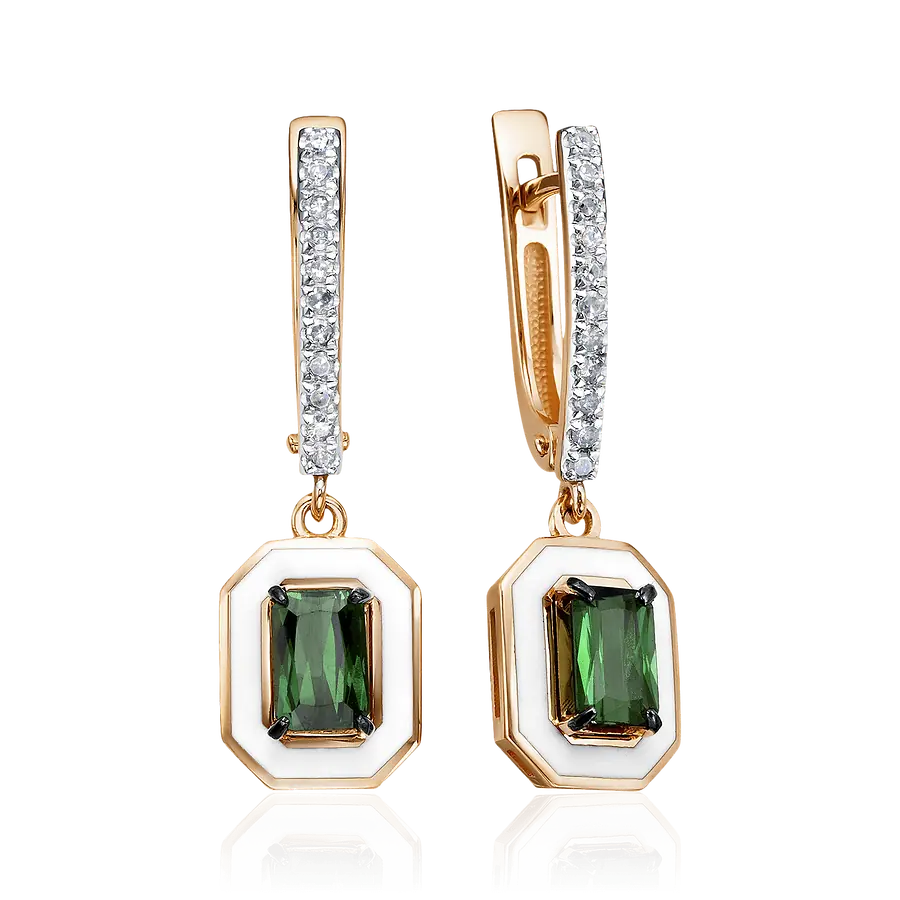
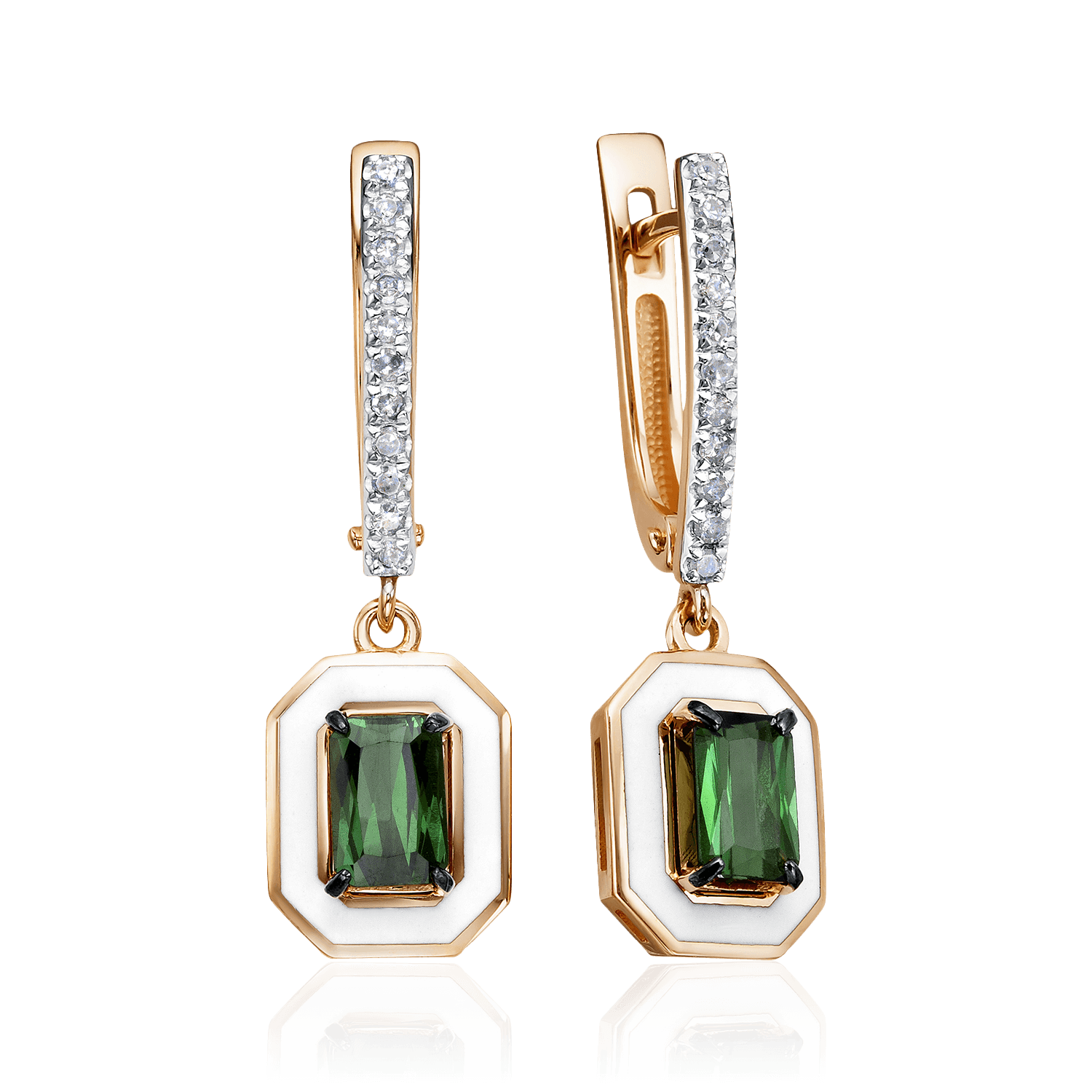
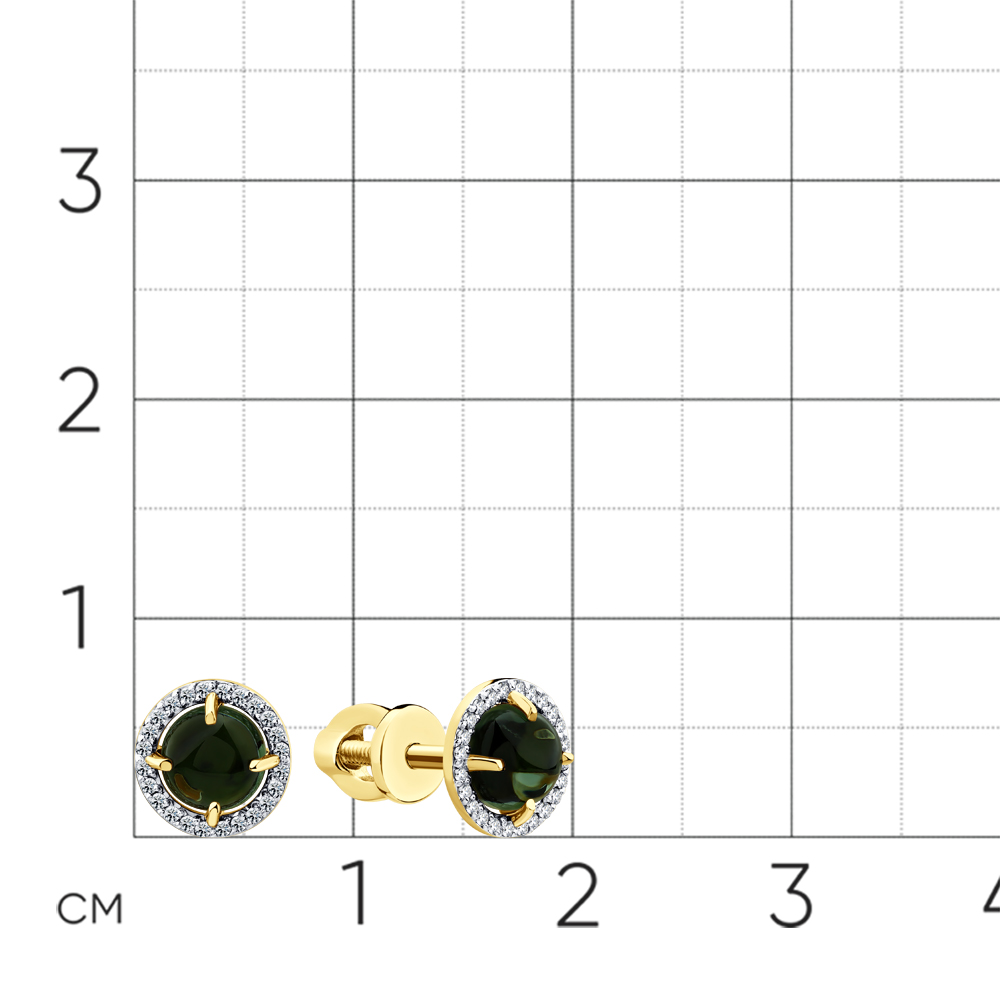
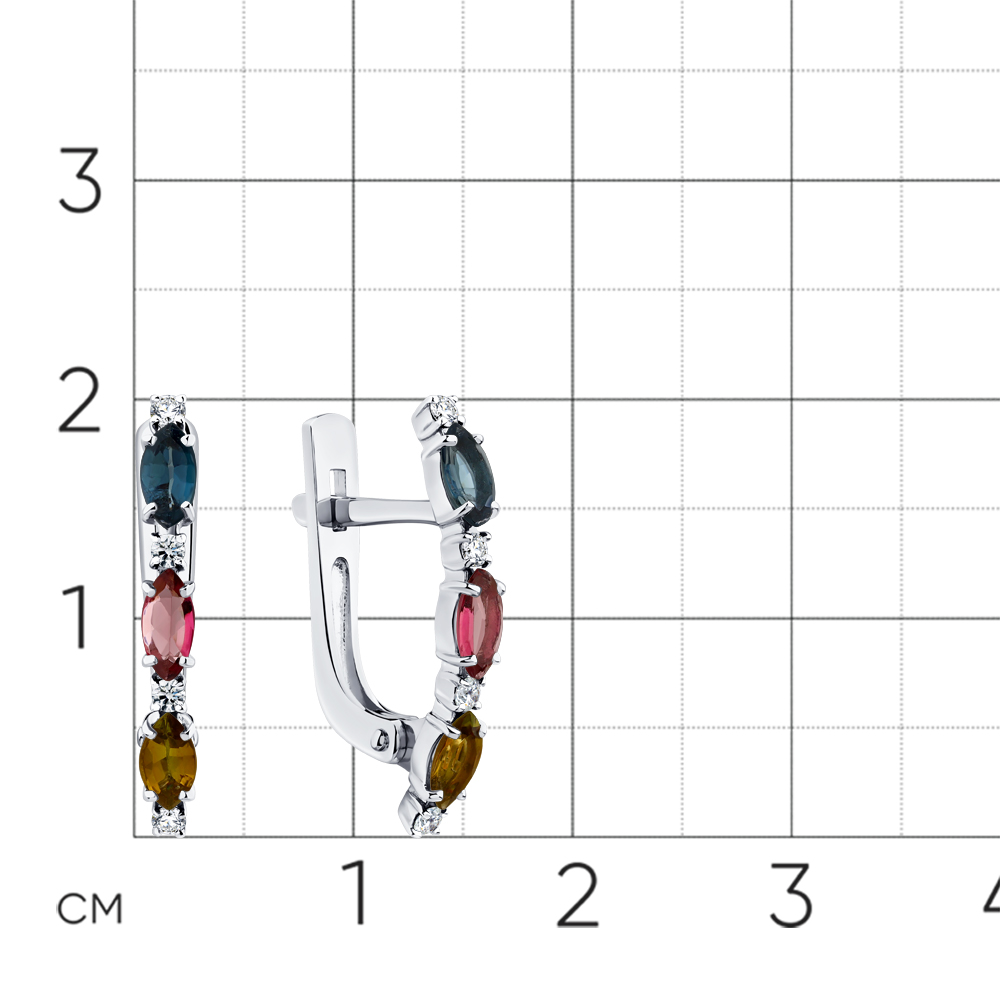
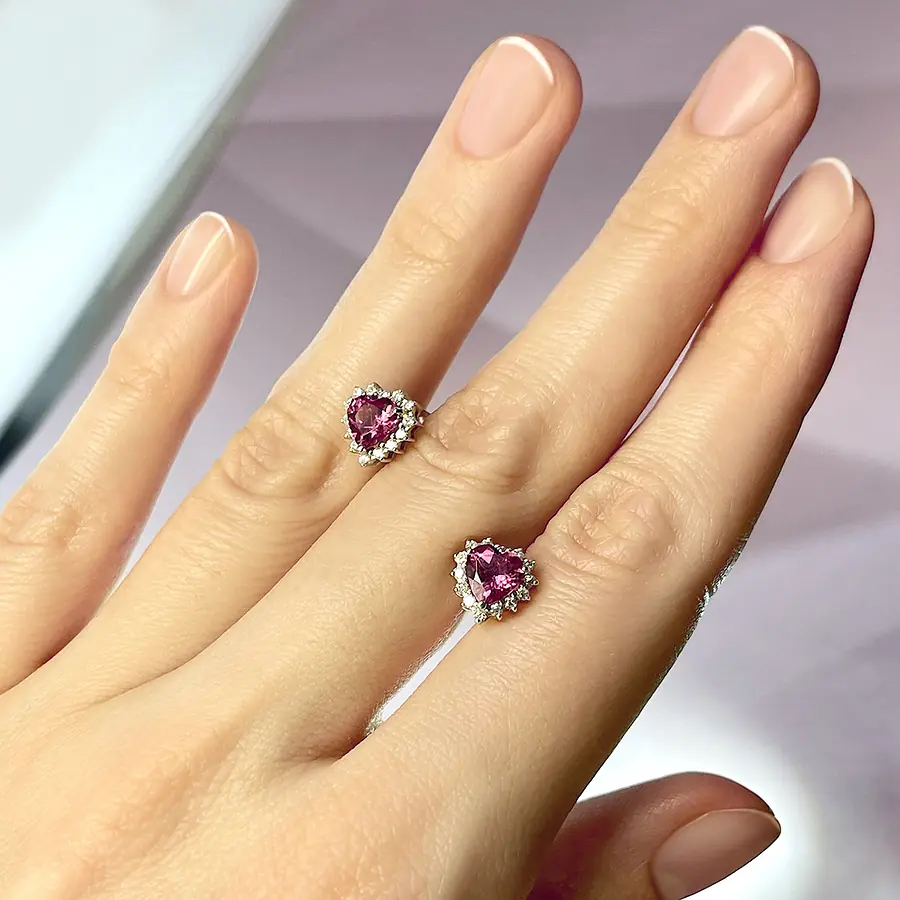
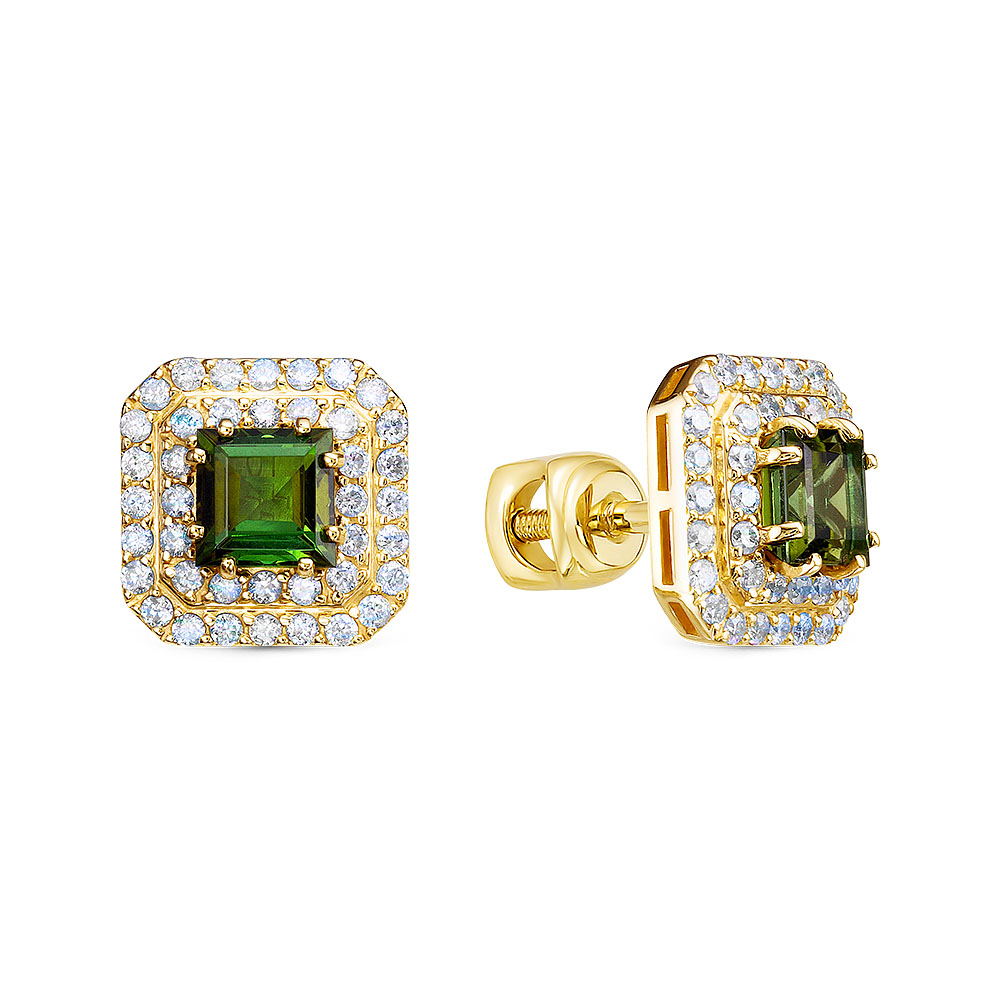
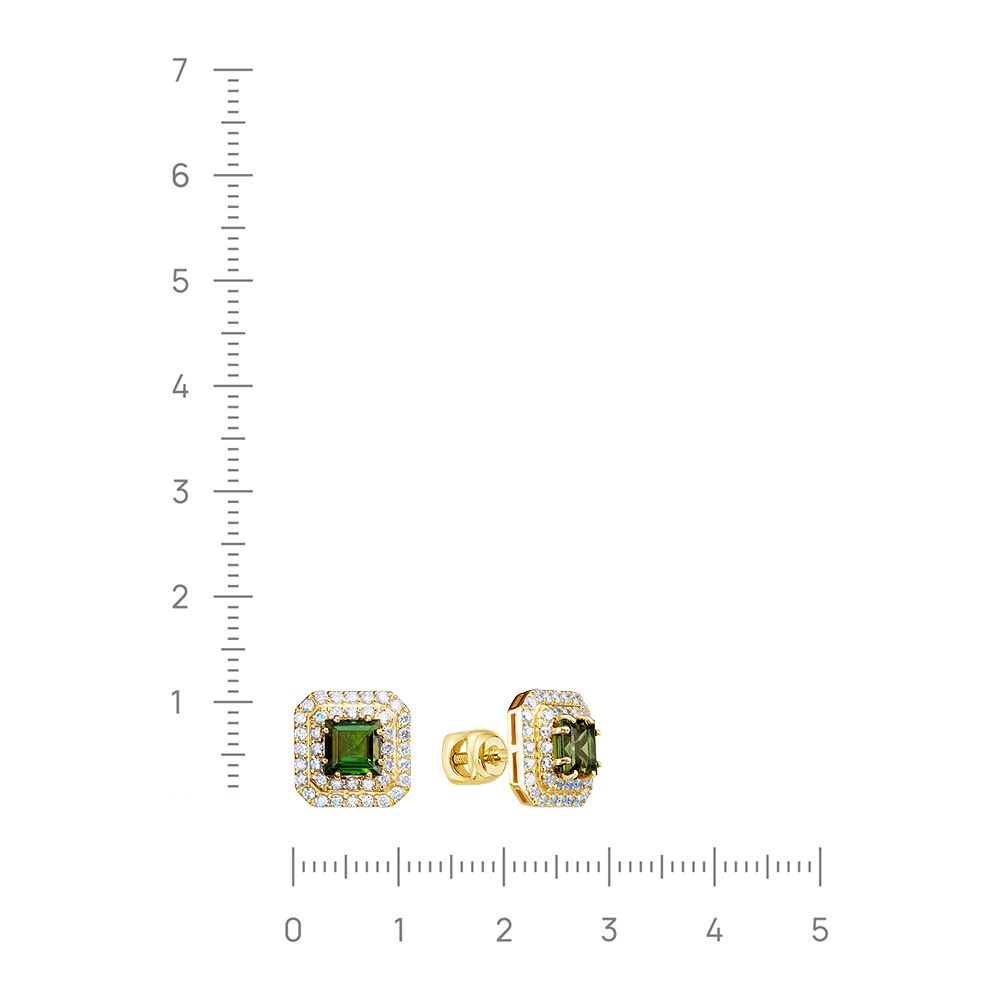
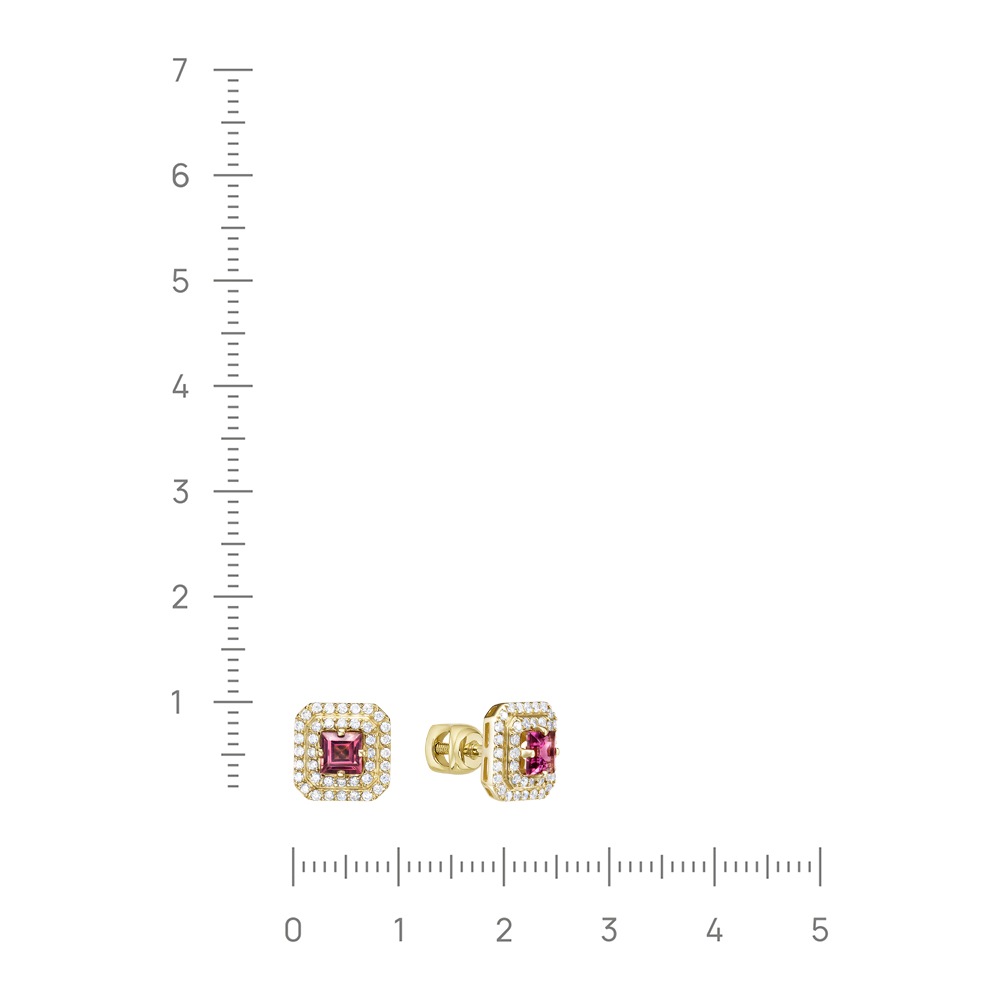
Heart-cut stud earrings (push-backs) with tourmaline and diamonds in 14K white gold (585) ( 97449)
In stock
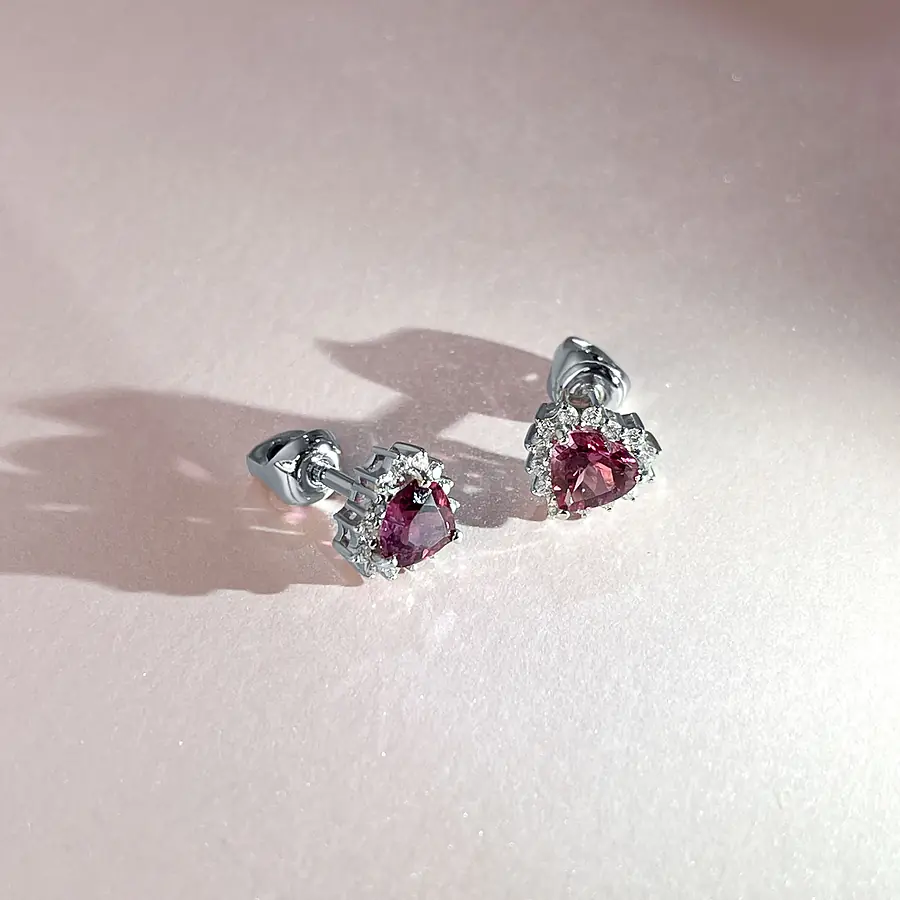
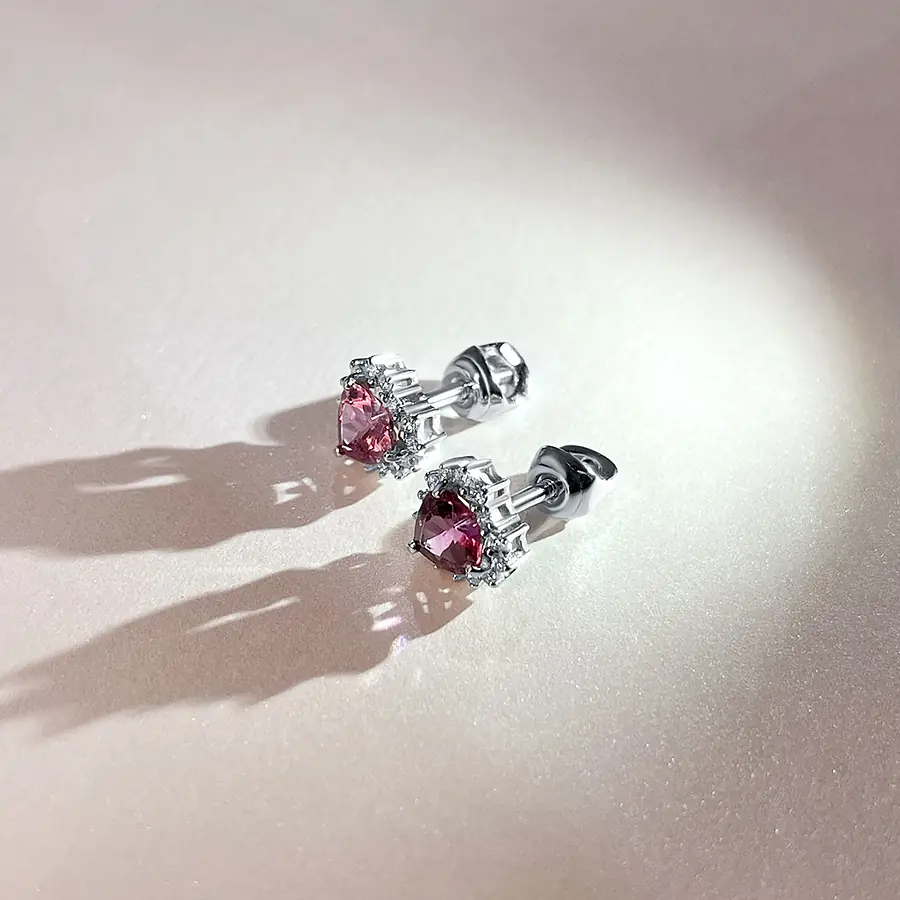
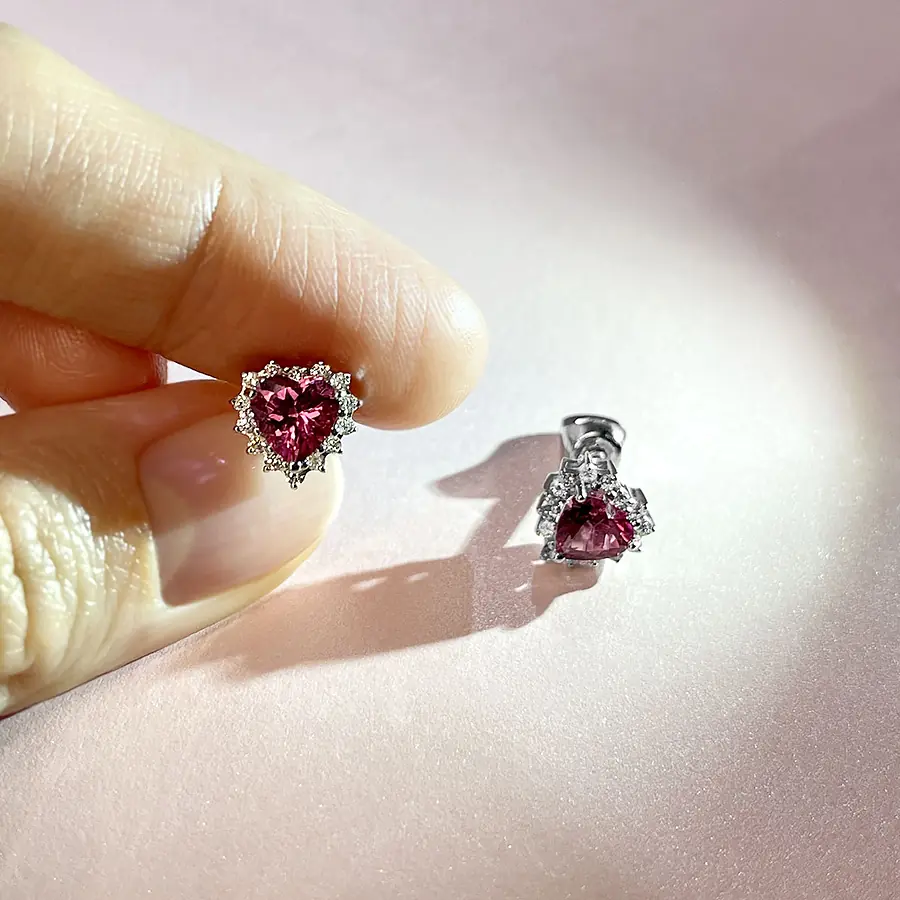




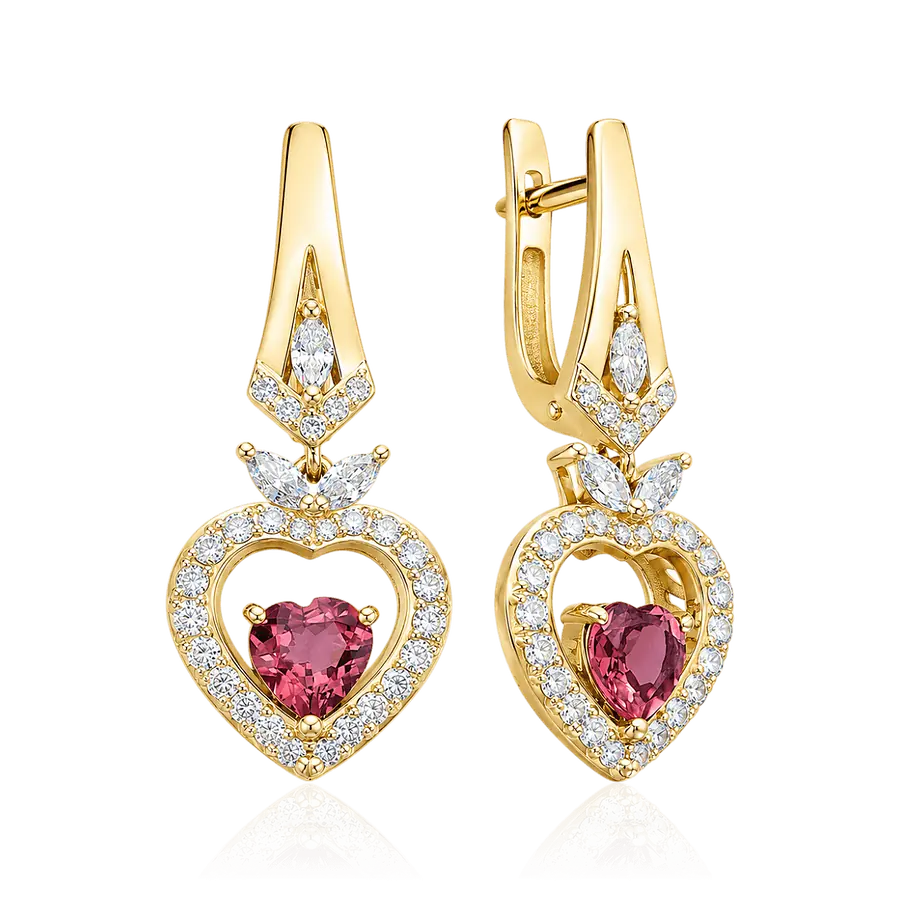
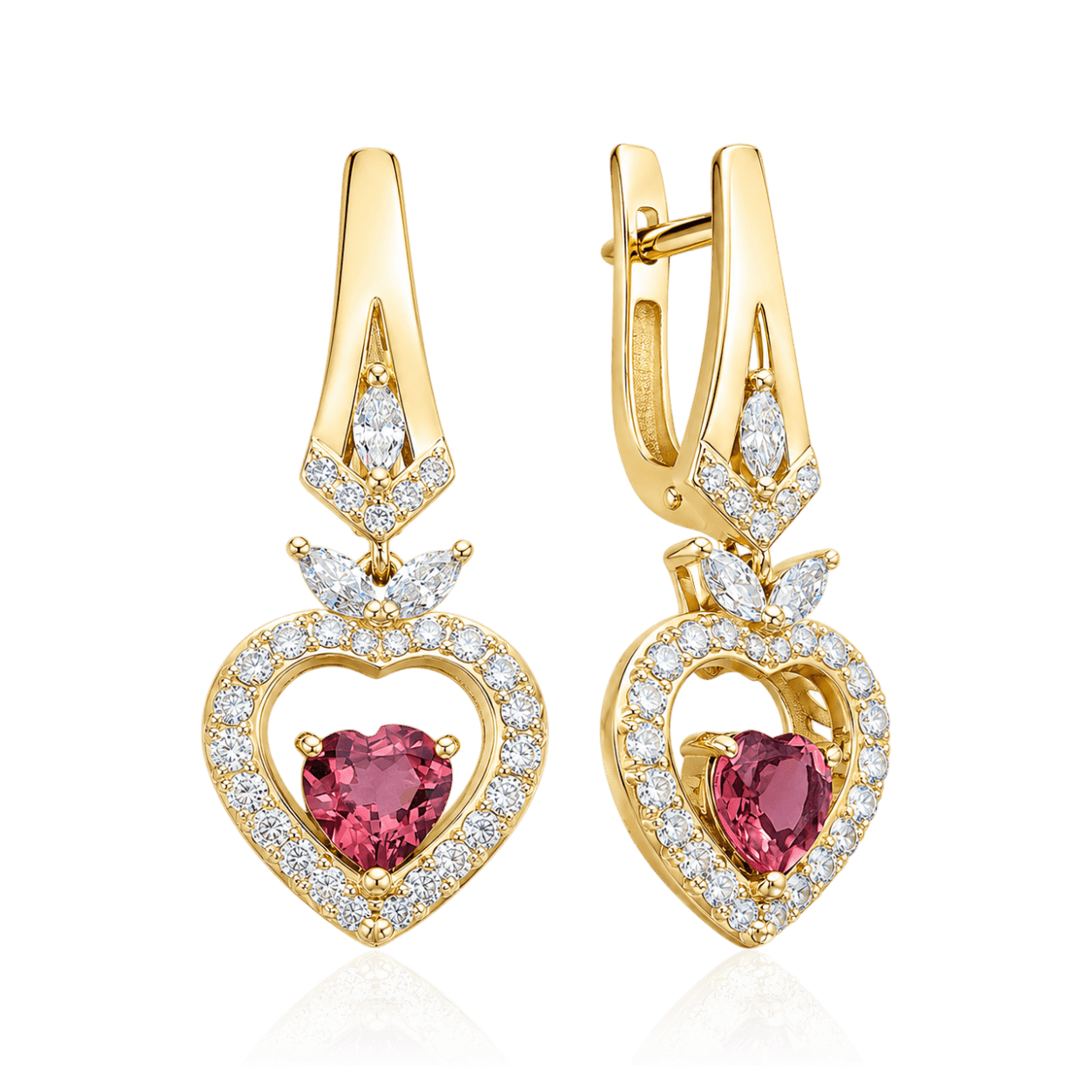
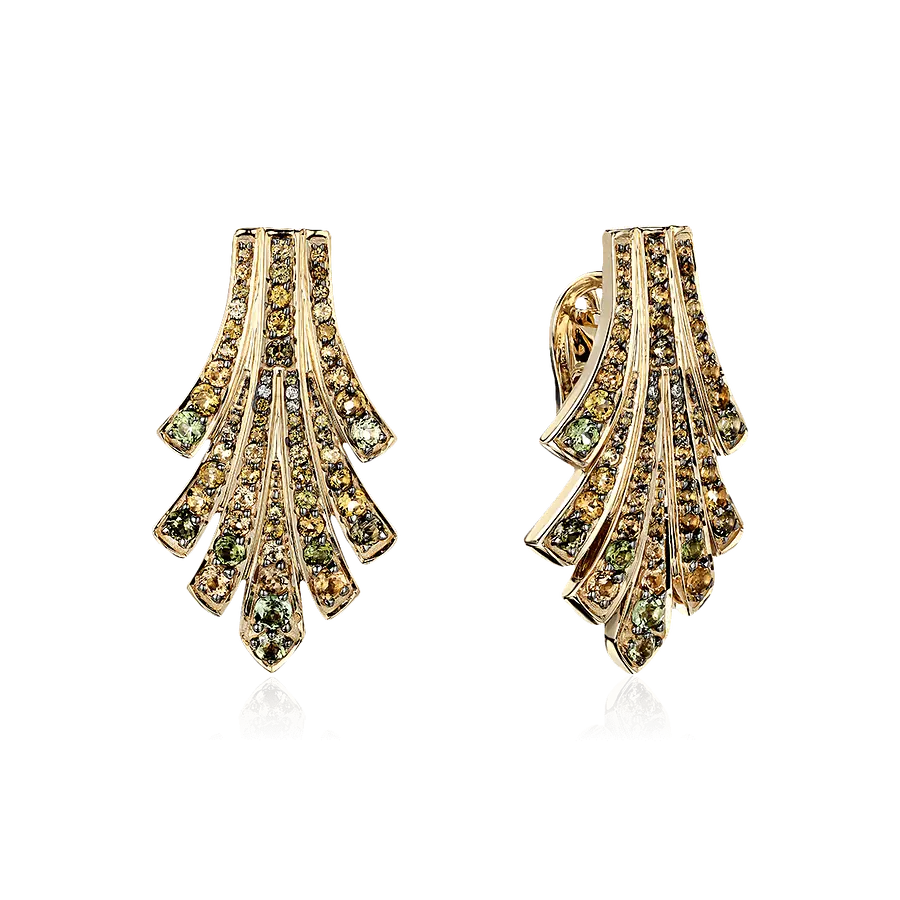

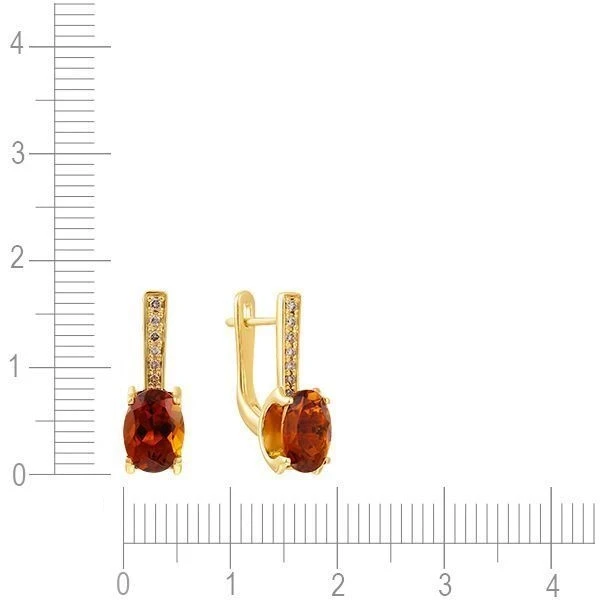
Gold earrings with tourmaline start at 56,900 ₽, but half of the section costs more than 747,000 ₽, a wider gap than in any other category of the catalog. The reason is not the setting but the fact that tourmalines differ widely. Tourmaline earrings in one color and in another are effectively different products that share the name of one mineral.
Price distribution: 50,000-100,000 ₽ has fourteen models, 100,000-200,000 ₽ has twenty-six, 200,000-500,000 ₽ has forty-seven, and the rest cost more than half a million. Tourmaline earrings under one hundred thousand are usually a small verdelite or rubellite without a complex setting.
Beyond that, the price rises along two axes: the variety of the stone and its size. Paraiba costs an order of magnitude more than green tourmaline of the same weight, and a large, clean rubellite costs several times more than a small one. That is why comparing two pairs “with tourmaline” by photo alone is pointless: you need to look at which tourmaline it actually is.
The third factor is the setting. Tourmaline earrings with a diamond surround cost more than a single-stone piece not only because of the diamonds themselves: matching small stones by color and seating each in its bezel is separate work by the master. In this section 89% of models come with diamonds, so the base price level here is higher than in sections with simpler settings.
The main varieties of tourmaline are rubellite, verdelite, indicolite, Paraiba and watermelon. These are not marketing names but terms accepted in gemology, and the difference between them is fundamental. Tourmaline earrings may have the same name on the product card yet cost different amounts precisely because of the variety of the stone, and knowing these five words saves time when choosing.
Rubellite — pink and red tourmaline; in the catalog this is a subsection for pink, 50 pieces. Verdelite — green, the most populous group: 74 models. Indicolite — blue and light blue, found noticeably less often. Paraíba — tourmaline with a copper admixture, neon blue or green; discovered in Brazil in 1989 and today among the most expensive colored stones in the world. Watermelon tourmaline — a crystal with a green rim and a pink core, cut across to show both colors at once.
Earrings with one variety of tourmaline or another can differ in price by tens of times at the same stone weight. The variety is not always stated in the product listing, so if it matters to you, ask a manager. Tourmaline earrings with no variety given most often turn out to be verdelite, the most common and most affordable group.
Fineness is the share of pure gold in the alloy: 585 means 58.5%, 750 means three quarters. Both are offered in this section.
By metal color, yellow gold predominates: 28 pieces out of 57 in the selection, with 20 in white and 8 in rose. The choice here depends on the variety of stone, and there is no general rule: yellow gold is more often chosen for green verdelite, white or rose gold for pink rubellite, and only white gold for blue indicolite. Tourmaline earrings in yellow gold look warmer and more traditional, in white gold more modern. If the stone is large and rich in color, it is better to choose a neutral metal: it shouldn't compete with the color of the stone.
White gold is plated with rhodium; the plating wears off over time and is renewed periodically – the procedure is included in the store’s service.
Main signs of a natural stone: strong pleochroism, uneven coloring and inclusions in the form of thin tube-like channels. Pleochroism is more pronounced in tourmaline than in most stones: along the main axis the crystal is noticeably darker than across it, and when you turn the earring, the color changes visibly.
Glass does not do this. An even, identical color from every side with a bright, saturated tone is the first reason for doubt. The second sign of a fake is bubbles inside, which natural tourmaline does not have.
"Tourmaline glass" deserves separate mention: the name is sometimes given to colored glass with a metallic coating. It has nothing to do with the mineral, but it looks similar: the same turn of the piece helps spot the substitution, since a natural stone changes tone and glass does not.
All the stones in our pieces are natural. There are no synthetic stones in any model in the catalog. Every pair in this section is set with natural stones, and in a disputed case the variety of the stone is confirmed by a gemologist's report.
Paraiba stands so far apart that it has its own a separate section — there are 14 pieces there now. Its color comes from copper, and no other natural stone gives such a neon glow.
Paraiba was discovered in 1989 in the Brazilian state that gave it its name, and the deposits there are almost exhausted. Similar stones were later found in Mozambique and Nigeria, but the Brazilian ones are still valued higher. The price per carat of Paraiba is comparable to that of a fine diamond and sometimes exceeds it.
You can tell paraiba from ordinary blue tourmaline by its glow: copper creates an effect where the stone seems to glow from within even in shade. Indicolite does not do this; it is simply blue.
To keep your earrings looking neat, wipe them more often than jewelry with other stones. Tourmaline is pyroelectric: when heated, whether by the body, the sun, or a lamp, it builds up an electric charge and attracts dust. This is a physical property of the mineral, not a defect of the piece.
Tourmaline has a hardness of 7–7.5 on the Mohs scale, lower than sapphire and topaz, so tourmaline earrings should be stored apart from them. Ultrasonic cleaning is not advisable: tourmaline often has internal cracks, and vibration makes them worse. A soft cloth, warm water and a drop of soap are enough. You can wear the jewelry every day, but it is worth taking it off before sleep and sports: the setting loosens over time, and a stone of 7 on the Mohs scale doesn't like impacts. If you take one earring off more often than the other, for example when talking on the phone, the pair will wear unevenly.
What not to do: leave it in direct sun for long, wear it to the pool or sauna, put it in a shared box with diamond pieces.
You can order tourmaline earrings on the website with delivery across Russia, or view them at the DAF boutique in central Moscow. Seeing them in person is especially useful here because of pleochroism: the stone changes shade as you turn it, and a photo shows only one position.
If visiting is not convenient, ask the manager to film a video with the piece turning: this shows the true color. Also ask about the variety of the stone and the weight of the stone in carats: without these two parameters the price cannot be explained. In a pair there is one more thing to check: whether the stones are matched by tone. In an earring both stones are visible at the same time, and a difference in shade is noticeable right away, which is especially critical for tourmaline with its strong pleochroism.
Tourmaline is considered the birthstone of October, alongside opal. Returns are possible within fourteen days.
One more thing about the clasp. In an earring with a heavy stone, an English lock holds more securely than a push-back, while a French lock is more comfortable for everyday wear. If you are buying jewelry for every day, the type of lock deserves as much attention as the stone itself: it determines whether you will wear the pair or leave it in the jewelry box.
56,900 ₽. In the range up to a hundred thousand there are fourteen models, but half the section costs more than 747,000 ₽ – the spread is explained by the variety of stone.
No. The catalog contains only 585 and 18K gold (750); we do not make silver pieces with tourmaline.
Only by color; it is one mineral. Rubellite is pink and red, verdelite is green, and indicolite is blue and light blue. The price differs several times over between varieties, and for paraiba by an order of magnitude.
A tourmaline with a copper impurity that gives a neon glow. It was discovered in Brazil in 1989 and is among the most expensive colored stones in the world. We have a separate section for it.
Yes, all stones are natural. There are no synthetic stones in the catalog.
Tourmaline is pyroelectric: when heated it builds up an electric charge and attracts dust. This is a property of the mineral itself. It is enough to wipe the jewelry more often with a soft cloth.
We will contact you shortly.
Unfortunately, we cannot deliver to this locality. Please choose another city nearest to you.
How to get them. 3% of every order on the site. Sign in with your phone number to receive bonuses.
How to spend them. Sign in, add jewelry to your cart and specify at checkout how much to redeem. Bonuses can pay up to 10% of the price.
Confirm that you are not a robot
Unfortunately, this item is currently out of stock. We can make the jewelry individually to your requirements. Our consultant will contact you
Our consultant will contact you shortly
Refresh the page and send the message again
Specify the size of the jewelry and try again
Enter your number and our manager will contact you about the price calculation
Refresh the page and submit the order again