


Gemstones have always attracted special attention. They surprise, charm and delight, making jewelry truly unique. In the past, serious battles and intrigues were fought over the right to own them, so the history of many stones is wrapped in a kind of "criminal aura." But today we will not delve into the often bloody history of individual gems, because they are certainly not to blame for the deeds that some members of humanity committed to get them.
Today we will talk about the most expensive gemstones that can be found in the world today. And it is far from only the noble diamond that many of you immediately thought of. There are several very rare stones whose value exceeds that of diamonds, so we have put together a kind of TOP for you. This is the true elite of the jewelry world, and some of its members can be found only at the world's famous auctions.

Contents
- How did we put this ranking together?
- No. 10: Blue garnet
- No. 9: Demantoid
- No. 8: Emerald
- 7th place: Red spinel
- 6th place: Paraiba tourmaline
- 5th place: Padparadscha sapphire
- No. 4: Blue sapphire
- 3rd place: Ruby
- No. 2: Blue diamond
- No. 1: Red diamond
How did we put this ranking together?
Similar articles that rank the most expensive and rare stones in the world often give examples of truly valuable but highly peculiar gems that are never even cut. For example, grandidierite is a mineral that comes in various shades of green combined with light blue, deep blue and other colors. There are no more than two dozen such stones in the world, which makes them extremely expensive. But you are unlikely to come across jewelry with grandidierite anywhere, and if there is any, it sits in some private collection belonging to people who are not used to drawing attention to themselves.
Our list includes gemstones used in making various kinds of premium jewelry. They have incredible beauty and rarity, which makes them a sought-after prize for anyone interested in the world of jewelry and elite gemstones. The data comes from open sources, so these are not just numbers plucked out of thin air. Our TOP of gemstones includes specimens of interest to lovers of premium jewelry, collectors and investors alike, because every stone on our list is a serious investment in the future.
No. 10: Blue garnet
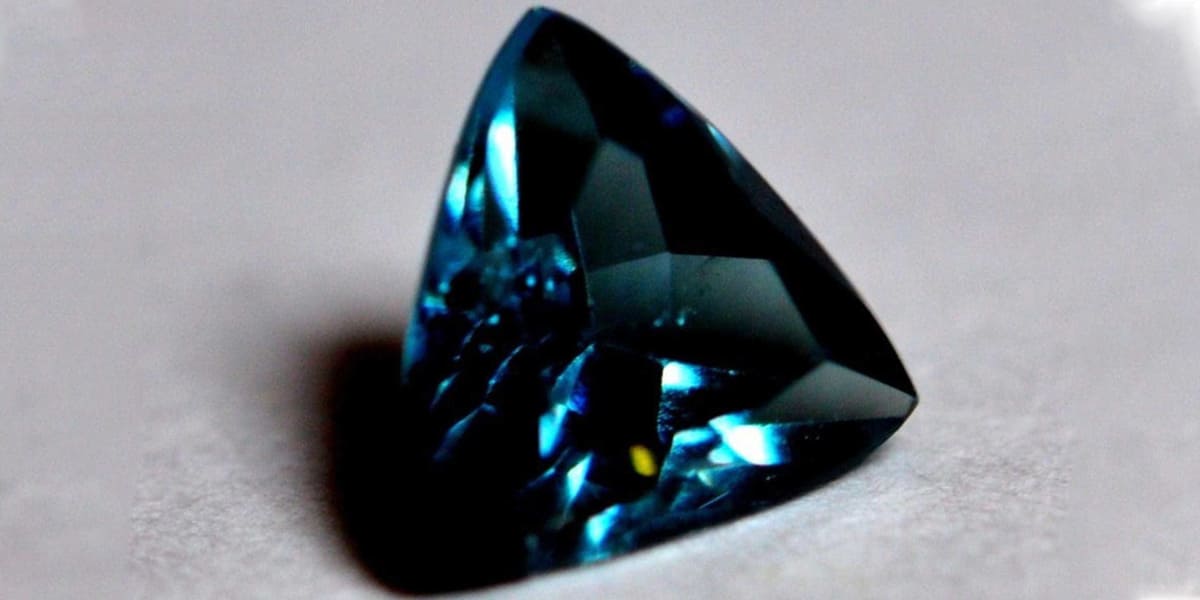
Blue garnet was discovered in Madagascar about 30 years ago. Until then it was believed that stones of this shade simply did not exist in nature. Later, gems were found in other parts of the world too: the USA, Tanzania and elsewhere.
The high value of the stone is due to its color, which is rare for garnets, as well as the "alexandrite effect," when the gem changes color depending on the lighting. In daylight, blue garnet takes on green, light blue, and blue play of color, and under artificial light it can shift its shade to red. The average price is around 1,500 USD per carat.
No. 9: Demantoid

This is a gemstone with a rich green color. The most prized specimens have a pure shade without foreign inclusions. The name of the gem can be translated as "diamond-like," owing to the play of colored flashes seen in cut diamonds.
The stone is found in different countries:
- Russia (magnificent specimens are found in the Middle Urals).
- Namibia.
- Kenya.
- Pakistan.
- Tanzania and others
The popularity of this stone among jewelers and fans of premium jewelry is gradually growing. The average price for 1 carat is 2,000 USD, but keep in mind that the quoted prices are approximate and may change within a few months.
Jewelry with demantoid


No. 8: Emerald

Stones of a rich dark green color often appear in various rankings of valuable minerals. They can hardly be called very rare, but that does not affect their value. Individual specimens of this variety of beryl cost a fortune. For example, the "Fura" stone weighing 2 kg, found in Colombia, was valued at 150 million dollars.
This is a first-rank gemstone that can quite compete with diamonds in price. But prices for this gem vary, because everything depends on the clarity of the stone and the saturation of its color. The price per carat can be 2,000 USD, but individual specimens cost many times more, around 20-25 thousand USD.
7th place: Red spinel

A mineral of rich red color that was once mistaken for ruby, because the two share similar physical properties and, of course, a similar hue. The stone has always been associated with power and wealth, since it once adorned the crowns of emperors in Russia and Britain. The best-known example is a spinel called the “Black Prince's Ruby.” It was given to Edward, the Prince of Wales, and weighs about 170 carats.
The most beautiful specimens are found in Myanmar (formerly Burma). It is a fairly rare mineral whose popularity grows every year. Spinel is usually not treated, so these are always exclusive stones. The mineral is hard enough to allow cutting in different styles. The price of the most expensive specimens can reach 10,000 dollars per carat.
6th place: Paraiba tourmaline

This gemstone was once mined only in the state of the same name in Brazil, which makes it truly rare. It has a sky-blue color that can be compared to a magnificent azure coast.
Today the stone is also found in deposits in Mozambique and Madagascar, which supply the market with very good specimens. But they cost less than Brazilian ones, at roughly 8-12 thousand per carat.
The deposits in Brazil have all but run dry, which is a pity, because the local stones are known for their special brightness and play of light. But anyone who wants to make a sound investment should definitely look at Paraiba tourmaline, because there are fewer and fewer of them and demand exceeds supply many times over.
Jewelry with Paraiba tourmaline


5th place: Padparadscha sapphire

A stone with an unusual name deserves a separate mention. The mineral has a pinkish-orange color reminiscent of the lotus flower (which is how it got its name, padparadscha, from the Sinhalese word for "lotus flower").
Here are a few of its features:
- Cut. Very few such minerals are found in nature, so when cutting, craftsmen try to preserve as much of the stone's weight as possible. The cut may look slightly asymmetrical, but that is precisely a sign of the mineral's authenticity.
- Size. Small minerals of up to two carats are the most common. Stones over 5 carats are a true rarity that you can only find at auctions.
- Price. It depends directly on the place of origin. Stones from Sri Lanka are considered the most expensive, and many experts hold that only these stones can be called “padparadscha.” Stones are also mined in Madagascar, but their shade is more pink than orange, so they cost 20–25% less.
The most valuable specimens are considered to be unprocessed minerals, but there are extremely few of them. The average price ranges from 10,000 to 15,000 USD per carat. Stones whose color has been enhanced by heat treatment cost almost 2 times less.
No. 4: Blue sapphire

The blue color of sapphire is considered the most valuable, so its price can be very high. There are several versions of where the name of this mineral comes from. According to one, it comes from the word canipriya, which translates as “beloved by Saturn.” According to another theory, it comes from the word sappheiros, meaning “blue stone.”
But the story of the name is less interesting than the stone itself and its role in exclusive jewelry. It looks wonderful in a gold setting in rings, pendants, bracelets and other accessories.
Jewelry with blue sapphire


The most valuable specimens are stones that have not undergone heat treatment, that is, so-called "enhancement." The highest value goes to minerals from Kashmir, which can reach 30,000 USD per carat. Stones from Sri Lanka cost less, but the price is still quite high, around 4,500-5,000 USD per carat.
3rd place: Ruby

Another specimen that simply had to be part of our ranking. It is one of the best-known gemstones, ranking alongside diamond and blue sapphire.
The color of the mineral varies, so in nature there is not only the bright red shade. The price you will have to pay for a ruby depends on the color too.
The most valuable is considered to be the ruby known as "pigeon's blood." It has a vivid red color with a violet tint. These are also called "Burmese" rubies because they are mined in Myanmar. This "fearsome" name was given to the mineral by a Swiss gemologist who compared its shade to the blood of a freshly shot pigeon. In an age of modern political correctness and tolerance, when every word can be turned against you, such a name seems not quite appropriate, but it has nevertheless stuck.
Burmese rubies can cost tens of thousands of dollars per carat, so it is hard to name any specific price. For example, the “Sunrise” stone, weighing about 25 carats, sold at auction for more than 30 million dollars.
No. 2: Blue diamond

It would be naive to think our ranking could do without diamonds. We left out ordinary colorless diamonds, because stones with fancy colors are valued more highly. The honorable second place goes to the blue diamond, which is mined at just one diamond mine, in South Africa.
Boron is responsible for the blue shade, and its content determines how saturated the color is. Different shades are possible: dark blue, cornflower, ultramarine, and other blues.
Jewelry with blue diamond


The presence of various inclusions is acceptable and is not a defect, only confirming the diamond's authenticity. Specimens with enhanced clarity and a vivid blue shade without any foreign tints cost an incredible amount. The average price per carat can reach 300 to 400 thousand dollars, so such stones are mostly in private collections. And the most expensive blue diamond, the Hope, is kept in the Smithsonian museum. By the most conservative estimates its price is around 350 million dollars, at a weight of 45.52 carats.
No. 1: Red diamond

Our winner and the most expensive diamond in the world is the red diamond. It is the most valuable not only among its own family but among other gemstones too.
So what makes this stone so expensive? There are plenty of reasons:
- The red diamond is mined in only one place, Australia. Whatever can be found on only one continent or in only one country is considered exclusive and rare a priori.
- Most of the diamonds found are very small – no more than 0.5 carat. Even so, stones from just 0.1 carat are highly valued.
- Only about 100 stones have been found in all of history, so this is a truly rare gemstone.
The average price for 1 carat is around 1 million USD. It is perhaps the most profitable investment imaginable, but the price of such a purchase is within reach of only a limited number of people.
Our ranking of gemstones leaves out many worthy stones that are actively used in jewelry making. These include the noble black opal, alexandrite and other minerals whose price can also run to thousands and tens of thousands of dollars. All of them are magnificent and deserve special attention, so whichever stone you choose when buying jewelry, remember that each of them is a work of art given to us by nature. Jewelry masters merely emphasize this beauty with different cuts, so that you can enjoy it in your engagement rings, earrings, bracelets and other jewelry.


