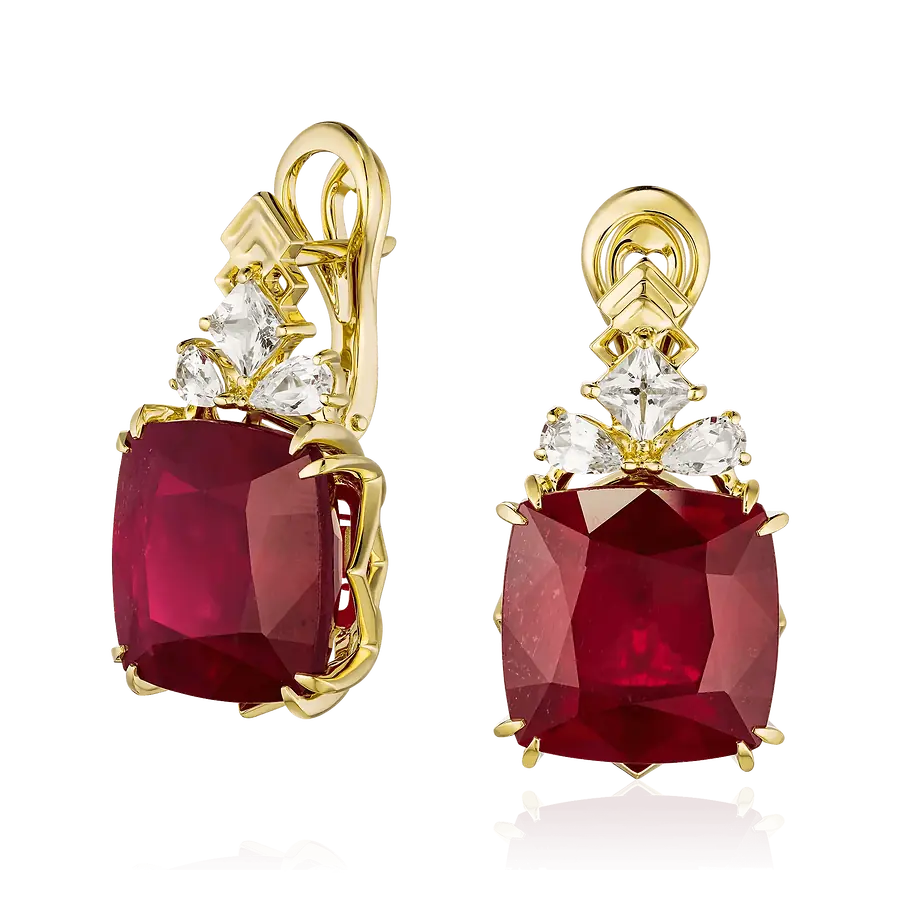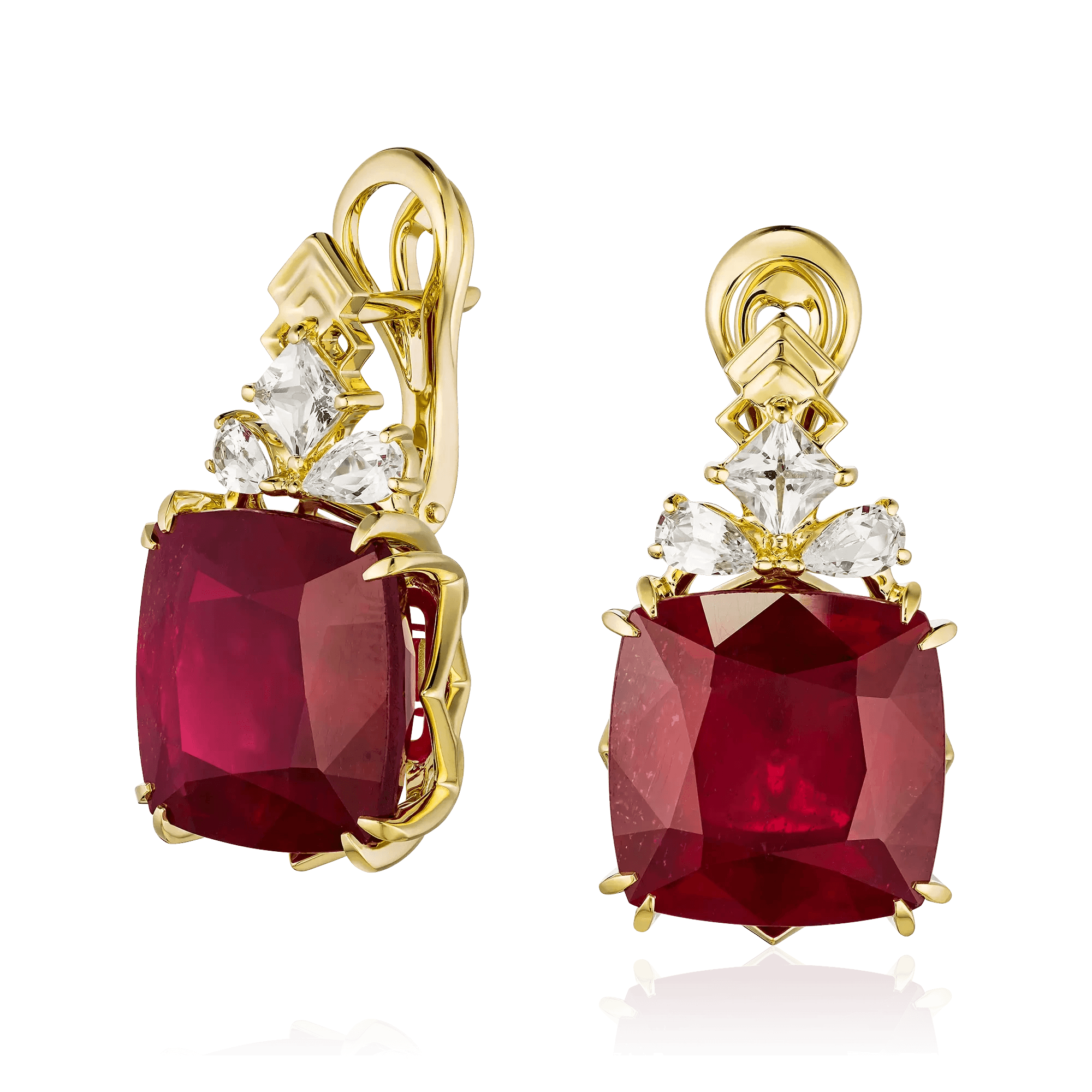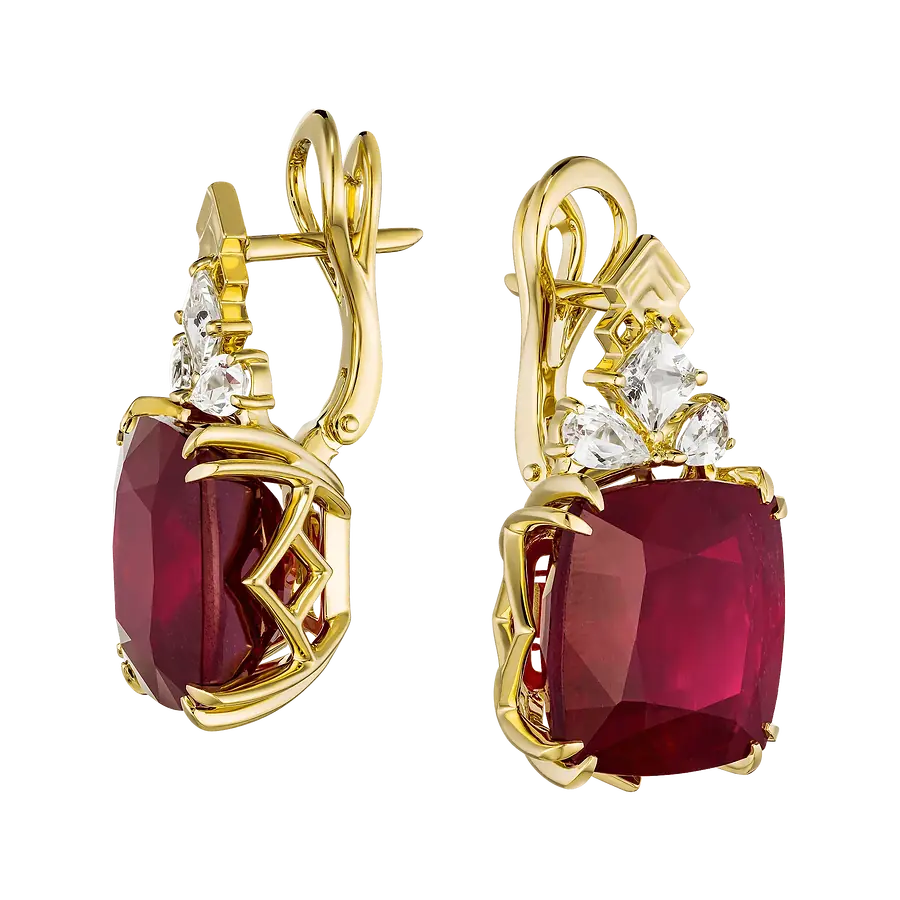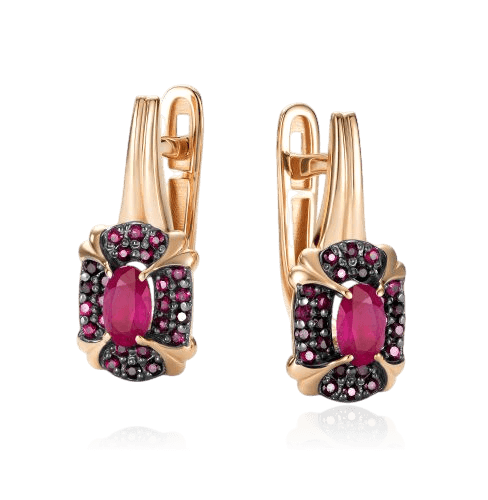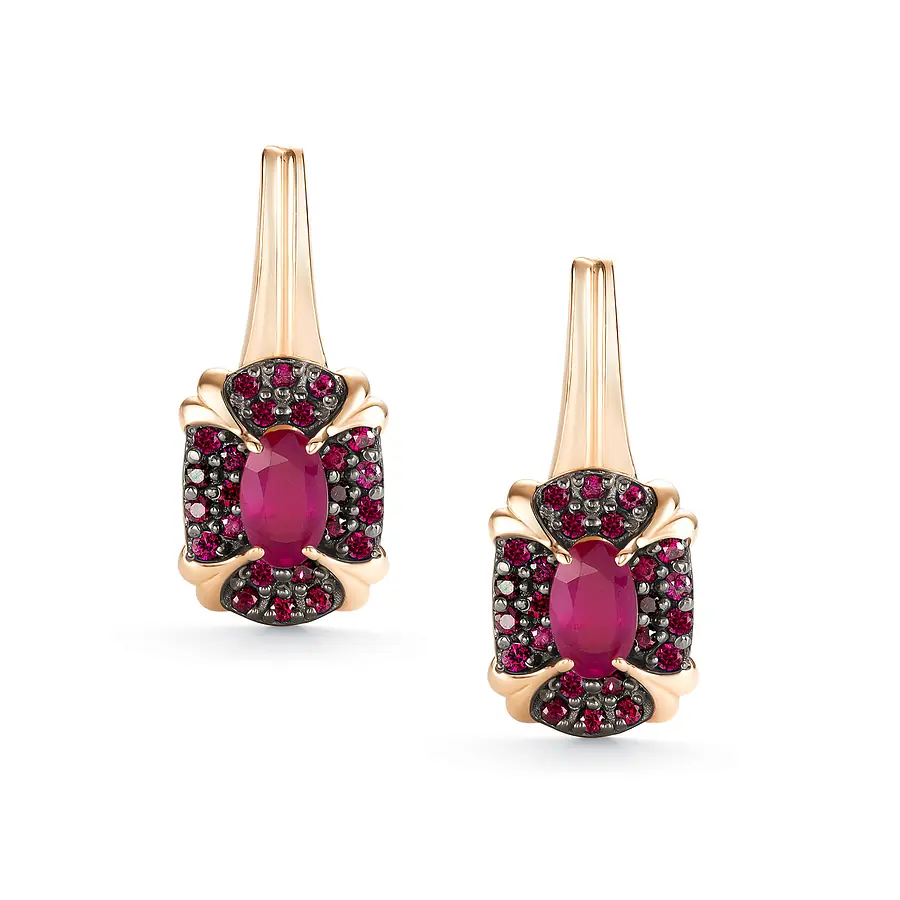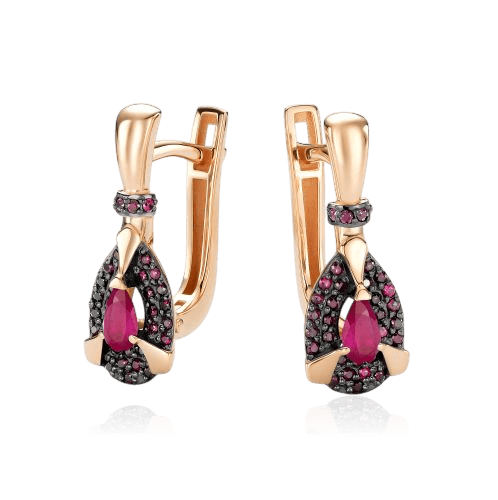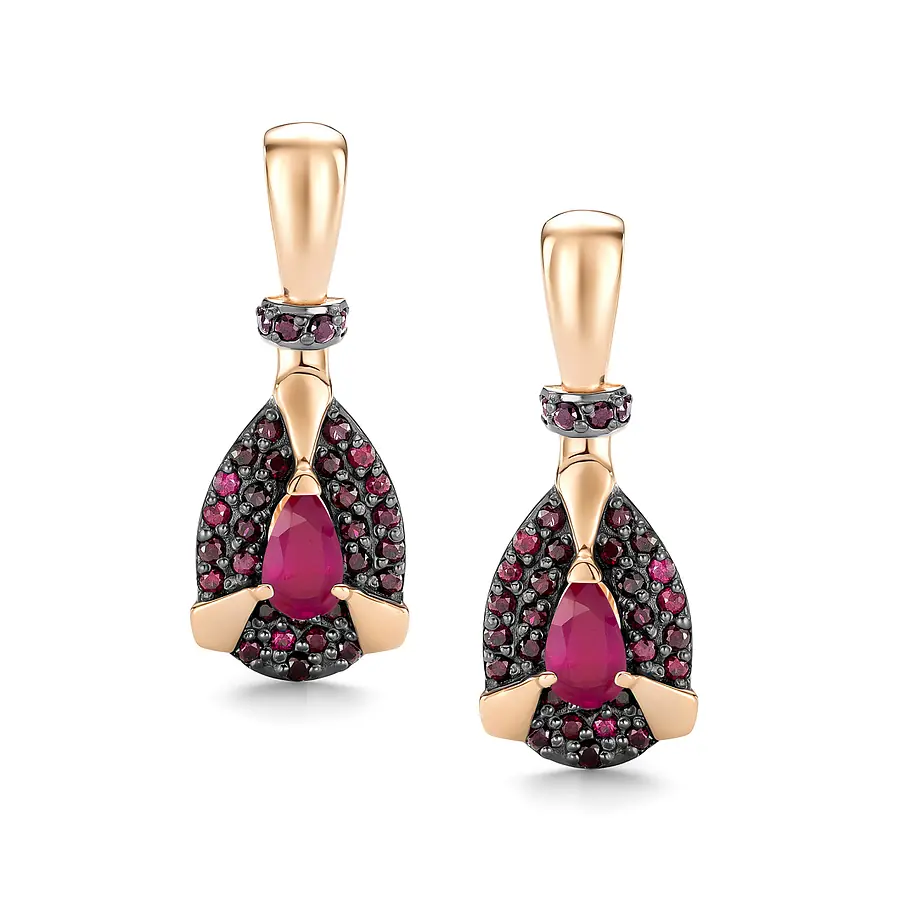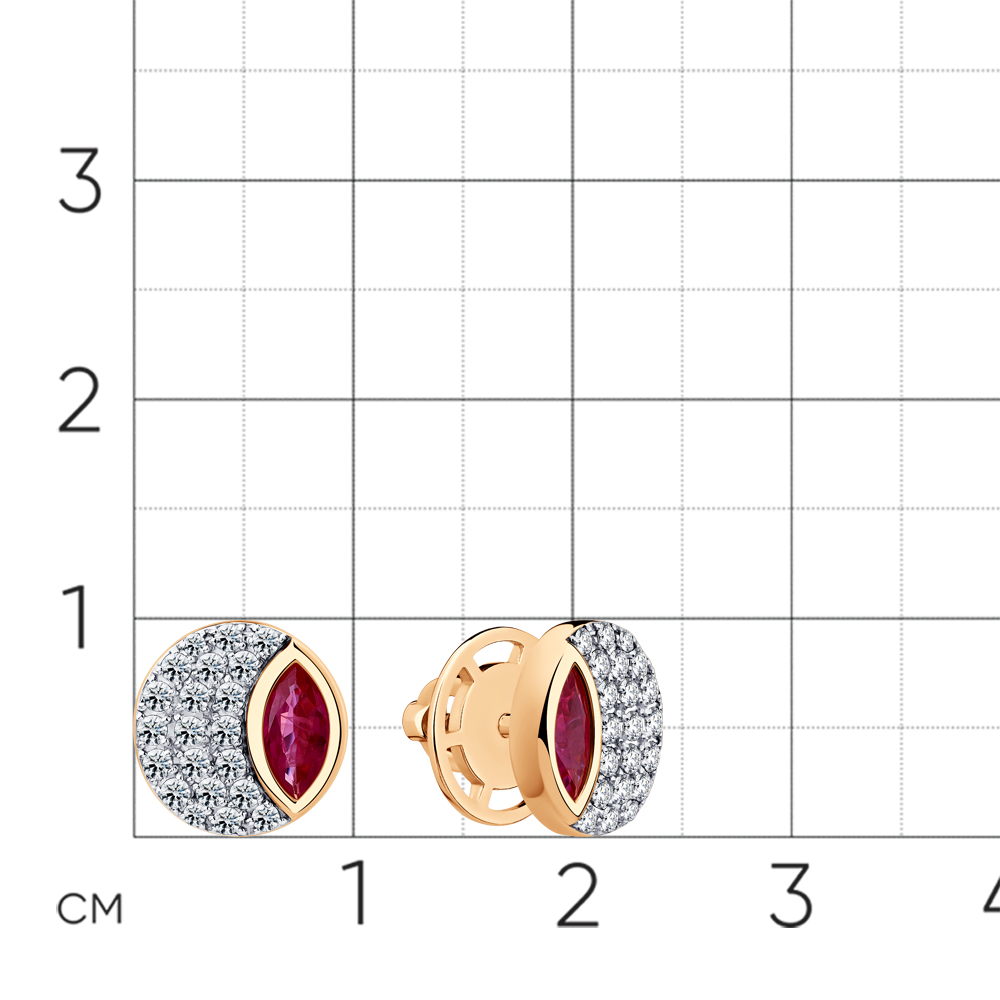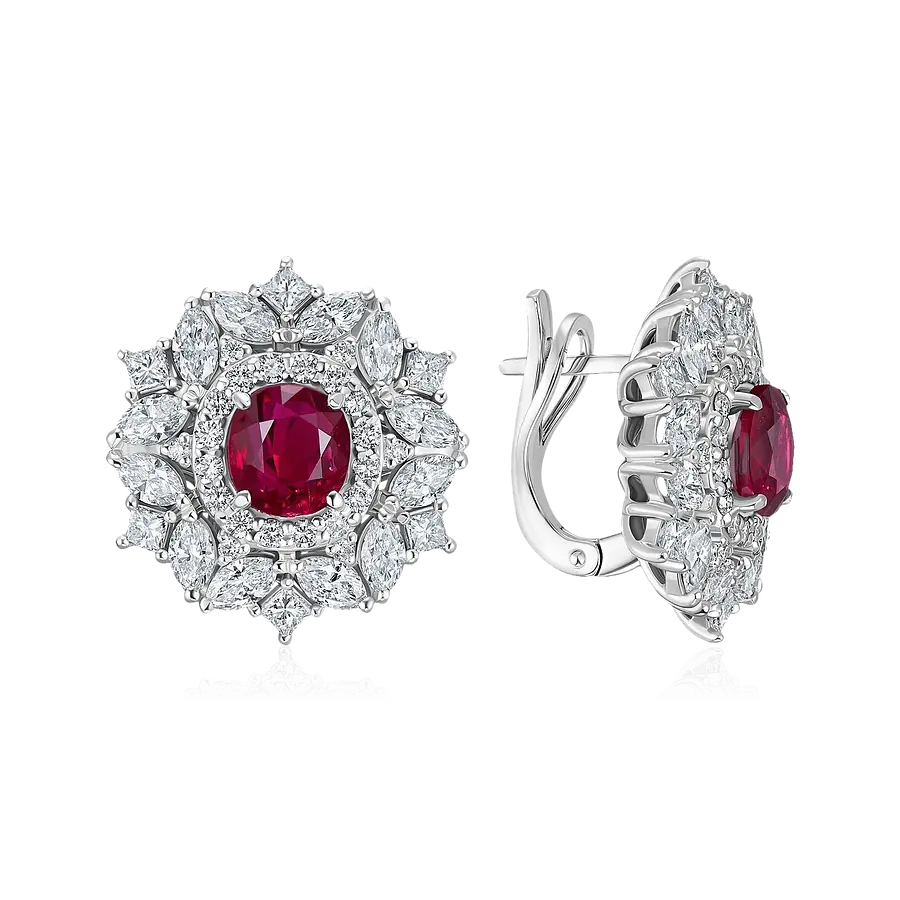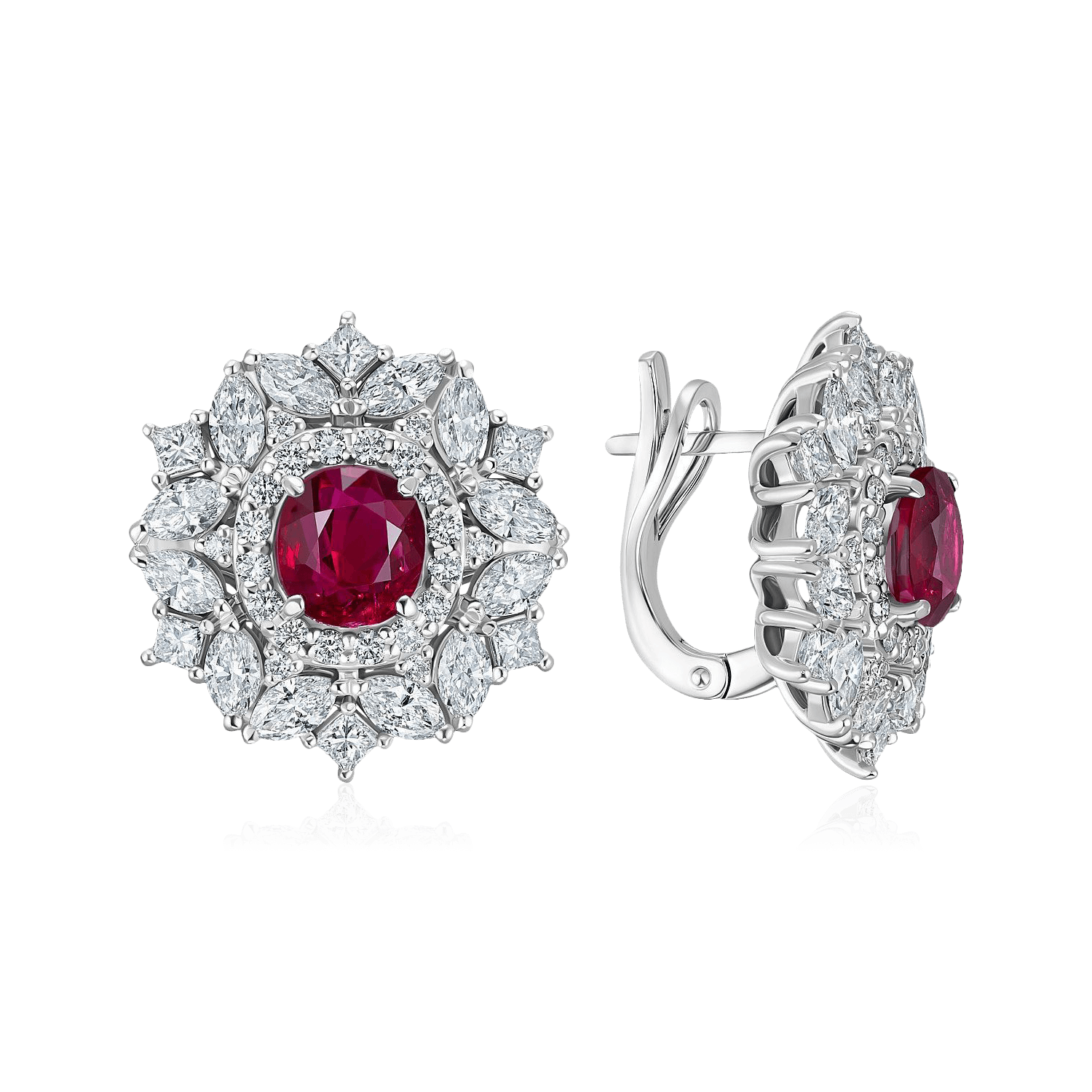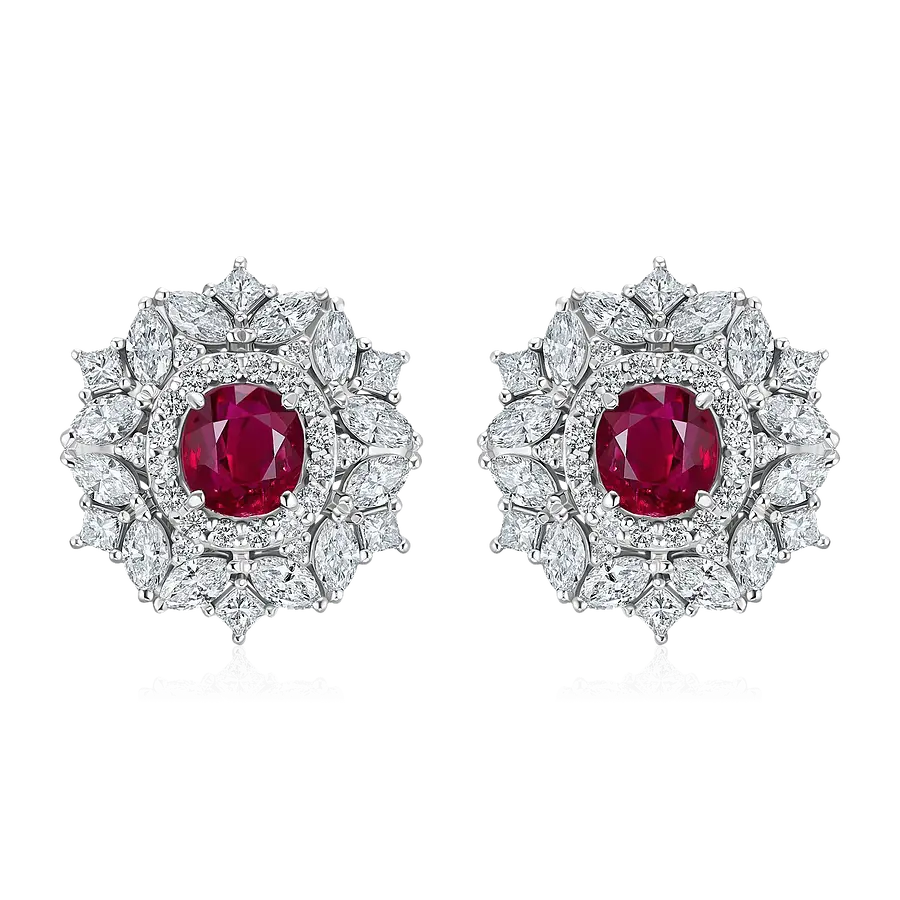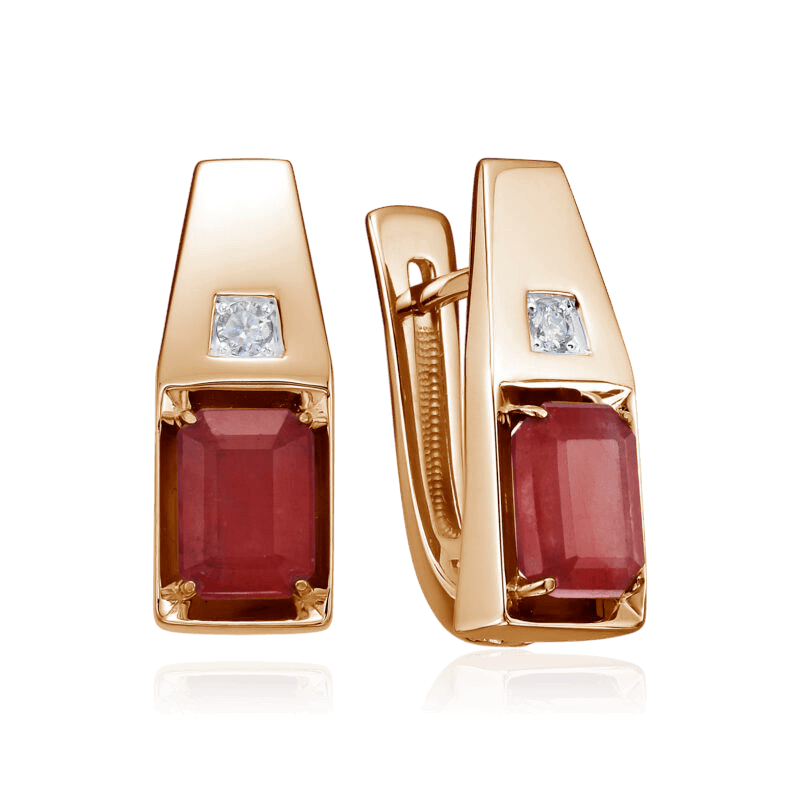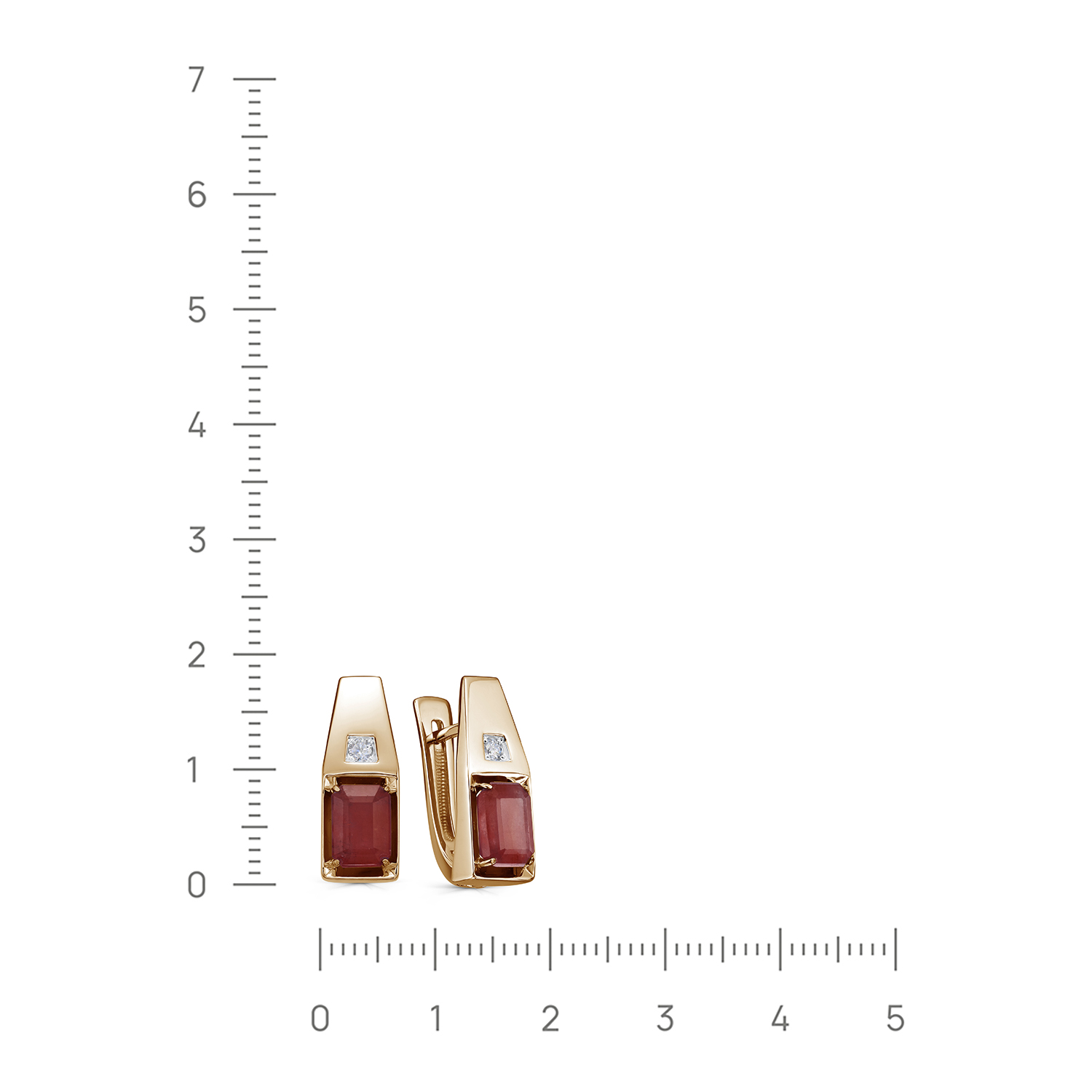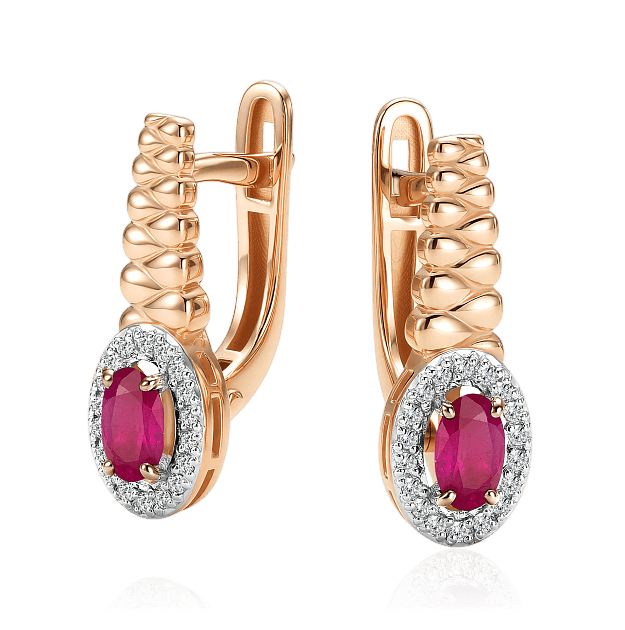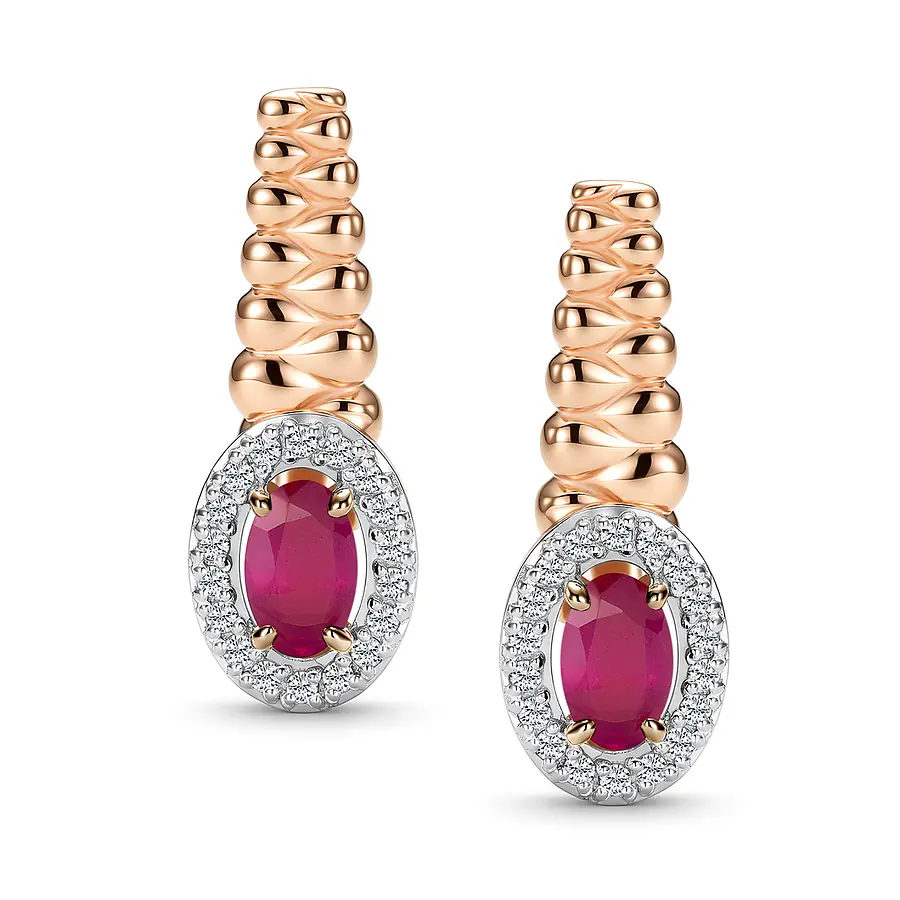
199 800 ₽666 000 ₽
We use cookies to improve the site and give you more options. By continuing to use the site, you agree to cookie usage terms.We use cookies. Learn more


By popularity
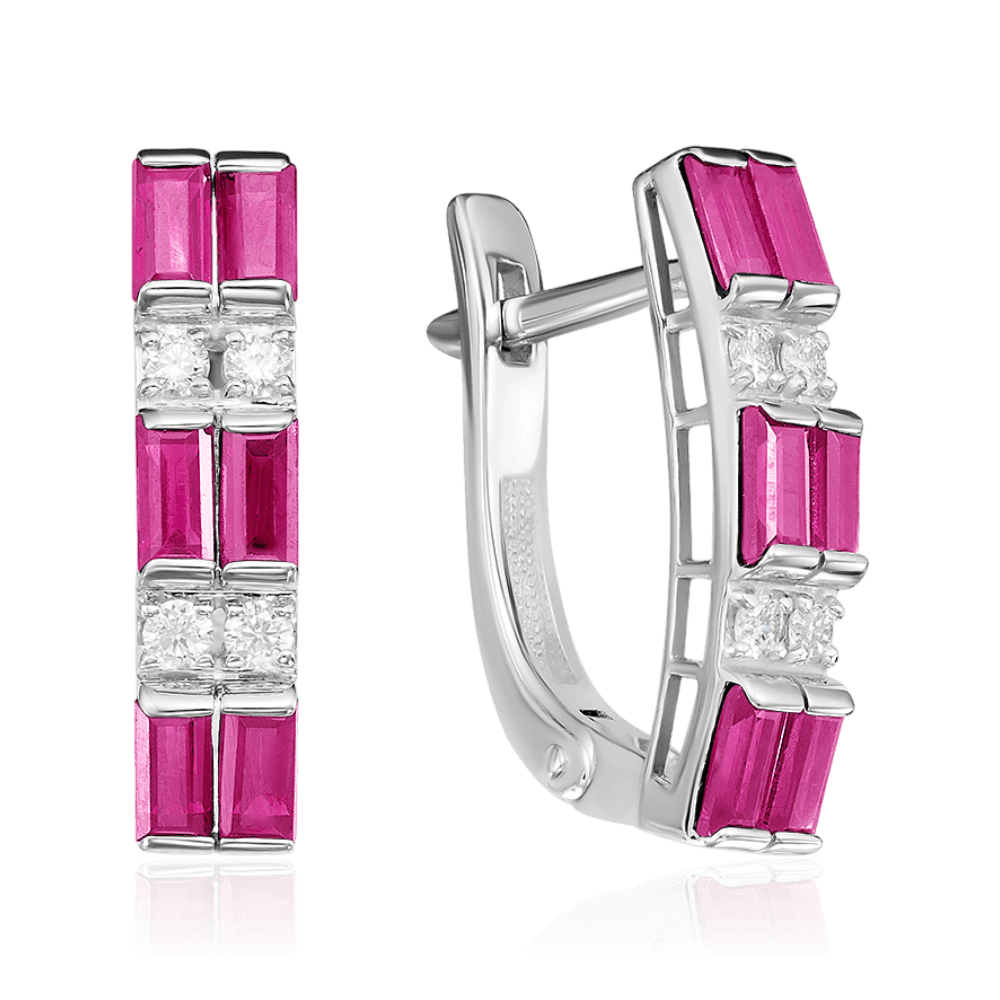
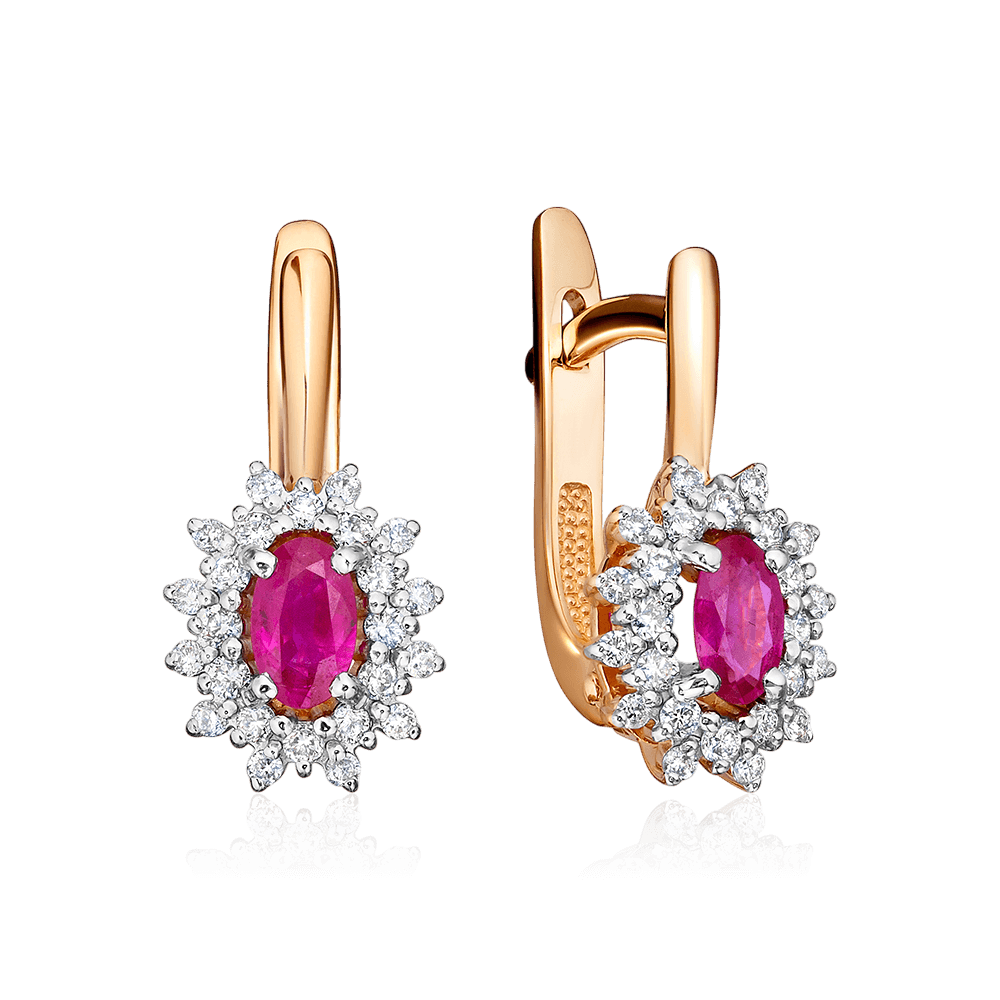
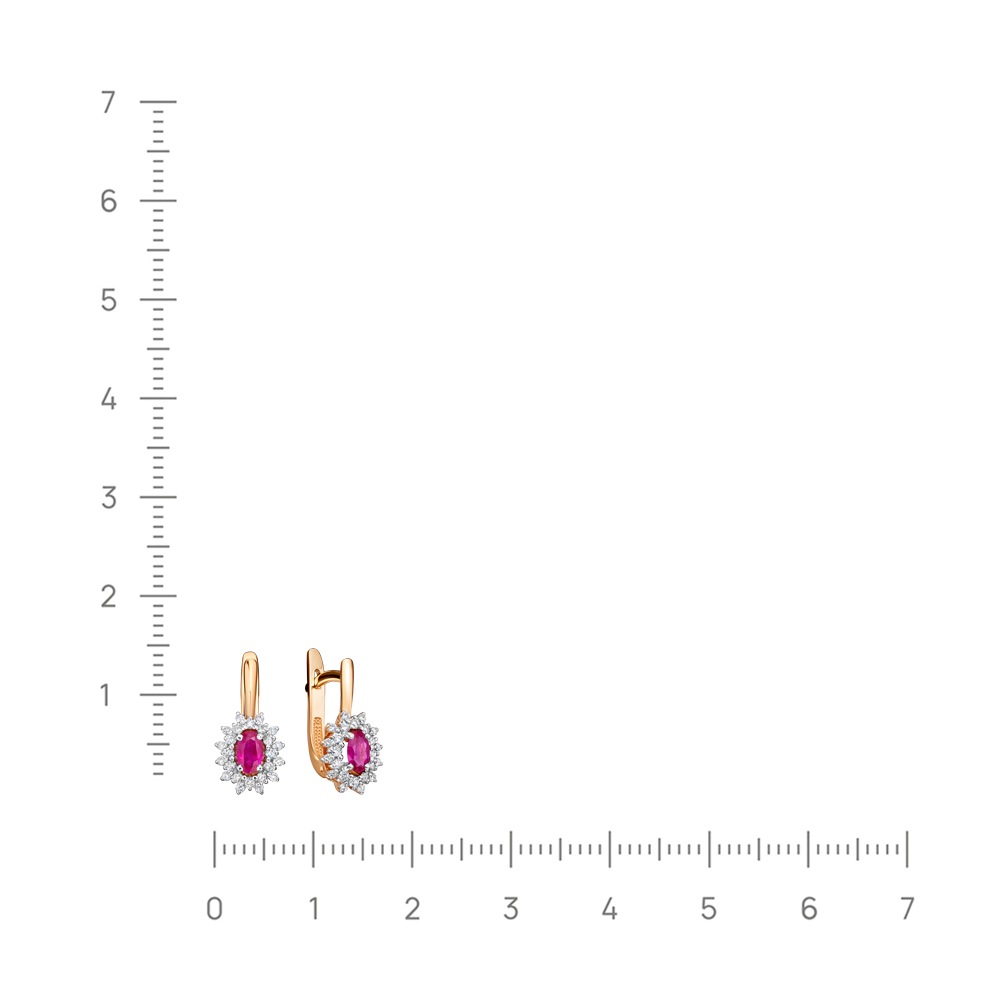
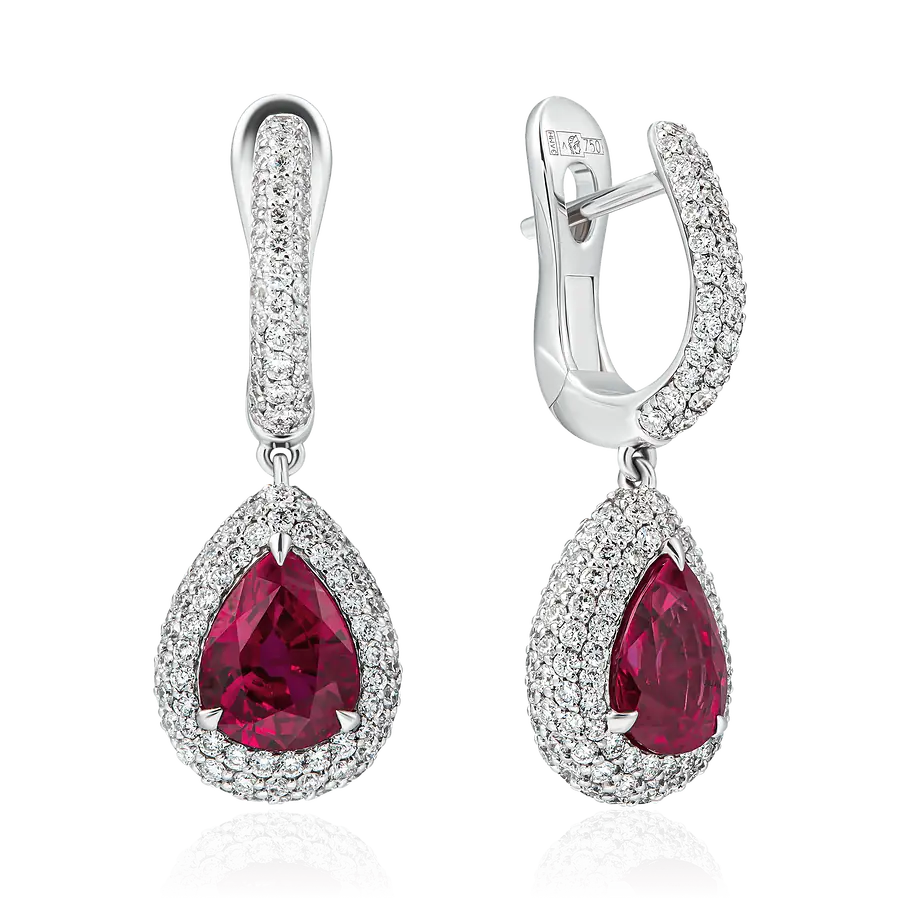

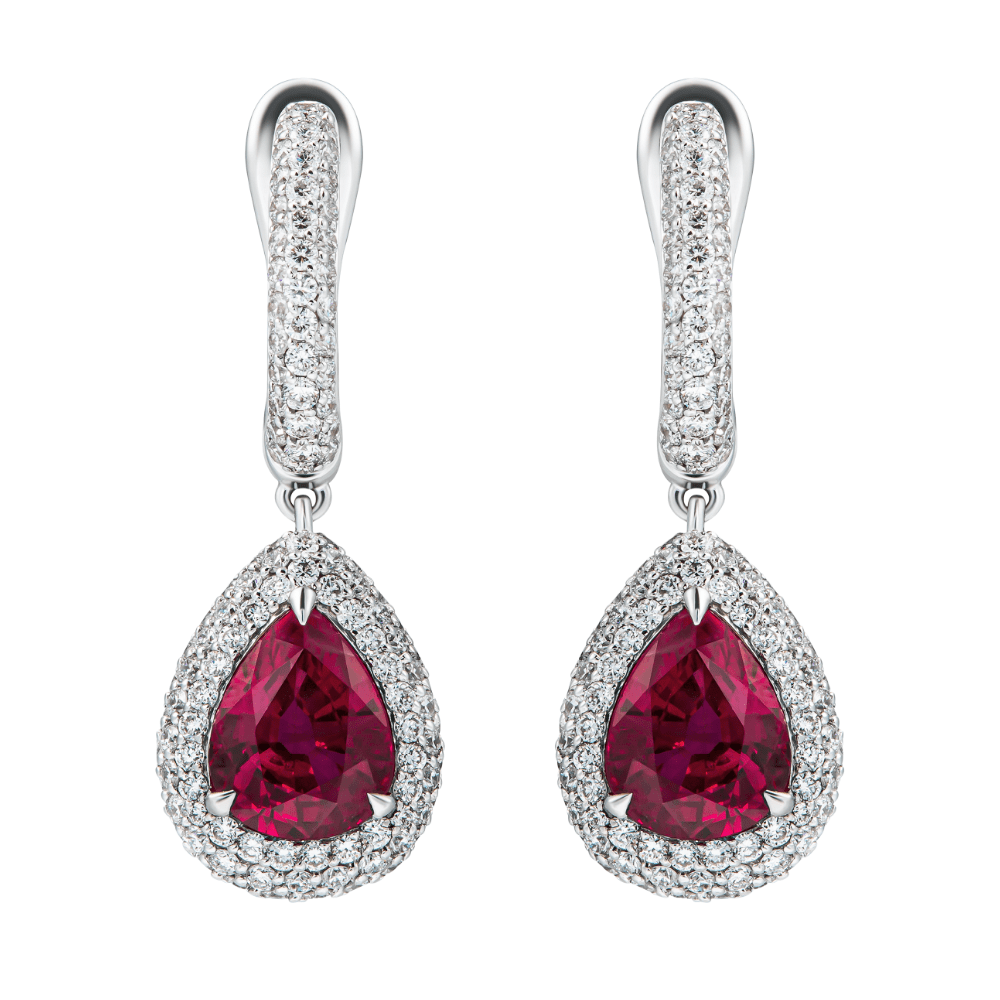
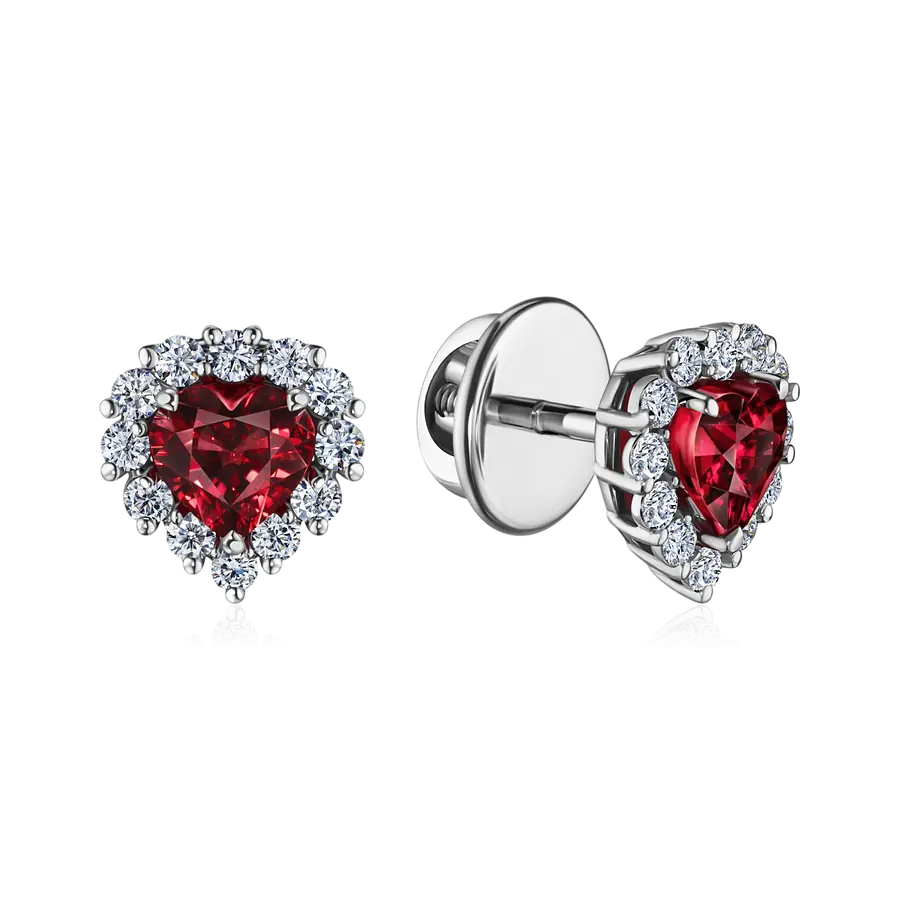
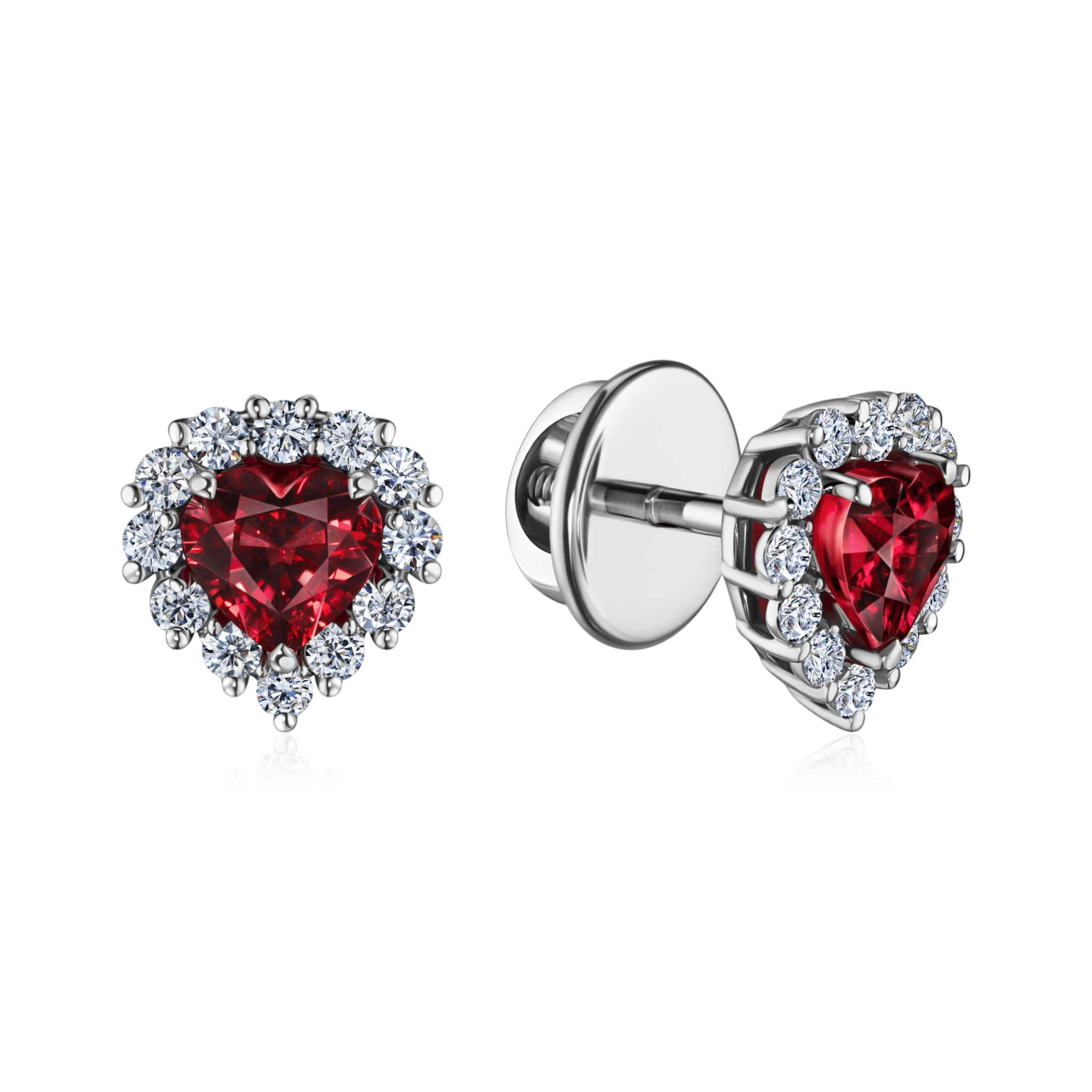


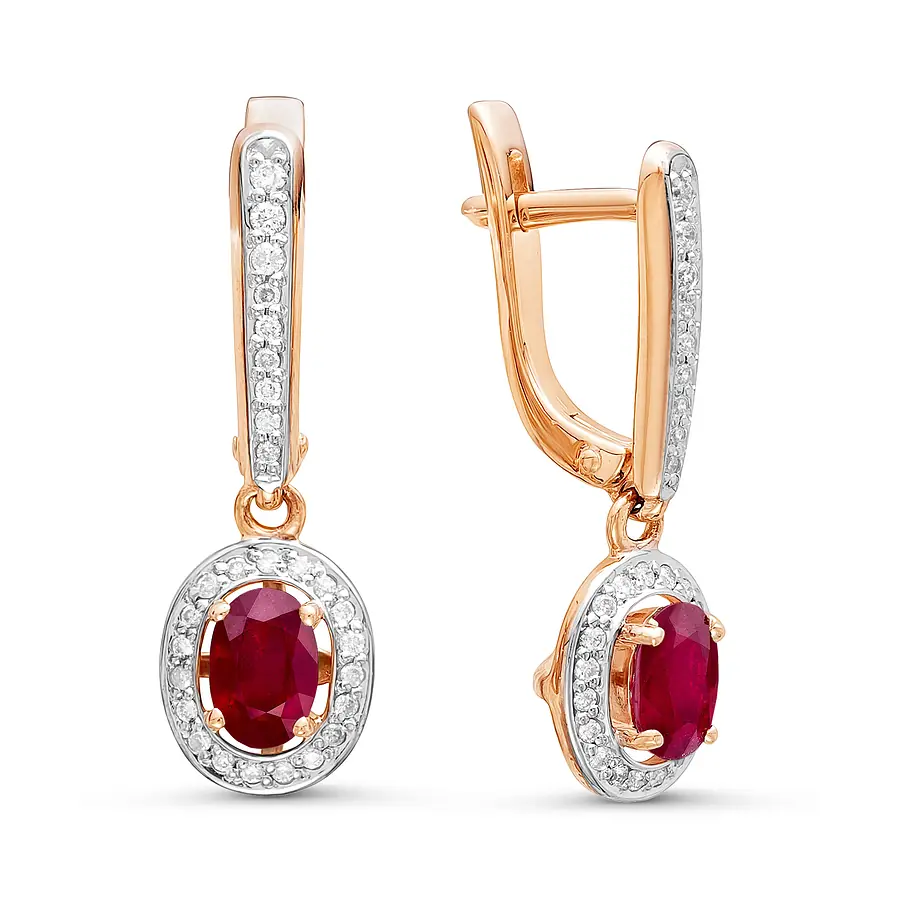
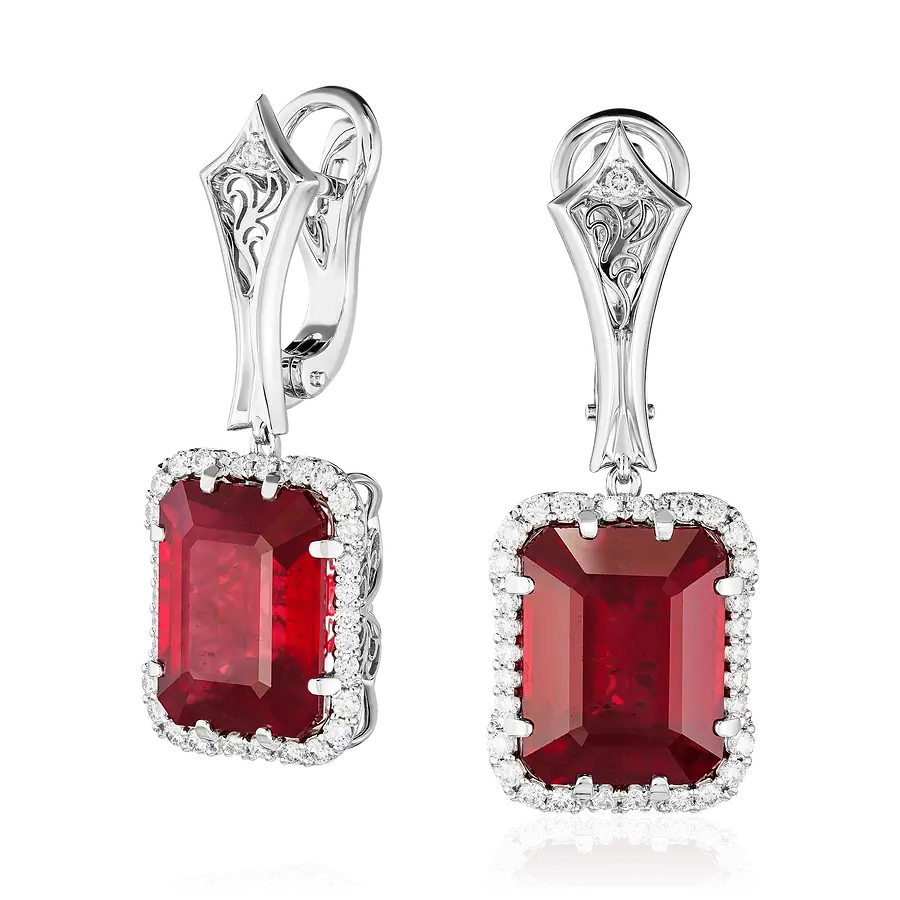
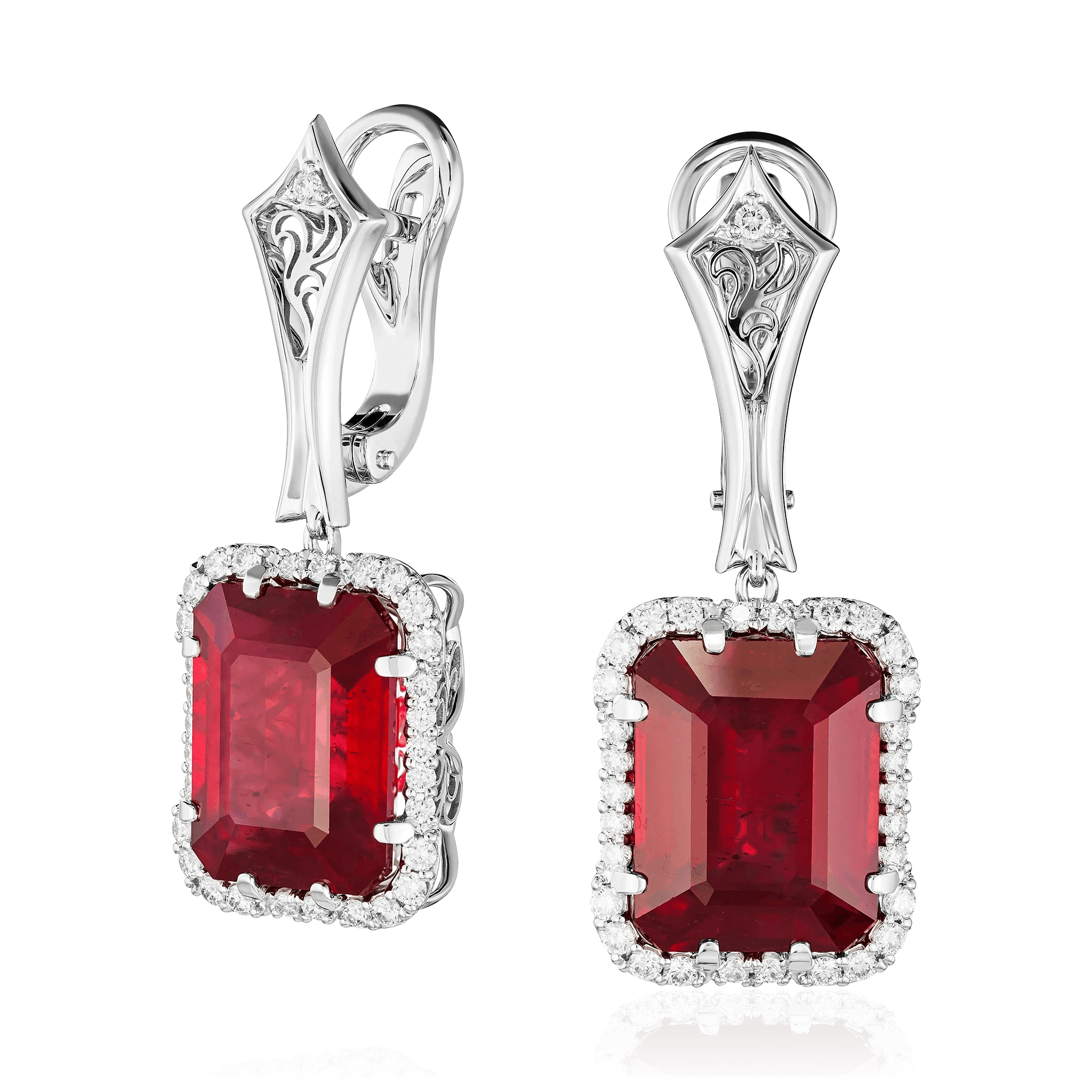
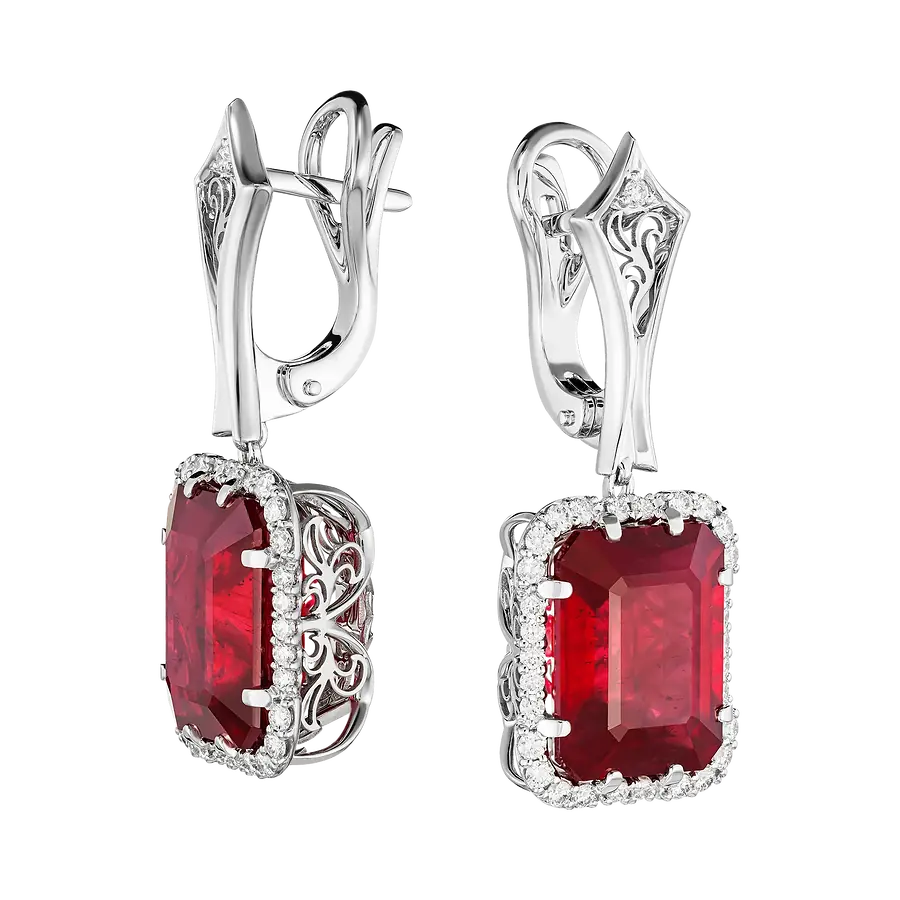
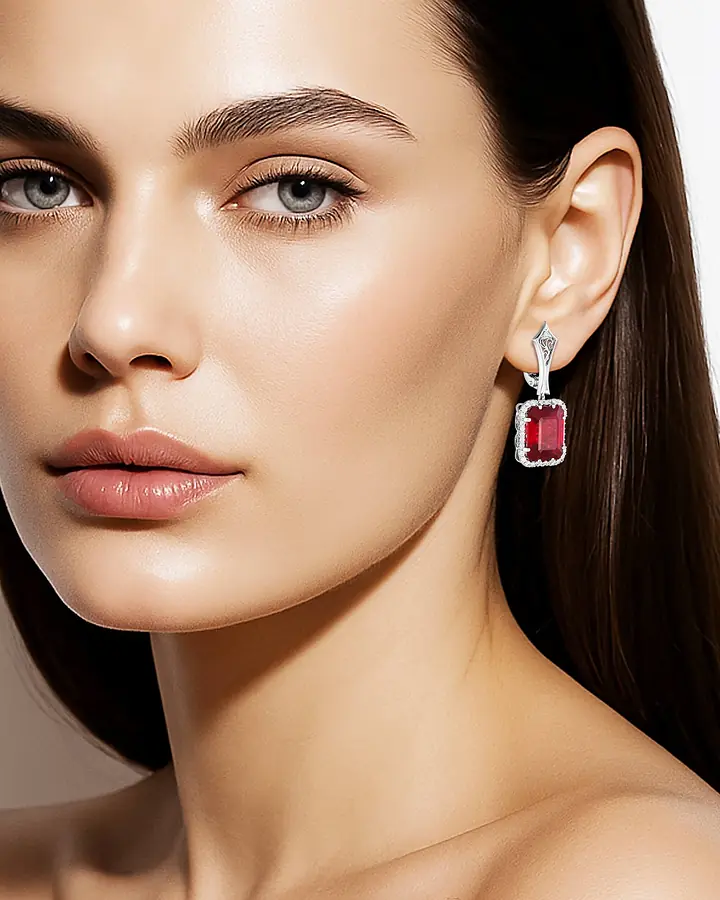
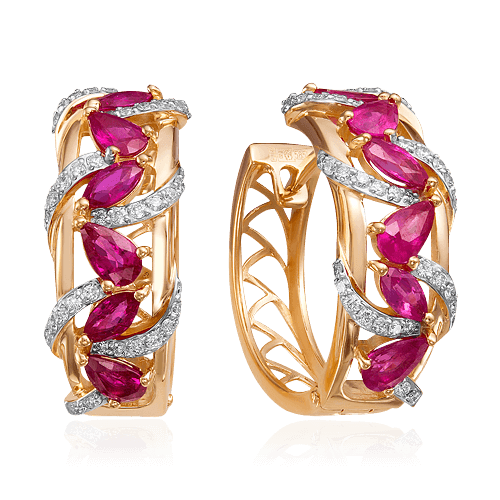
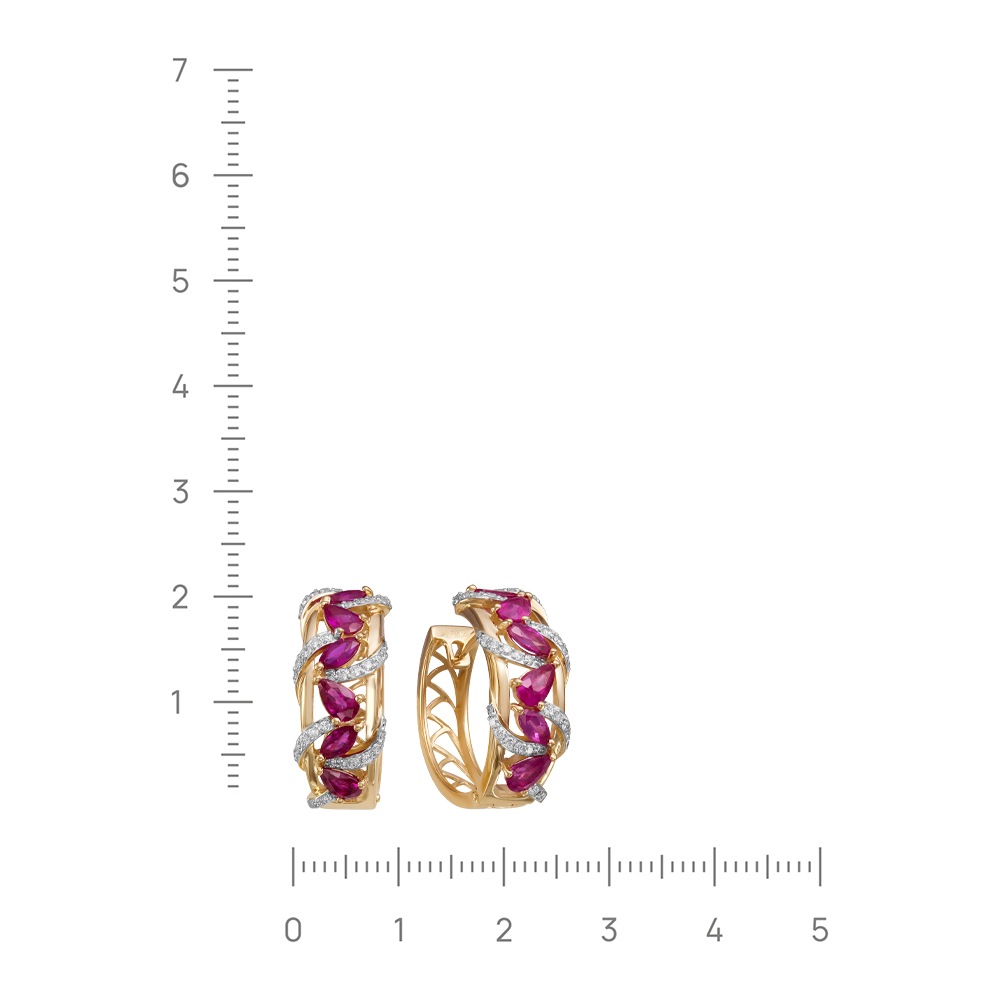

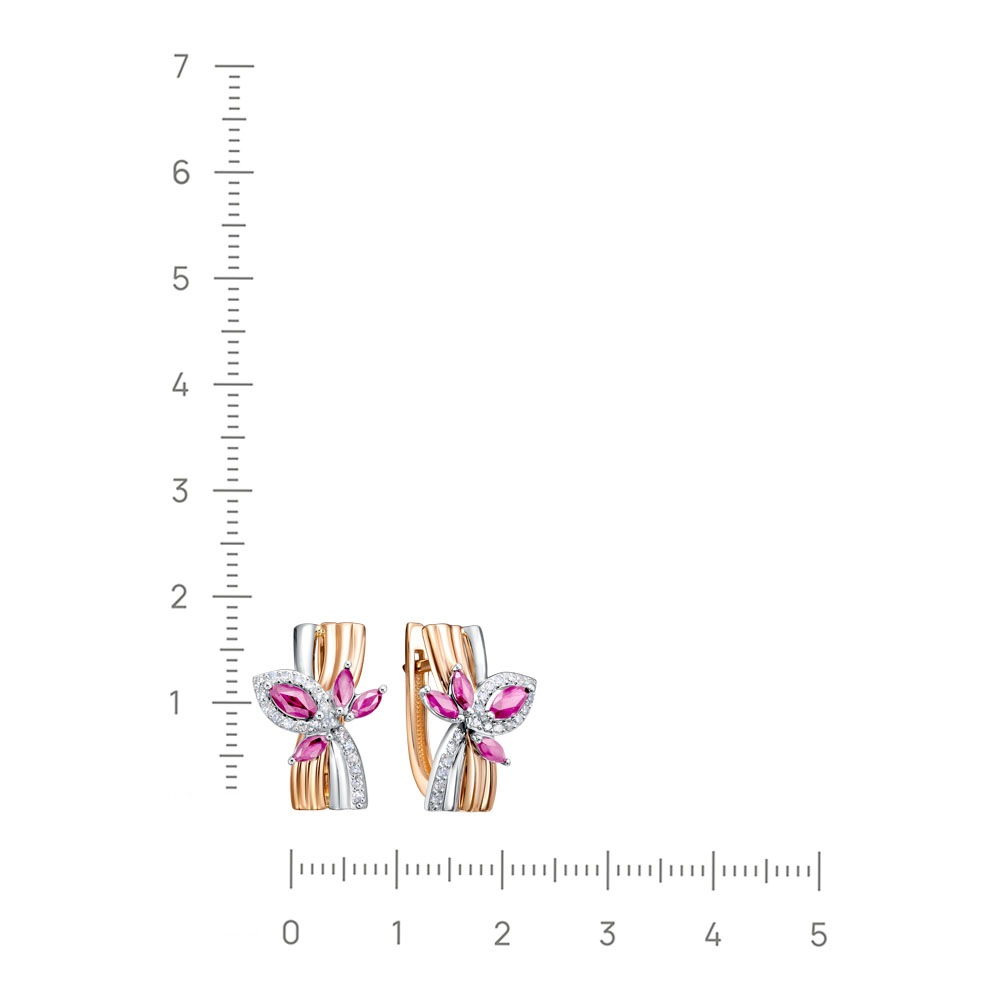
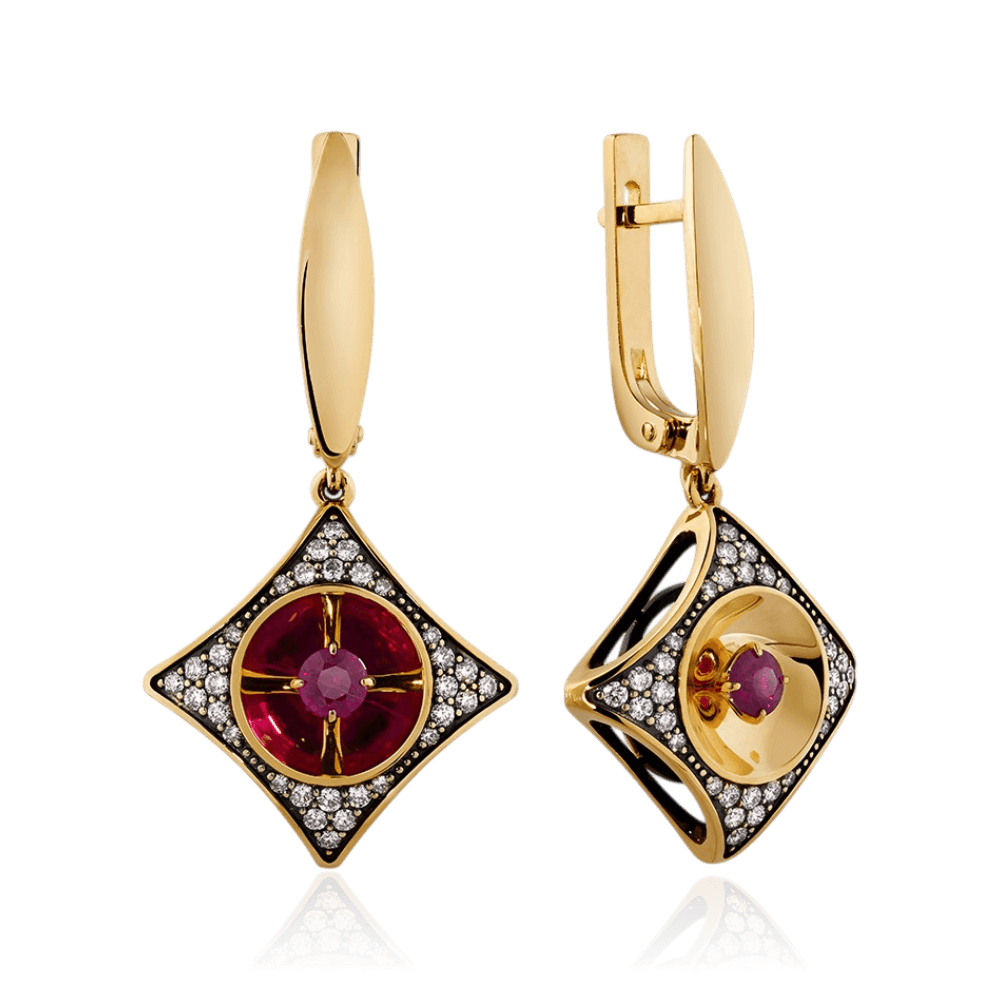

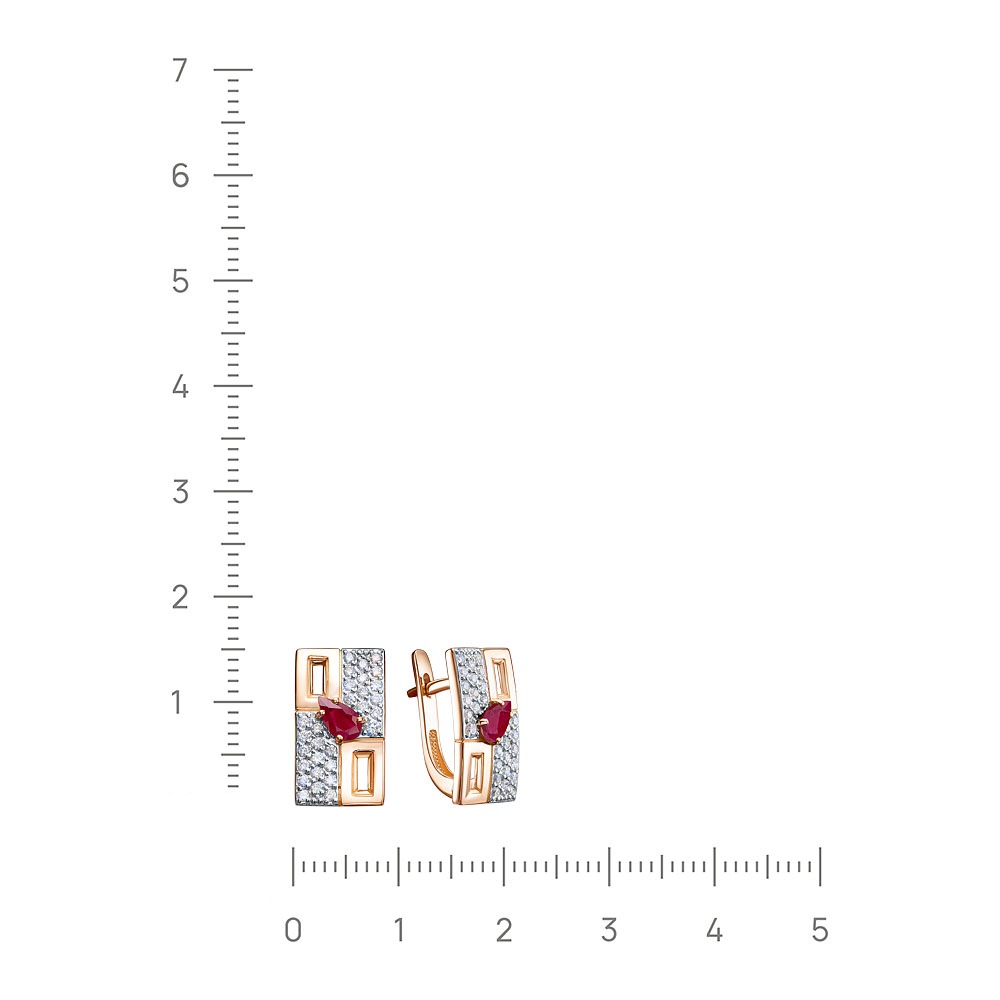


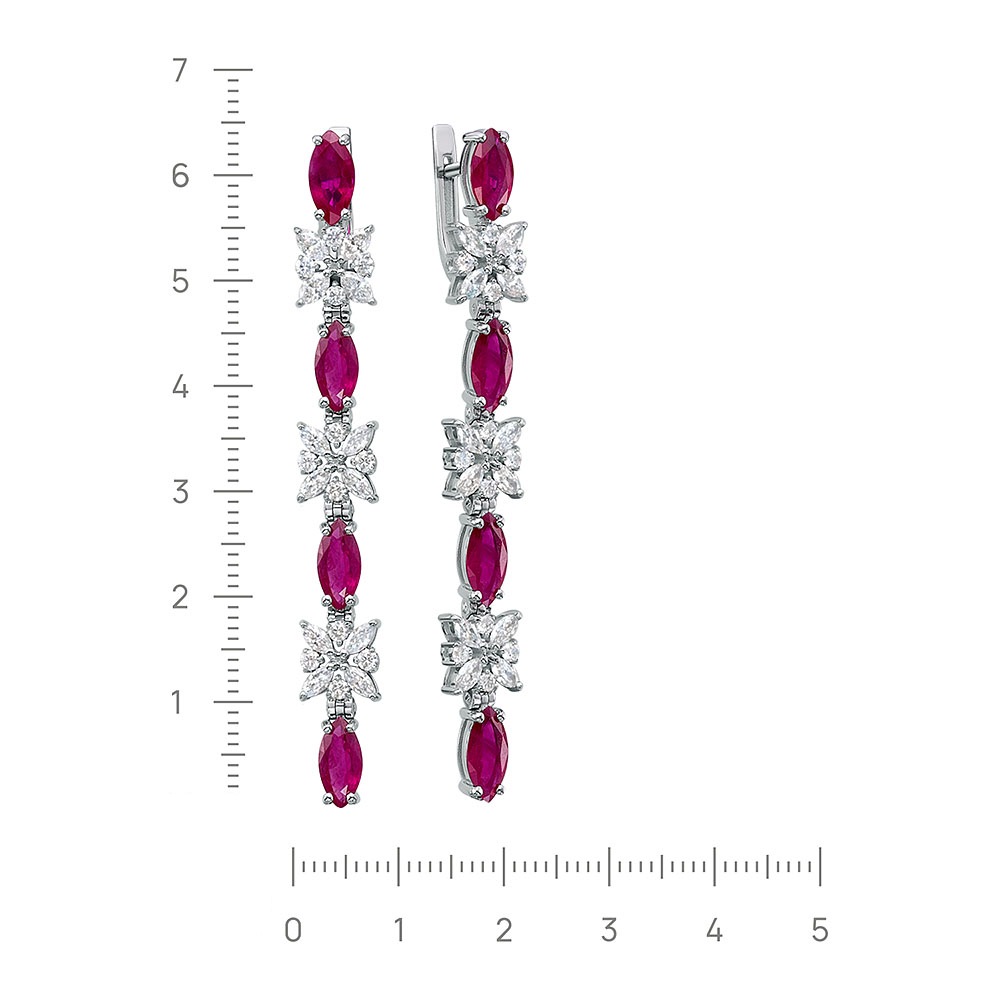
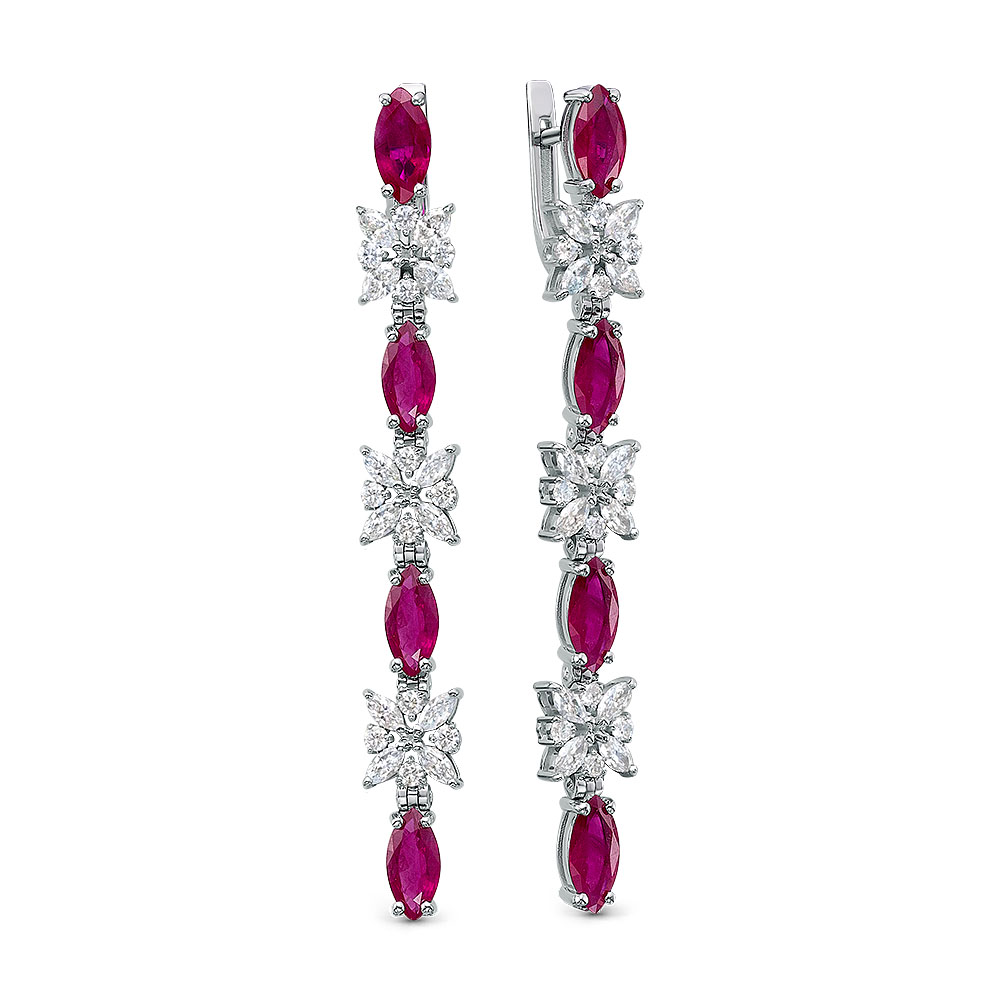
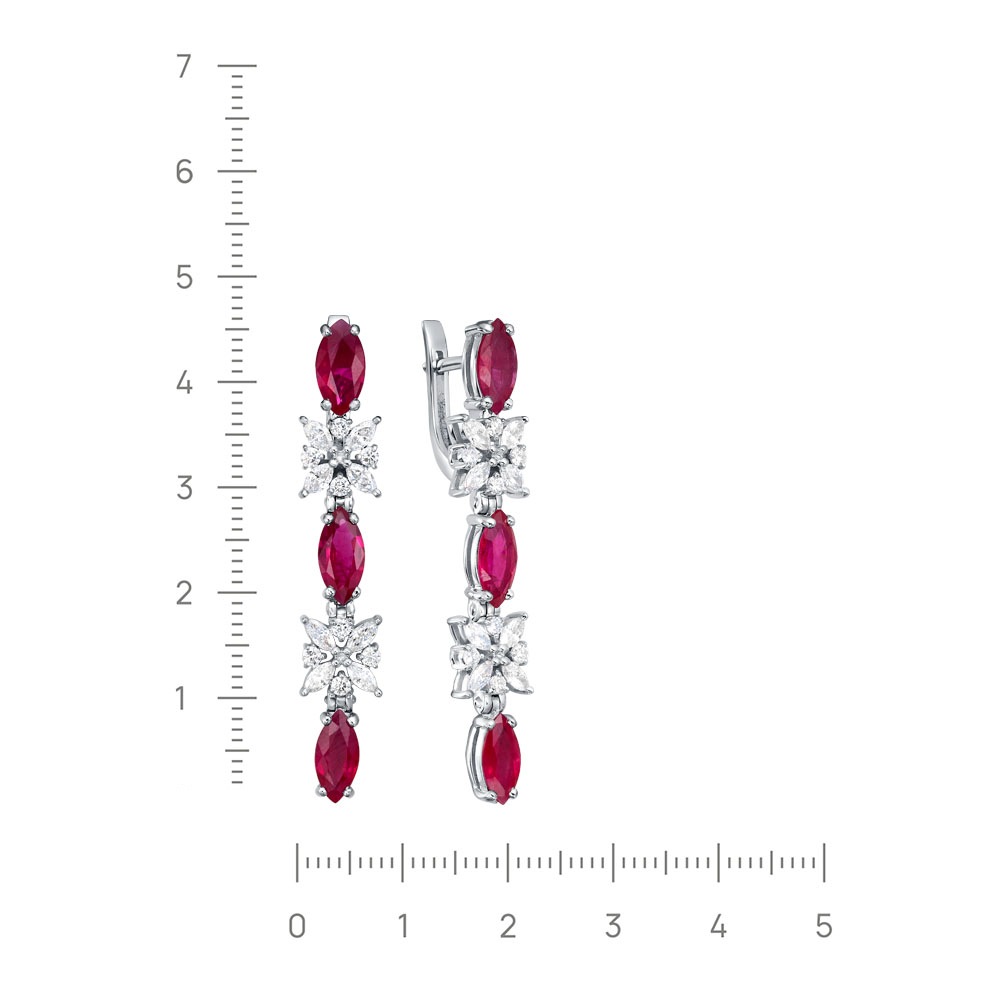
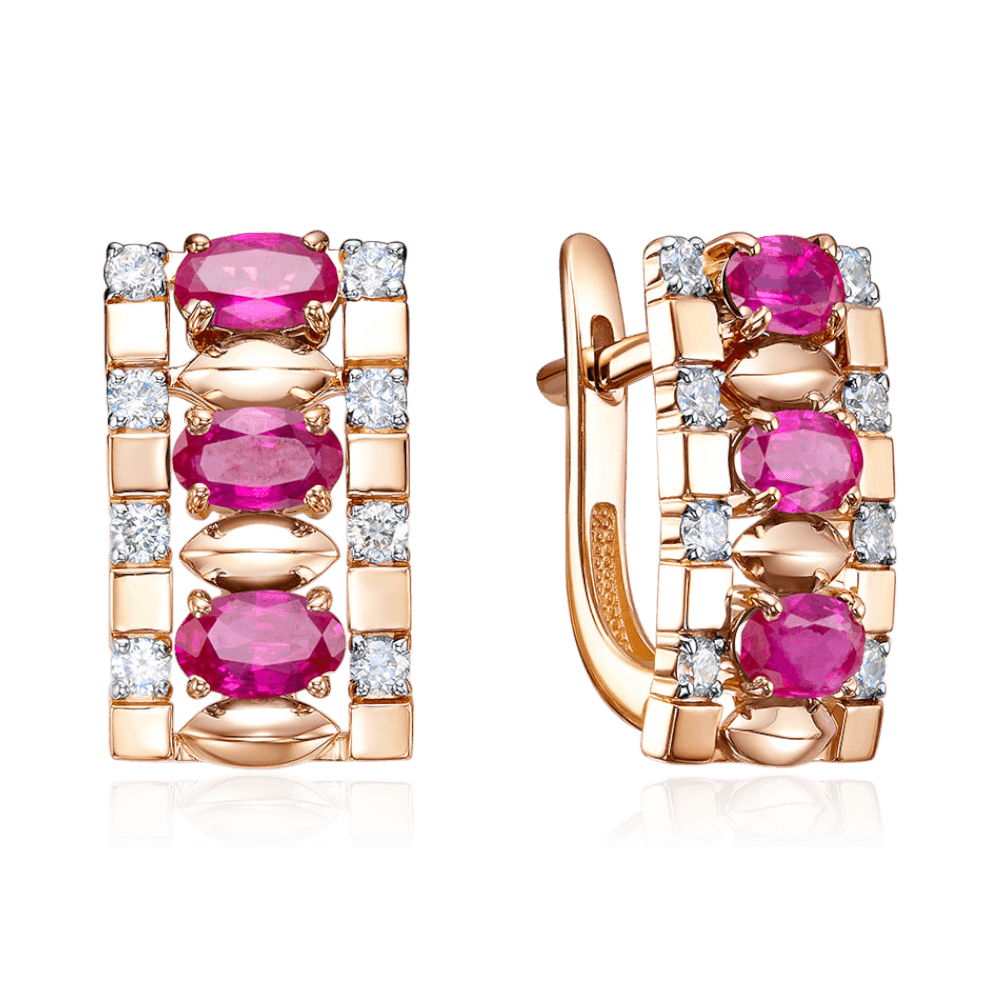
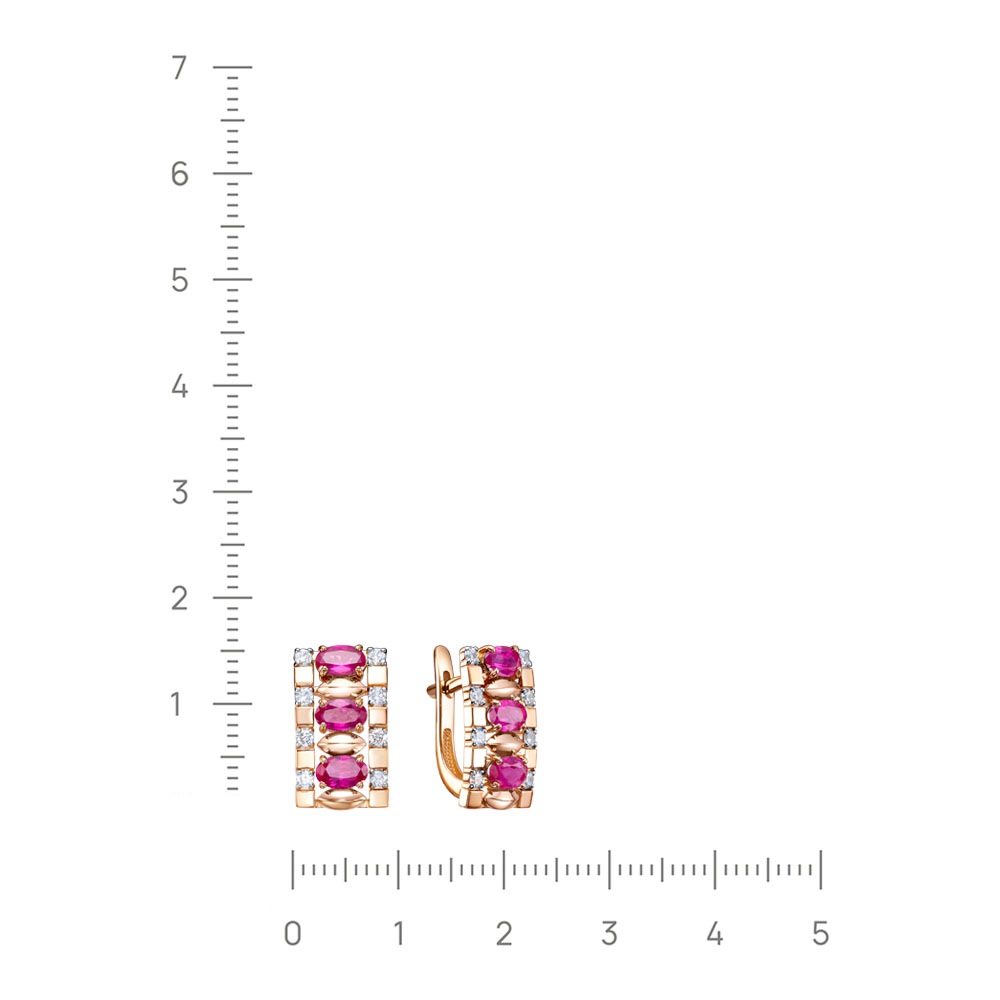
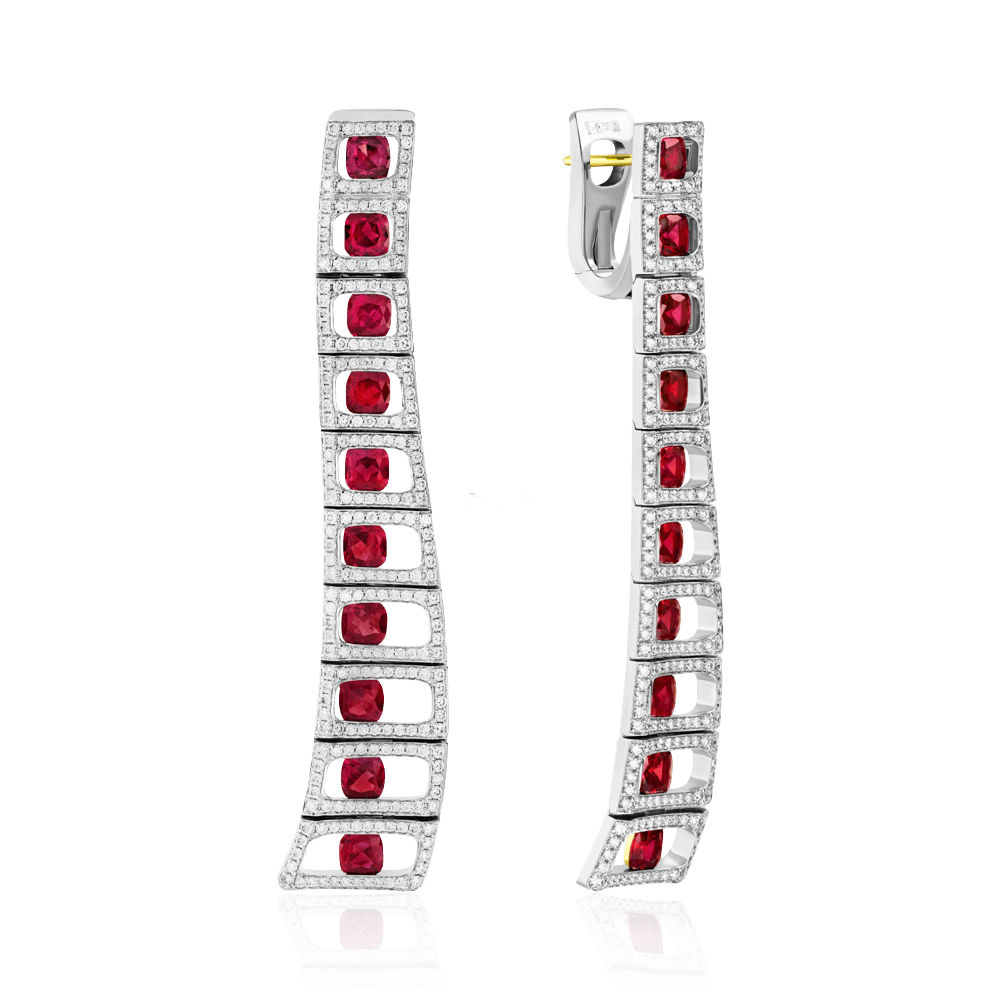
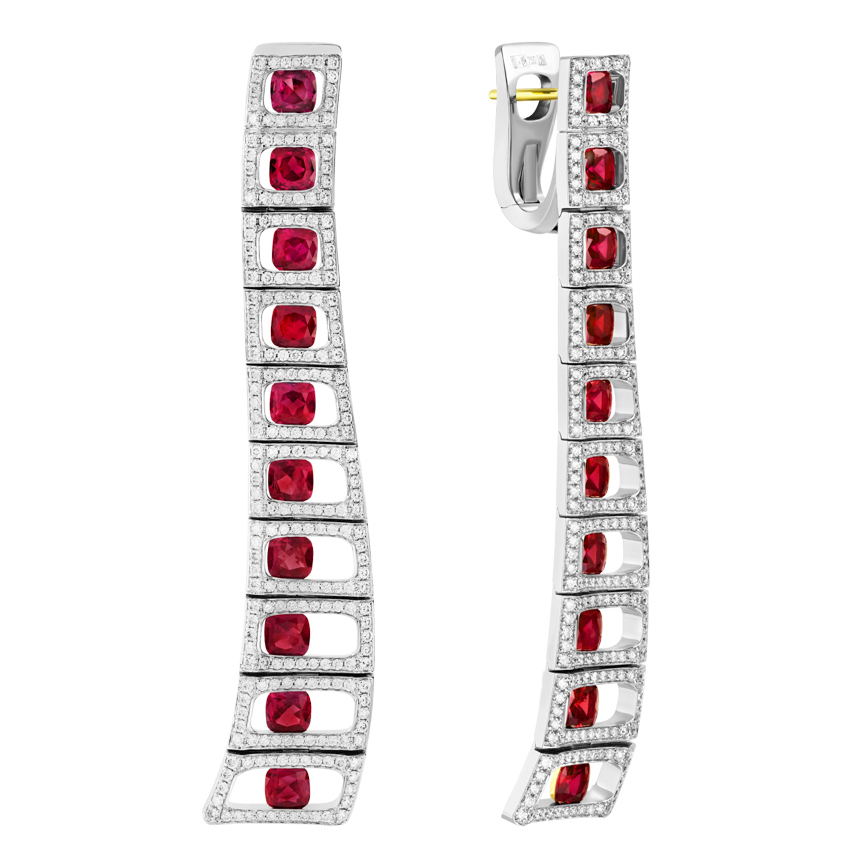
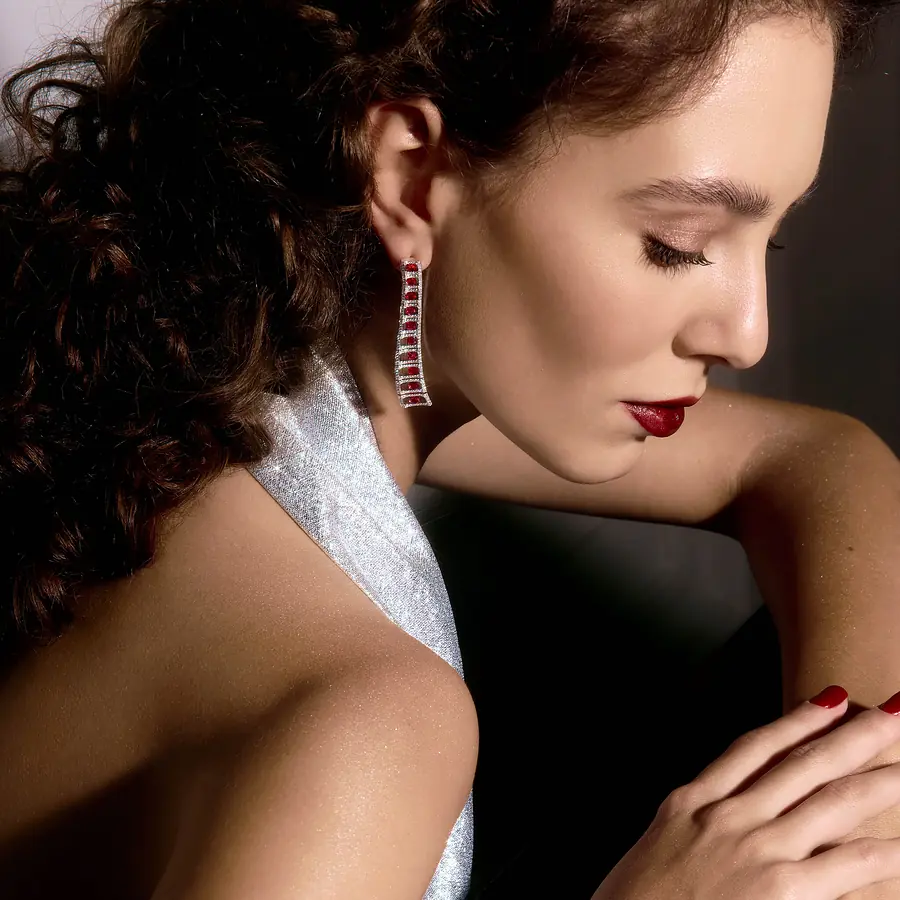
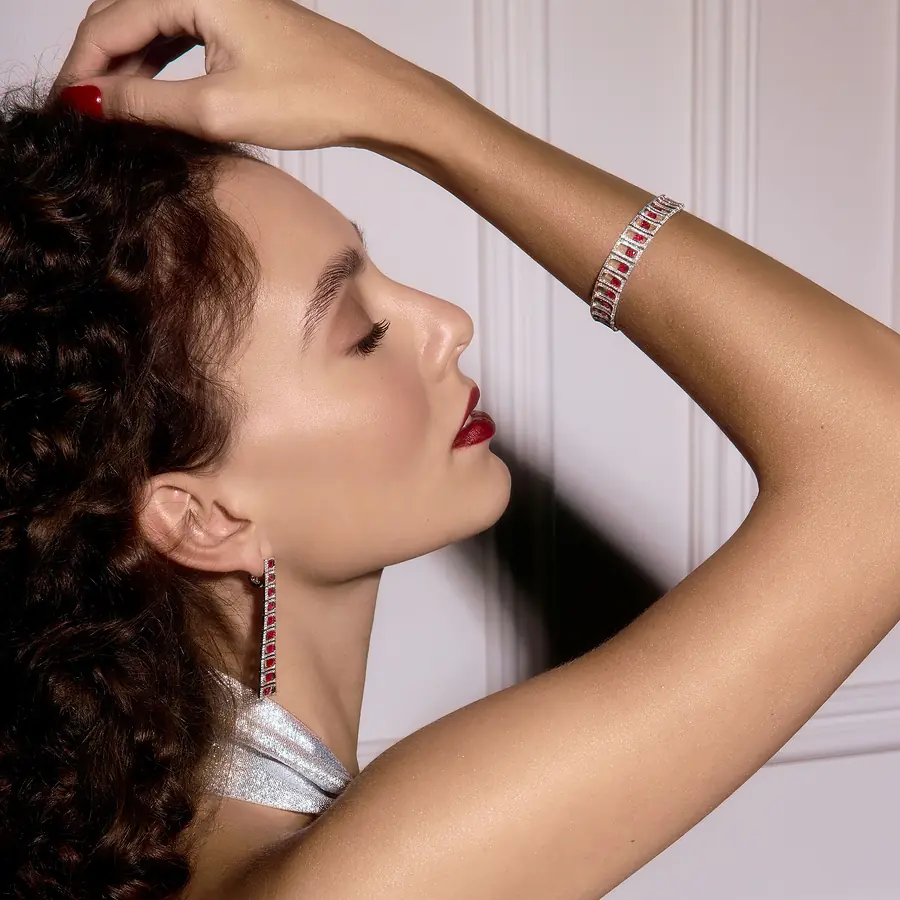
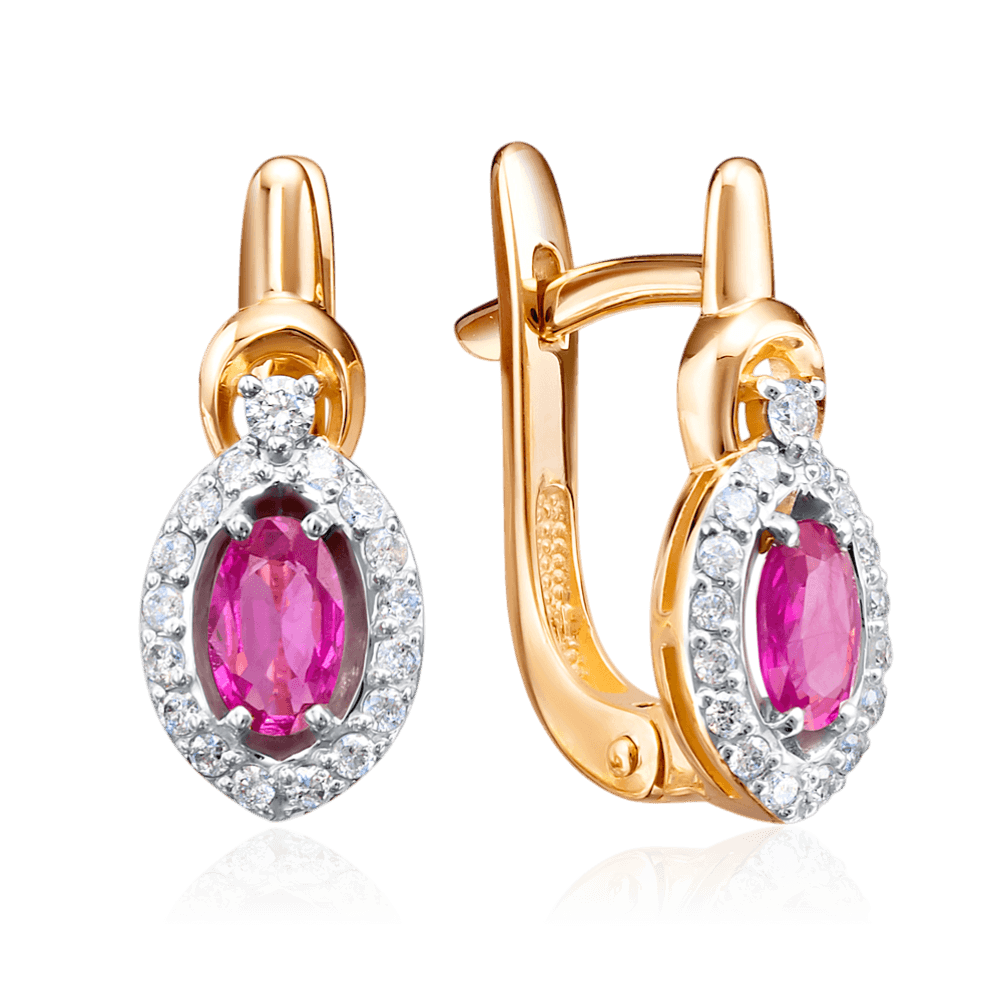
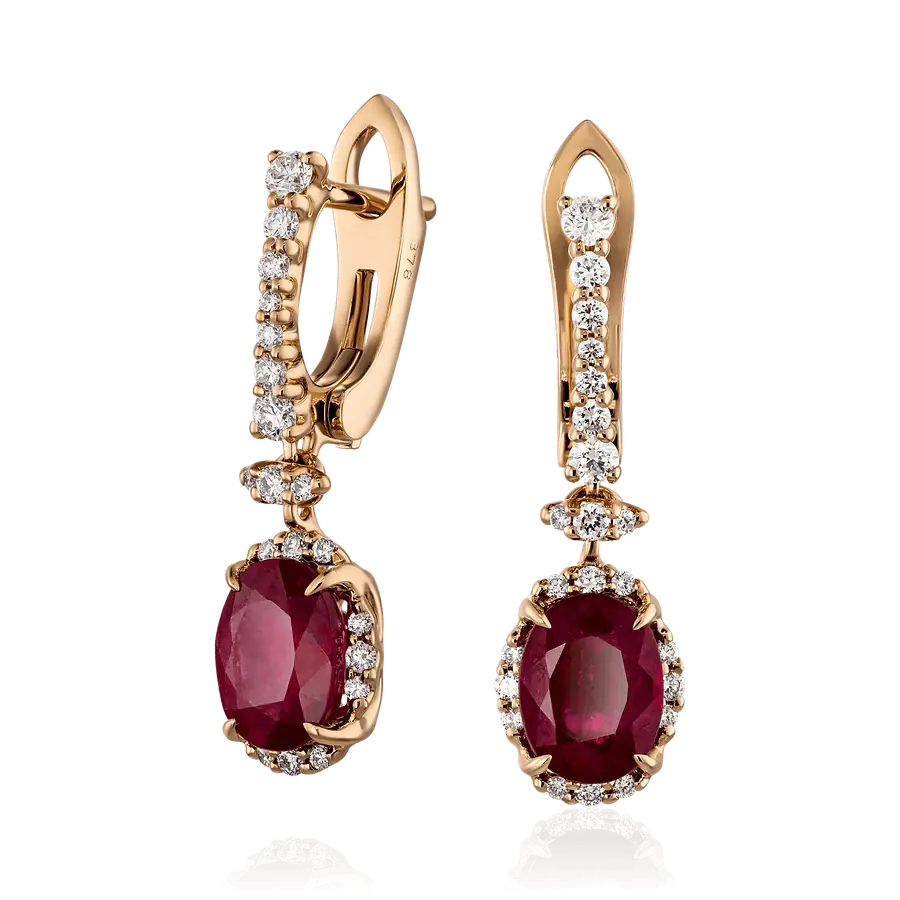
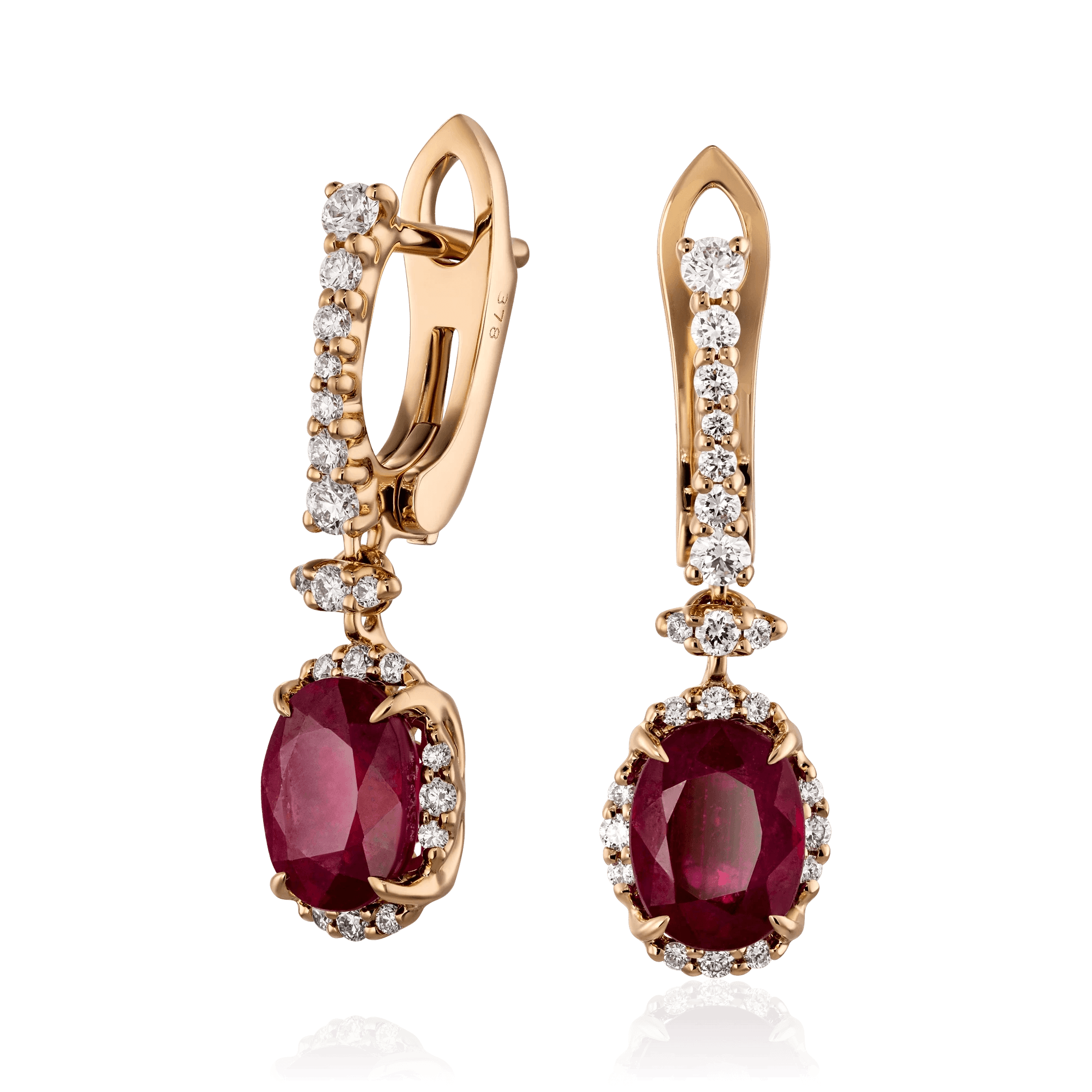
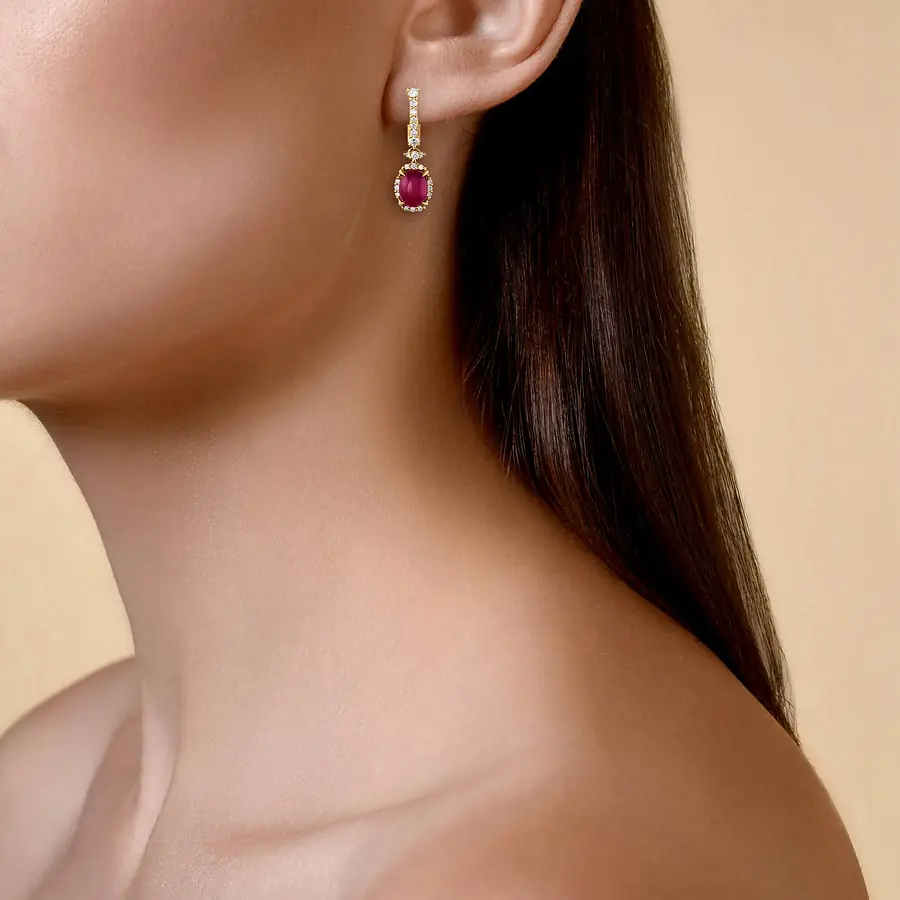
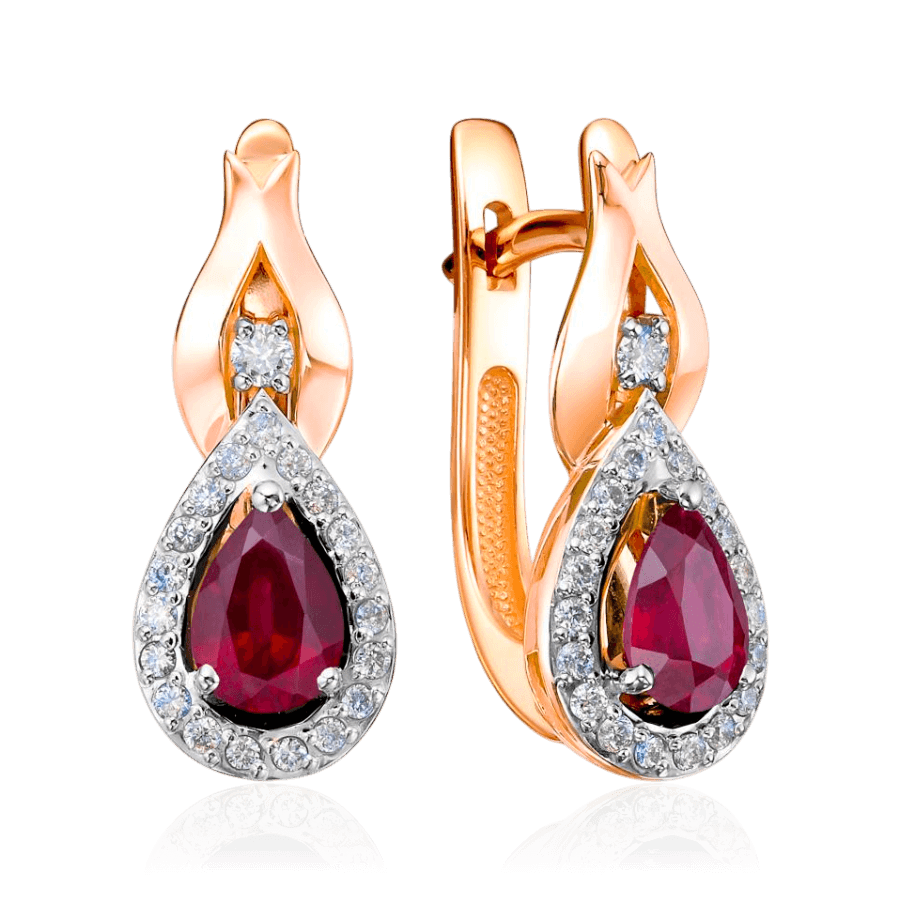
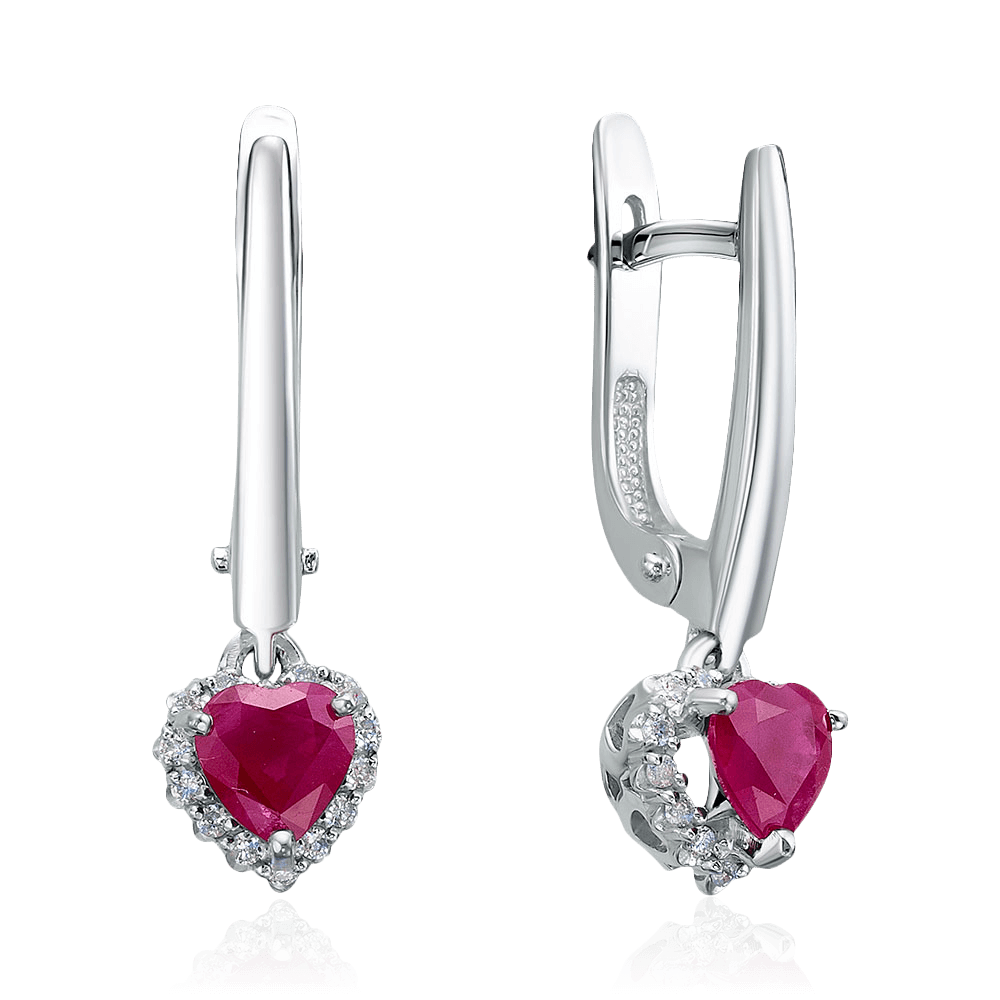
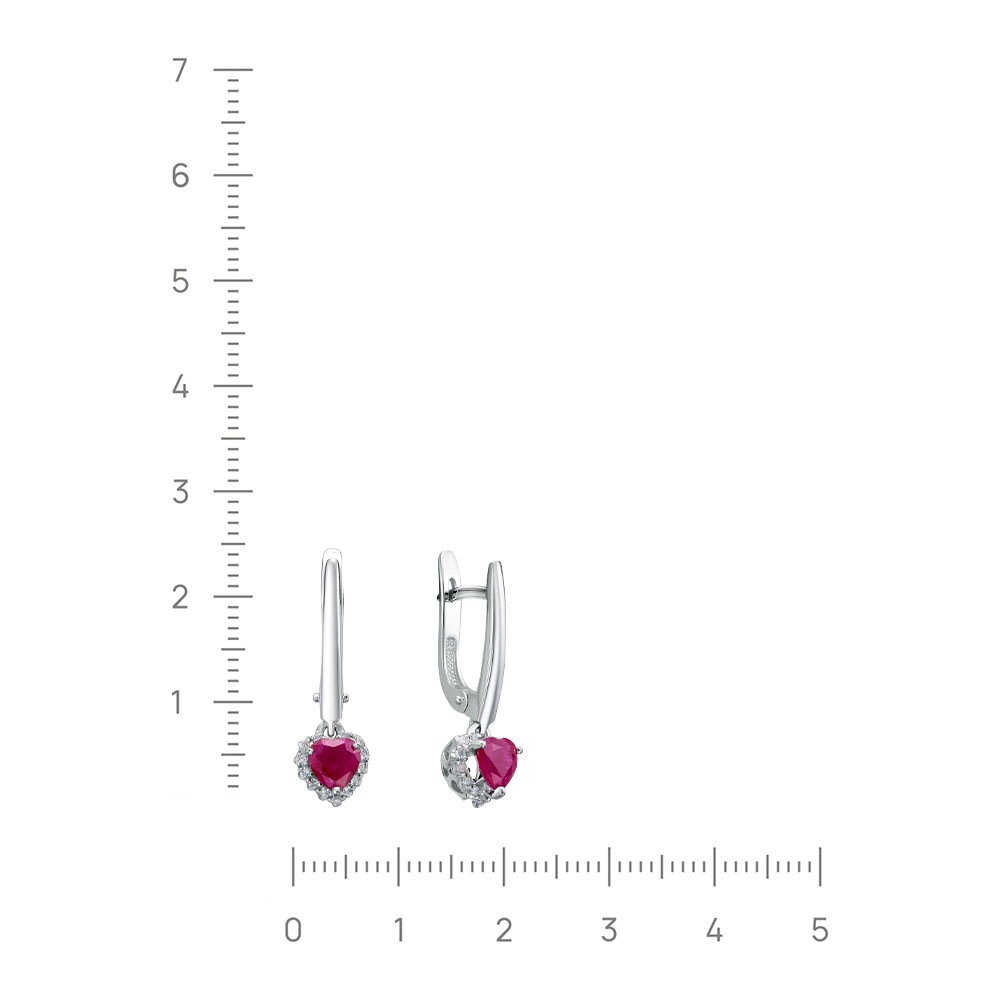
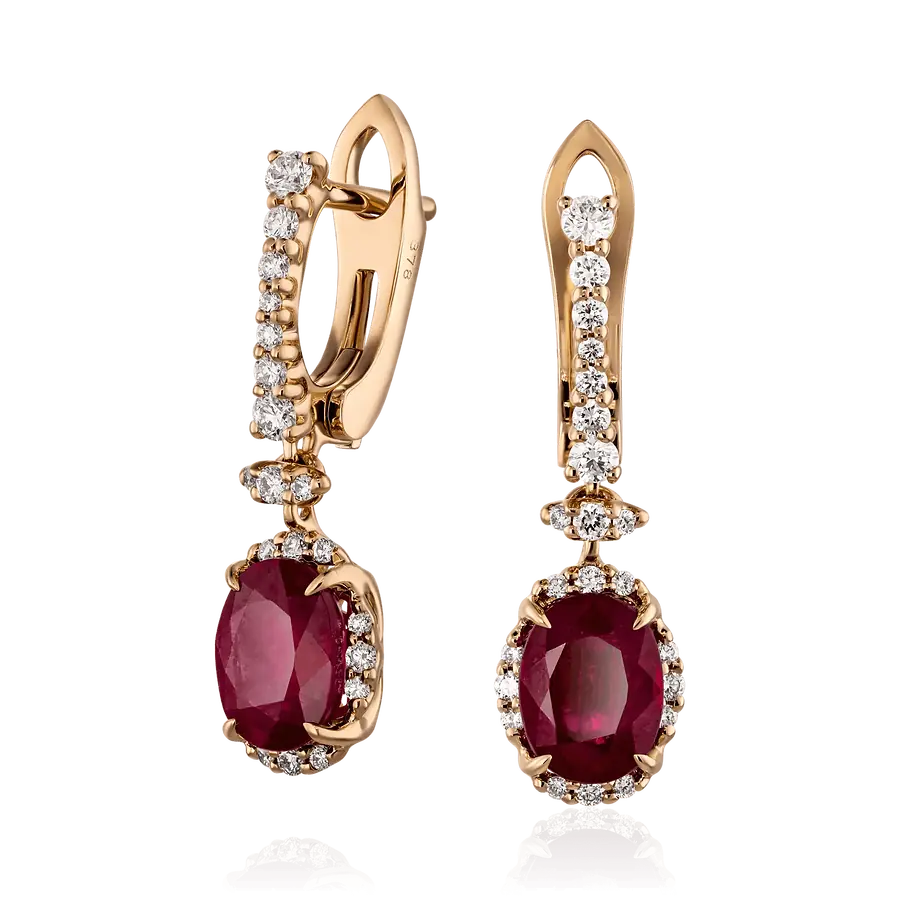

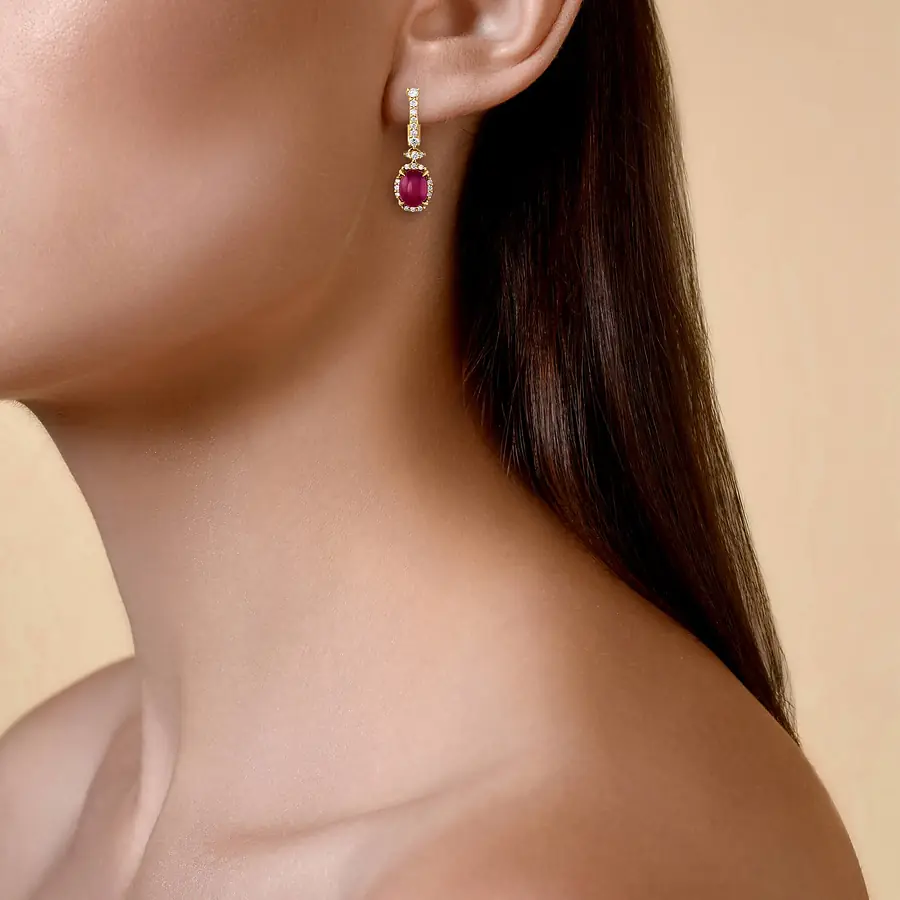

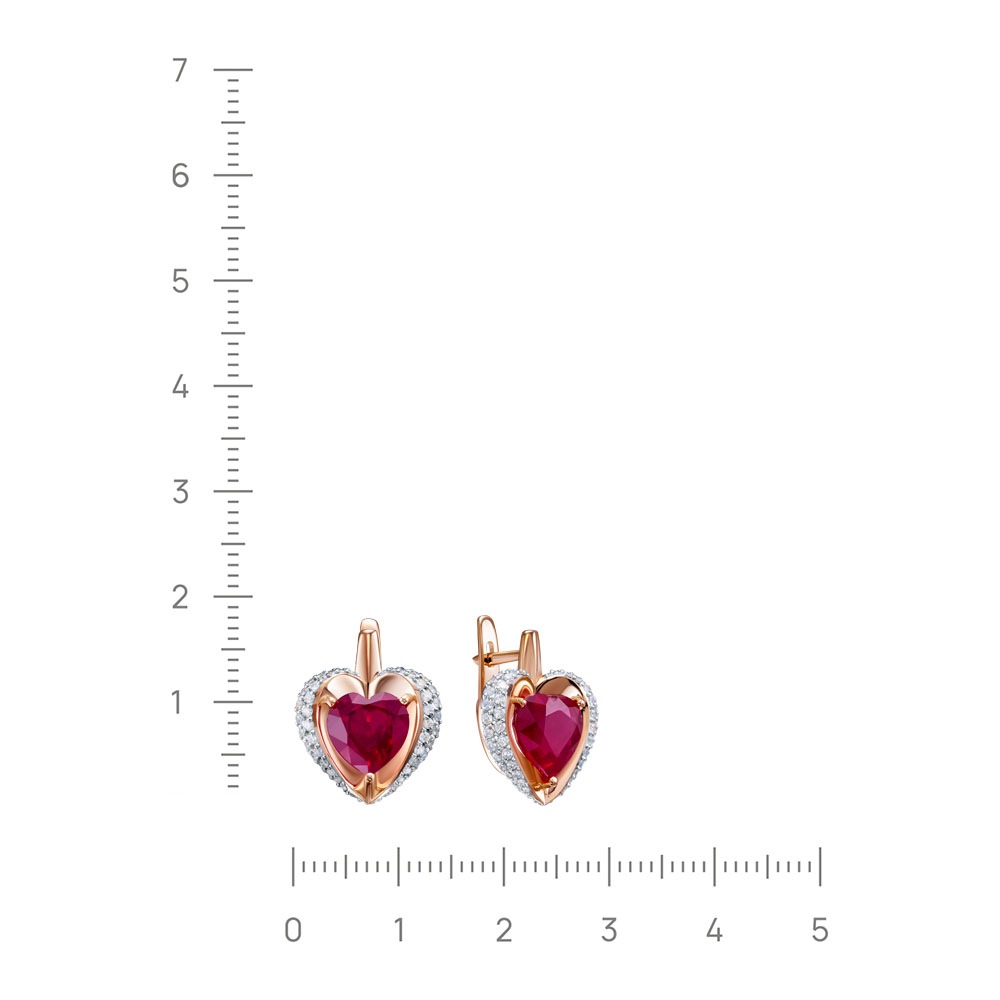
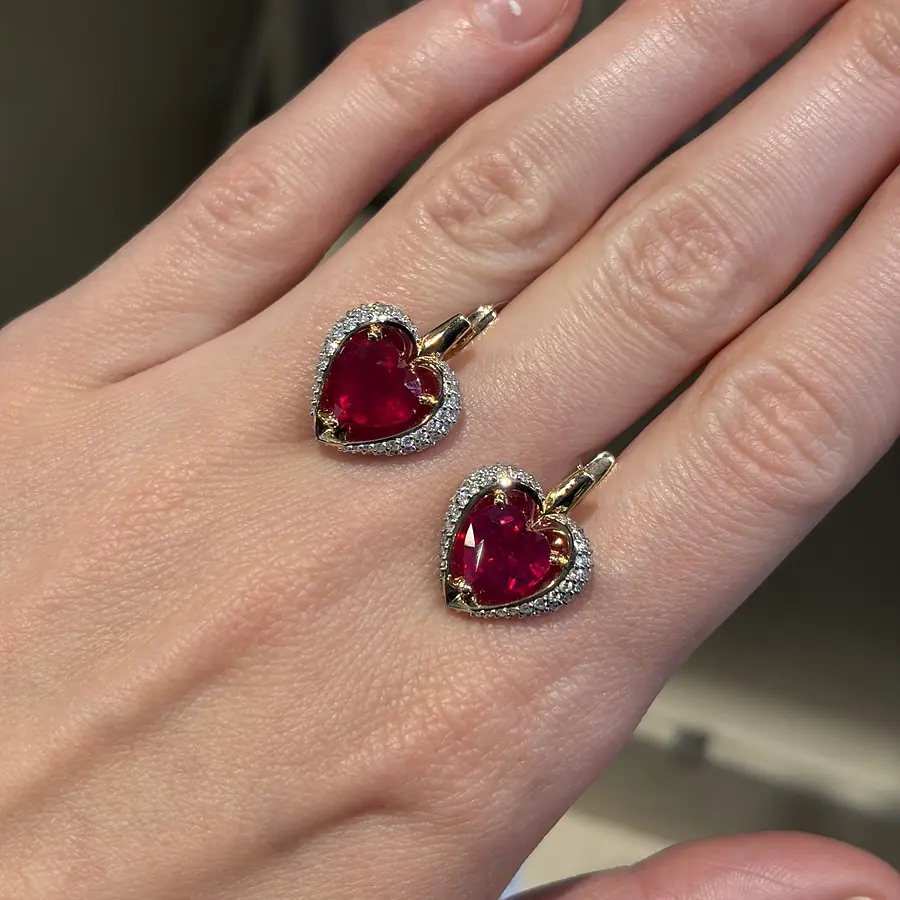
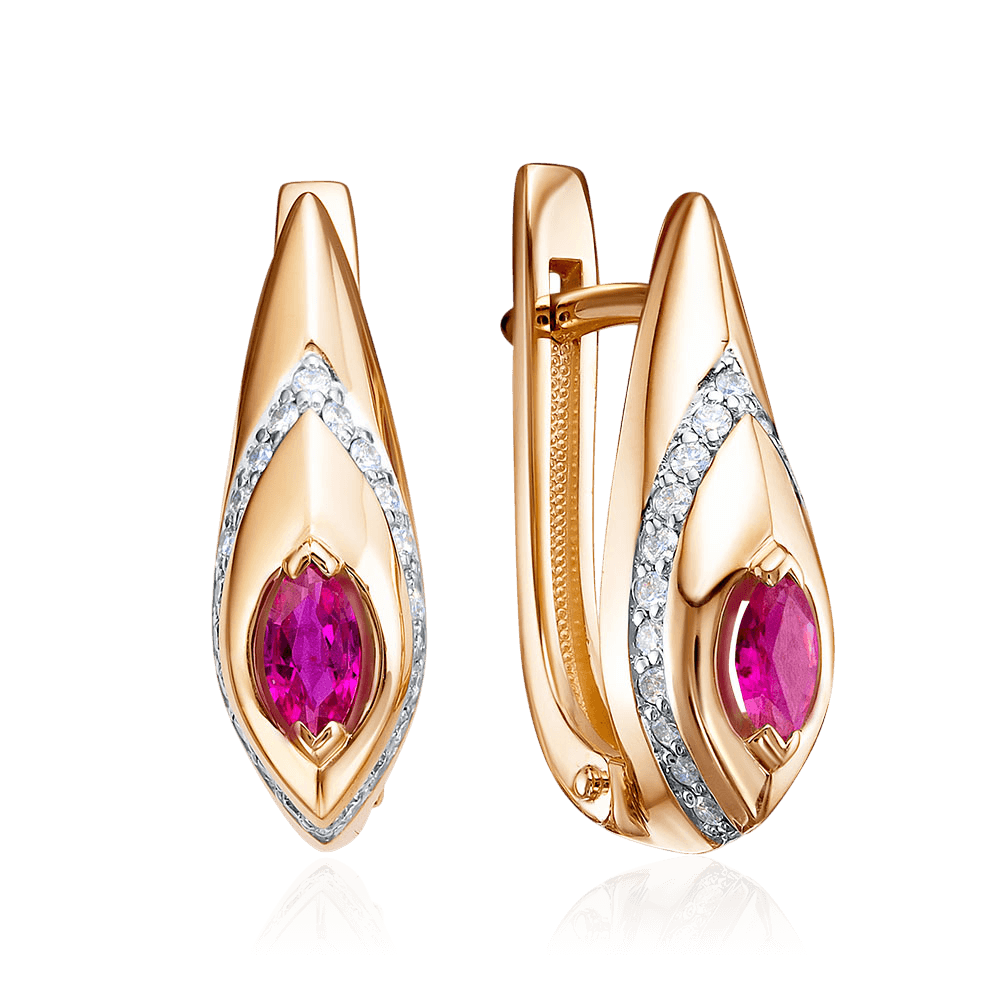


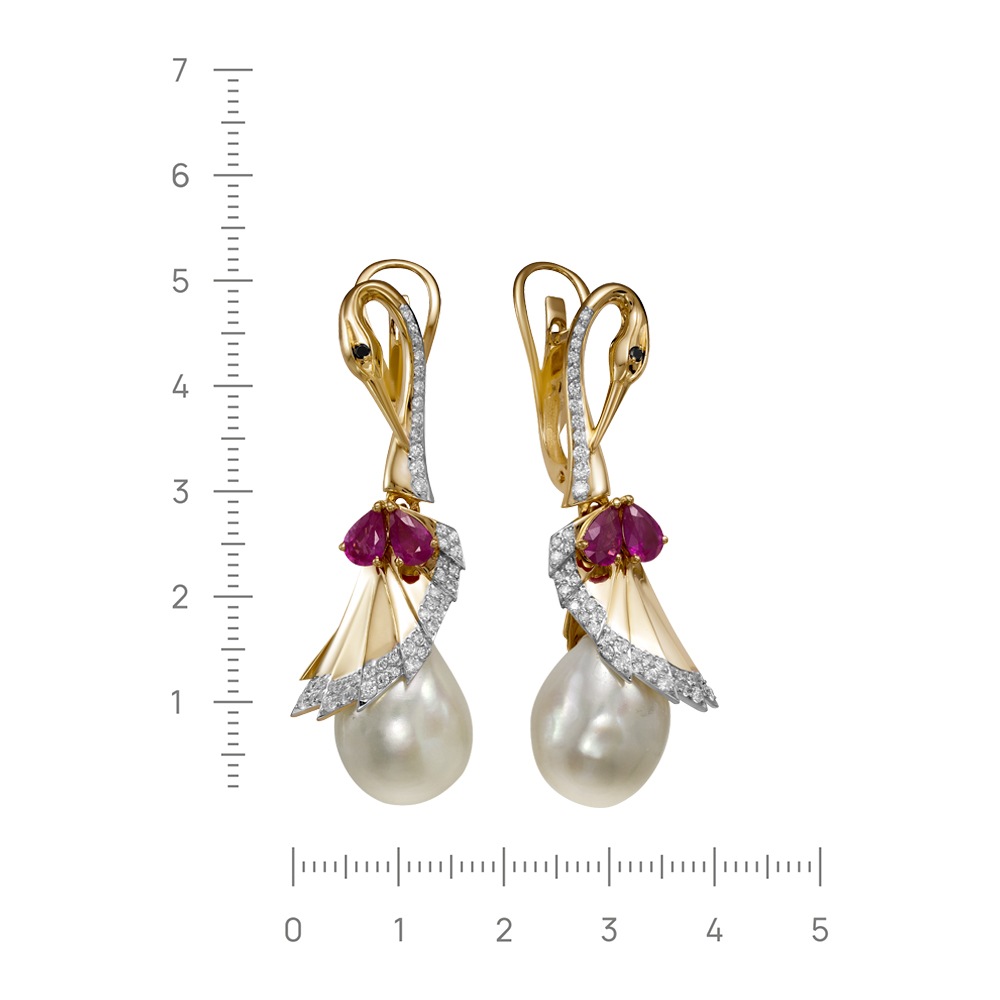
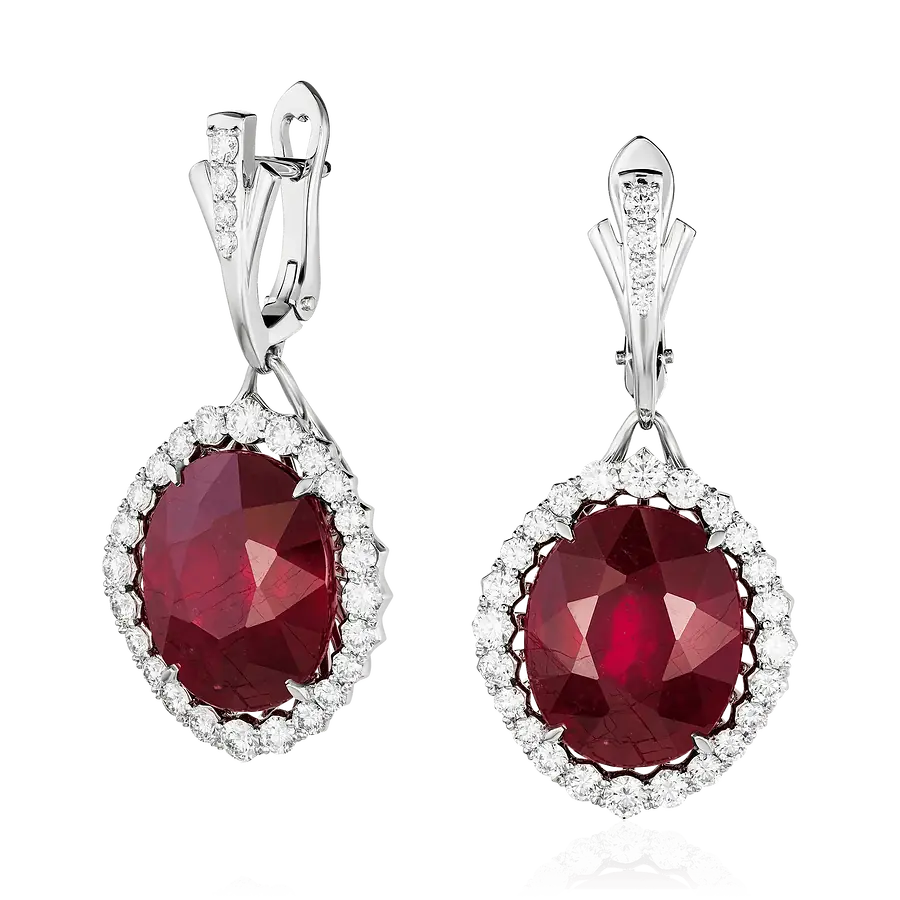
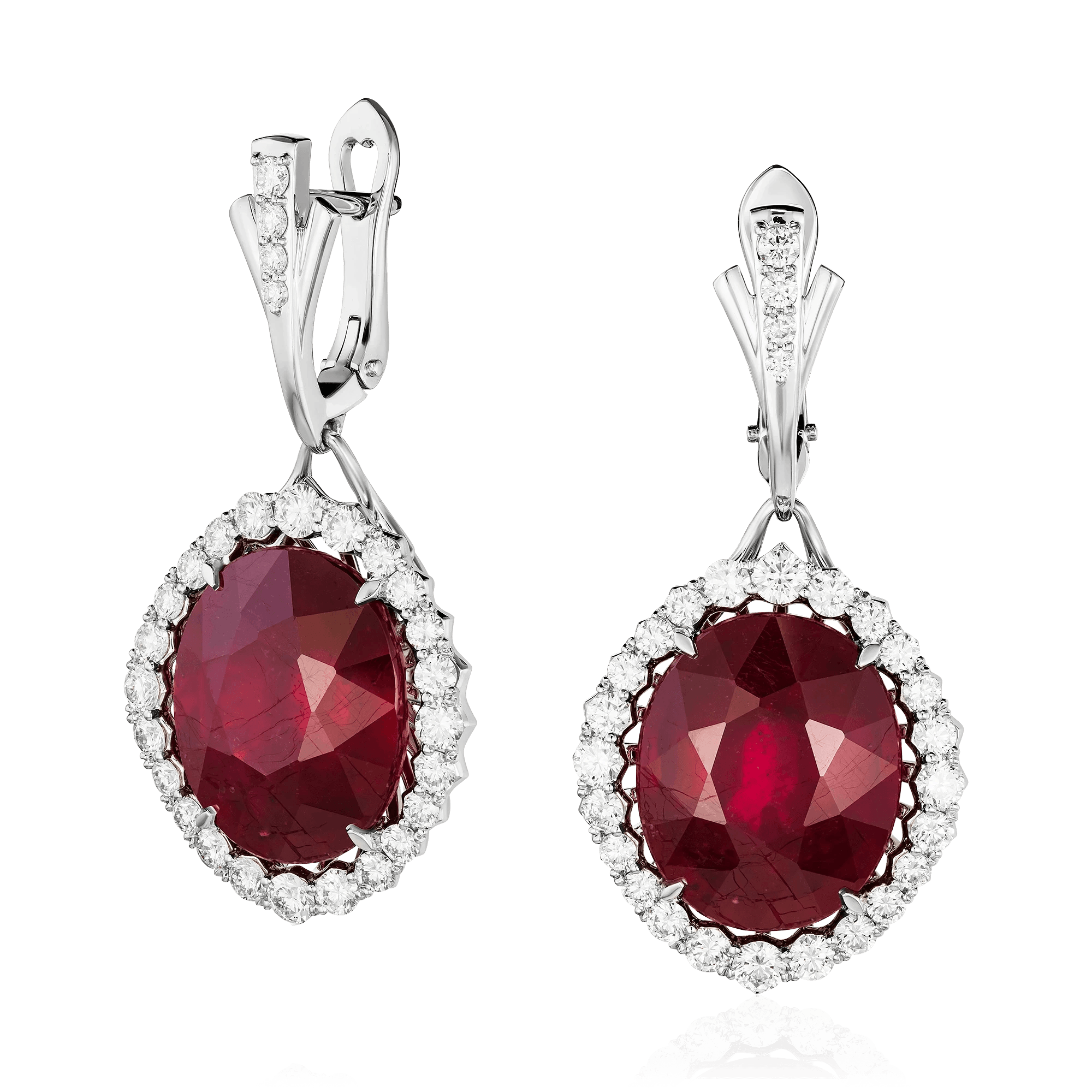
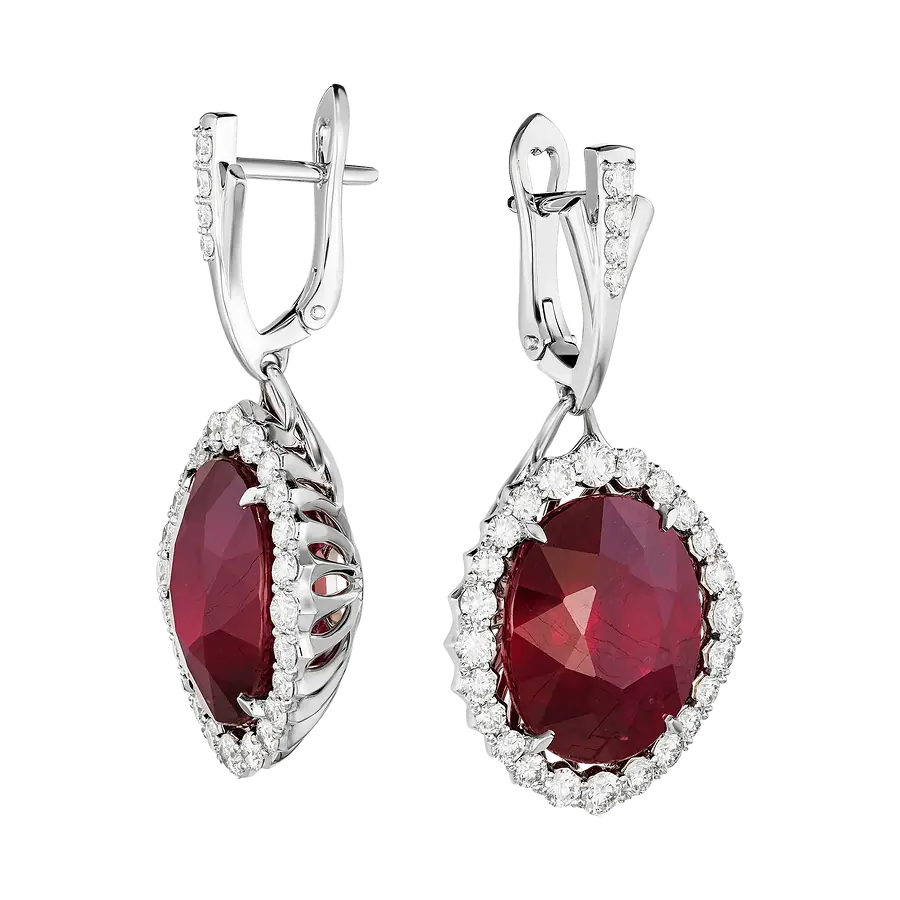
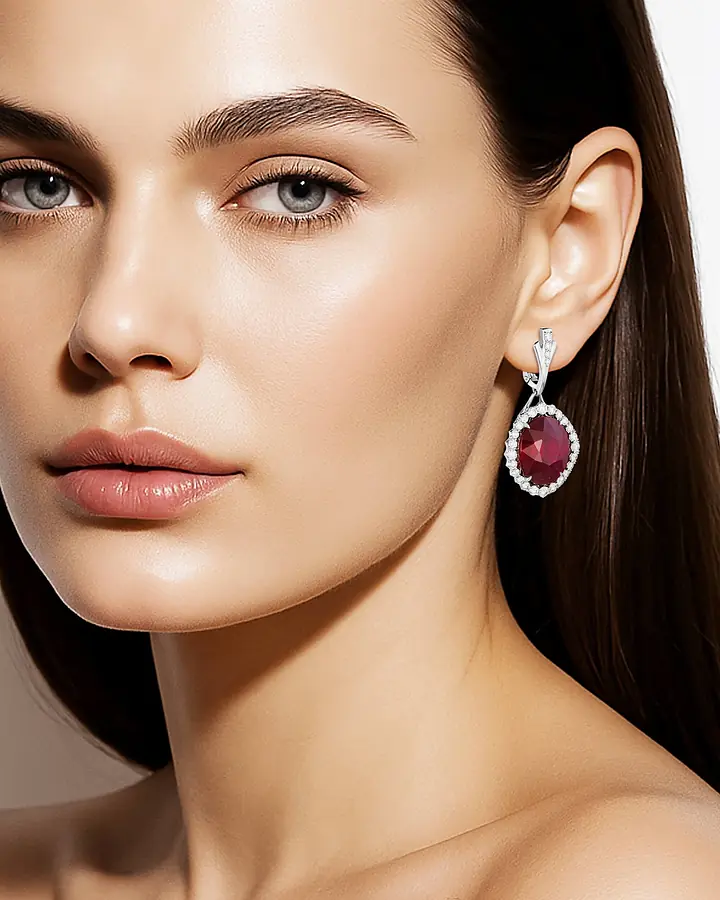
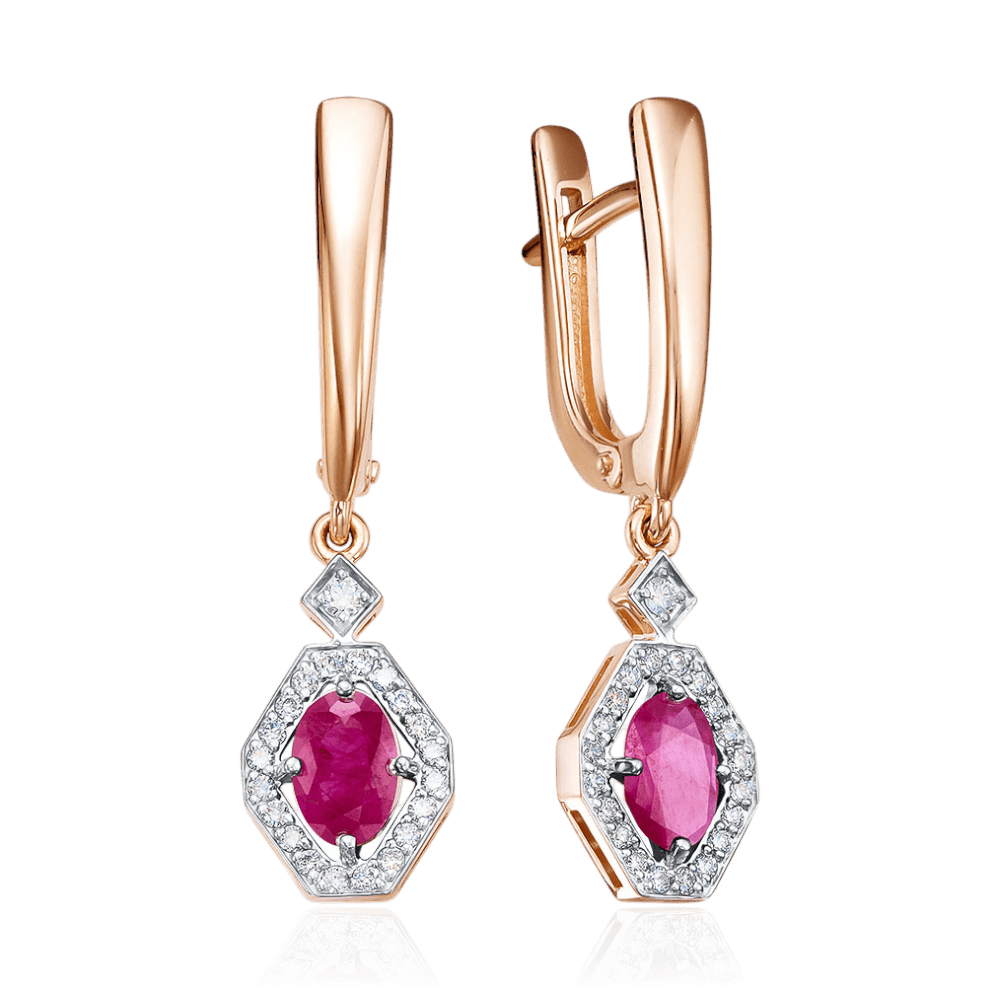
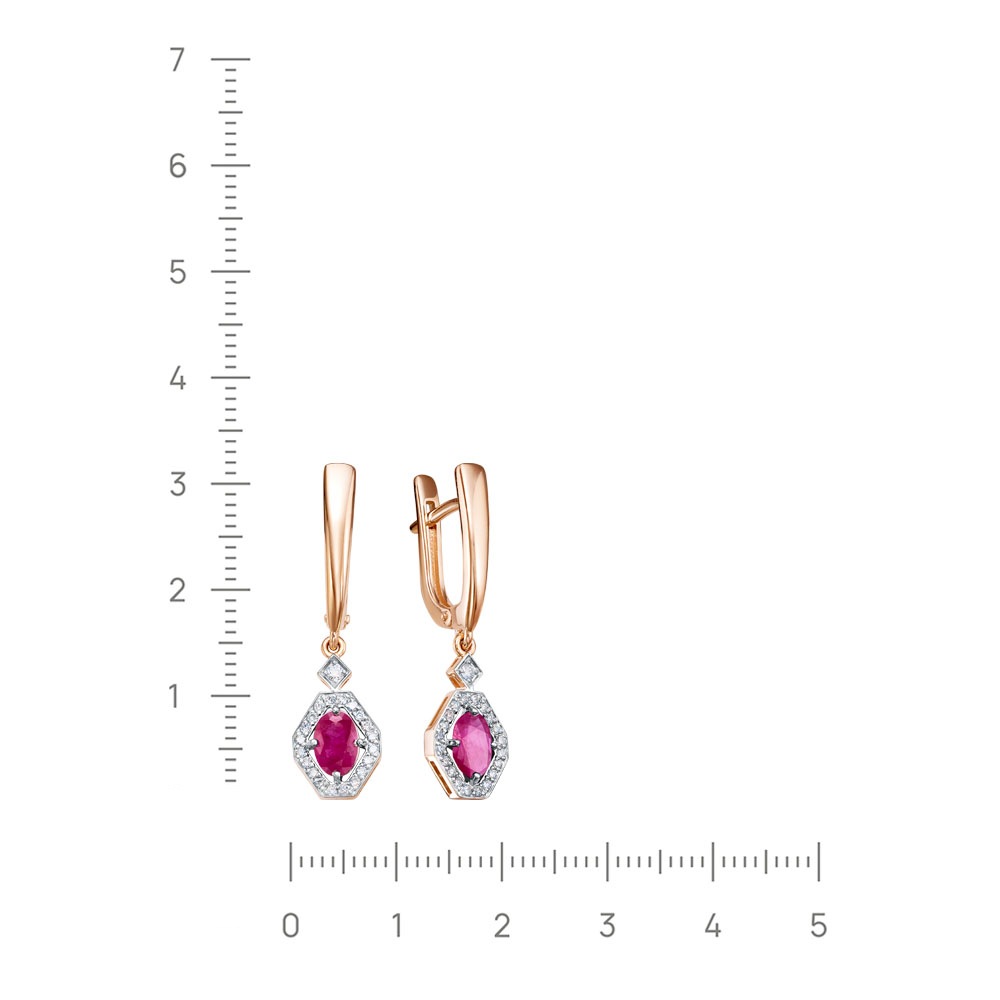
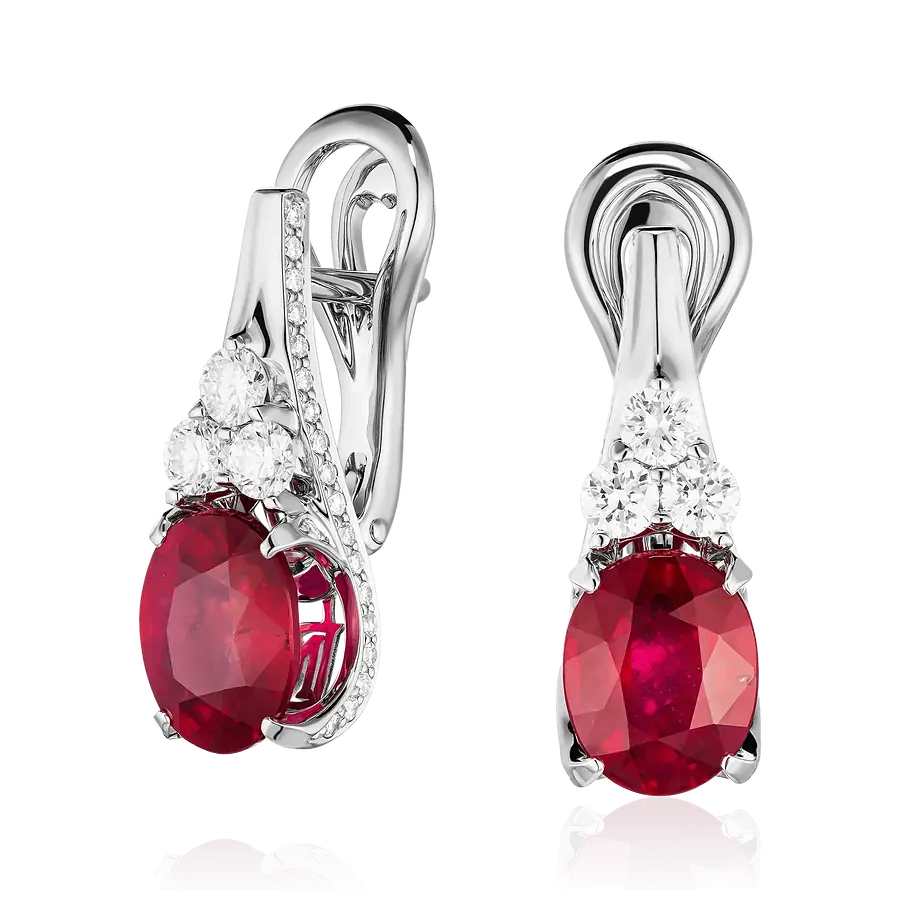
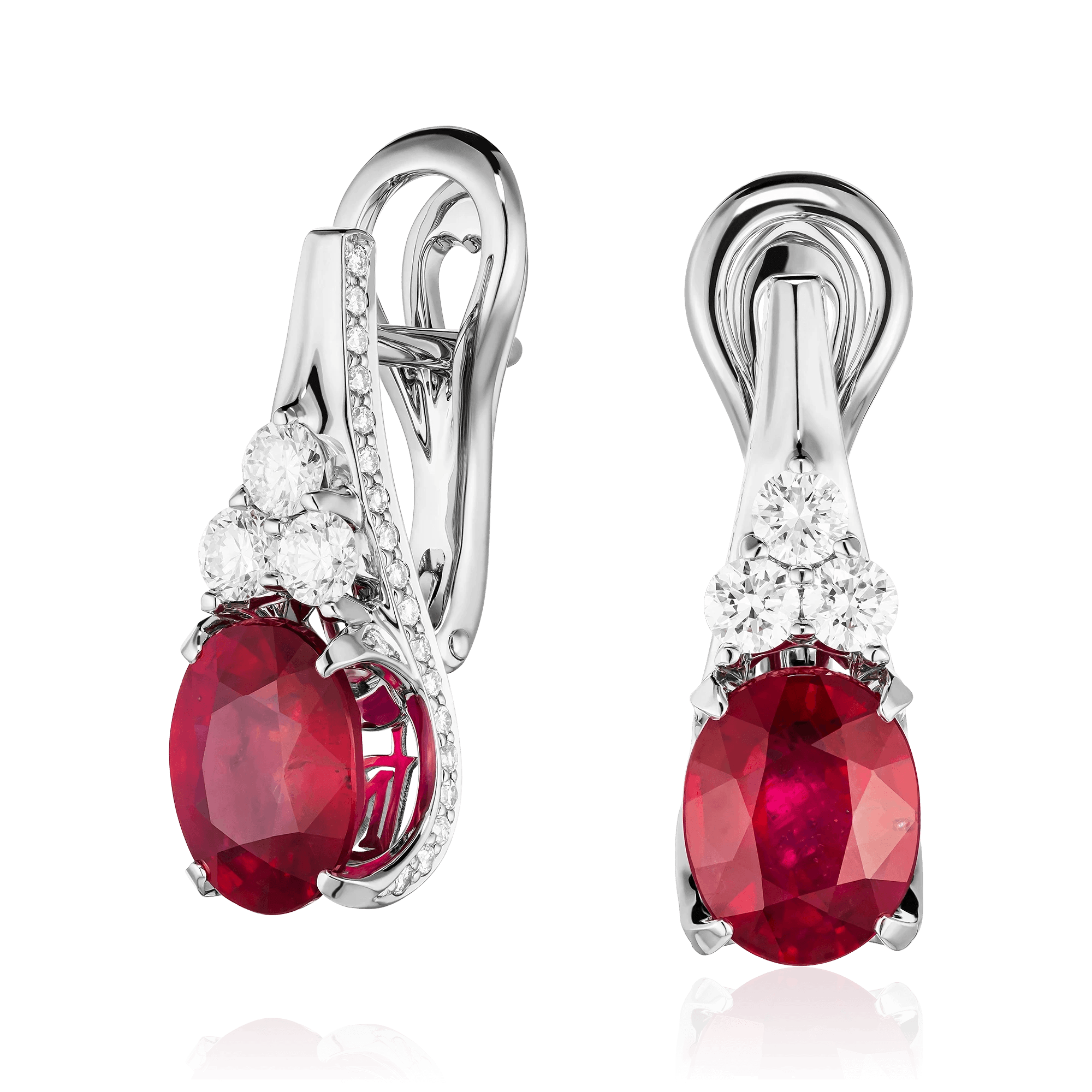

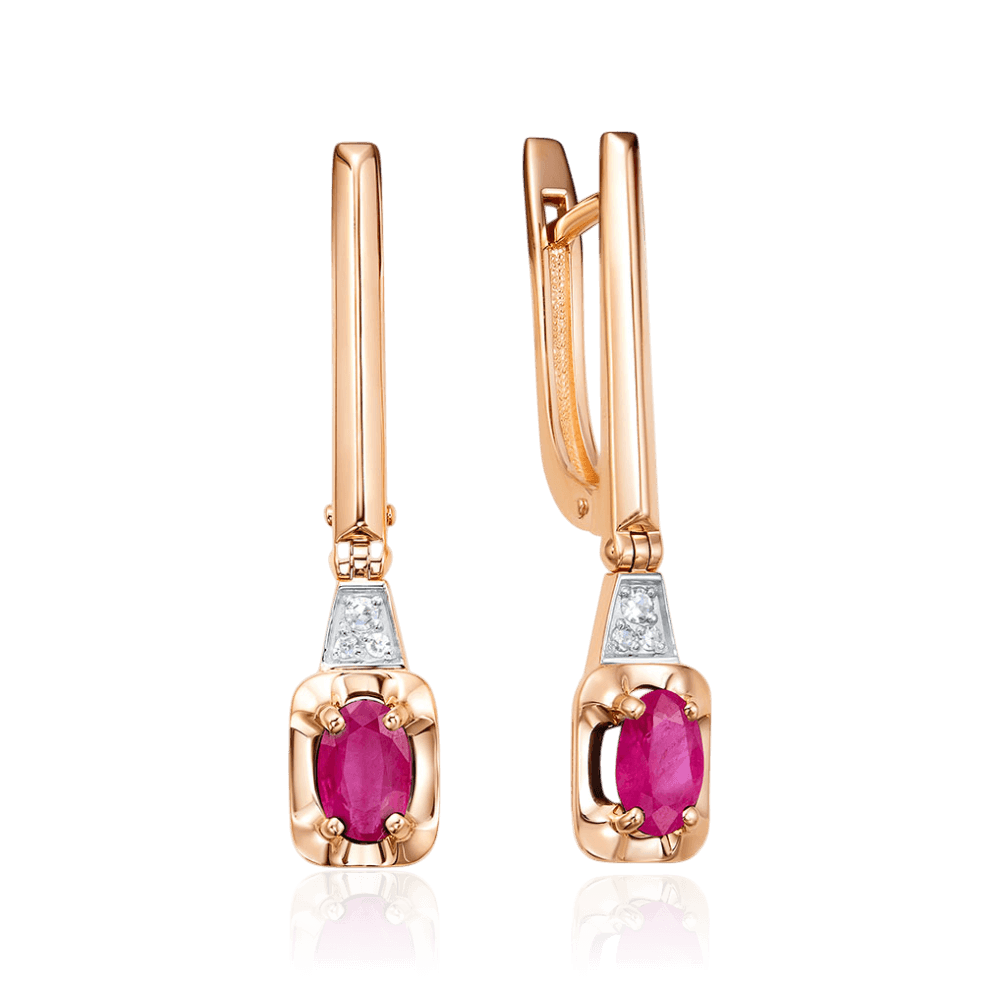
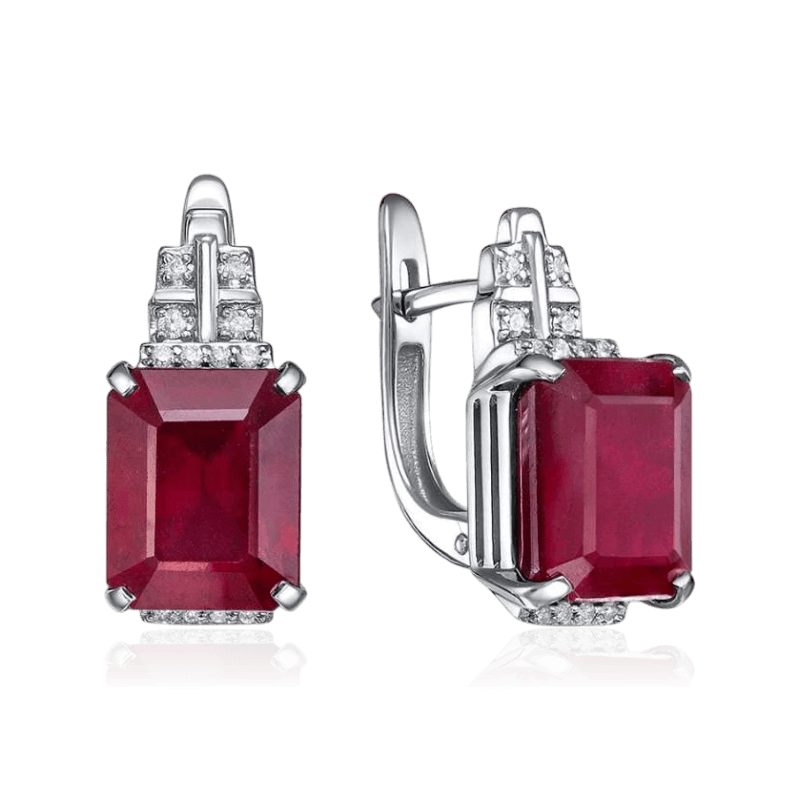
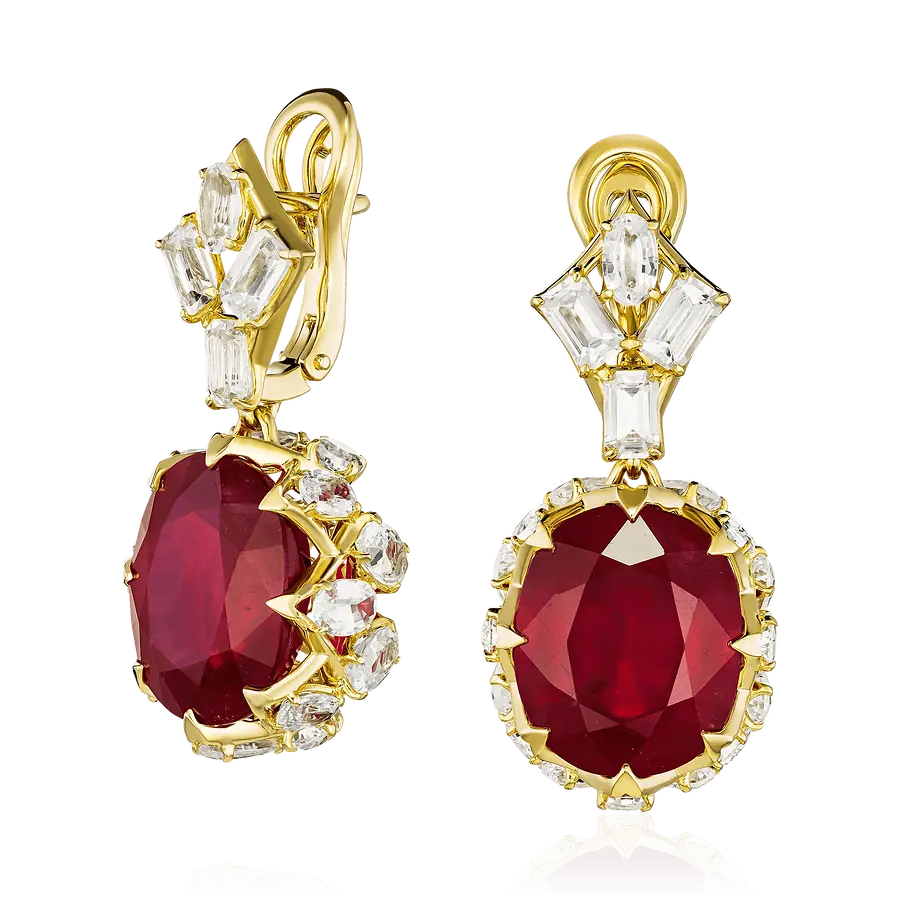
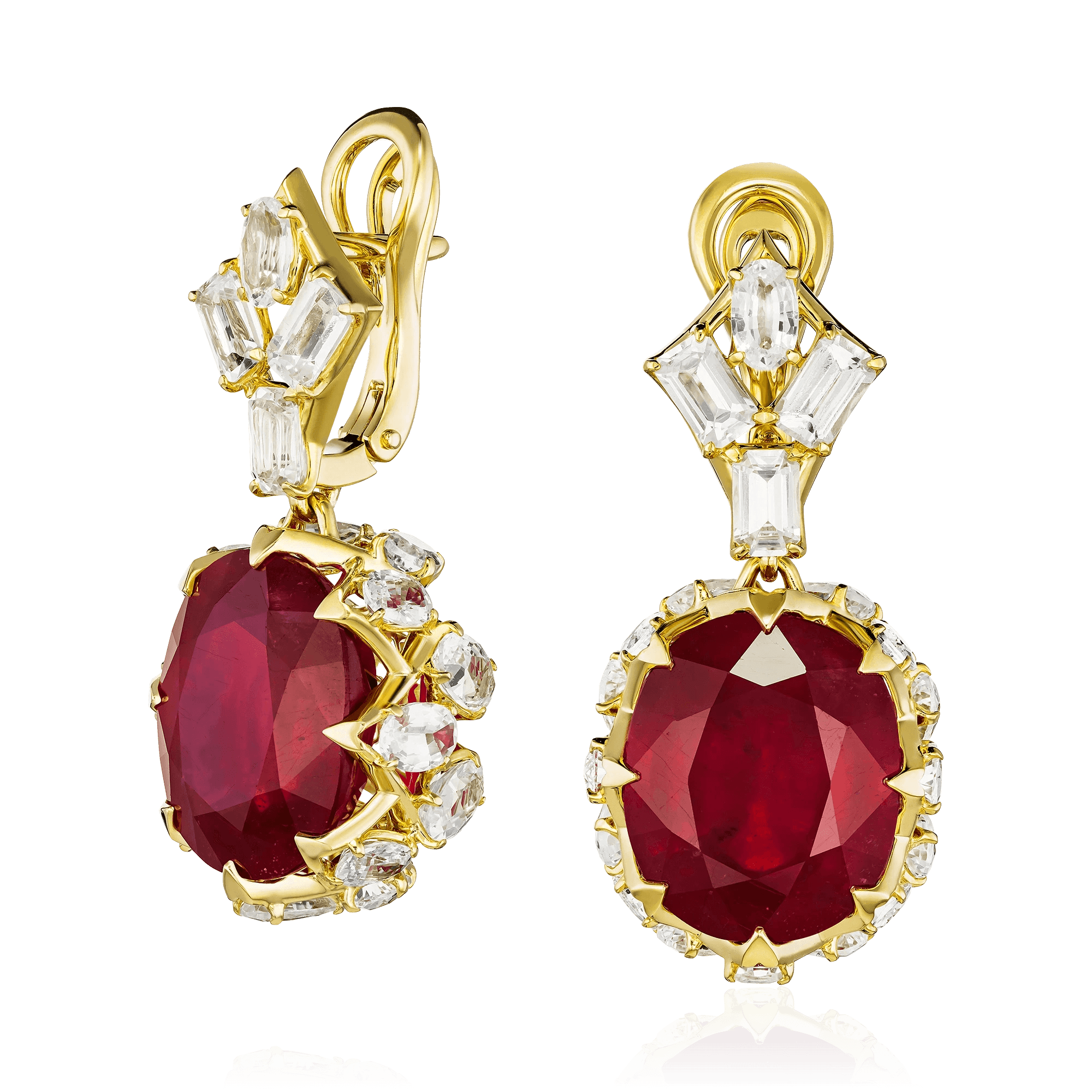
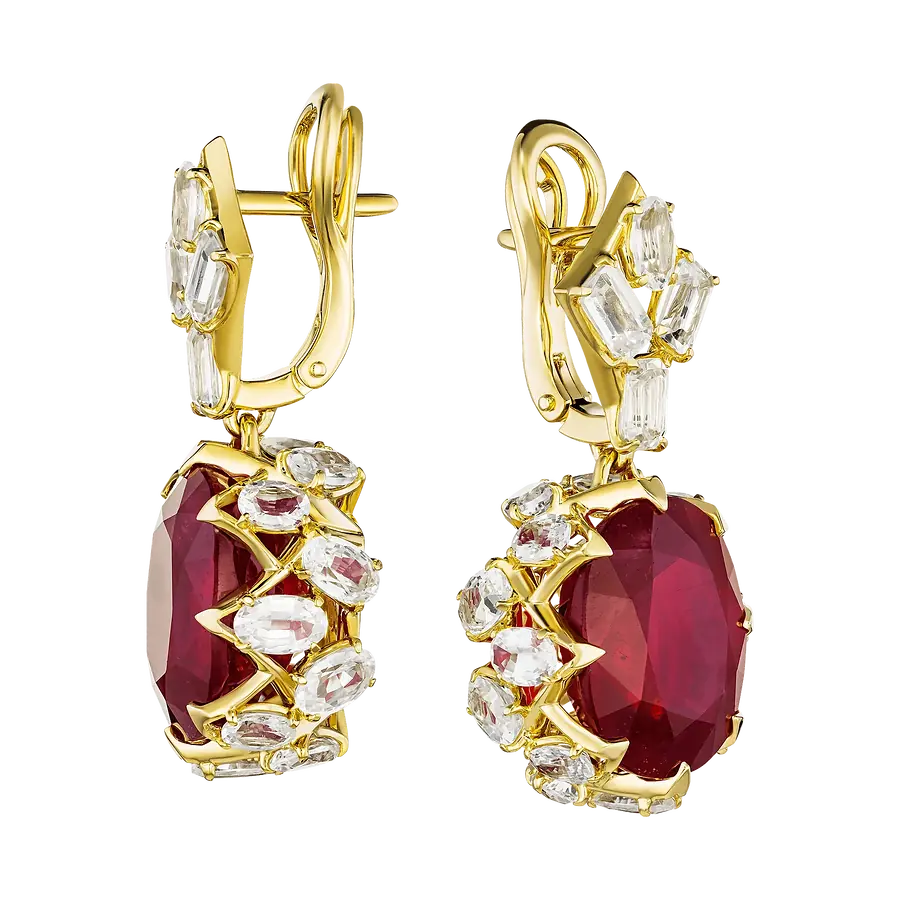

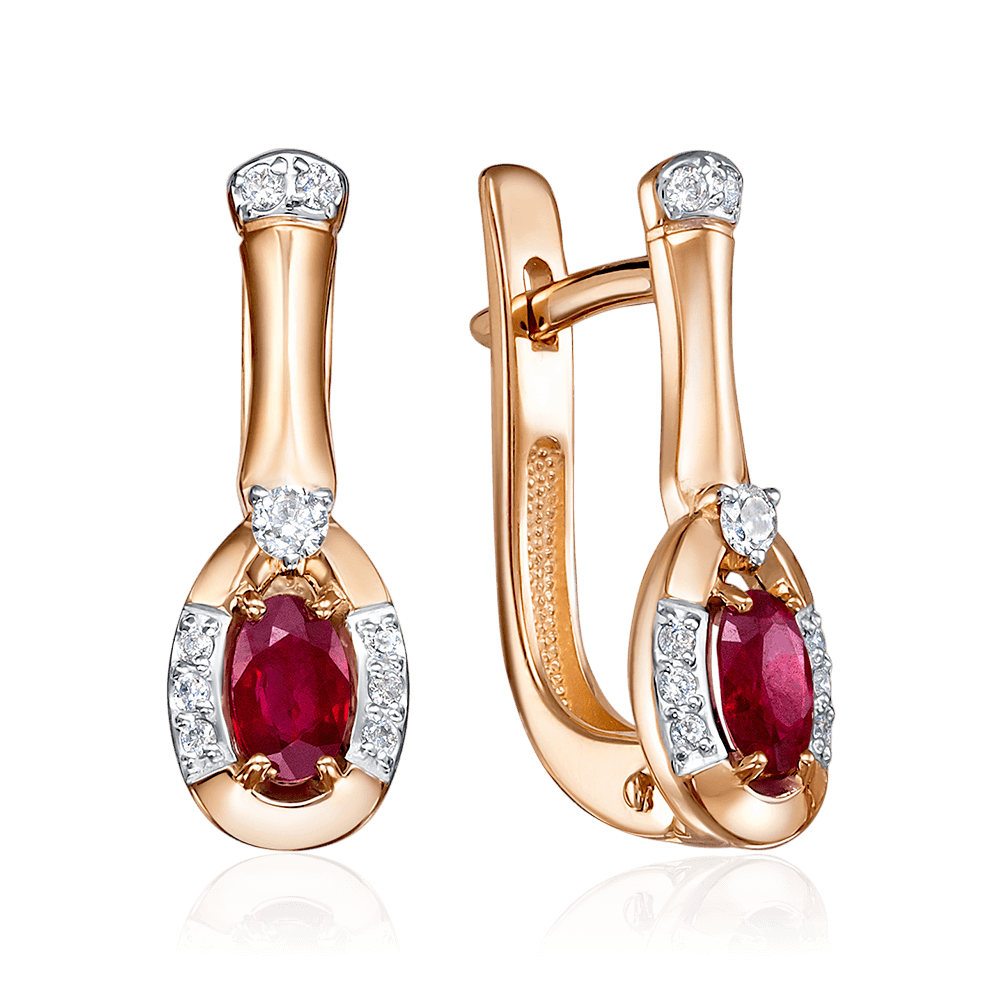
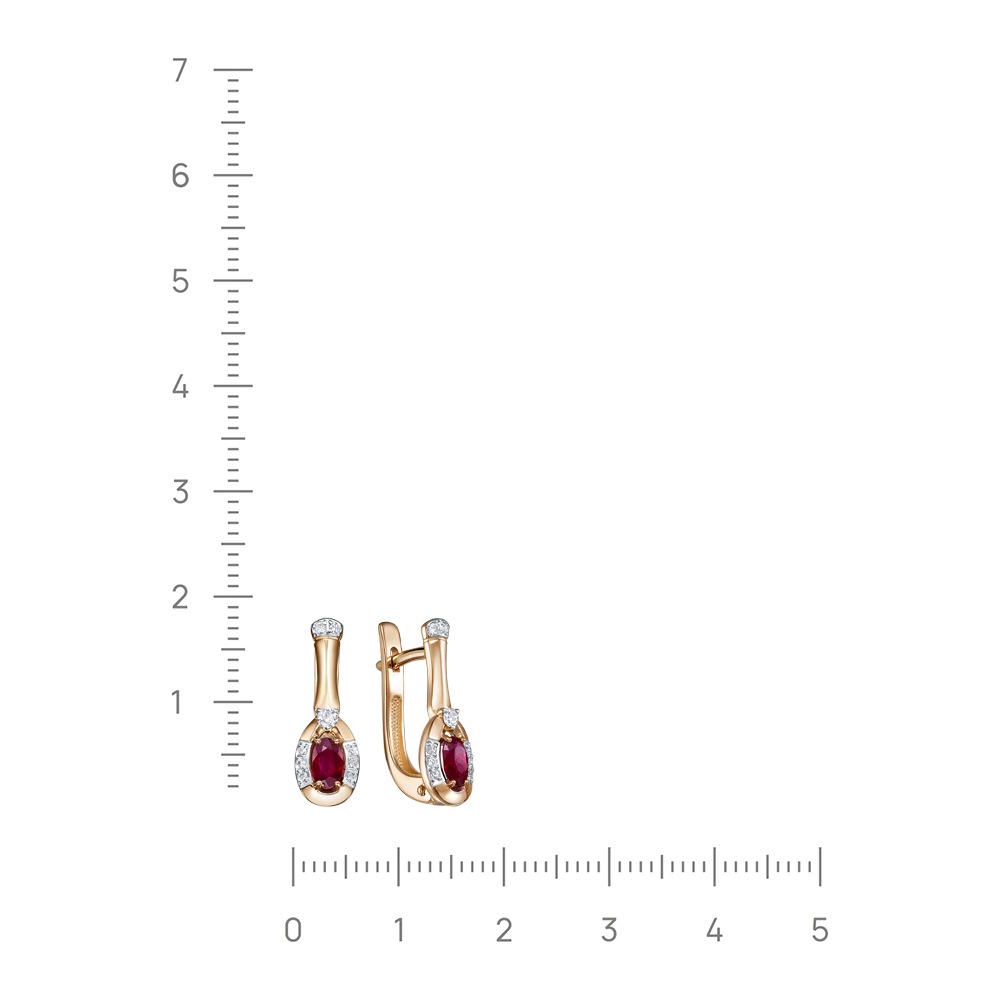


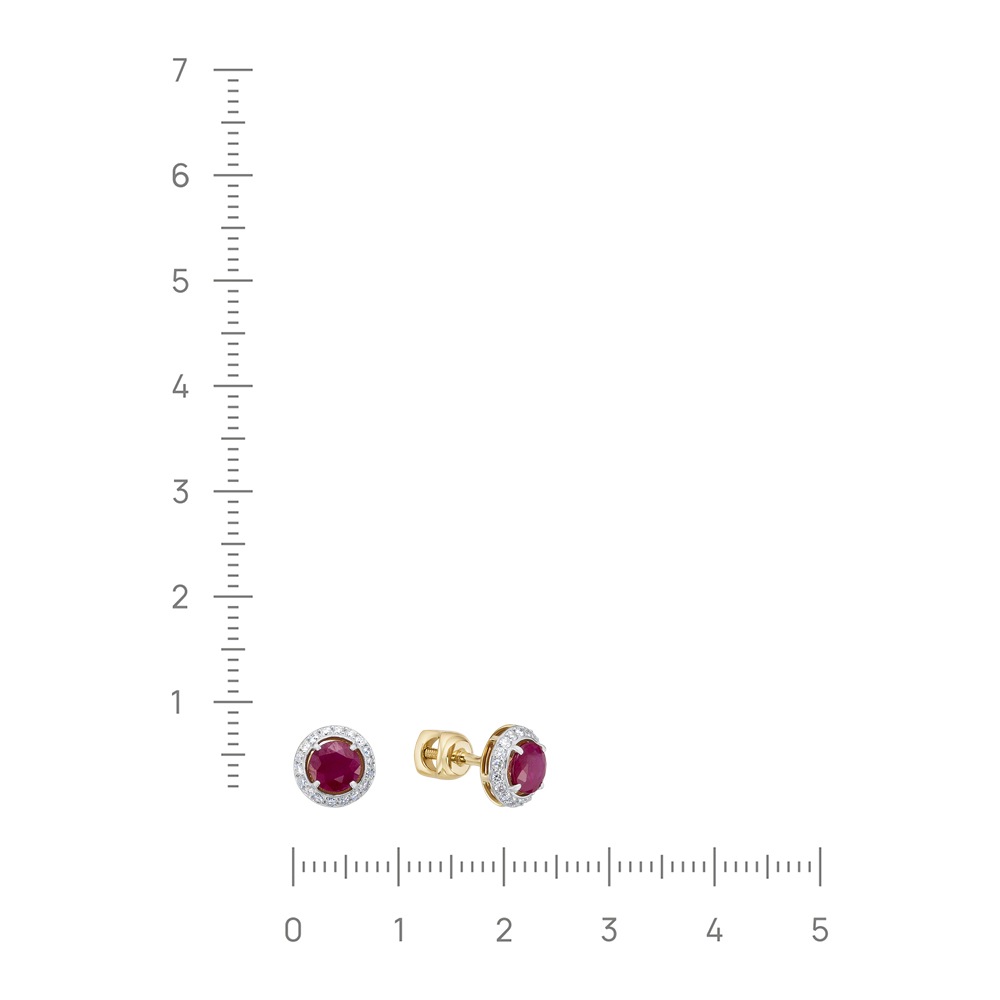
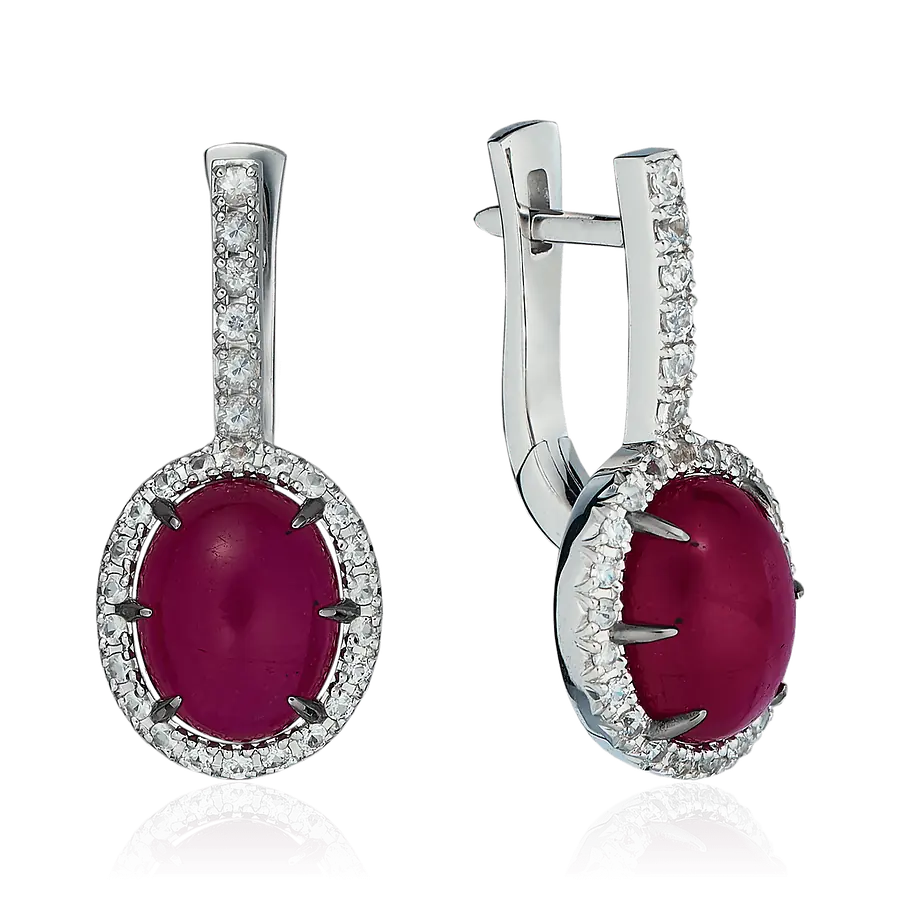


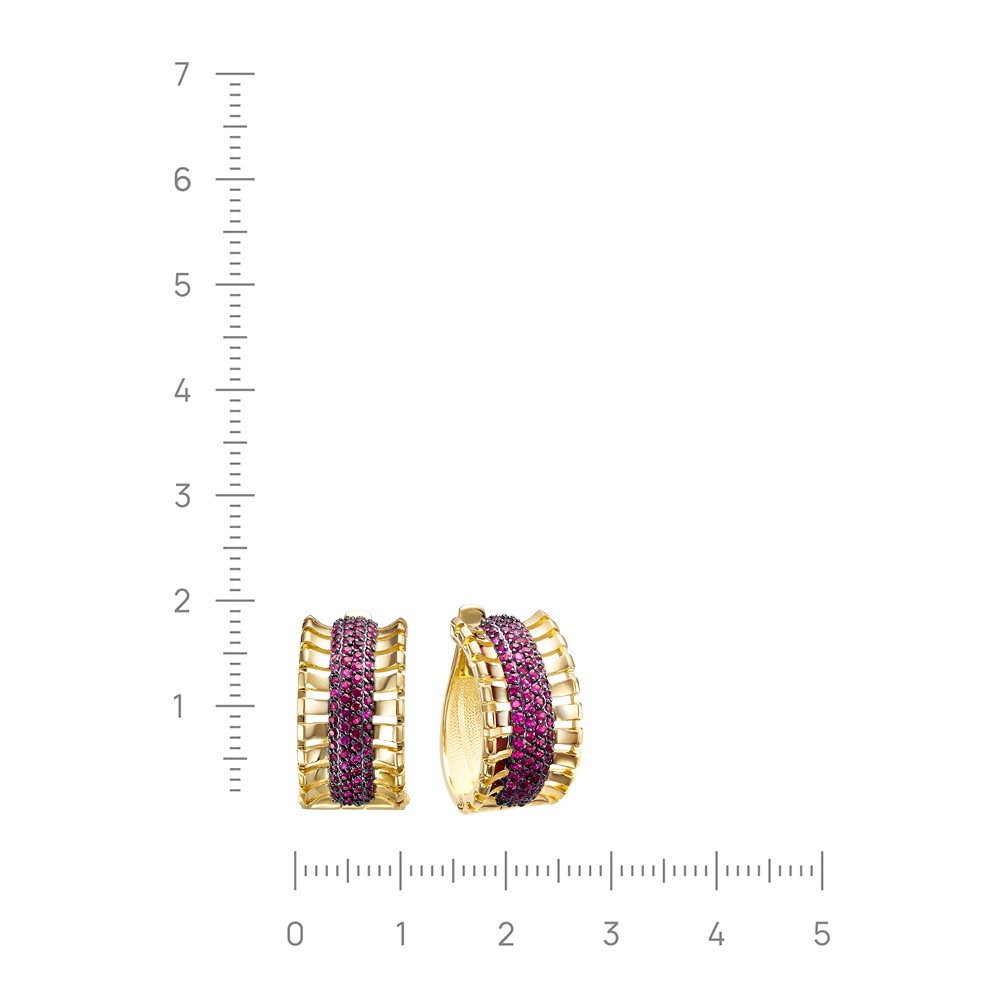

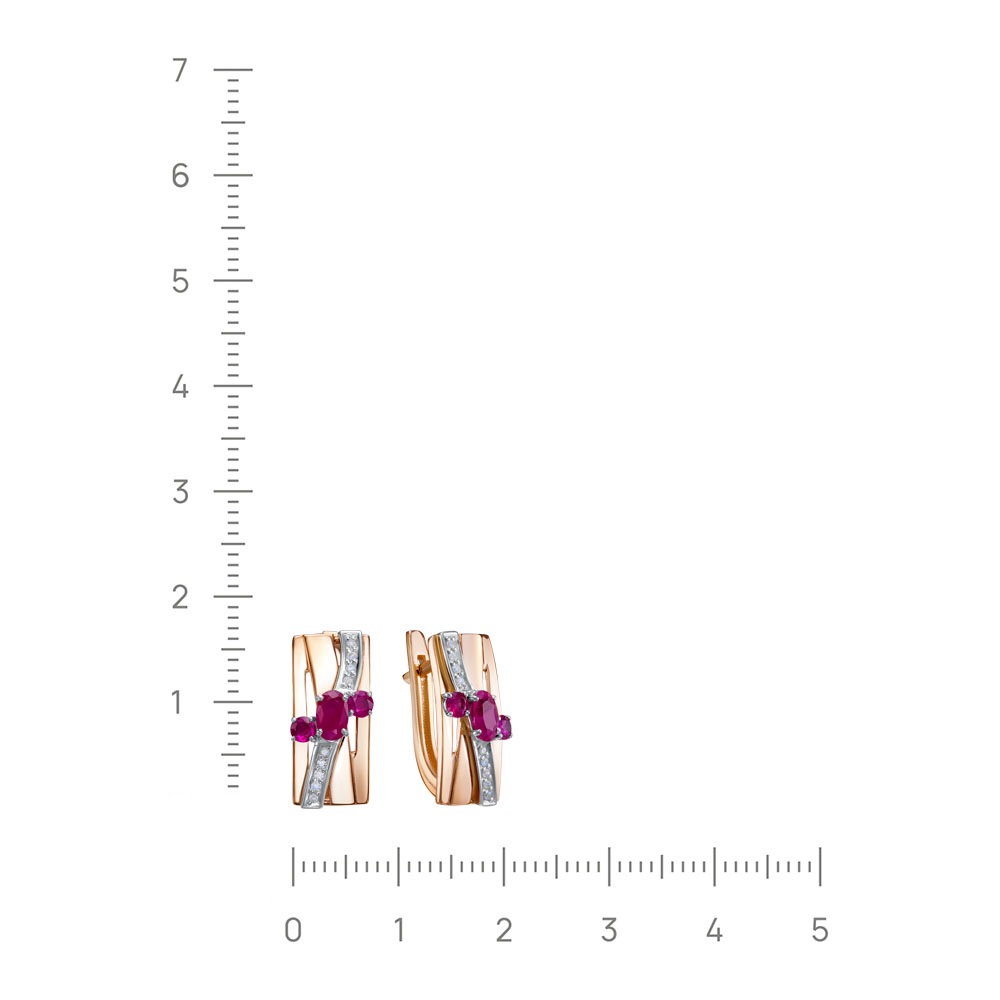
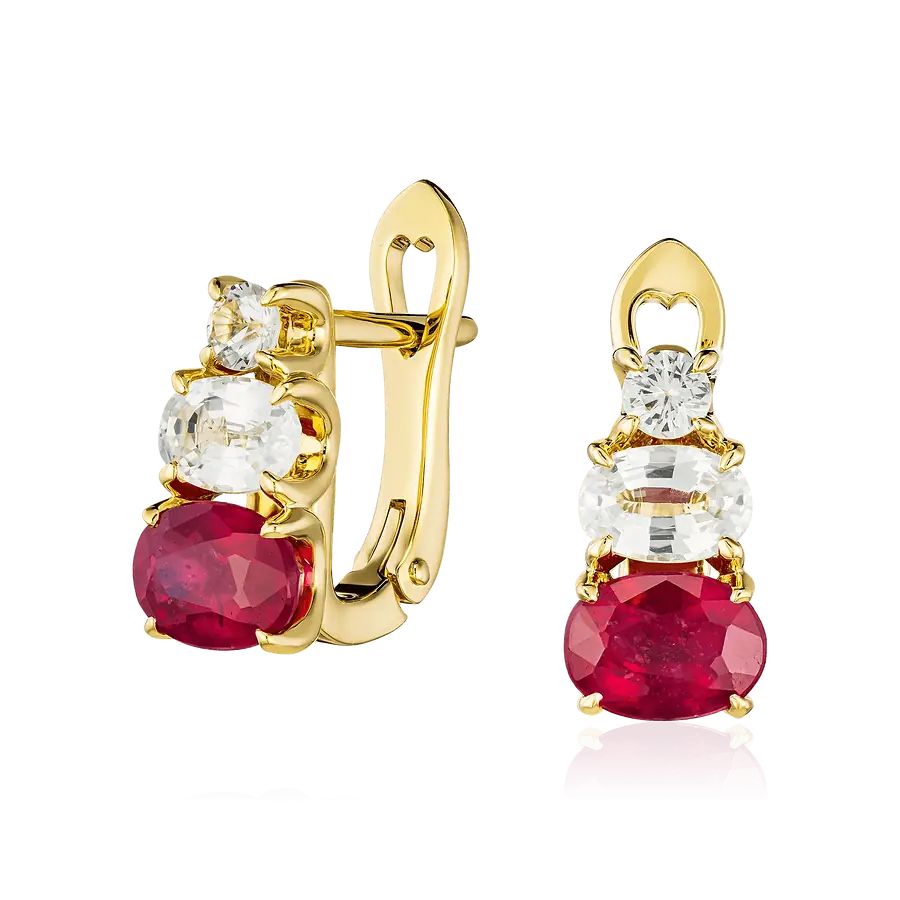
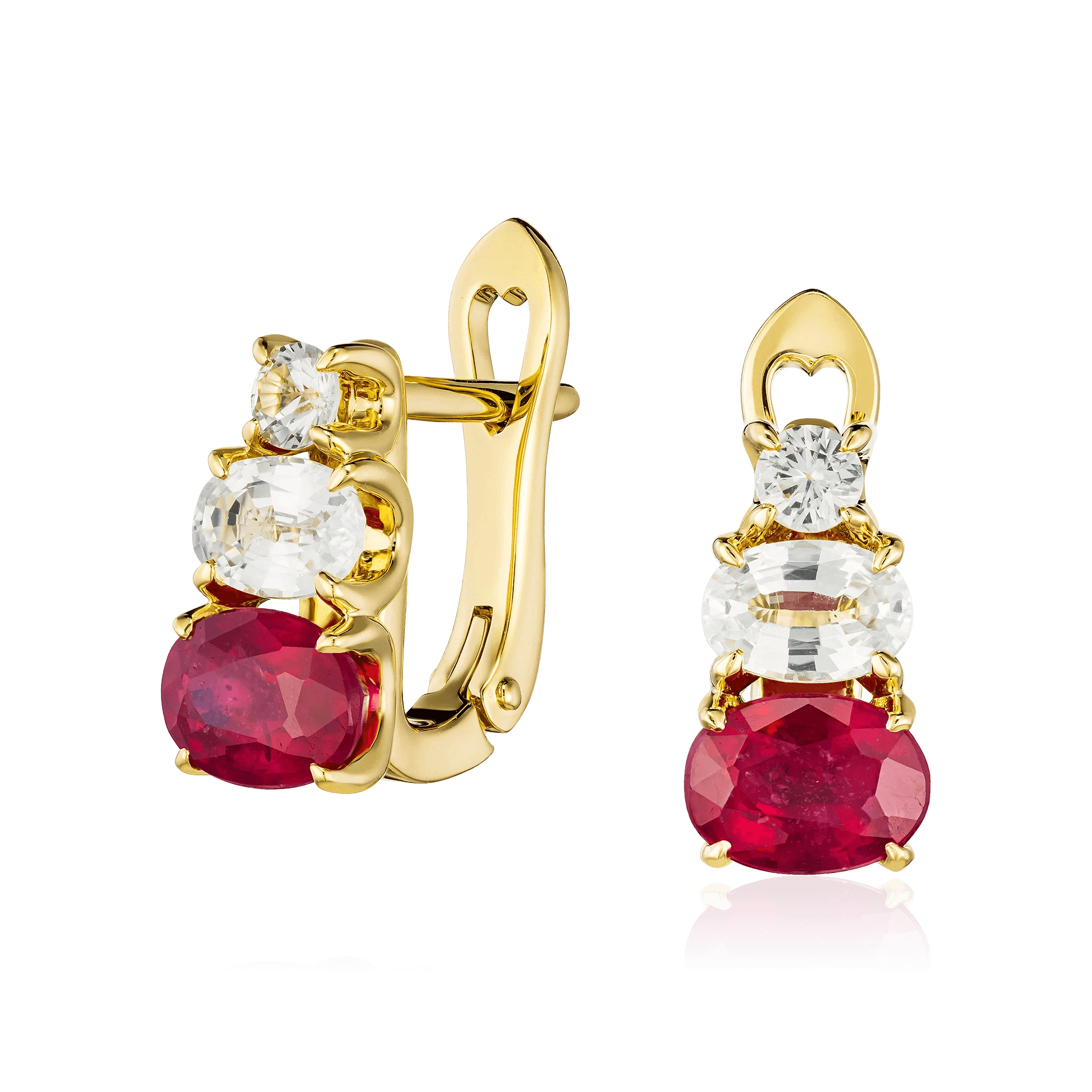


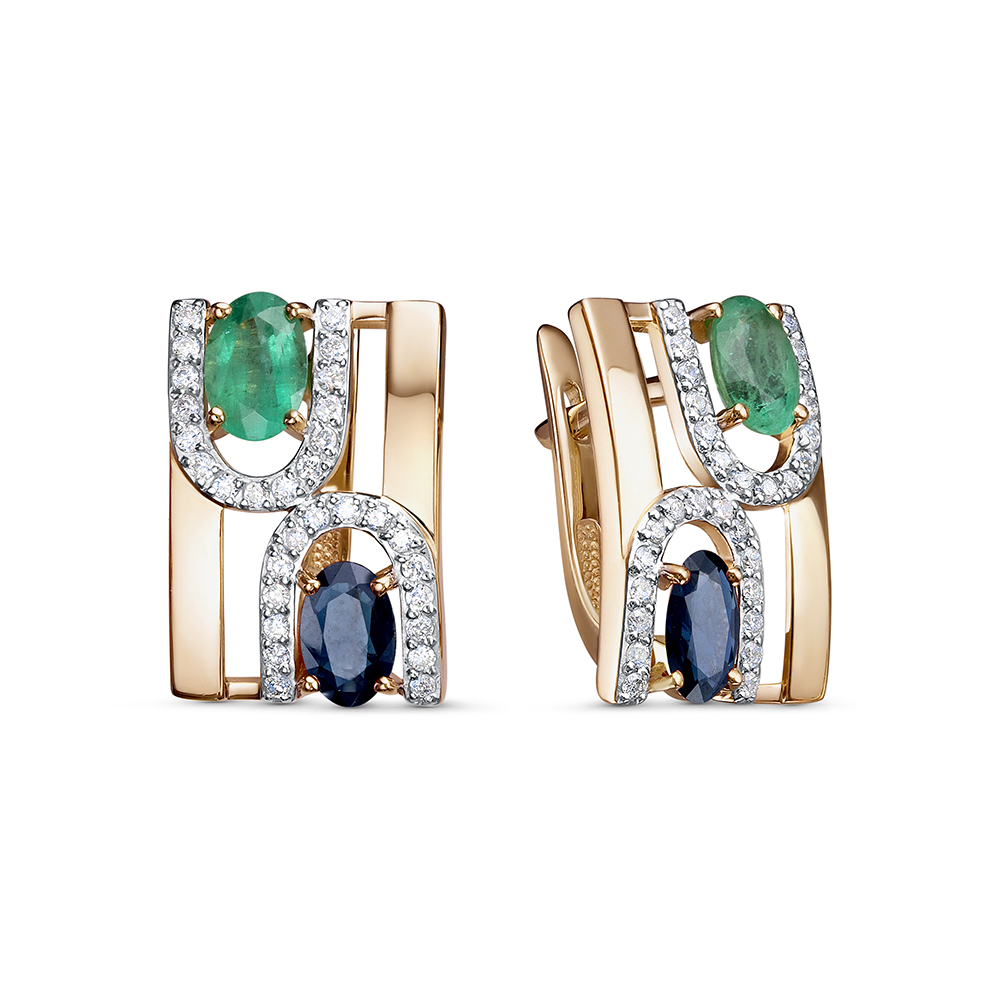
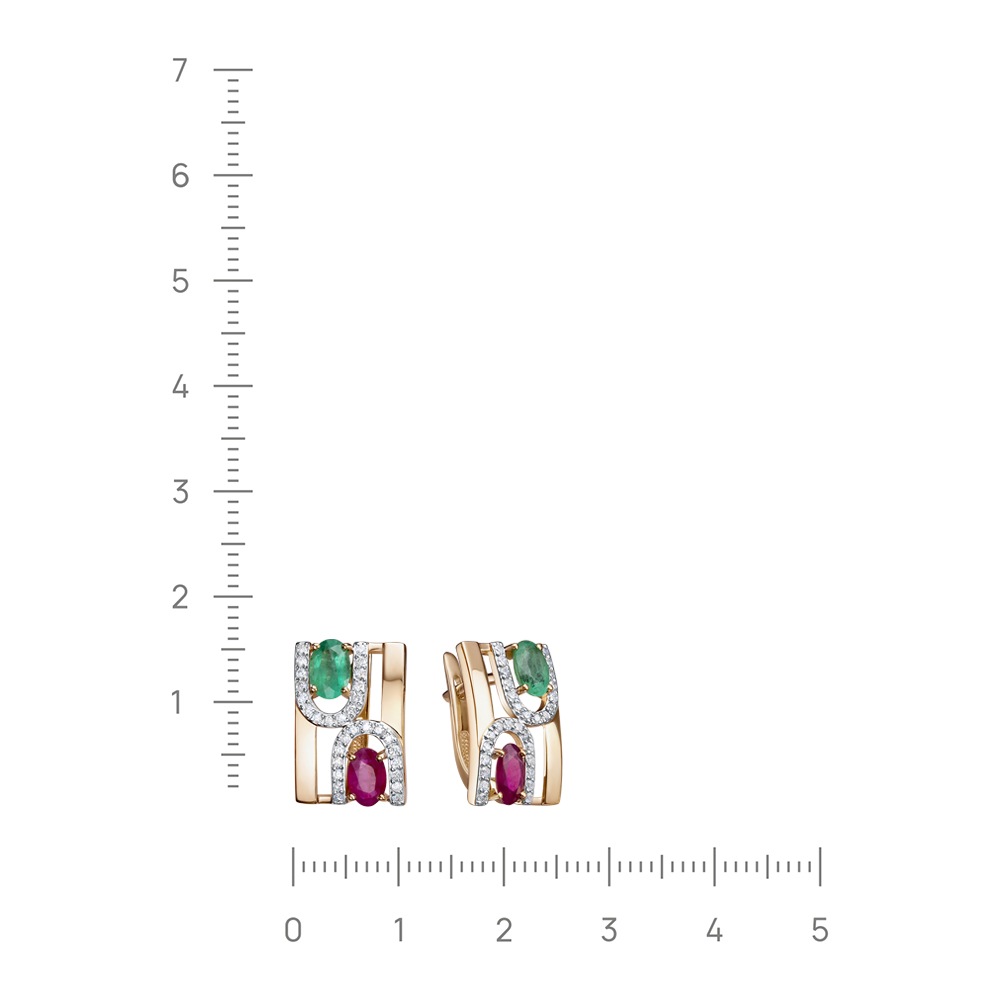

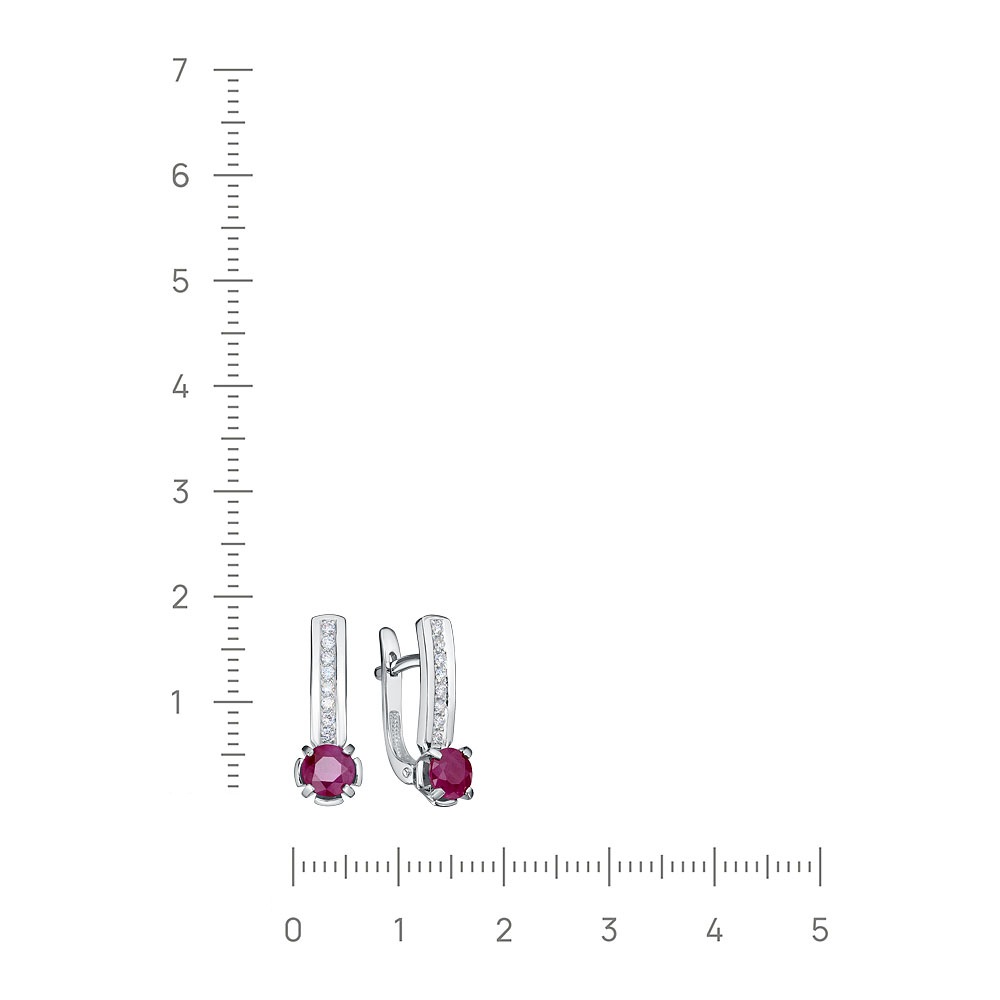
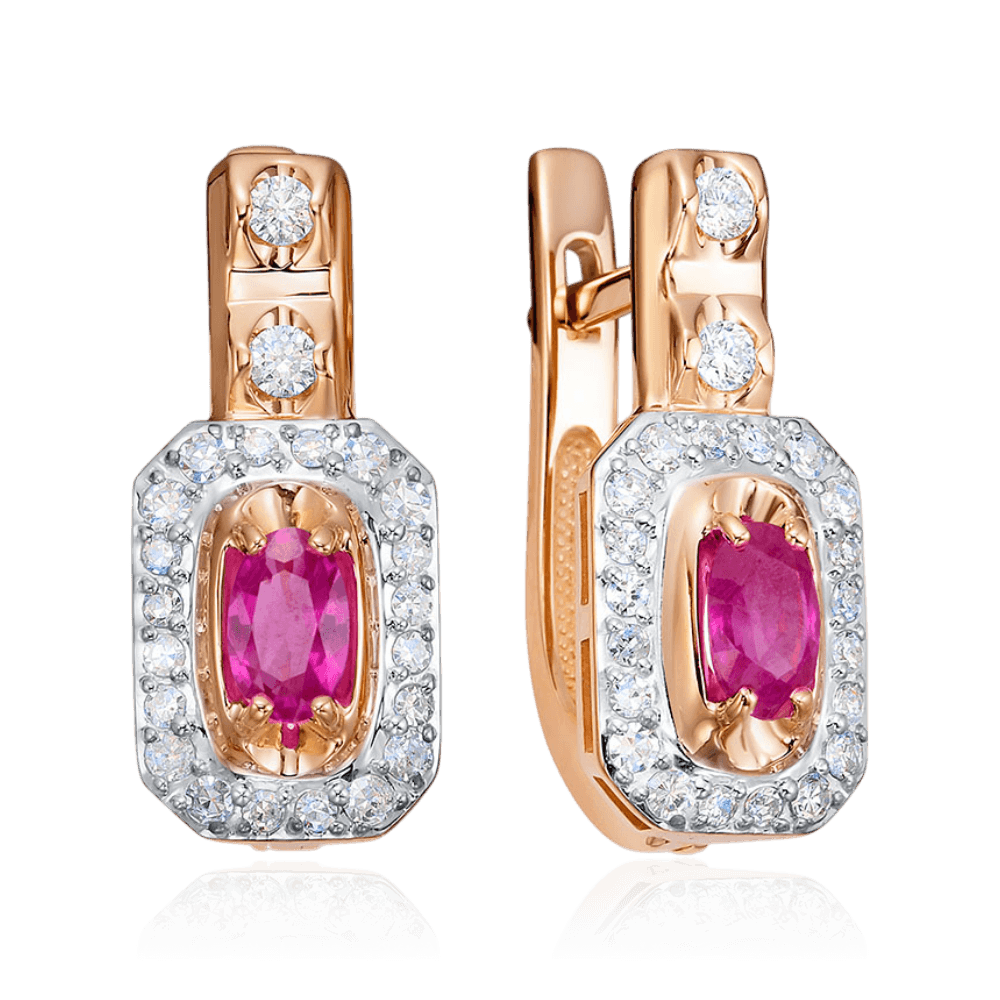
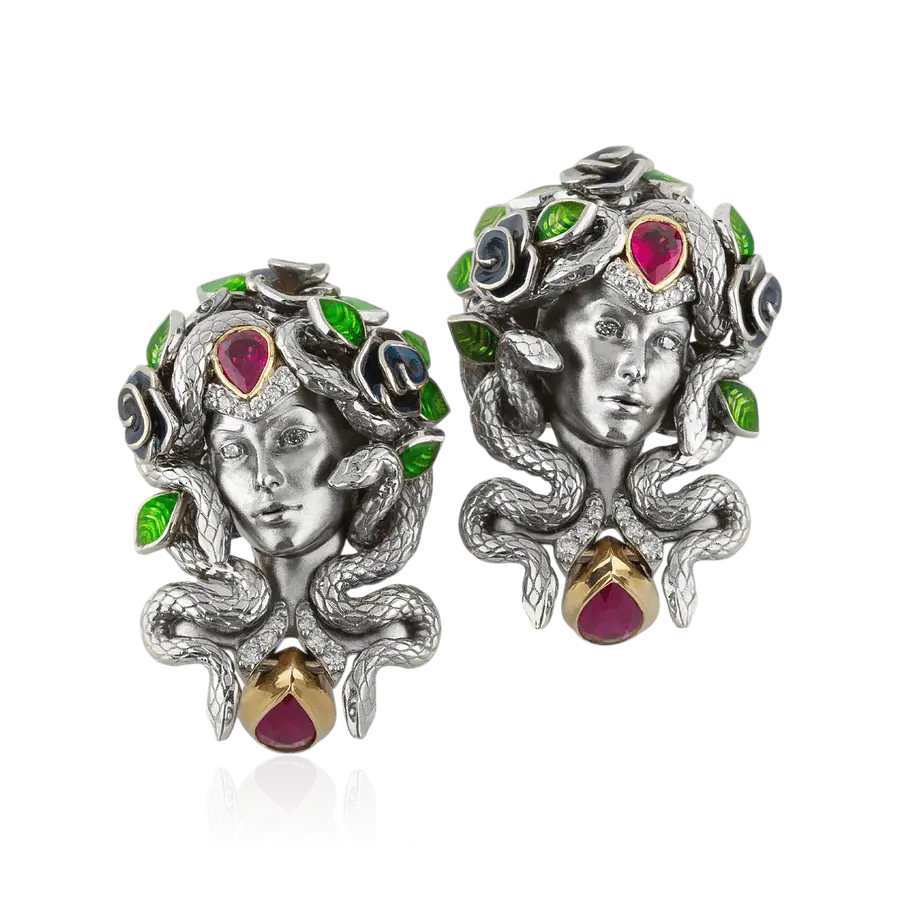
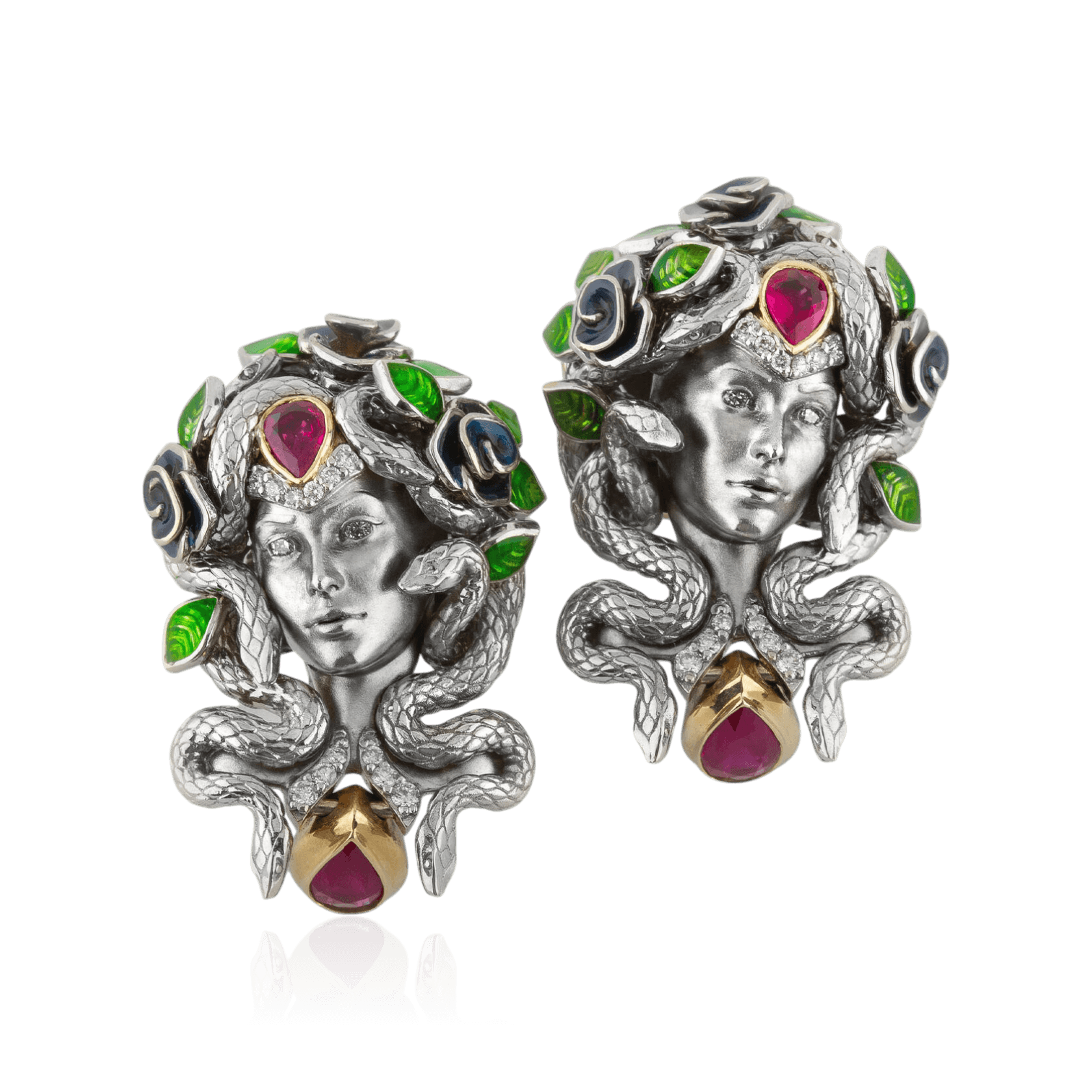
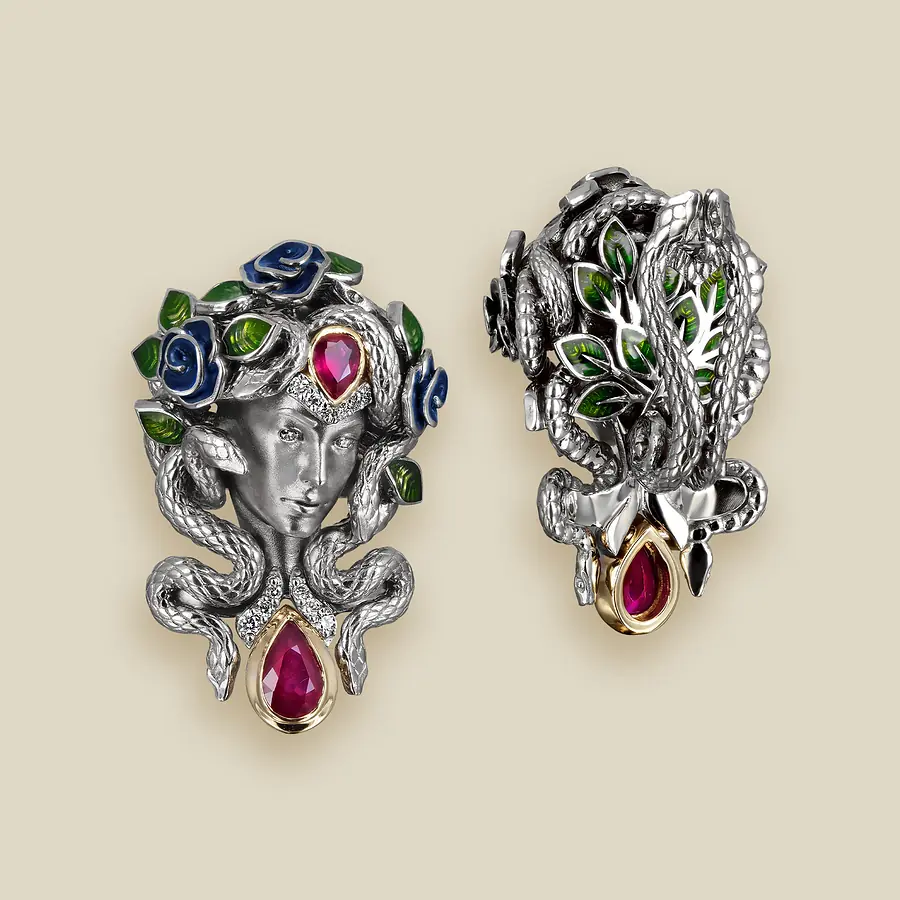
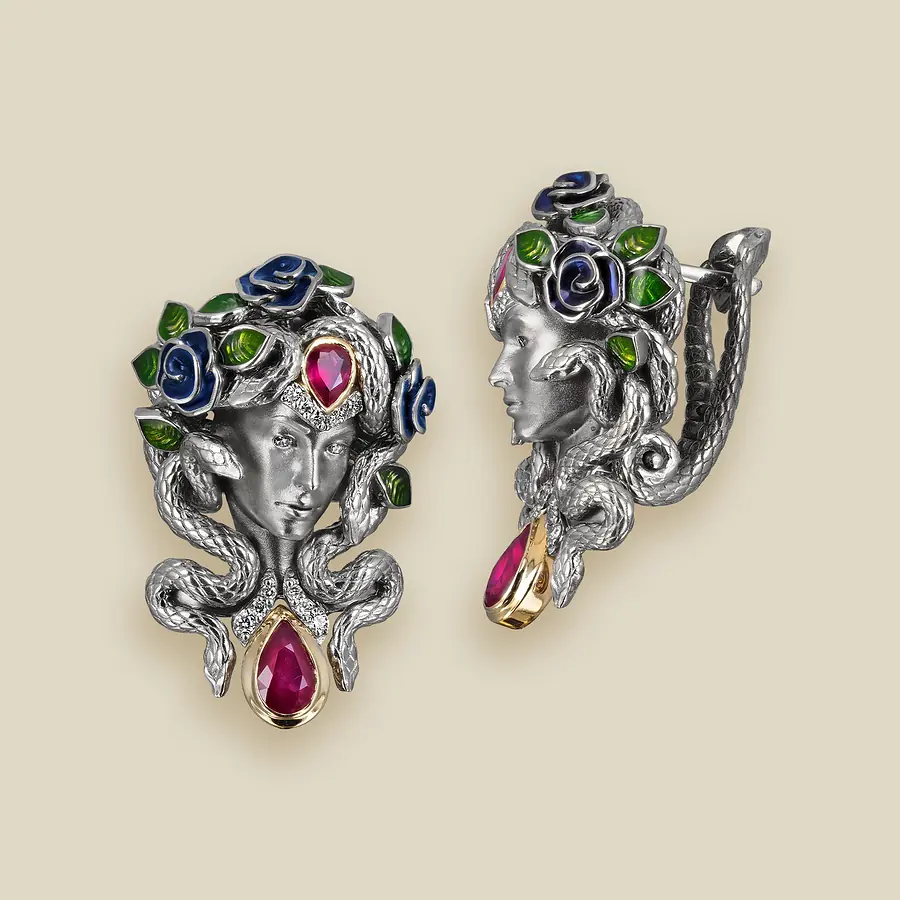
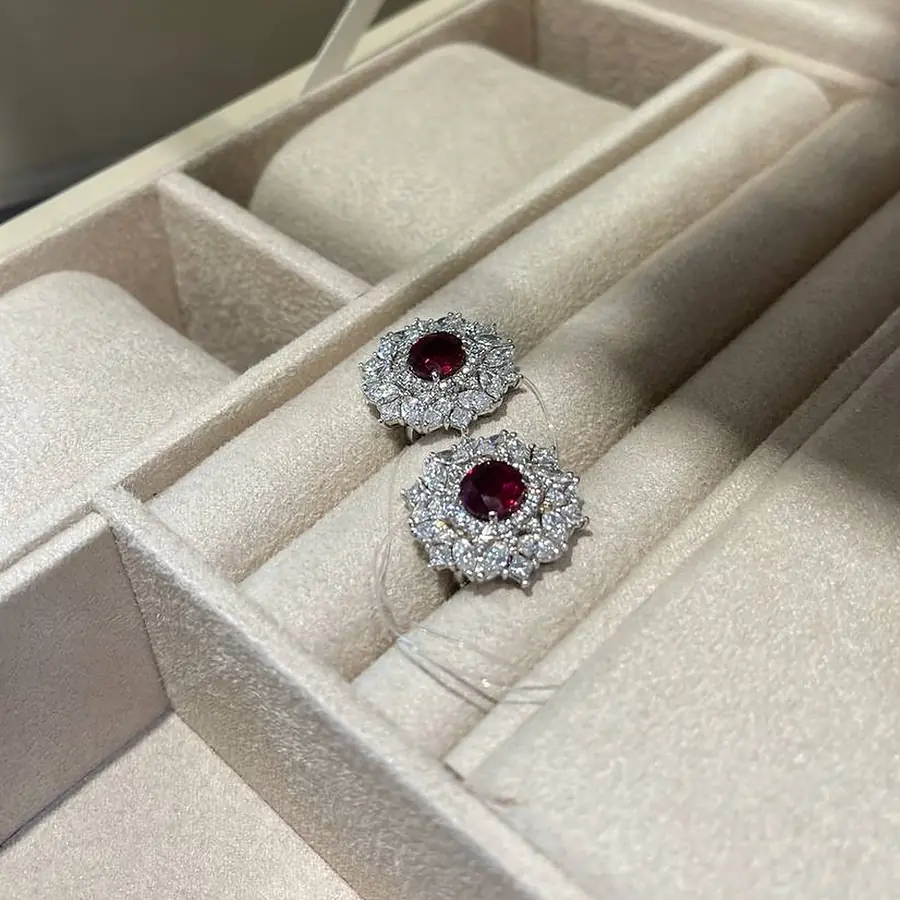
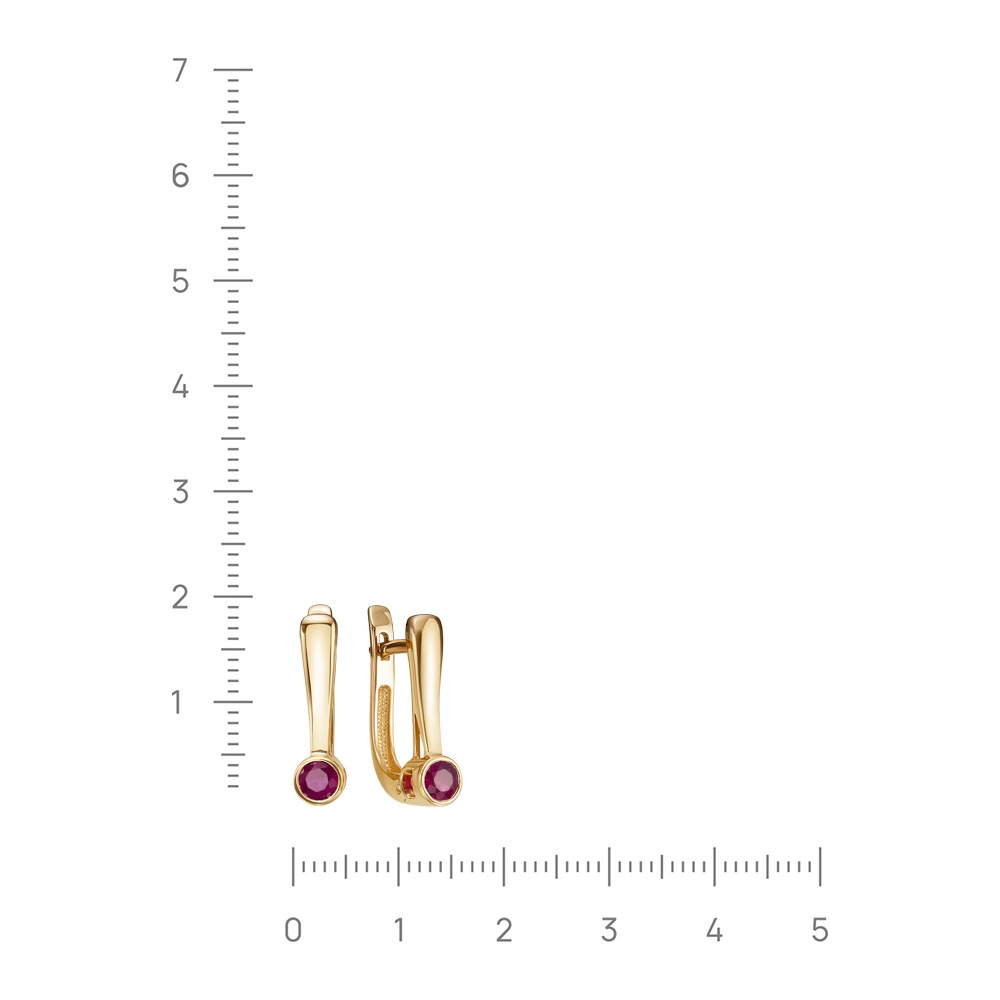
The median of this catalog is 333,500 ₽, the highest among earring sections: 55% of items cost more than 300,000 ₽. The lower limit is 22,900 ₽. There are 434 models in total, and 89% have diamonds set alongside the ruby.
Ruby earrings start from 22,900 ₽, but the section median is 333,500 ₽, the highest median among all earring sections on the site. It is therefore better to go by price ranges than by the minimum. The gap is explained by the fact that the price is set not by the size of the stone but by the purity of its red tone.
The lower limit consists of shaped models with small stones; classic ruby earrings start from 41,900 ₽. You can sort ruby earrings by price using the filter in the left column.
Catalog guidelines:
The catalog's upper limit is 45,910,000 ₽. Note that the share of the high-end segment here is higher than in other sections: stones priced above 300,000 ₽ account for 55% of the selection. Ruby earrings are rarely an incidental piece: a stone of this caliber is bought deliberately.
All 434 models in the section feature natural ruby. Earrings with synthetic ruby are not offered in the catalog, and it is worth explaining: demand for them is steady.
Synthetic ruby has been grown since 1902 by the Verneuil method, and chemically it is identical to natural ruby: the same corundum, the same chromium, the same red color. Earrings with lab-grown ruby are openly sold on the market and cost several times less. It differs in price, which is hundreds of times lower, and in internal structure: synthetics have characteristic curved growth lines that a gemologist can see under a loupe. The problem is not the stone itself but the honesty of the seller.
Heating is a different matter. Heat treatment of ruby is standard in the industry: it evens out the color and removes cloudiness. It is a recognized practice, it is not concealed, and it does not affect the stone's durability. Glass filling is a separate matter: cracks are filled with lead glass, which cuts the stone's price several times over and requires special care. We do not use such stones in our catalog.
About silver. Ruby earrings in silver are not offered in this section: there is not a single such piece, even though there is demand. The reason is practical: a natural ruby of noticeable size costs from several tens of thousands of rubles, and setting it in silver makes no economic sense, since the mount is softer, tarnishes and deforms, and costs many times less than the stone. Silver and gold plating in this category almost always mean a synthetic stone.
Ruby and sapphire are the same mineral, corundum. The difference is only in the name: red corundum is called ruby, and corundum of any other color is called sapphire. The red tone comes from traces of chromium, the blue from iron and titanium.
From this comes a practical consequence you can see right in the catalog: in 38 pieces in the section, ruby sits alongside sapphire. Earrings with a ruby and a blue stone in one setting appear in our range more often than the market average. This is not eclecticism but a combination of two varieties of one mineral: they have the same hardness, the same refractive index and the same behavior in setting. Such a pair is convenient for the jeweler, and visually red and blue give the strongest contrast possible among colored stones.
Corundum has a hardness of 9 on the Mohs scale, second only to diamond. In this respect, ruby earrings are more practical than pieces with emerald or opal: the stone is unaffected by everyday scratches or accidental contact with a hard surface. If you drop an earring on tile, you are more likely to damage the prong than the stone itself.
Gold fineness is the share of gold in the alloy: 58.5% in 585 and 75% in 750. Ruby earrings are mostly made in 585 – 87% of the section – but the share of 750 here 12,7%, three times higher than in sections with diamonds. The reason is that a more noble alloy is chosen for an expensive center stone.
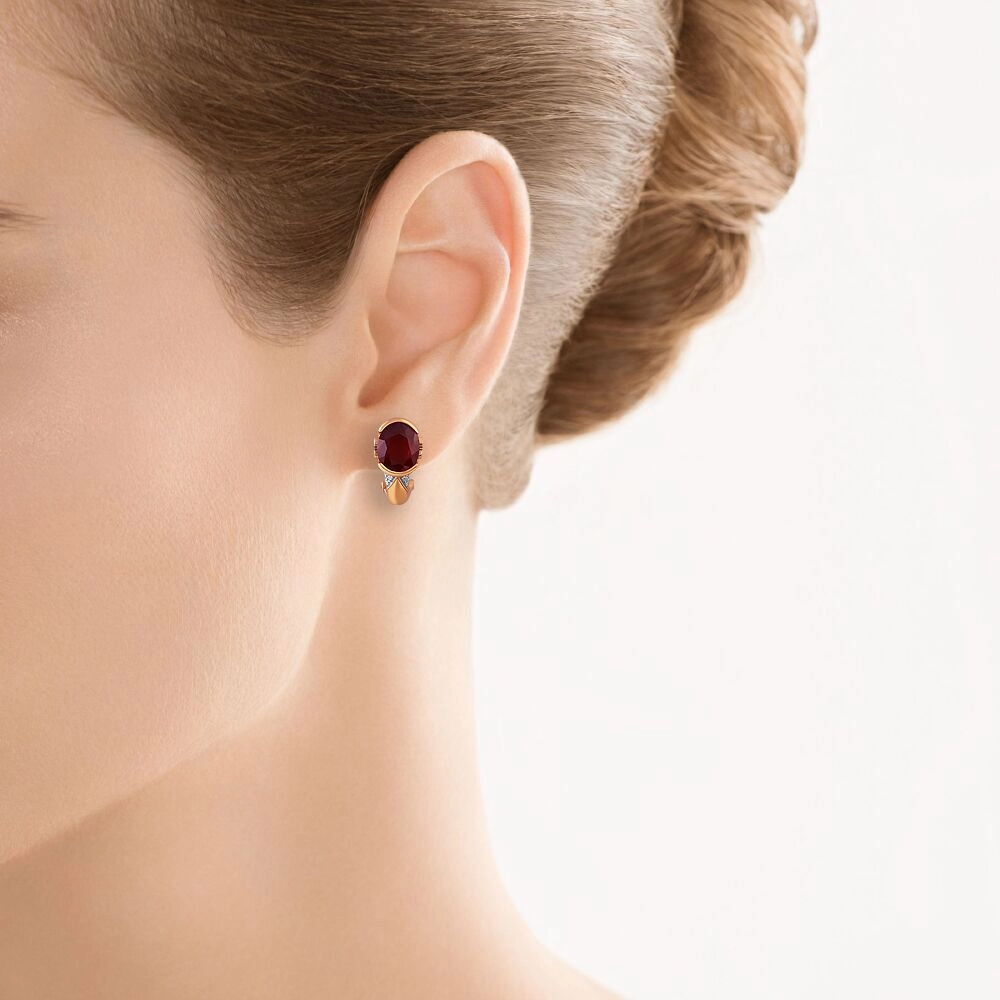
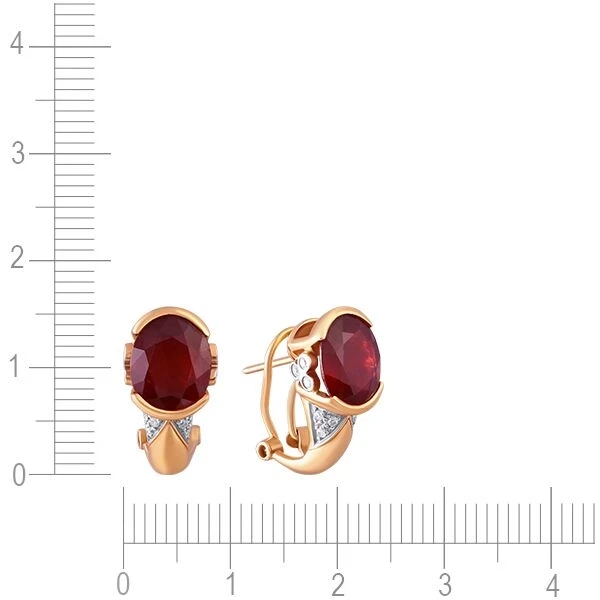
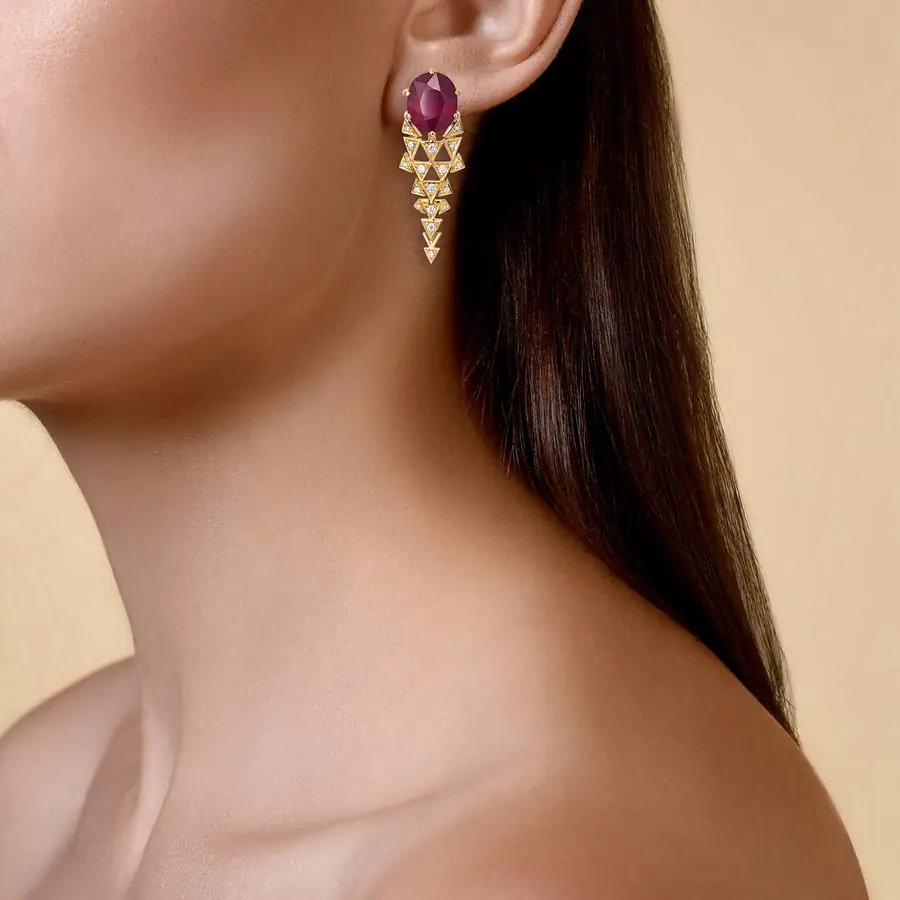
By color, the section breaks down as follows: red gold 46%, white 27%, yellow 16%. Red predominates for a reason: the warm metal enhances the stone's red tone, as both share the same color temperature. White gold does the opposite: the cool setting makes the red sharper and more graphic.
Models gathered separately in red gold — 229 items from 22,900 ₽ and in white — 136 from 41,900 ₽. If the metal matters to you, it is quicker to look for ruby earrings directly in the relevant section.
Ruby earrings require two stones, and matching them is harder than matching two diamonds.
With a colorless stone, color and clarity must match. With a ruby, shade is added to the mix: red can lean raspberry, orange, brownish or bluish, and two stones from different batches will almost certainly turn out different. In earrings this is critical: both stones are visible at once, and the eye compares them on its own. The most valuable tone is called “pigeon's blood,” a pure red with a slight blue undertone and no orange.
That is why a matched pair always costs more than two separate rubies of the same weight, and the difference here is more noticeable than with diamonds. You can check this right at the try-on: hold the earrings with ruby side by side in daylight, not under a lamp, because artificial light masks the difference in shade while daylight shows it. If in one earring the stone leans toward orange and in the other it stays pure, the pair has been matched carelessly.
Ruby earrings withstand daily wear better than jewelry with any other colored stone. A hardness of 9 on the Mohs scale means a ruby is practically immune to scratches: only a diamond can scratch it. This makes the piece suitable for everyday wear, unlike emerald, which is brittle despite comparable hardness.
The rules are simple. Clean with warm soapy water and a soft brush, paying particular attention to the back of the stone, where cosmetics and oils accumulate: in earrings this area rests against the earlobe and gets dirty faster than in a ring. Ultrasonic cleaning does not harm natural ruby; the exception is glass-filled stones, but there are none in the section.
Store them separately from diamond pieces: a diamond is harder and will leave a mark even on corundum. Once a year, have a jeweler check the setting: prongs loosen from knocks that the stone itself withstands without damage. A full service with setting check and polishing costs 4,990 ₽.
You can try a piece on in Moscow at the boutique at Nikolskaya 10 – Lubyanka metro, Nikolskaya Plaza shopping center, 2nd floor. A red stone changes a great deal under different lighting: under a warm lamp it shifts toward orange, while in daylight it becomes cleaner and cooler. It is best to view it by a window.
In Moscow, our courier delivers your order free of charge within 1-3 days, with a fitting on the spot: you pay only after trying it on, and you may decline the order. Across Russia we deliver via CDEK and Spetssvyaz in 1-9 days, free on orders over 50,000 ₽; parcels are sealed and insured.
The store has been open since 2008 and has won the industry award three times, in 2015, 2017 and 2020. The boutique is registered with the Assay Chamber of Russia: every piece bears the hallmark and the manufacturer's maker's mark. Stones and metal carry the store's lifetime warranty. Exchange is possible within 7 days if the piece is complete with all its packaging. Engraving is 3,190 ₽.
From 22,900 ₽, with a section median of 333,500 ₽. Classic models start from 41,900 ₽; stones priced above 300,000 ₽ account for 55% of the selection.
One mineral, corundum. Red corundum is called ruby, and any other color is called sapphire. In 38 pieces in the section they appear together in a single piece of jewelry.
Yes, all 434 models. Synthetic ruby has been grown since 1902; it is identical to natural ruby in composition but differs in internal structure and costs hundreds of times less.
A natural ruby of notable size costs tens of thousands of rubles, and a silver setting for it makes no economic sense: it is softer, tarnishes and costs several times less than the stone.
Yes. Corundum has a hardness of 9 on the Mohs scale, second only to diamond, so a ruby is practically immune to scratches. Remove them only before manual work and sports.
You may also be interested in:
We will contact you shortly.
Unfortunately, we cannot deliver to this locality. Please choose another city nearest to you.
How to get them. 3% of every order on the site. Sign in with your phone number to receive bonuses.
How to spend them. Sign in, add jewelry to your cart and specify at checkout how much to redeem. Bonuses can pay up to 10% of the price.
Confirm that you are not a robot
Unfortunately, this item is currently out of stock. We can make the jewelry individually to your requirements. Our consultant will contact you
Our consultant will contact you shortly
Refresh the page and send the message again
Specify the size of the jewelry and try again
Enter your number and our manager will contact you about the price calculation
Refresh the page and submit the order again