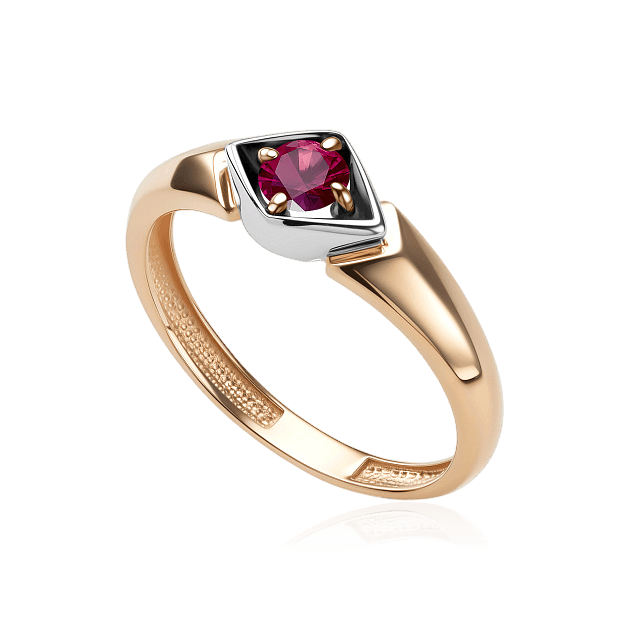
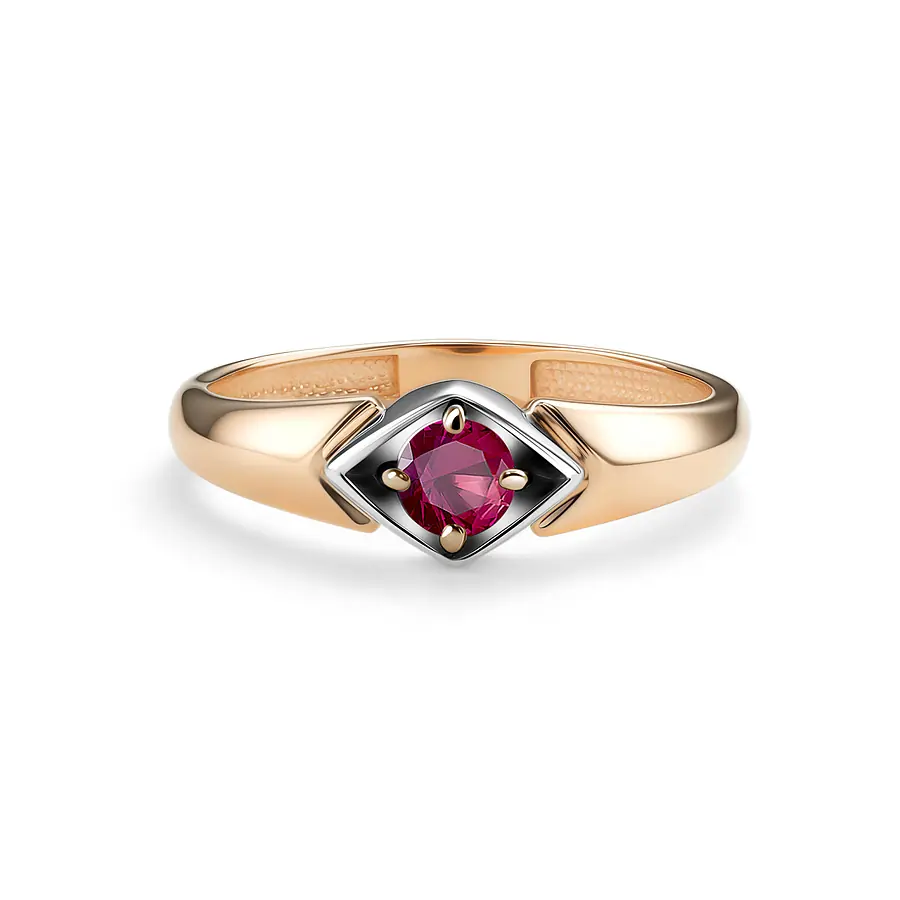
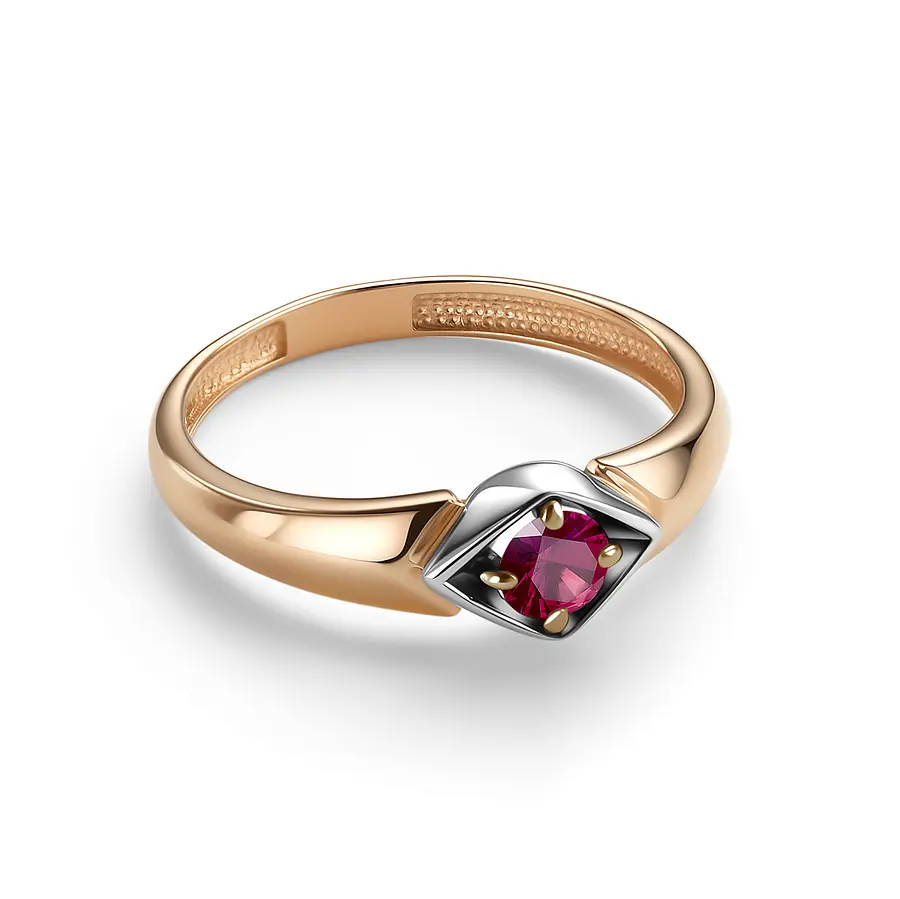
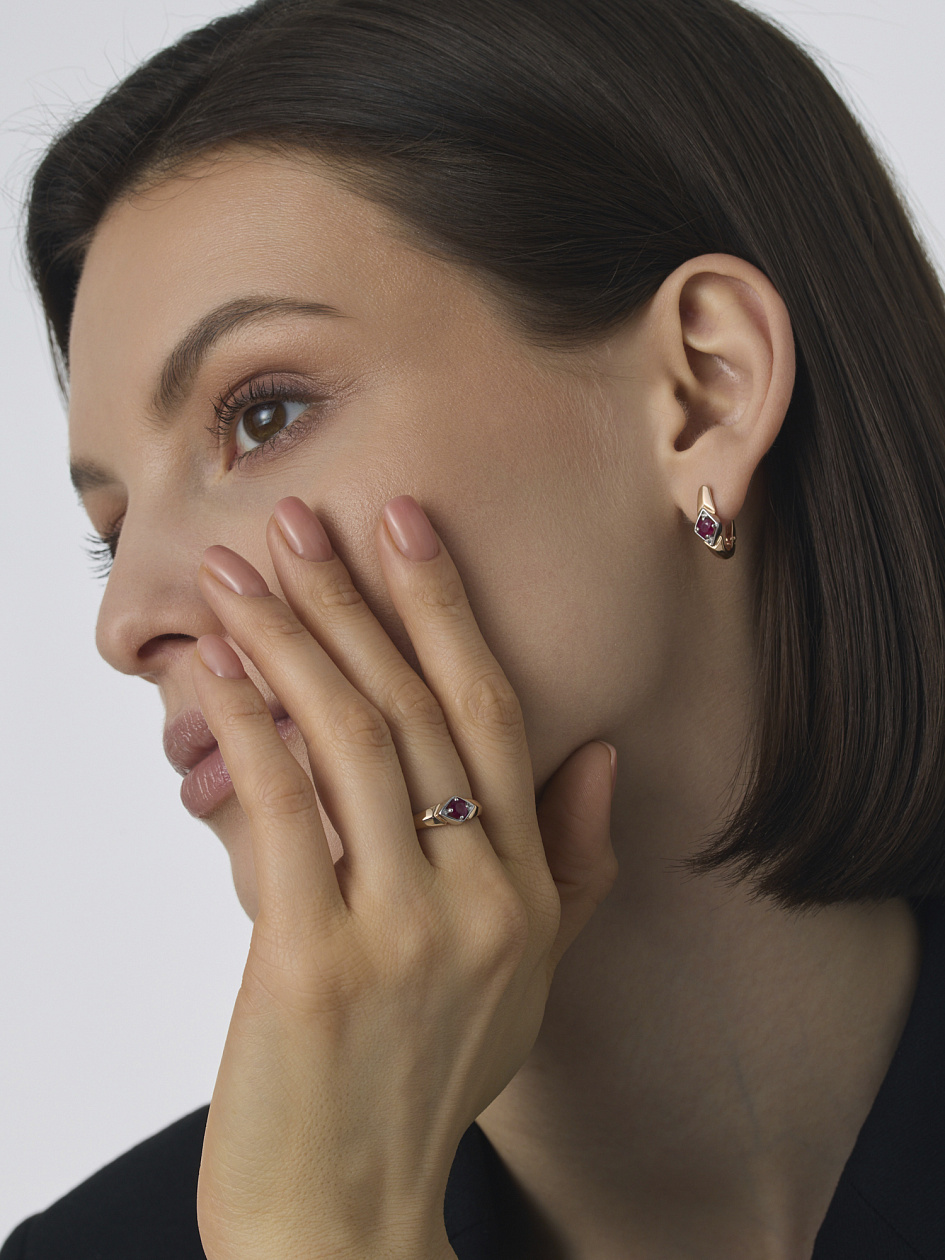
100 950 ₽
We use cookies to improve the site and give you more options. By continuing to use the site, you agree to cookie usage terms.We use cookies. Learn more


By popularity


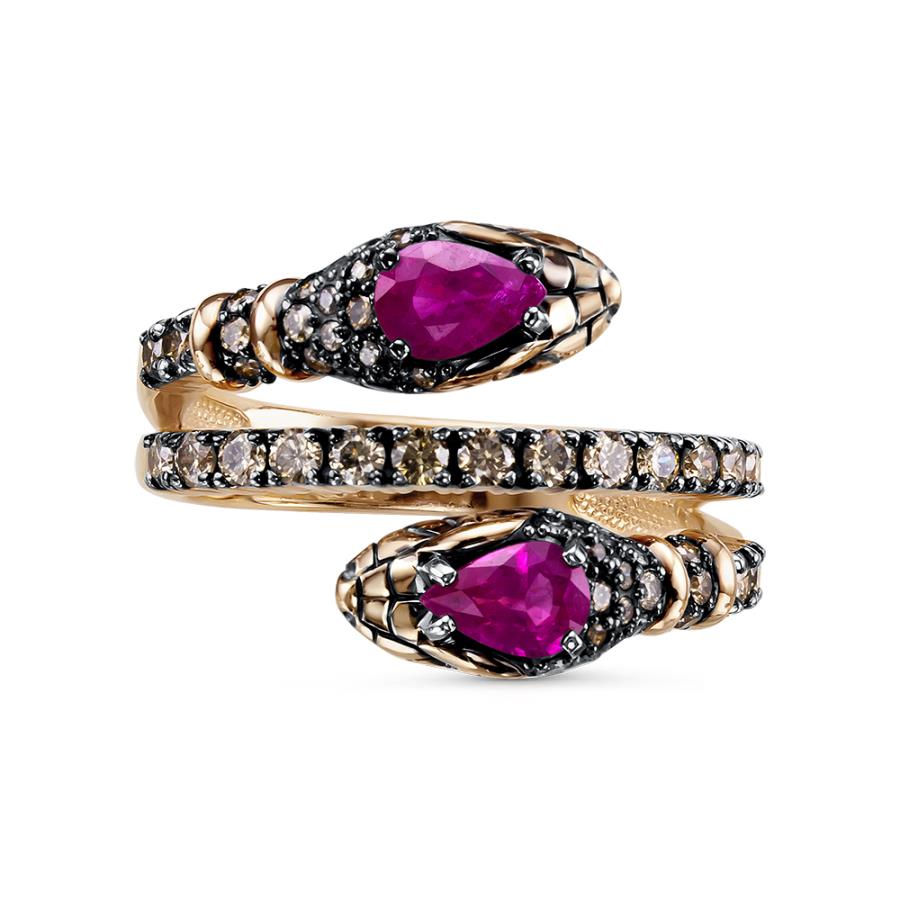
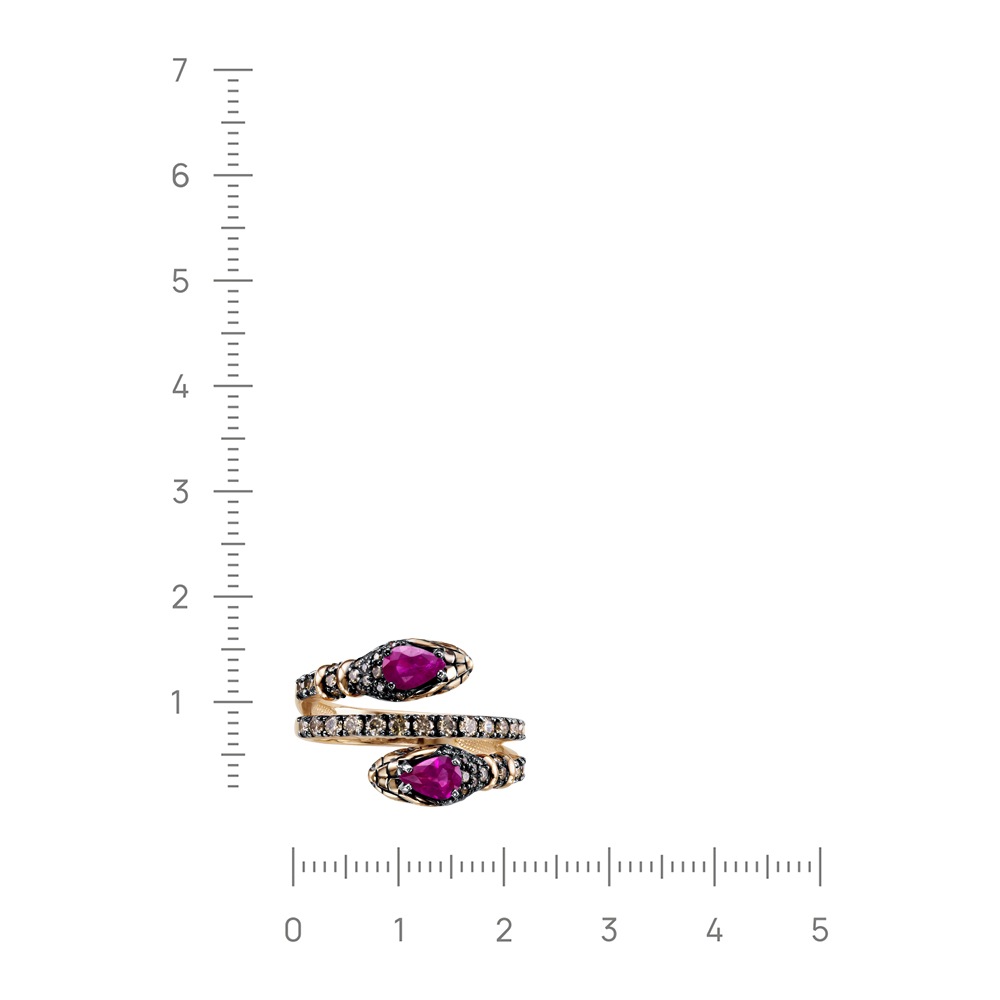

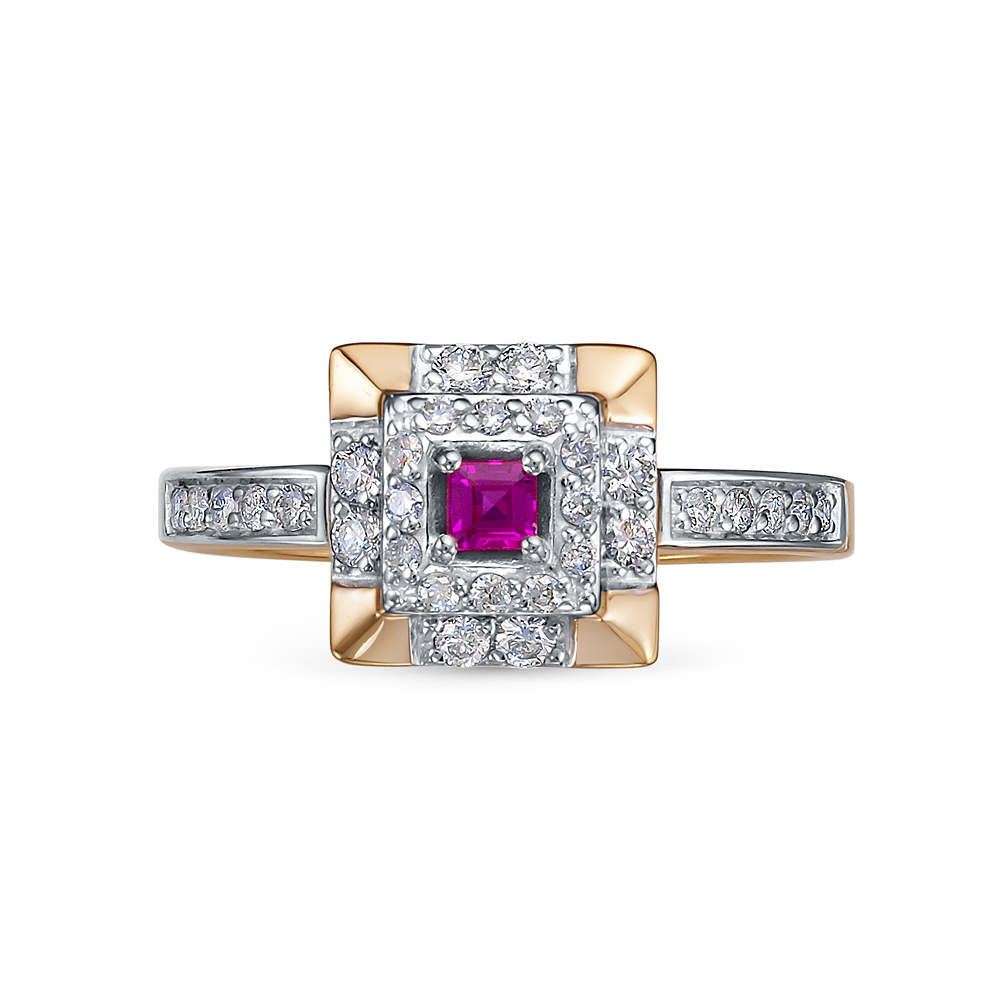
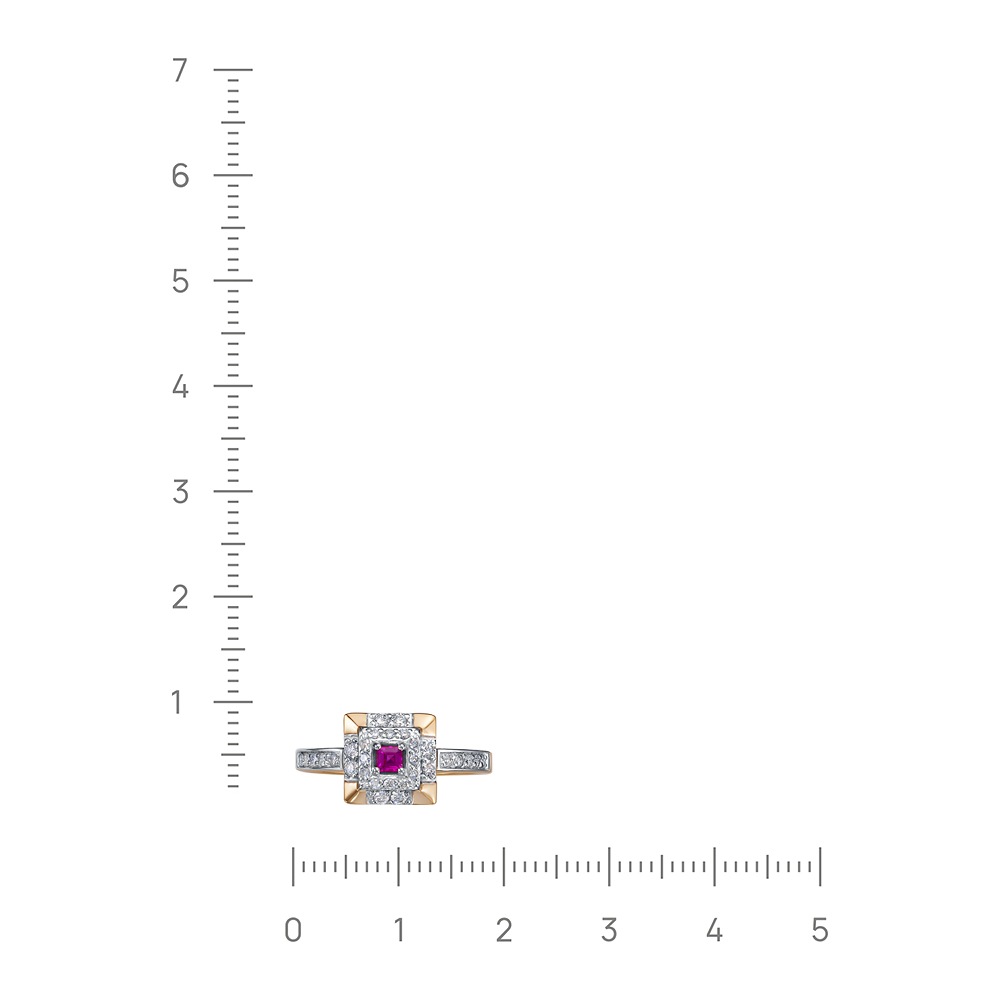
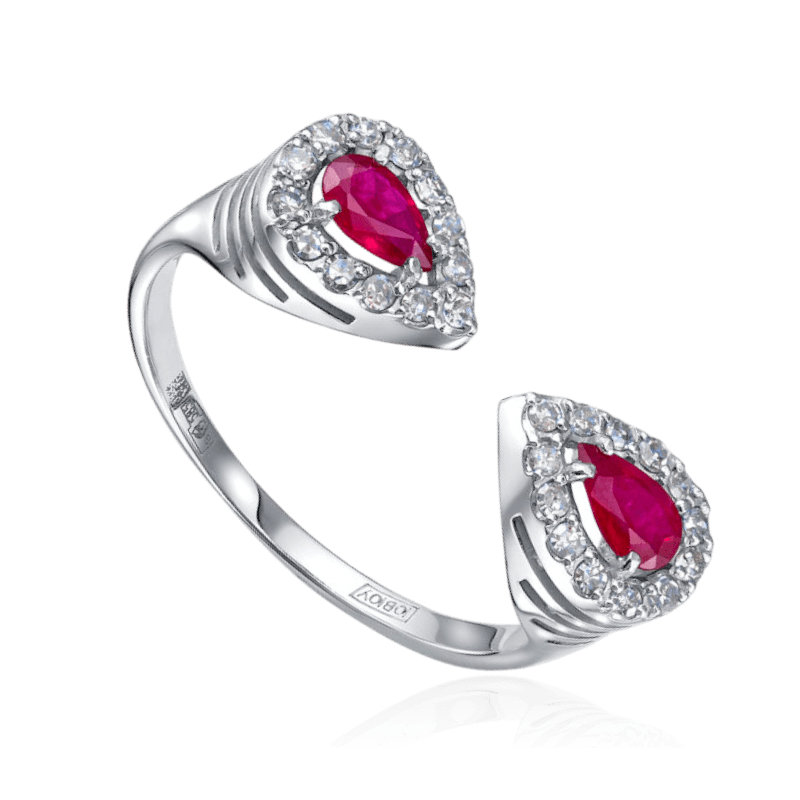


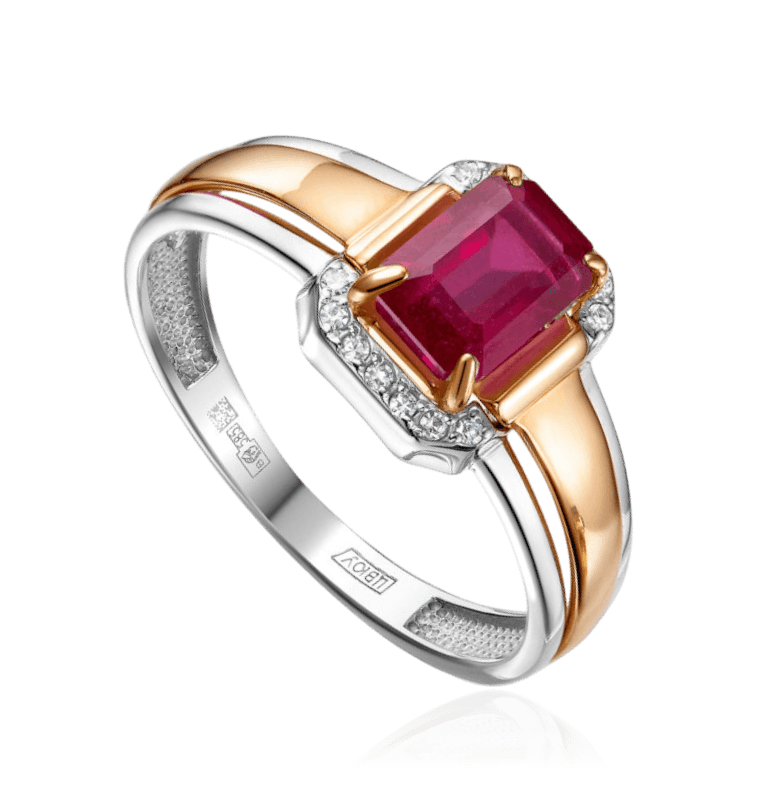
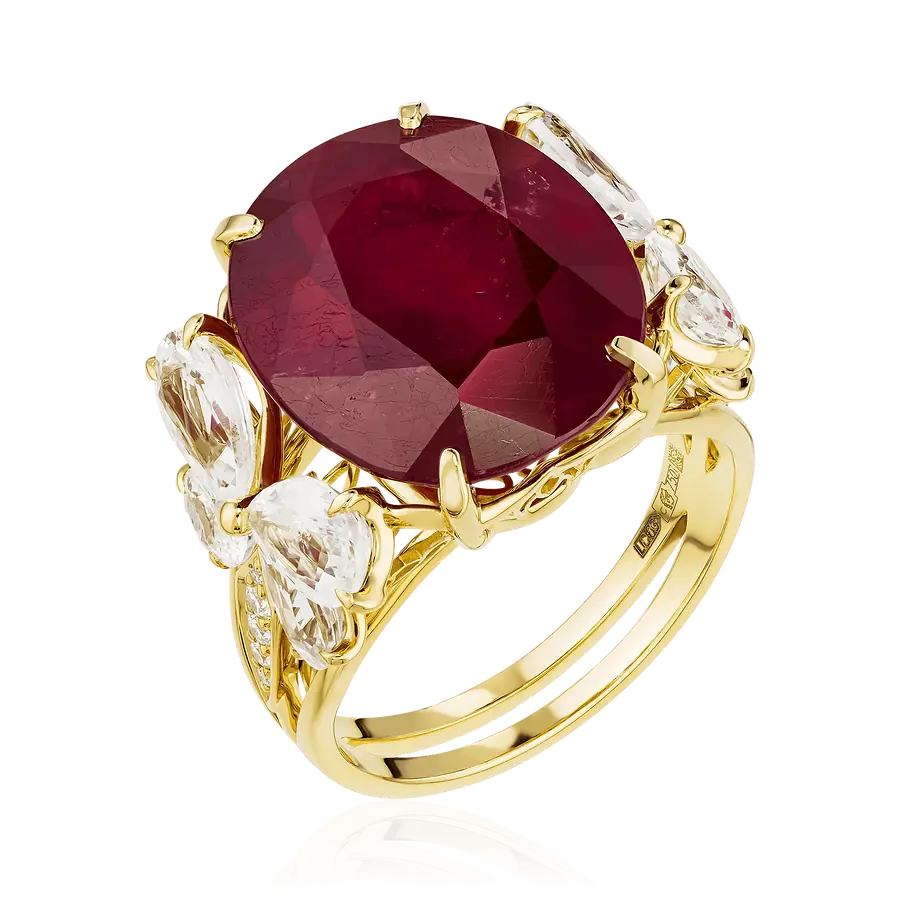
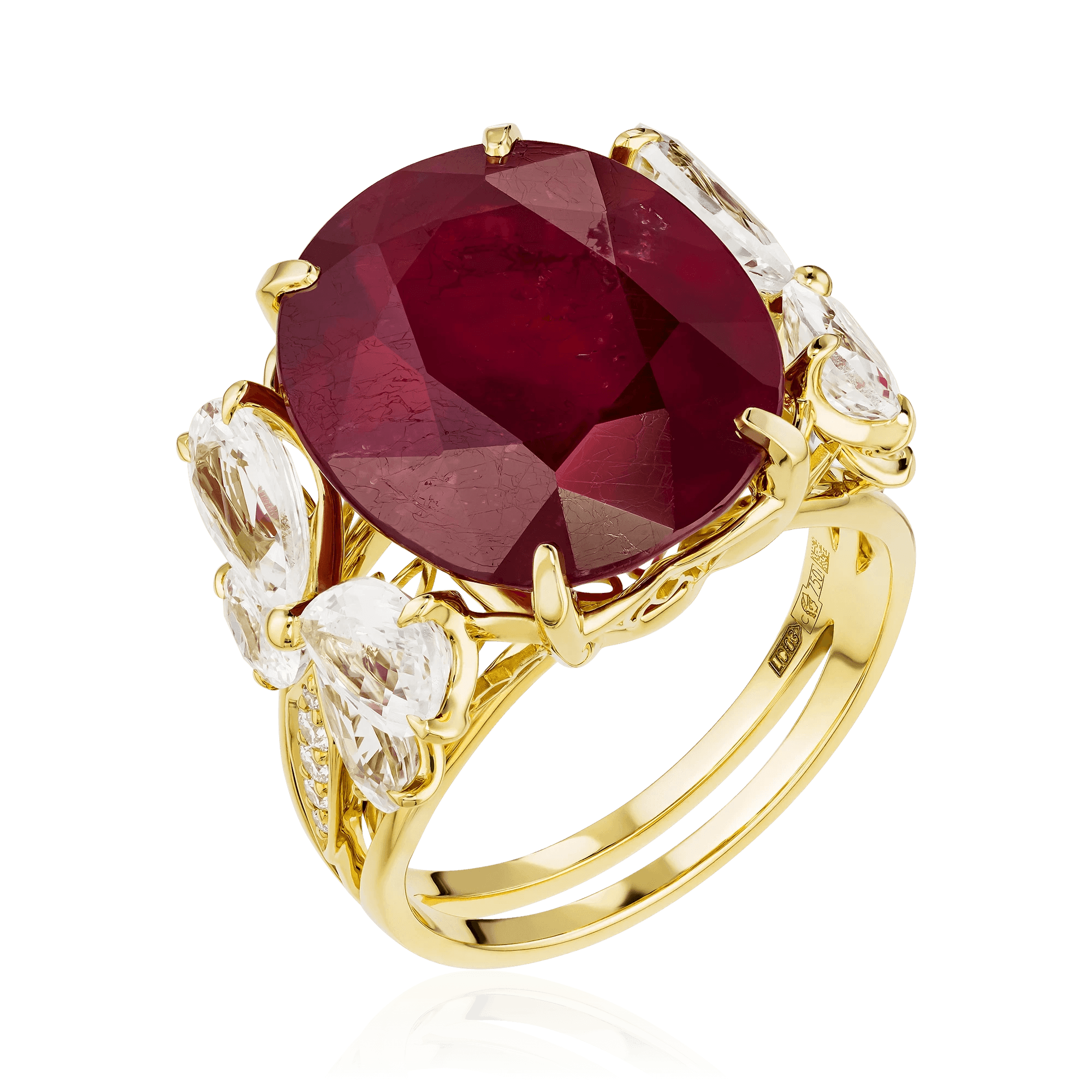
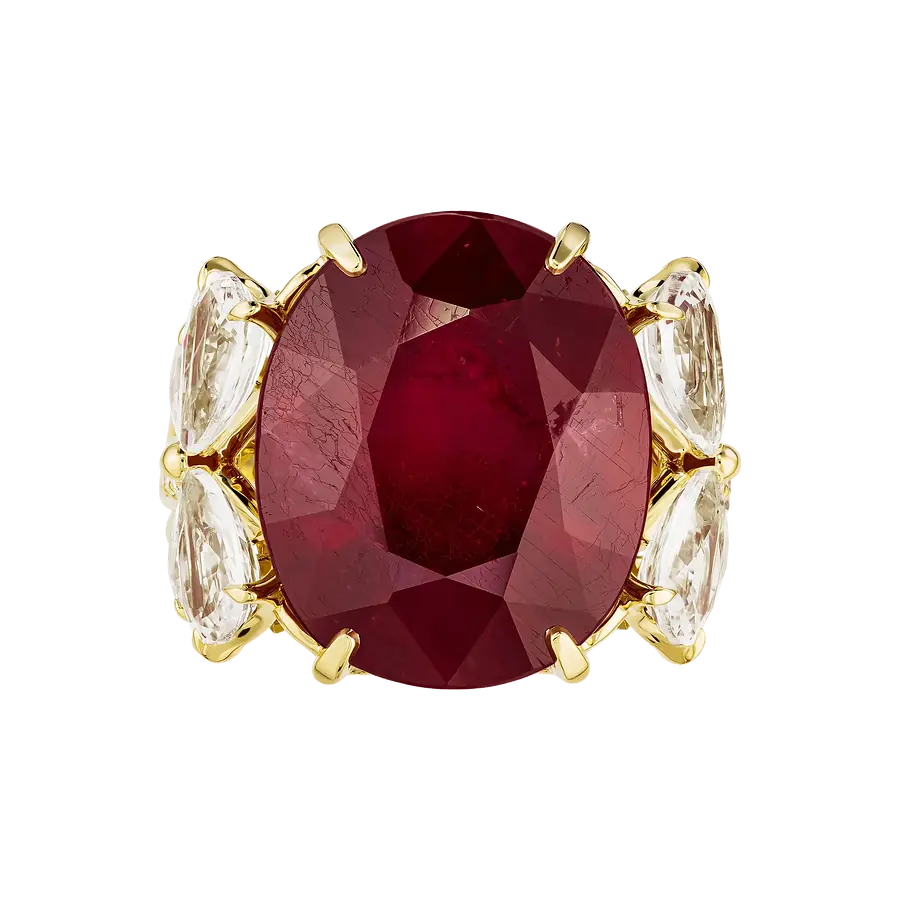
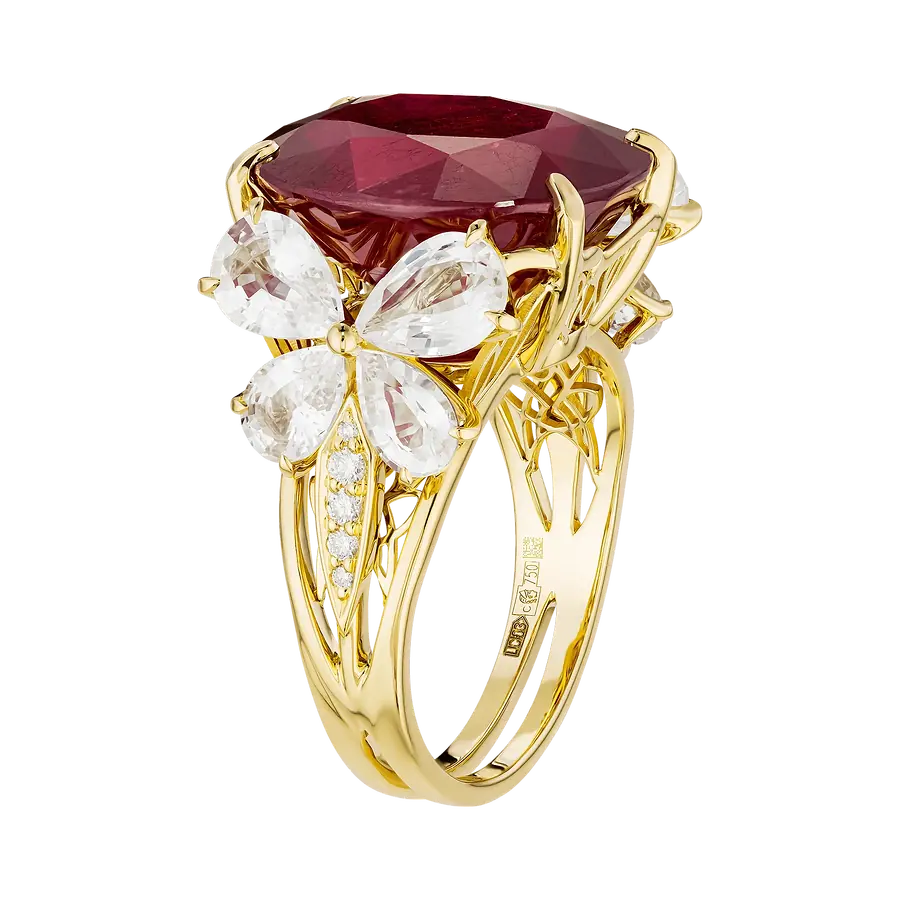
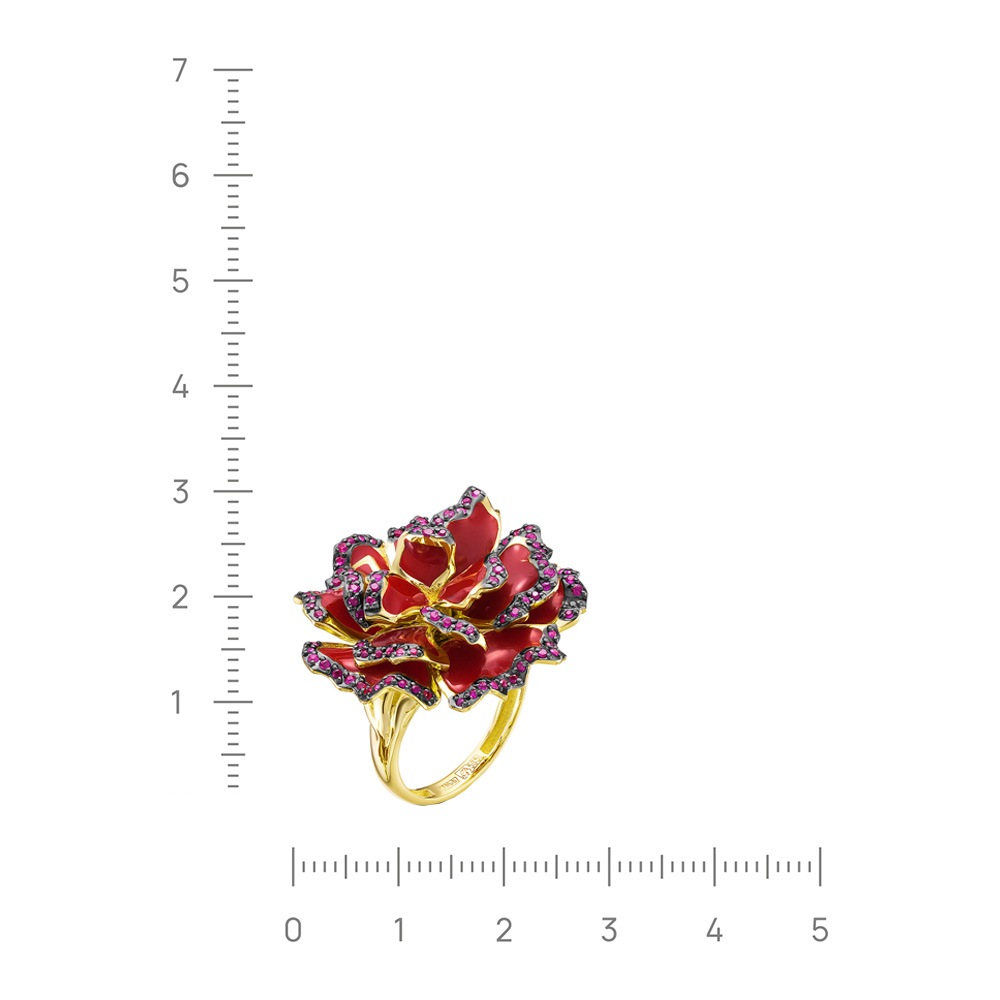
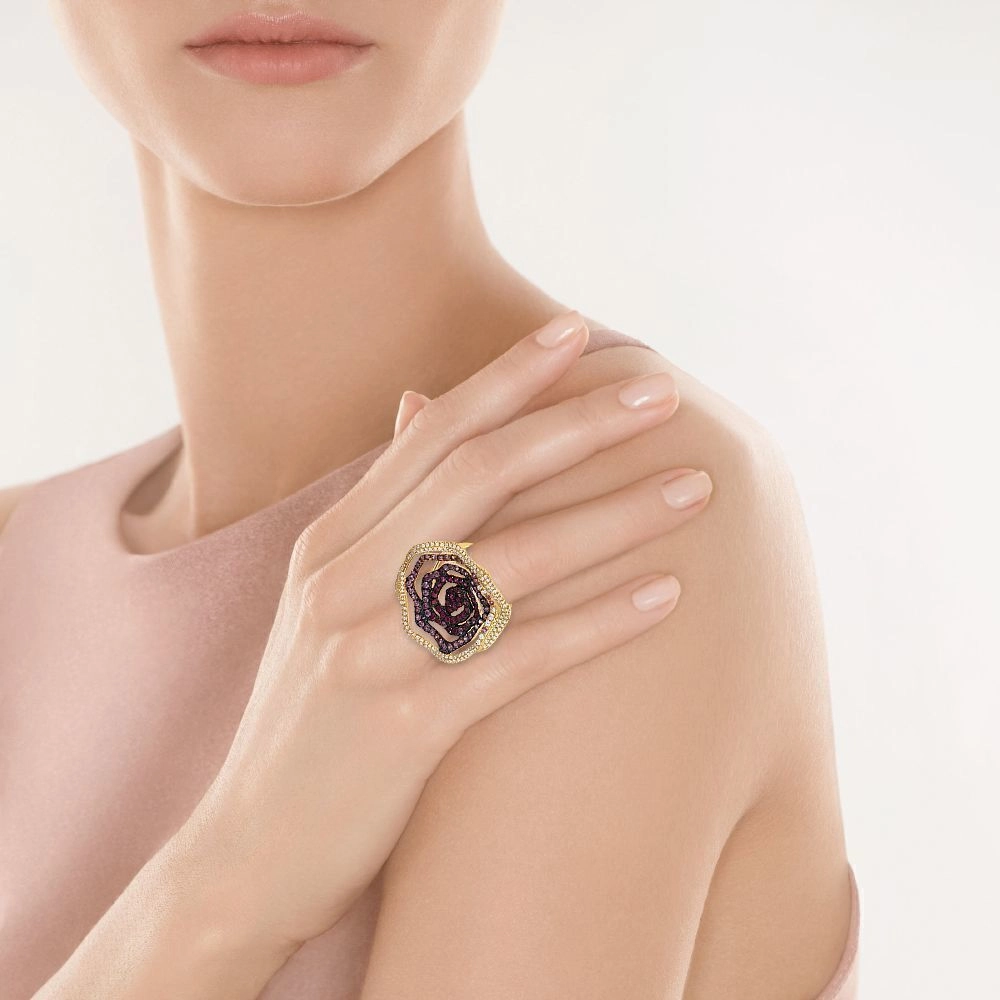
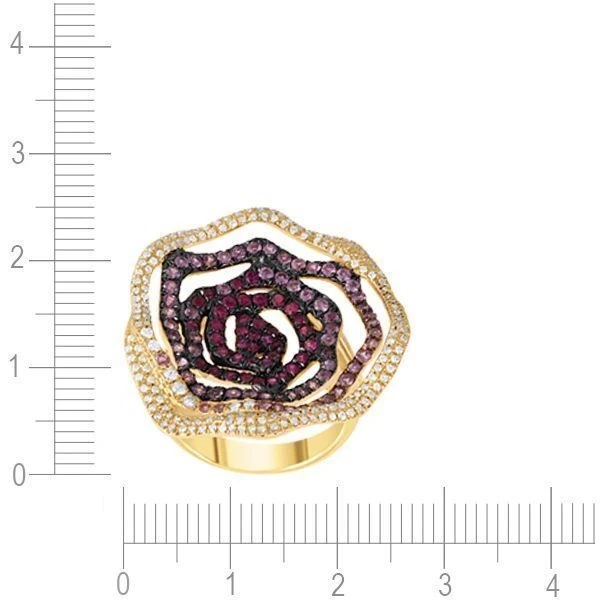
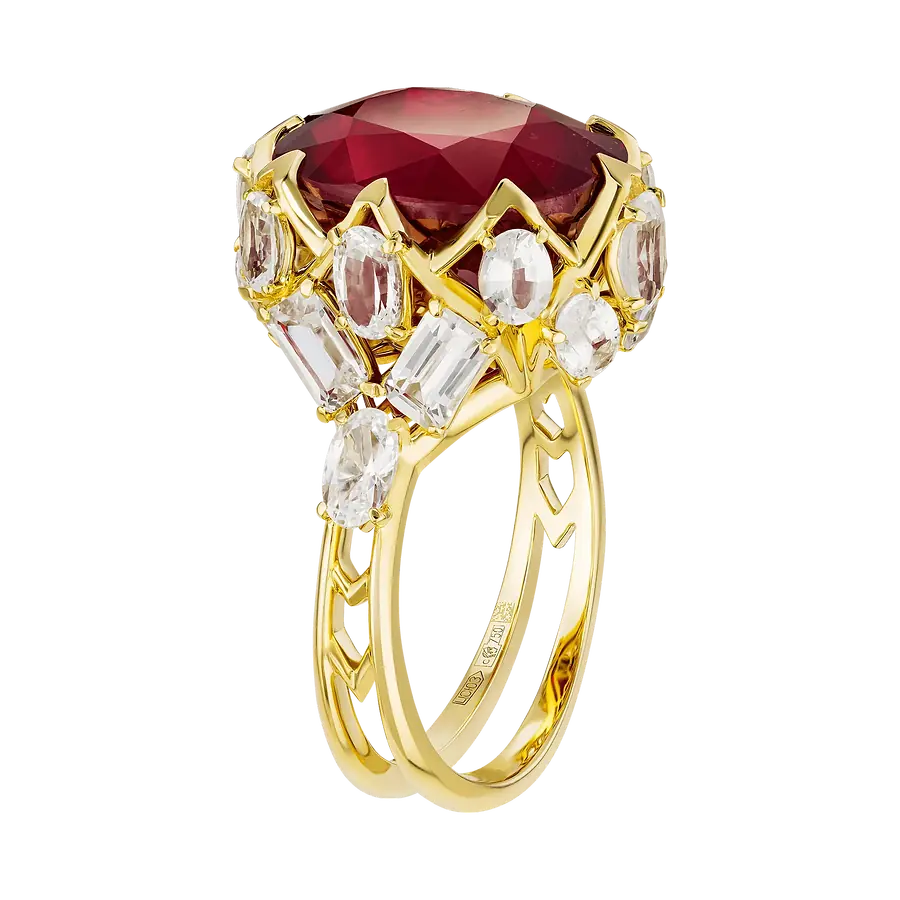
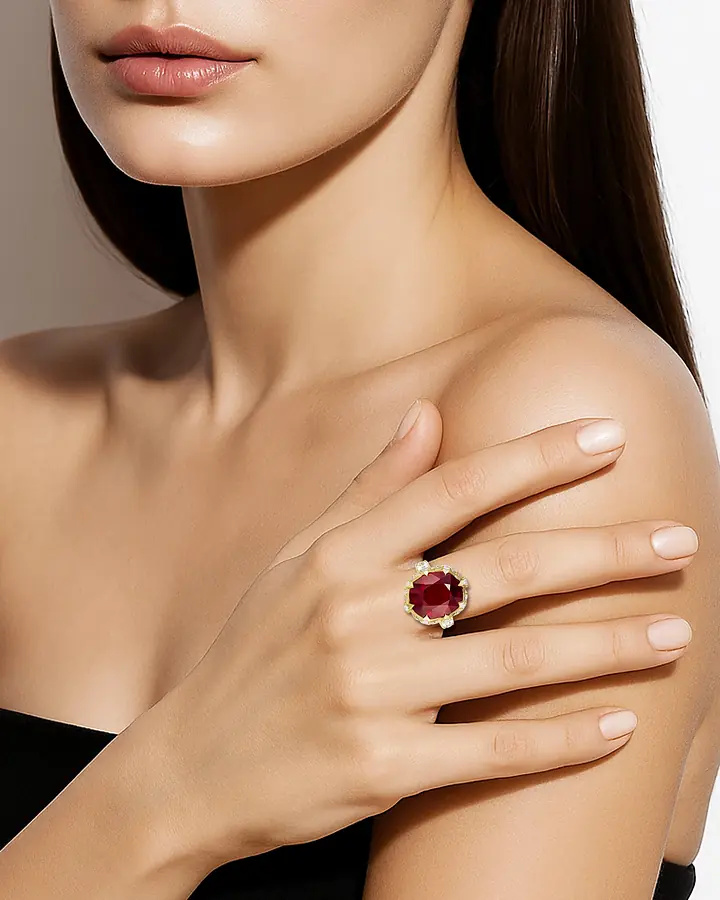
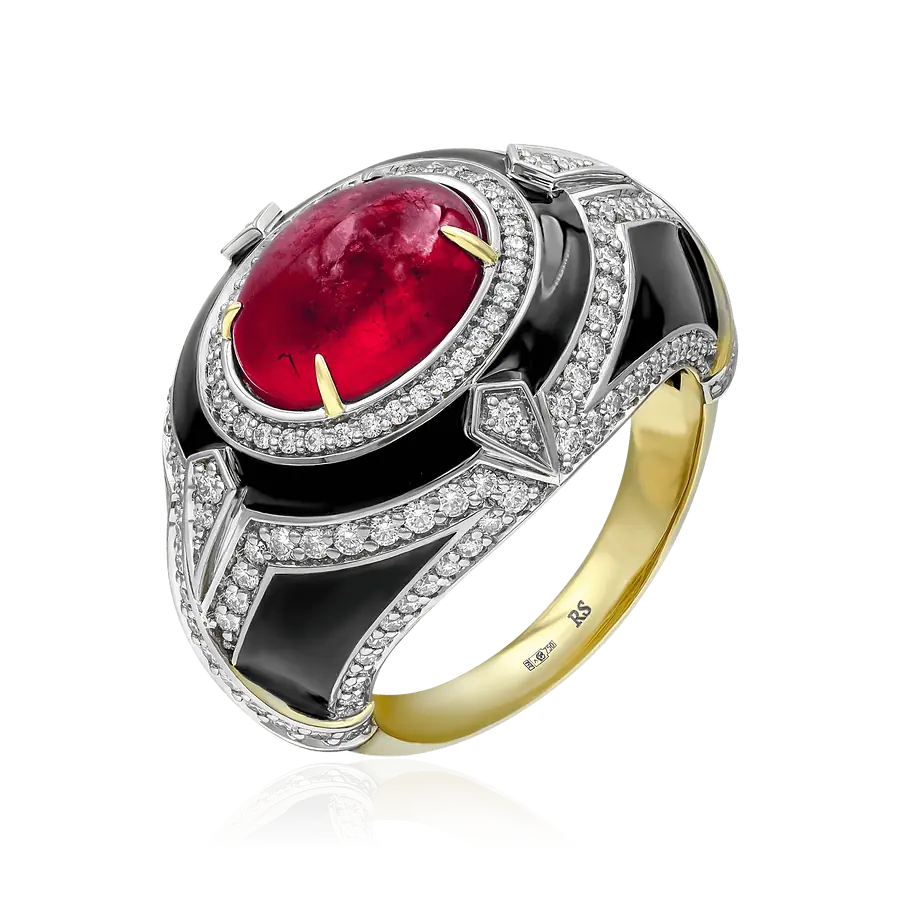
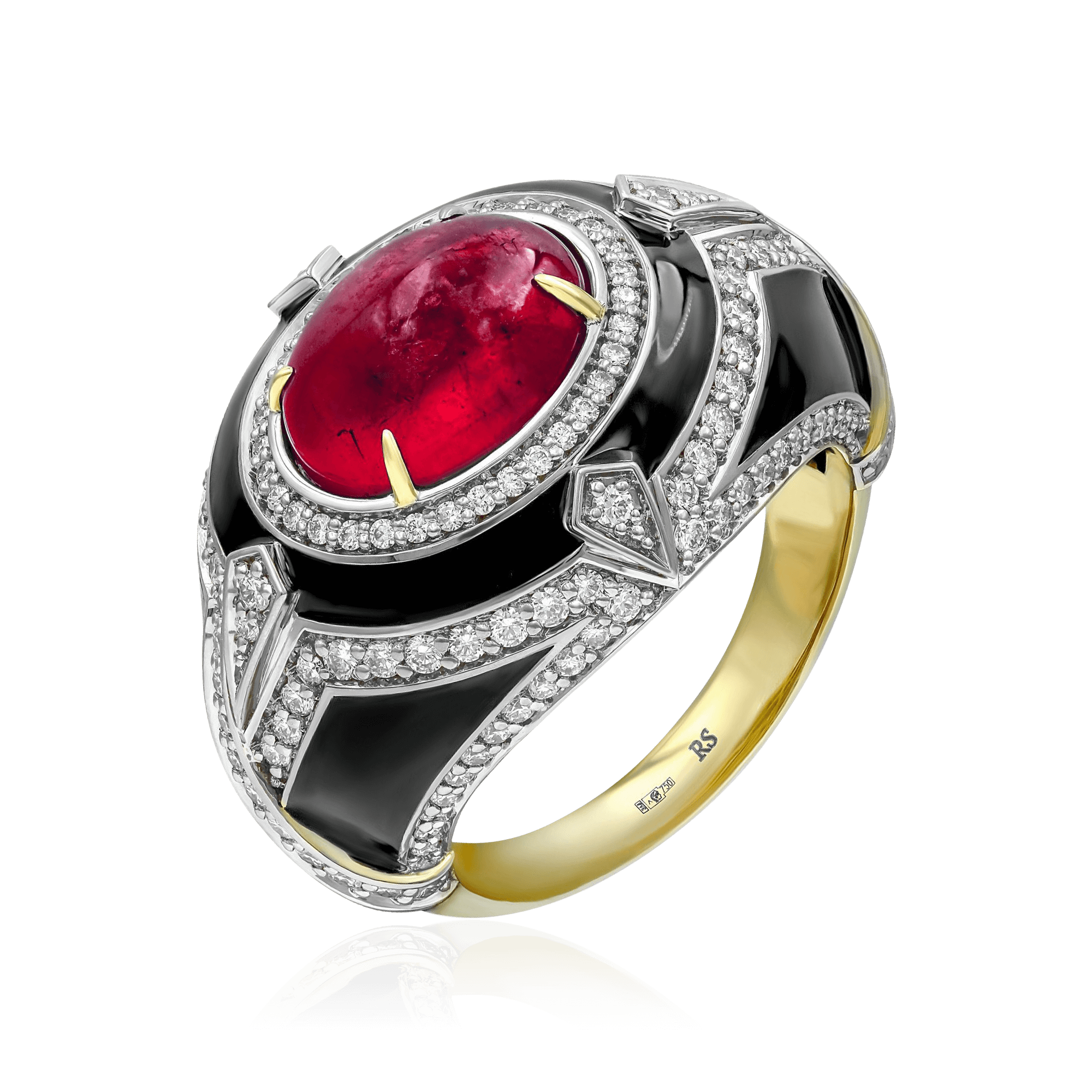
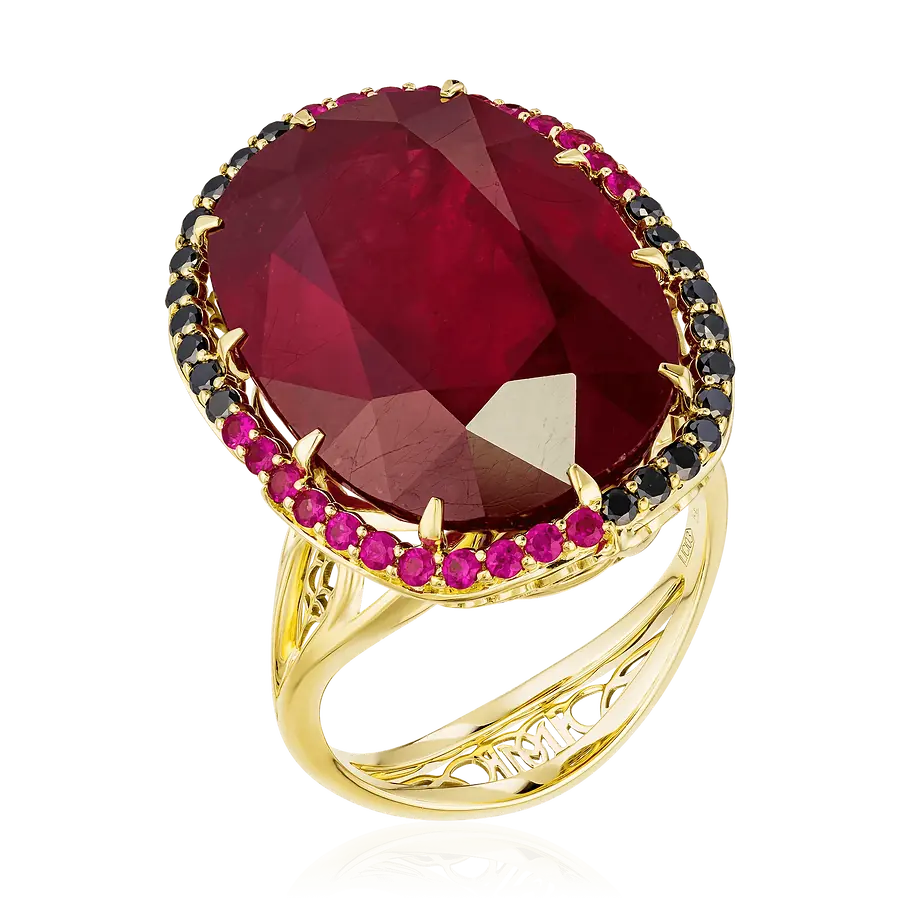
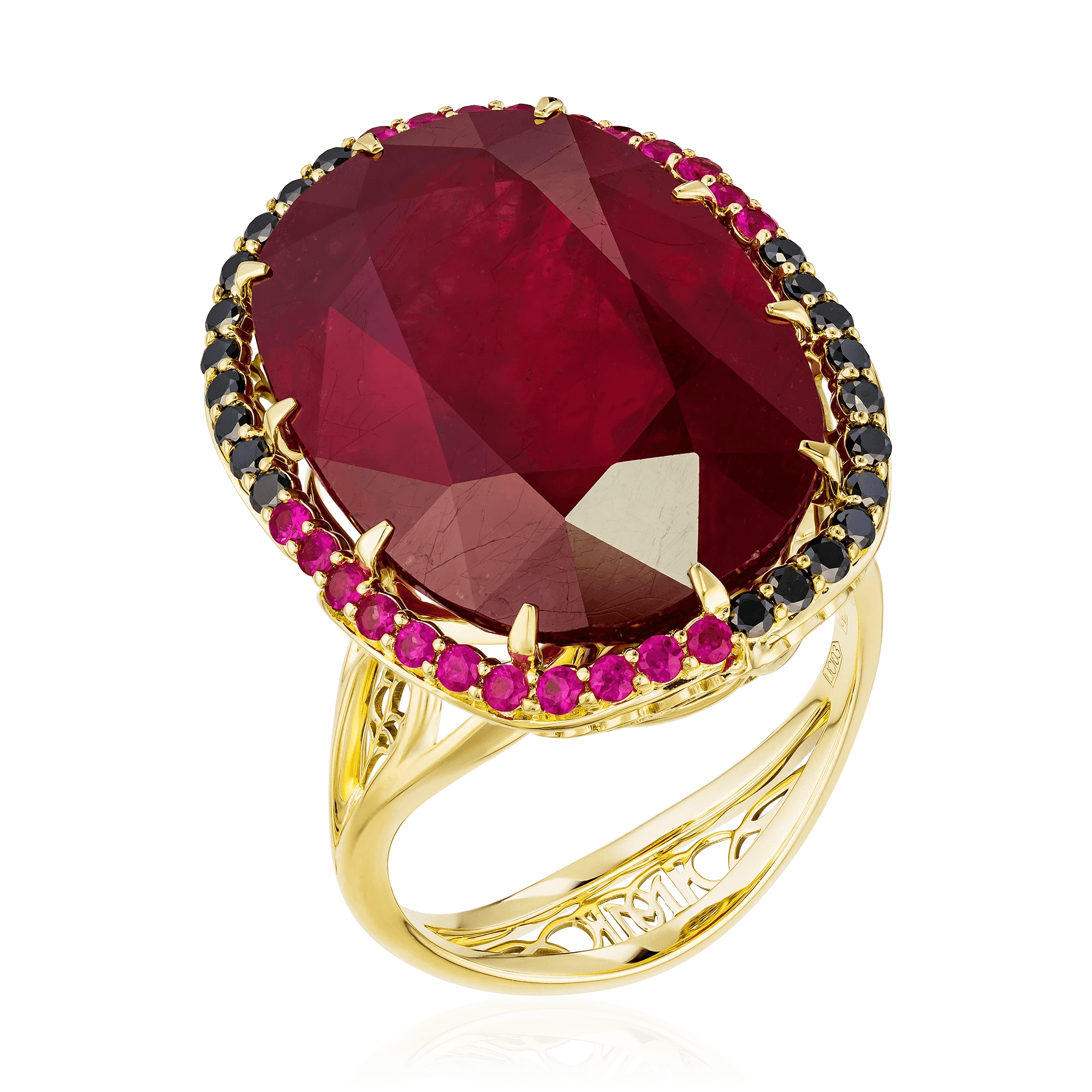
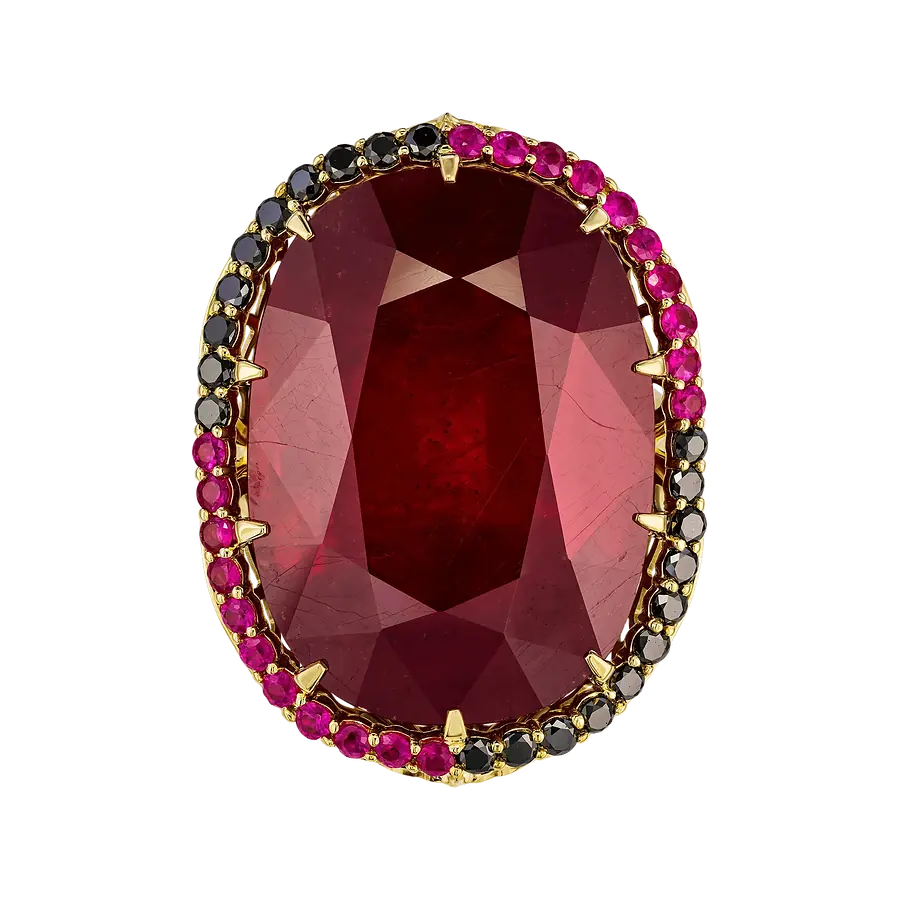
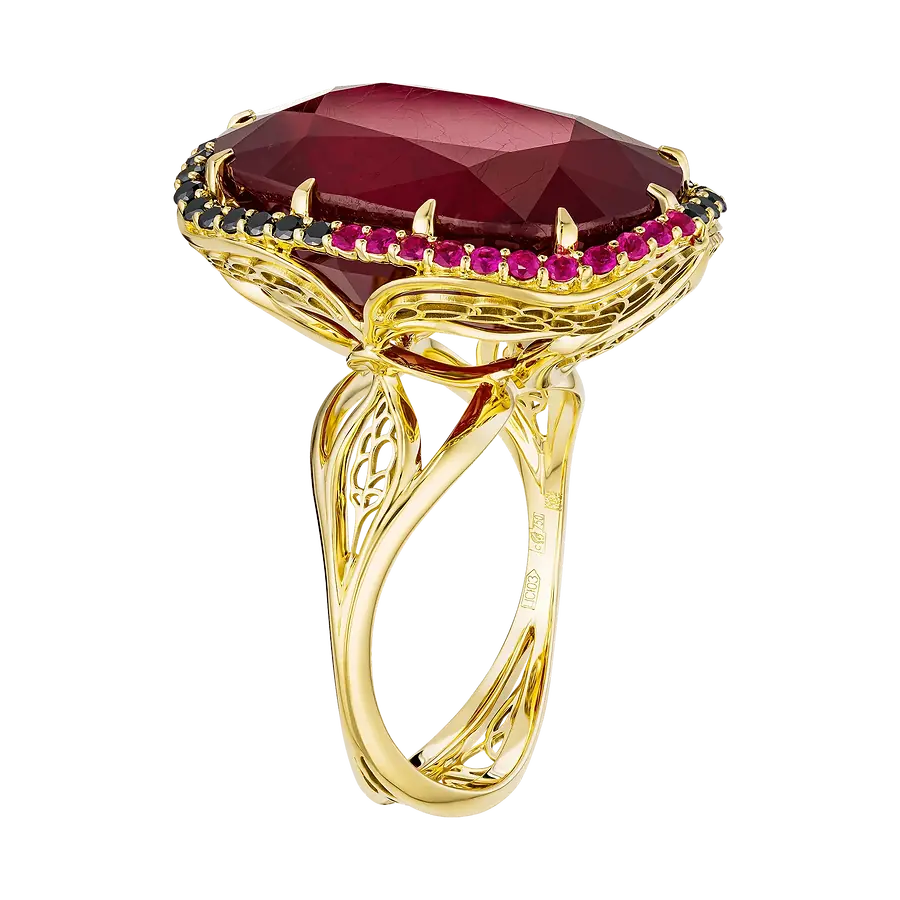
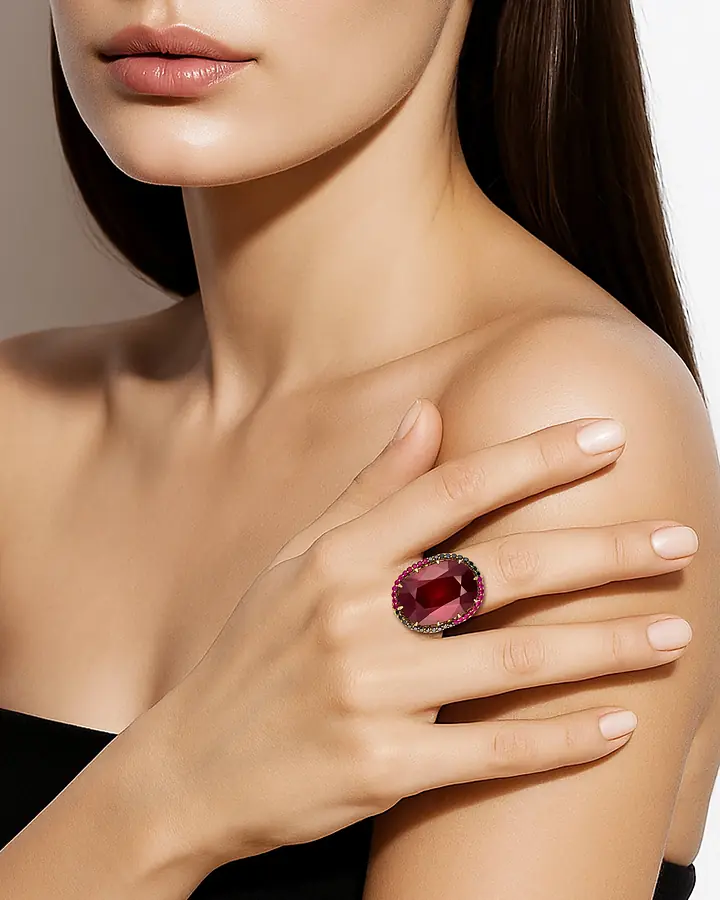
Ring with ruby, sapphires fancy and diamonds in 18K yellow gold (750) ( 136070)
In stock
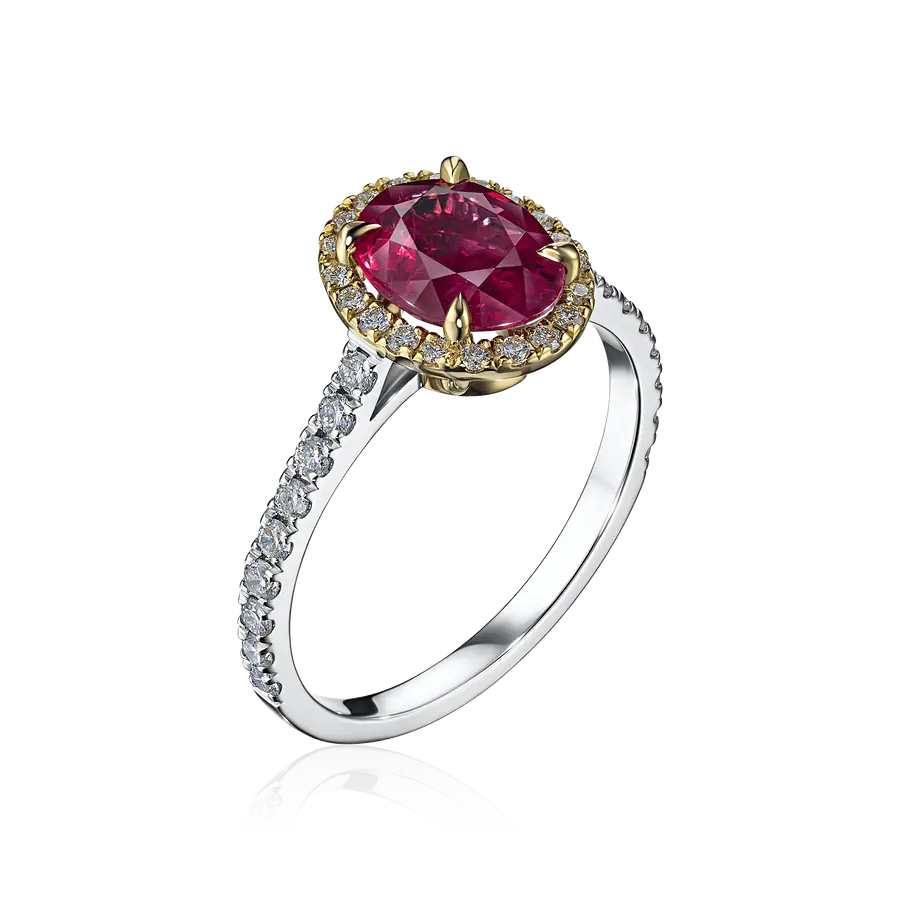

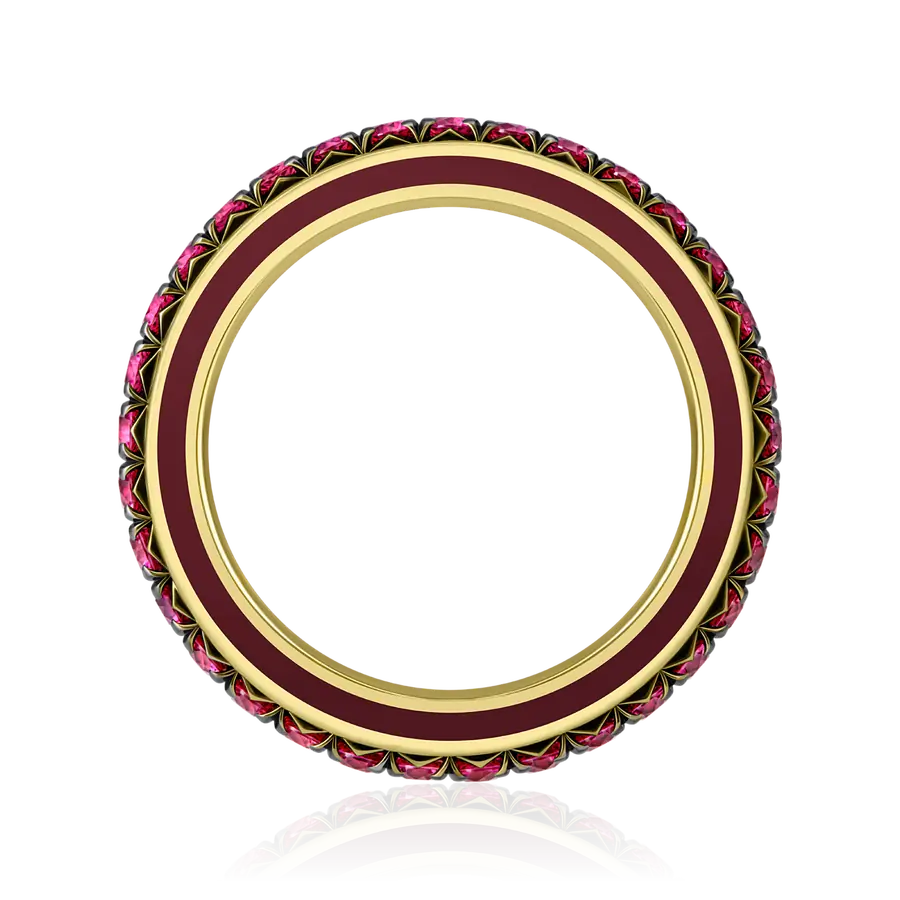
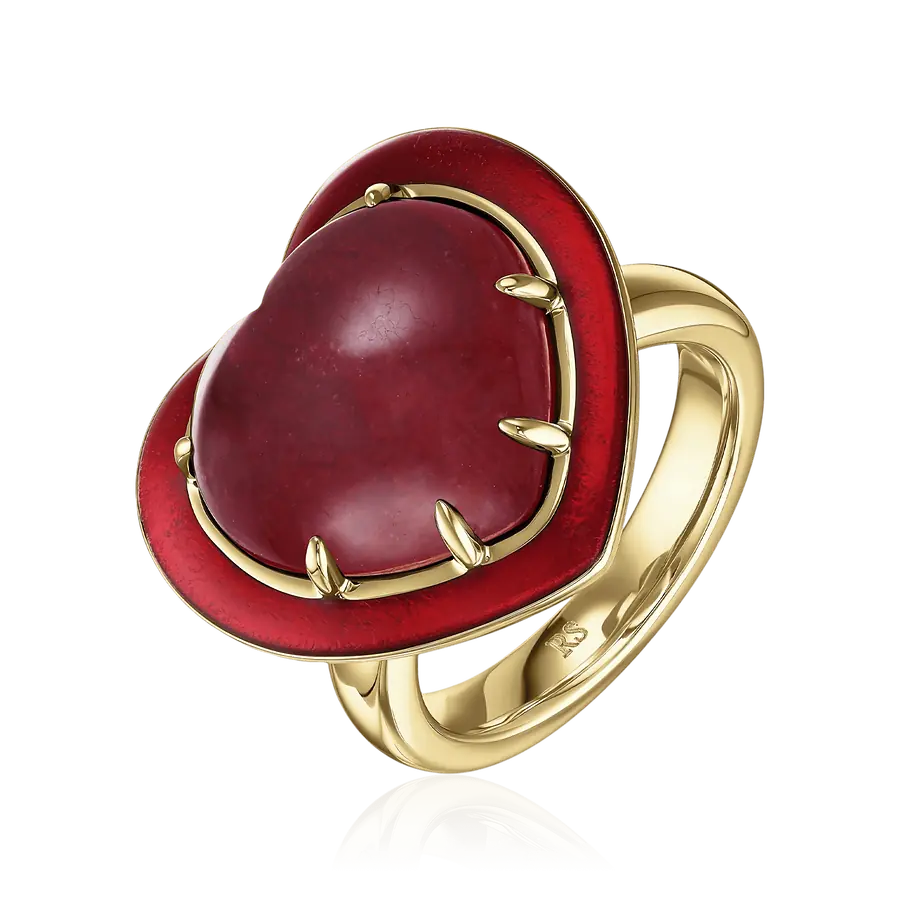
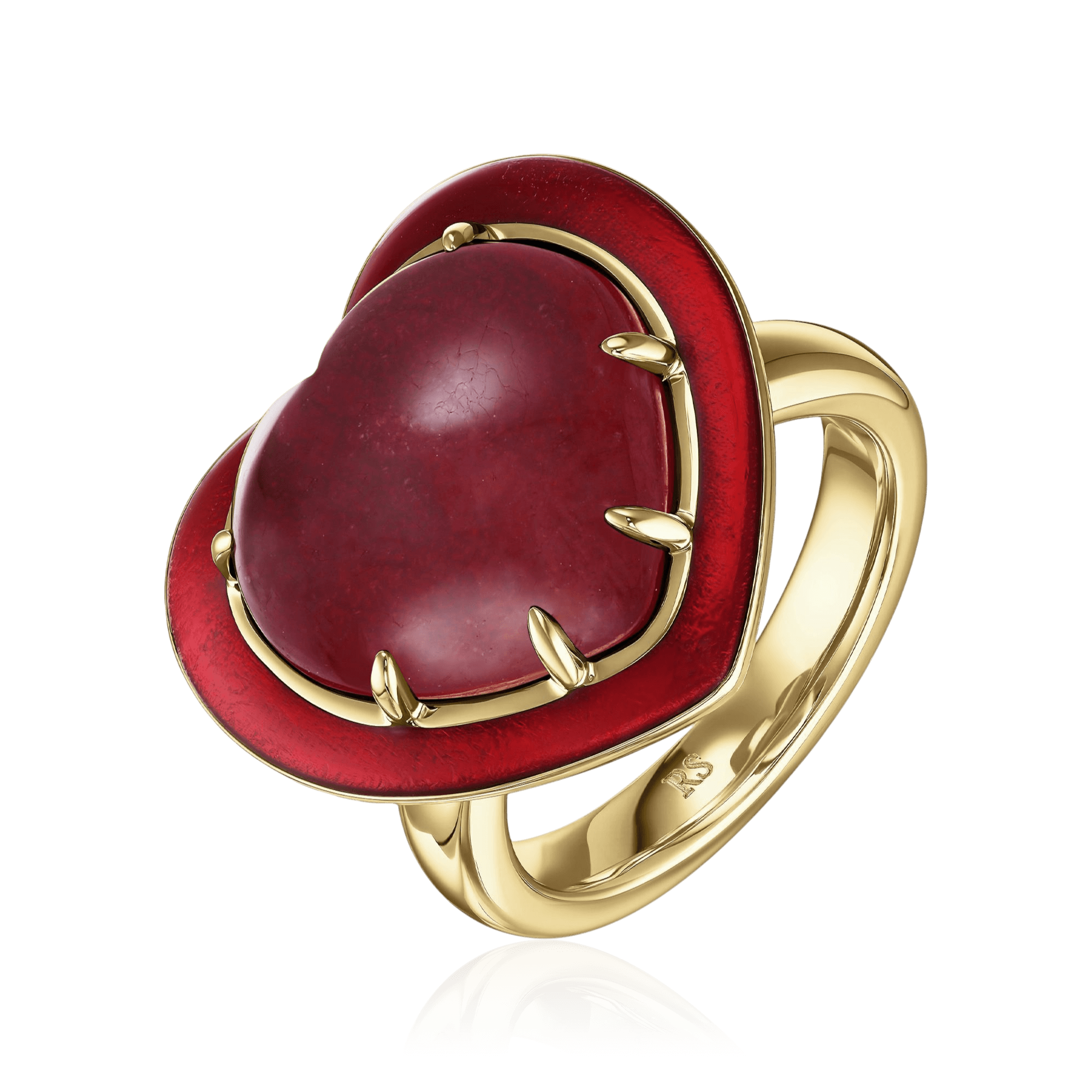
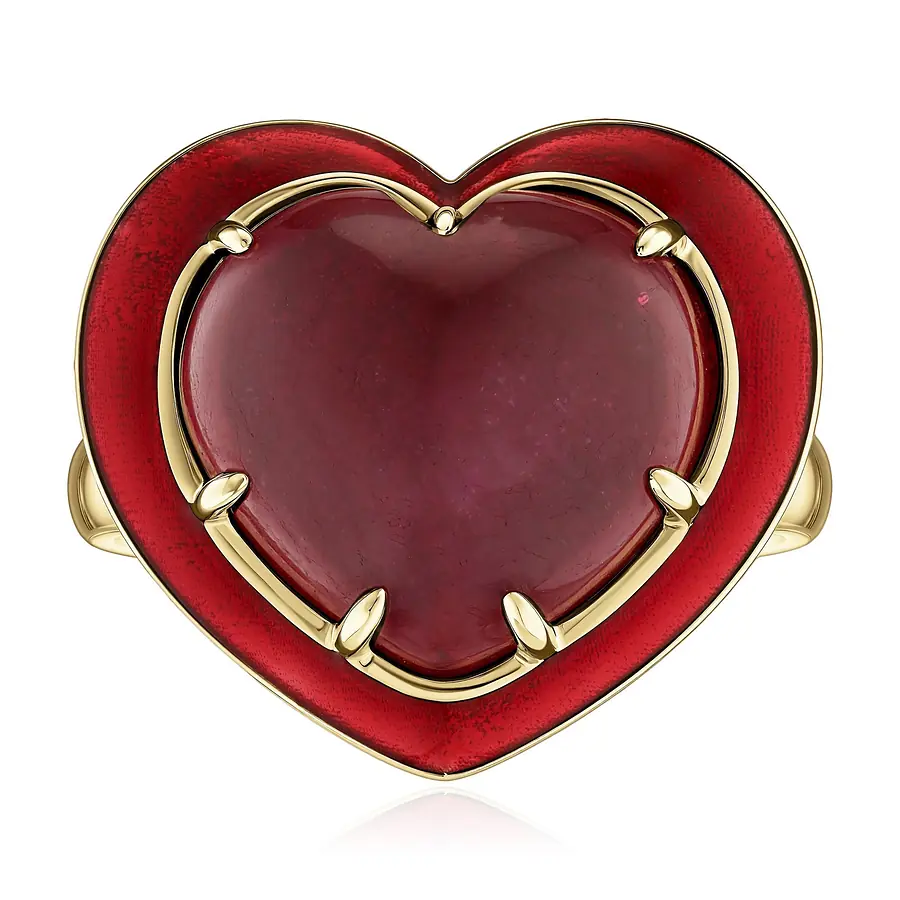
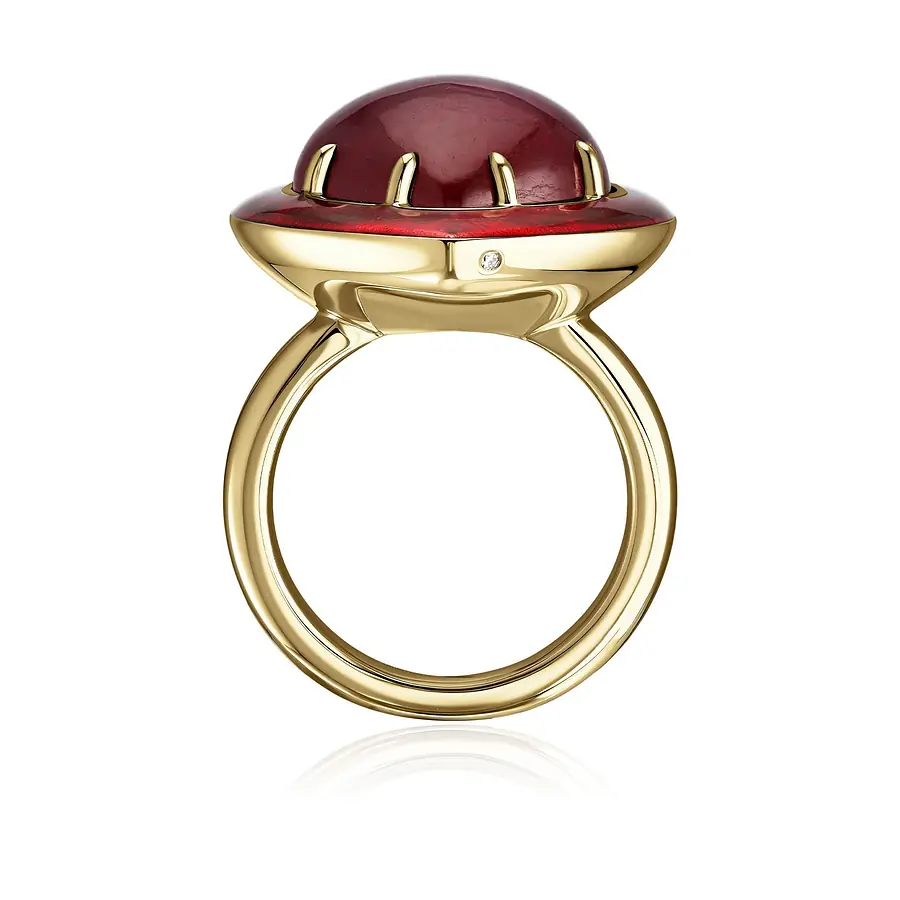
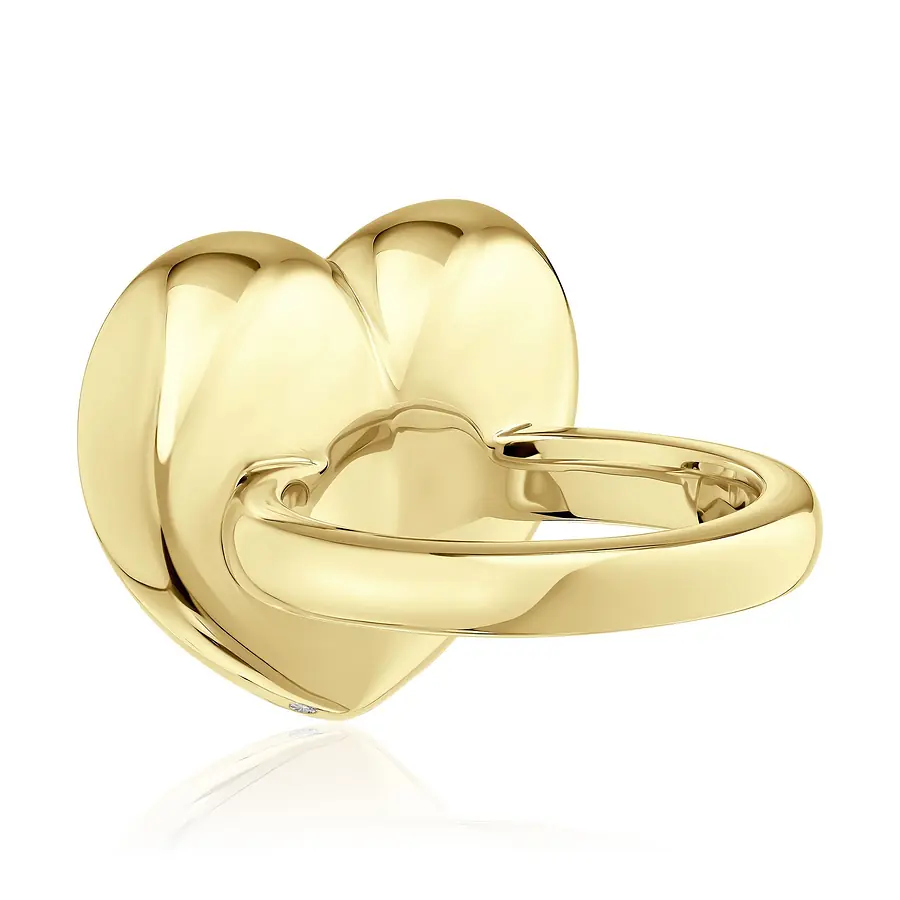
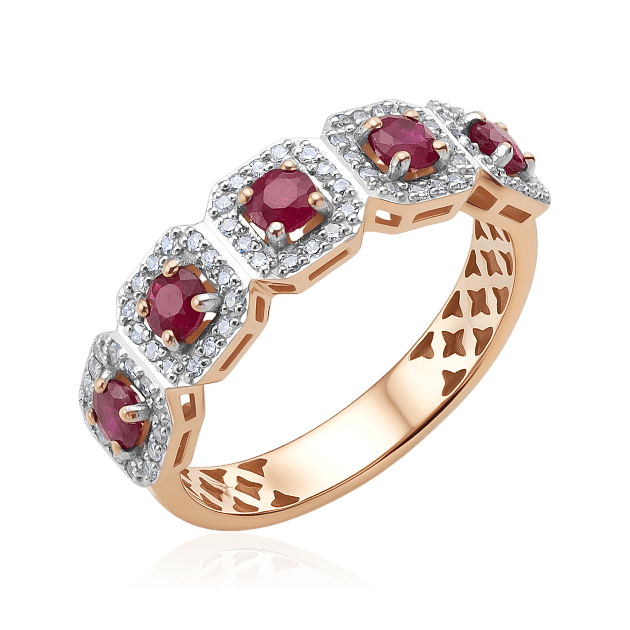
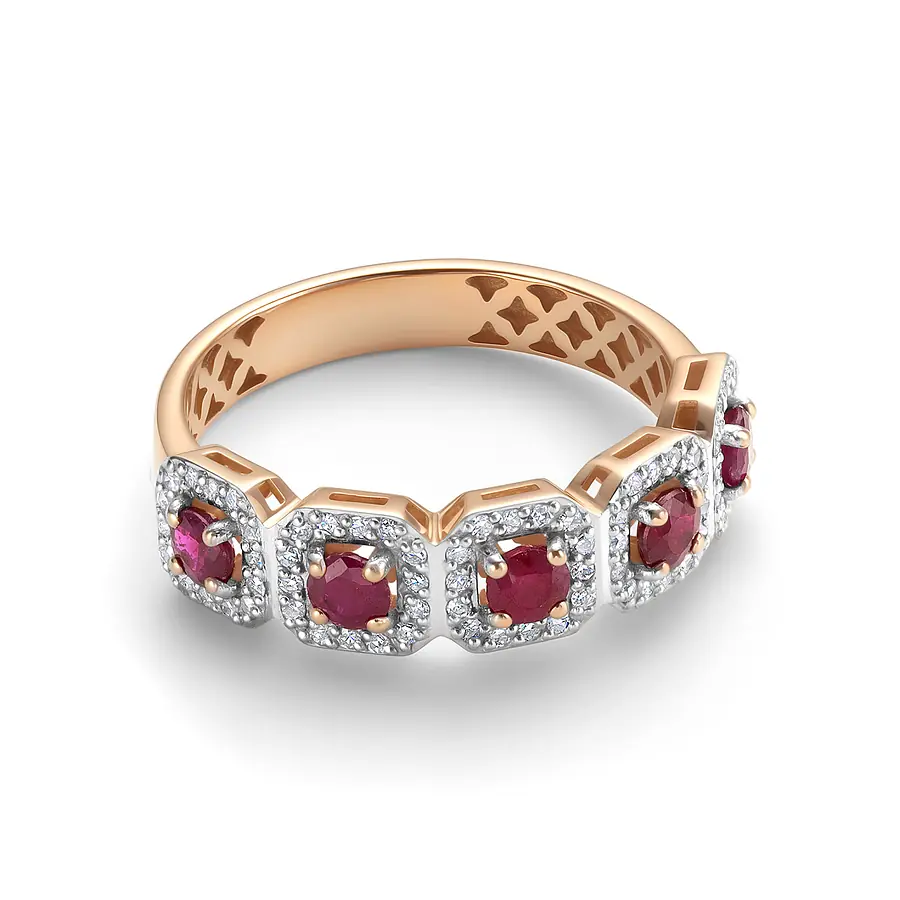
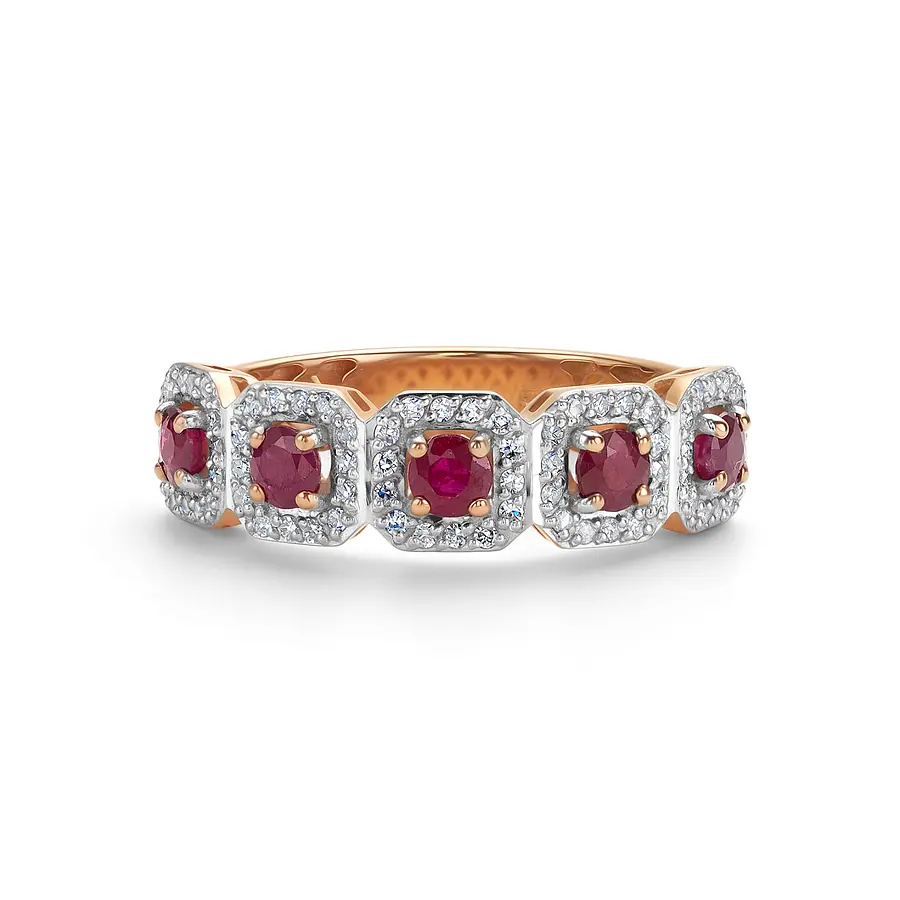
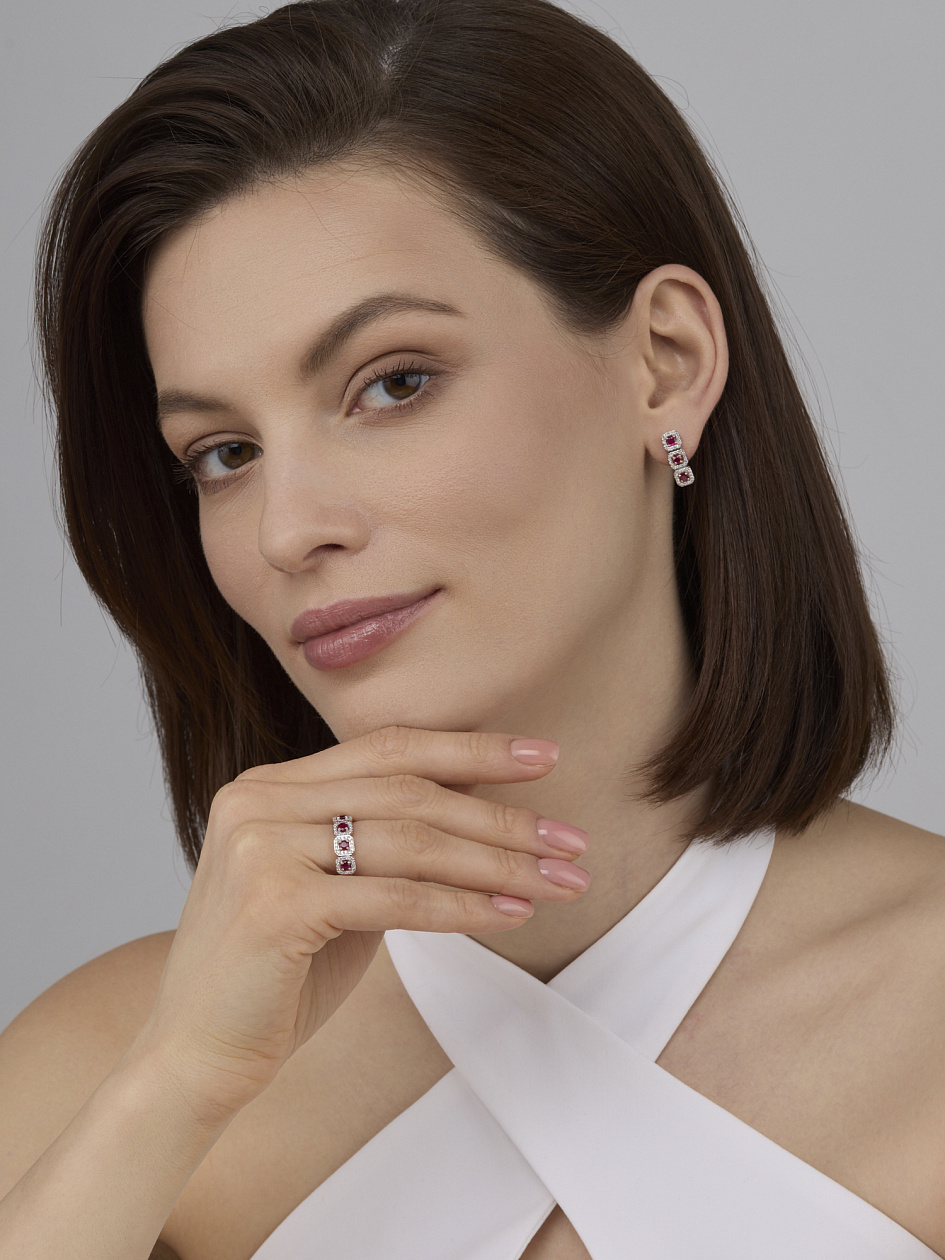
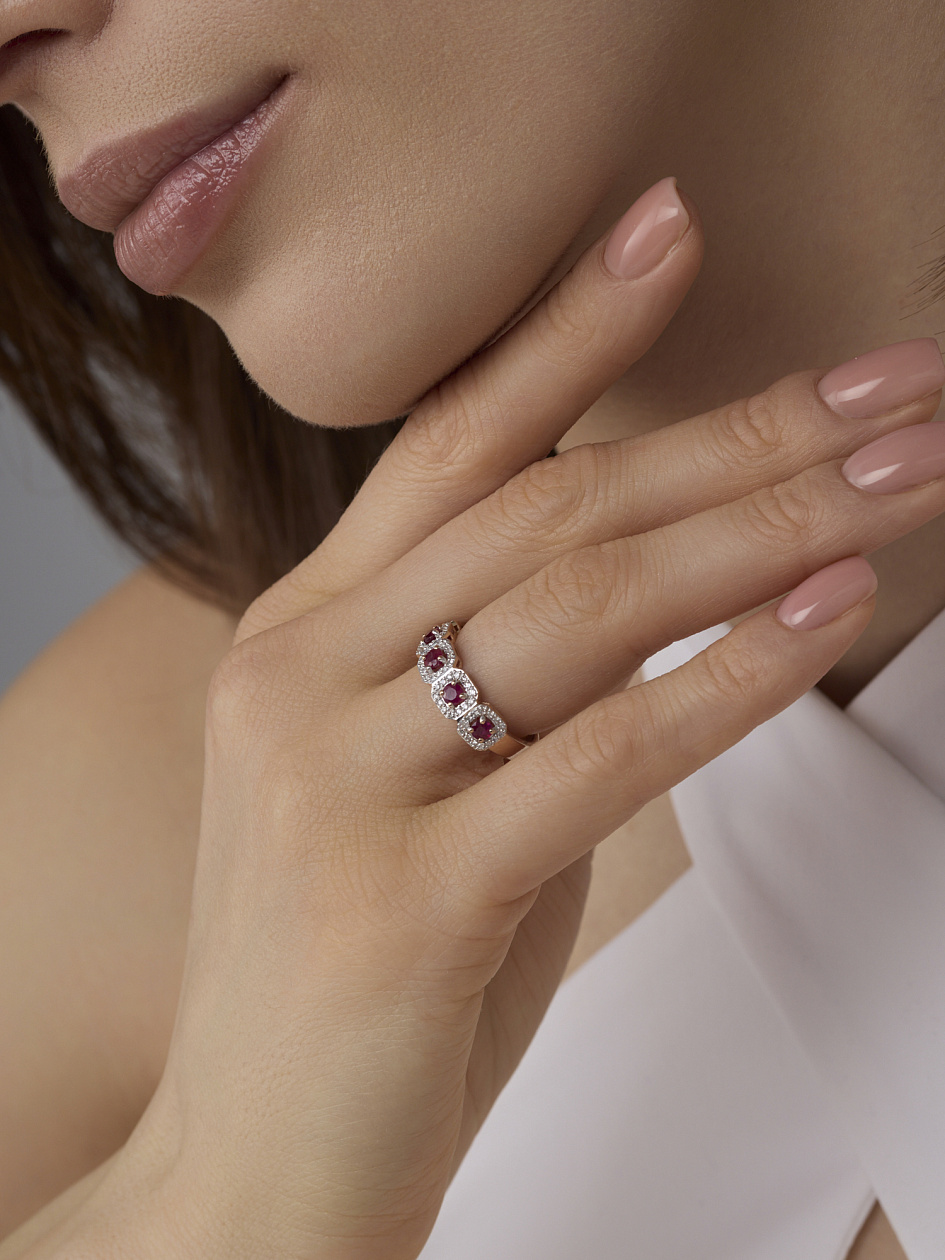


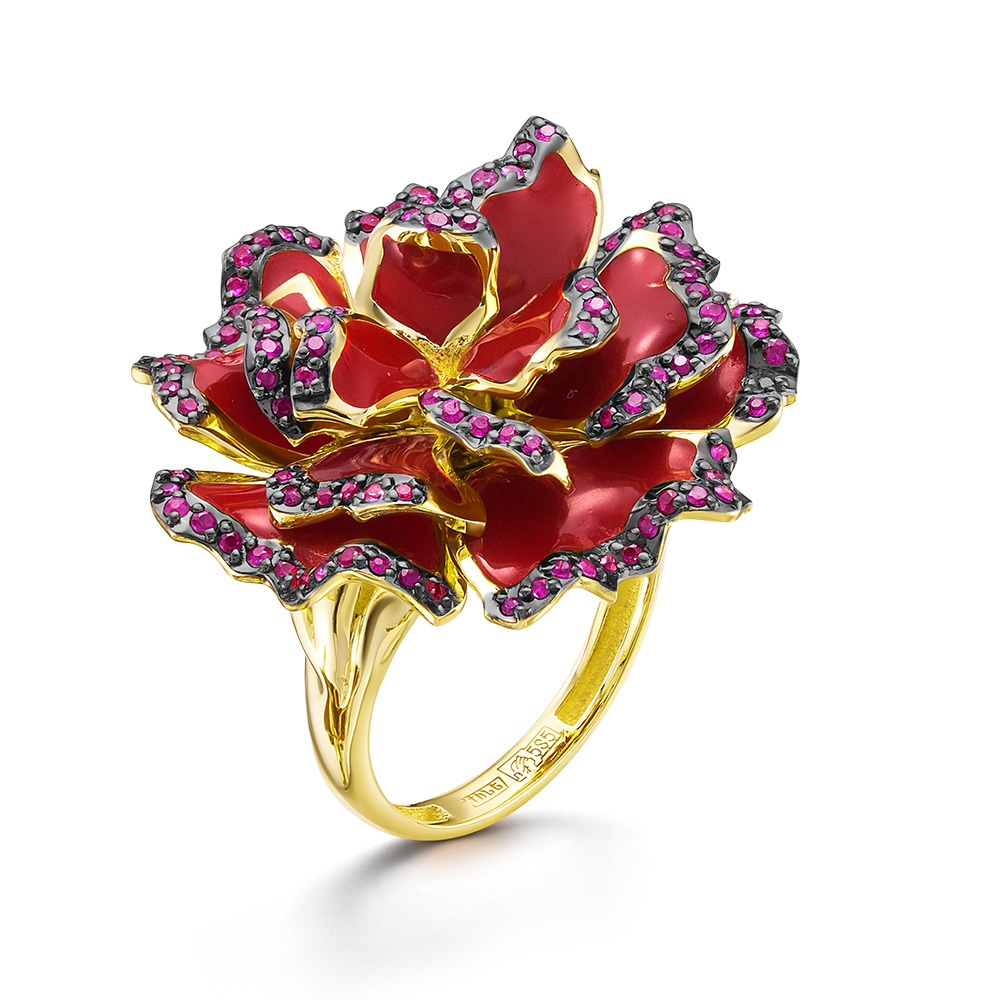


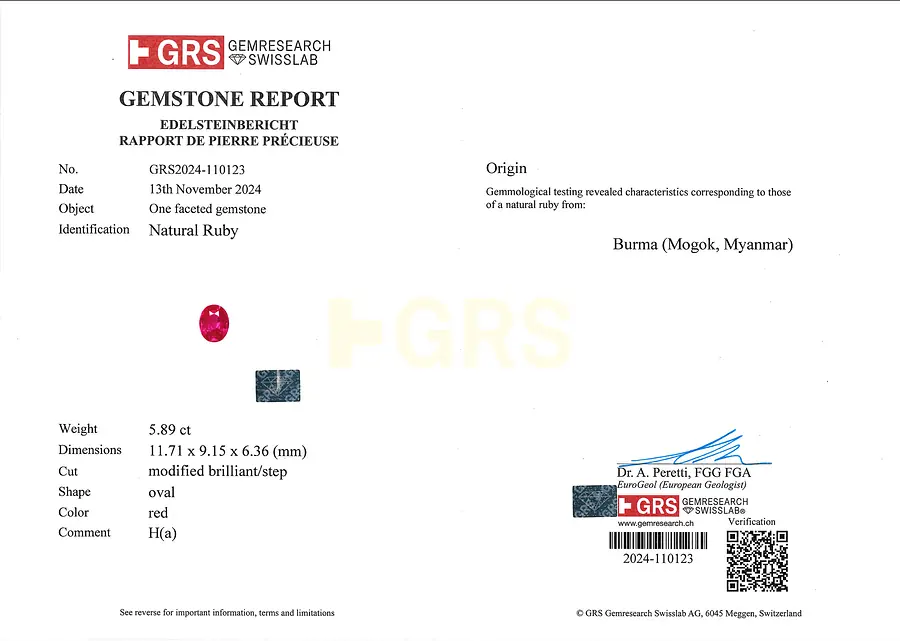
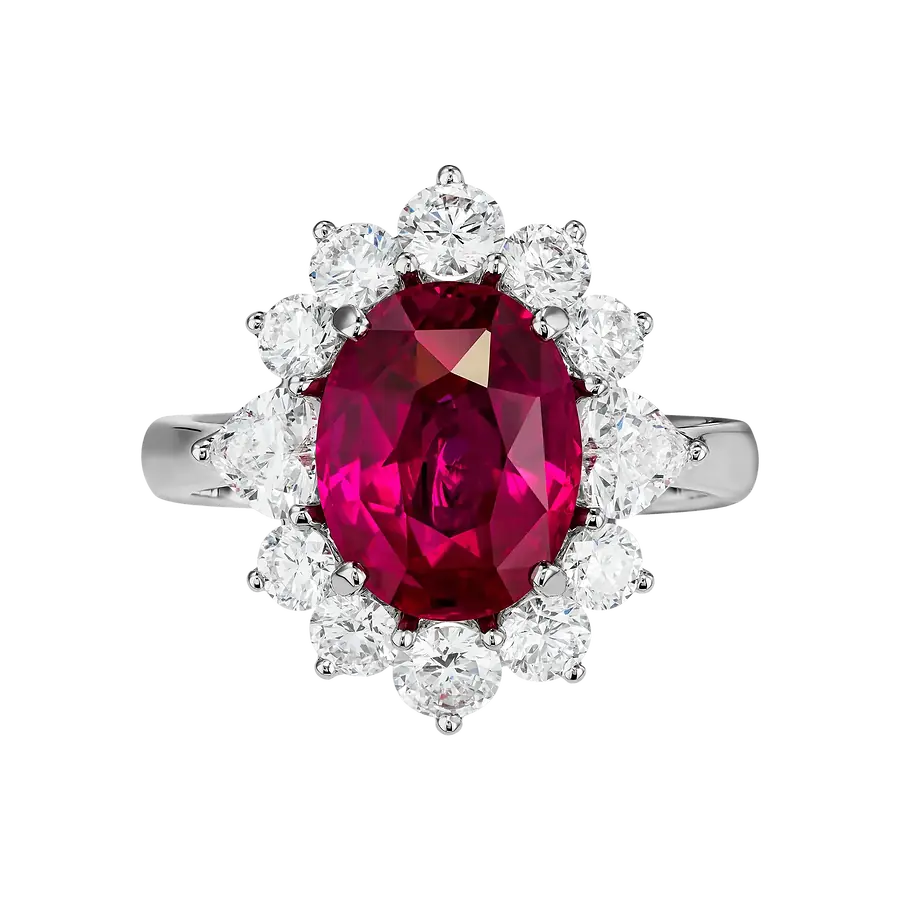
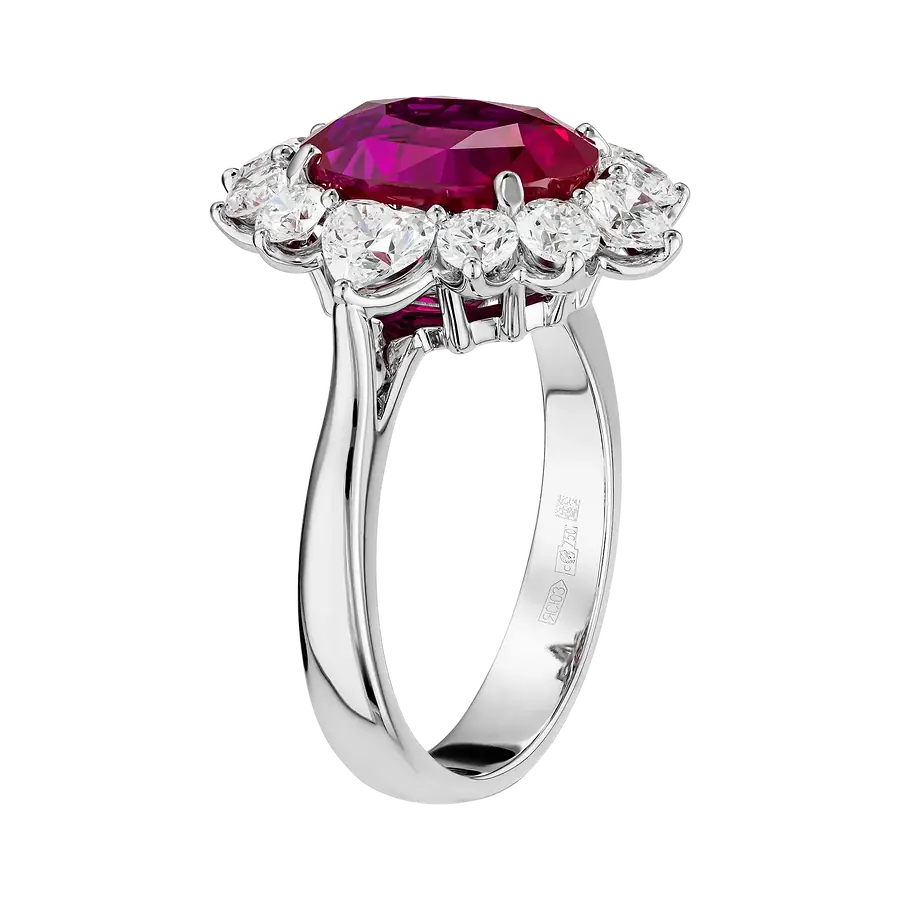
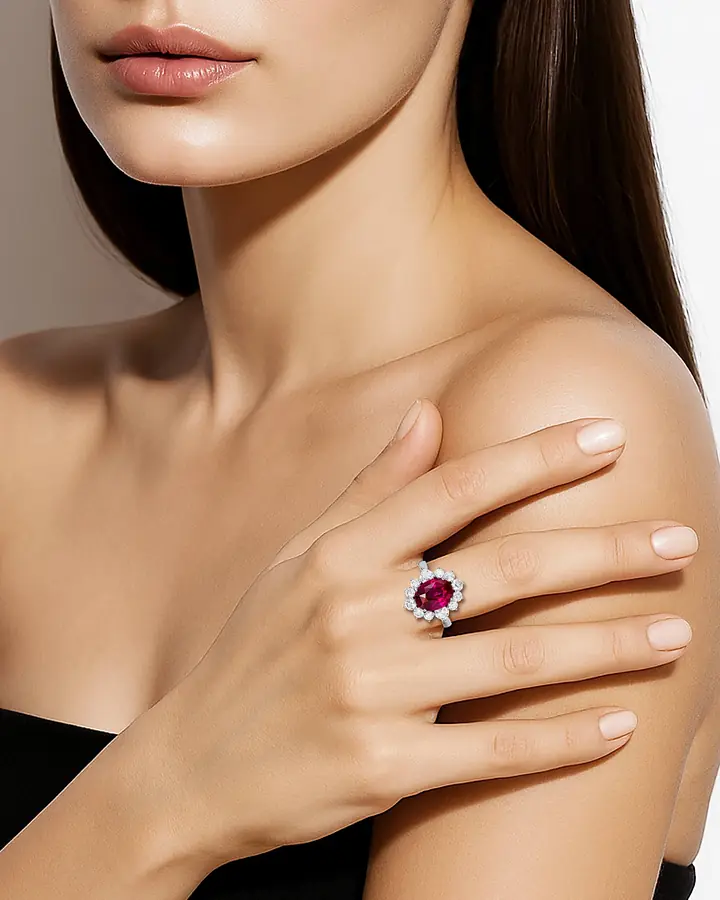
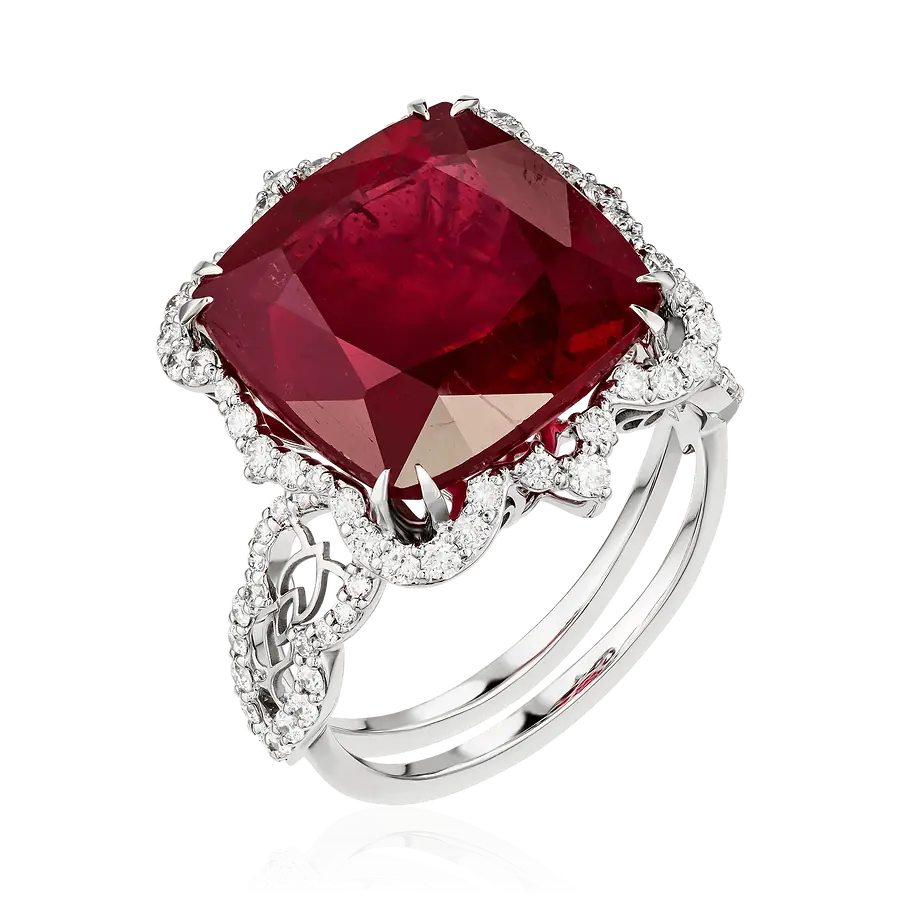
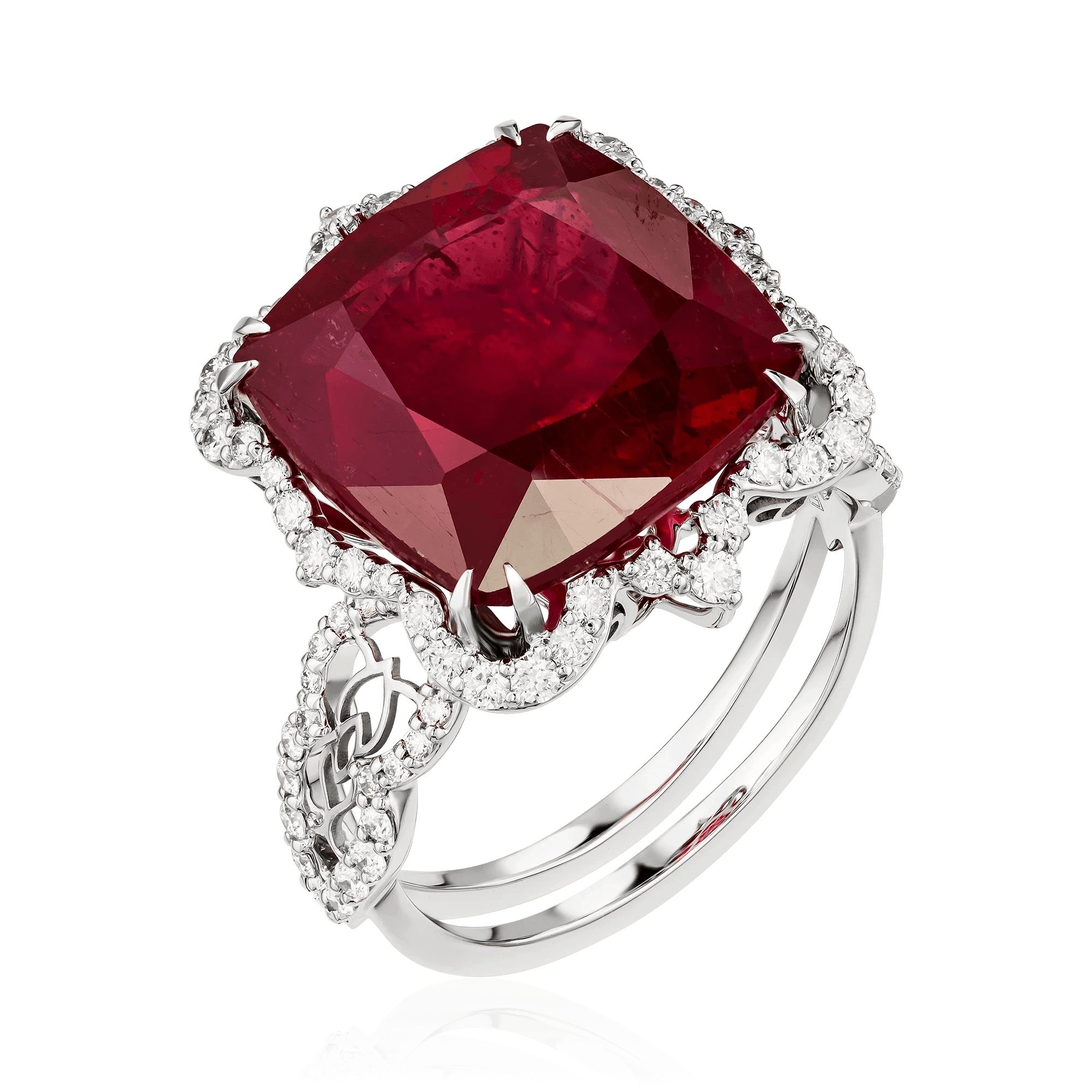
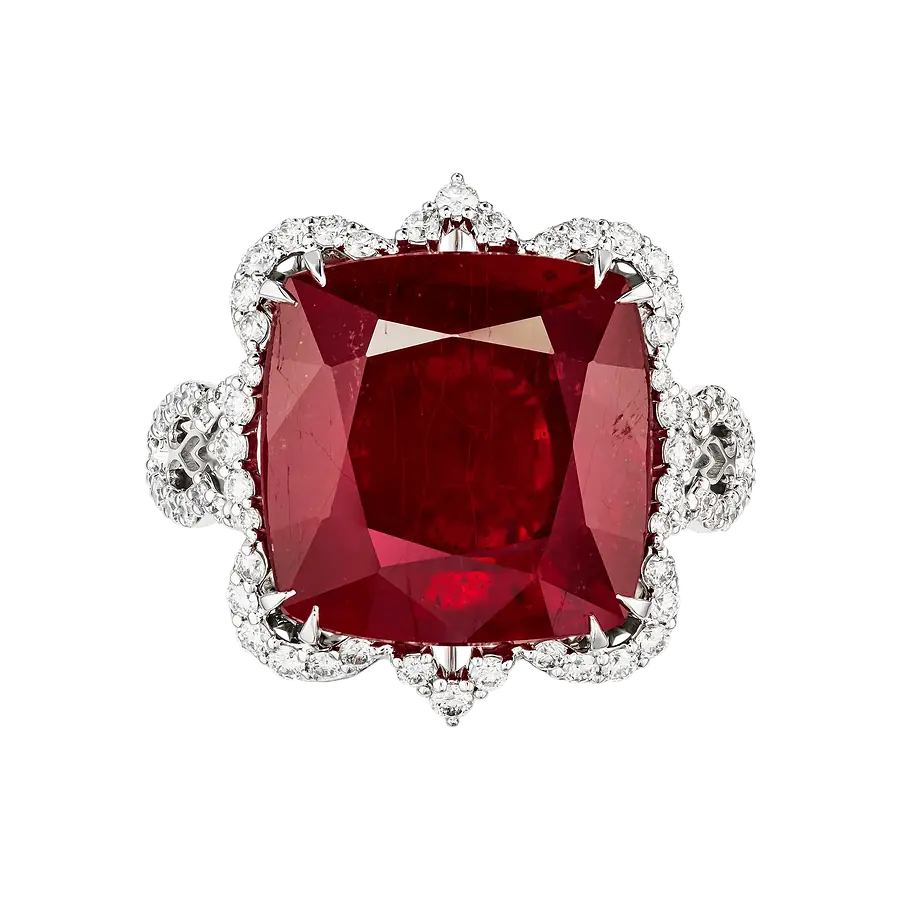
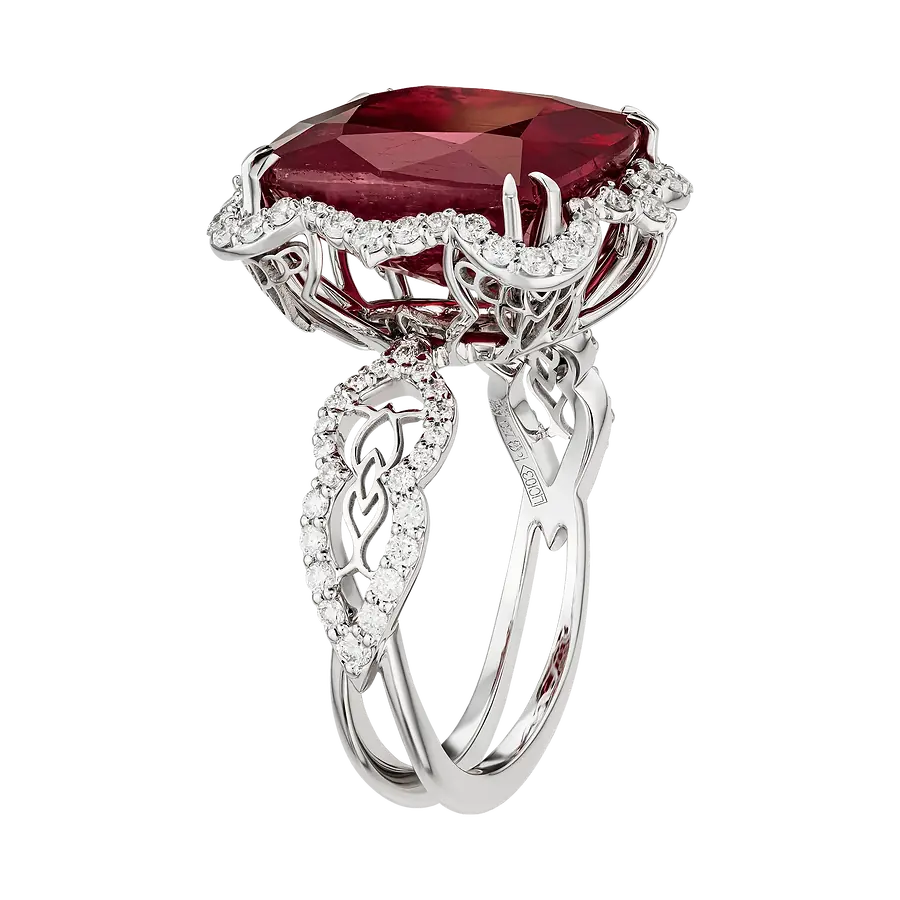
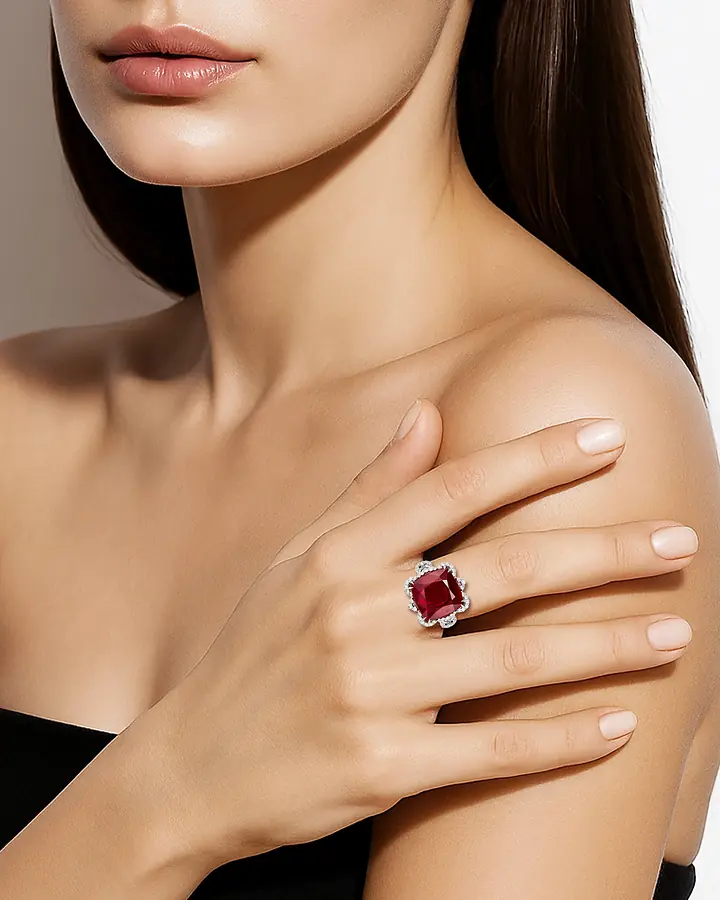
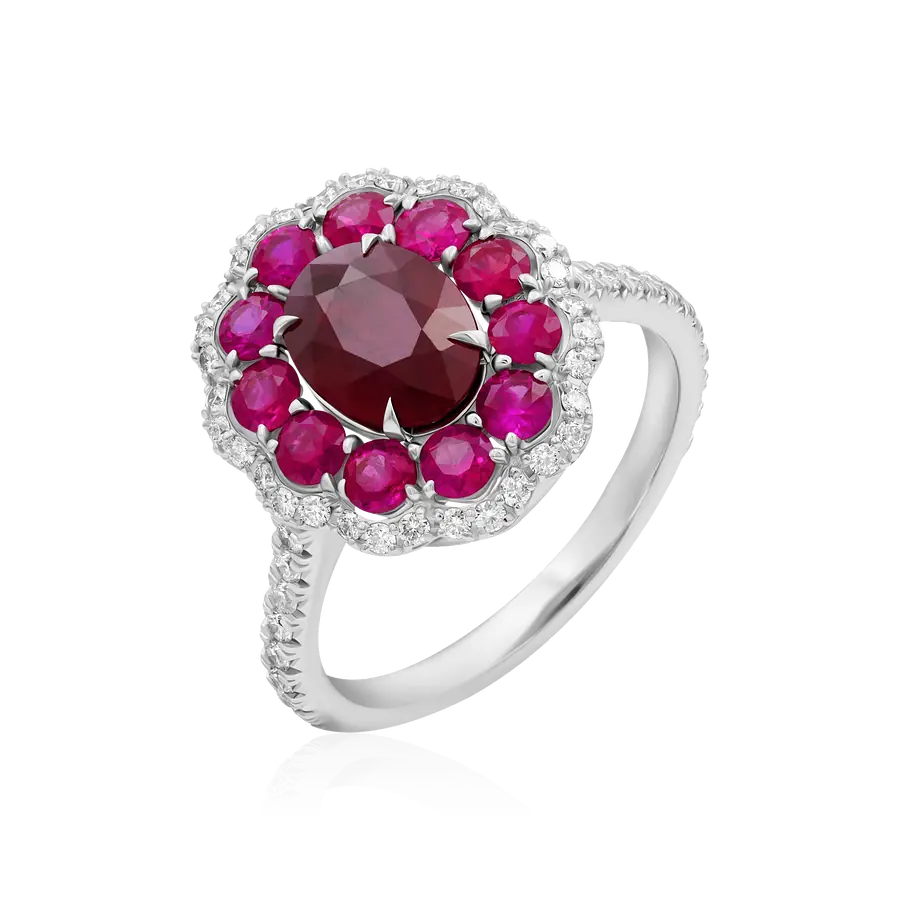

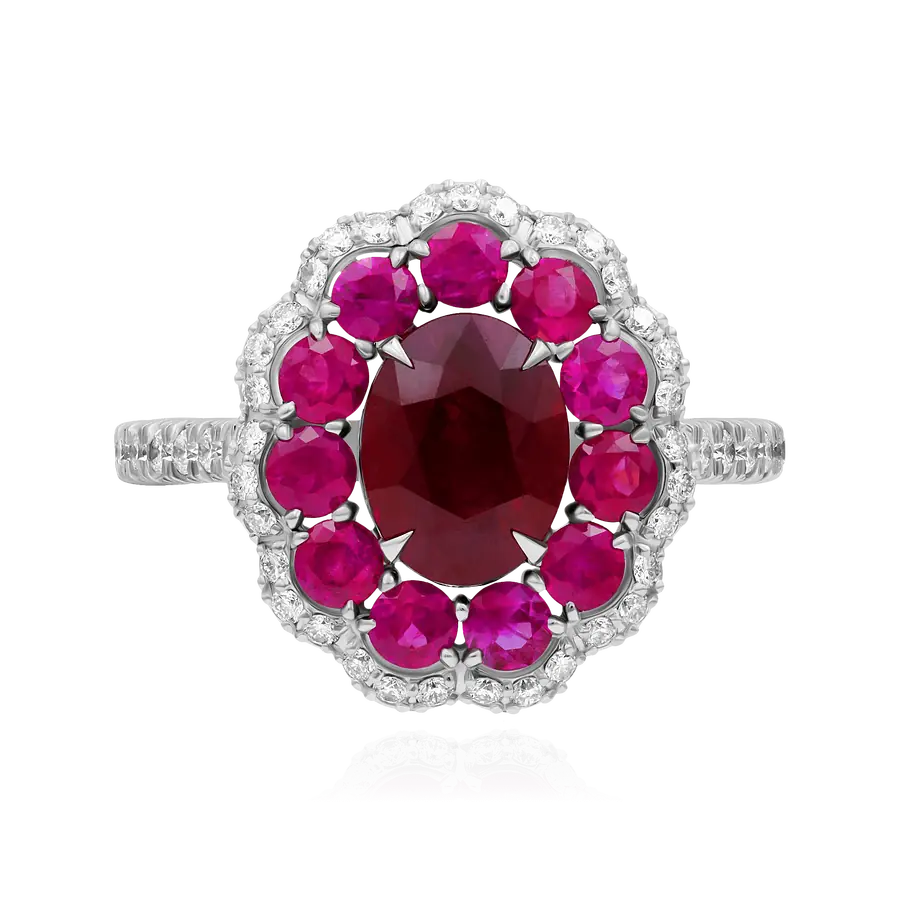


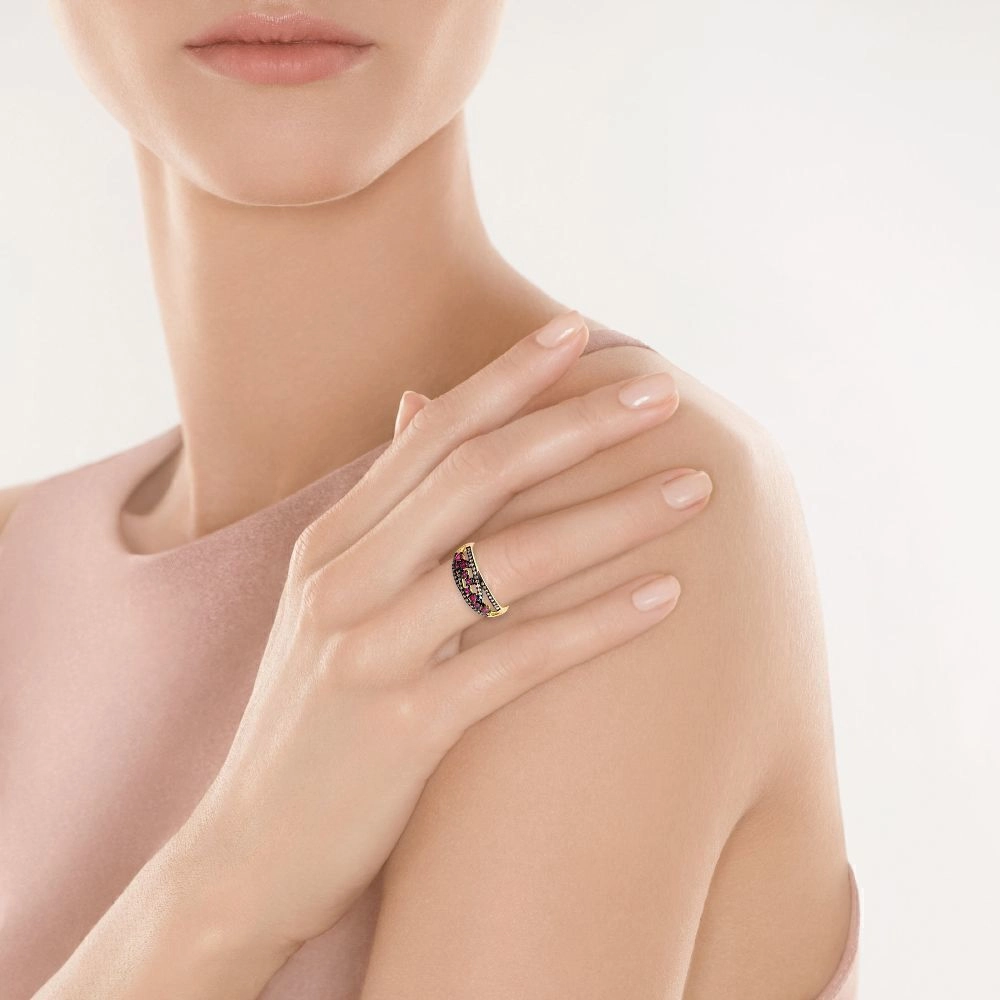
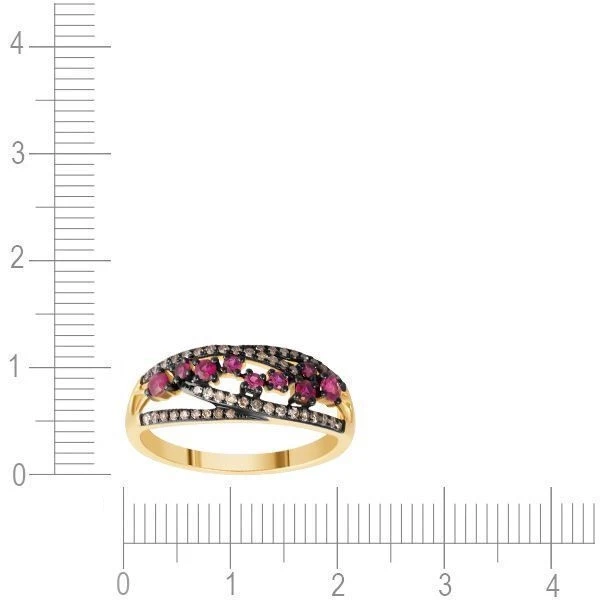

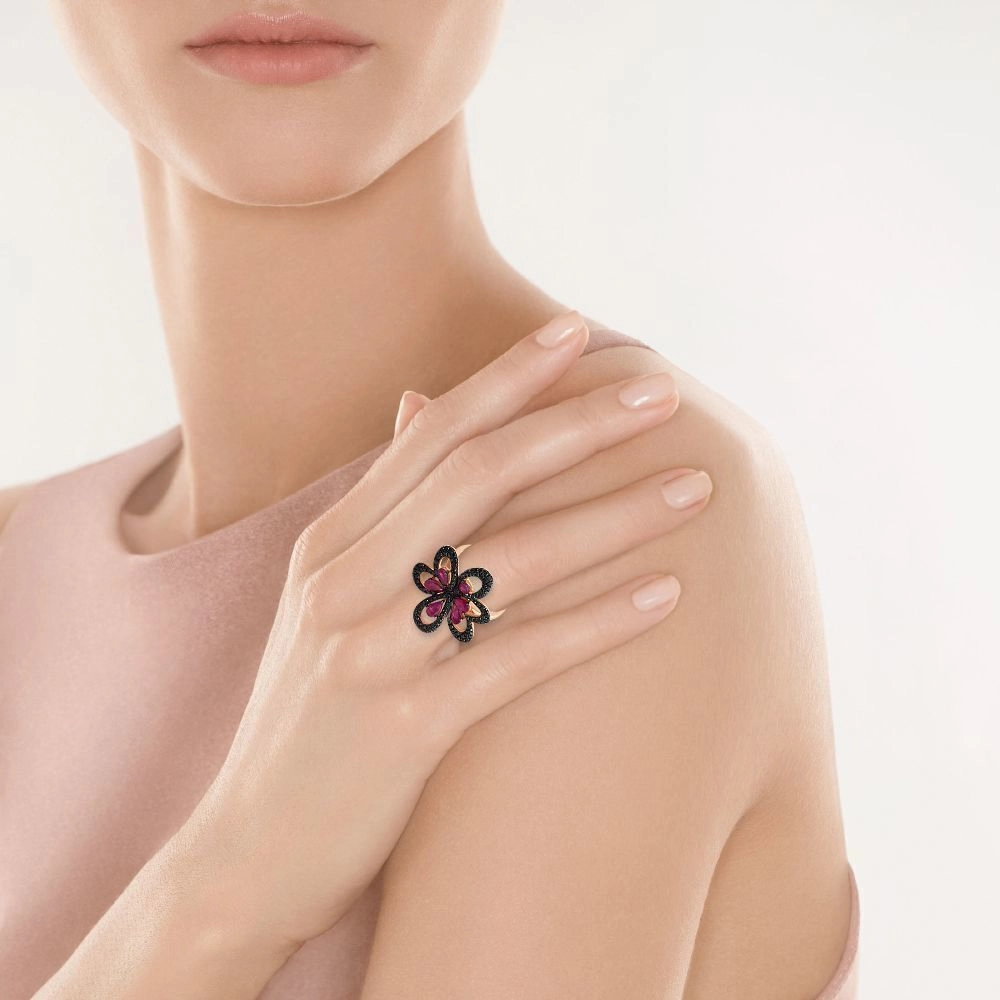
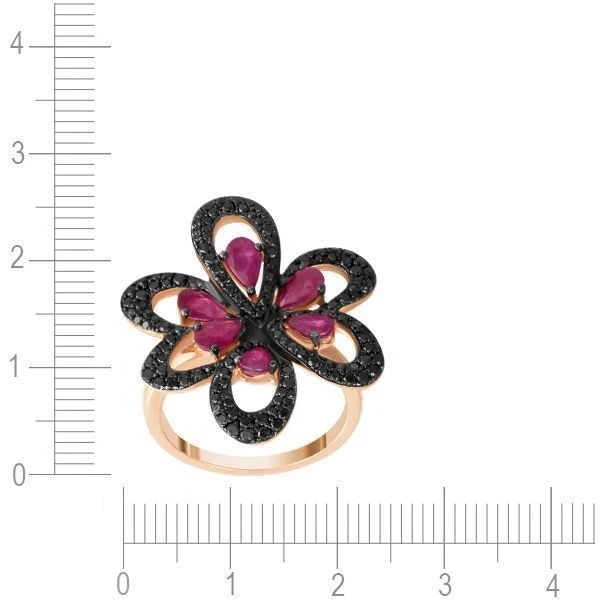
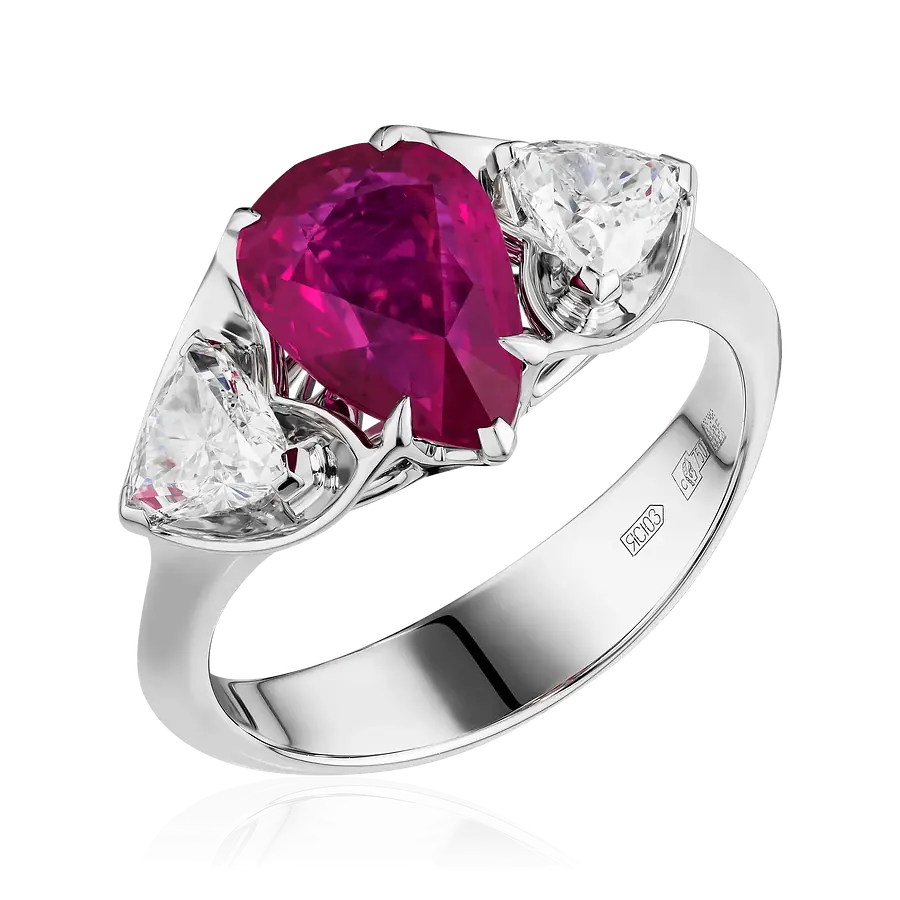

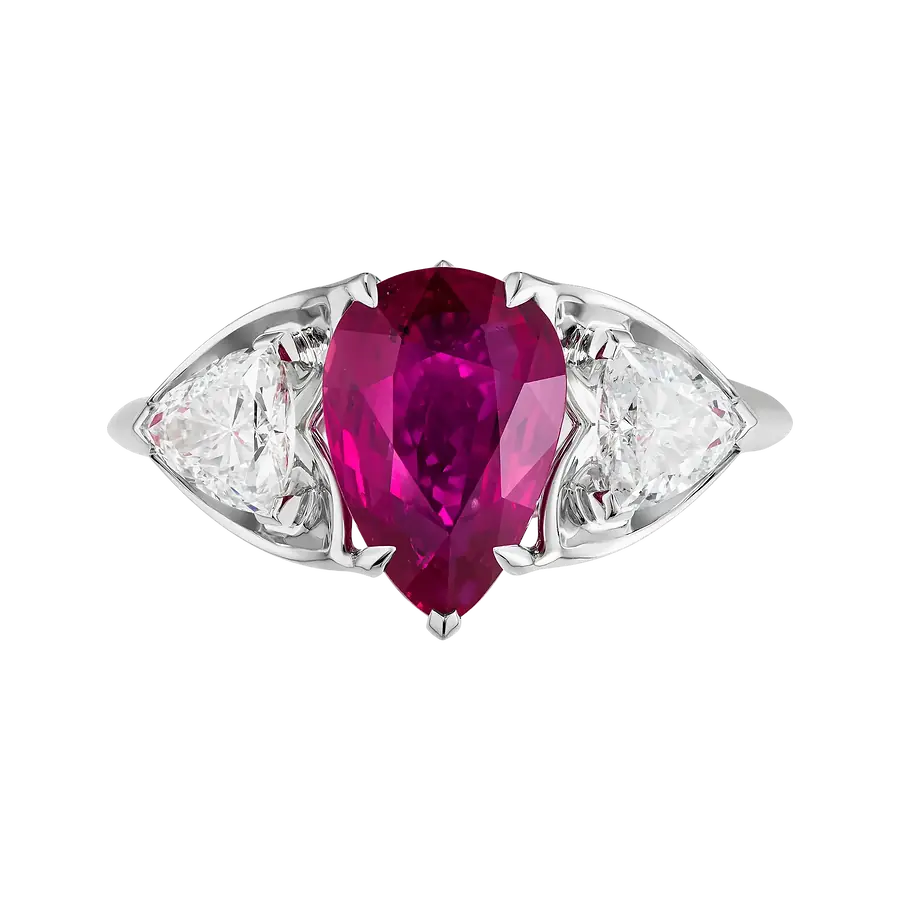
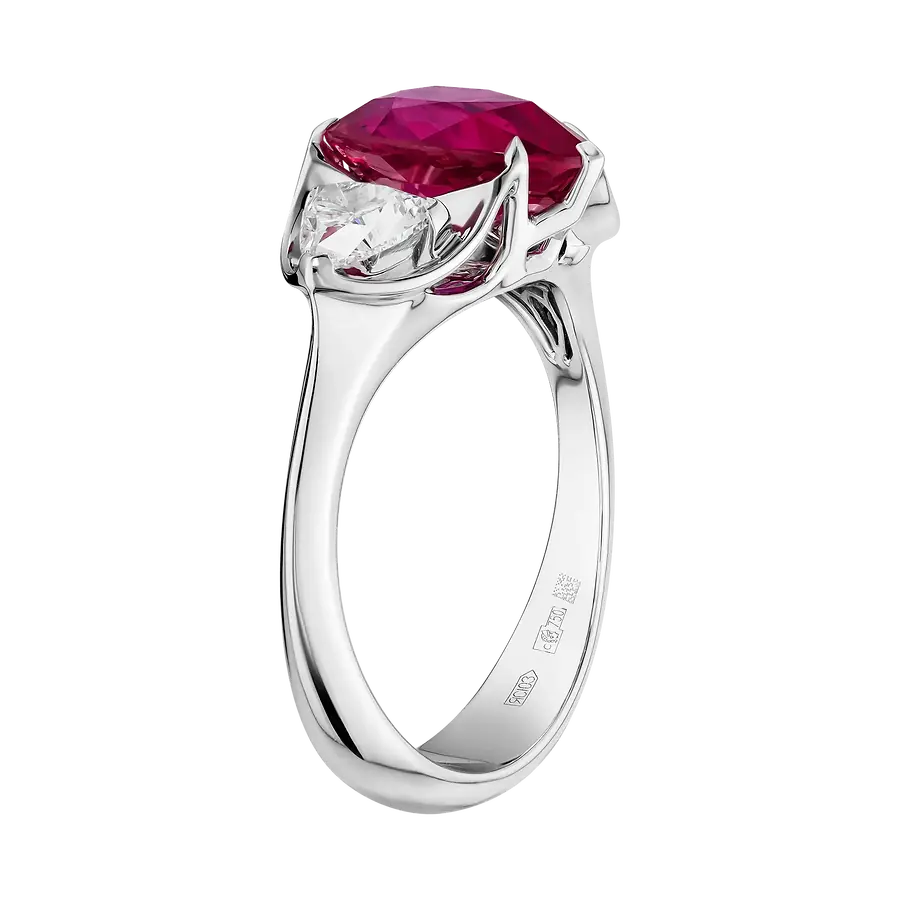
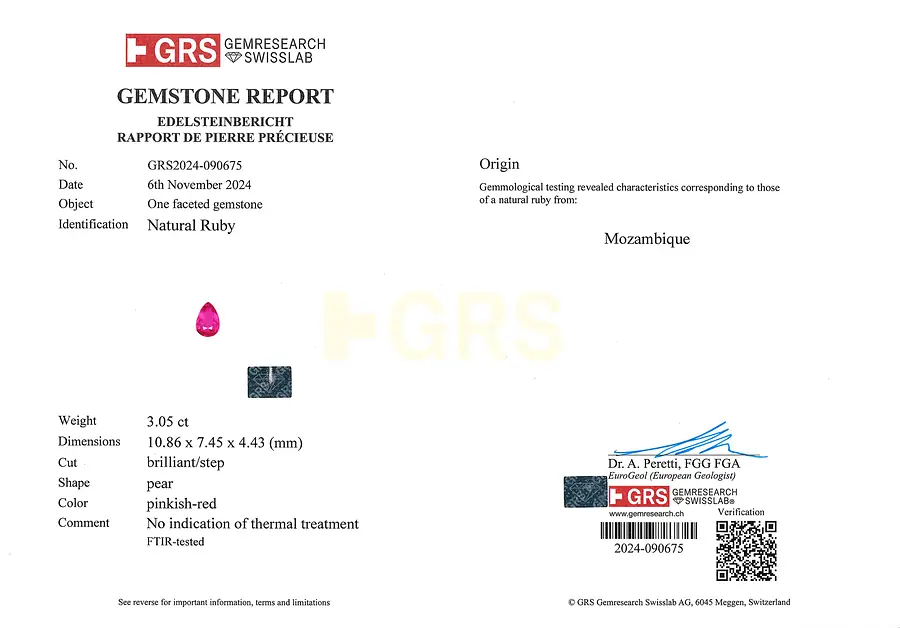



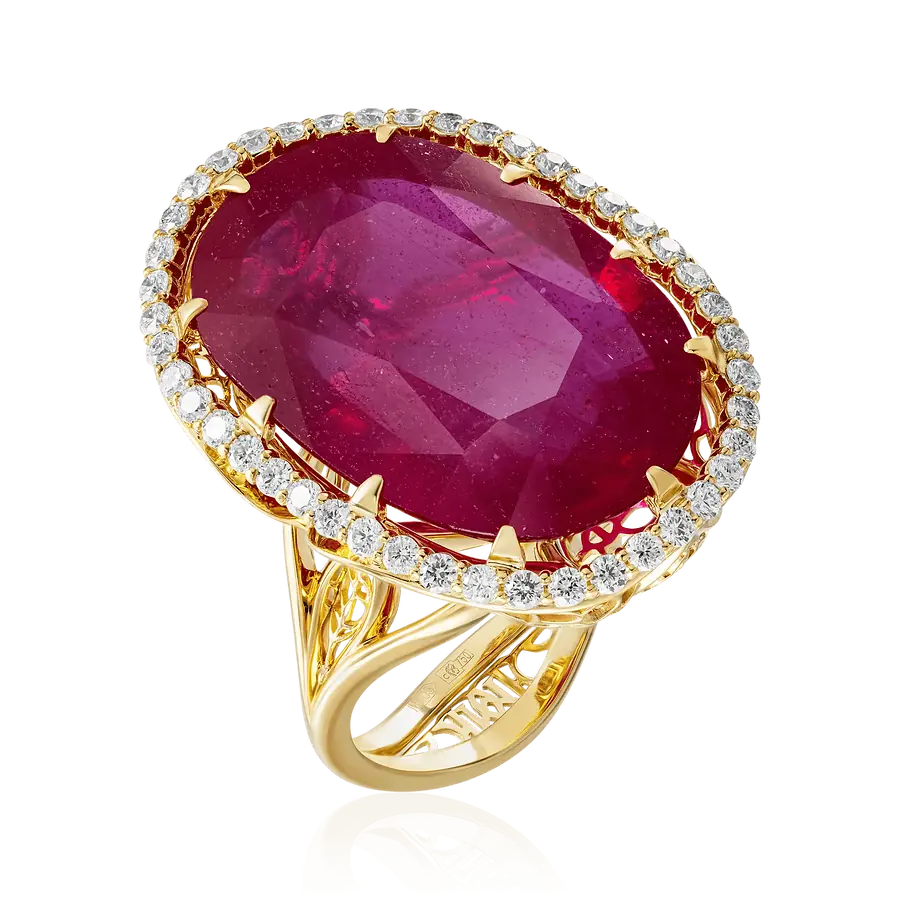
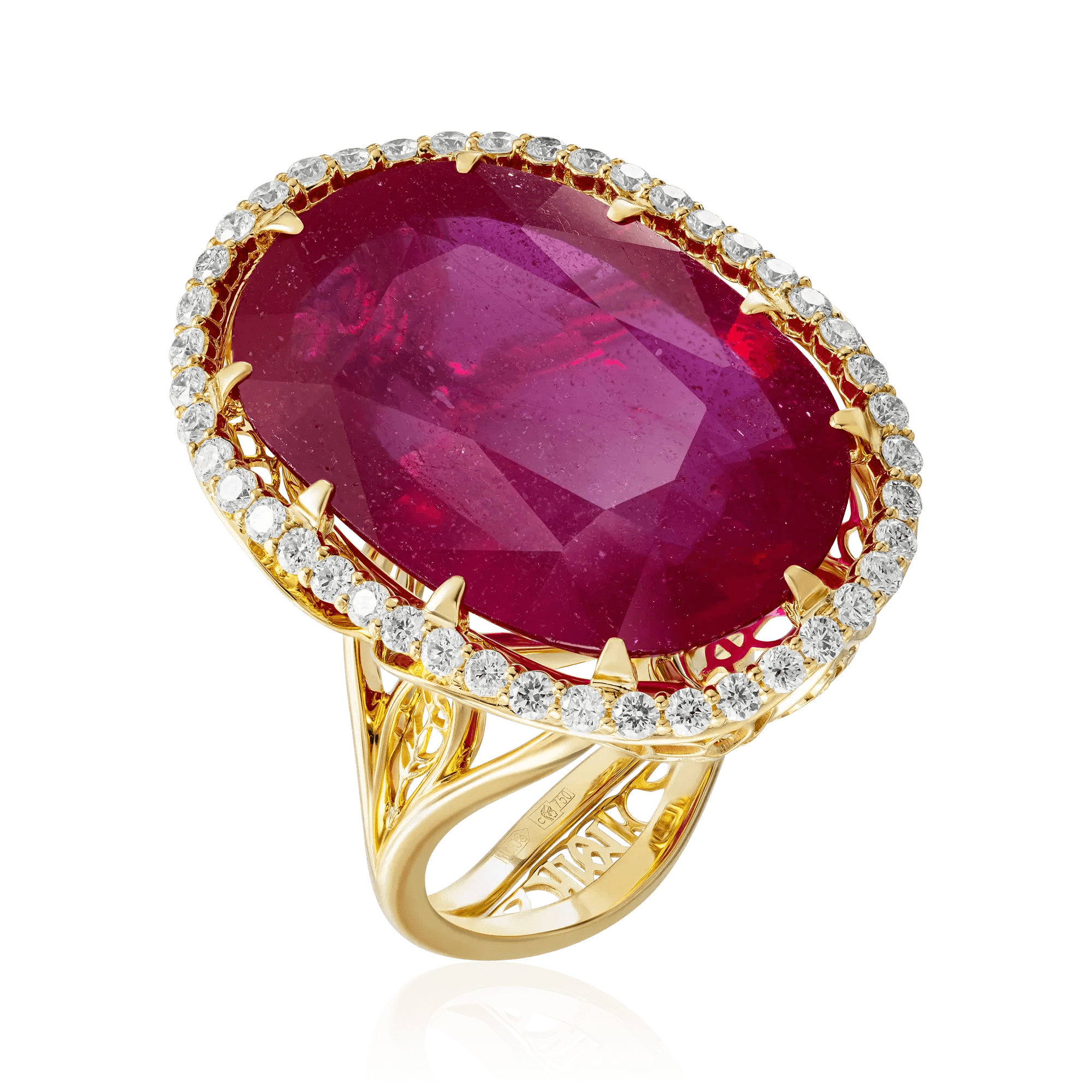
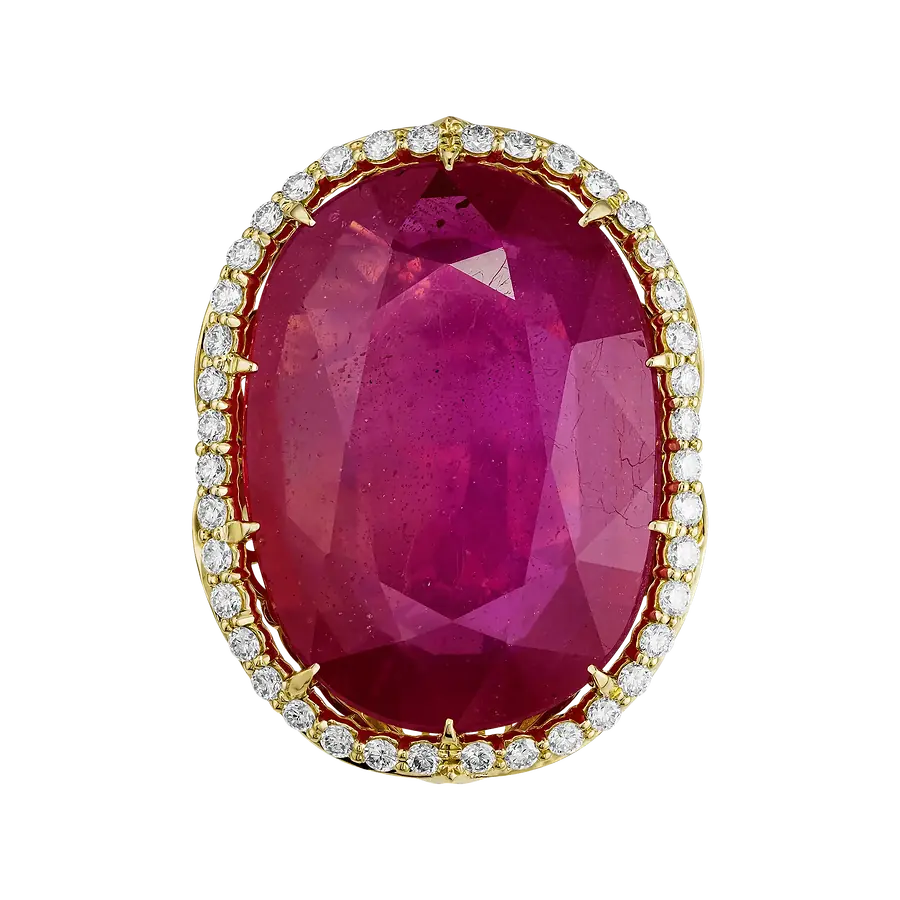
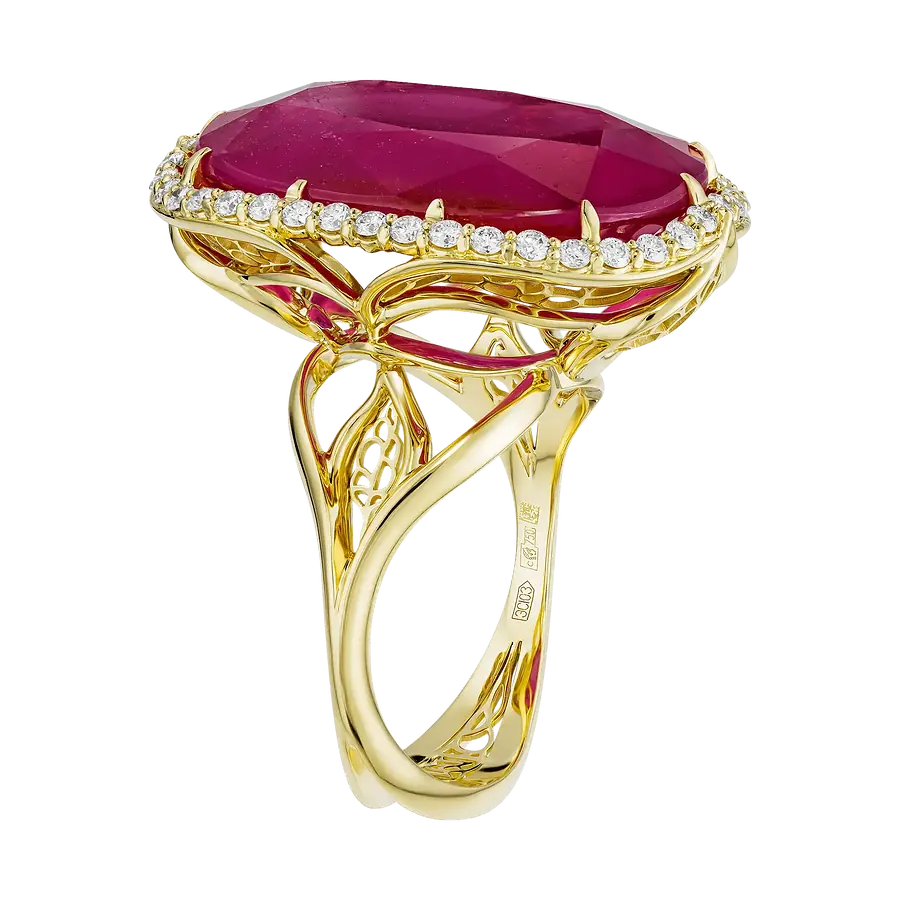
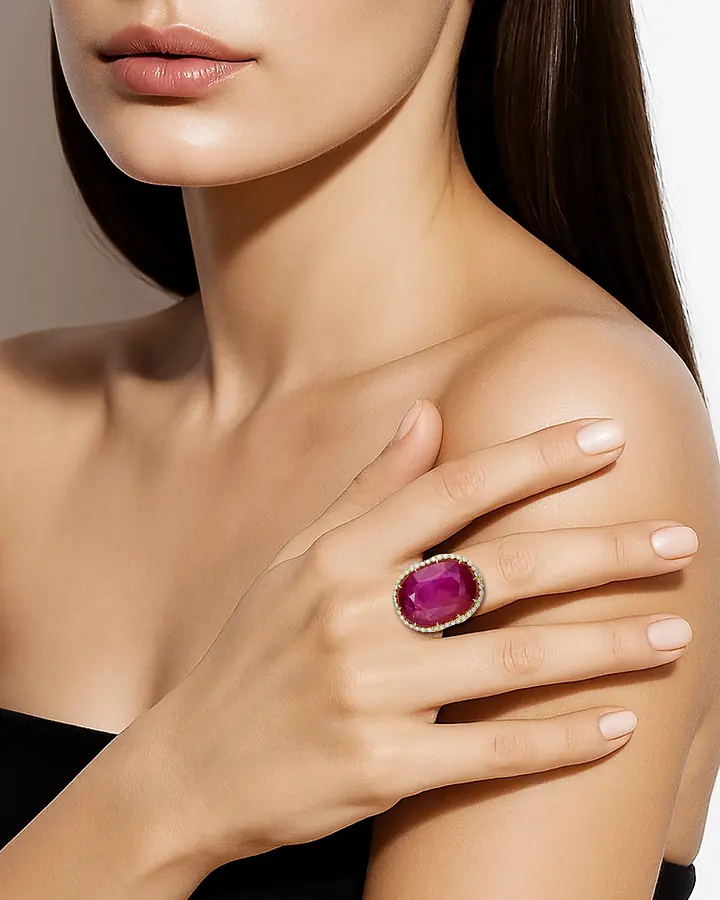
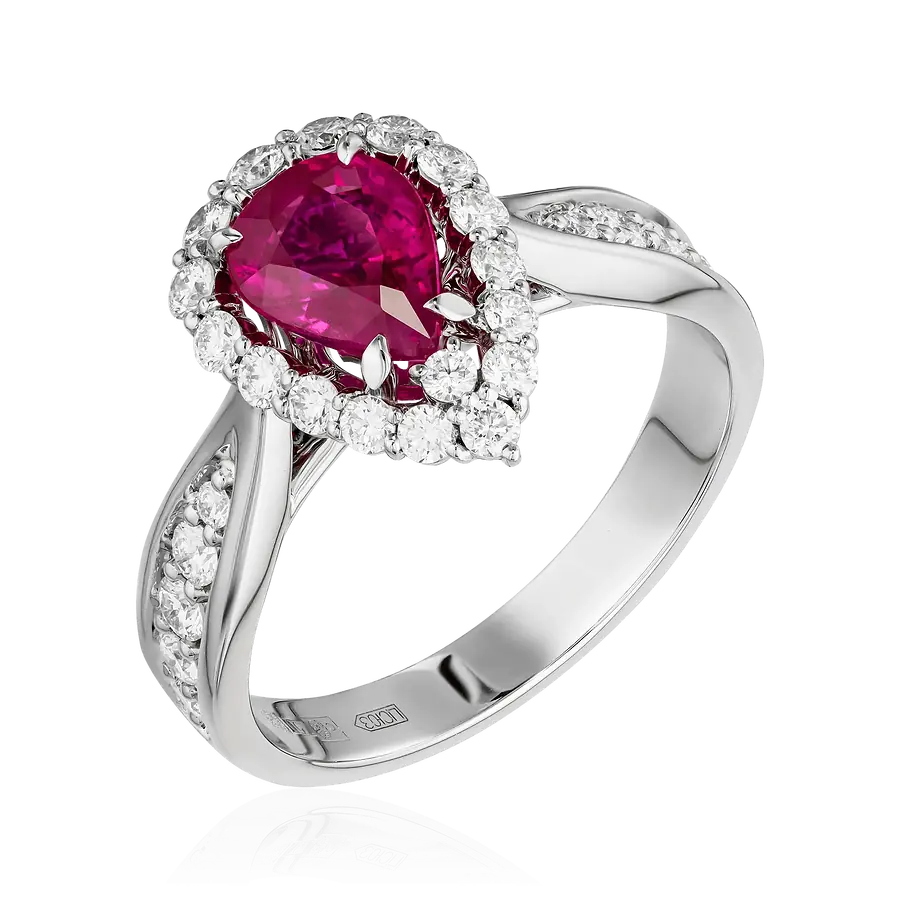
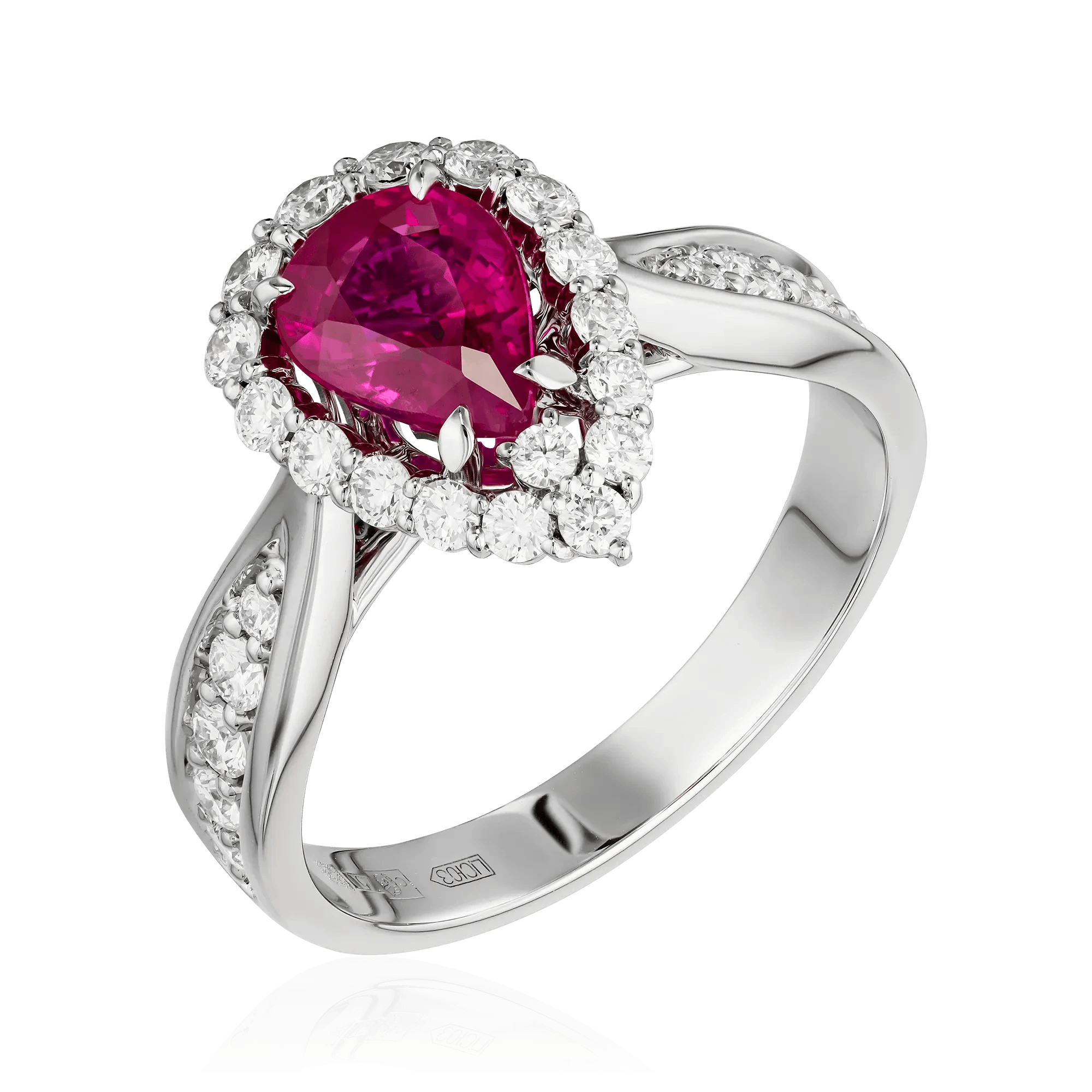
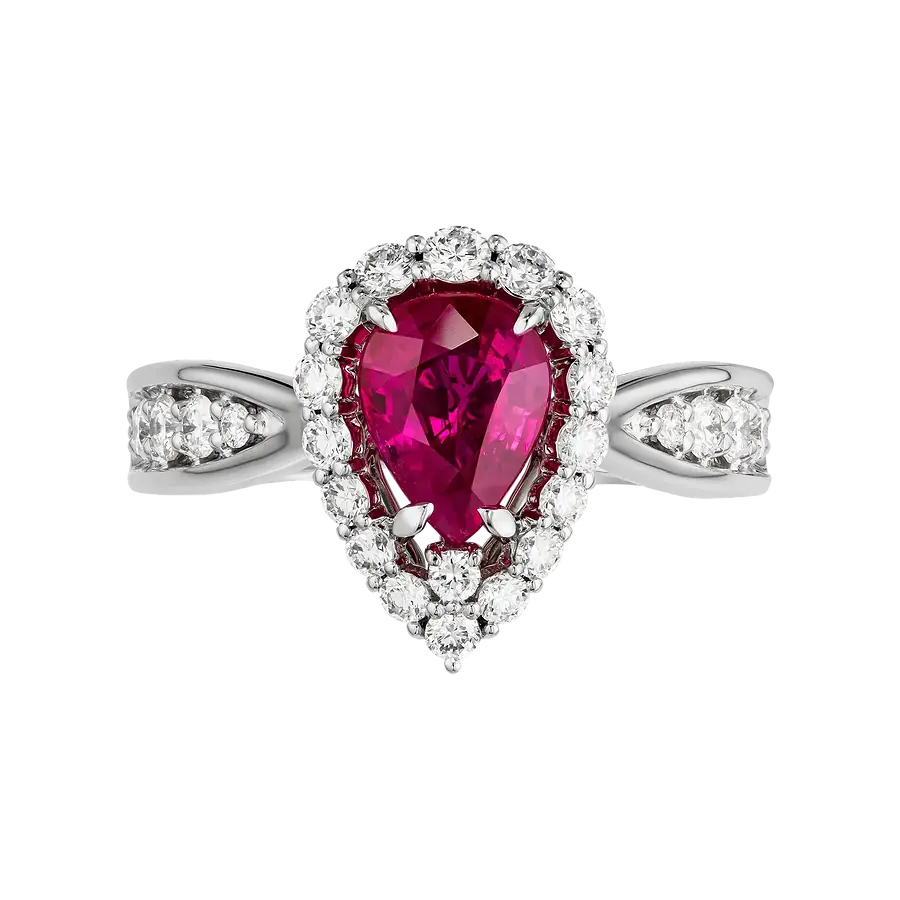
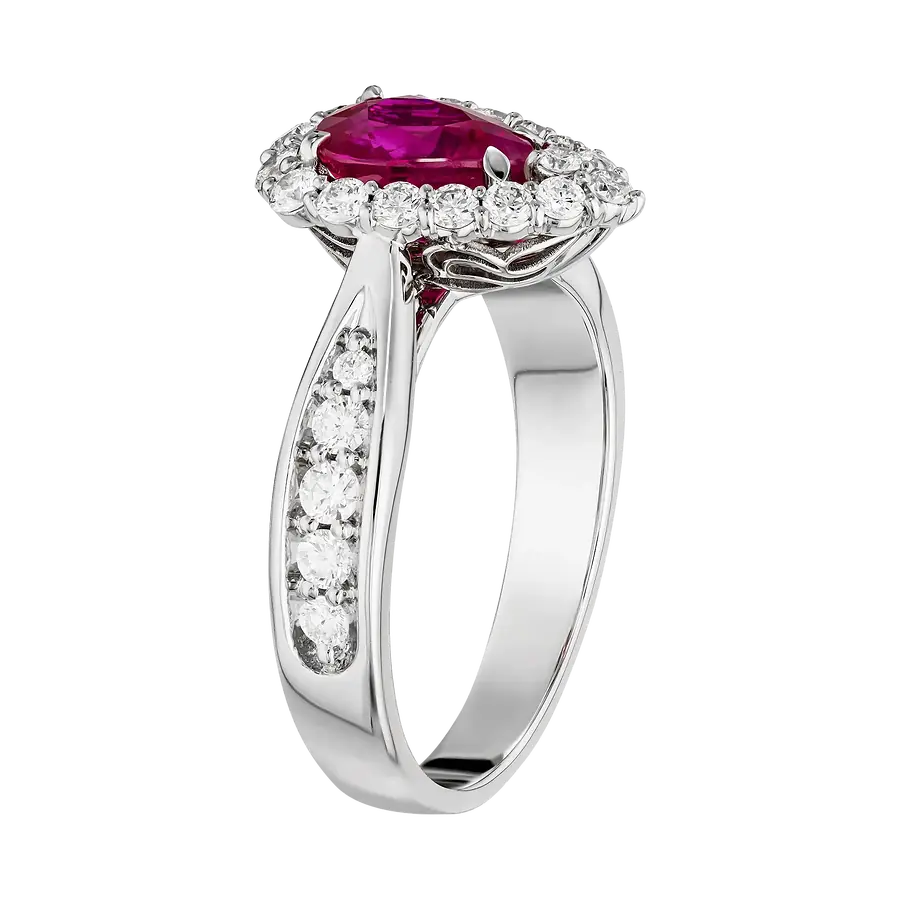
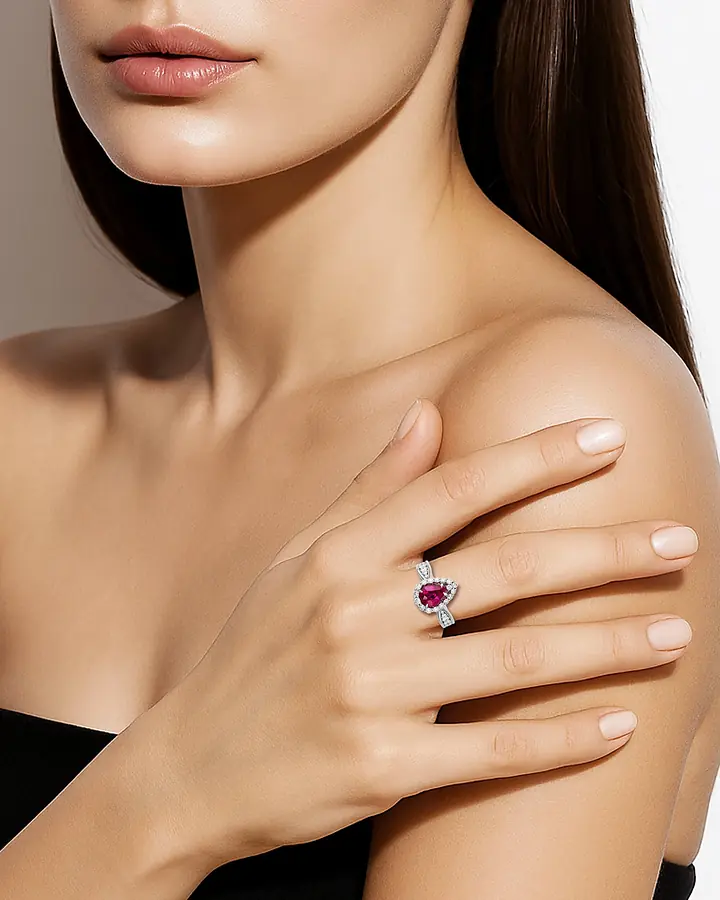

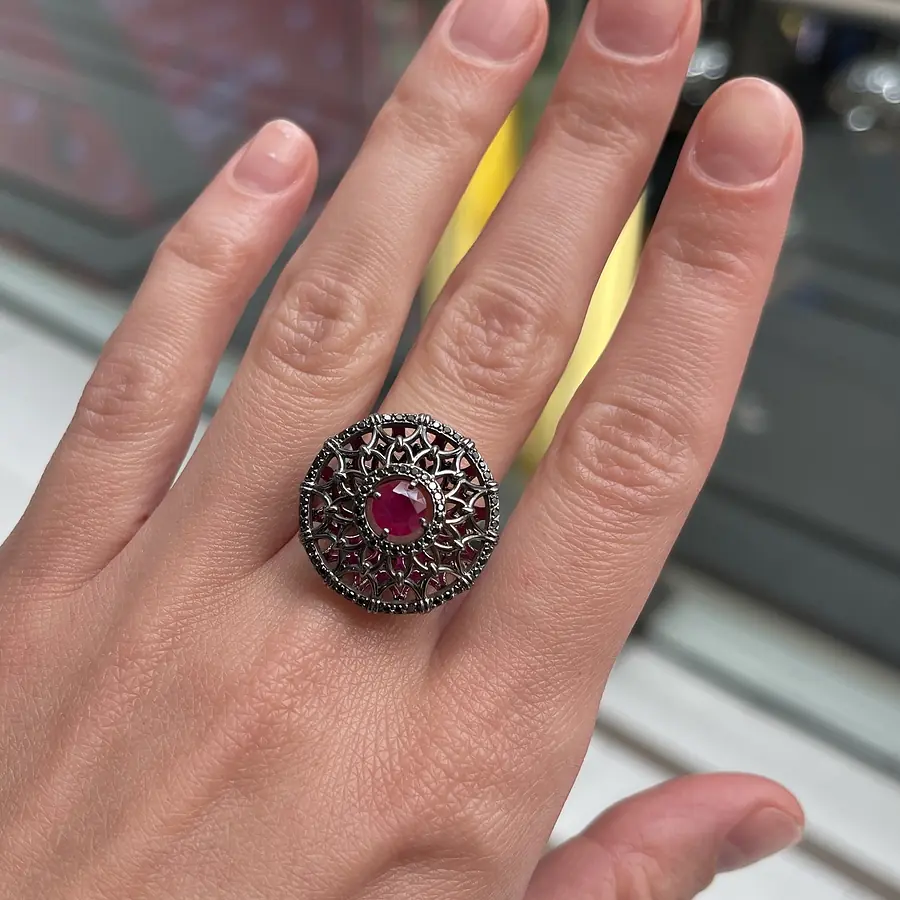
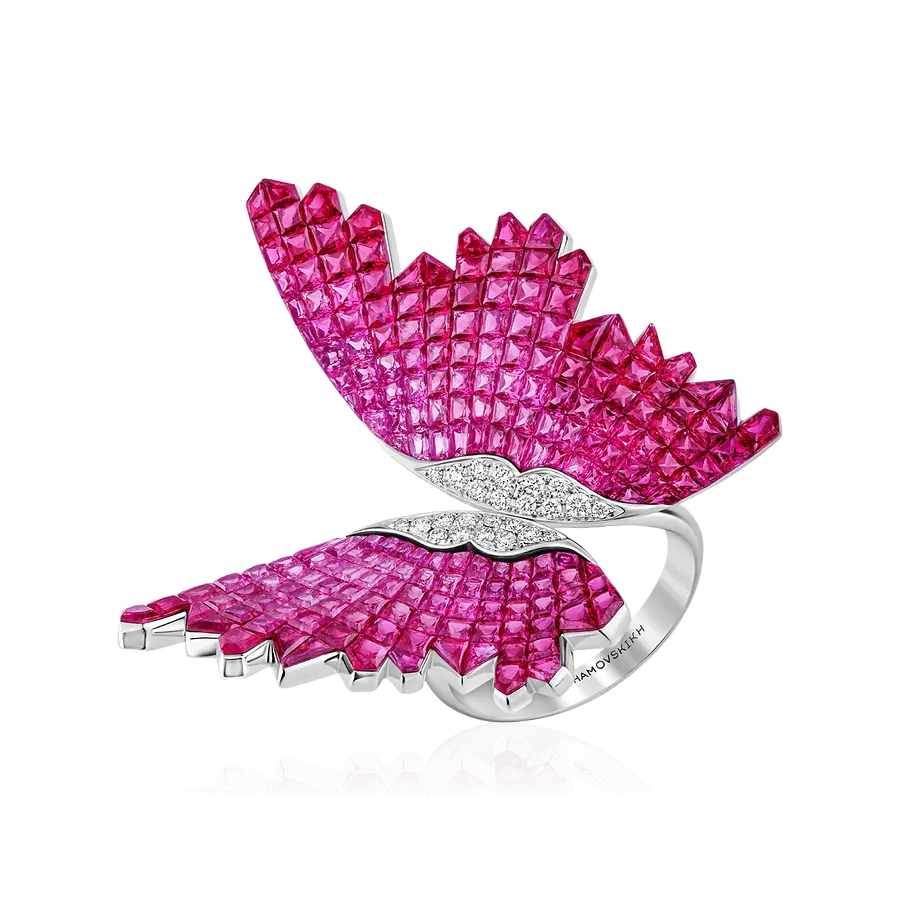
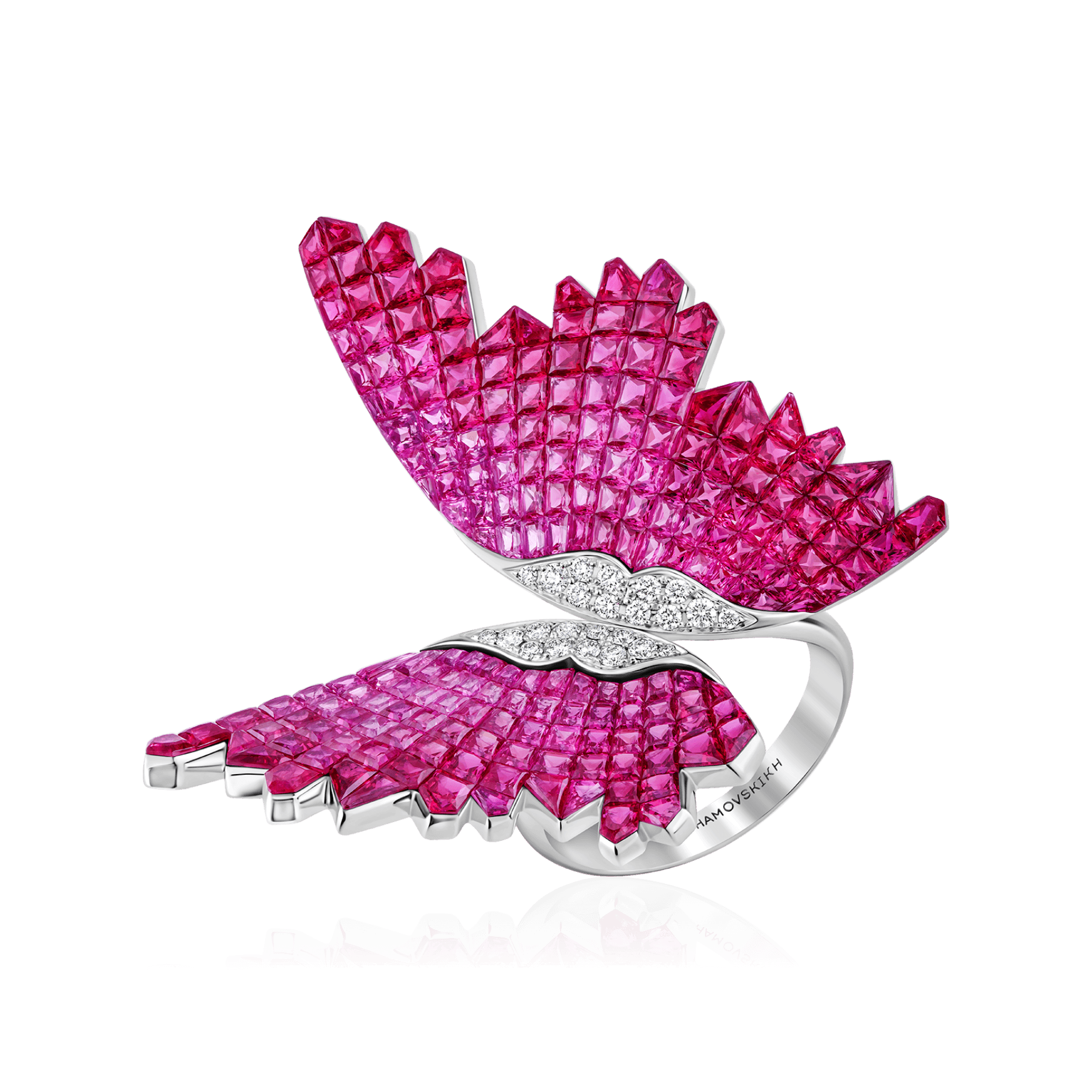
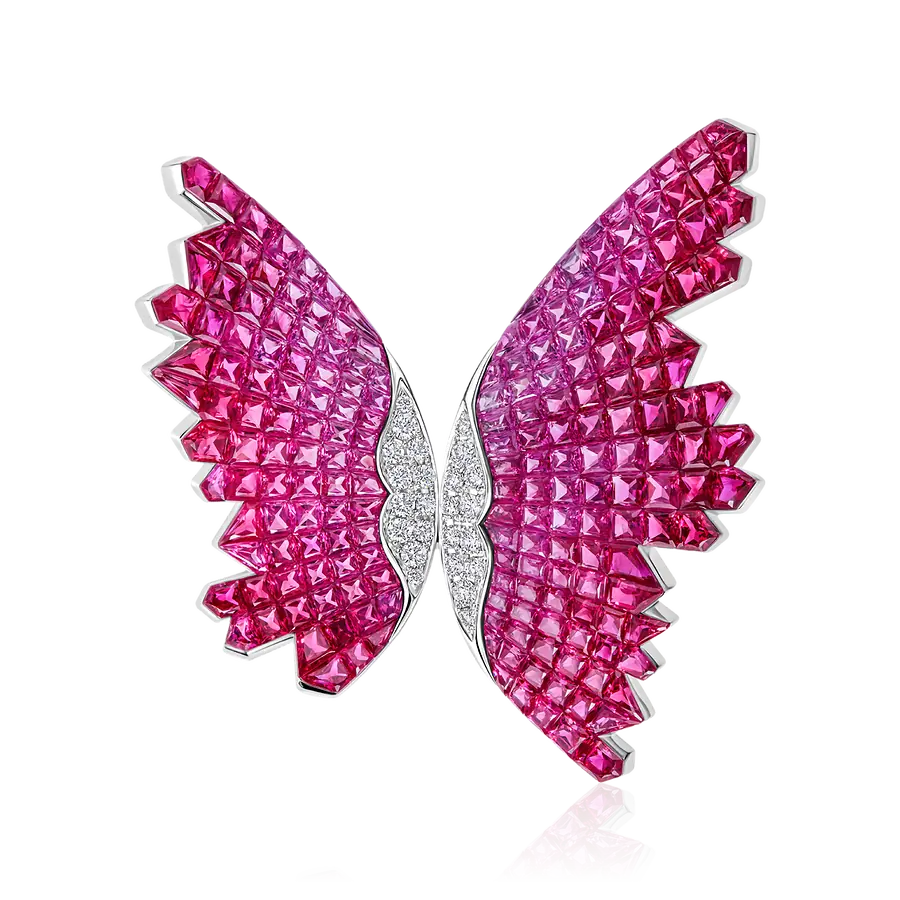
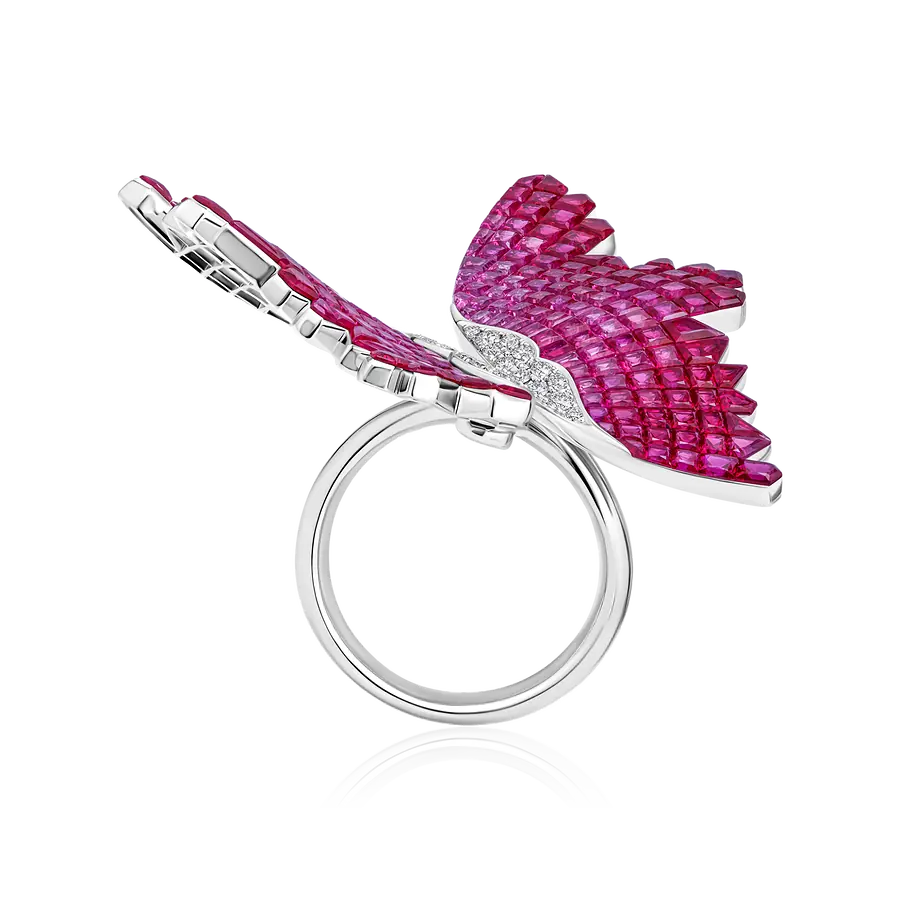

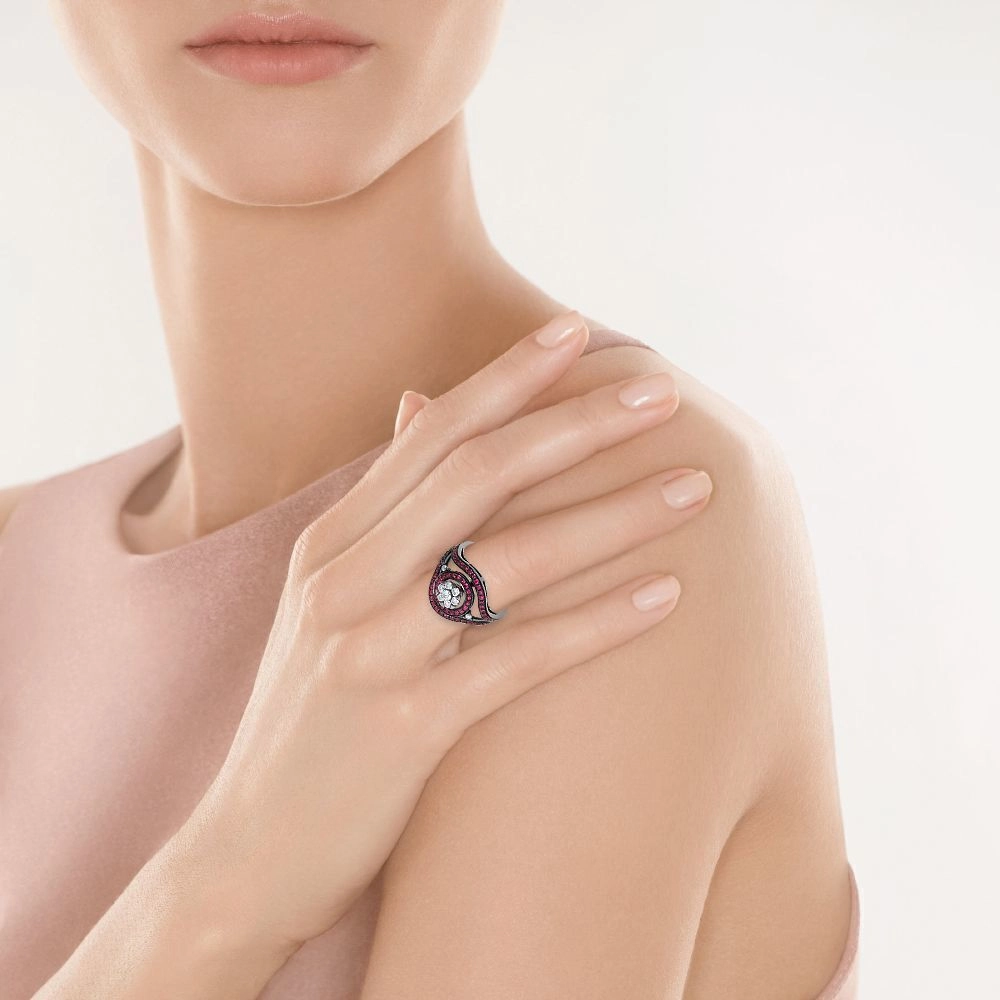
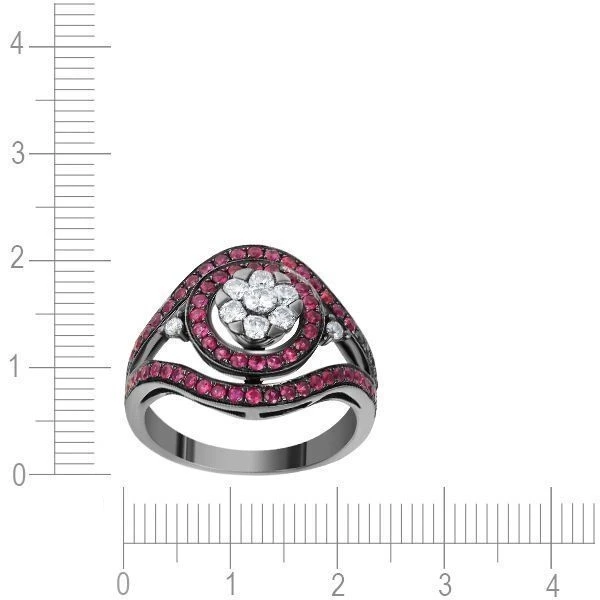


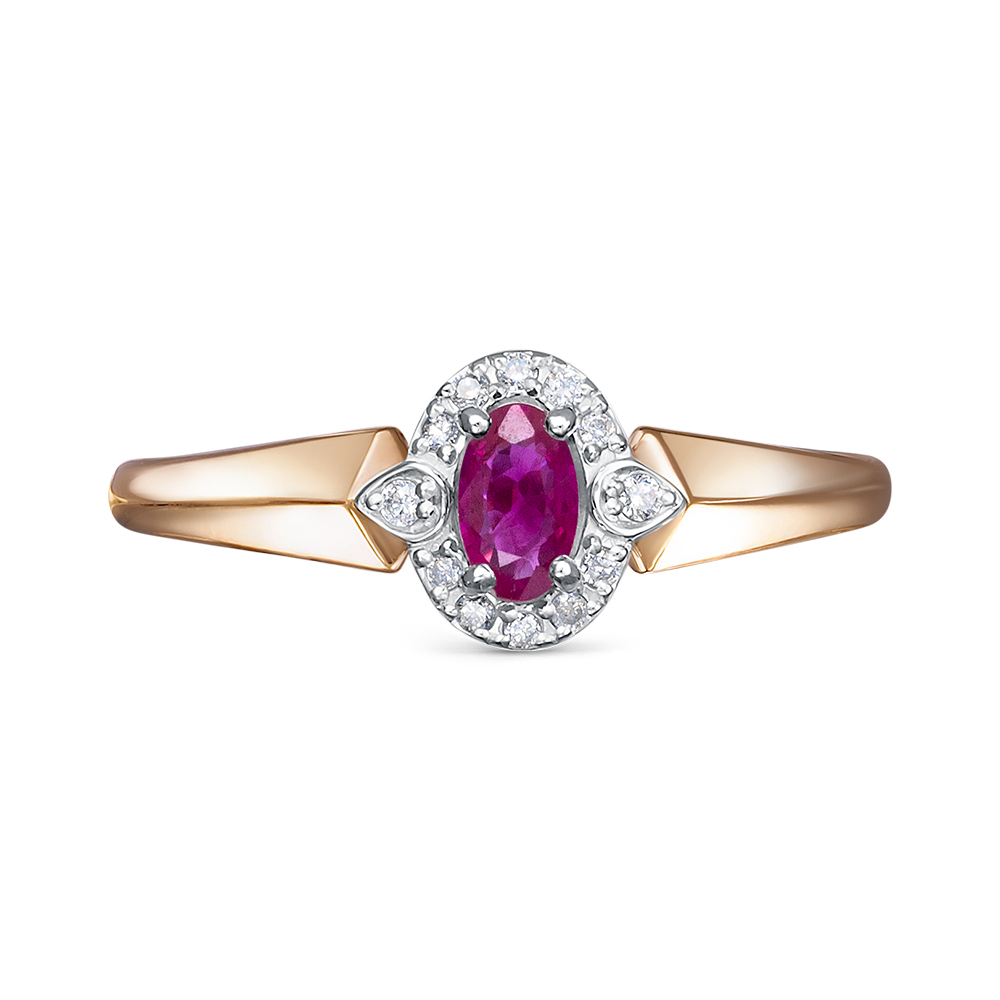
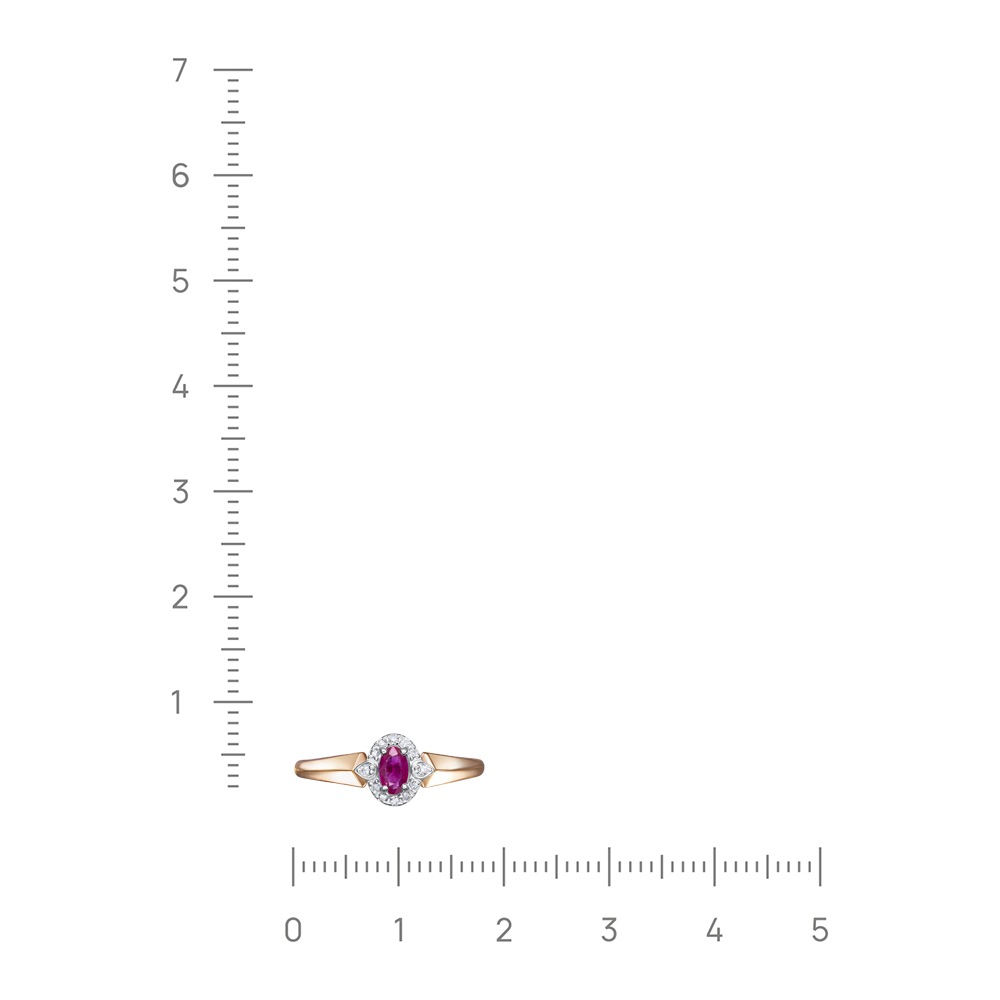
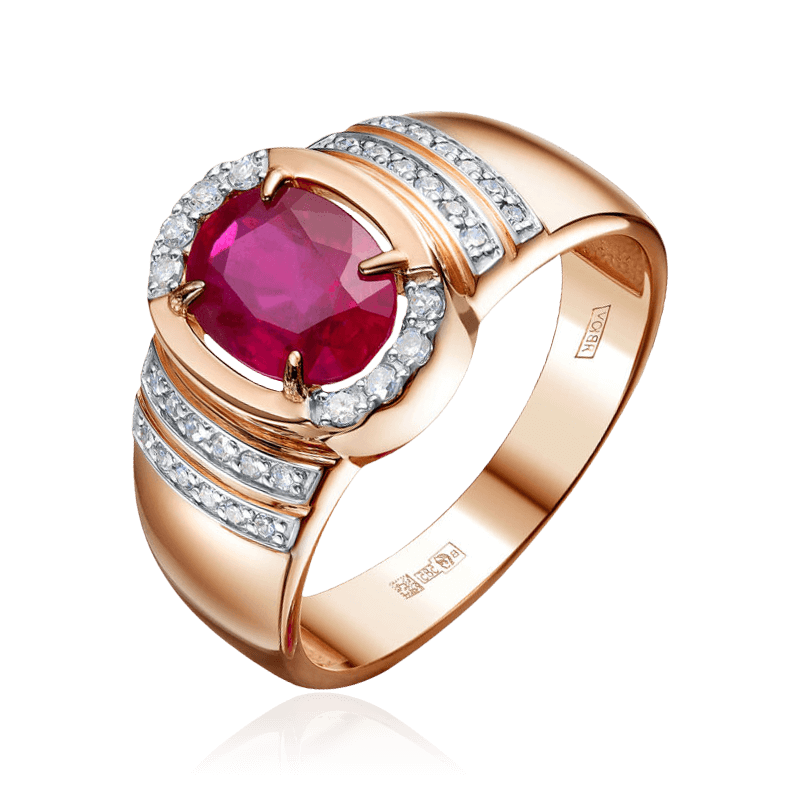
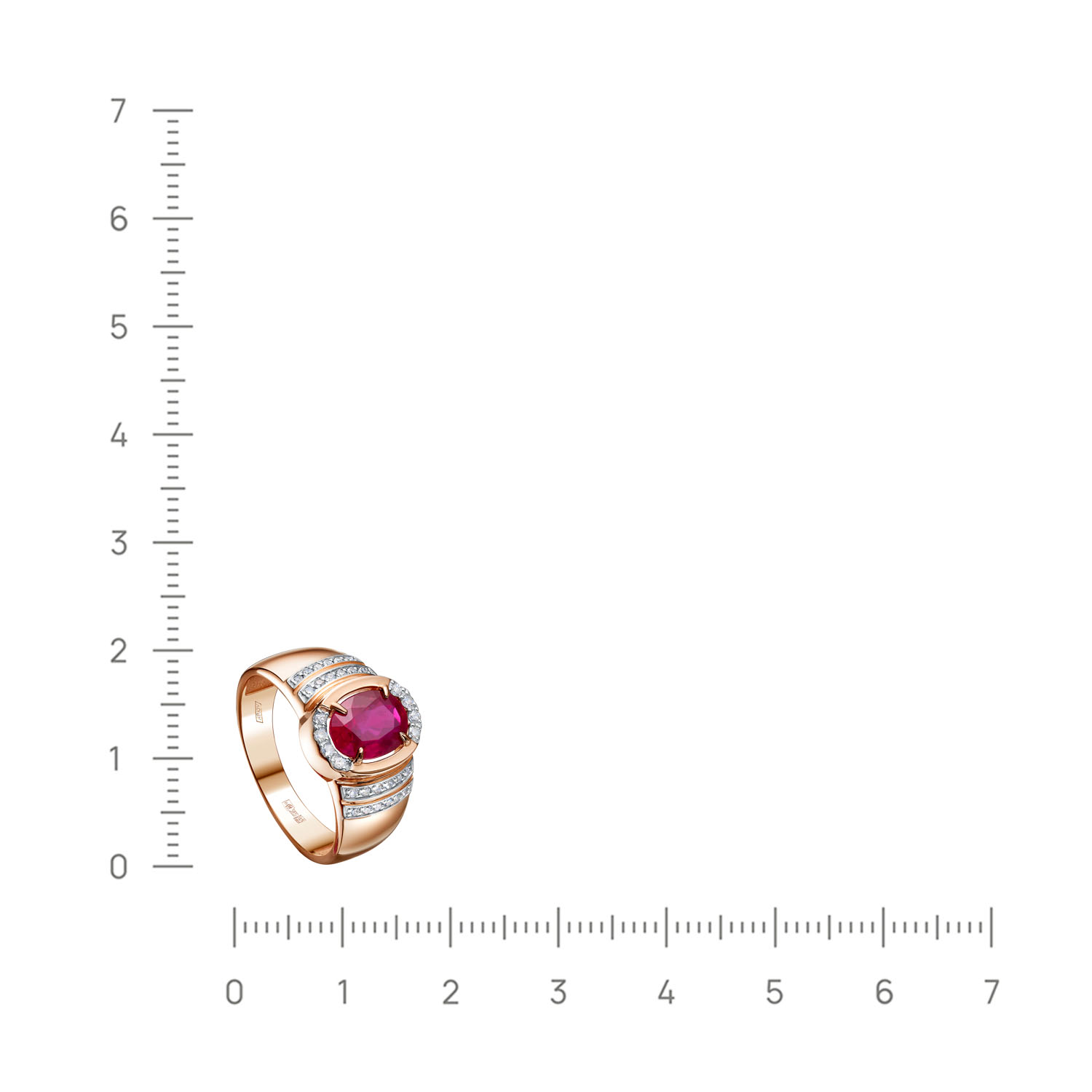
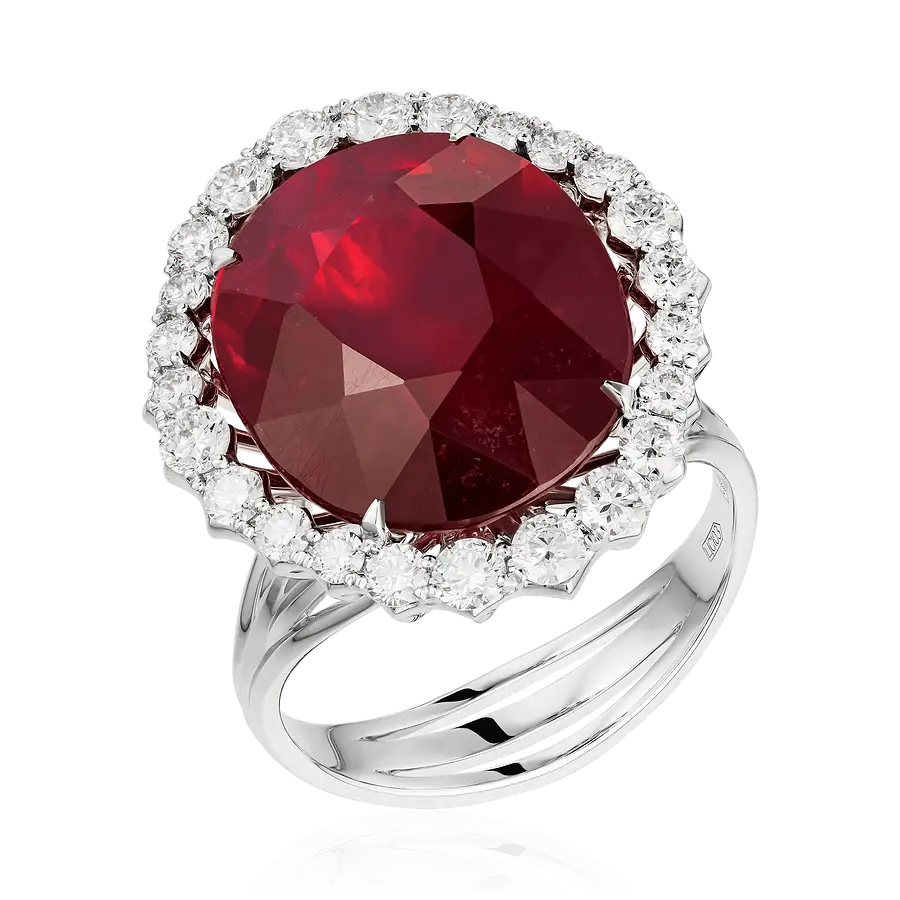
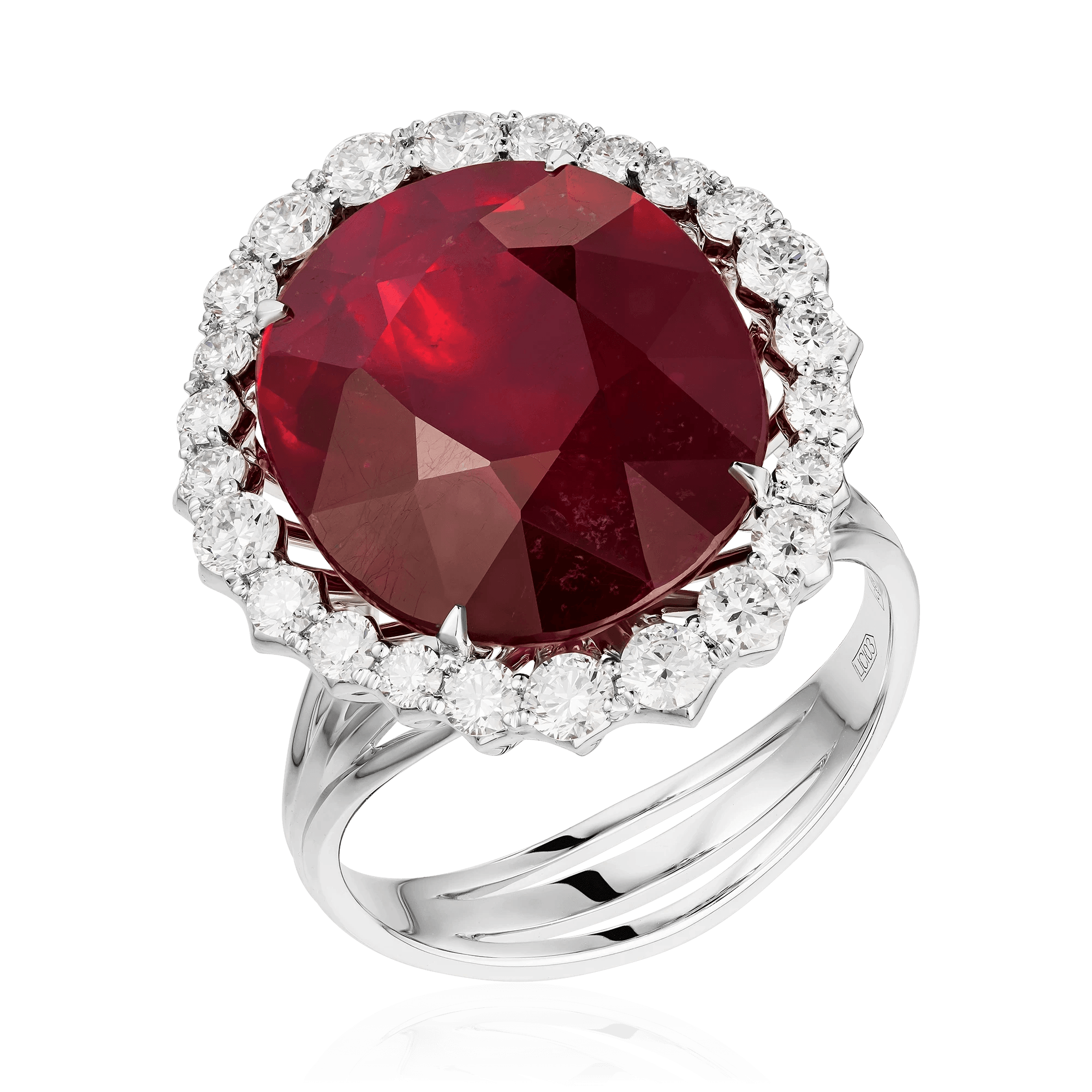
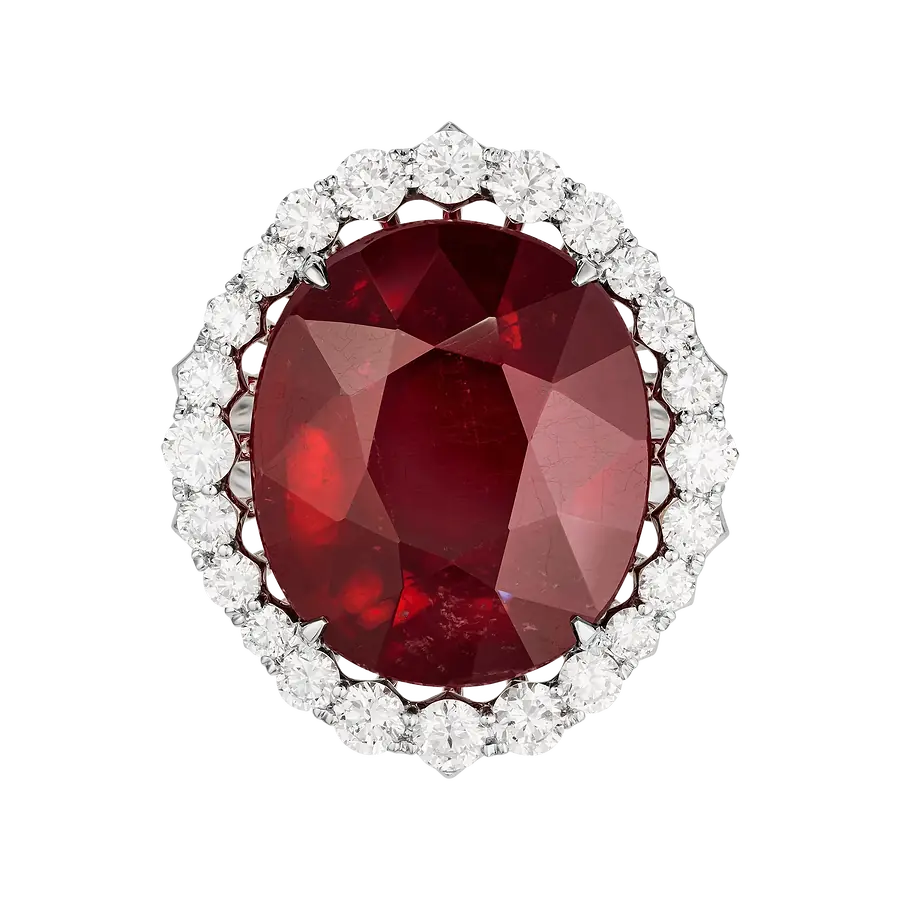
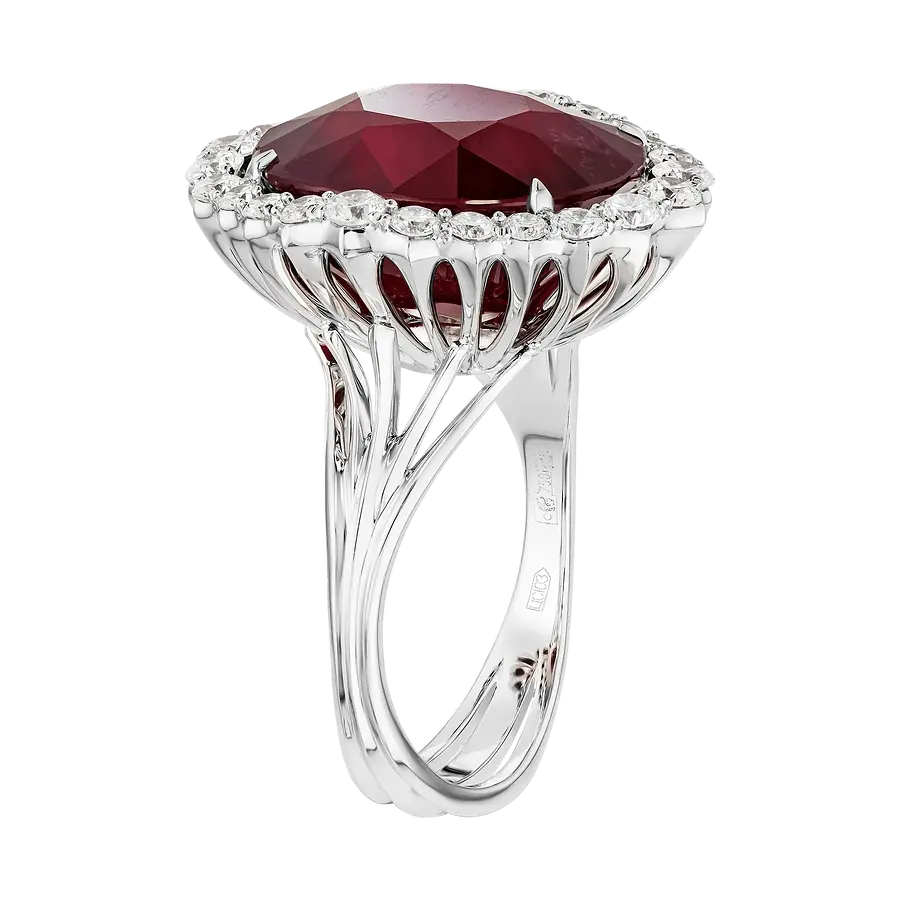
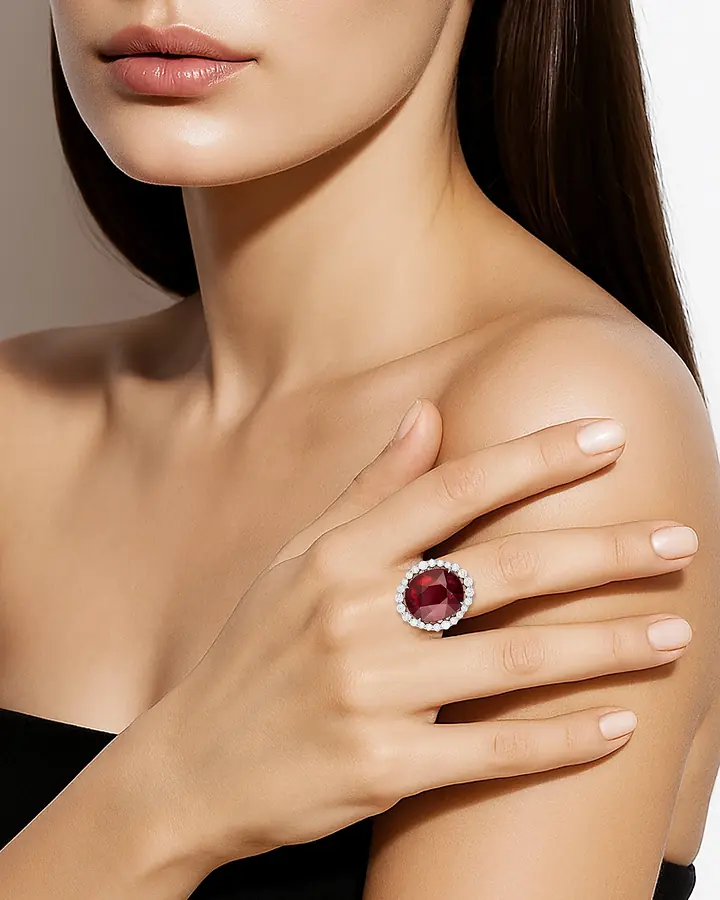
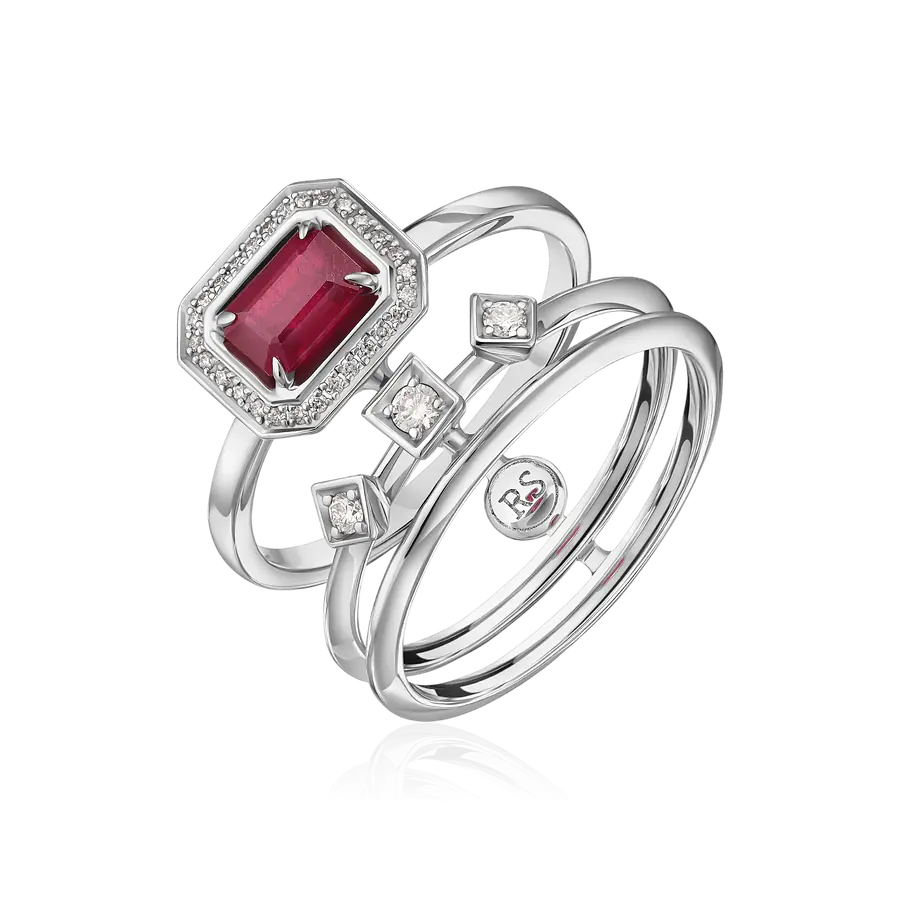
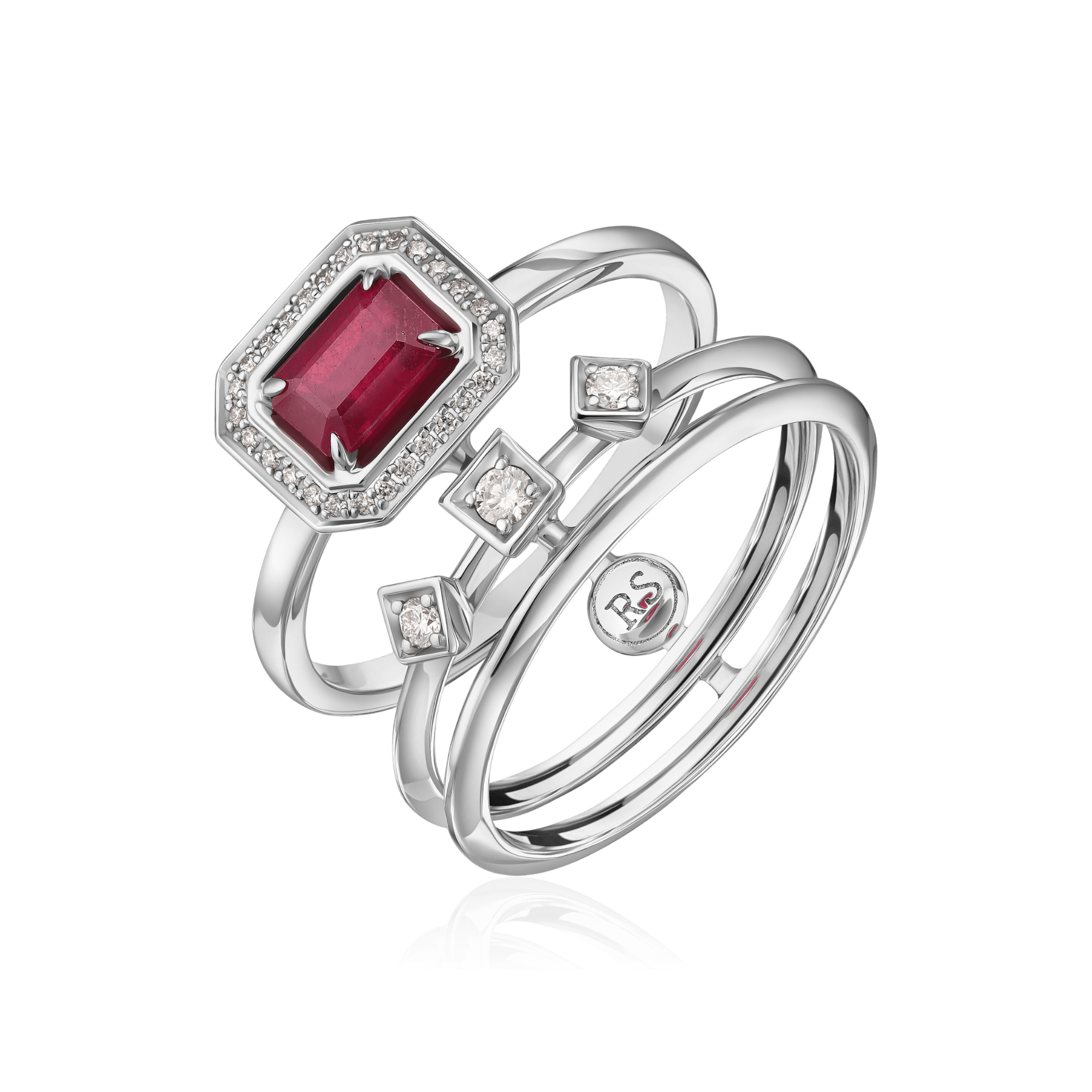
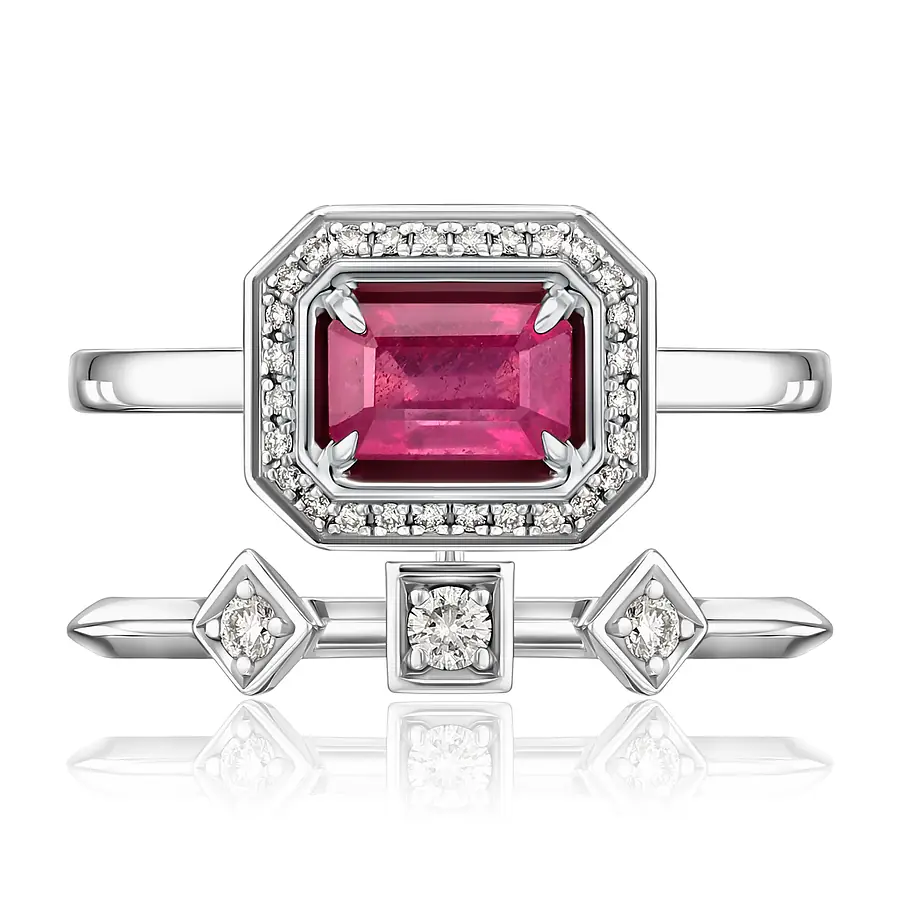
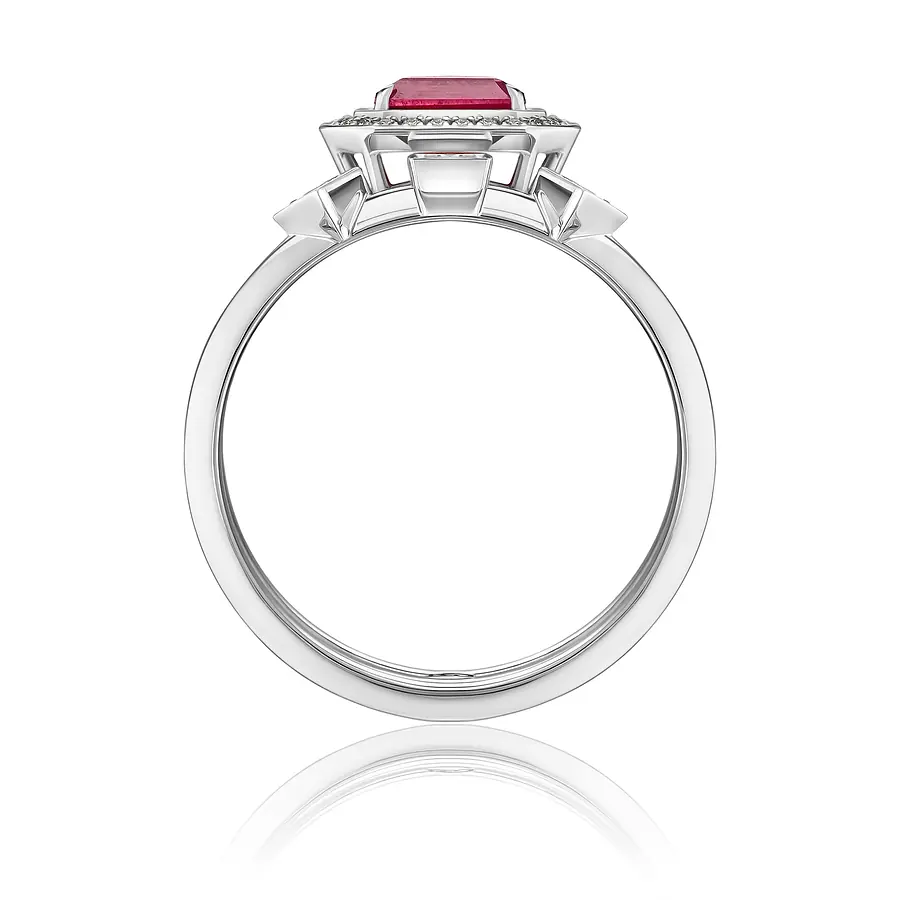
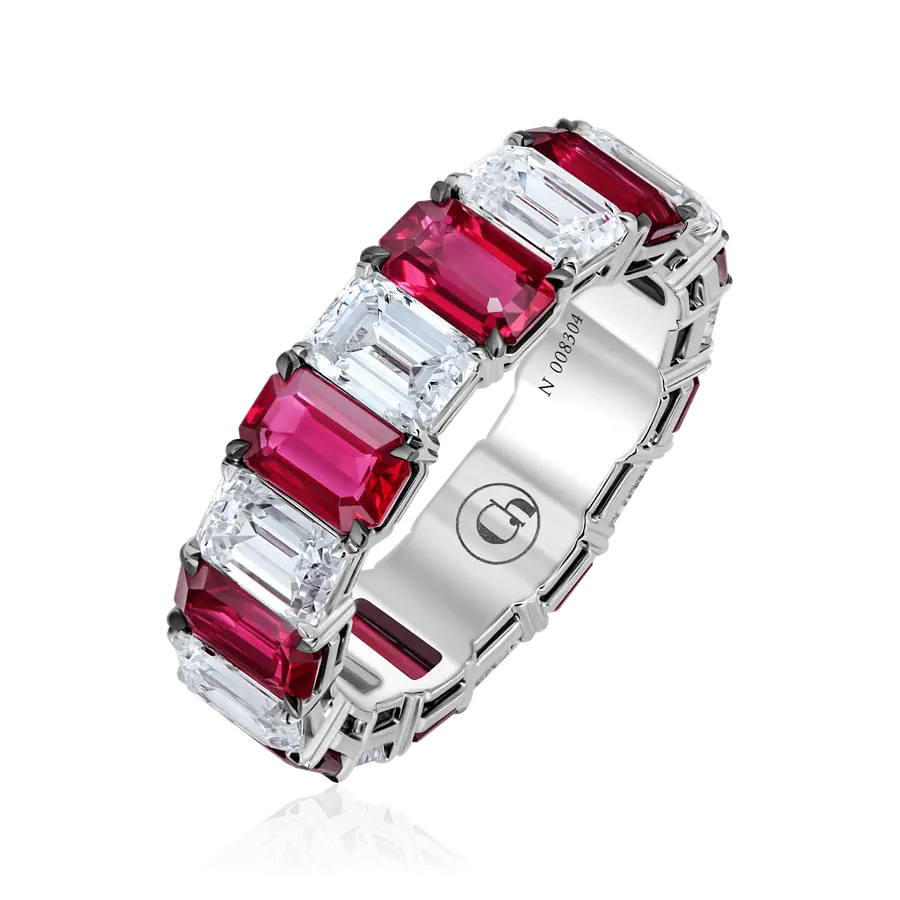
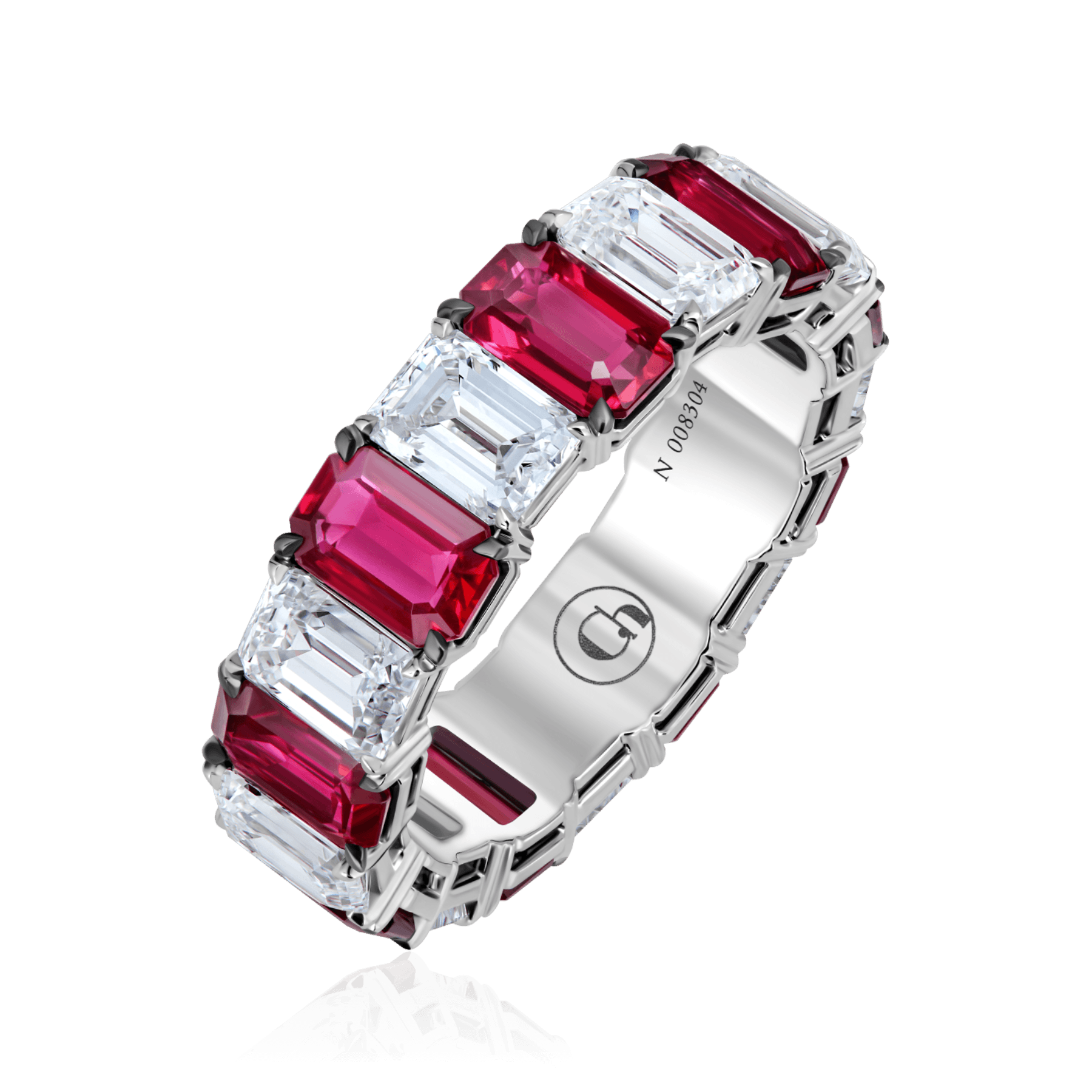
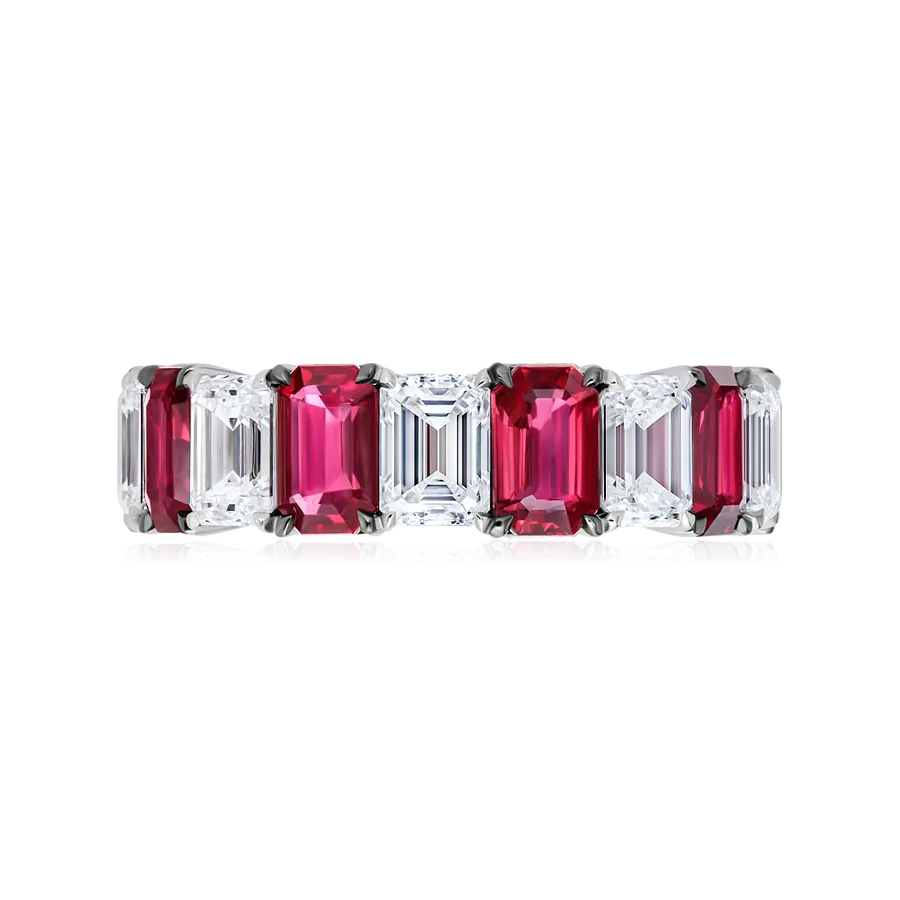
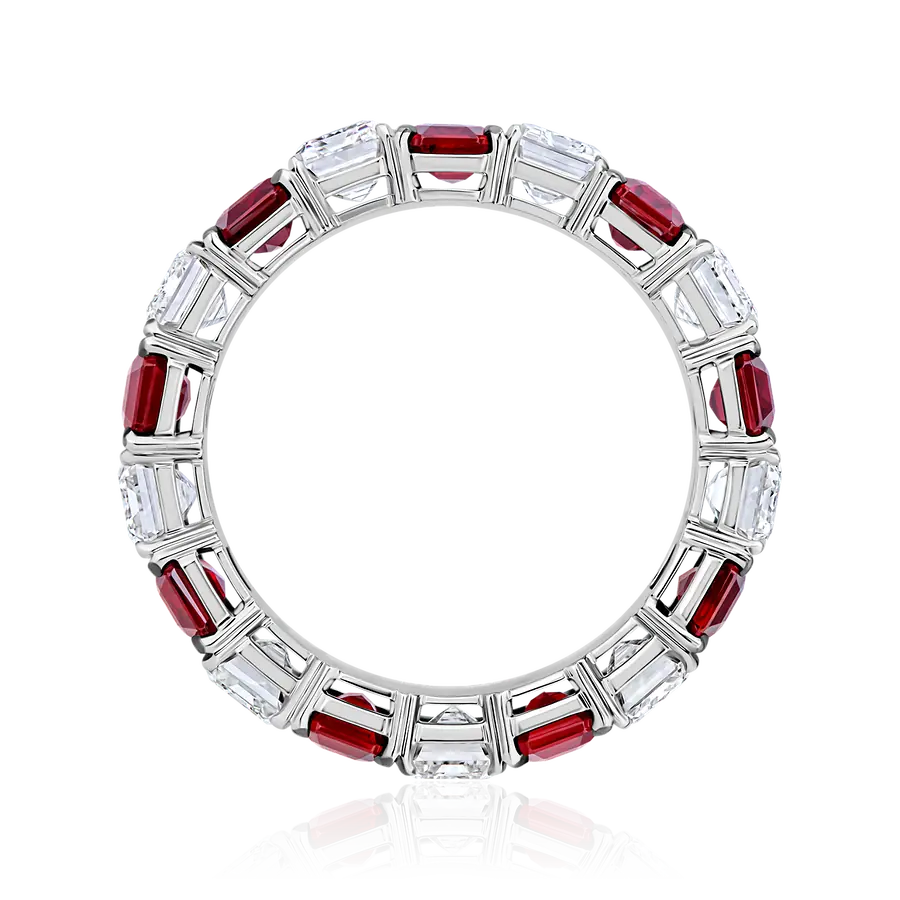
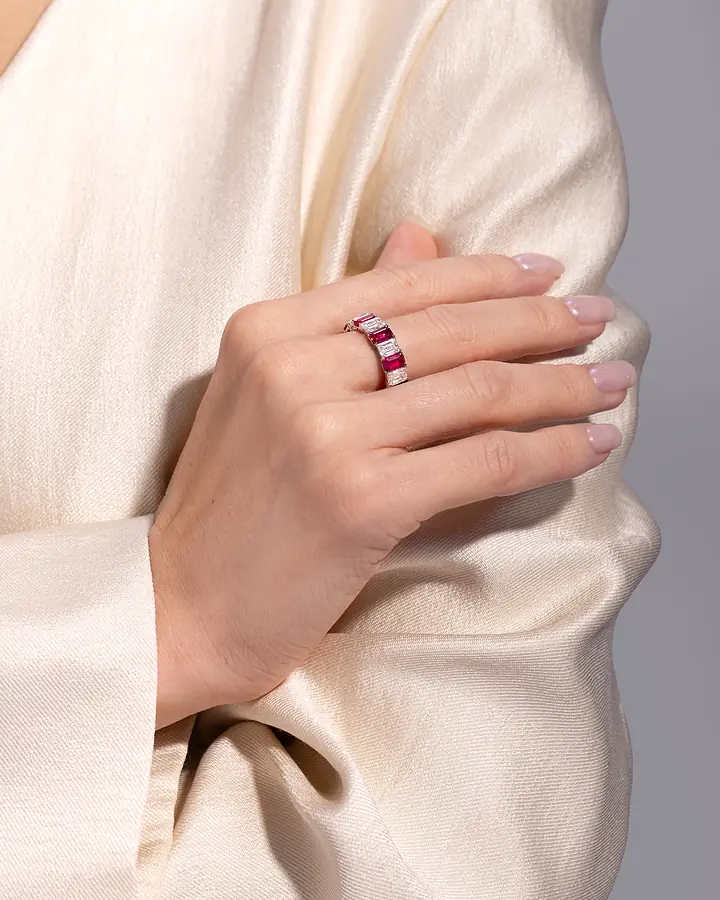

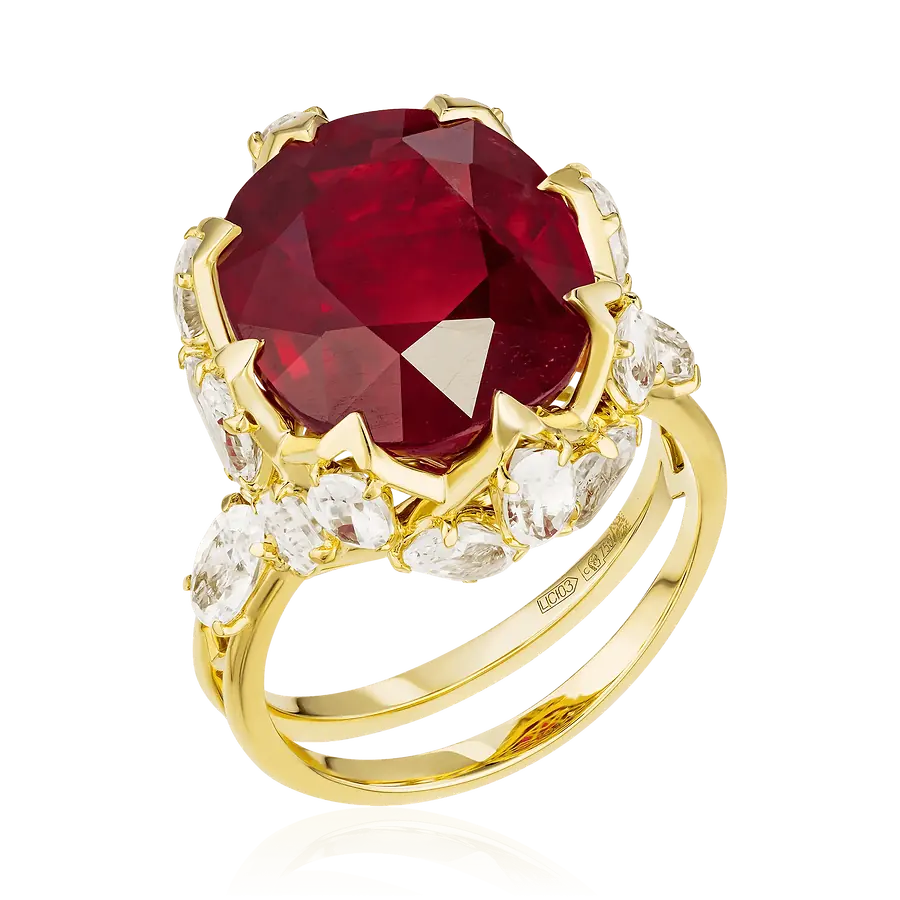
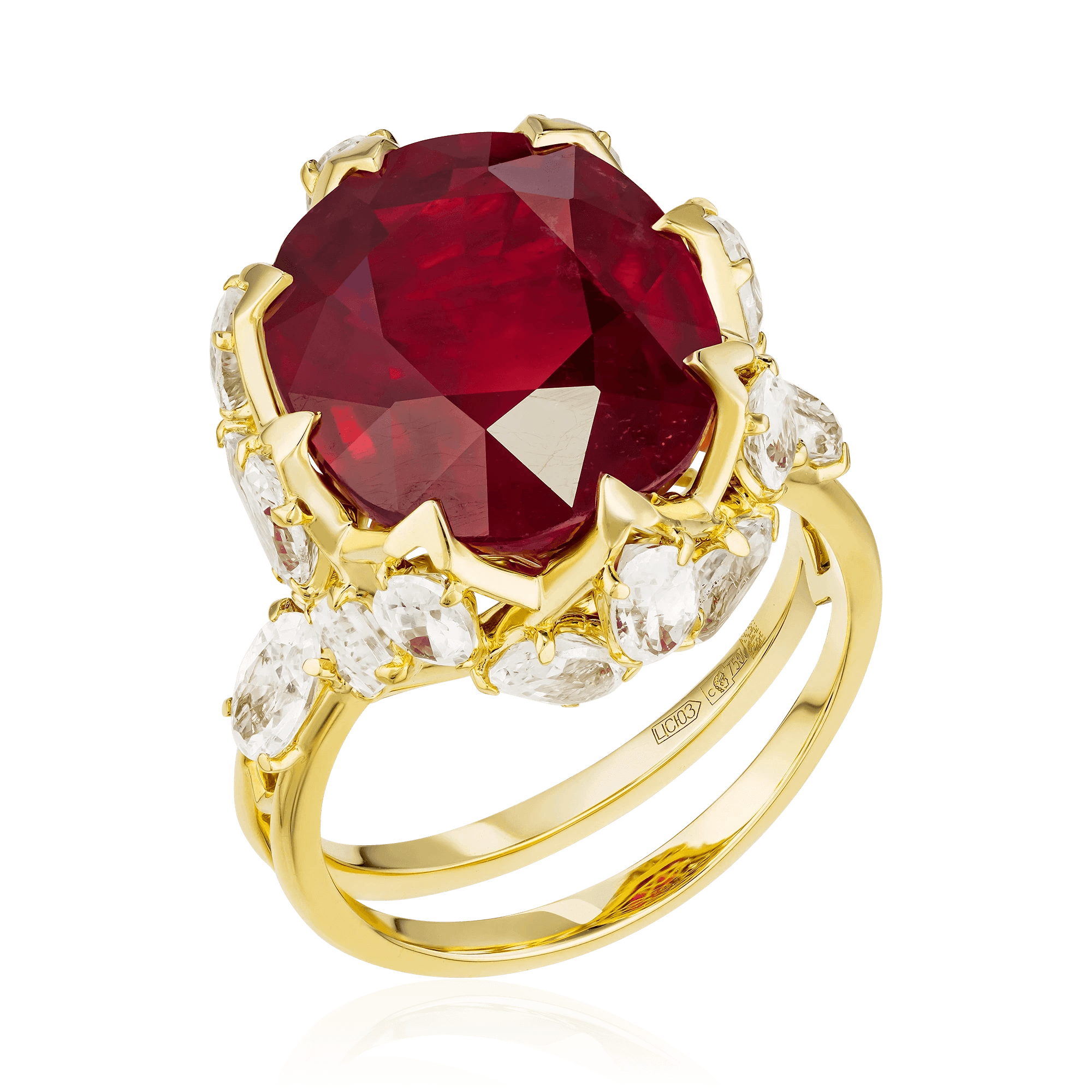
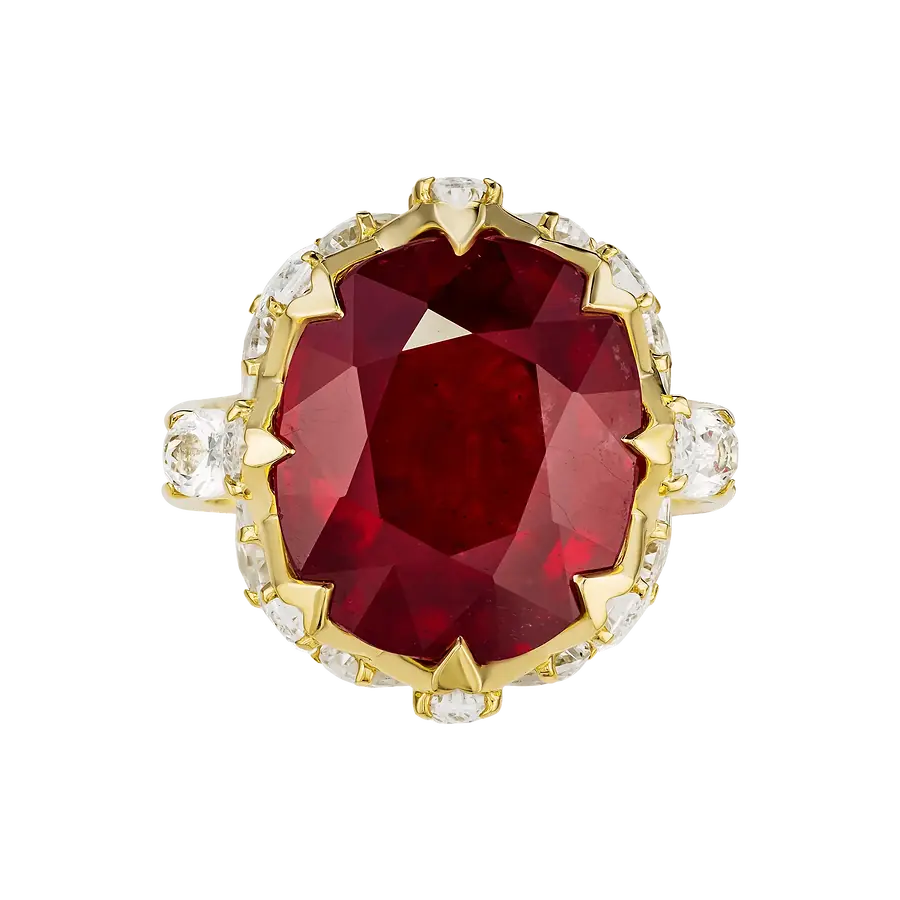
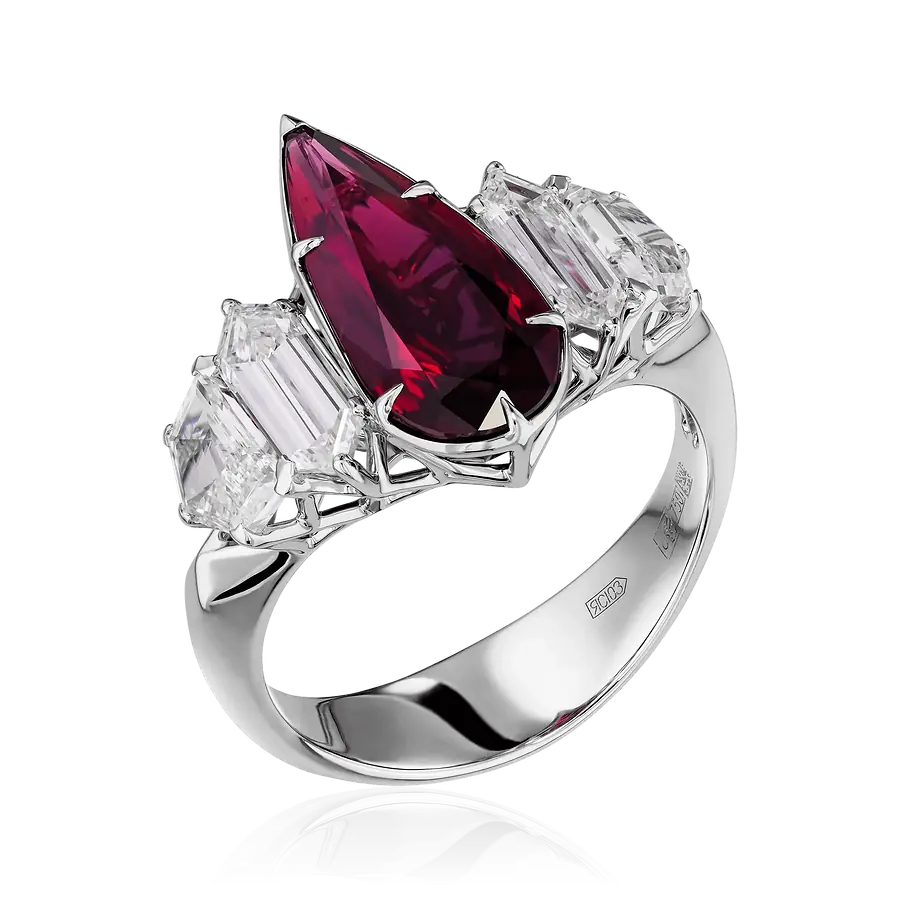
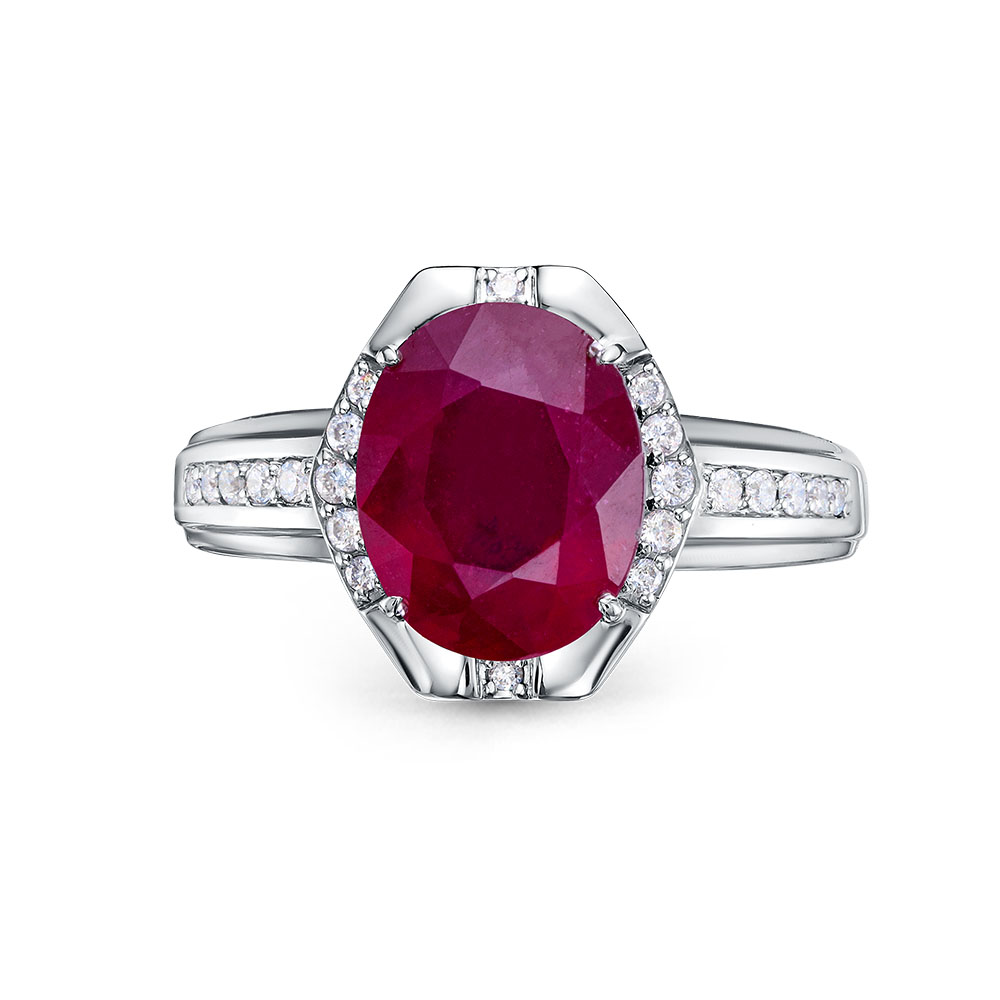
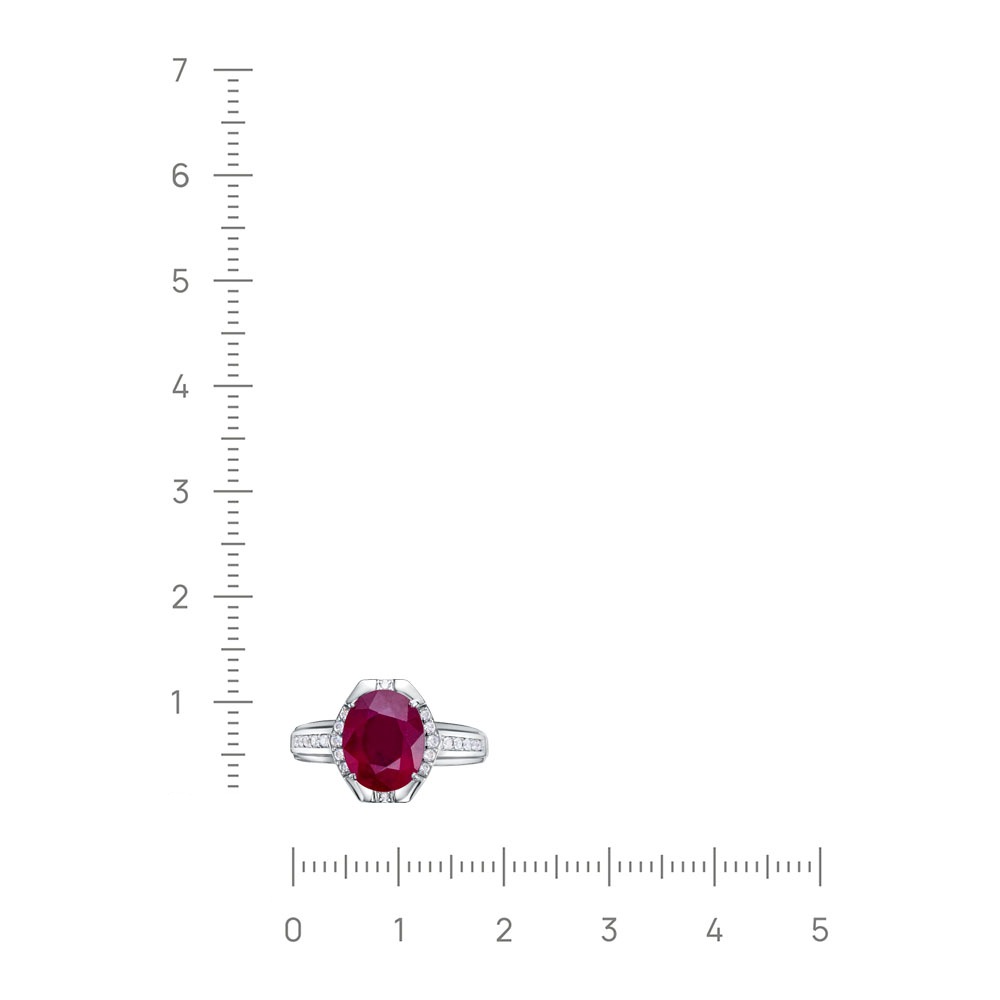
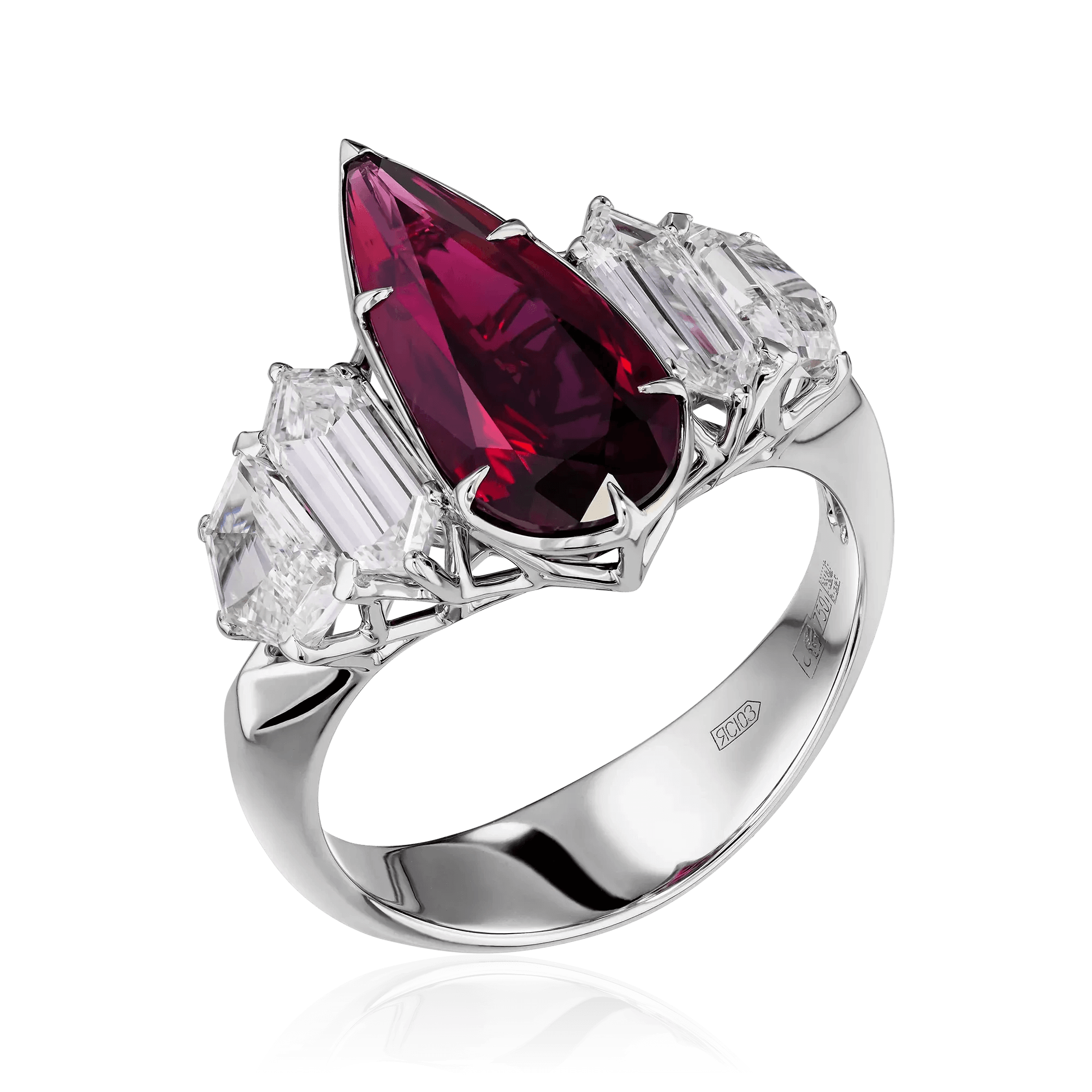
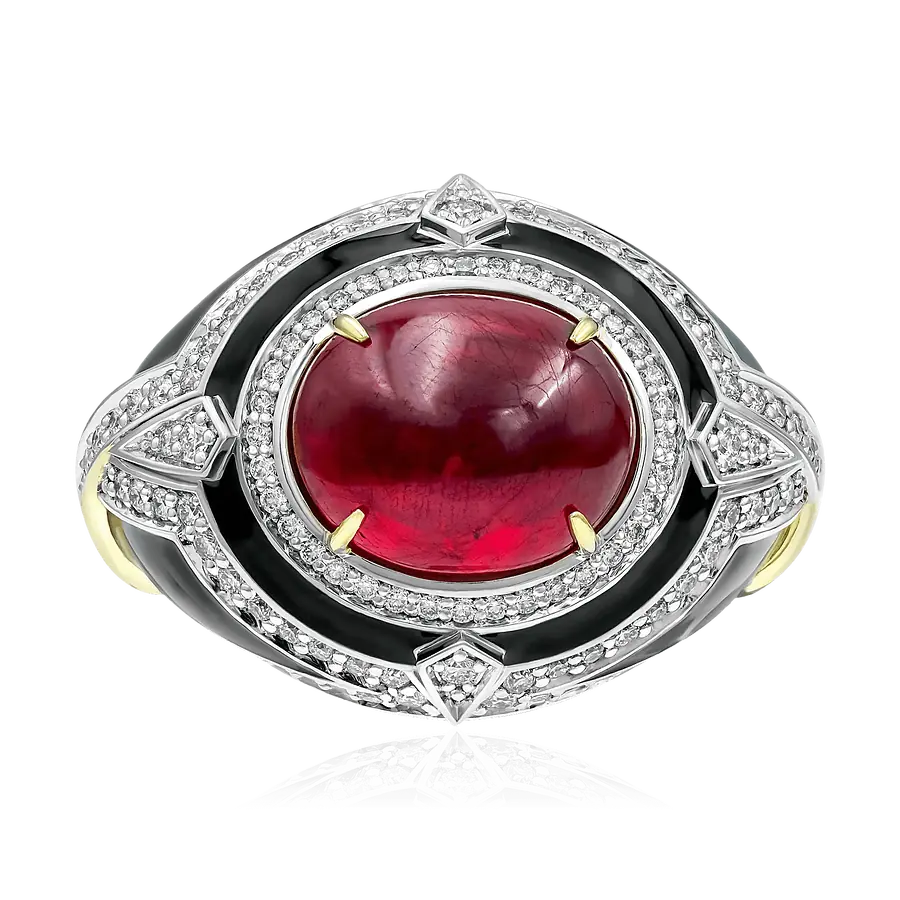
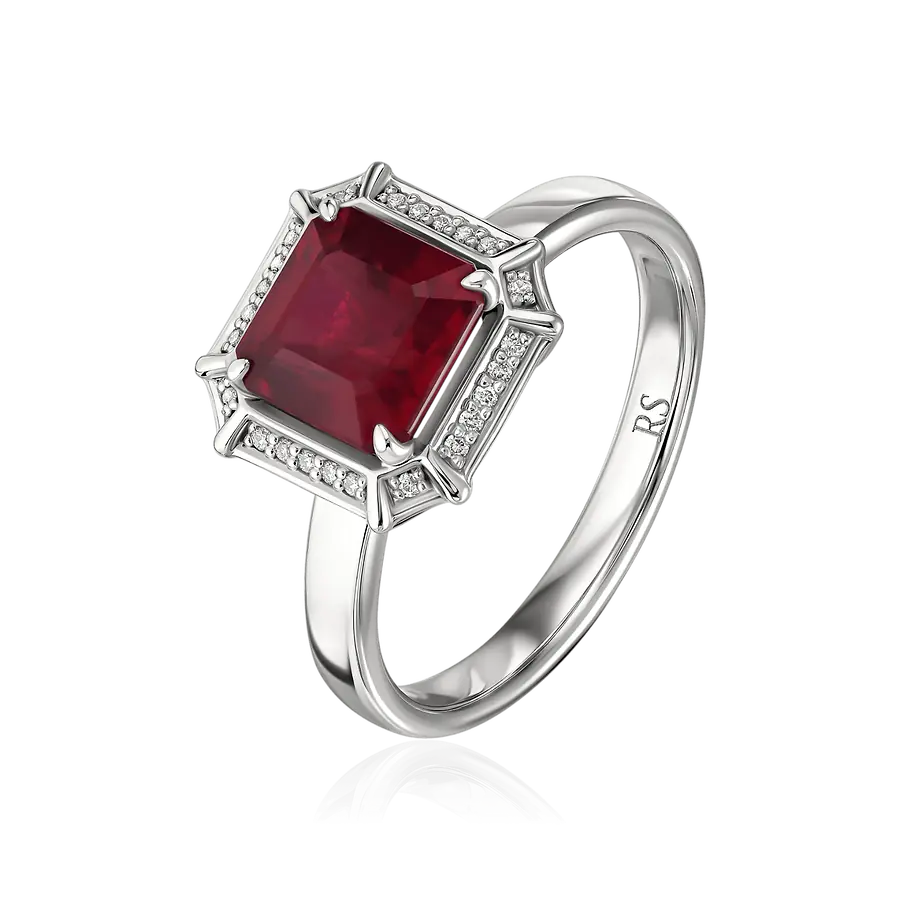
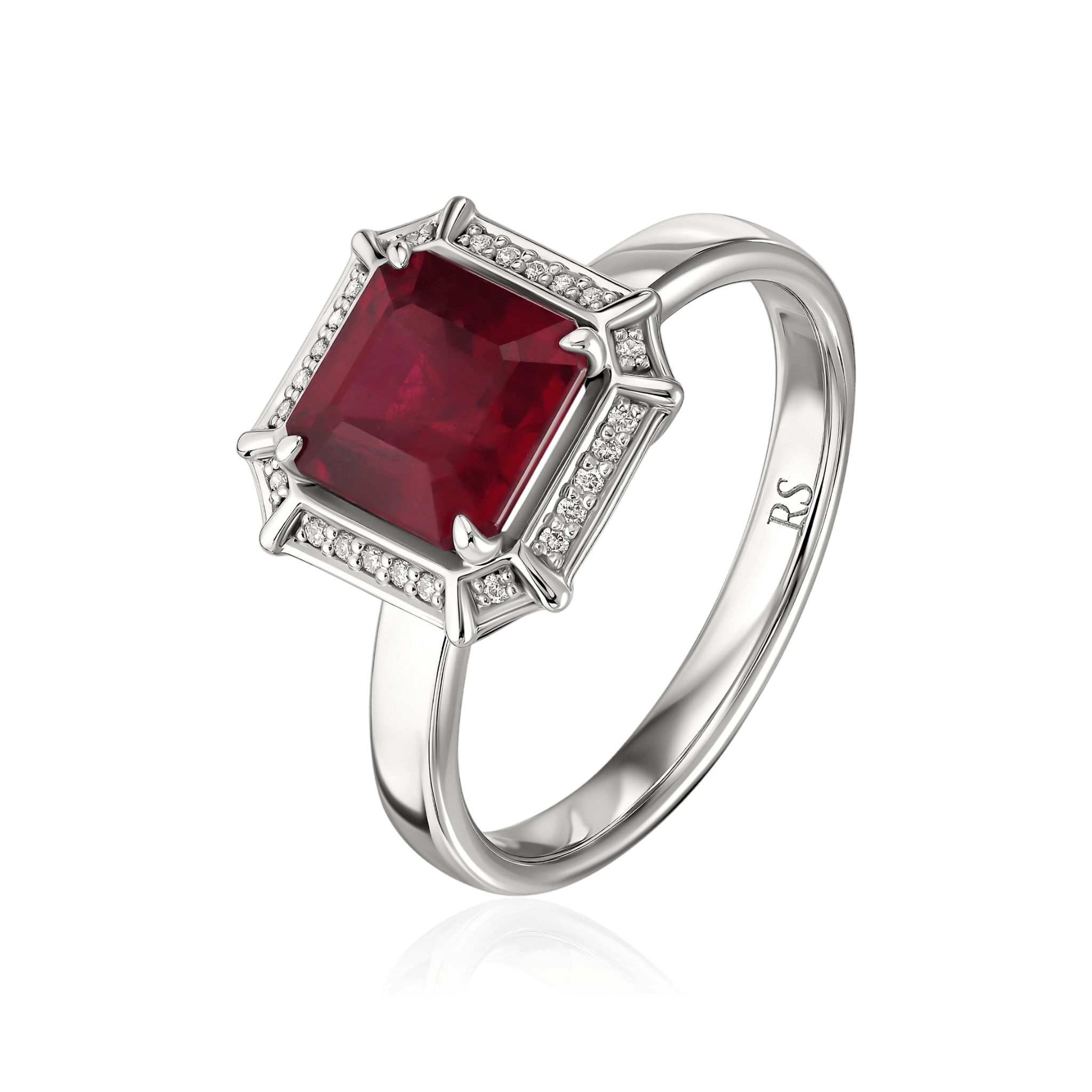
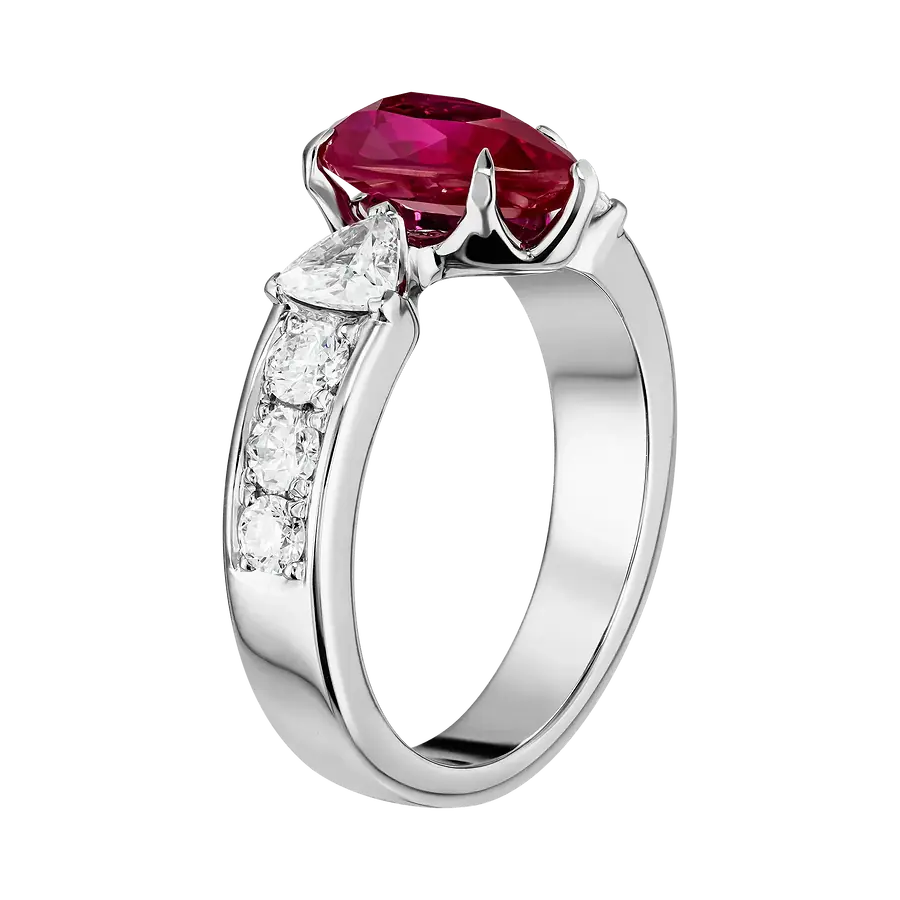
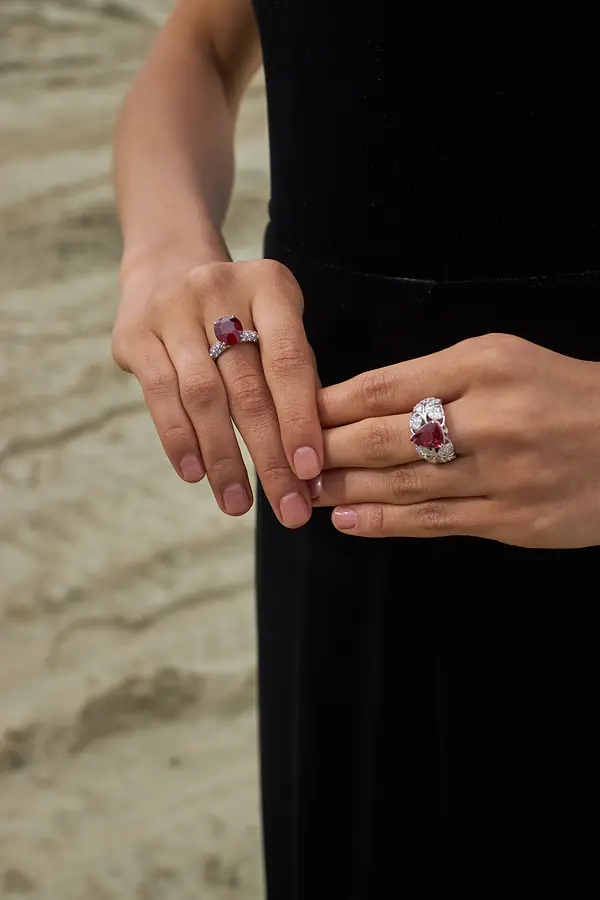
Ring with ruby Pigeon’s Blood and diamonds in 18K white gold (750) ( 121342)
In stock
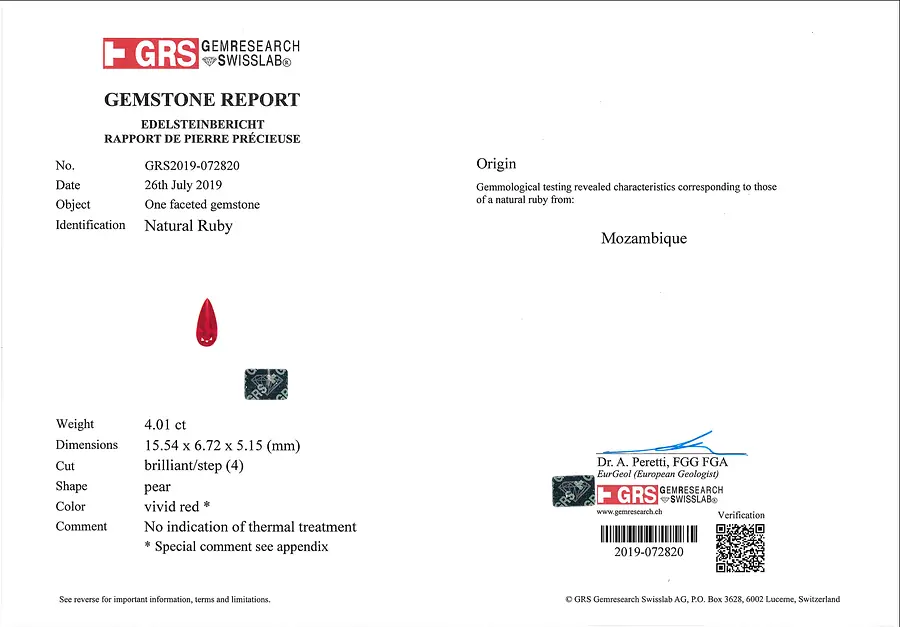
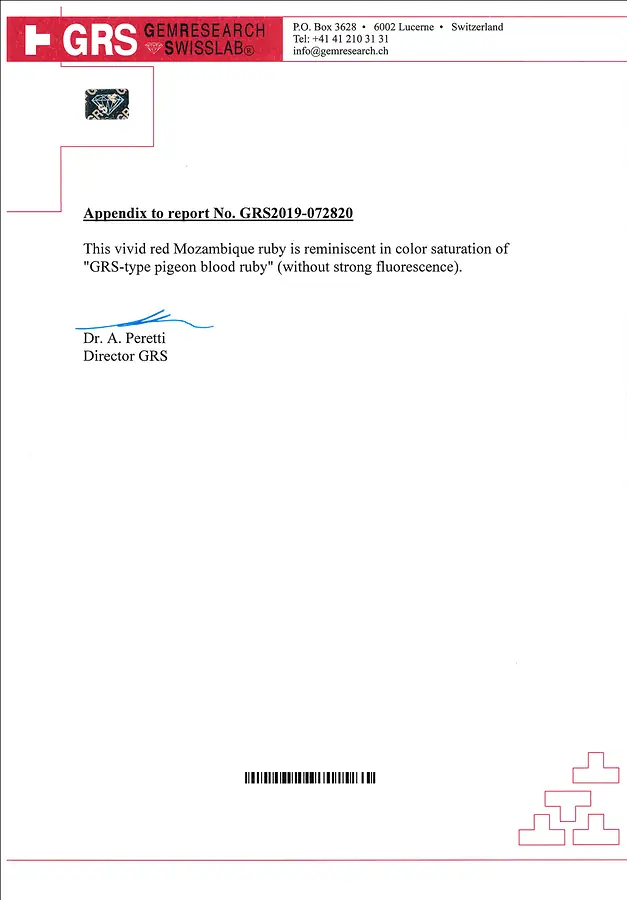
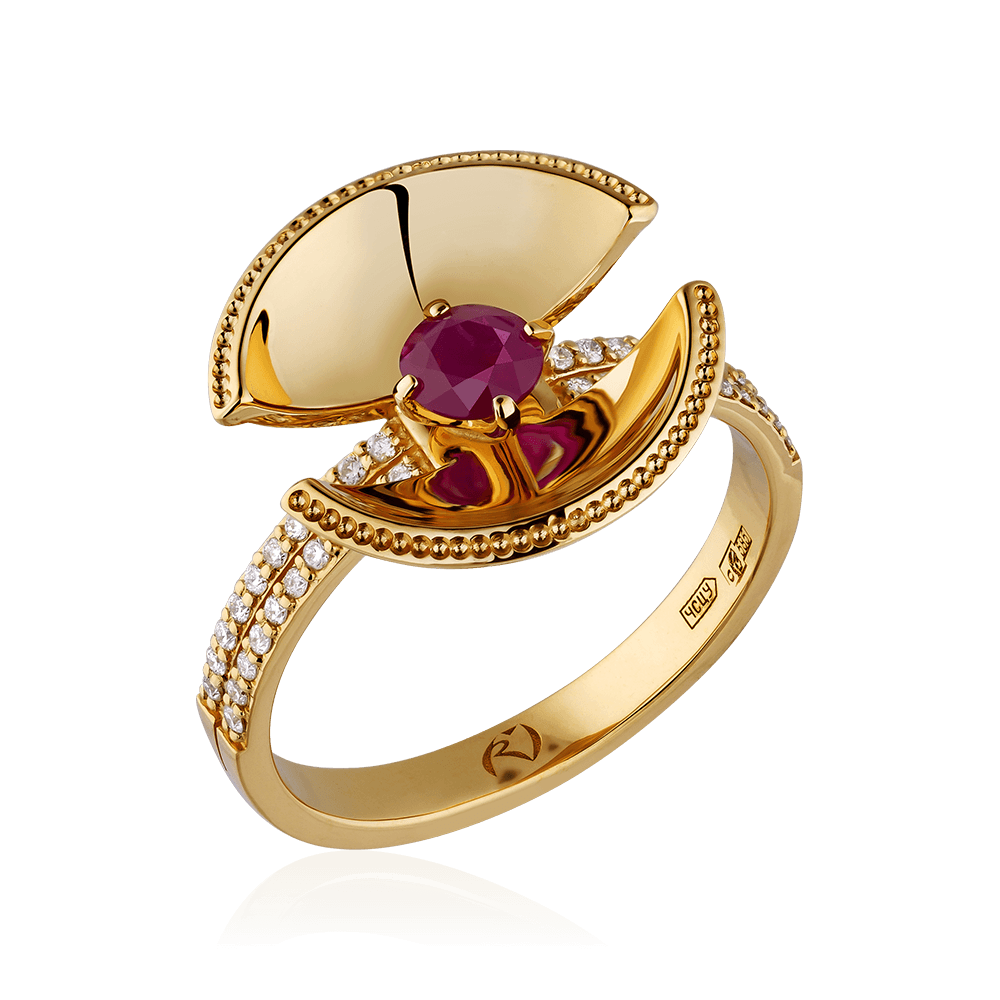
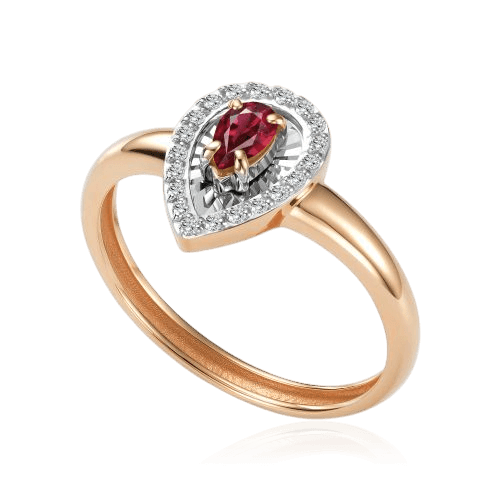
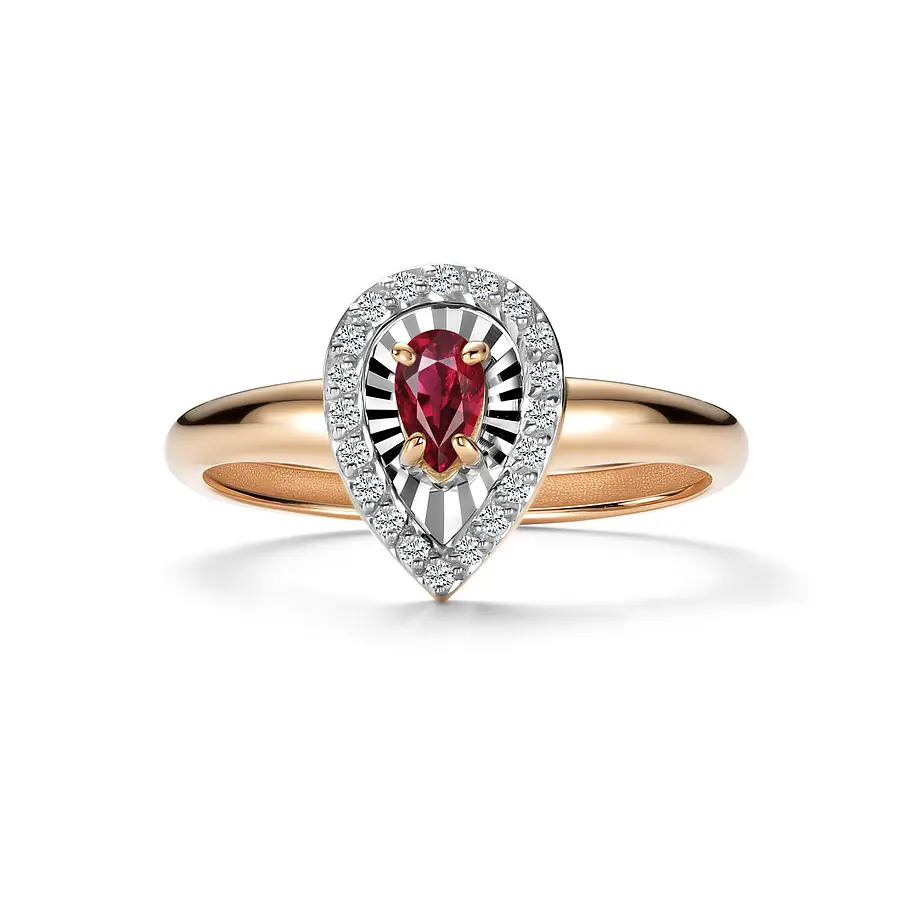

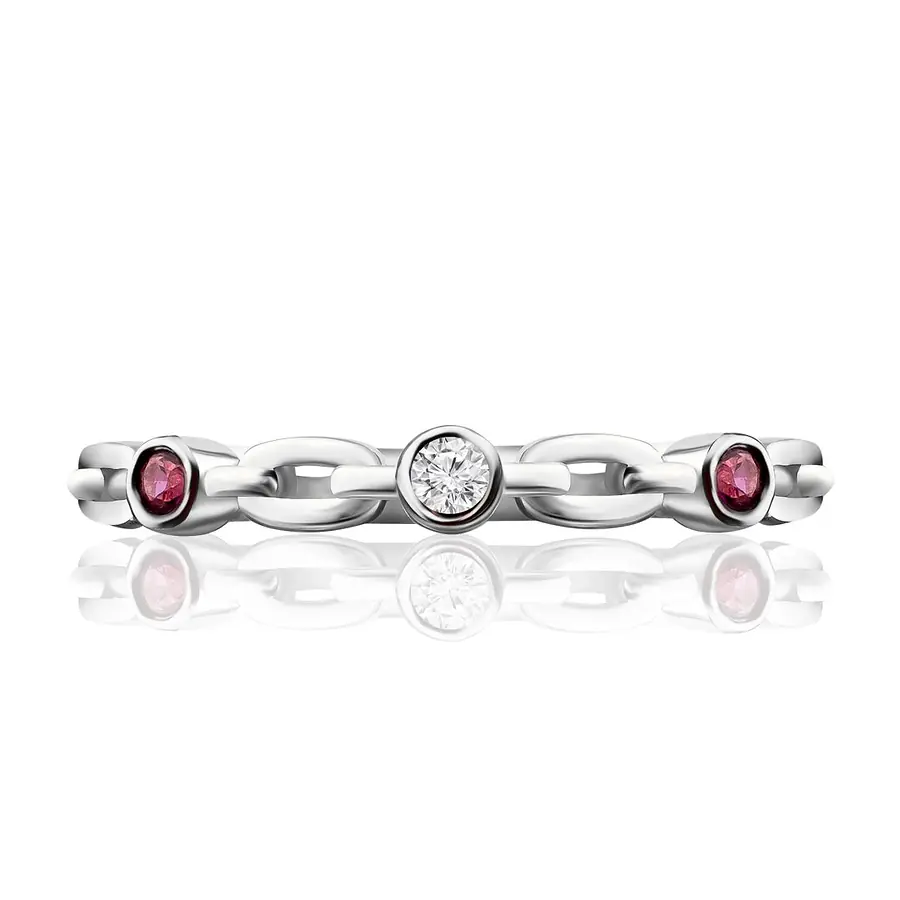


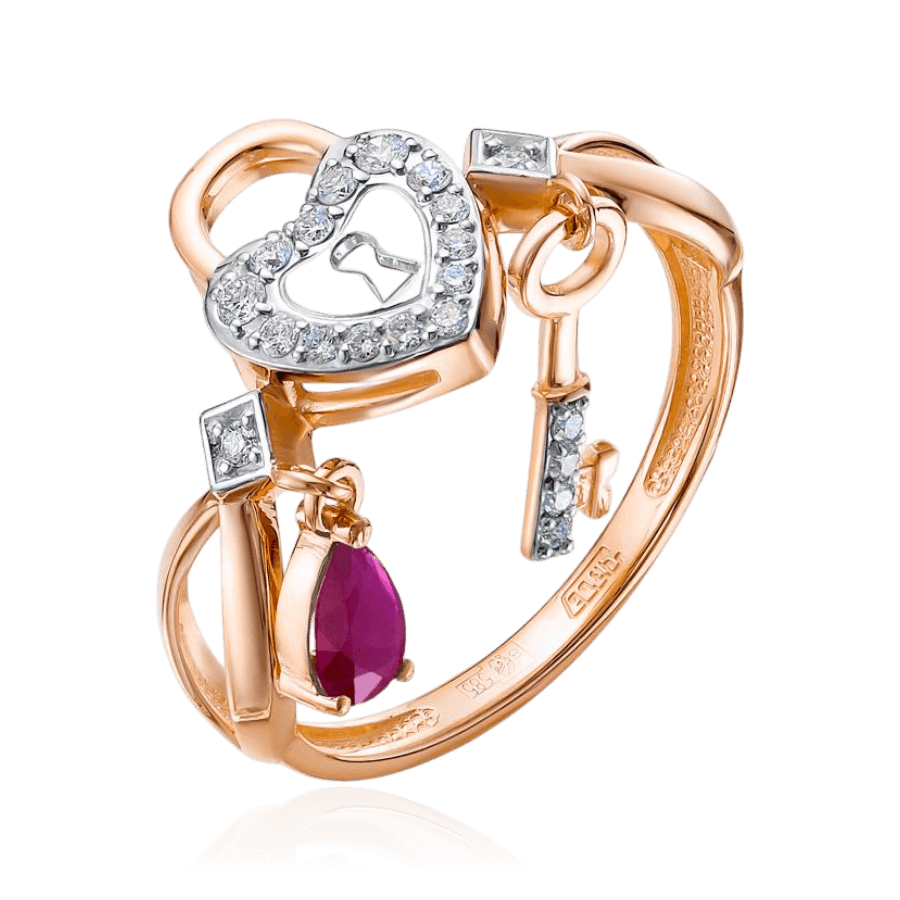


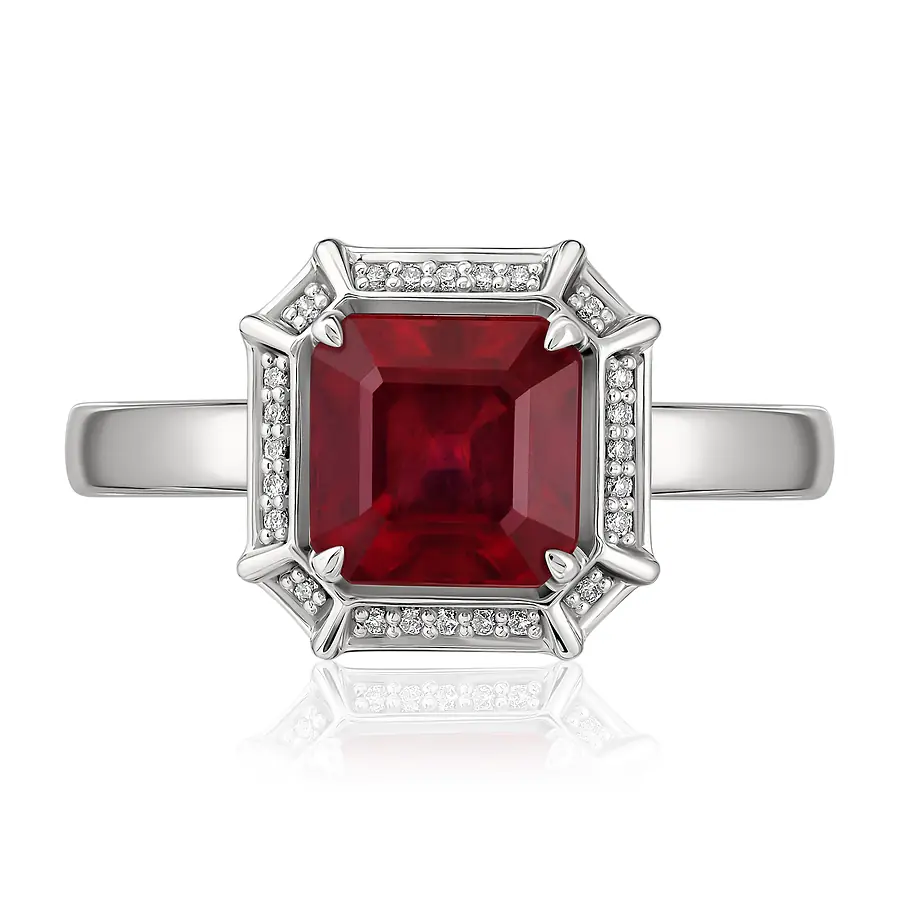
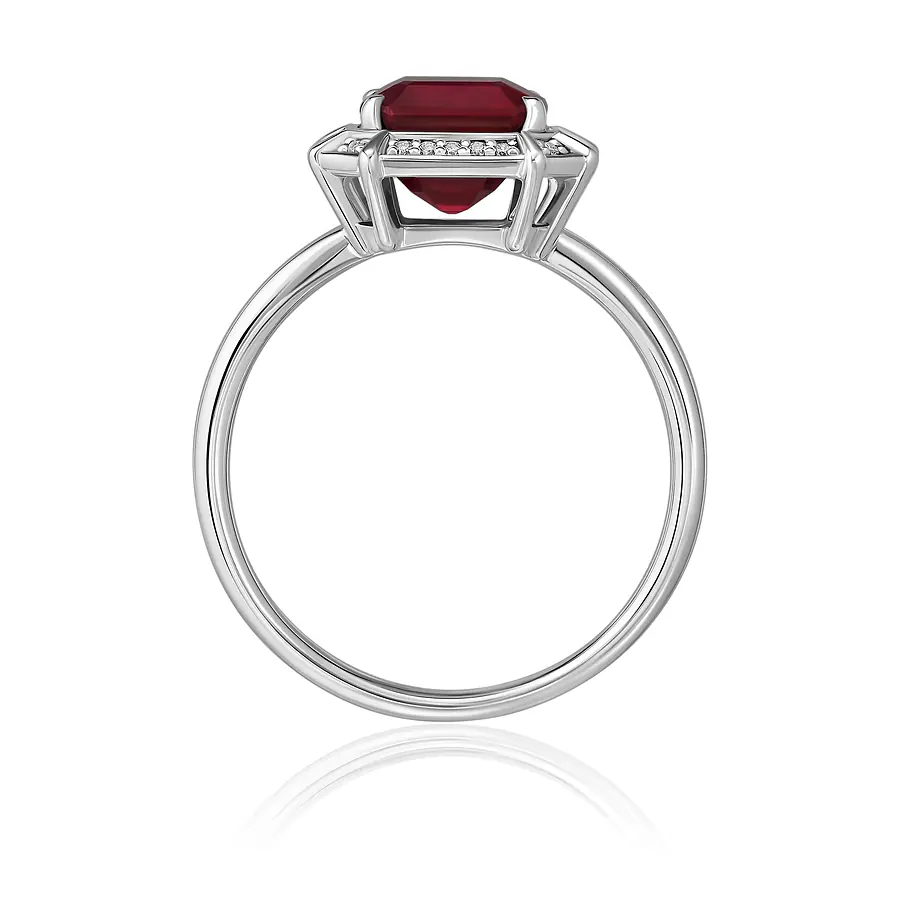
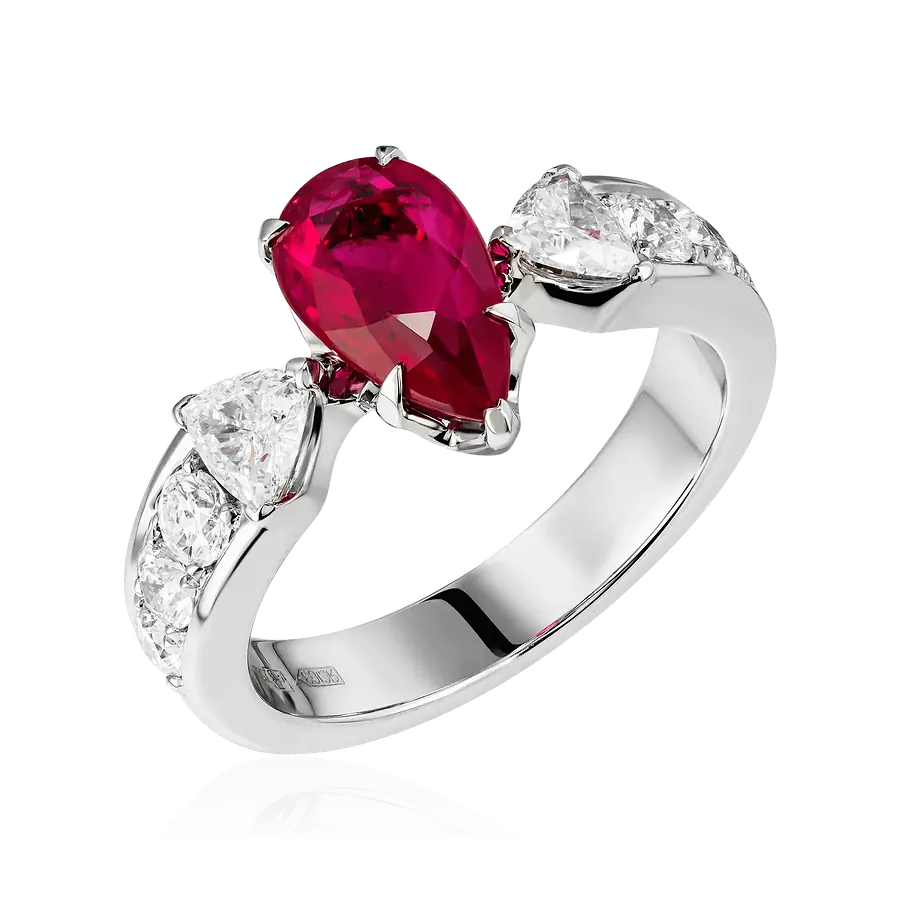

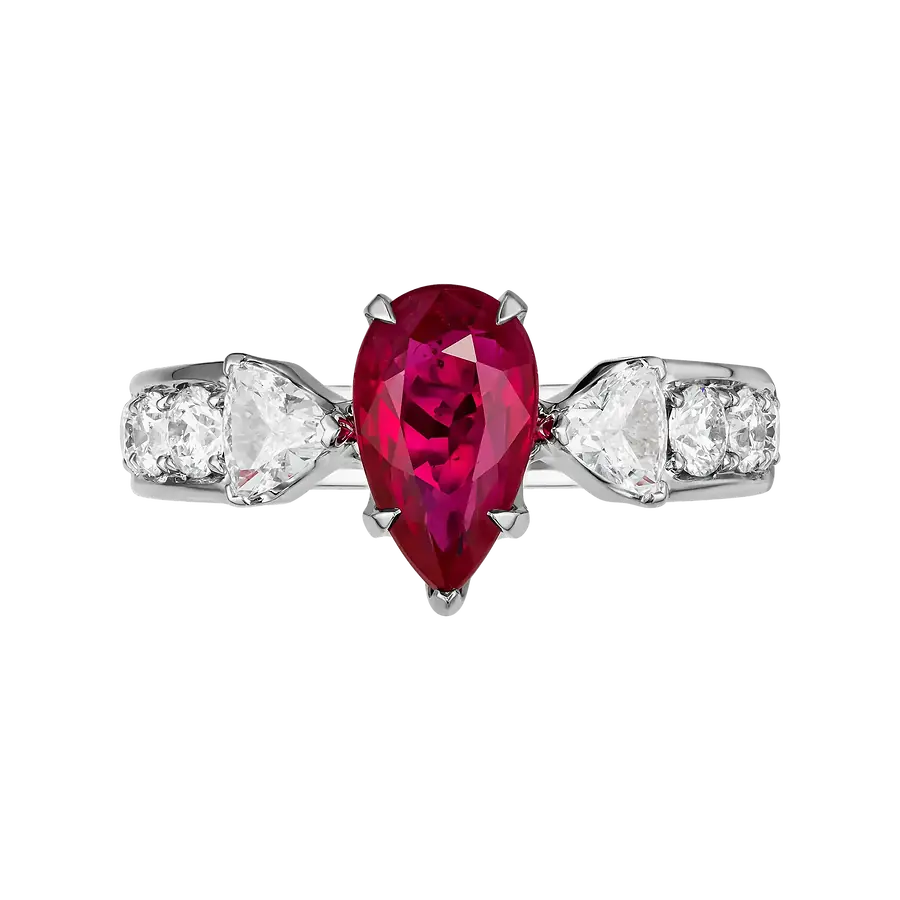
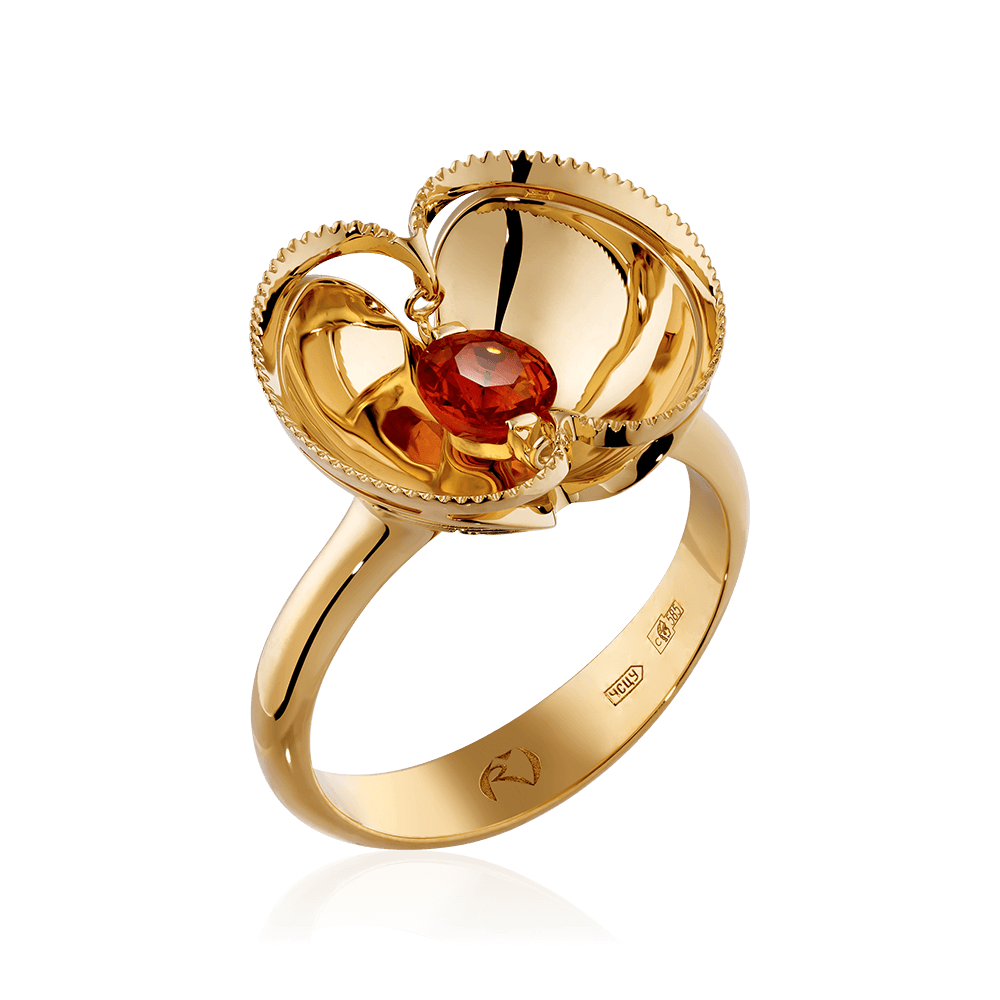
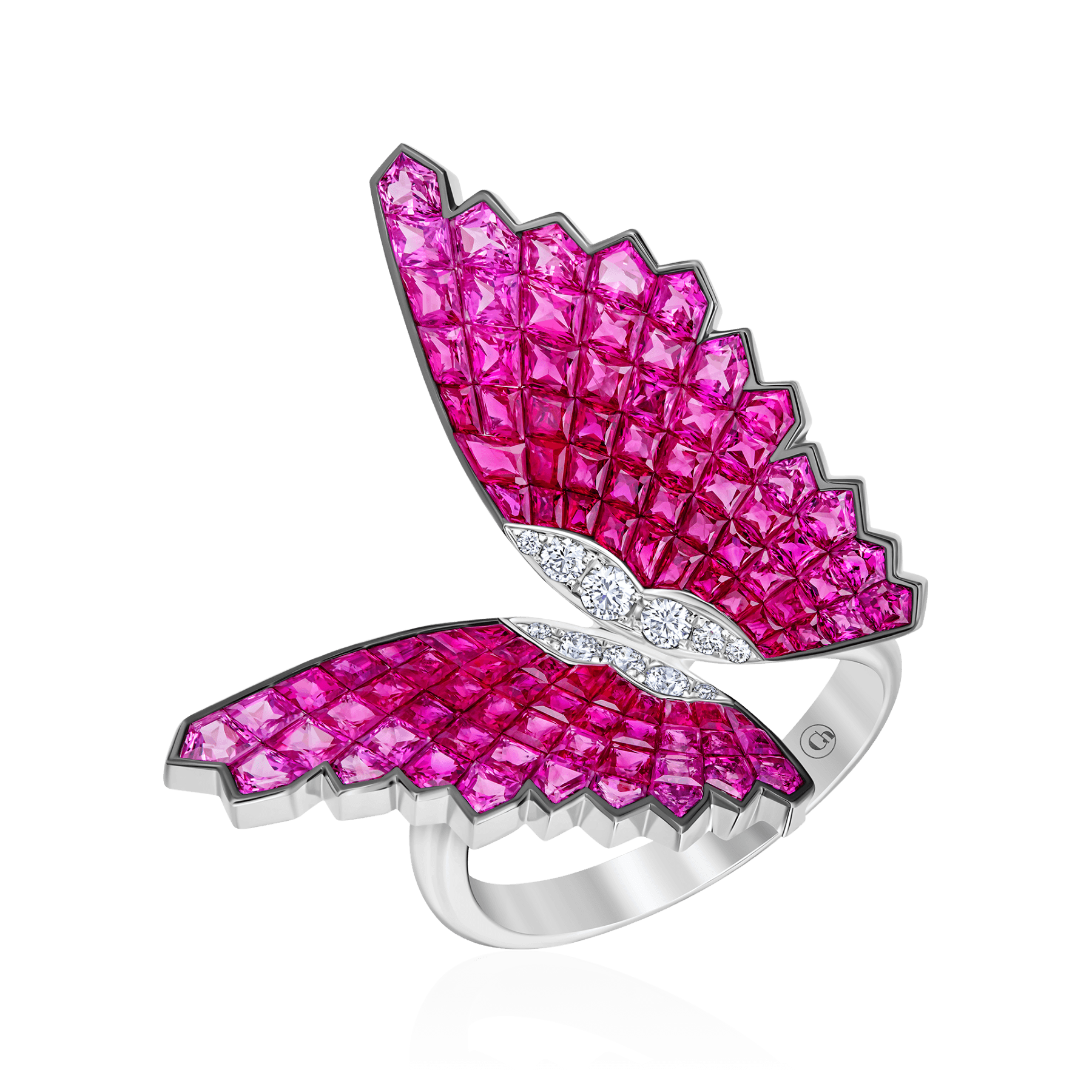
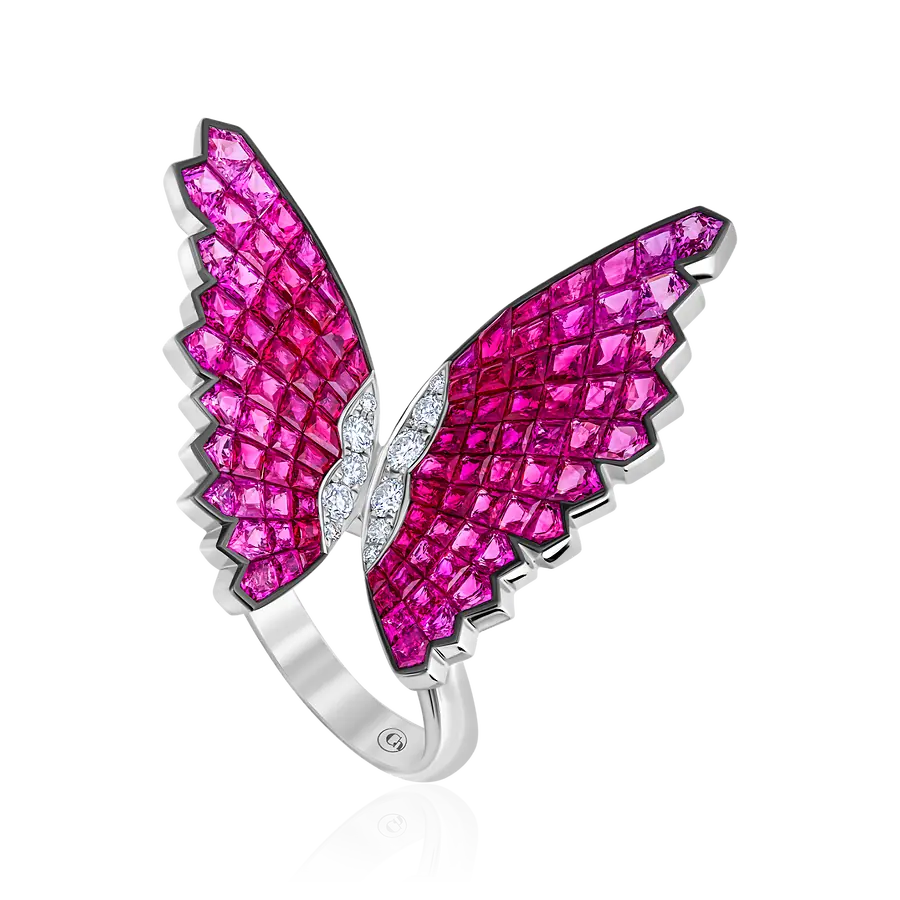

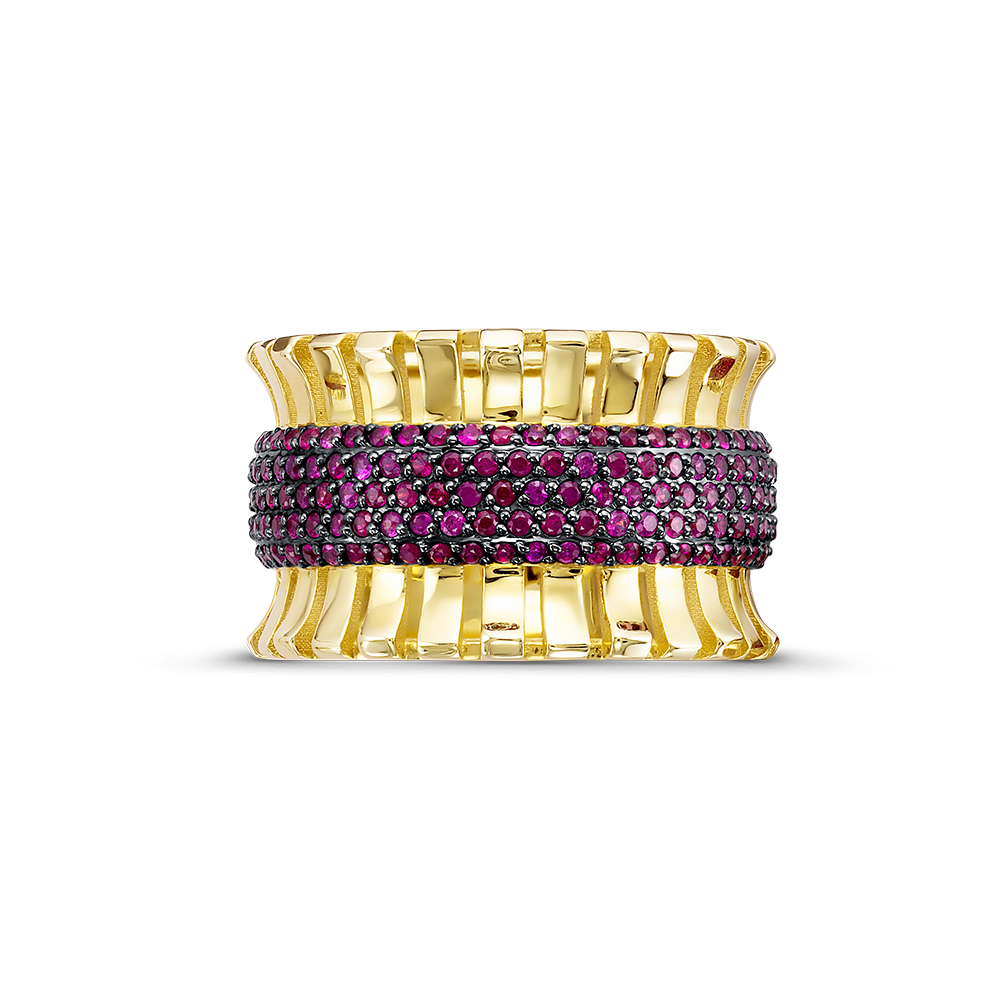

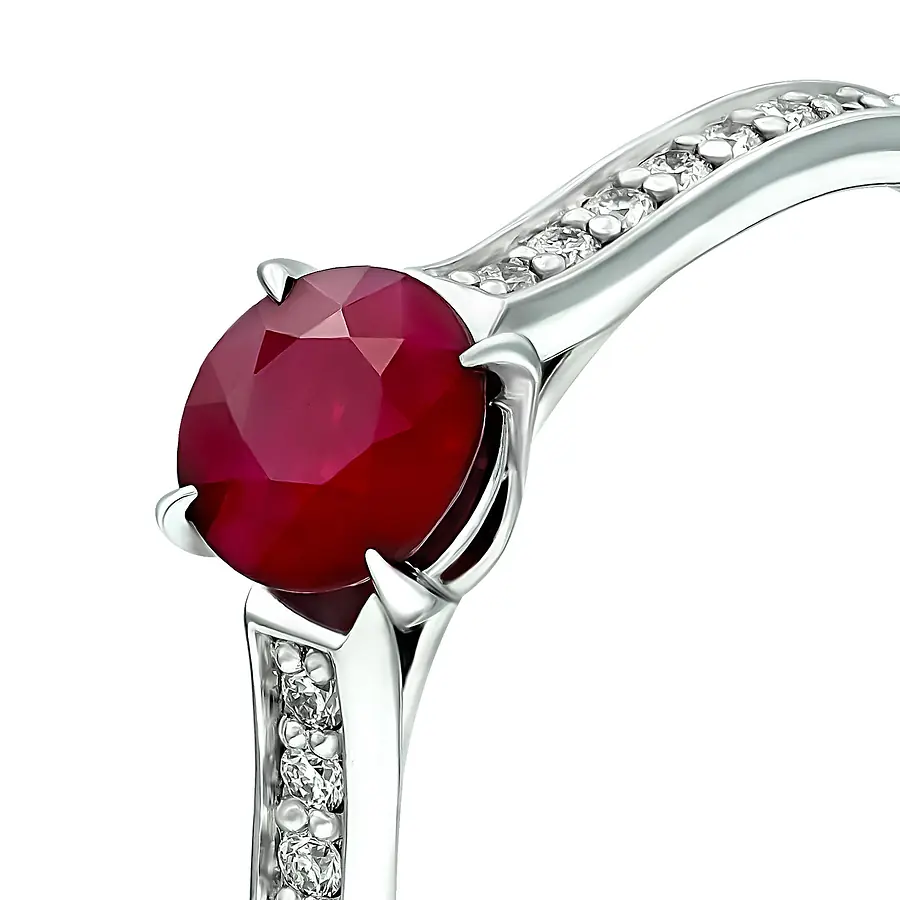
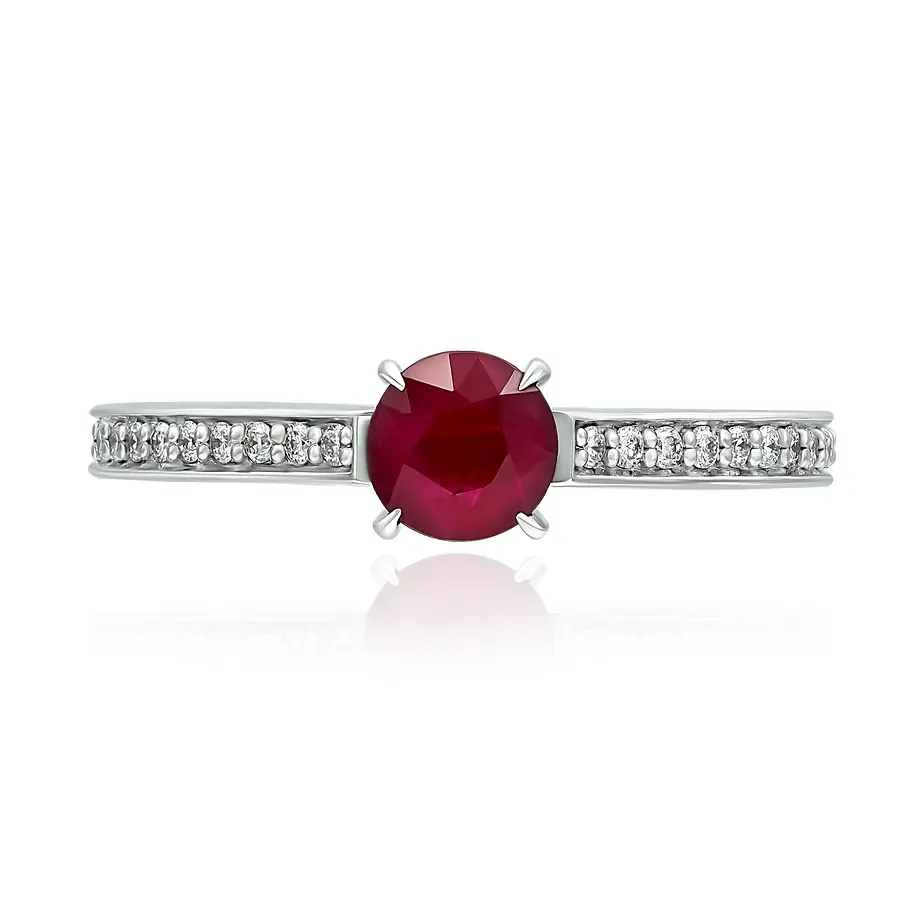
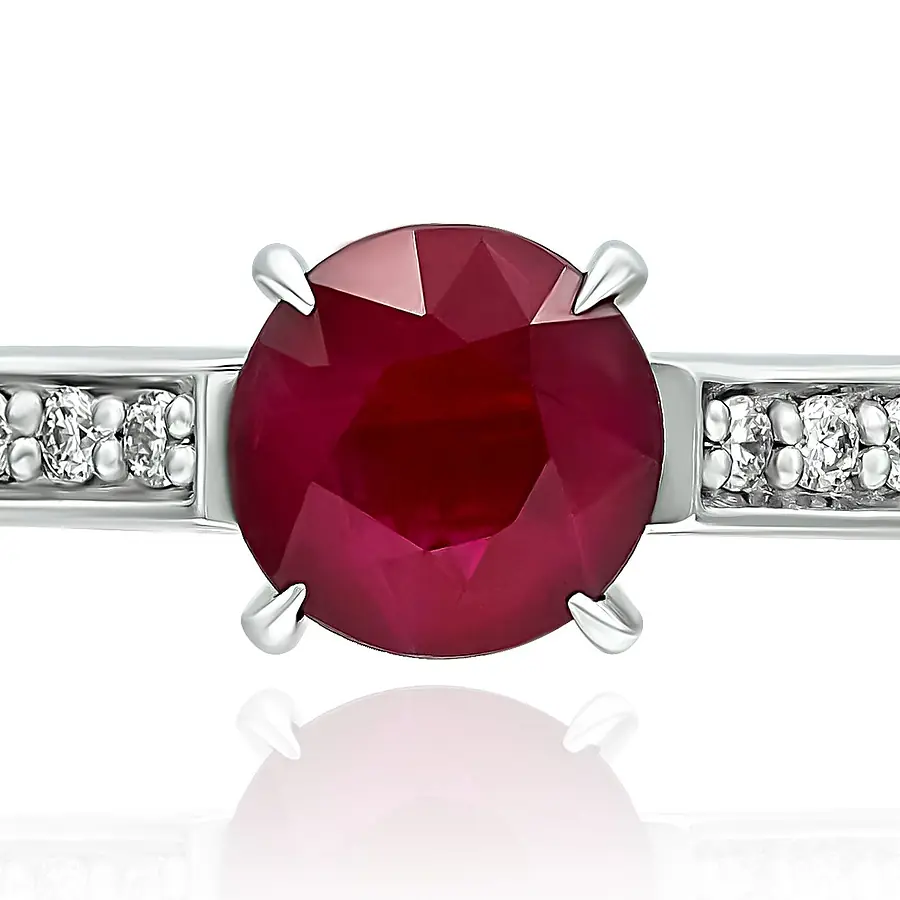

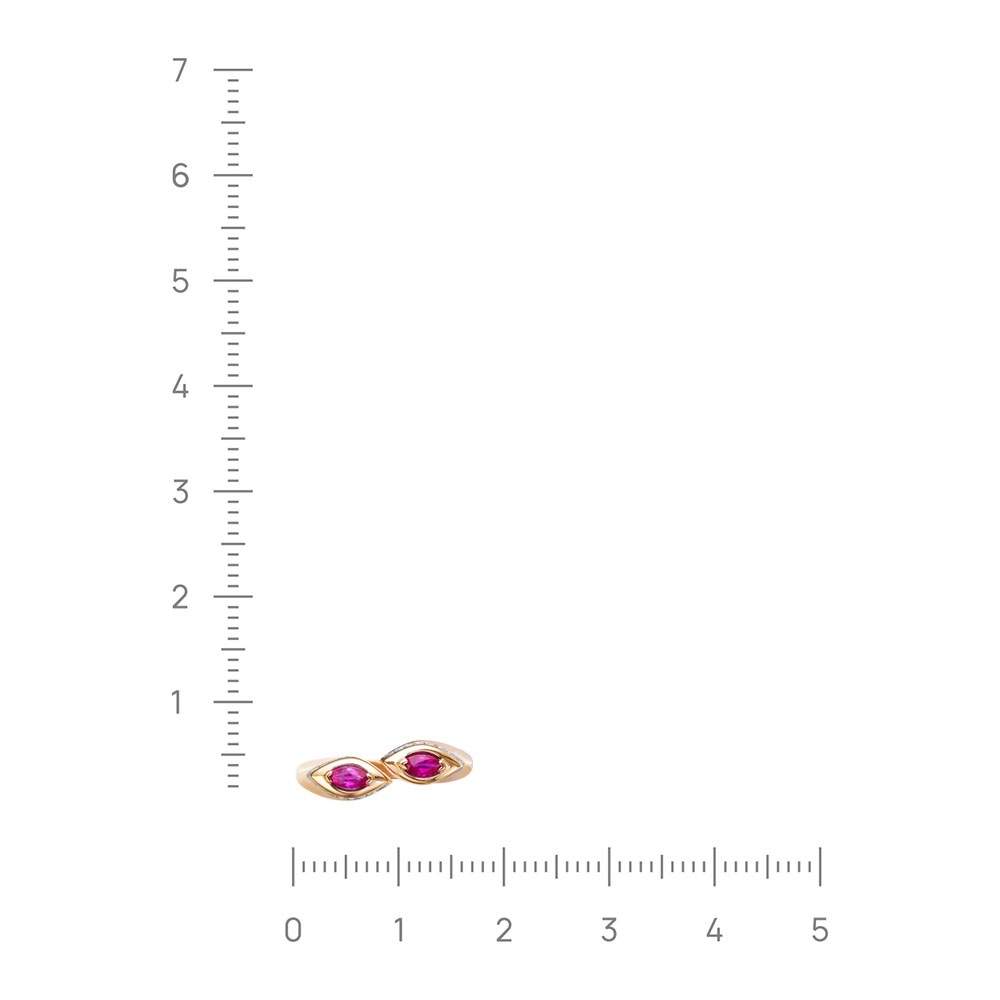
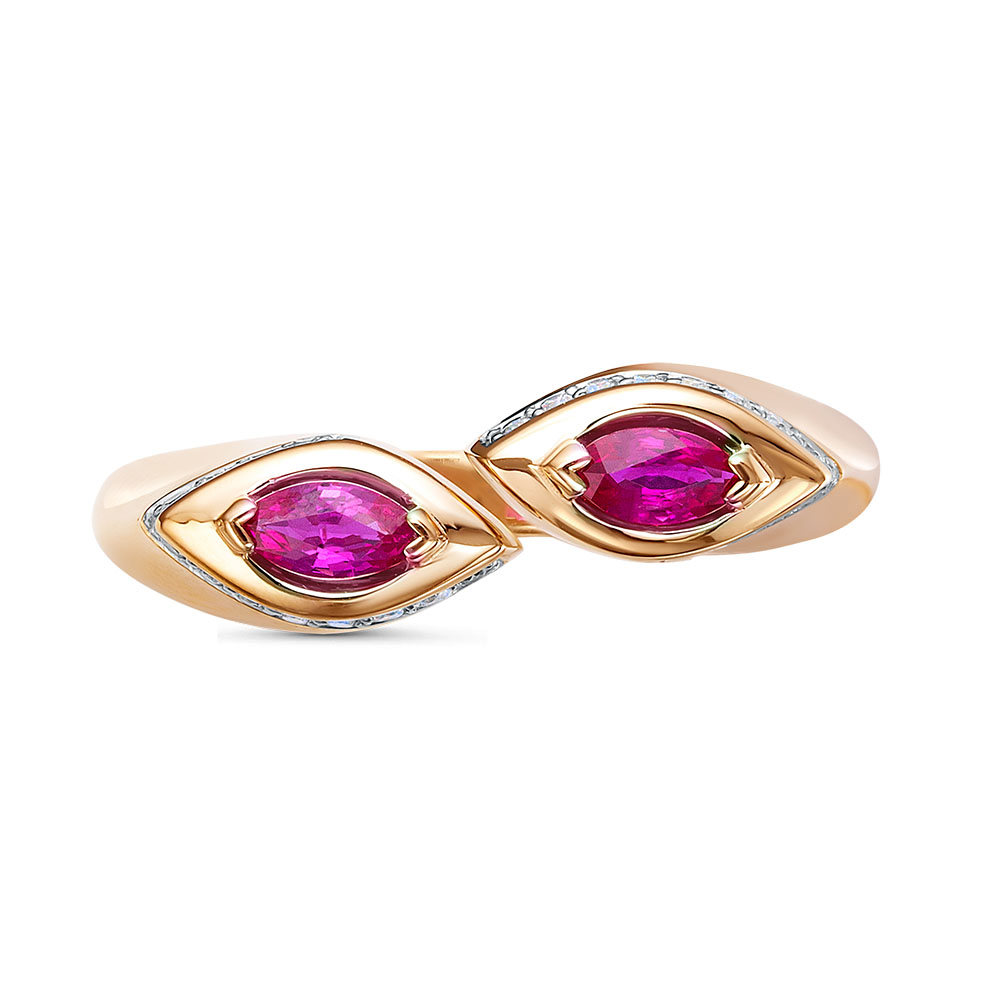

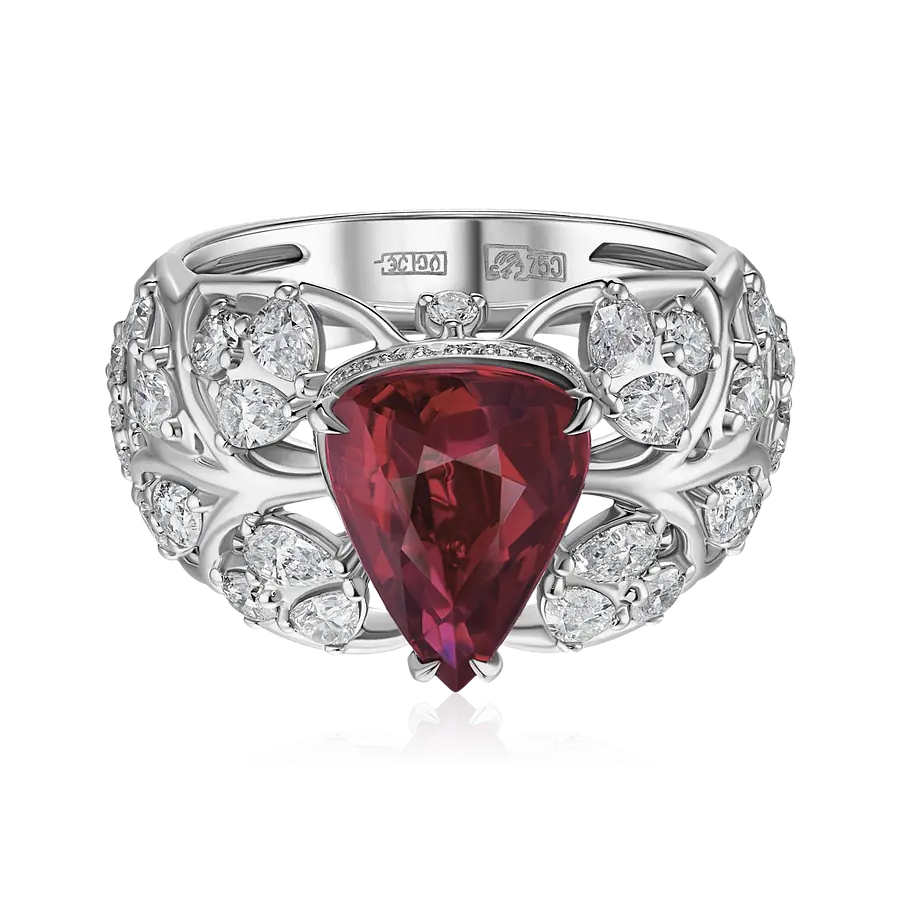
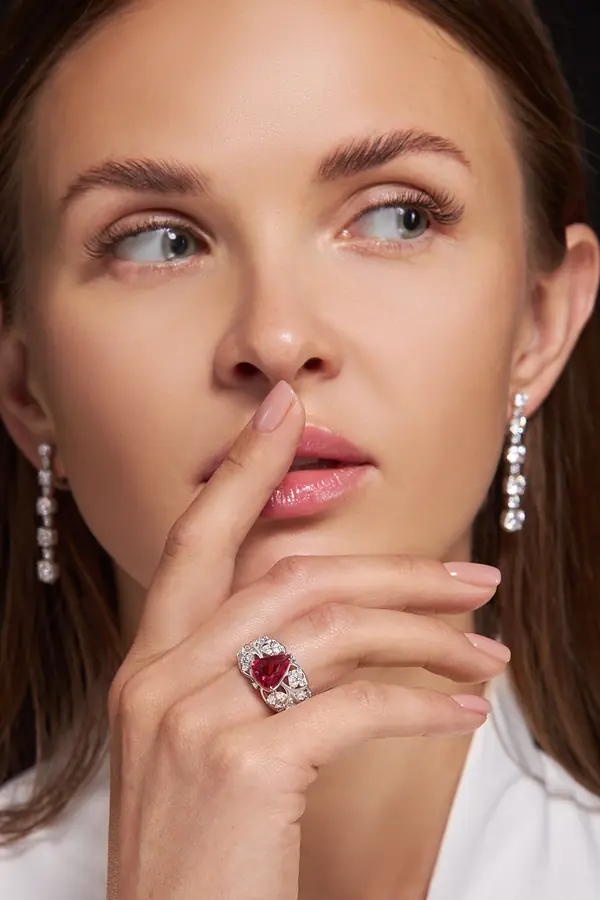
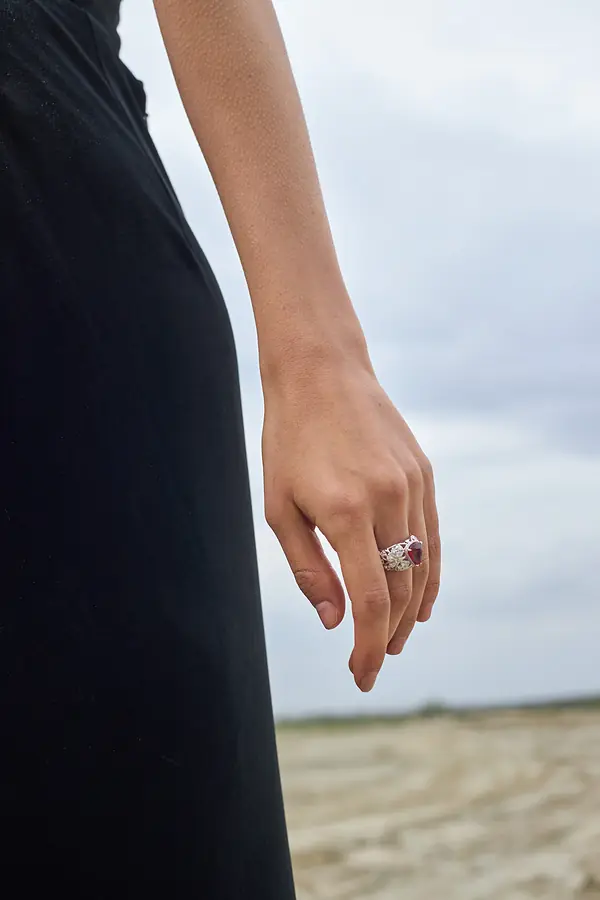

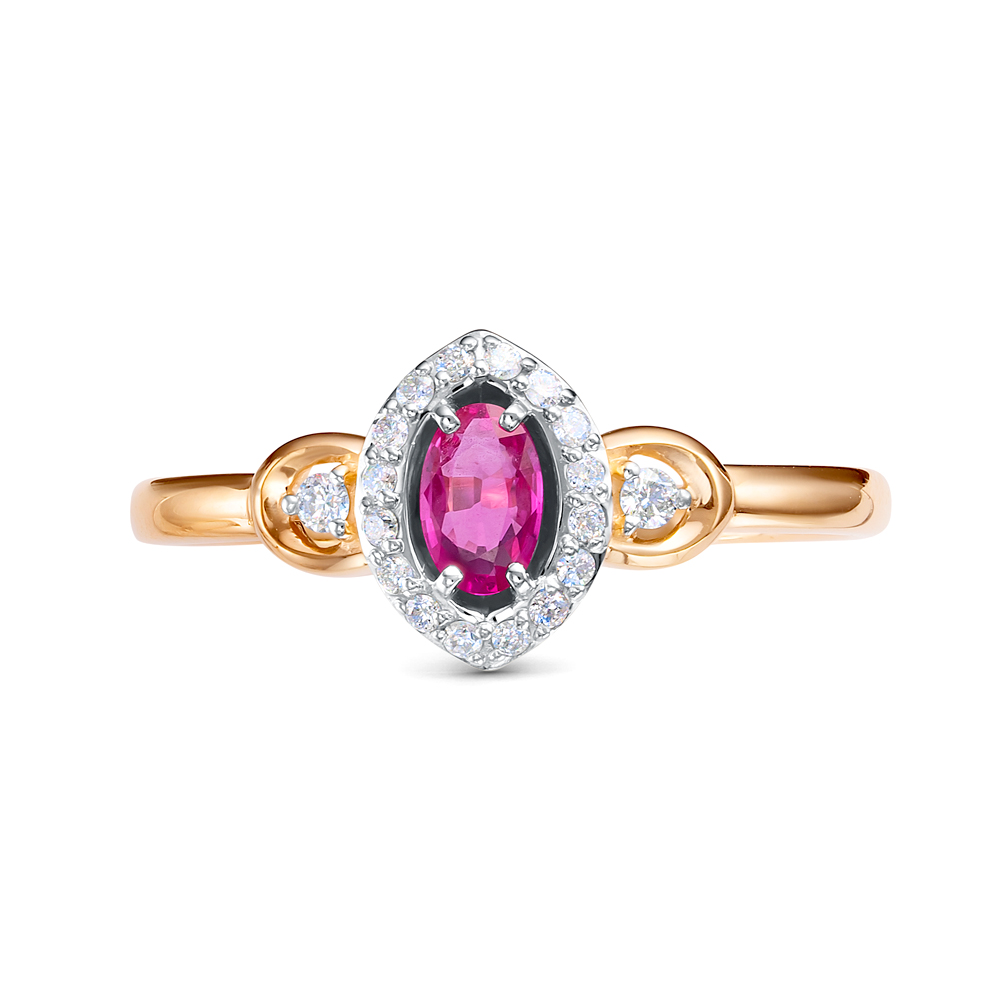
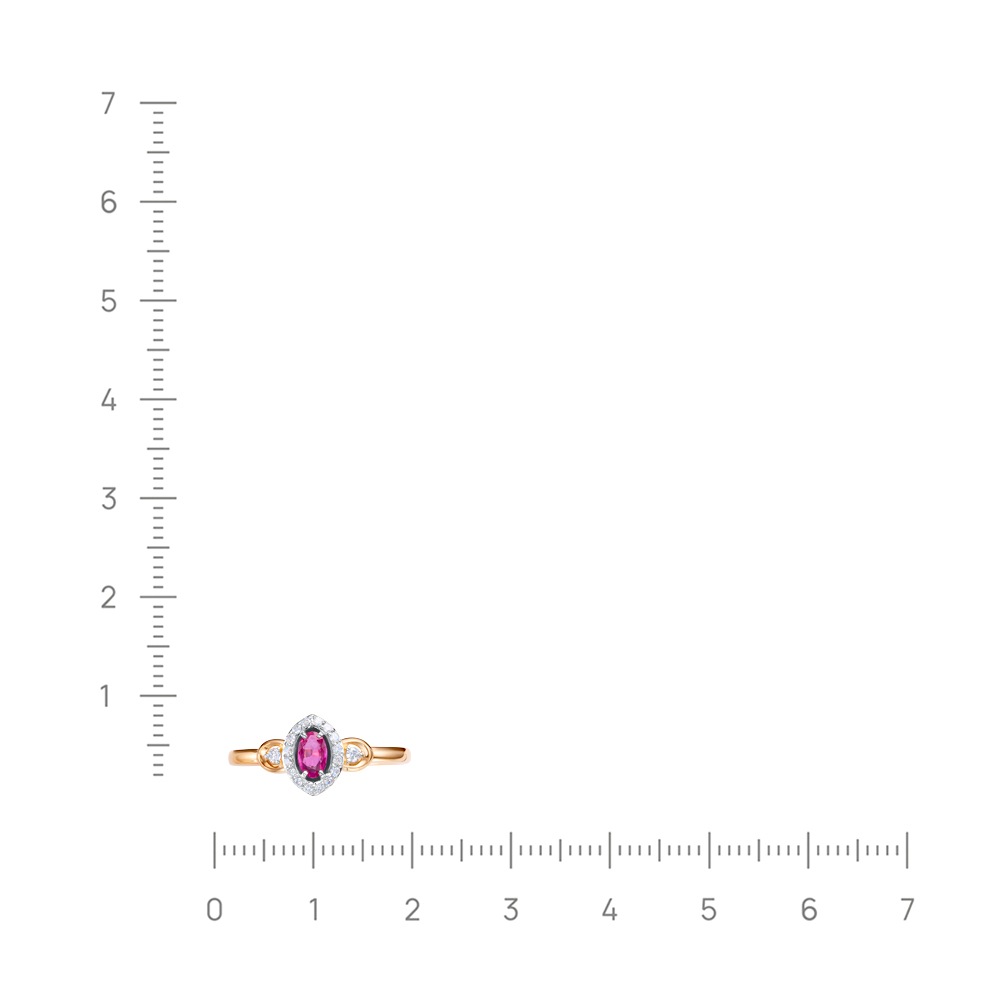

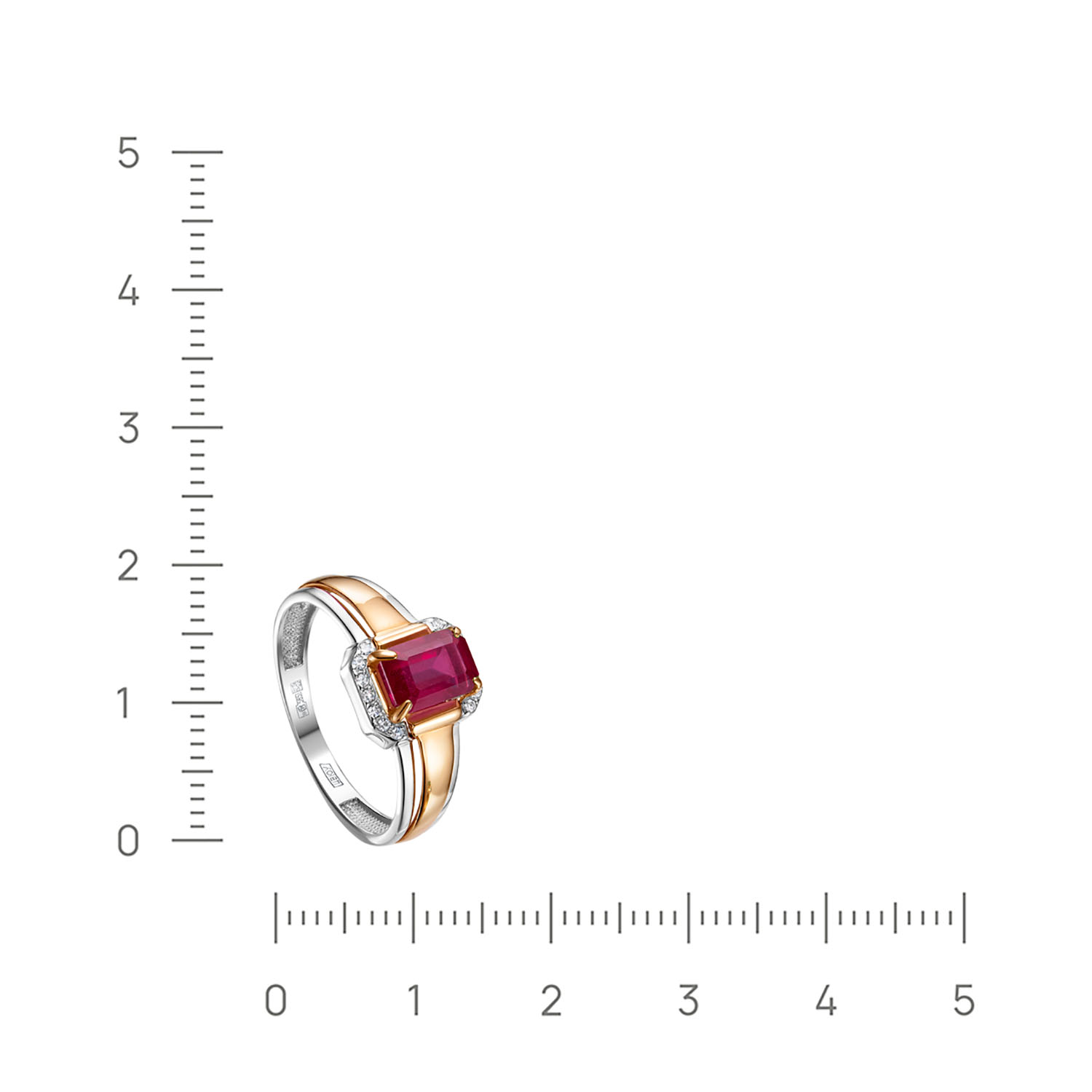
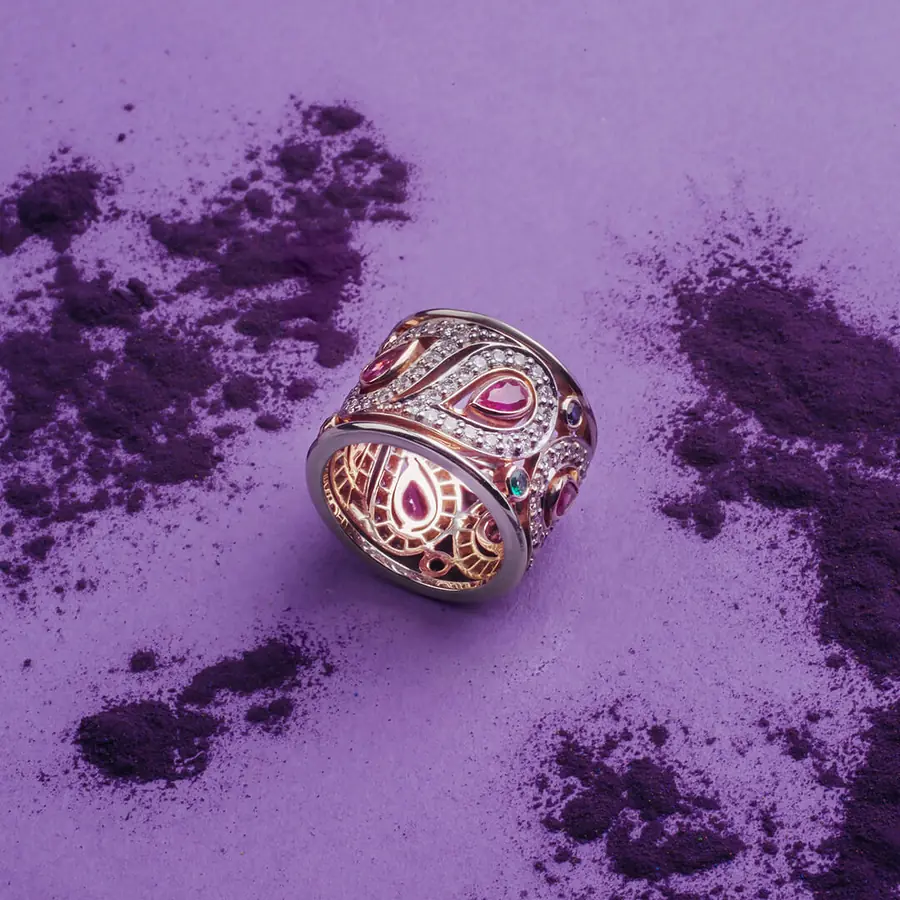
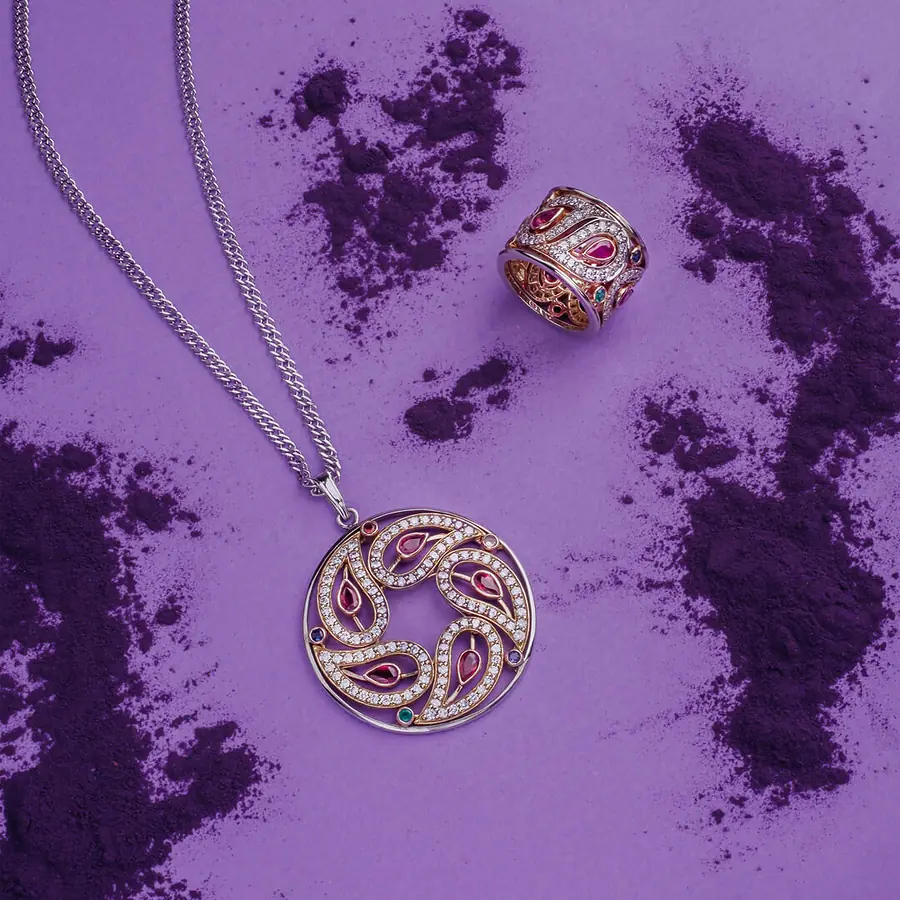
“Paisley” Ring with Ruby, Sapphire, Emerald in 14K Yellow Gold (585) ( 76662)
In stock

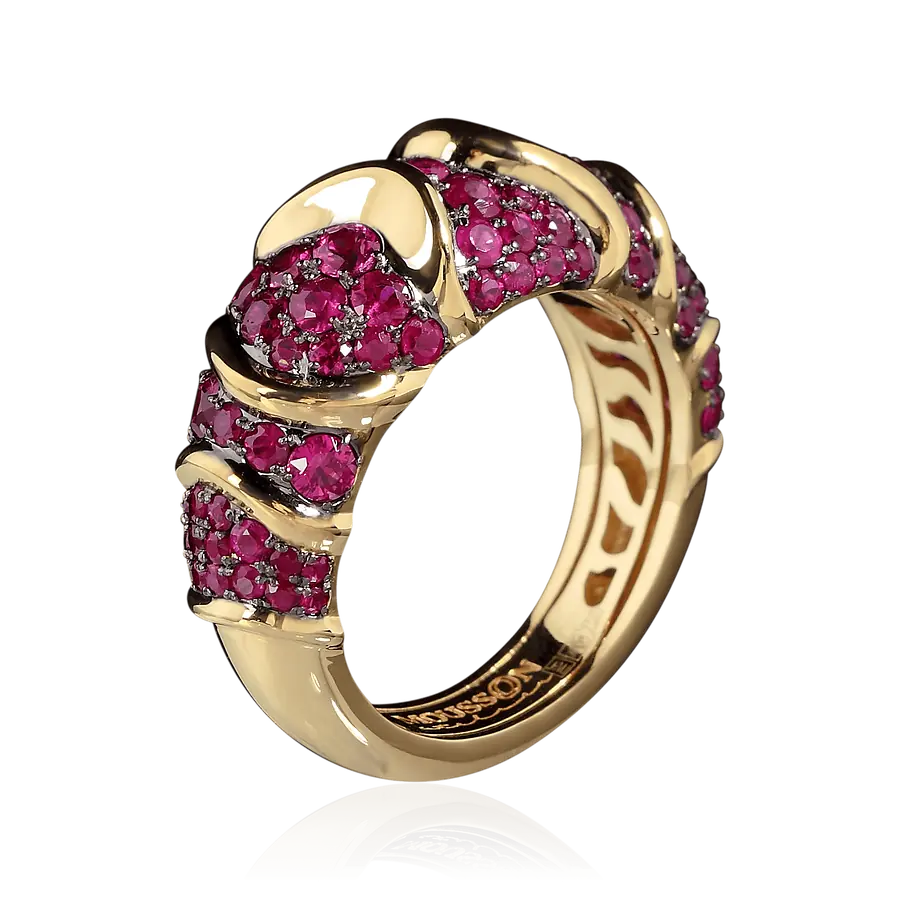
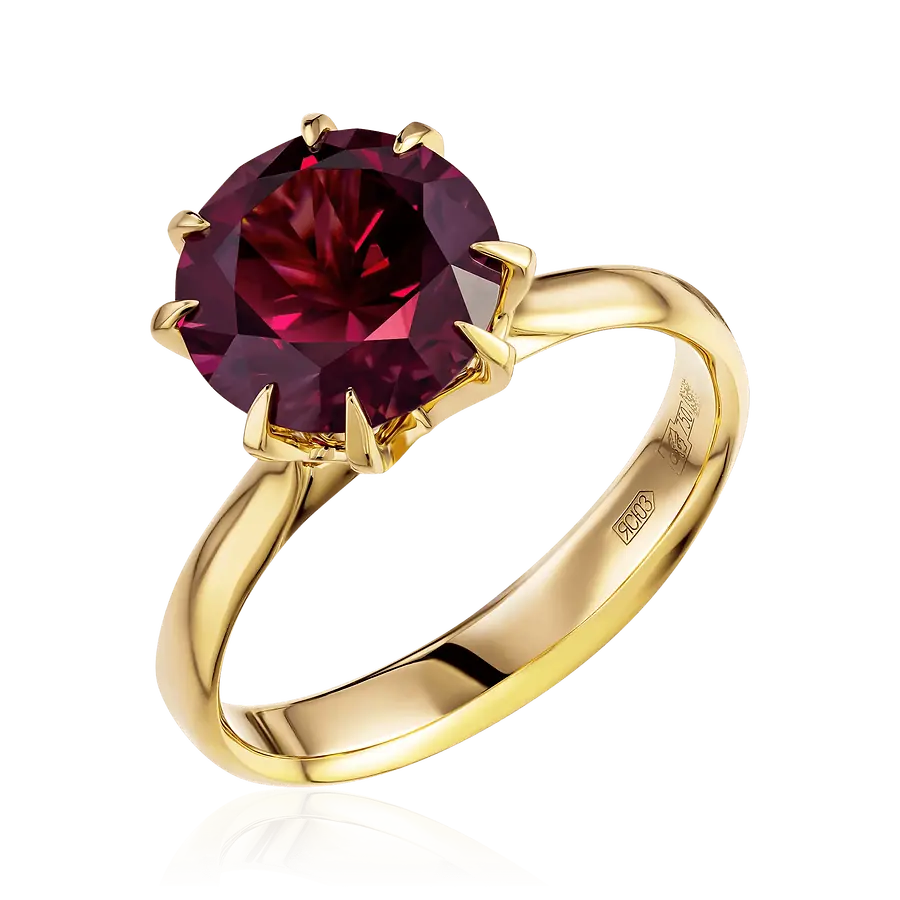
The section has 499 models, and a third of them are in red gold: a warm metal is chosen for red stones more often than any other. A ruby ring starts at 35,900 ₽, 91% of pieces come with a diamond halo, and the stones are natural only.
Ruby rings start at ₽35,900, and what decides the price is the intensity of the red, not the size of the stone. The spread in the section reaches three orders of magnitude: the upper end is tens of millions of rubles, and those are pieces with large Burmese stones.
Why is that? Jewelry-quality ruby is found noticeably less often than sapphire of the same size, and as weight increases the price rises in steps, not linearly. A ruby ring with a carat of deep red color can cost more than three pieces with half-carat stones put together. A ruby ring with a pale tone at the same stone weight costs several times less, and that is not a discount but a different product.
Catalog guidelines:
You can sort rings with ruby by price using the filter in the left column. Note that 750 fineness rings with ruby start from 134,950 ₽: larger and cleaner stones are collected in this fineness.
A third of this section is red gold: it's chosen for red stones twice as often as for blue or green ones. In numbers, ruby rings break down like this: red gold, 33% of pieces; white, 39%; yellow, 21%. For comparison, red metal makes up just 18% of the sapphire section and 13% of the emerald one.
The explanation is simple. Warm metal and a red stone work in the same palette: the stone looks deeper and the boundary between it and the setting is softer. White gold gives the opposite effect, a contrast in which the color reads brighter and sharper. Both options work, and the choice here is purely a matter of taste.
Fineness affects not the stone but the setting. 585 contains 58.5% gold and 750 contains 75%, and the more gold there is, the softer the alloy and the faster the prongs holding the stone bend open. That is why 86% of the section is 585 fineness: a ruby ring for daily wear is more reliable in it.
Separate sections: rings with ruby, 585 fineness, in red gold and line rings.
A glass-filled ruby is not heat treatment but the filling of fractures with lead glass. The difference is fundamental, and it is on this that people most often lose money when buying a ruby ring.
Ordinary heat treatment changes color and clarity by heating, without adding anything to the stone. It is accepted by the industry and applied to most colored stones on the market. Glass filling is different: low-quality rough riddled with cracks is taken and the cracks are filled with lead glass. Outwardly such a stone looks clean and richly colored, costs several times less than a comparable natural one and needs special handling: it is sensitive to heat, household chemicals and ultrasonic cleaning. A jeweler repairing the setting may damage it with a torch.
It is hard to spot a filler by eye, but there are clues. Under a loupe, such a stone shows areas with a different luster: glass refracts light less than corundum, and a characteristic glint appears at the border of the filling. Sometimes frozen air bubbles are visible. Both signs take skill to read, so it is more reliable not to inspect but to ask.
What the buyer should do. Ask directly about the nature of the treatment and require the answer in writing, in the product description or in the certificate. A sharply low price on a ring with a large, clean ruby is the first sign of a filler.
The stones in this section are natural. You won’t find a lab-grown ruby ring in the catalog: synthetic corundum is mass-produced and costs incomparably less, and we do not use such stones.
Corundum is considered ruby when red dominates in it; at lower saturation the same stone would be called a pink sapphire. These are not two different minerals but one, with a different grading of color.
The GIA gemological laboratory compares a stone with reference samples and acknowledges that the boundary is partly subjective: it is an assessment of shade, not a measurement of a physical quantity. That is why the same crystal may receive different names in different laboratories, and different prices in stores. The difference in cost is considerable: a ring with ruby costs more than a piece with a pink sapphire of comparable quality.
The practical takeaway: when buying a stone of a borderline shade, look not at the name on the price tag but at the actual color in daylight. For more on the corundum palette, see the page rings with sapphire.
The story of "pigeon's blood" is similar. It is the name for the most saturated red with a slight purple tint, historically from the mines of Burma. The term is a trade one: there is no single international scale behind it, and different laboratories apply it in their own way.
The star on the surface of the stone is asterism, an effect of needle-like rutile inclusions. Light reflects from them in several directions and gathers into a six- or twelve-rayed figure that moves with the light source.
Such stones are cut as cabochons — a smooth dome without facets: only this shape lets the star appear. The same crystal cut with diamond facets will not show the effect. In the catalog, cabochons are found in models with large stones.
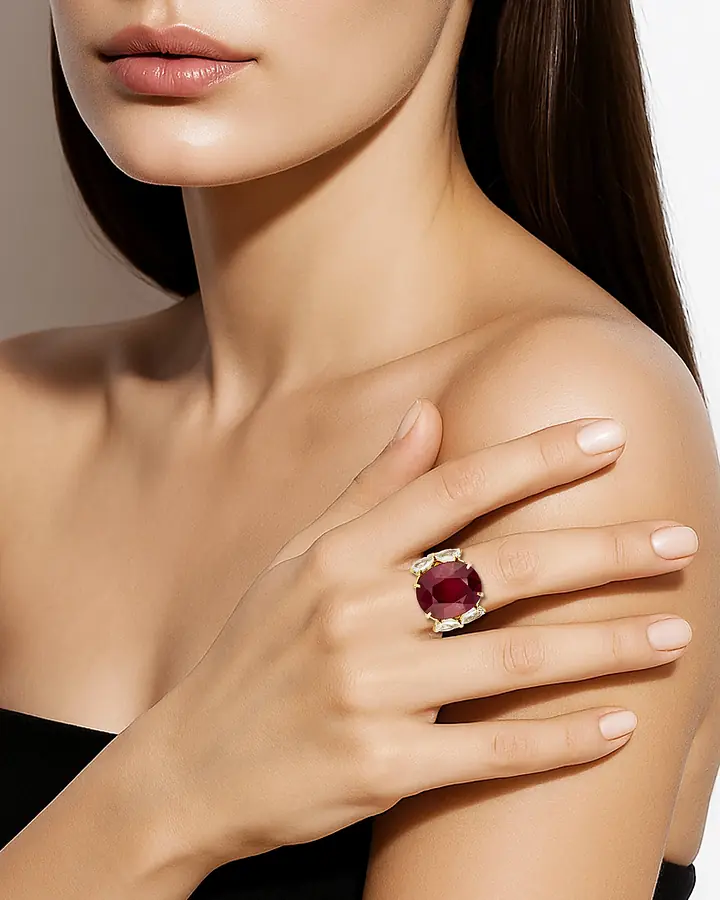
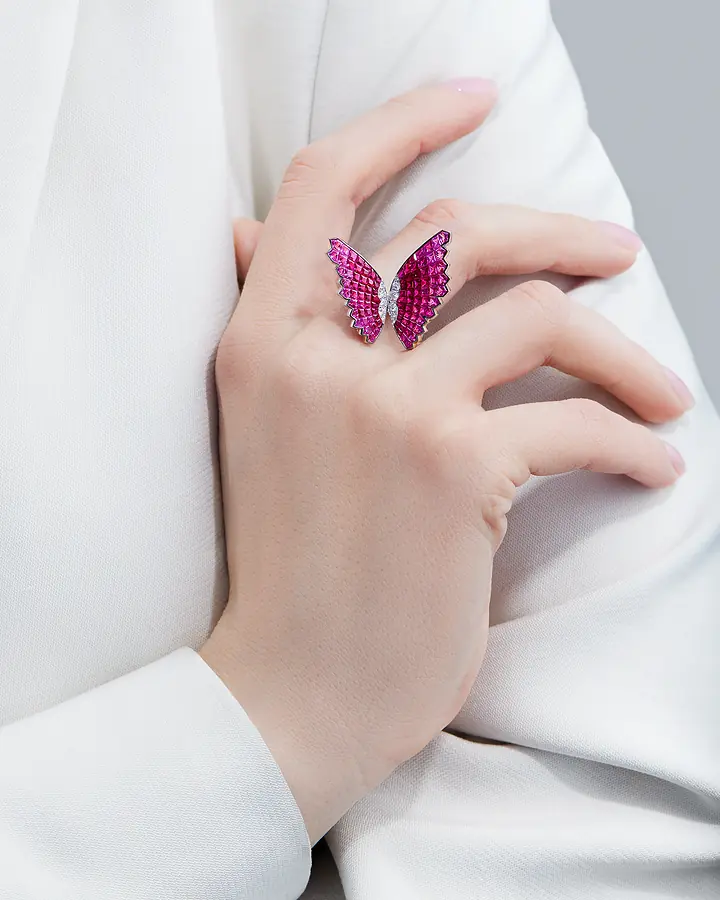
Choose the size of the stone not by carats but by the hand: the same stone looks larger on a slim finger than on a broad one. A good guide for everyday jewelry is a stone that does not extend past the width of the finger segment: it does not snag on clothing and does not get in the way when you work with your hands. For an evening look, this rule does not apply.
As for weight: a jewelry-quality stone larger than two carats is rare, so a ruby ring of that size almost always comes with confirmation of origin. Today's significant sources are Mozambique and Madagascar by volume of production and Myanmar for prestige: Burmese stones from Mogok are valued above the rest.
In Moscow, you can try on a ruby ring at the boutique at Nikolskaya, 10, near Lubyanka metro station, in the Nikolskaya Plaza shopping center, 2nd floor. Red changes more than any other color under different lighting: under a warm lamp the stone looks deeper, in daylight it looks cleaner and cooler. You can't see that from a photograph.
In Moscow, our courier delivers your order free of charge within 1-3 days, with a fitting on the spot: you pay only after trying it on, and you may decline the order. Across Russia we deliver via CDEK and Spetssvyaz in 1-9 days, free on orders over 50,000 ₽; parcels are sealed and insured.
The store has been in business since 2008 and has received an industry award three times, in 2015, 2017 and 2020. The boutique is registered with the Assay Chamber of the Russian Federation: every piece carries the hallmark and the manufacturer's maker's mark. The store's lifetime warranty covers the stones and the metal. Exchanges are possible within 7 days if the piece is returned complete with its original packaging. Engraving inside the band is 3,190 ₽, and resizing a ring with stones starts at 2,990 ₽.
A ring with ruby costs from 35,900 ₽. The main group in the catalog runs from 60,000 to 150,000 ₽, where you get a stone of noticeable size with even color. 750 fineness pieces start from 134,950 ₽.
A glass-filled stone has had a foreign material added: the fractures are filled with lead glass. Ordinary heat treatment adds nothing and only changes the color through heating. A glass-filled stone costs several times less and is sensitive to heat, chemicals and ultrasound.
One mineral, corundum, but a different grading of color. It is called ruby when red dominates; at lower saturation it is called pink sapphire. The boundary is acknowledged to be partly subjective even in gemological laboratories.
A stone in which a six- or twelve-ray star is visible. The effect is called asterism and is caused by needle-like rutile inclusions. It appears only in a cabochon cut.
A matter of taste. Red gold works with ruby in the same palette and deepens the color; a third of the pieces in the section are like this. White offers a contrast in which the red reads brighter.
We will contact you shortly.
Unfortunately, we cannot deliver to this locality. Please choose another city nearest to you.
How to get them. 3% of every order on the site. Sign in with your phone number to receive bonuses.
How to spend them. Sign in, add jewelry to your cart and specify at checkout how much to redeem. Bonuses can pay up to 10% of the price.
Confirm that you are not a robot
Unfortunately, this item is currently out of stock. We can make the jewelry individually to your requirements. Our consultant will contact you
Our consultant will contact you shortly
Refresh the page and send the message again
Specify the size of the jewelry and try again
Enter your number and our manager will contact you about the price calculation
Refresh the page and submit the order again