37 900 ₽
We use cookies to improve the site and give you more options. By continuing to use the site, you agree to cookie usage terms.We use cookies. Learn more


By popularity

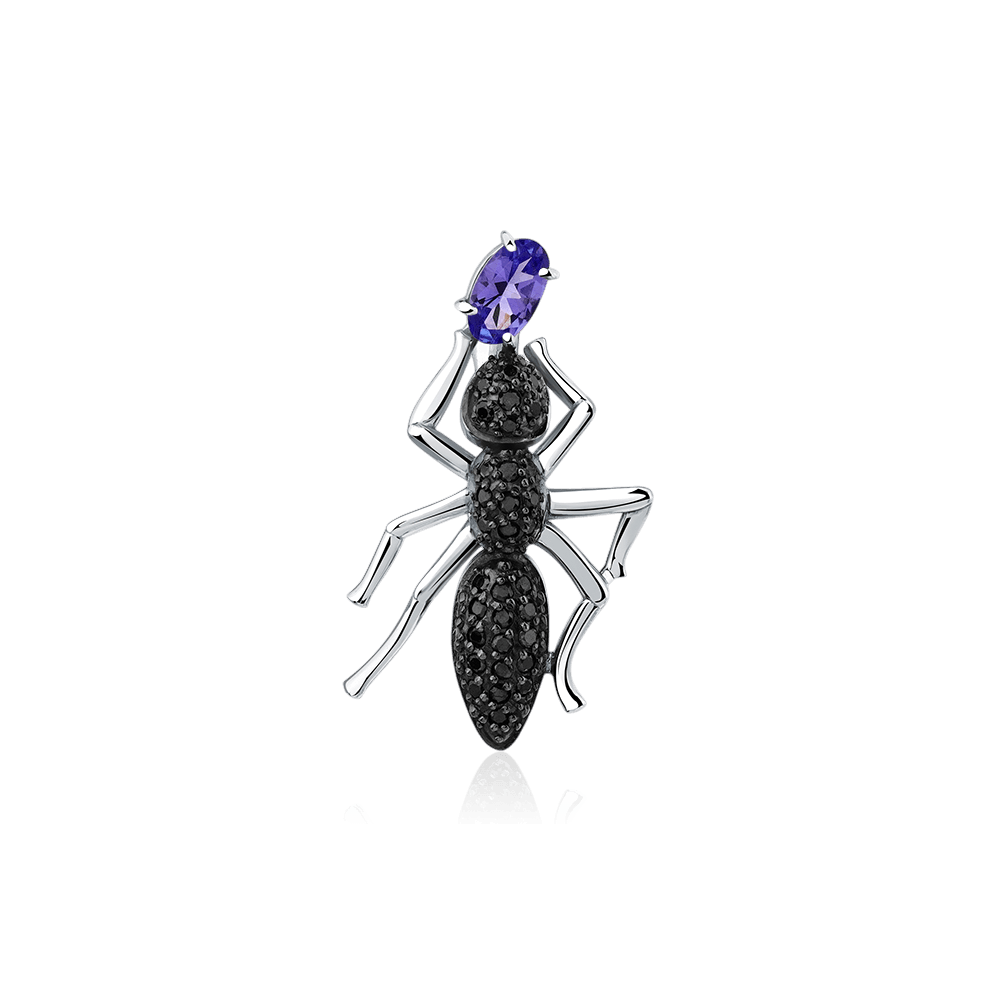
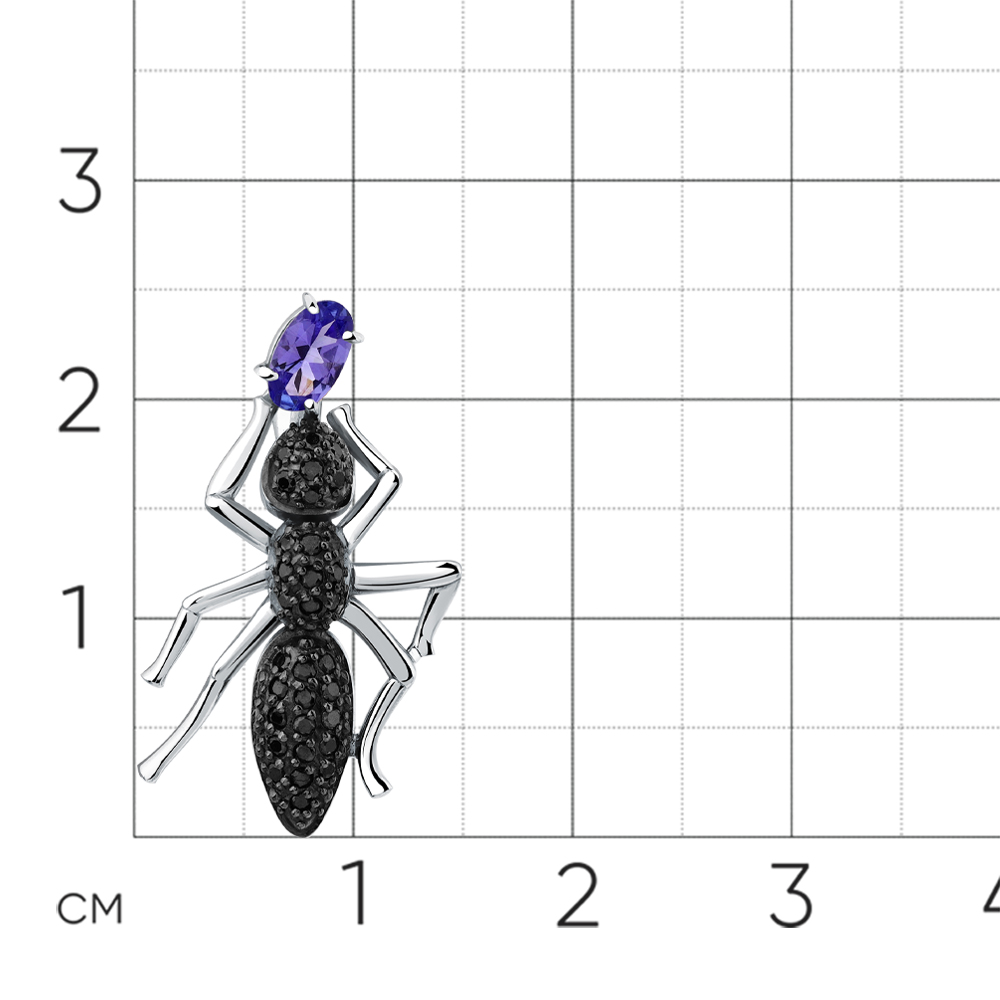
Brooch-pendant with tanzanites, amethyst, tourmaline and diamonds in 14K yellow gold (585) ( 43681)
In stock
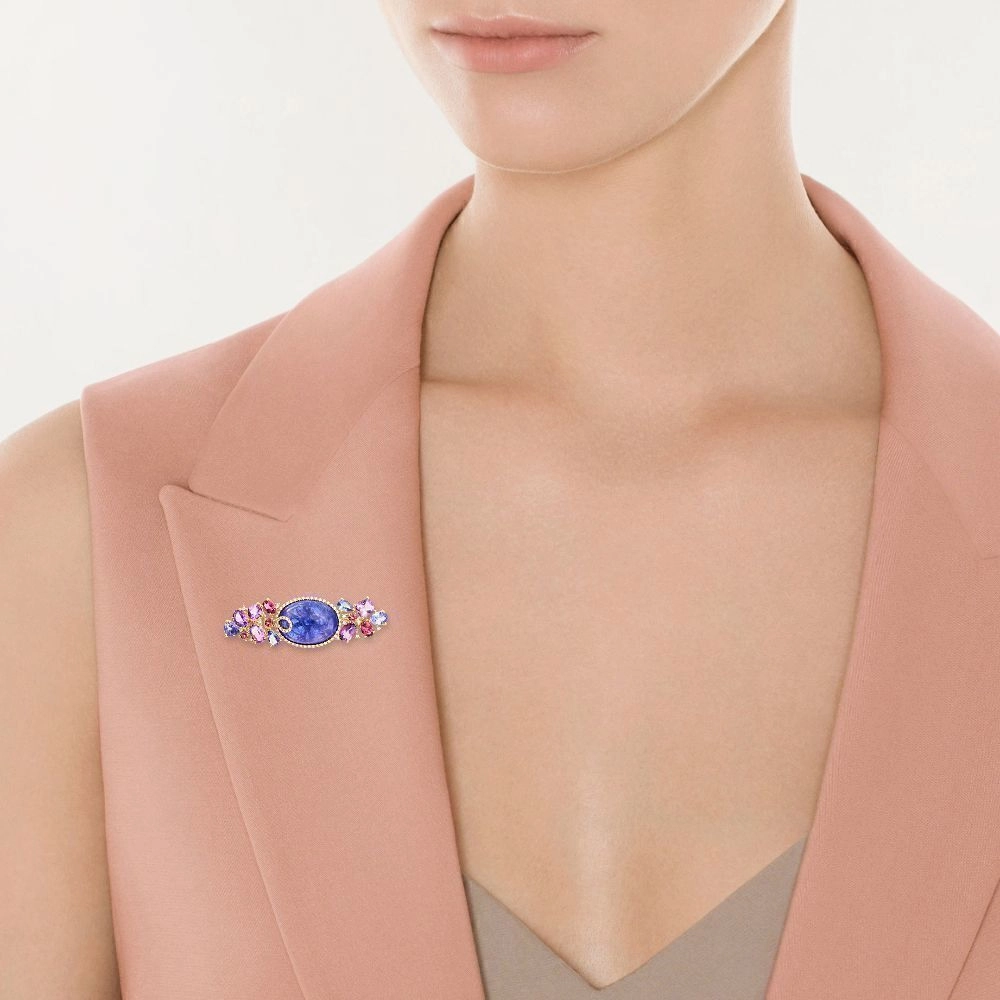
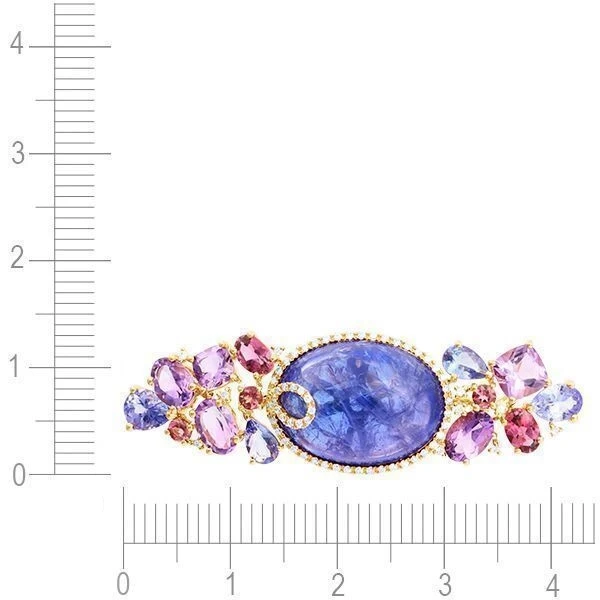

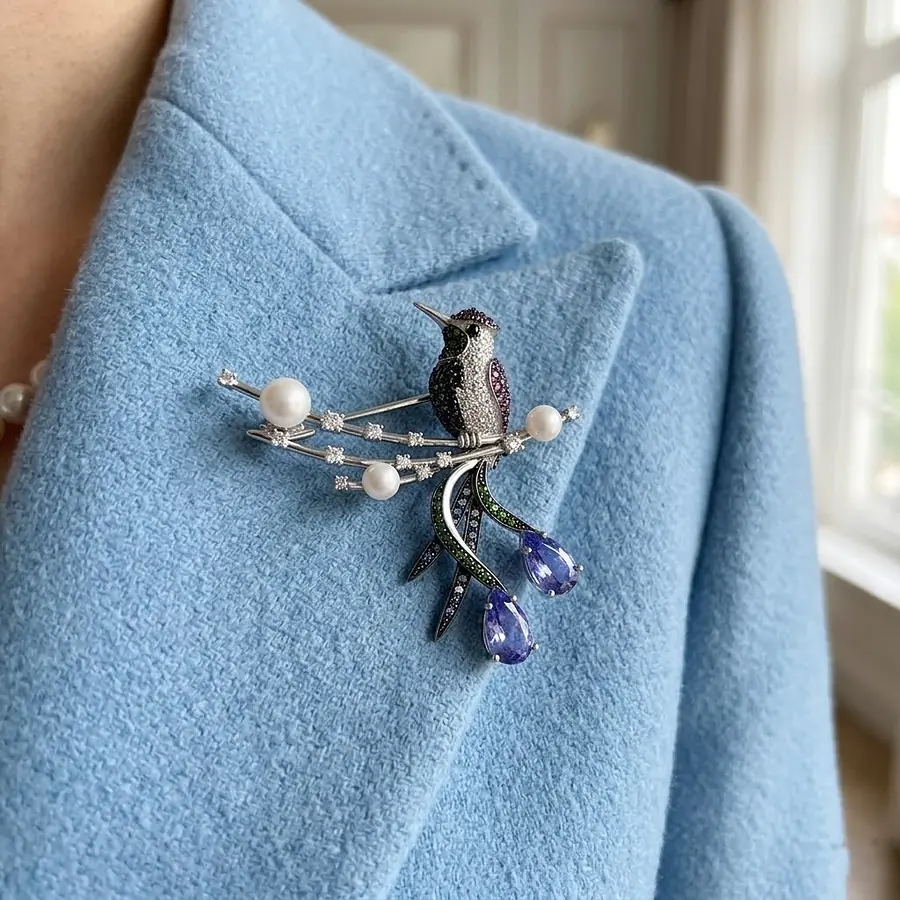
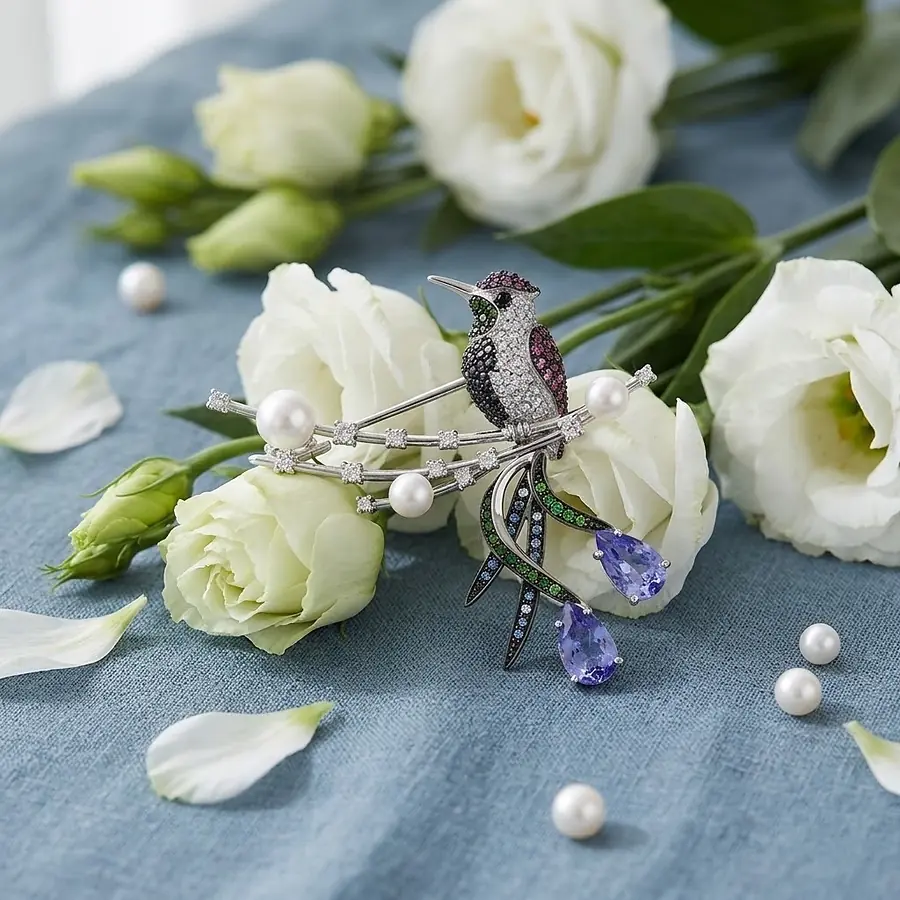
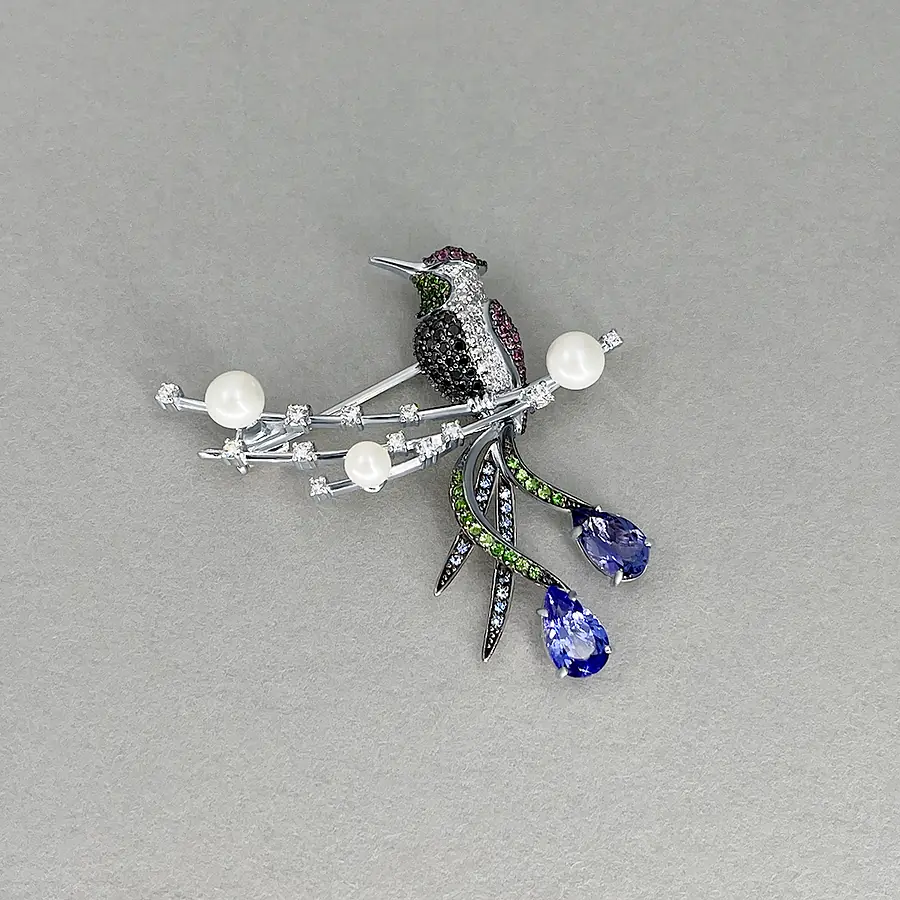
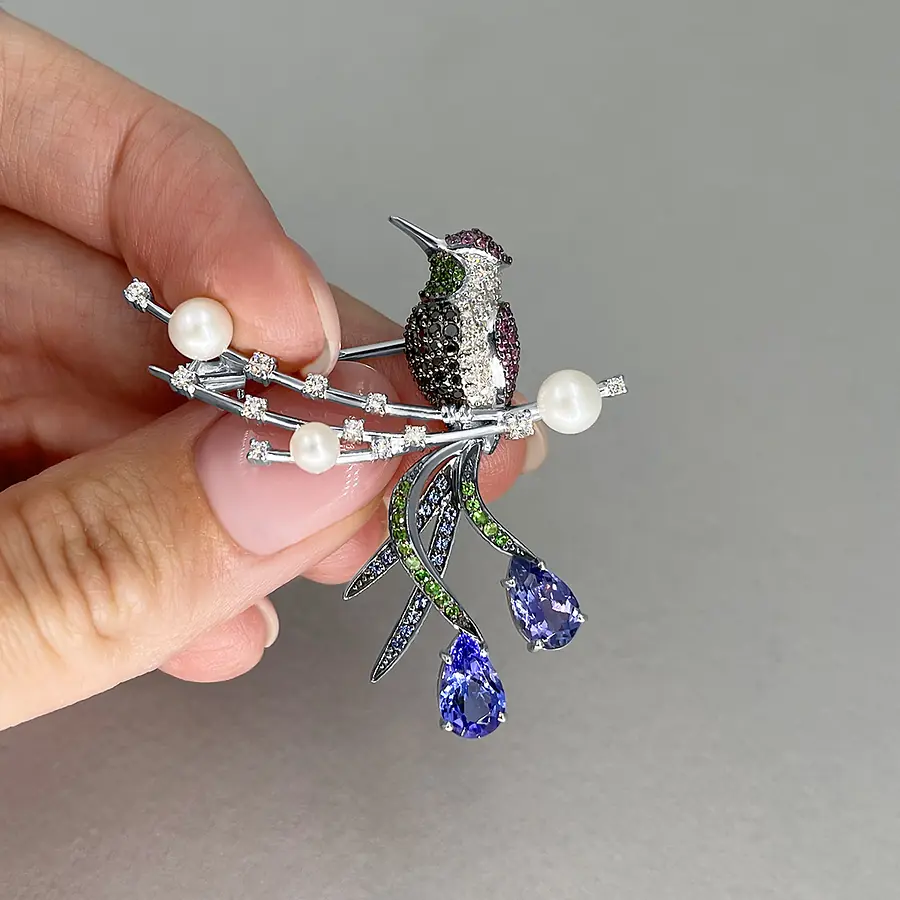
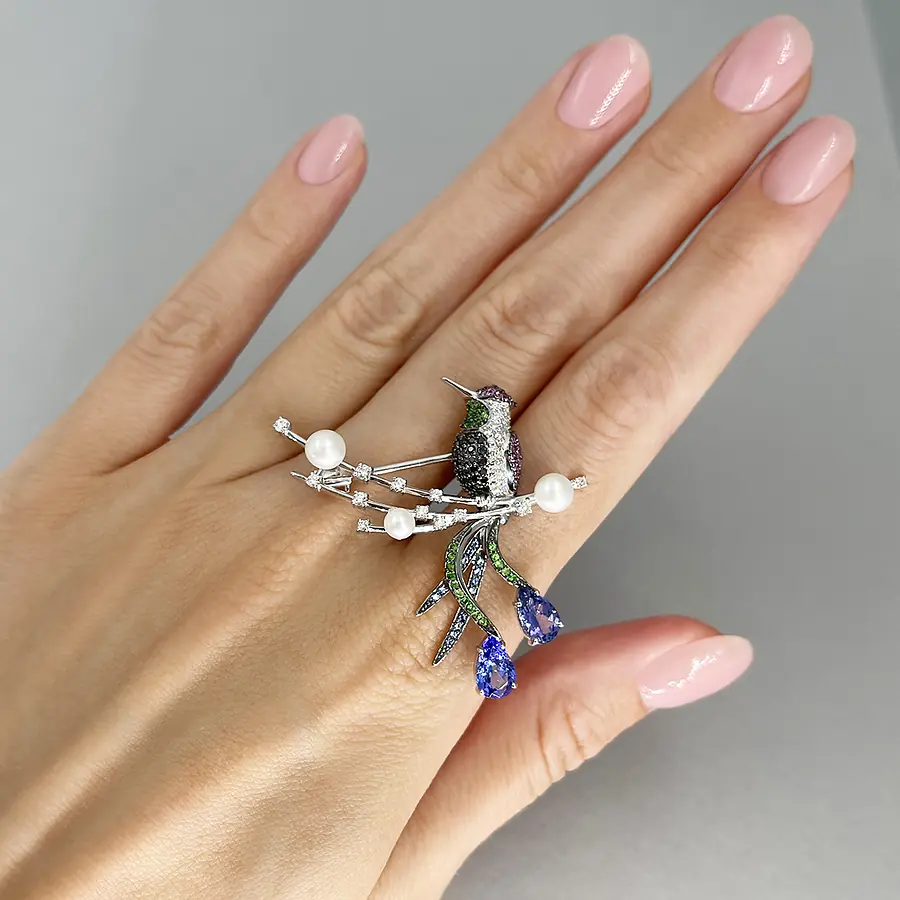


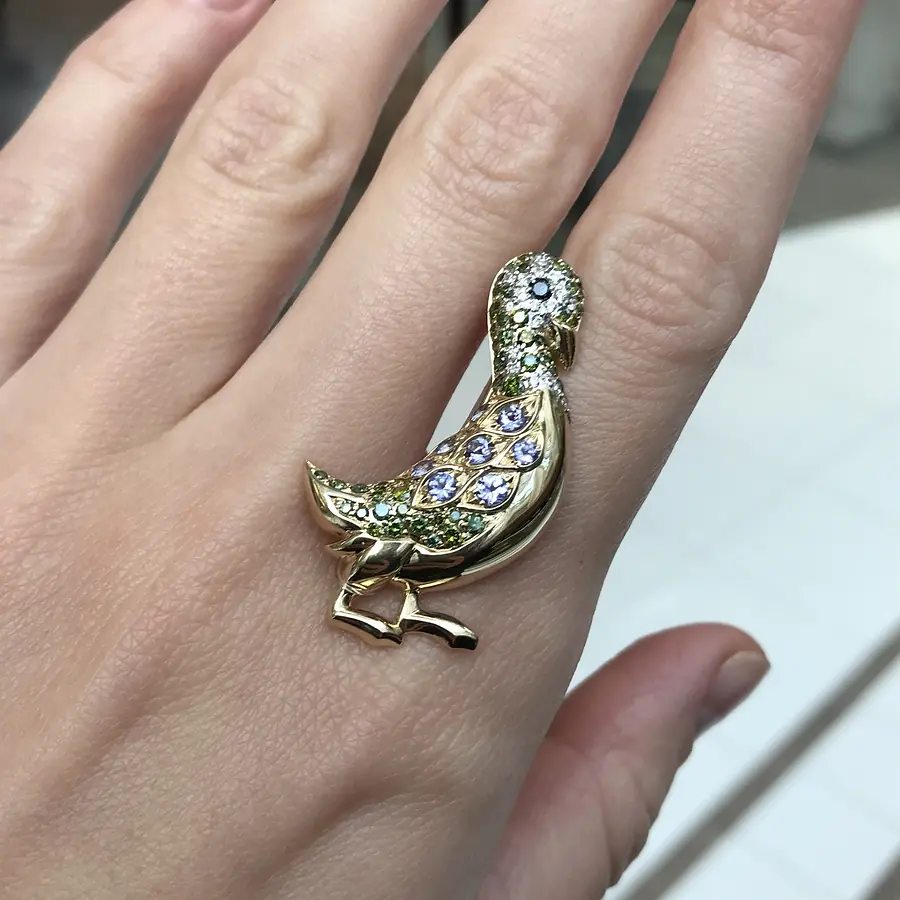


Flower Pendant-Brooch with Diamonds, Enamel and Fancy Sapphire in 18K Yellow Gold (750) ( 38126)
In stock

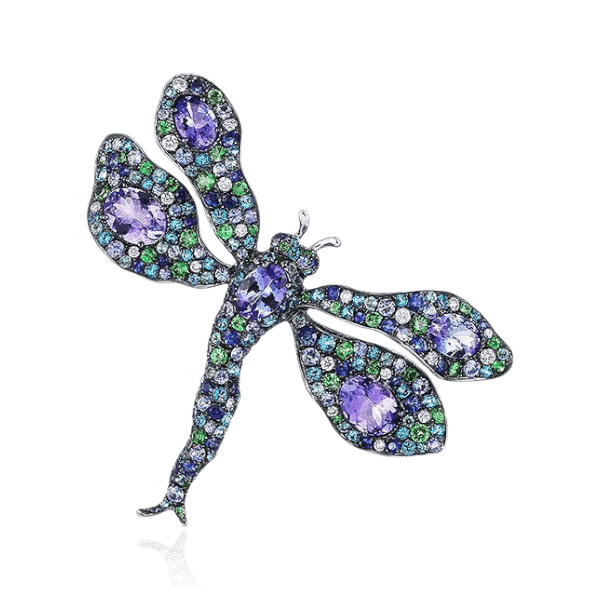

A tanzanite brooch is a piece of jewelry with a pin clasp in which blue zoisite serves as the centerpiece. The section features 8 pieces priced from 232,000 to 1,080,000 ₽. Prices here are higher than in any other section of the catalog with this stone, and the reason is not markup: a tanzanite brooch is the only format that lets you set a large stone without risk.
The price of a tanzanite brooch ranges from ₽232,000 to ₽1,080,000. At the lower end of the range, a tanzanite brooch is a compact piece with a single stone; at the upper end, a large stone in an intricate composition.
You can choose a brooch with tanzanite in only two price brackets — the entire section sits in the upper segment:
| Cart | Pieces |
|---|---|
| 200 000–500 000 ₽ | 1 |
| From 500,000 ₽ | 7 |
Seven pieces out of eight cost more than half a million rubles, and all of them contain stones that could not be set in a ring or a cross. There is no tanzanite brooch under 200,000 ₽ in the catalog, and this follows from the nature of the format, not from pricing policy.
To understand why a tanzanite brooch costs what it does, you need to know the limitations of the stone itself. Tanzanite has a hardness of 6.5–7 on the Mohs scale and perfect cleavage in one direction: at a point impact it splits along a plane rather than chipping at the edge.
From this follows a rule: the more a piece is exposed to contact, the smaller the stone should be and the deeper its seat. A jeweler cannot get around this limitation through design: cleavage is built into the structure of the crystal and does not depend on the quality of the cut. A ring is squeezed with every grip, a cross is worn without ever being taken off, a bracelet knocks against tables, and in all of these formats the stone has to be made smaller.
The brooch is the opposite pole. It is pinned to outer clothing over everything else, does not touch the skin, is not compressed, does not brush against surfaces and is worn for a few hours rather than for years. For a stone with cleavage this is the gentlest regime possible, and a brooch with tanzanite makes full use of it.
That is why a tanzanite brooch can carry a large stone in a high setting – where in a ring or a cross it would be only a matter of time.
How much a tanzanite brooch outperforms other formats is plain from the catalog itself:
| Format | Stress on the stone | The catalog price ceiling |
|---|---|---|
| Brooch | minimal | 1 080 000 ₽ |
| Cross | maximum, worn without removing | 195 600 ₽ |
| Pendant | medium, hangs freely | ниже |
The minimum in the brooches section, 232,000 ₽, is higher than the maximum in the crosses section with the same stone, where the ceiling is 195,600 ₽. These are not different price segments of the store: a tanzanite brooch simply allows a stone of a size that cannot be set in a cross.
Tanzanite is trichroic: it shows three different colors along three crystallographic axes, blue, violet and burgundy-brown. The cutter chooses which tone to make dominant: the color of the finished stone, and its weight, depend on how the crystal is oriented when it is sawn. To achieve a saturated blue, up to half of the original mass is lost, which is why stones of deep tone cost disproportionately more.
This matters more for a tanzanite brooch than for other jewelry. A ring and earrings are constantly moving, the stone turns, and the viewer sees all three tones in turn. A tanzanite brooch is fixed motionless on clothing, so the stone always faces one way.
A practical conclusion: it makes sense to view such a piece in the position in which it will be worn, not in the palm of your hand. A tone that reads on a display case from above can differ from what the people you talk to will see.
The range divides into figurative and decorative pieces. What we have in stock:
In every case, a brooch with tanzanite is complemented by diamonds: the stone itself has little sparkle, and the brilliance comes from them.
Three pieces in the section have a dual fastening: a pin and a loop for a chain. The piece works in two ways.
For tanzanite this is a compromise. In the first mode the stone is protected: it is fixed on dense fabric and does not move. In the second, the piece hangs freely on a chain and may touch surfaces when you lean forward, and a point impact is exactly what is most dangerous for a stone with cleavage. If the stone is large, it is wiser to wear it as a brooch and keep the second option for special occasions.
Almost all tanzanite on the market has been heated: in its natural state the crystal is more often brownish, and the blue tone appears after heat treatment at a moderate temperature. This is standard industry practice, not a flaw or a fake. Untreated stones are rarer and prized by collectors, but they are hardly ever used in jewelry.
For the owner, the consequence is simple: reheating is harmful to the stone, and sudden temperature changes are best avoided.
To keep a brooch with tanzanite looking its best, wipe it with a soft cloth, warm water and a drop of soap, then dry it thoroughly.
Main limitations:
You can view the pieces in this section at the boutique at Nikolskaya, 10, on the 2nd floor of the Nikolskaya Plaza mall in central Moscow. A large tanzanite is worth viewing in different lighting: under a lamp and in daylight the tone differs noticeably.
The format allows large stones: a brooch does not touch the skin and is not under compression. The minimum of this section is higher than the maximum of the crosses section.
Hardness of 6.5–7 on the Mohs scale and perfect cleavage. In a brooch this causes no problems; in a ring it calls for care.
The stone's ability to show a different color along three axes. In tanzanite these are blue, violet and burgundy-brown.
Almost all of them. In its natural state the crystal is more often brownish, and the blue tone comes from heat treatment — this is the industry standard.
No. The stone has perfect cleavage, and vibration acts on it like a wedge.
We will contact you shortly.
Unfortunately, we cannot deliver to this locality. Please choose another city nearest to you.
How to get them. 3% of every order on the site. Sign in with your phone number to receive bonuses.
How to spend them. Sign in, add jewelry to your cart and specify at checkout how much to redeem. Bonuses can pay up to 10% of the price.
Confirm that you are not a robot
Unfortunately, this item is currently out of stock. We can make the jewelry individually to your requirements. Our consultant will contact you
Our consultant will contact you shortly
Refresh the page and send the message again
Specify the size of the jewelry and try again
Enter your number and our manager will contact you about the price calculation
Refresh the page and submit the order again