135 950 ₽
We use cookies to improve the site and give you more options. By continuing to use the site, you agree to cookie usage terms.We use cookies. Learn more


By popularity


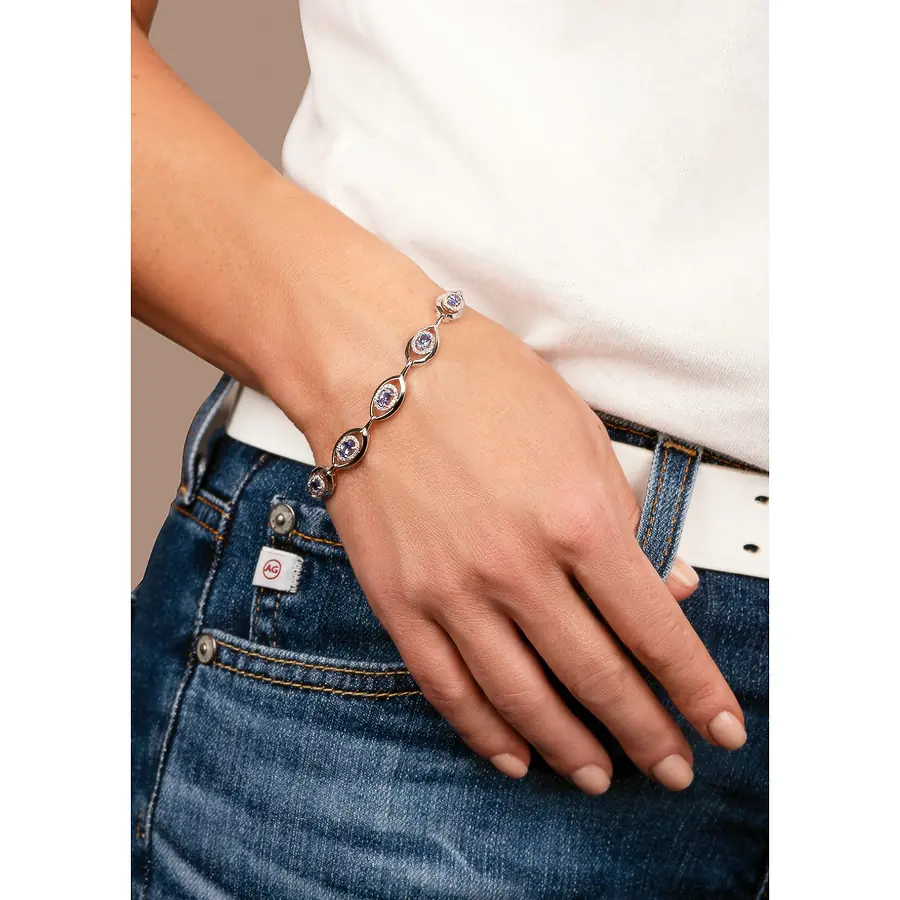

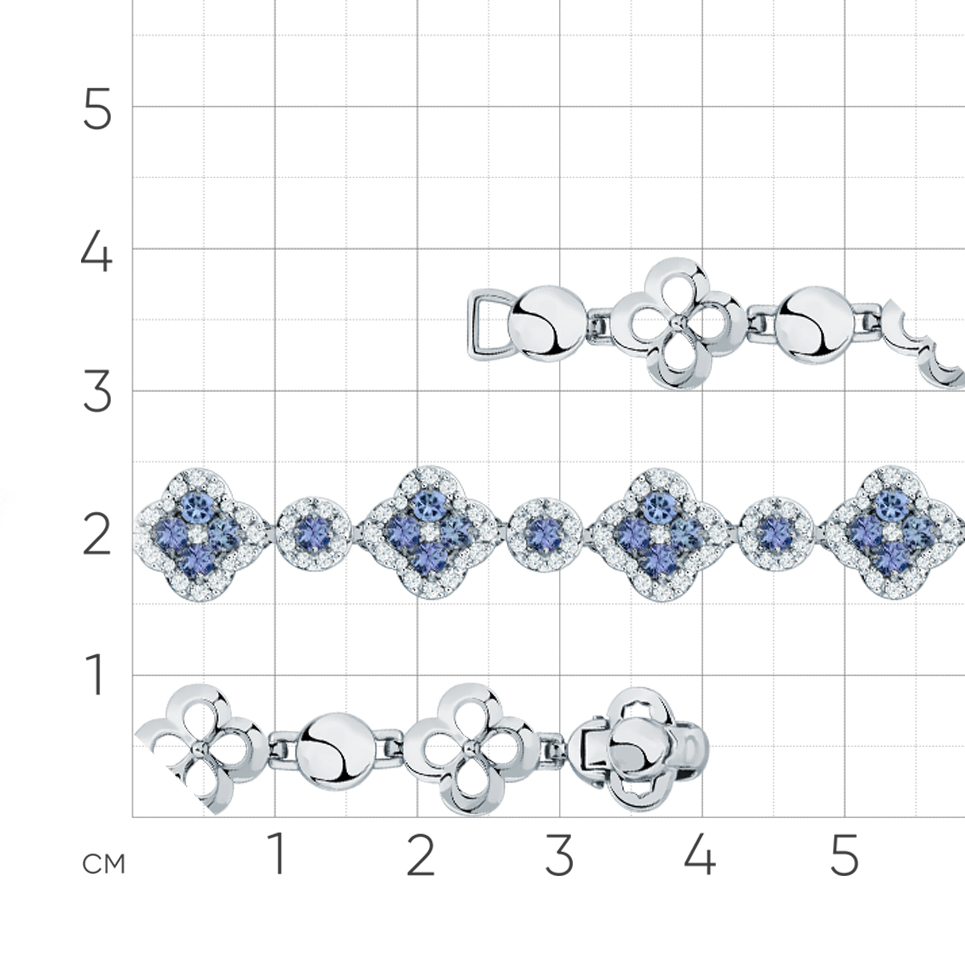


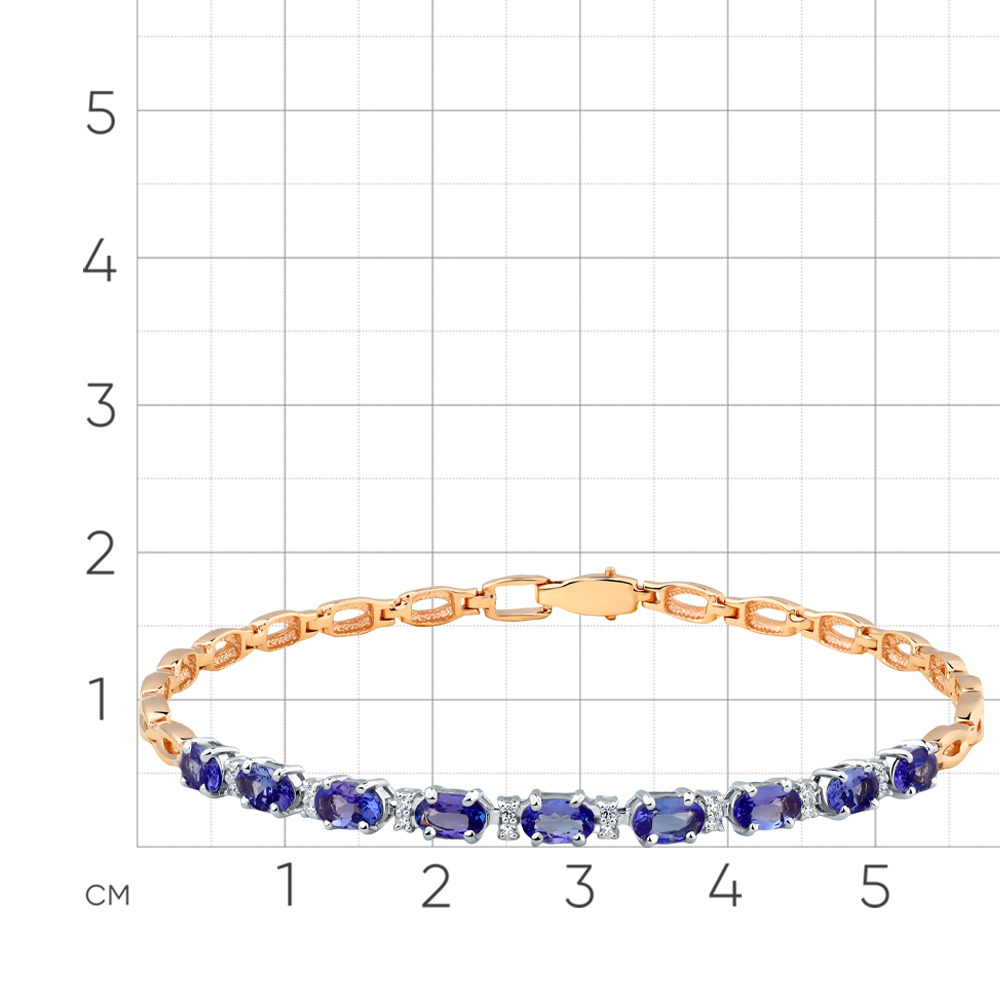

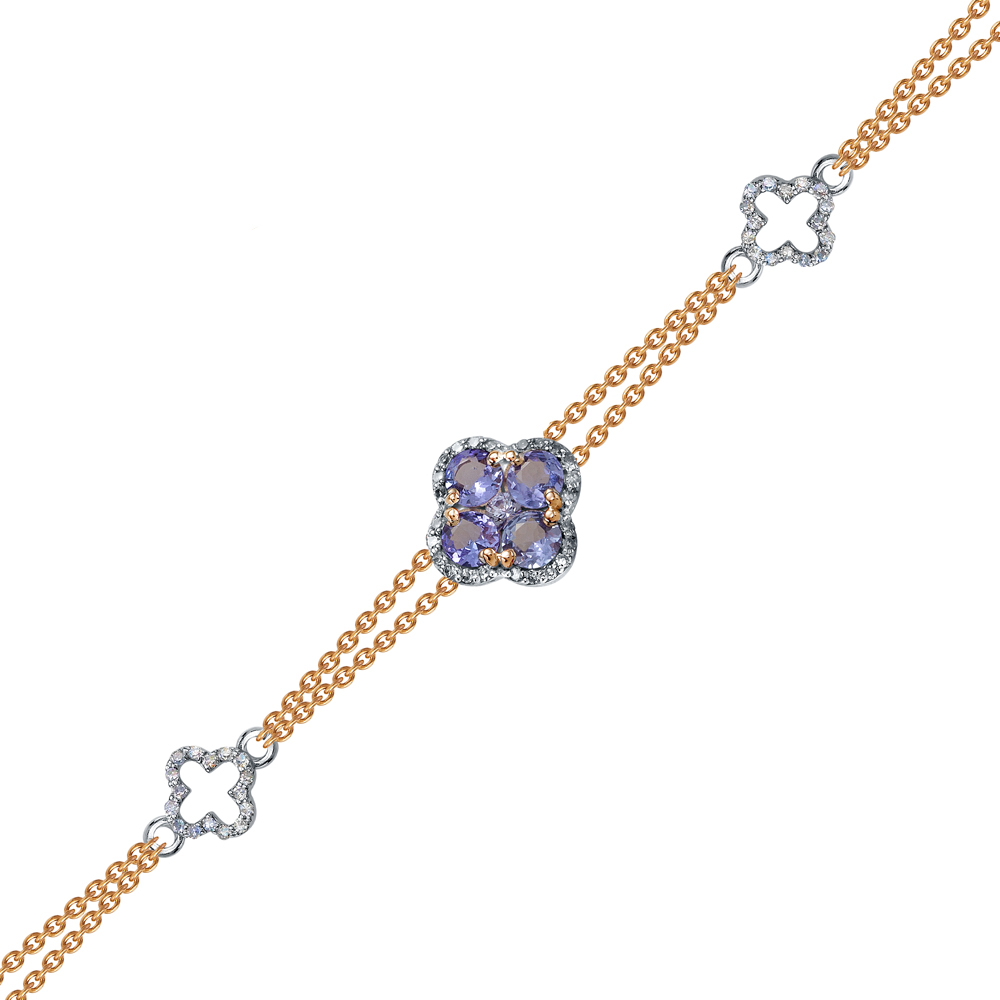
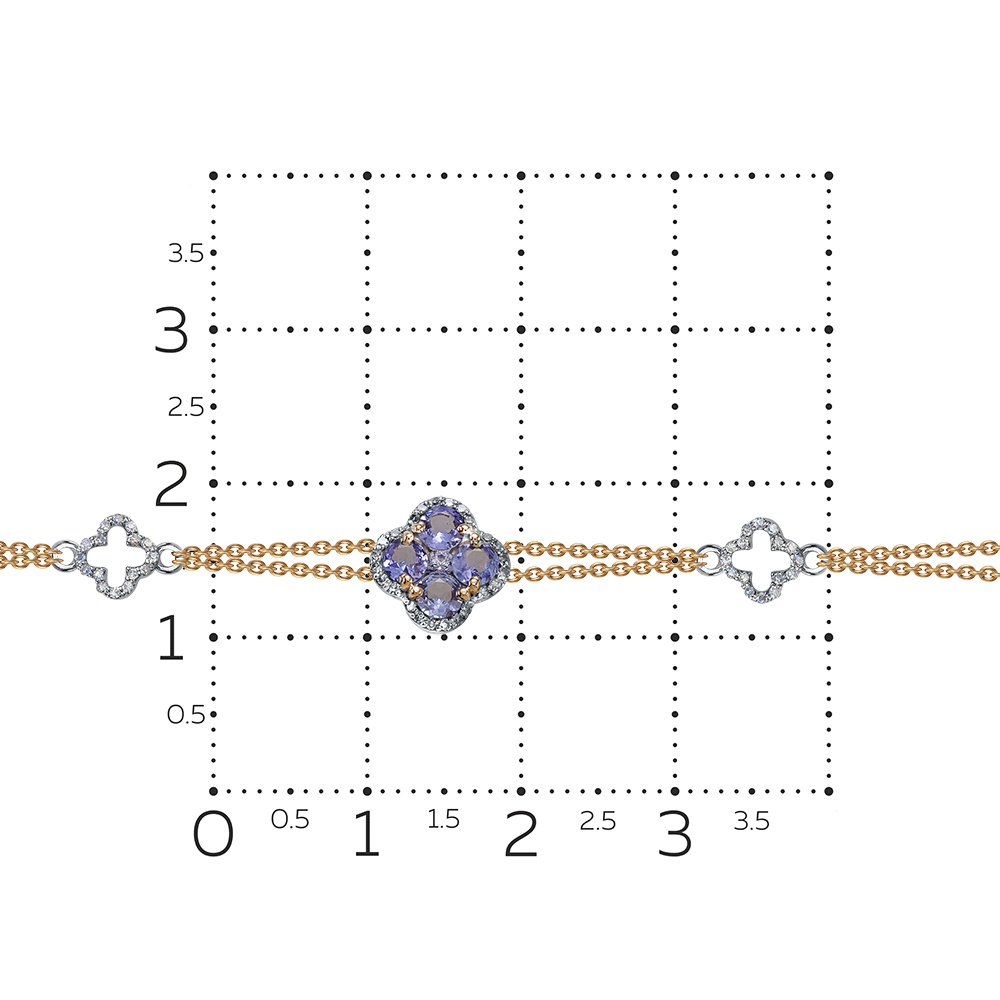


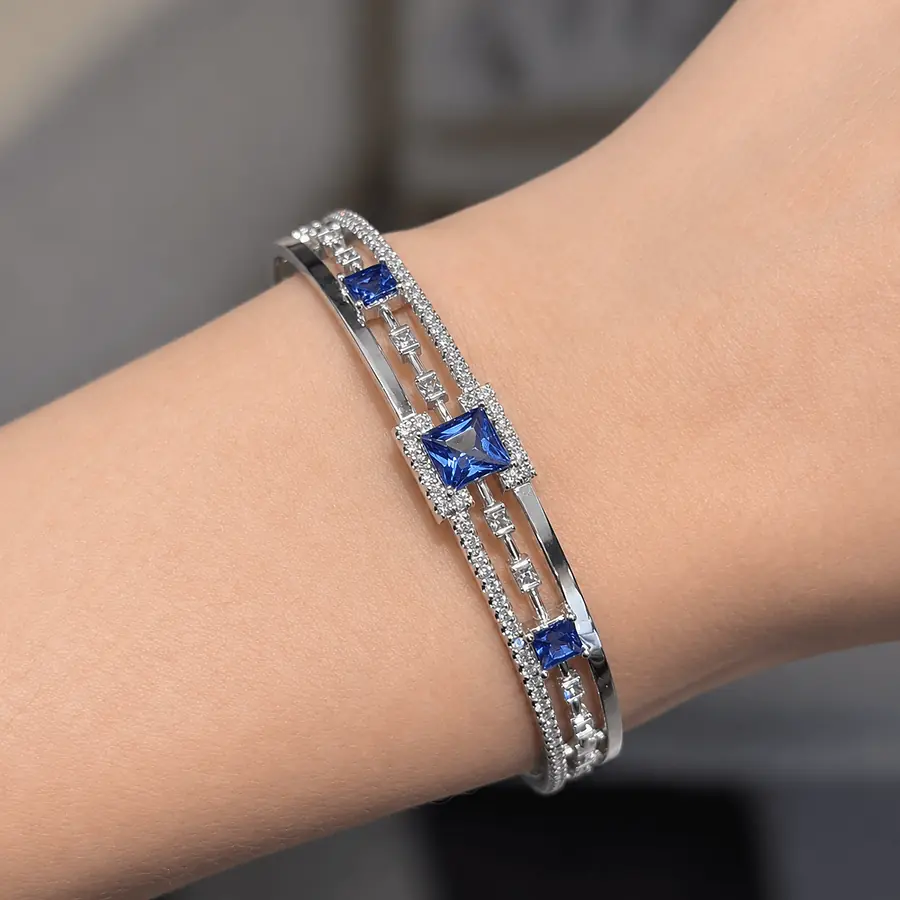
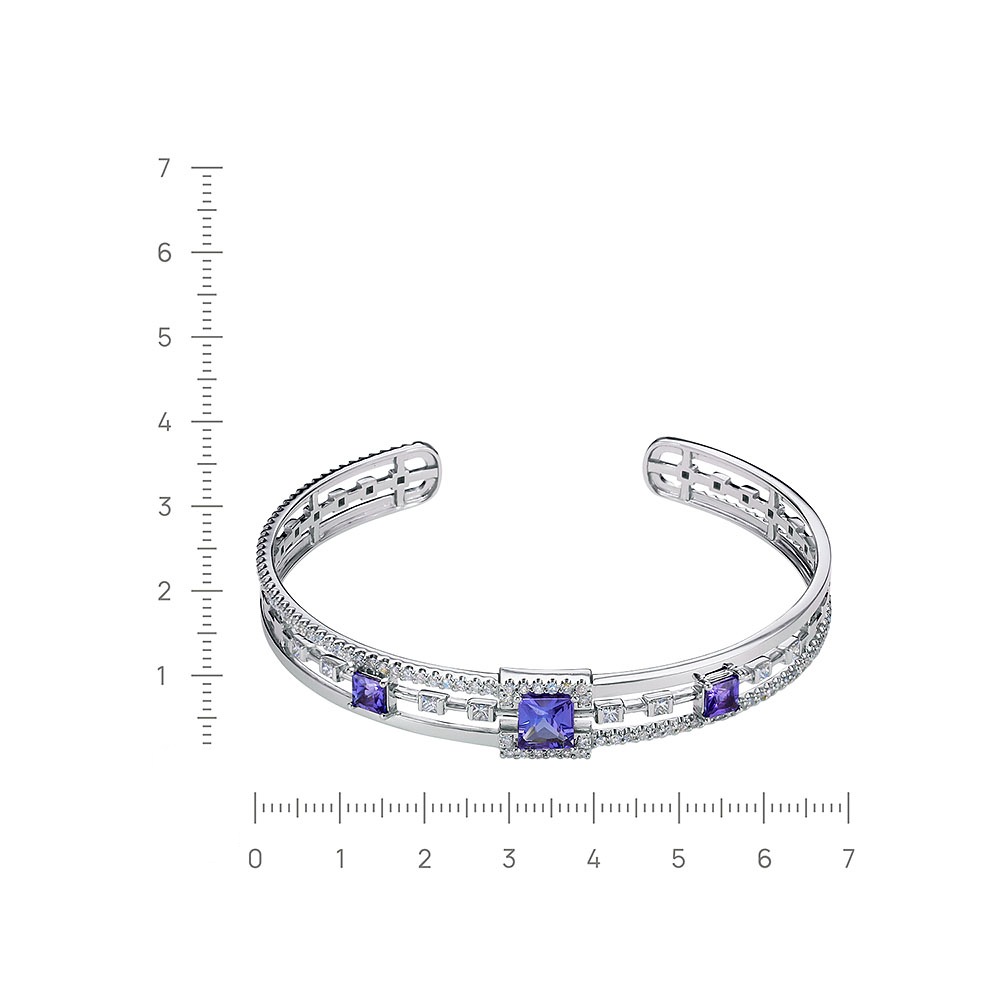


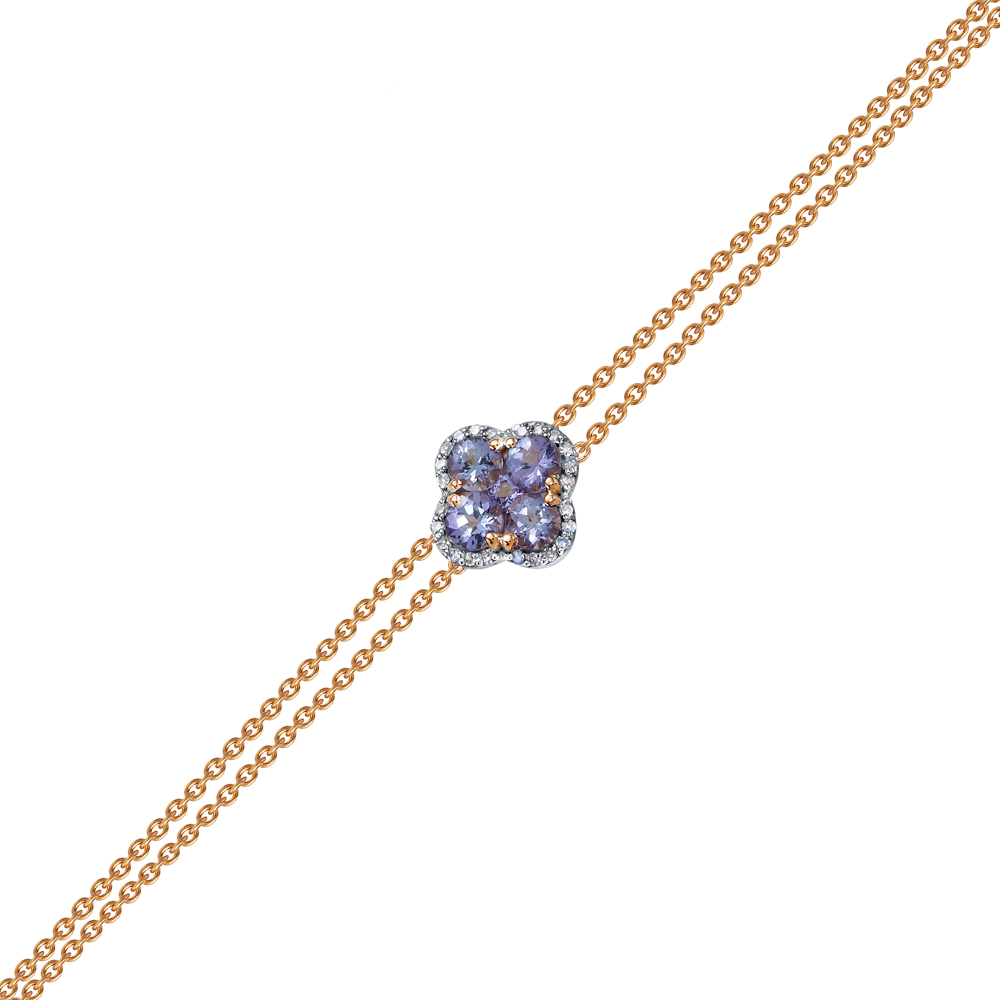
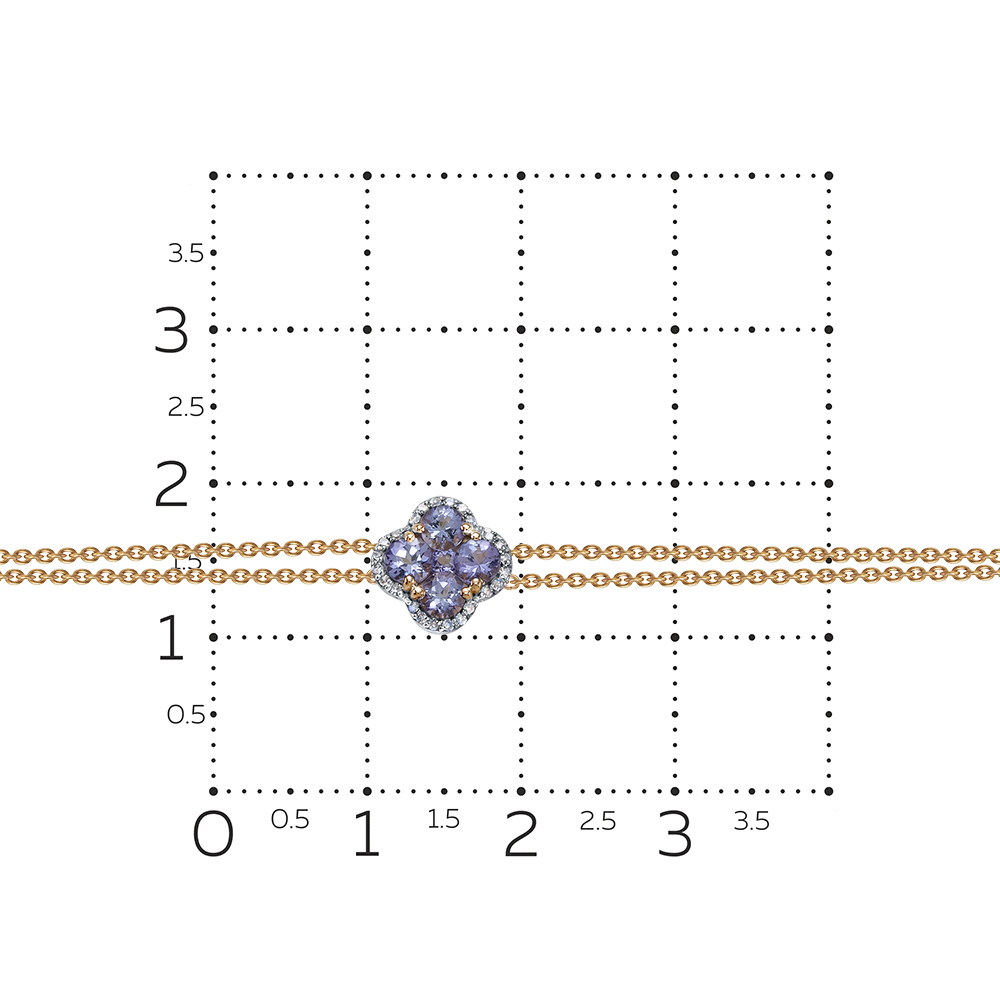

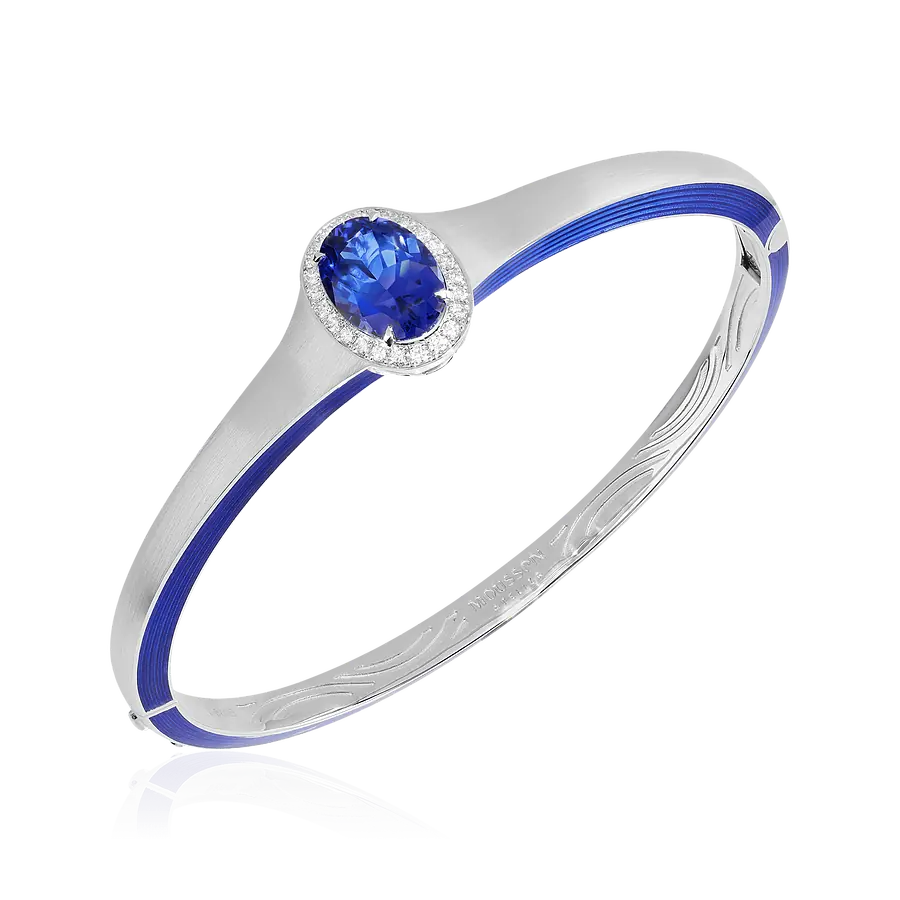

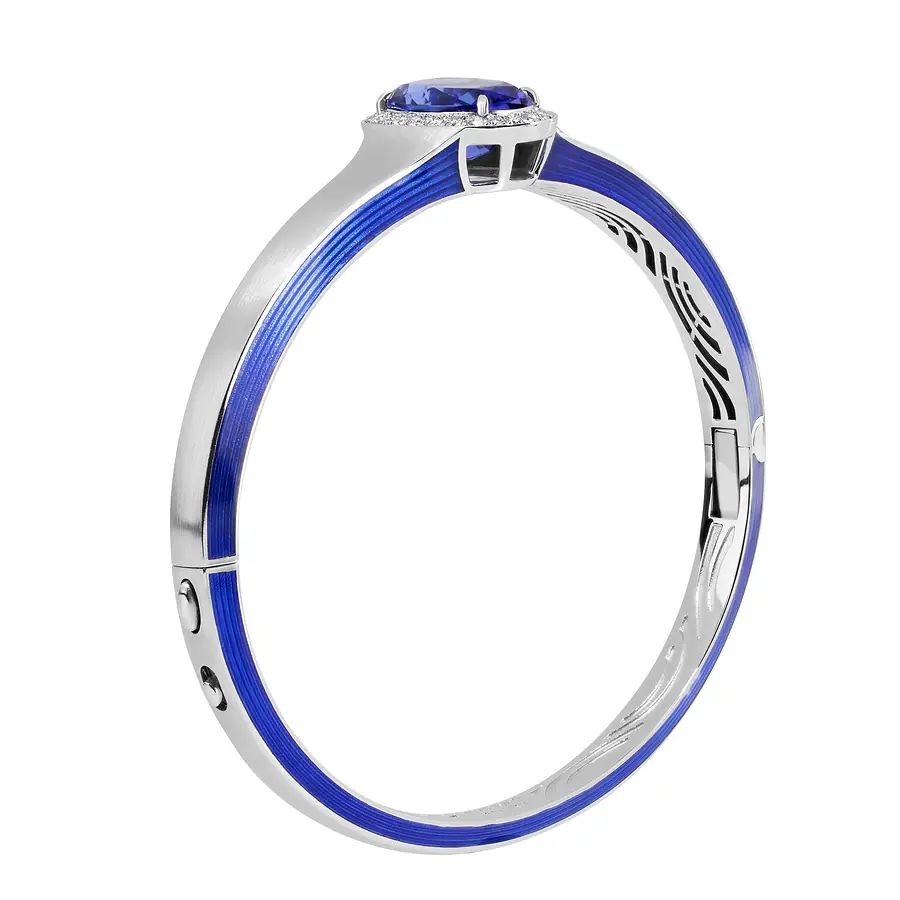
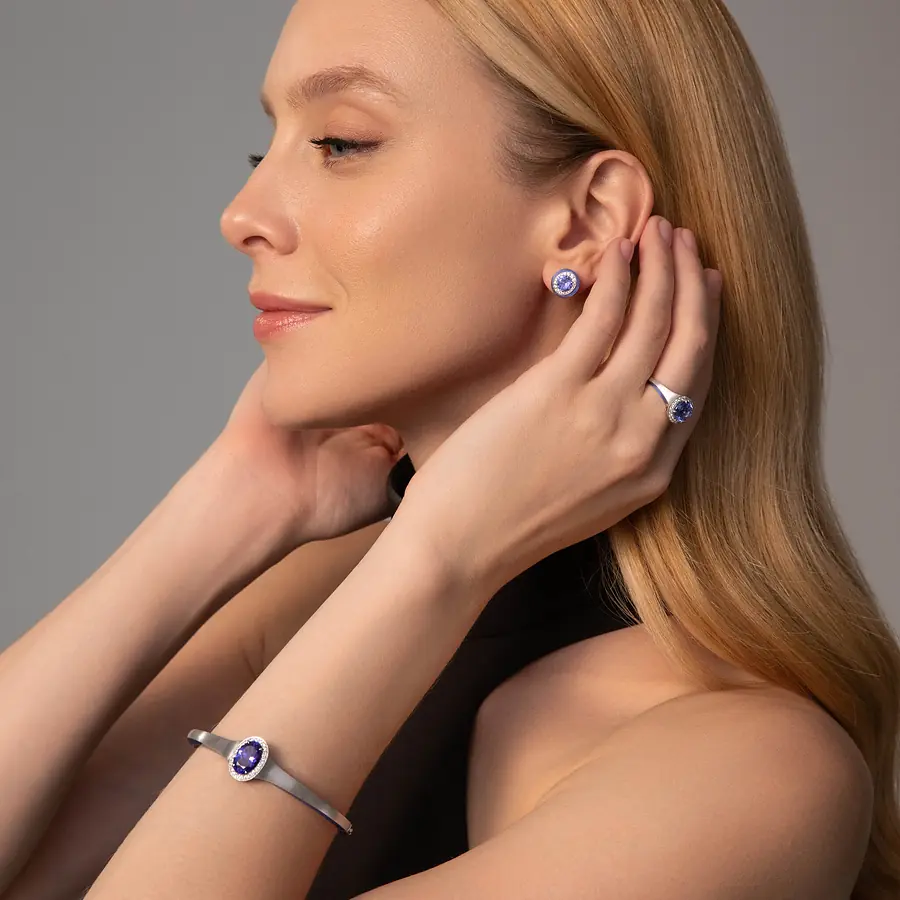
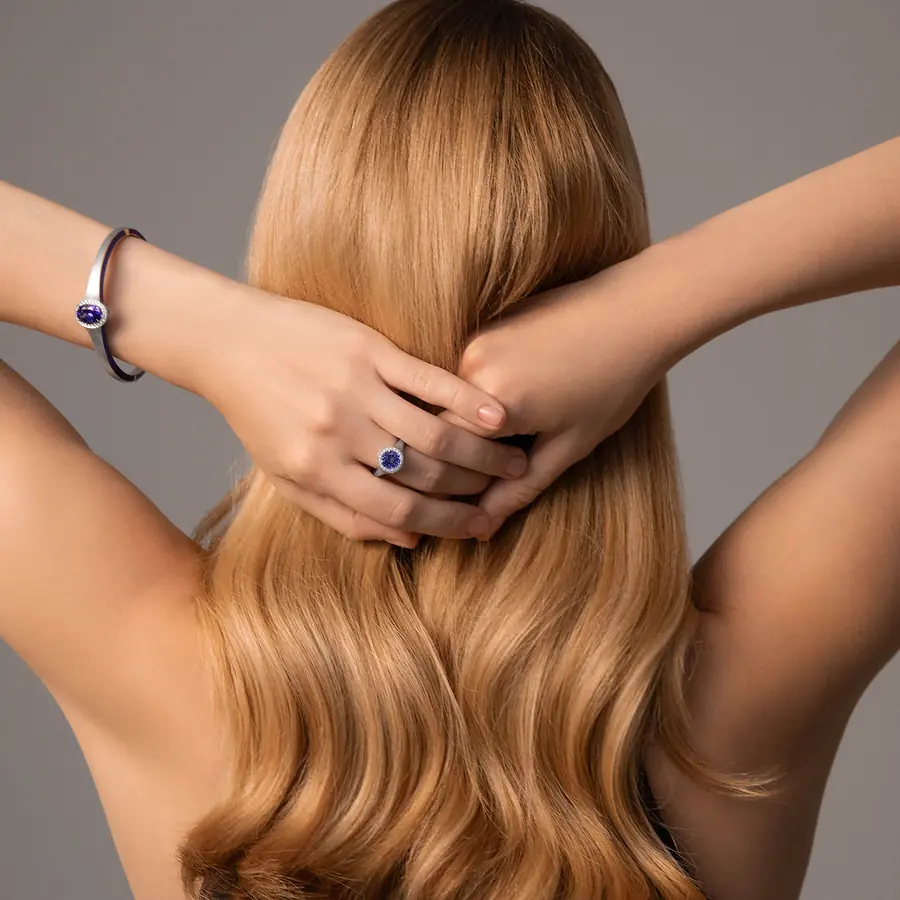
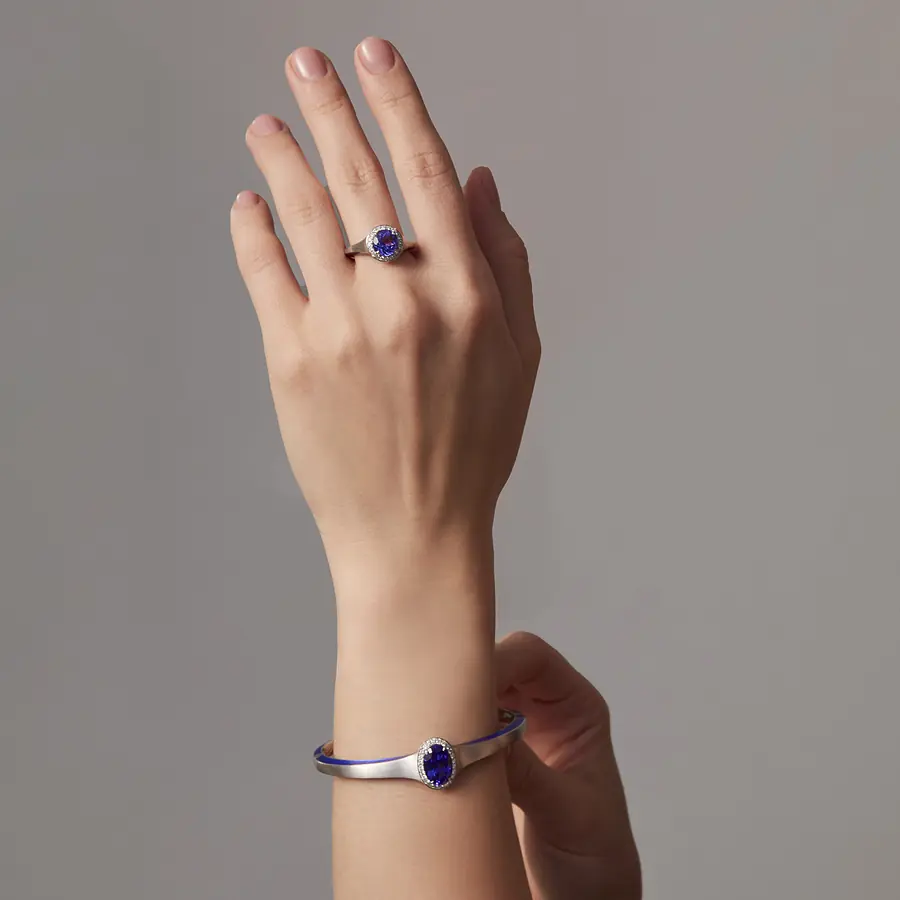


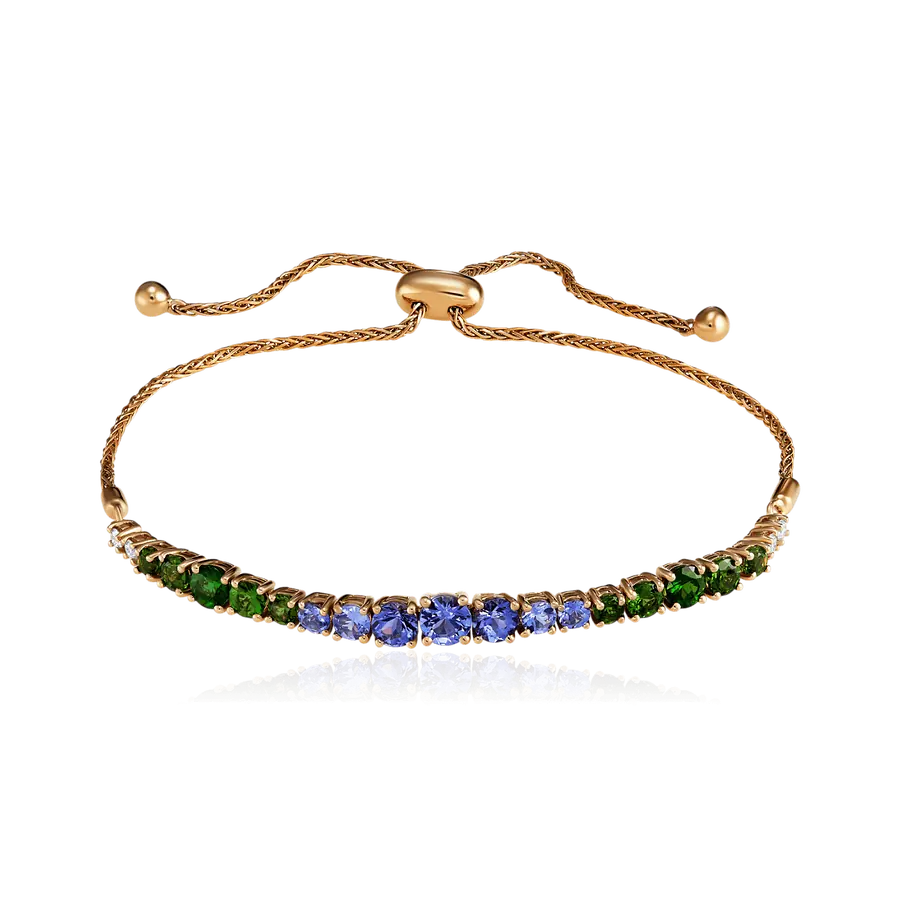
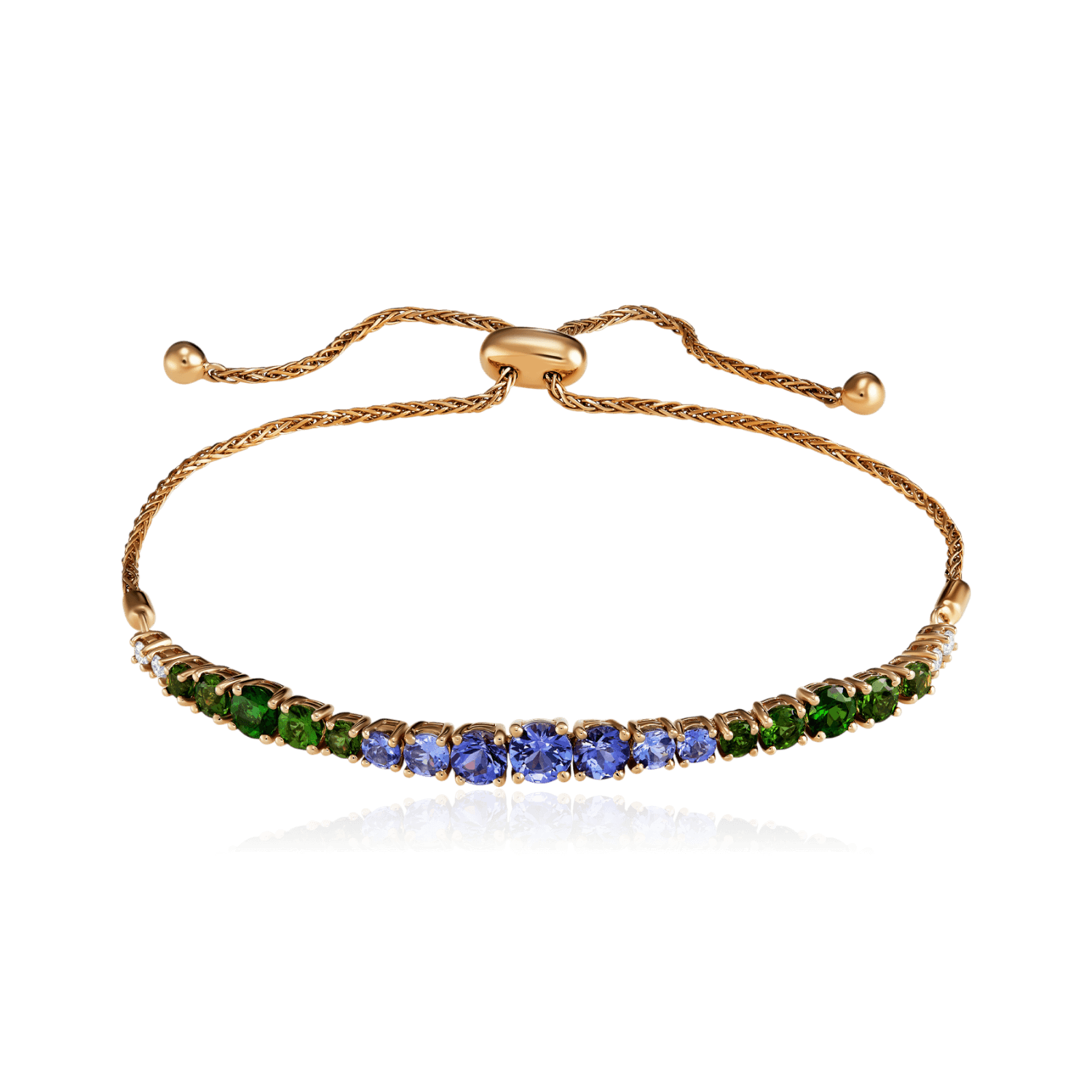

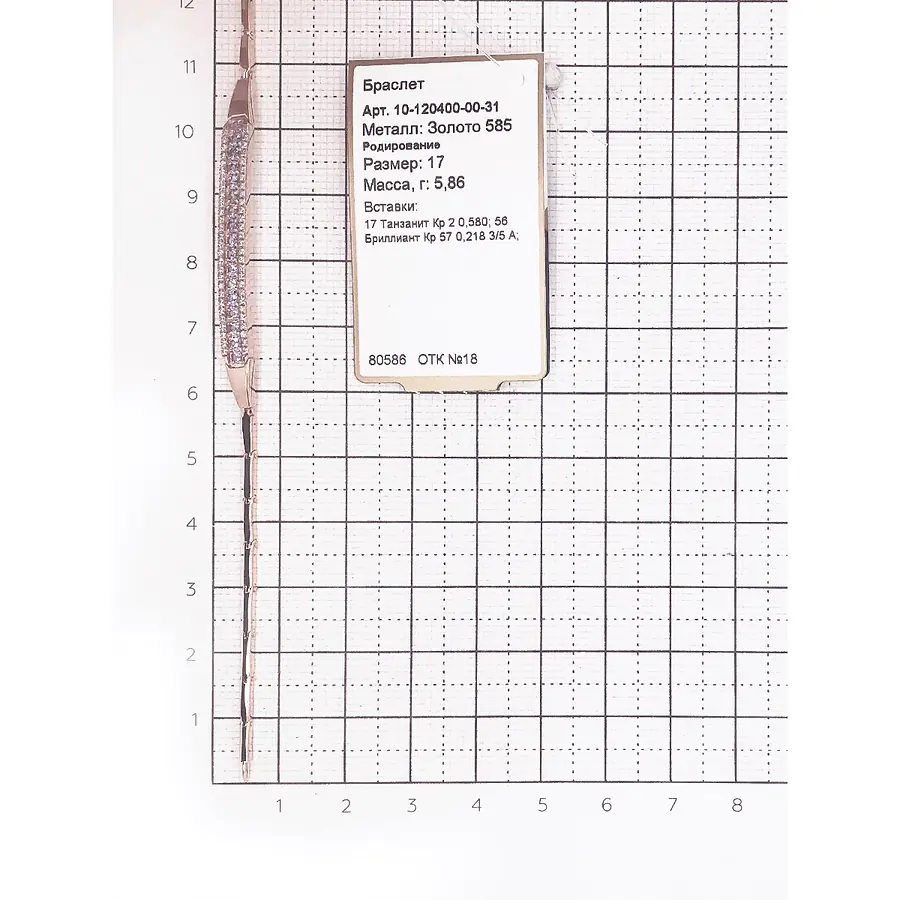
Tanzanite bracelets in the catalog start at 69,900 ₽, with 24 models in the selection. Of all jewelry formats, a tanzanite bracelet is the most demanding: tanzanite is softer than quartz and can split from a sharp point impact, while the wrist spends all day in contact with desks, door handles and keyboards. That is why what matters here is not the size of the stone but how it is set.
A tanzanite bracelet costs from ₽69,900, and the median of the visible selection is ₽163,950. This is the most expensive entry point among the tanzanite sections of the catalog; in rings and earrings the minimum is noticeably lower.
The reason is the amount of stone. A tanzanite bracelet usually has several stones rather than one, and each adds to the price. Also, 92% of tanzanite bracelets come with diamond accents.
The second multiplier is the depth of the blue. A bracelet with a deep cornflower-blue tanzanite costs several times more than one with pale lilac stones of the same weight, and with several stones the difference is more visible than with one.
The hardness of tanzanite is 6–7 on the Mohs scale, below quartz, which means ordinary household dust, where quartz is found, scratches the stone. In addition, it has perfect cleavage in one direction: at a point impact from a certain angle, the stone splits rather than chipping at the edge.
This applies to a ring too, but there the stone sits higher and is partly covered by the fingers; a tanzanite bracelet has no such protection. In earrings and a pendant, there is almost no contact with surfaces at all. A tanzanite bracelet bumps against the table, door handles, steering wheel and the edge of a bag dozens of times a day — and it does so on exactly the side where the stone sits.
Hence a practical conclusion: in a tanzanite bracelet, the construction matters more than the stone. A well-secured stone of average quality will last longer than a large, clean stone in an open prong setting.
The main parameters that are not visible in a photo: the type of setting, the type of lock, the fit on the hand and the working side.
| Parameter | Preferred option | |---|---| | Setting | closed or semi-closed – covers the girdle, the most vulnerable part of the stone | | Замок | a box clasp with a safety figure-eight is more secure than a simple lobster clasp | | Fit | dense: a loose bracelet knocks against surfaces twice as often | | Рука | wear is higher on the working hand, which is worth considering when choosing |
An open prong setting is more beautiful: it lets in more light and the stone plays brighter. But for a tanzanite bracelet it is a poor choice: the girdle stays exposed, and the first knock against the edge of a table lands right on it.
For a tanzanite bracelet to fit right, measure the wrist with a tape and add 1.5–2 cm for ease. The standard length for a woman’s wrist is 17–19 cm.
An allowance of less than a centimeter gives a tight fit: a tanzanite bracelet chafes and does not turn. An allowance of more than three centimeters makes the piece hang loose, and it starts knocking against surfaces with every movement, which is the worst scenario for a soft stone.
If you are unsure between sizes, choose the smaller one: it is easier to lengthen a chain by a link than to shorten a finished piece with set stones.
The section has 13 tanzanite bracelets in white gold, 6 in red, and 4 in yellow. White metal is chosen more often: a cool setting intensifies the blue of the stone, while a warm one mutes it and draws out the violet undertone.
The 585 standard means 58.5% pure gold. White gold needs rhodium plating: the coating wears away over time and the piece turns yellowish. This is a property of the alloy, not a defect. Here the process is faster than on any other piece of jewelry, because of constant friction against sleeves and surfaces.
Red and yellow gold need no rhodium plating at all, and for a piece worn every day that means less maintenance.
To avoid damaging the stone, a tanzanite bracelet is cleaned with a soft cloth and warm water with a drop of soap. Ultrasonic and steam cleaning are not suitable: vibration opens microcracks along the cleavage plane, and steam adds thermal shock.
Take jewelry off before cleaning, sports, working at a keyboard, and sleeping. This is not overcaution: most damage to soft stones happens in everyday situations rather than from impacts.
Store a tanzanite bracelet apart from pieces with diamonds, sapphires and rubies: they are harder and leave scratches on accidental contact in the jewelry box.
Tanzanite bracelets can be viewed at the boutique at Nikolskaya, 10, on the second floor of the Nikolskaya Plaza mall. Trying the piece on is a must: the fit determines both comfort and the safety of the stone, and a description of the length can’t convey that.
Delivery within Moscow is free, 1-3 days, with a try-on and payment after it. Within Russia we ship via CDEK and Spetssvyaz, 1-9 days, free on orders over 50,000 ₽, and parcels are insured. You can try a piece on before buying. Stones and metal are covered by the store's lifetime warranty, and every piece is registered with the Russian Assay Chamber and carries a hallmark and a maker's mark.
When buying remotely, ask the manager to film the piece by a window and to clarify the type of setting – in a studio photograph it often can’t be read.
No. The entire section is made of 14K gold (585). Silver is softer and holds the setting less well for a stone with perfect cleavage.
You can, if the setting is closed and the stone sits snugly. Take it off before cleaning, sports and keyboard work: it is everyday contact, not impact, that causes most damage.
Wrist circumference plus 1.5–2 cm. The standard is 17–19 cm. When in doubt, take the smaller size: adding a link is easier than shortening a piece with set stones.
No. Ultrasound and steam are harmful to tanzanite: vibration opens microcracks along the cleavage plane. A soft cloth, warm water, and a drop of soap are the right choice.
There are usually several stones rather than one, and each adds to the price. In addition, 92% of the pieces in the section come with diamond accents.
White emphasizes the blue of the stone, while red and yellow mute it. At the same time, white requires periodic rhodium plating, and here the coating wears away faster than on other jewelry.
We will contact you shortly.
Unfortunately, we cannot deliver to this locality. Please choose another city nearest to you.
How to get them. 3% of every order on the site. Sign in with your phone number to receive bonuses.
How to spend them. Sign in, add jewelry to your cart and specify at checkout how much to redeem. Bonuses can pay up to 10% of the price.
Confirm that you are not a robot
Unfortunately, this item is currently out of stock. We can make the jewelry individually to your requirements. Our consultant will contact you
Our consultant will contact you shortly
Refresh the page and send the message again
Specify the size of the jewelry and try again
Enter your number and our manager will contact you about the price calculation
Refresh the page and submit the order again