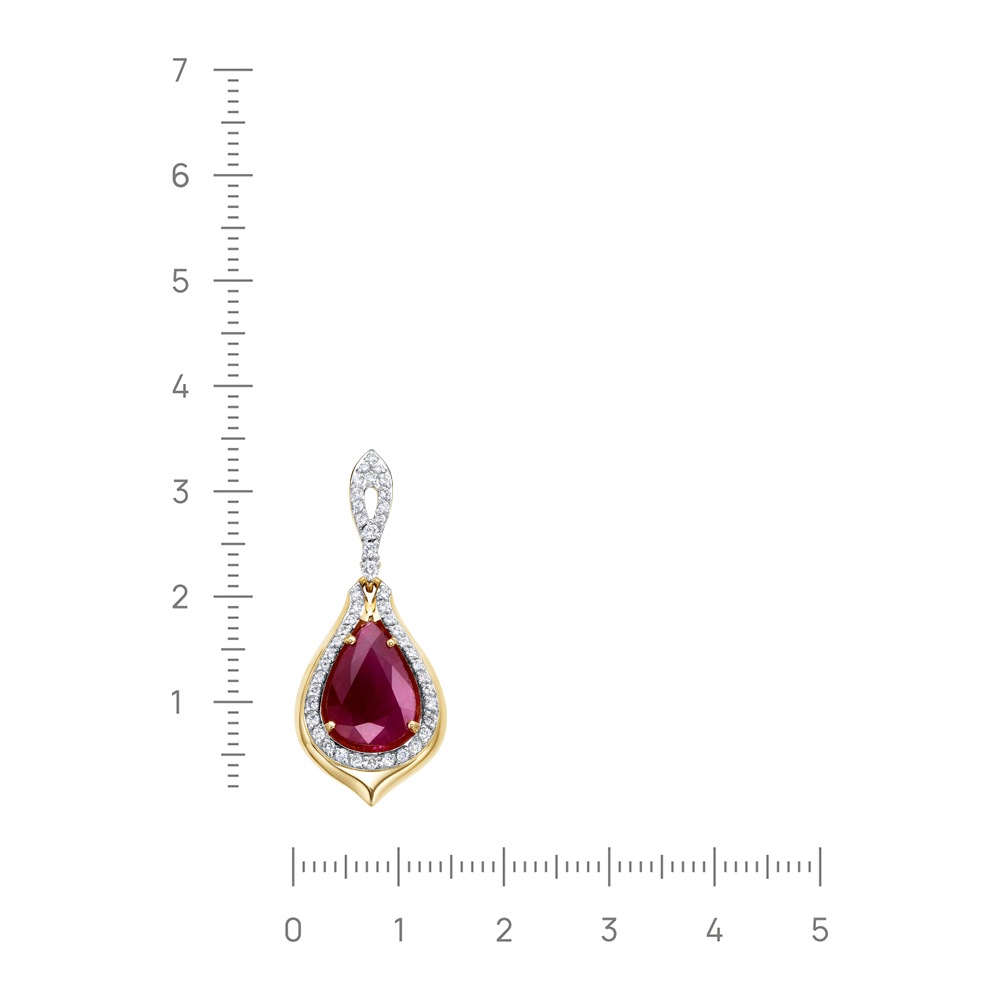
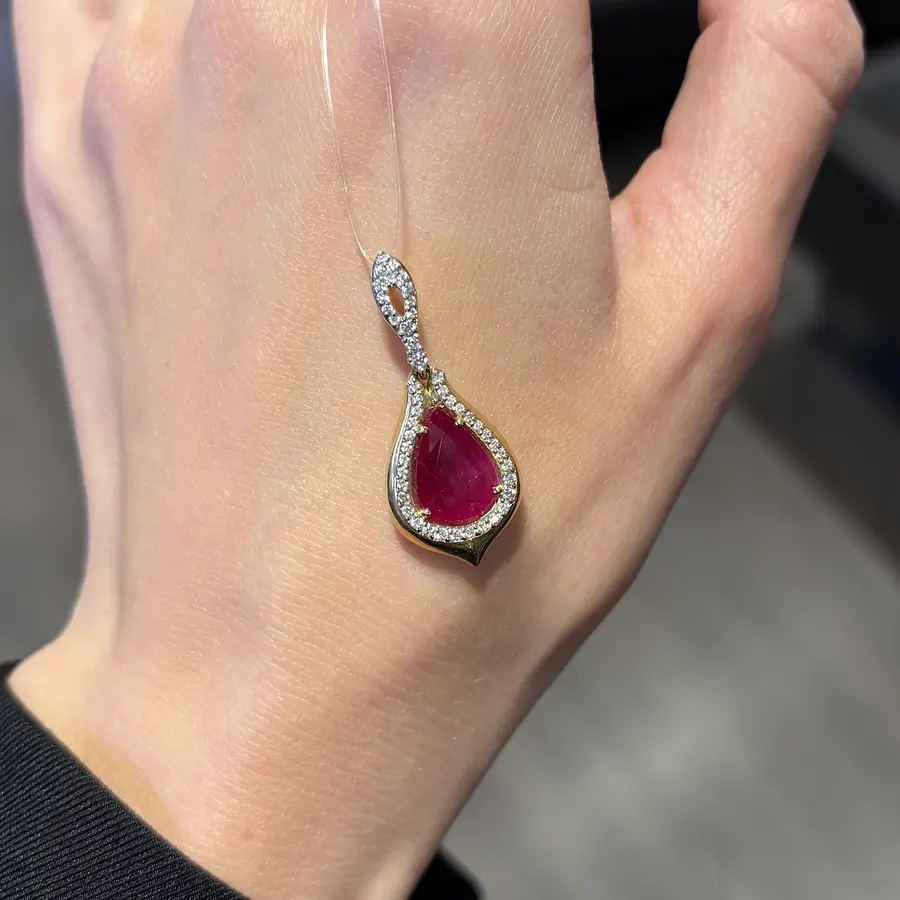
693 300 ₽2 311 000 ₽
We use cookies to improve the site and give you more options. By continuing to use the site, you agree to cookie usage terms.We use cookies. Learn more


By popularity
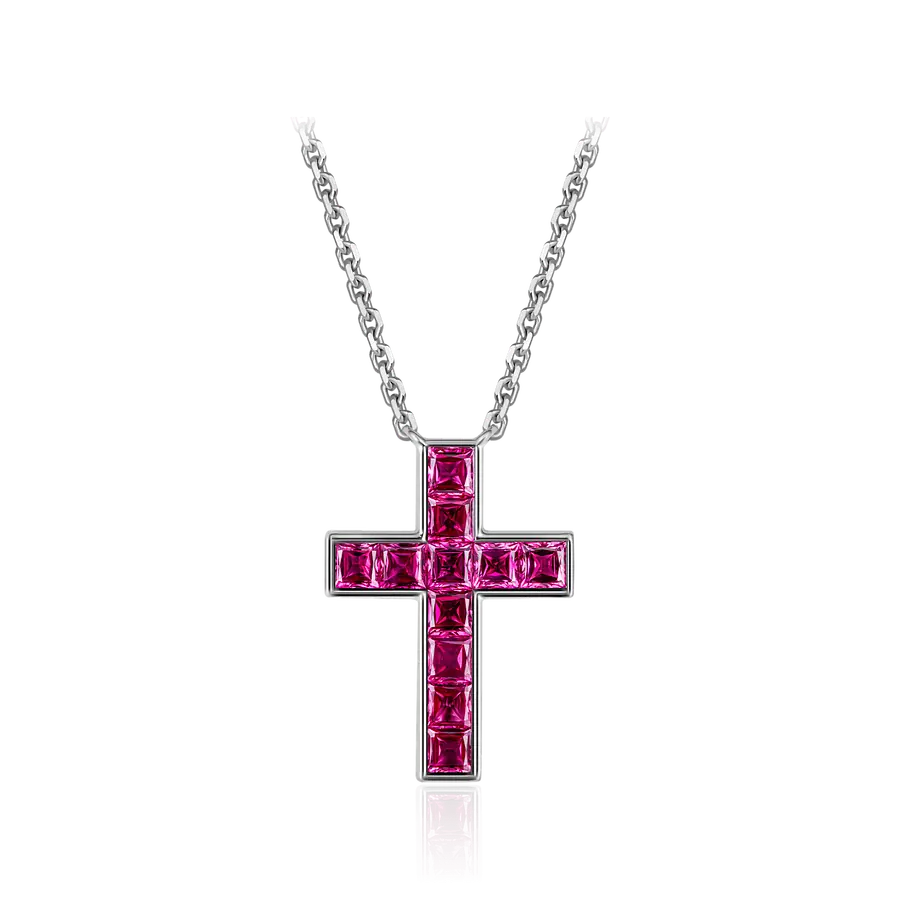
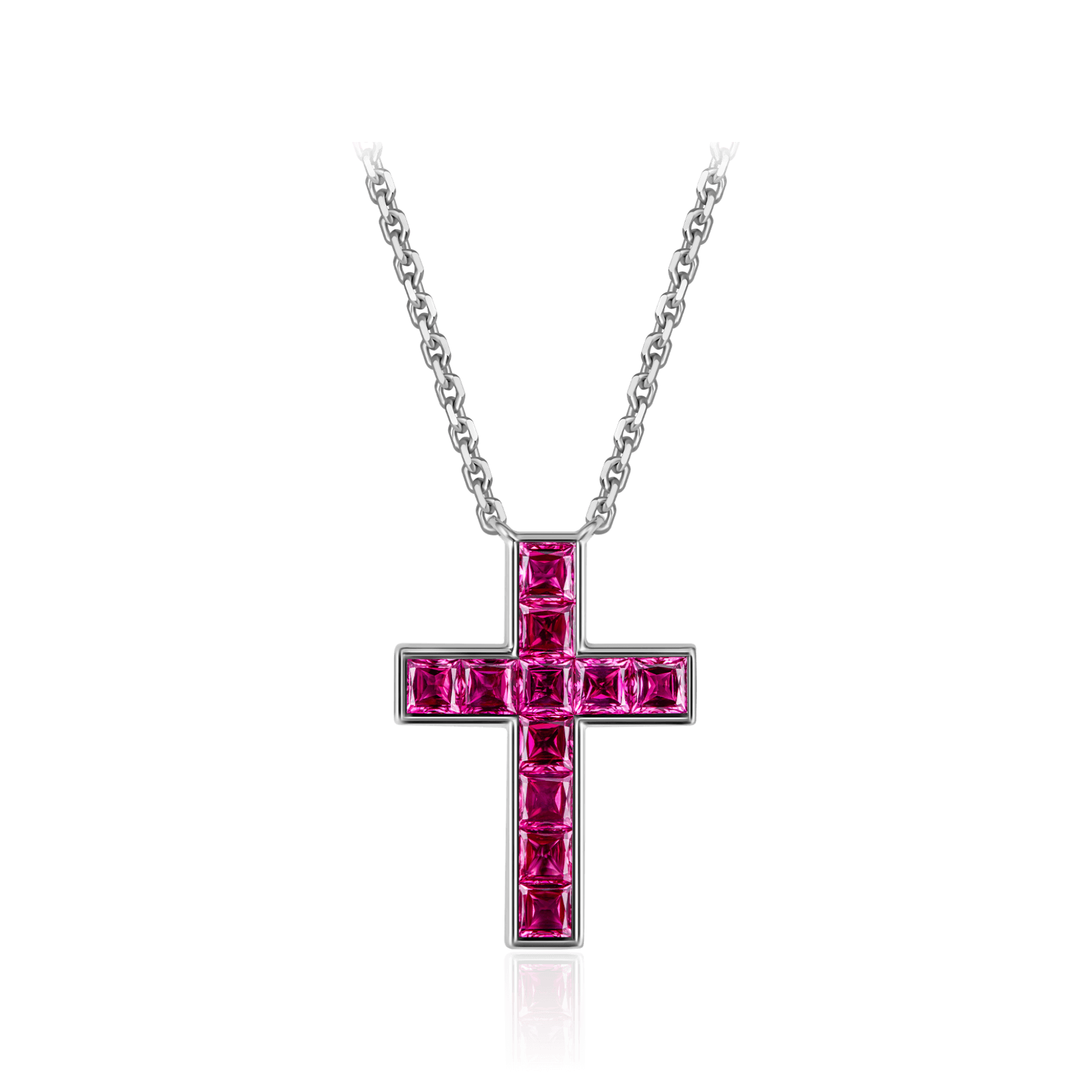
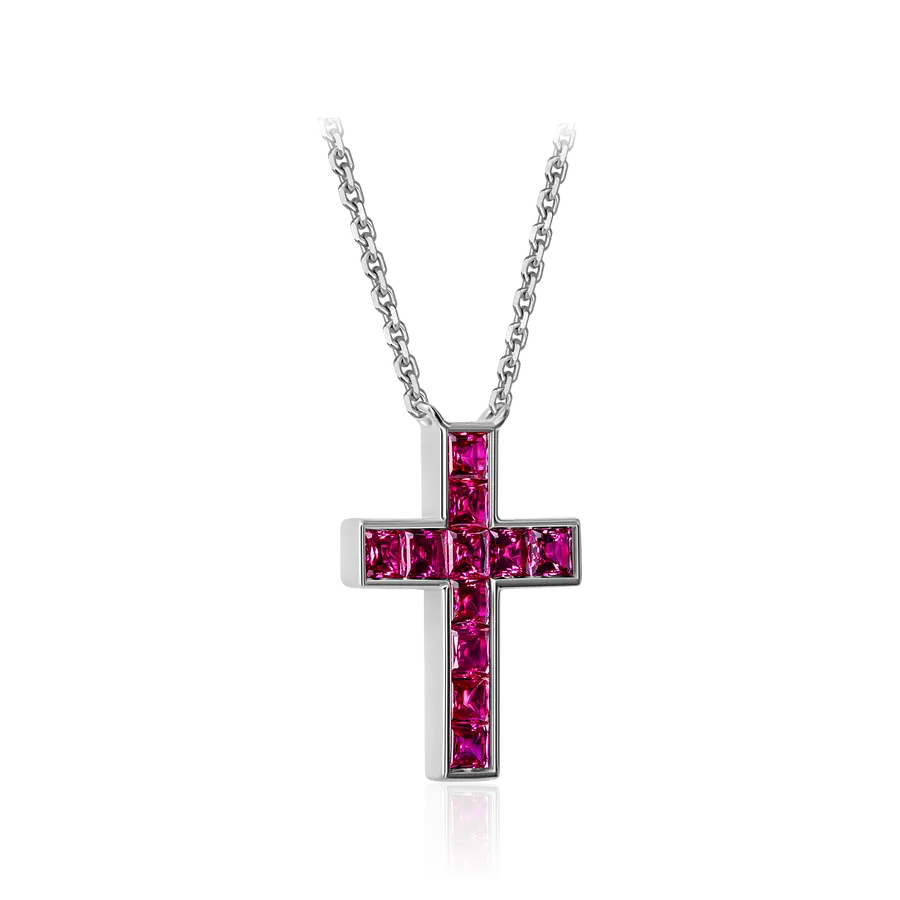
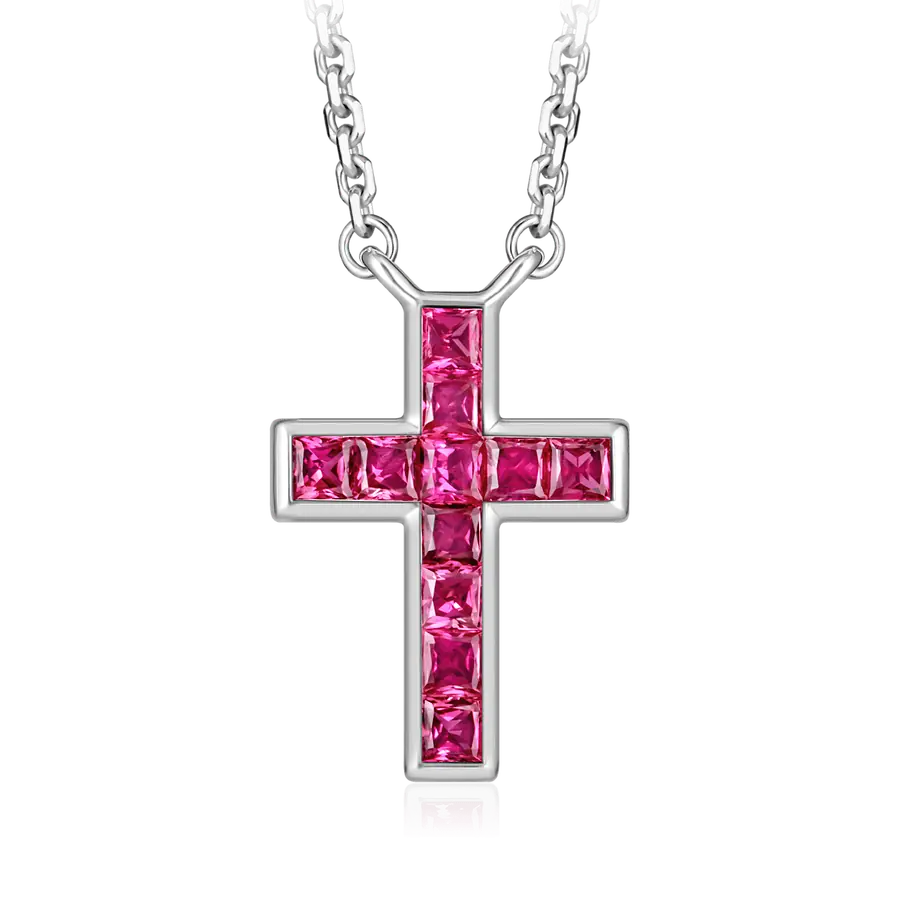
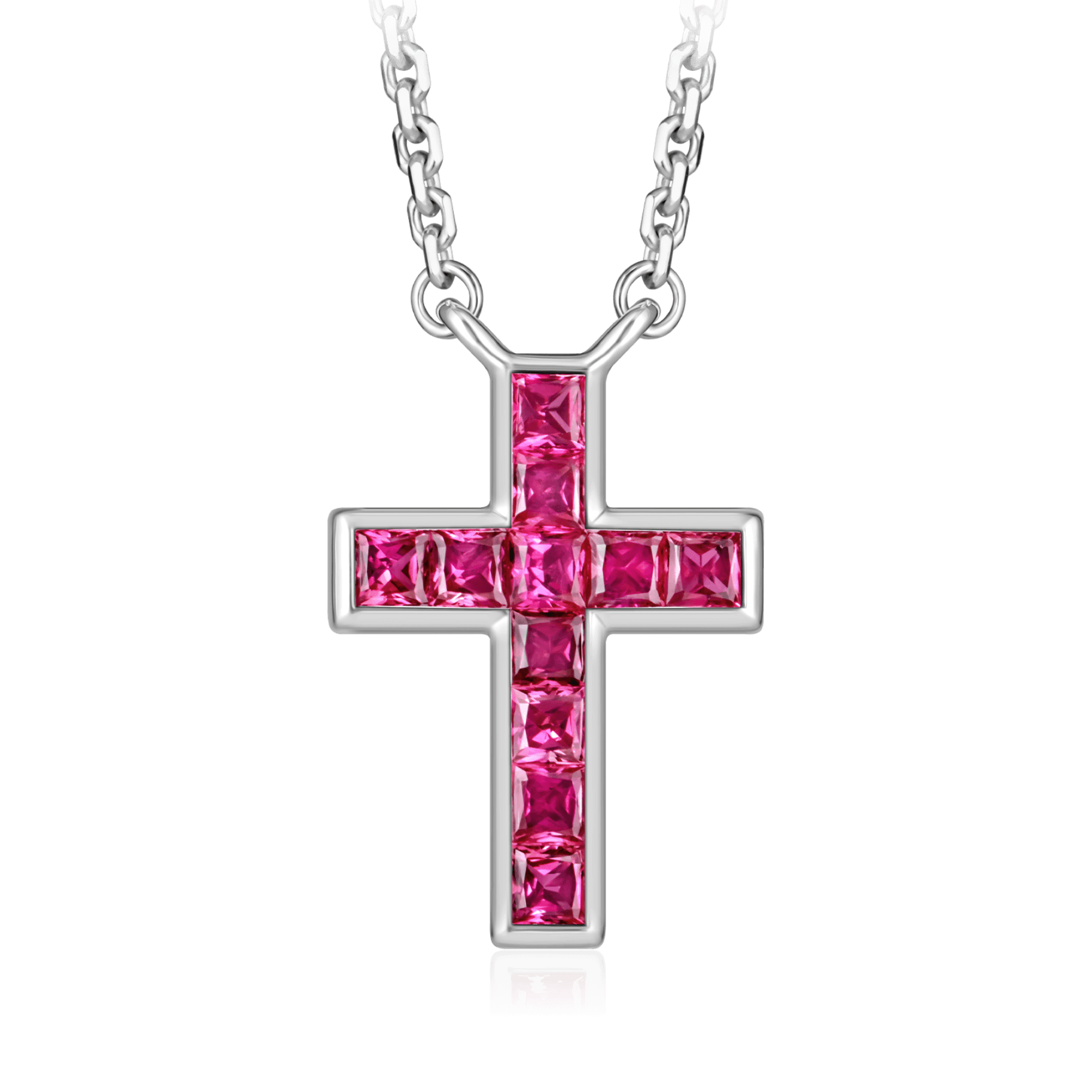
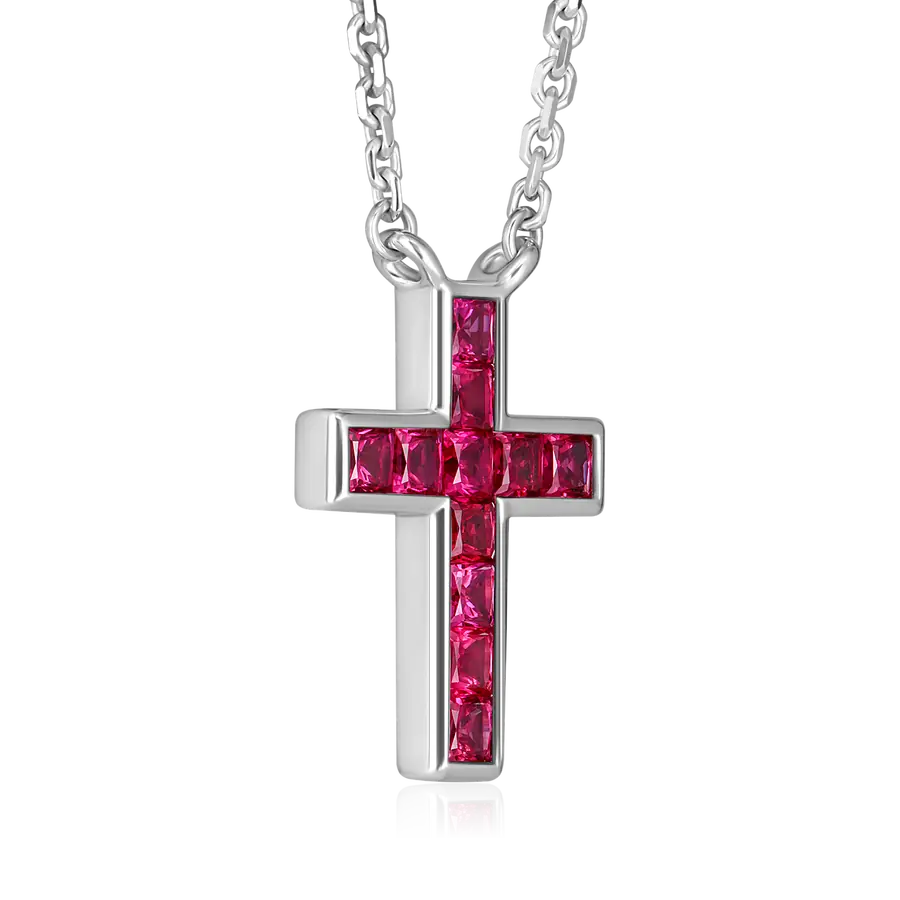
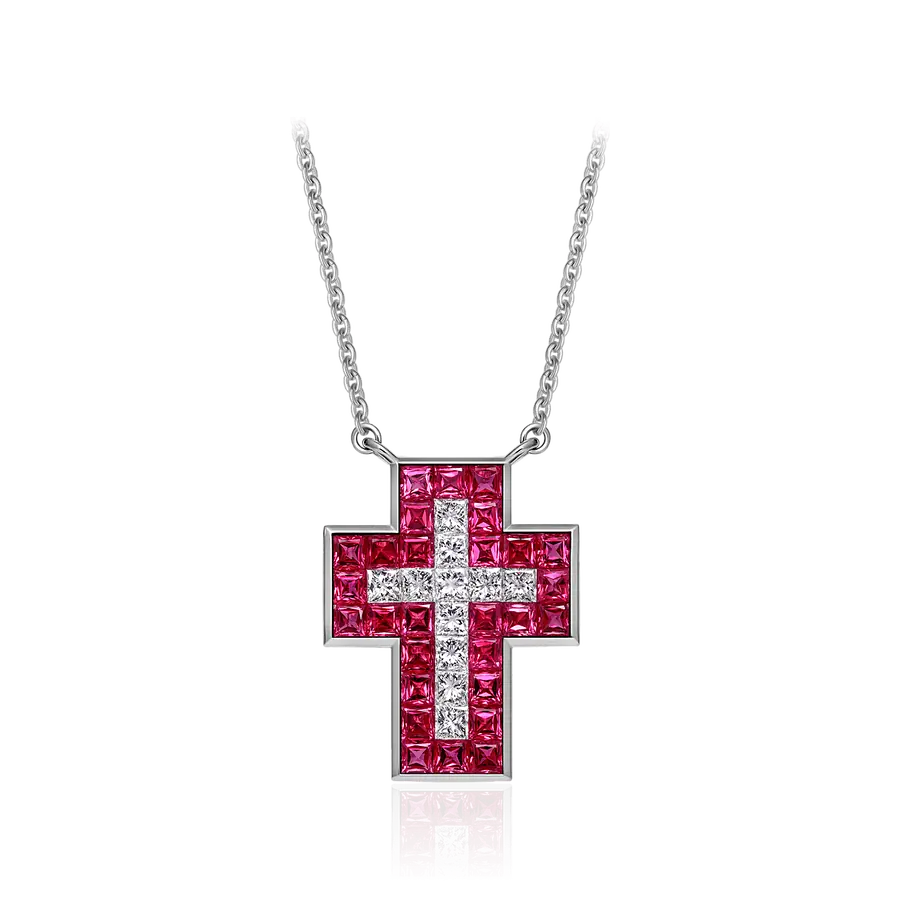
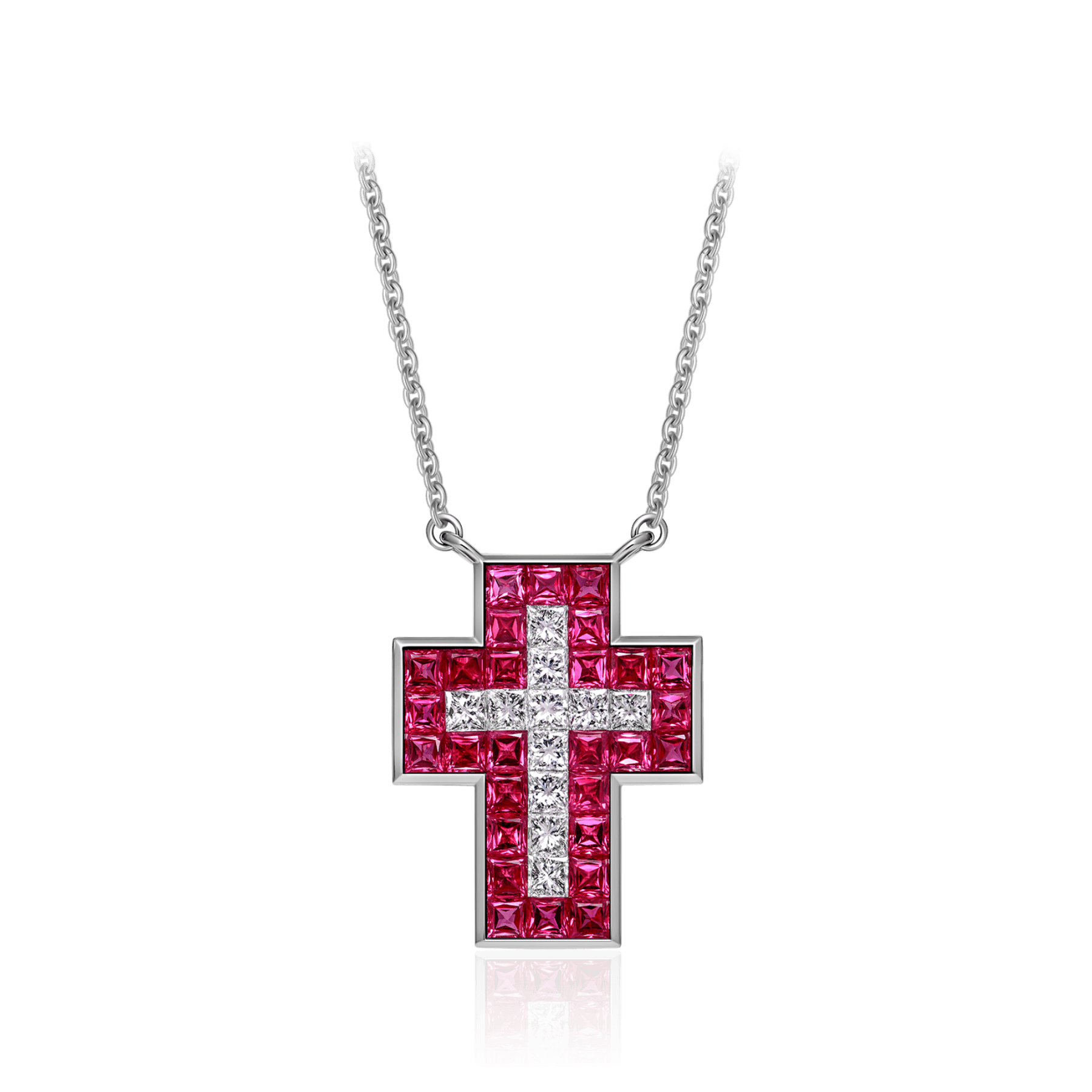
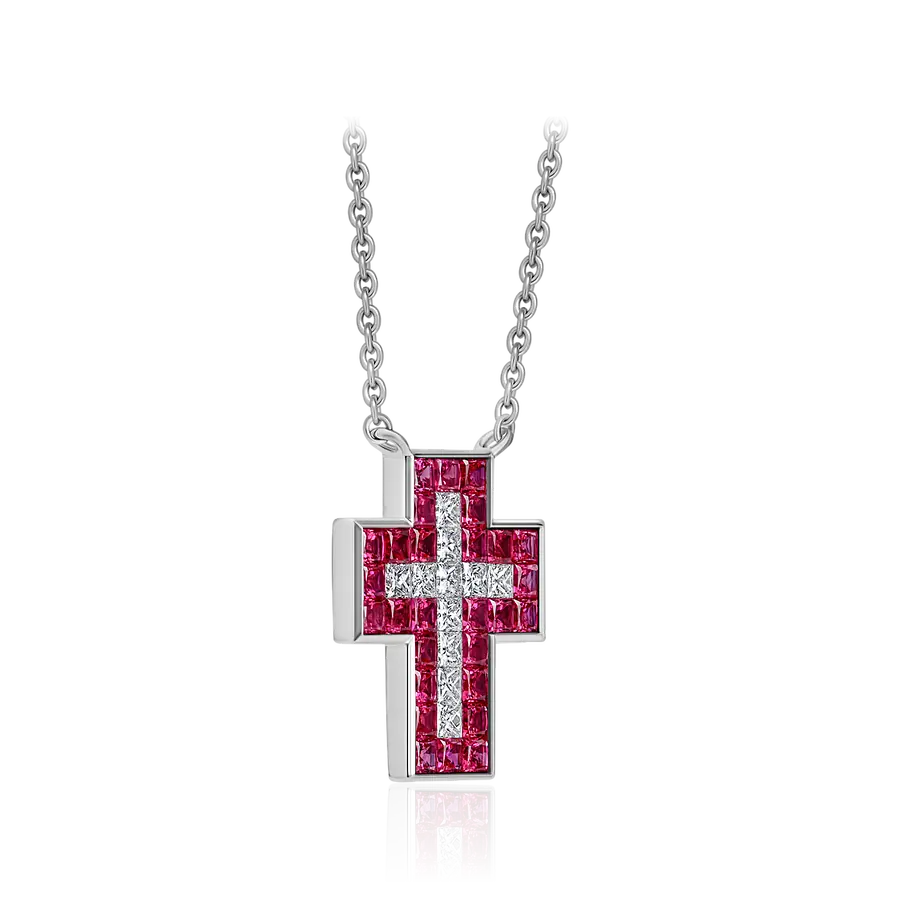

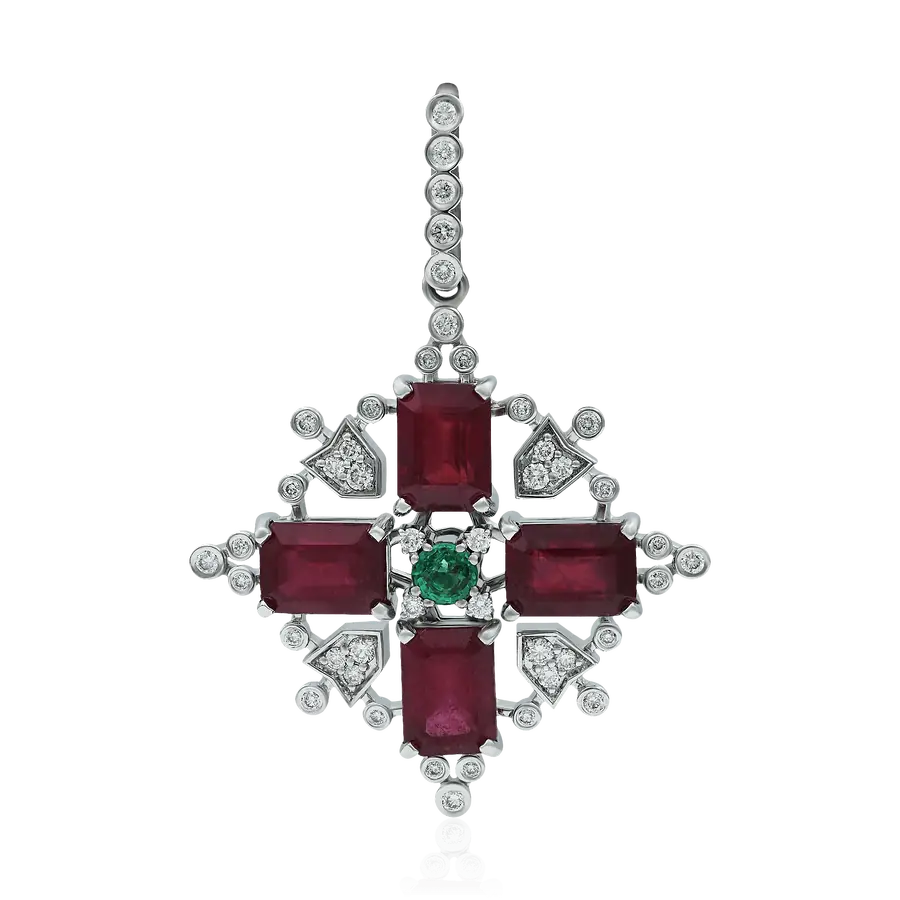

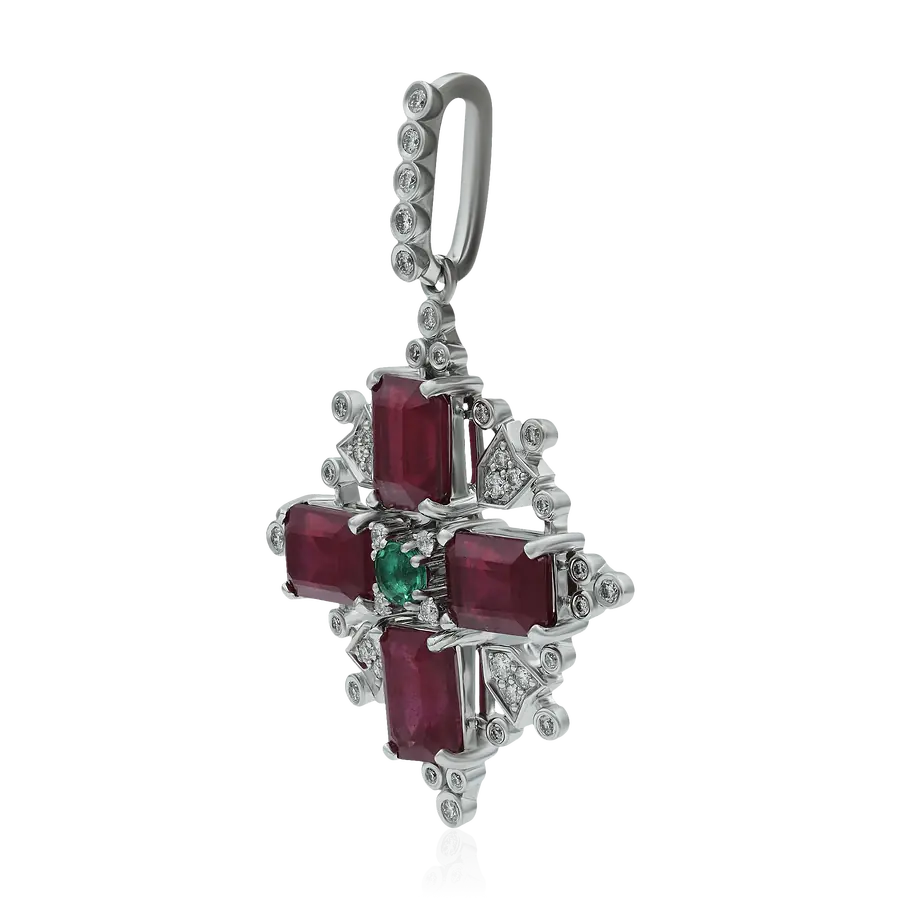

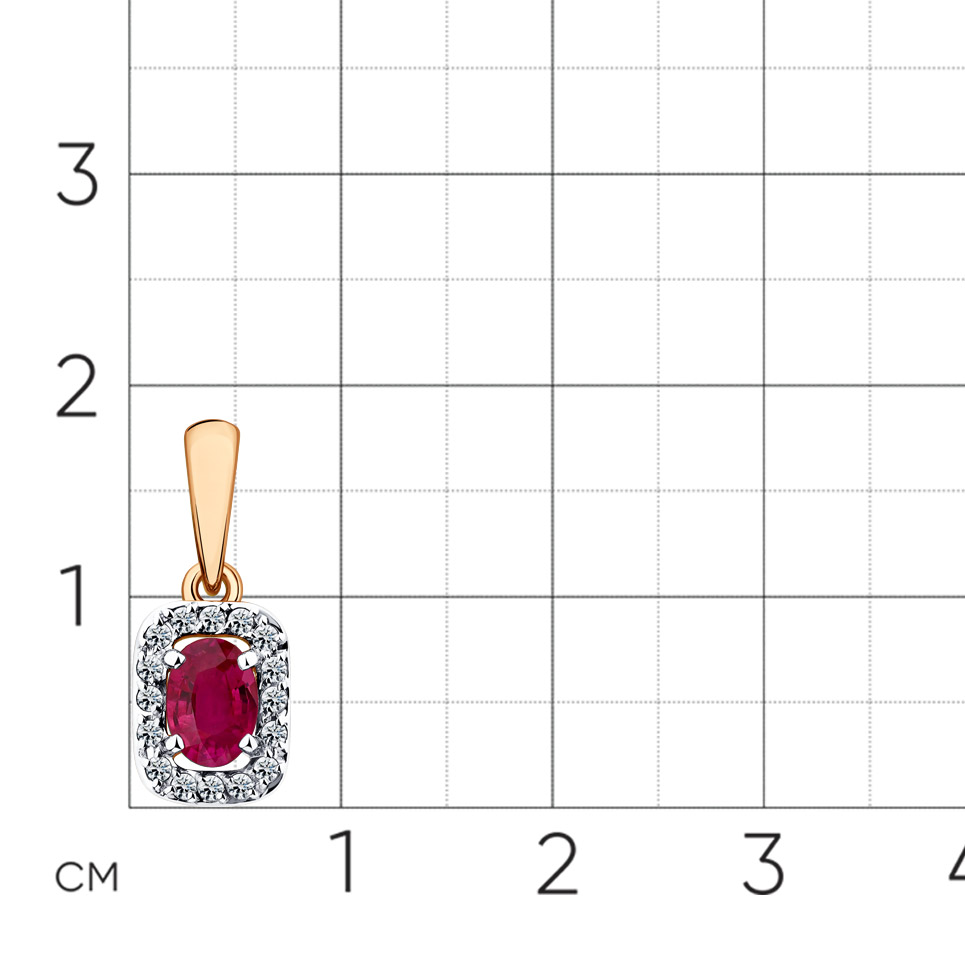
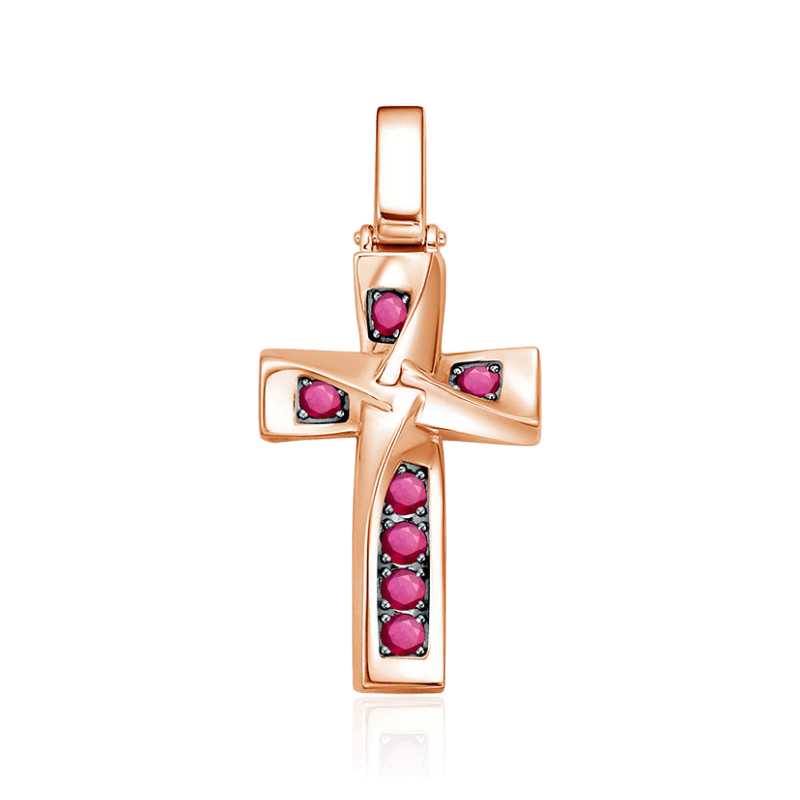
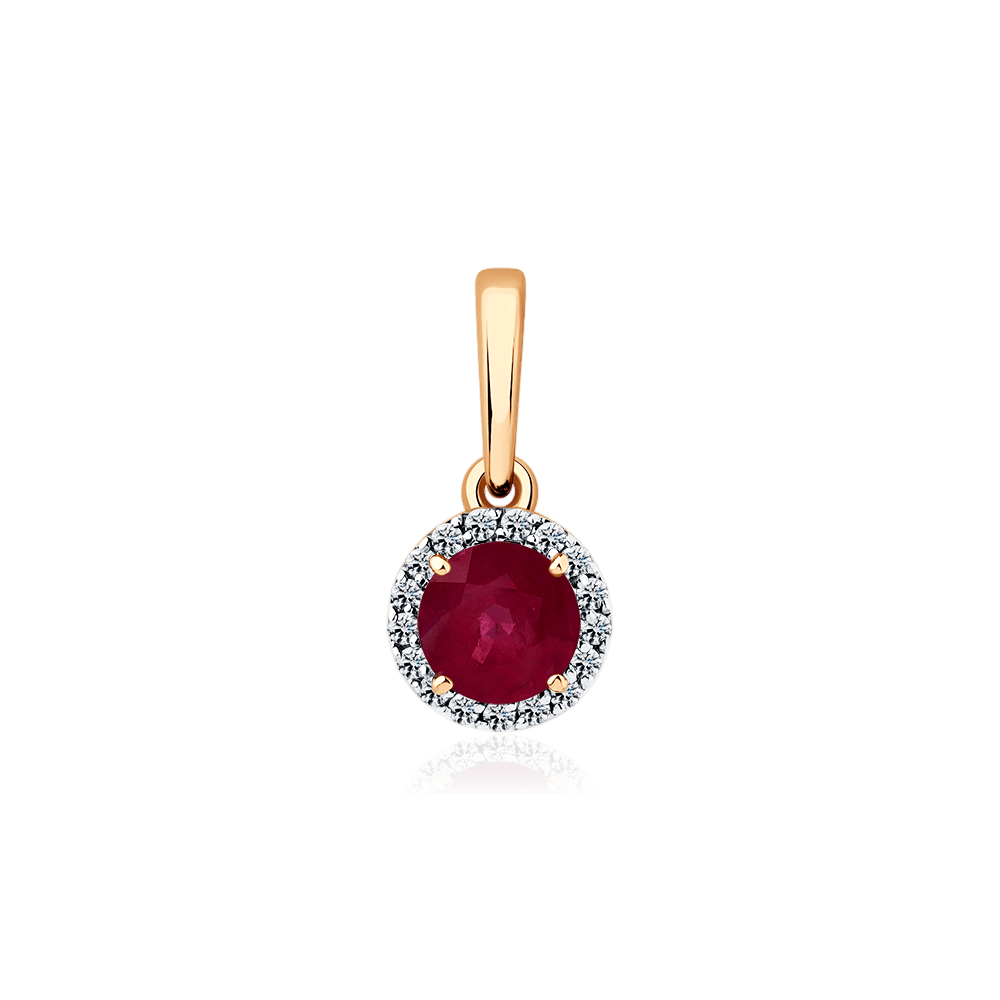
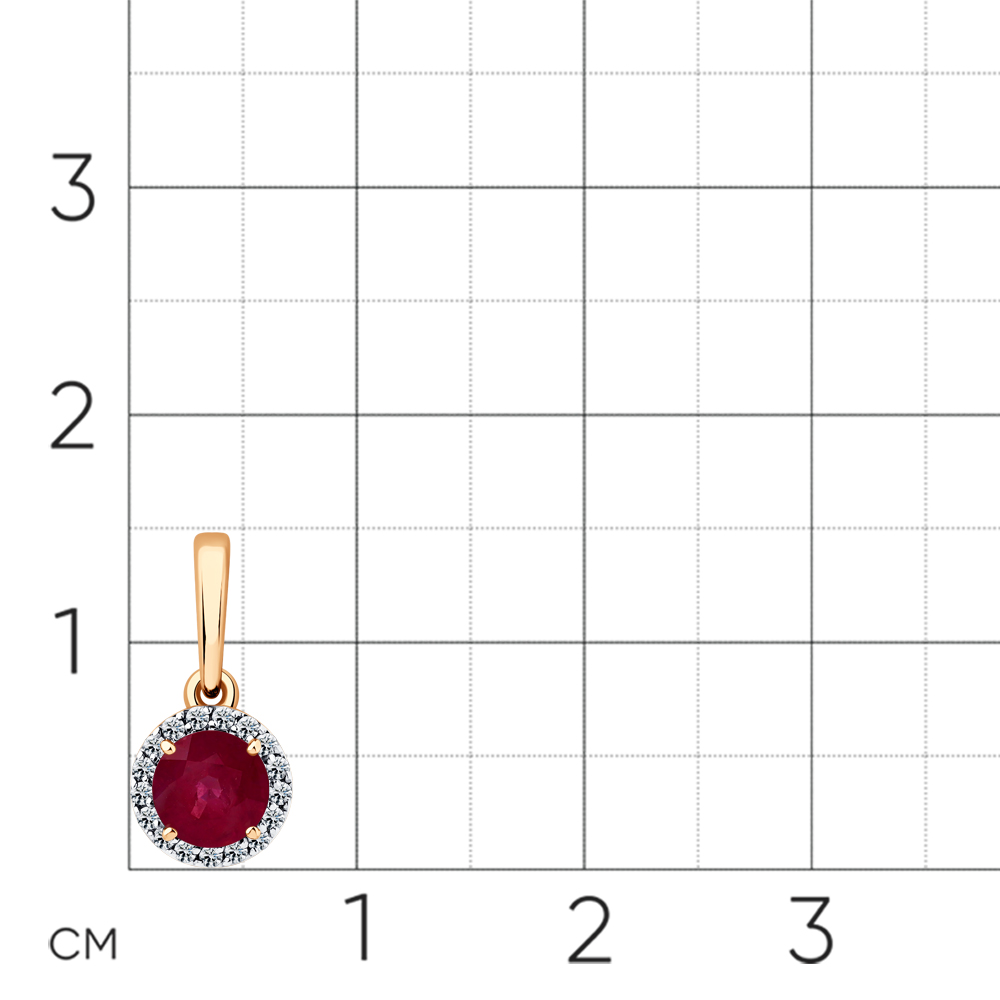
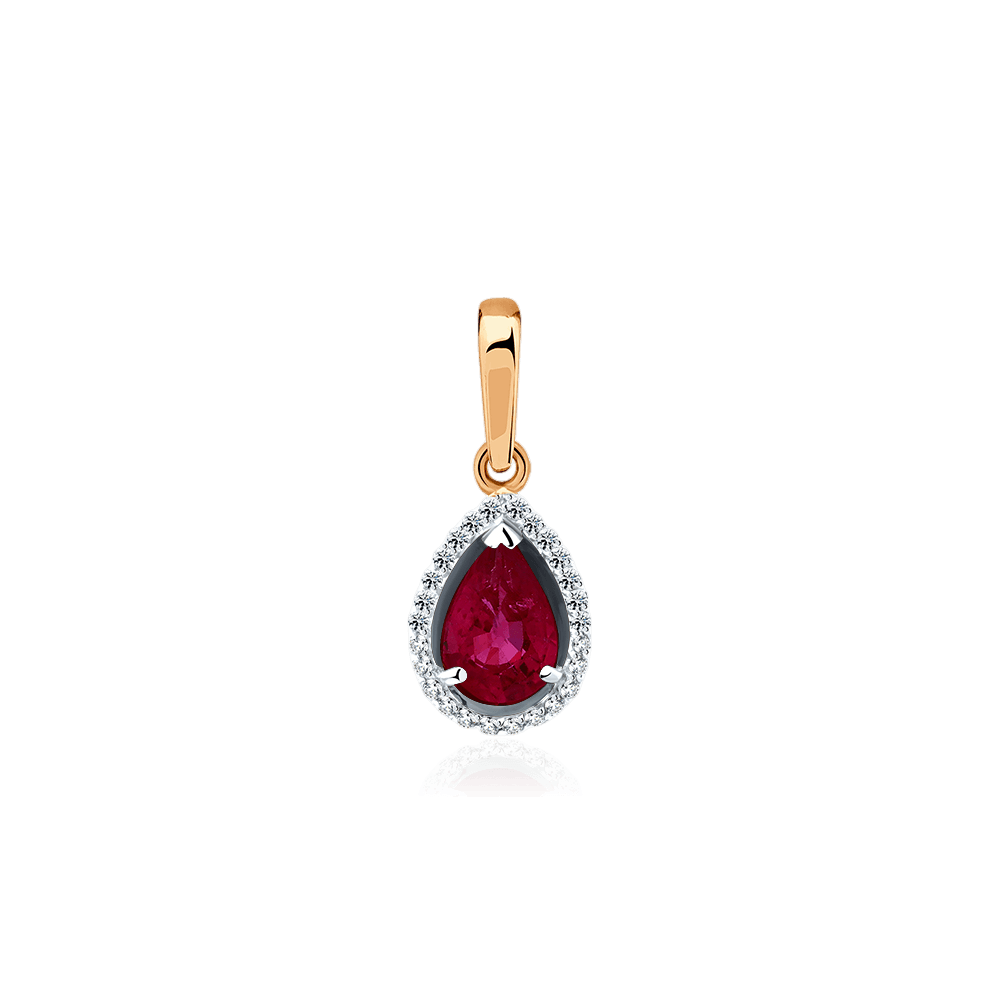
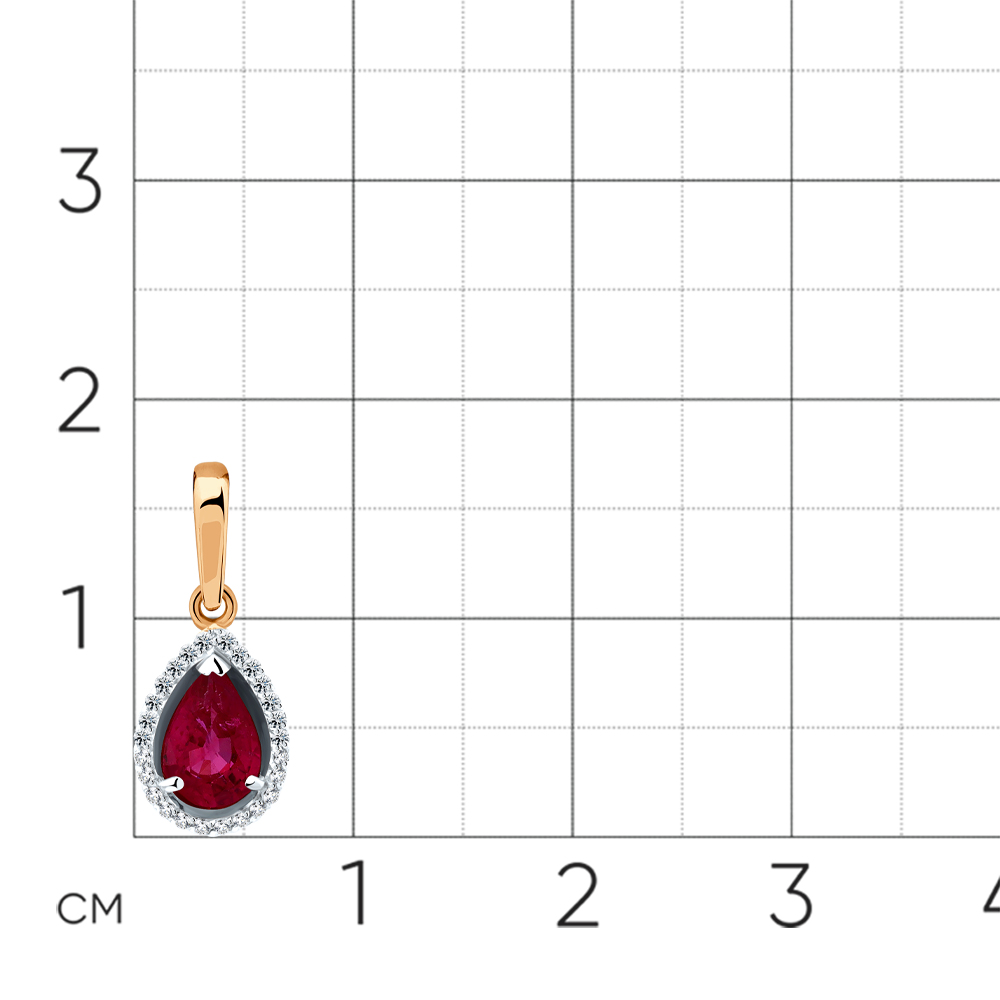
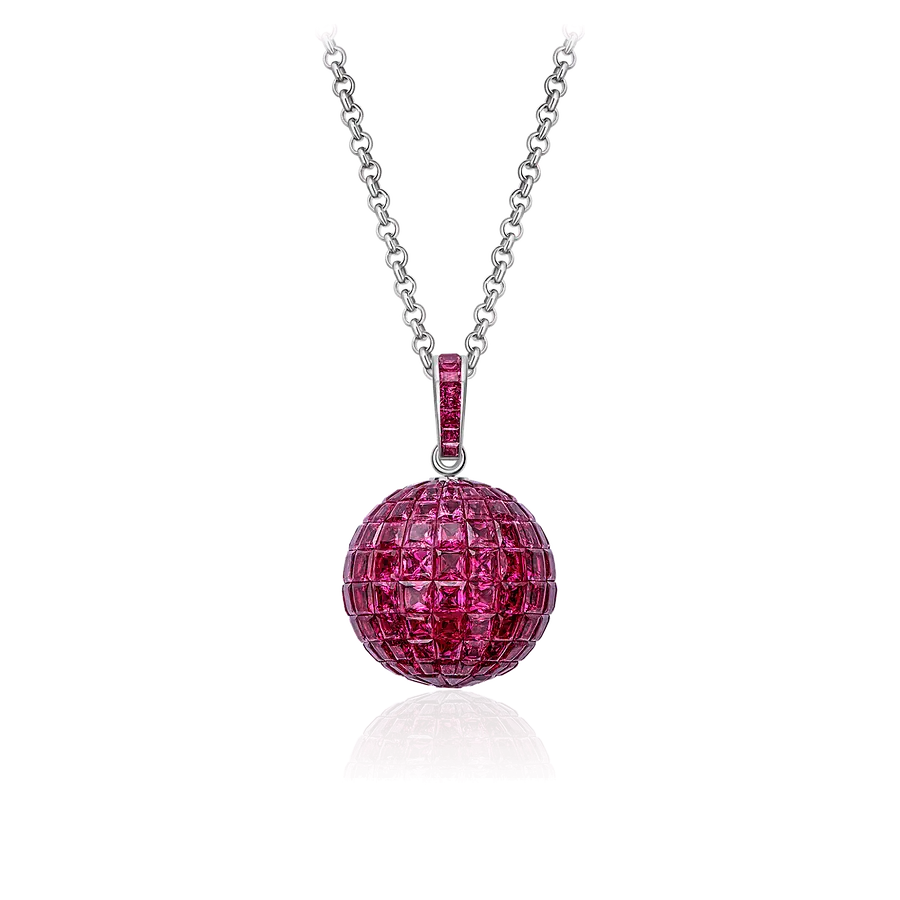
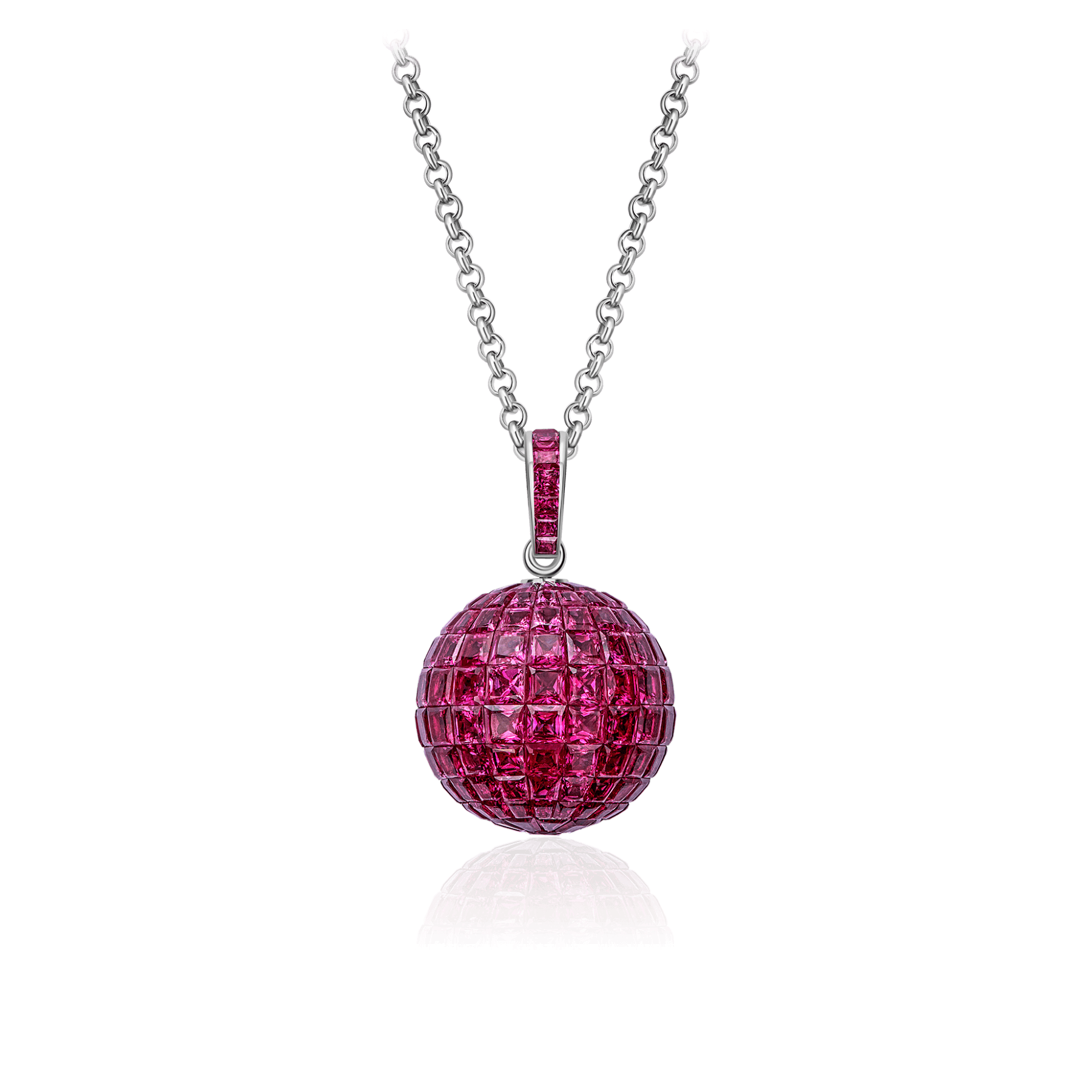
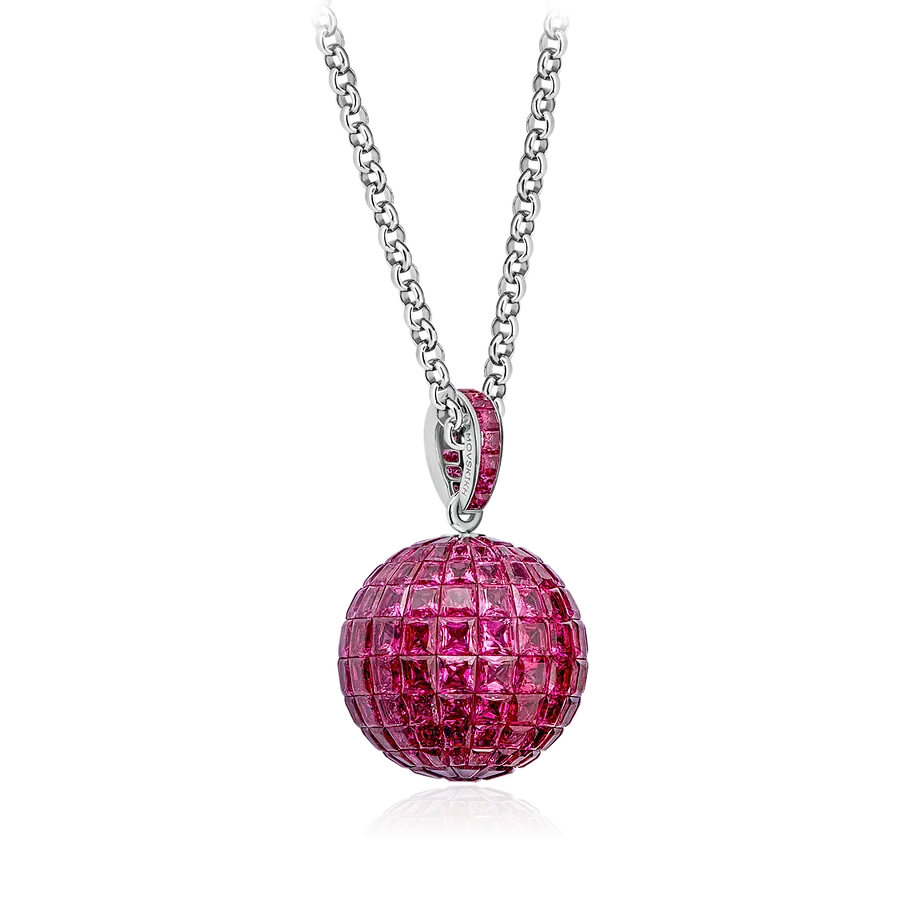
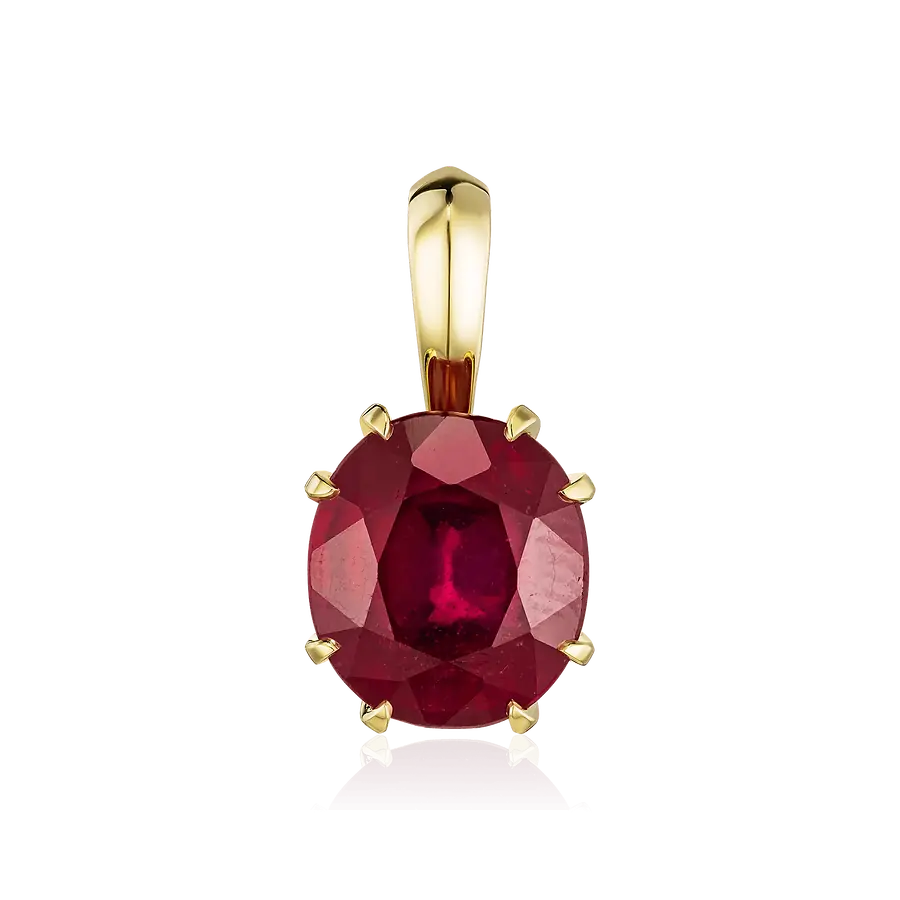
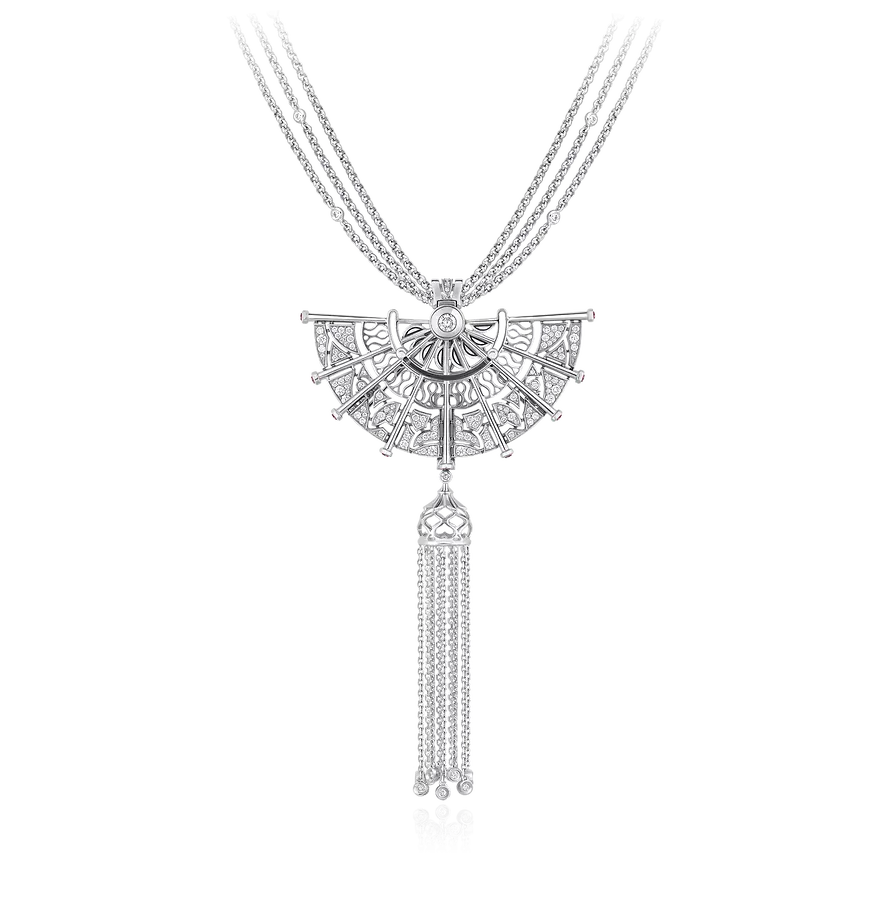
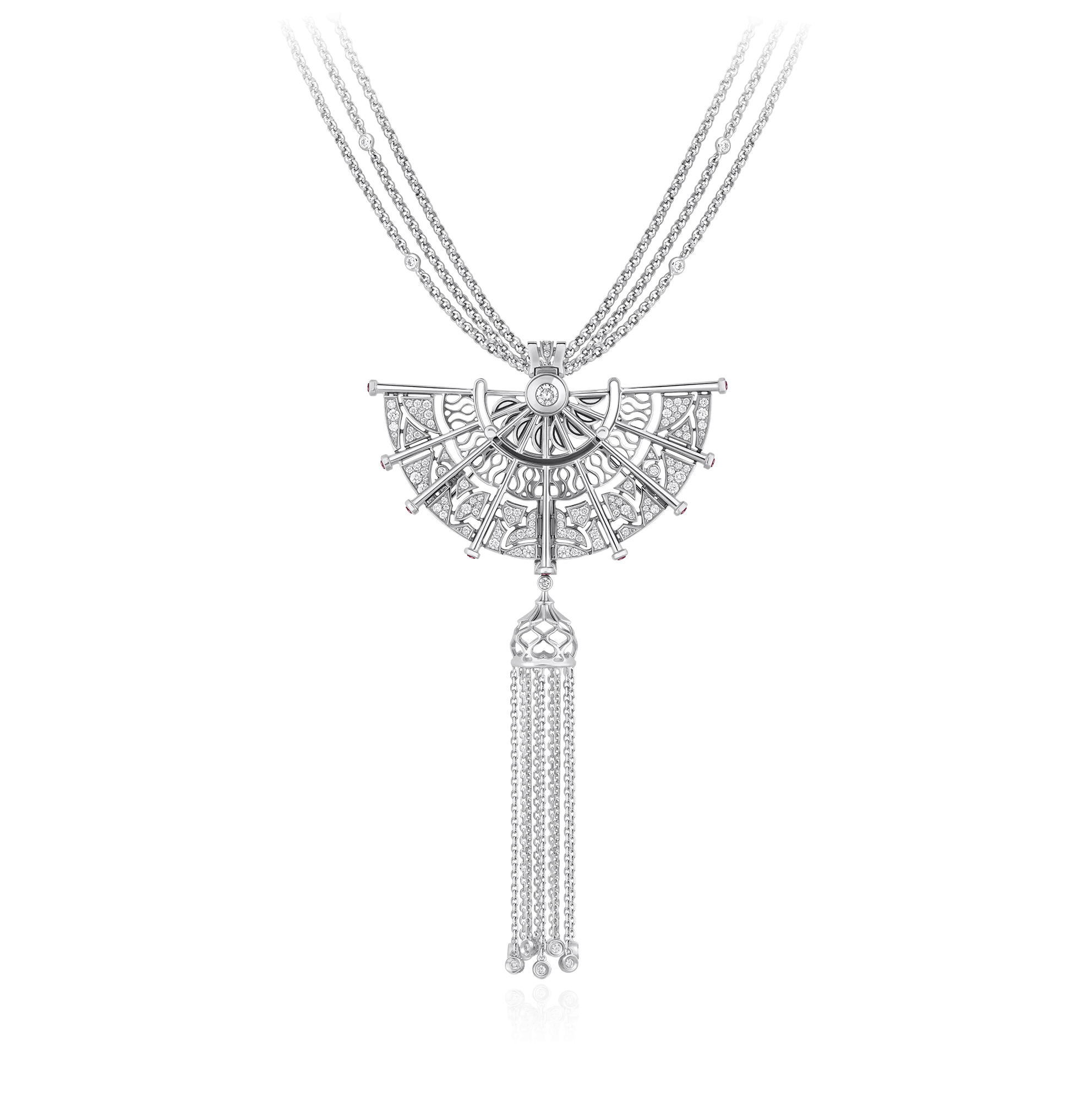
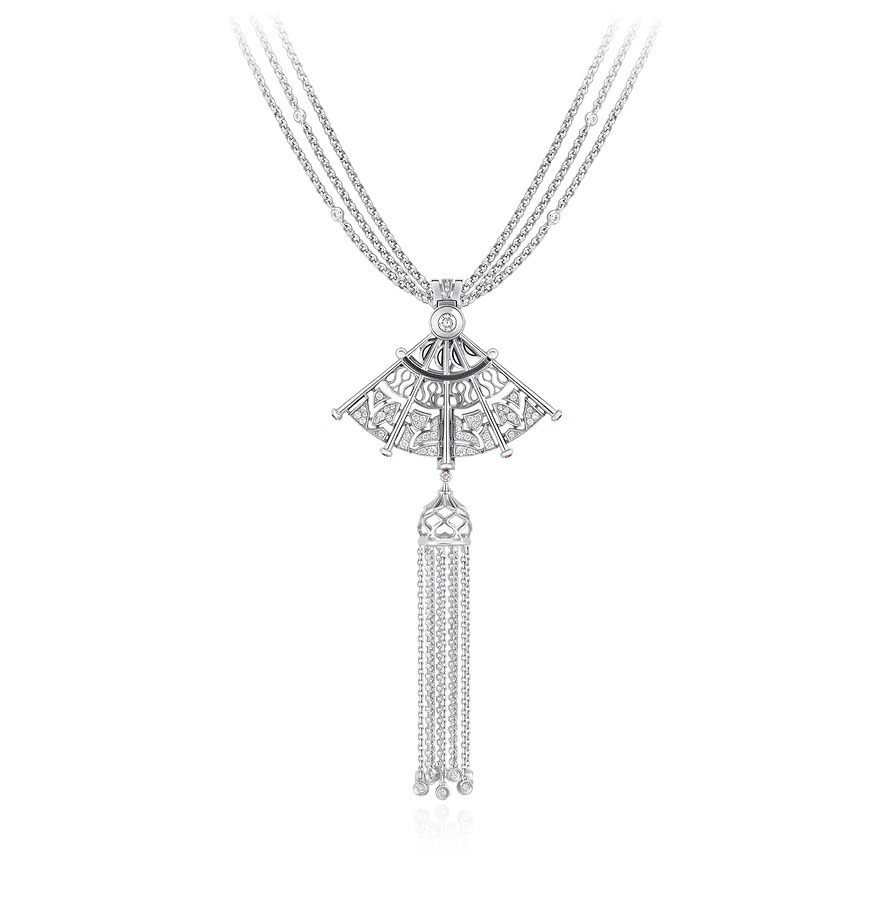
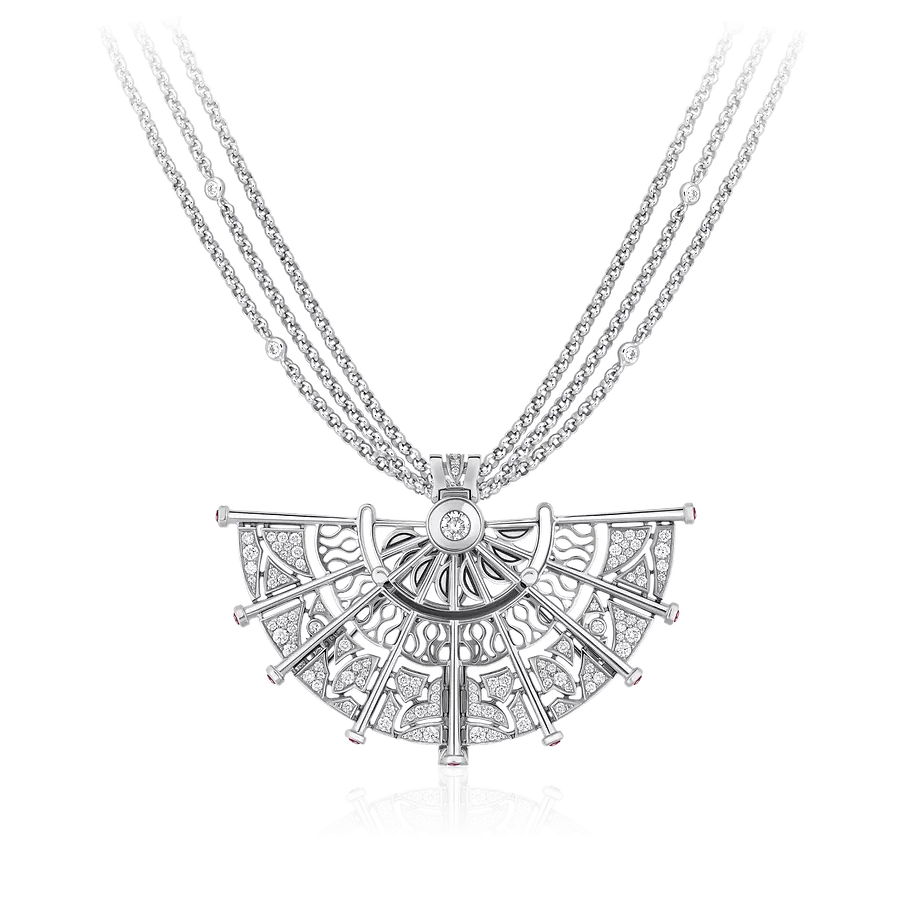
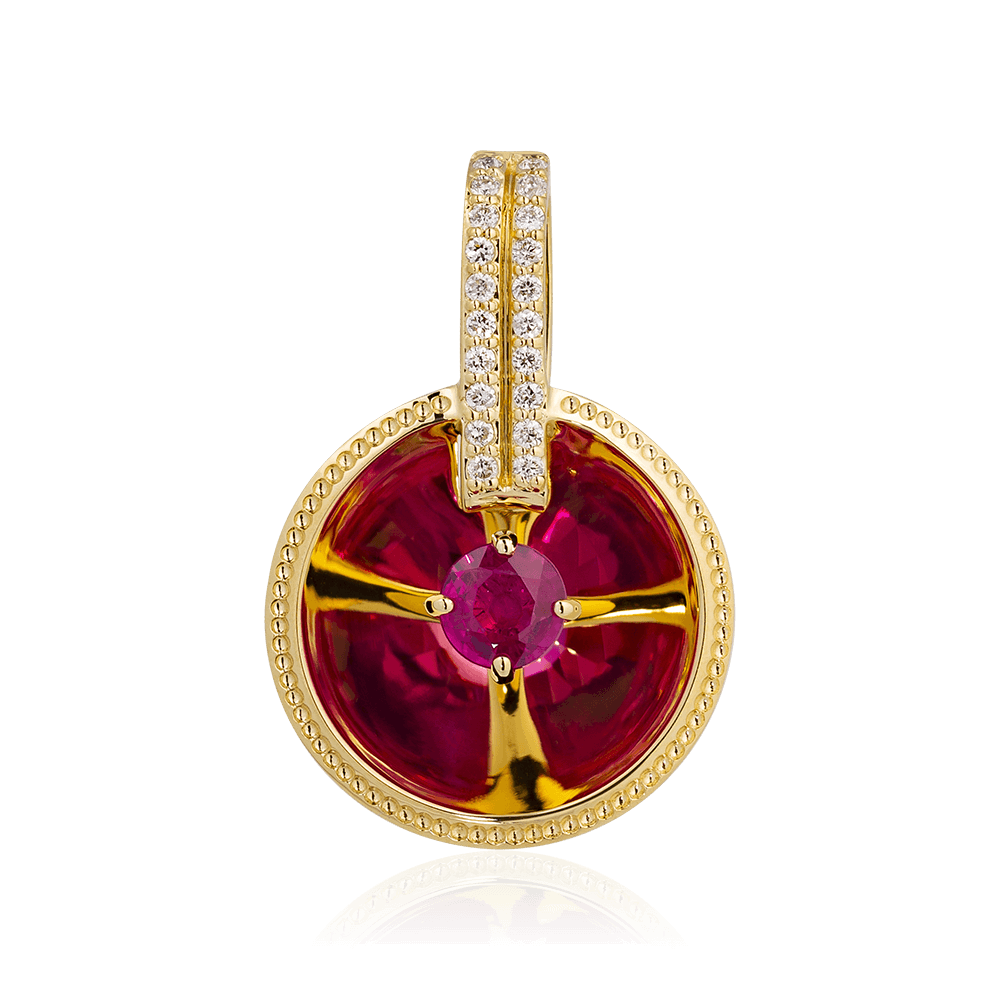
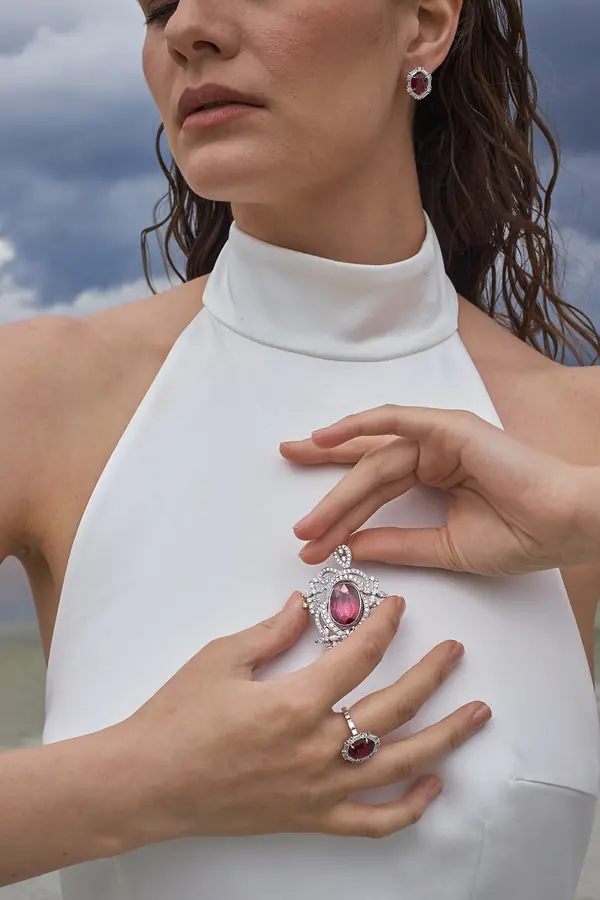
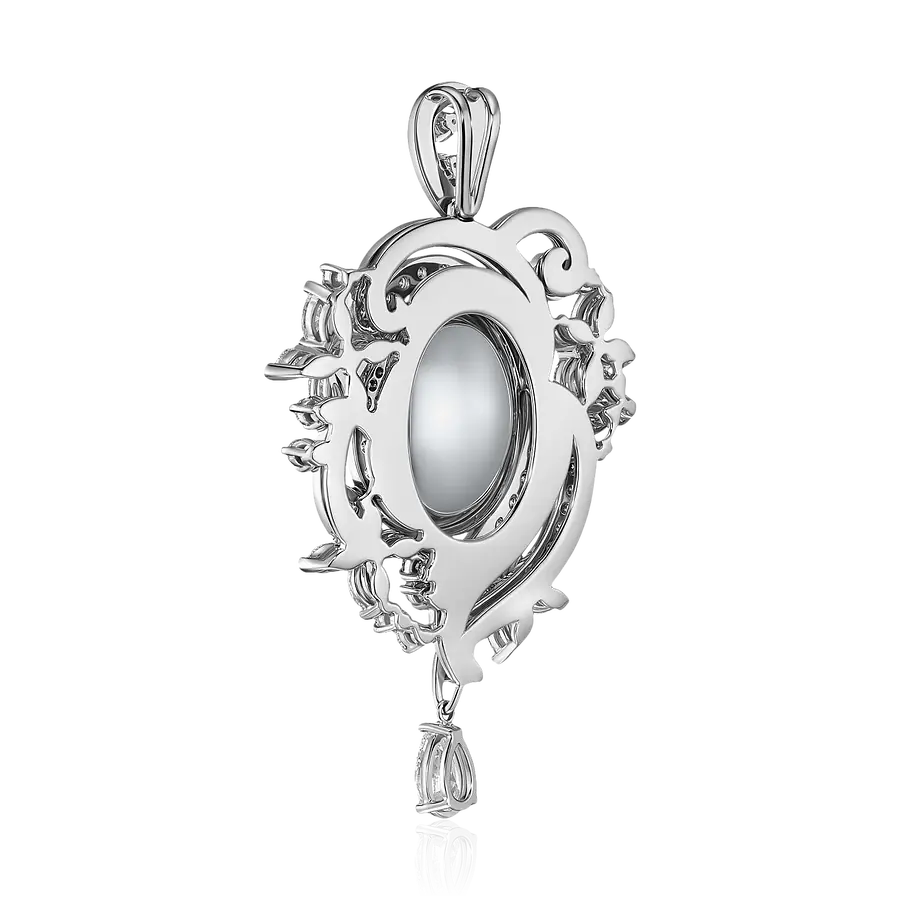
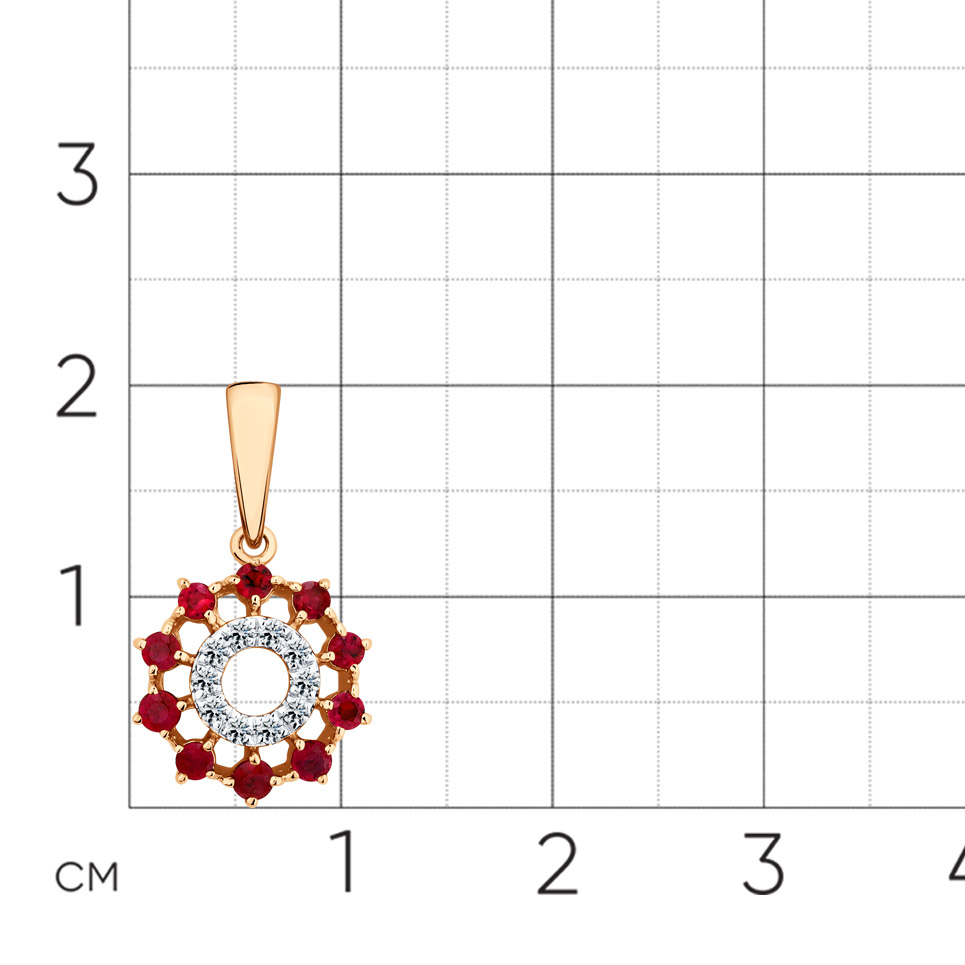
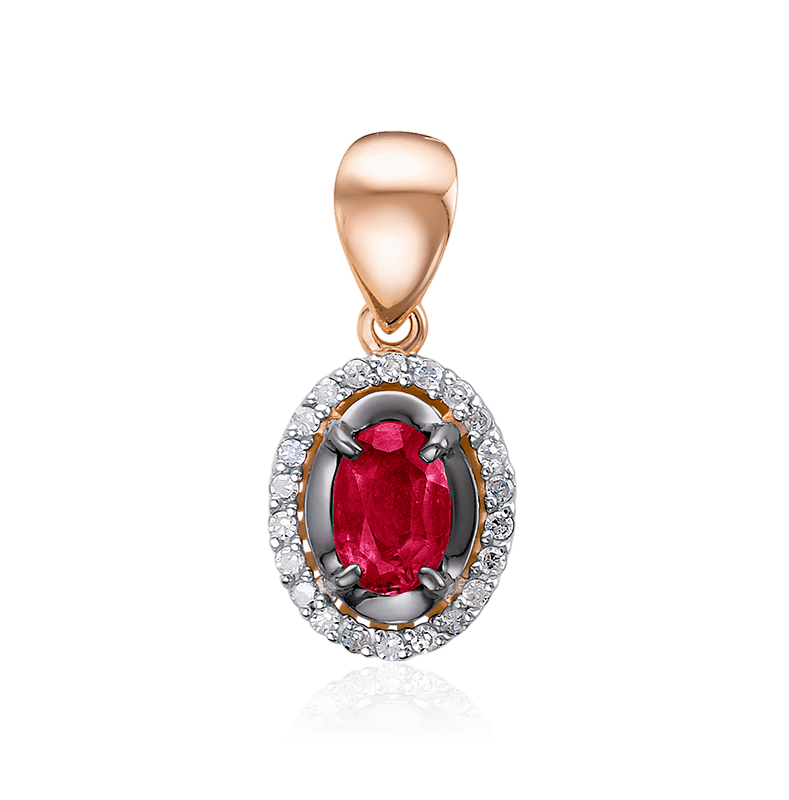
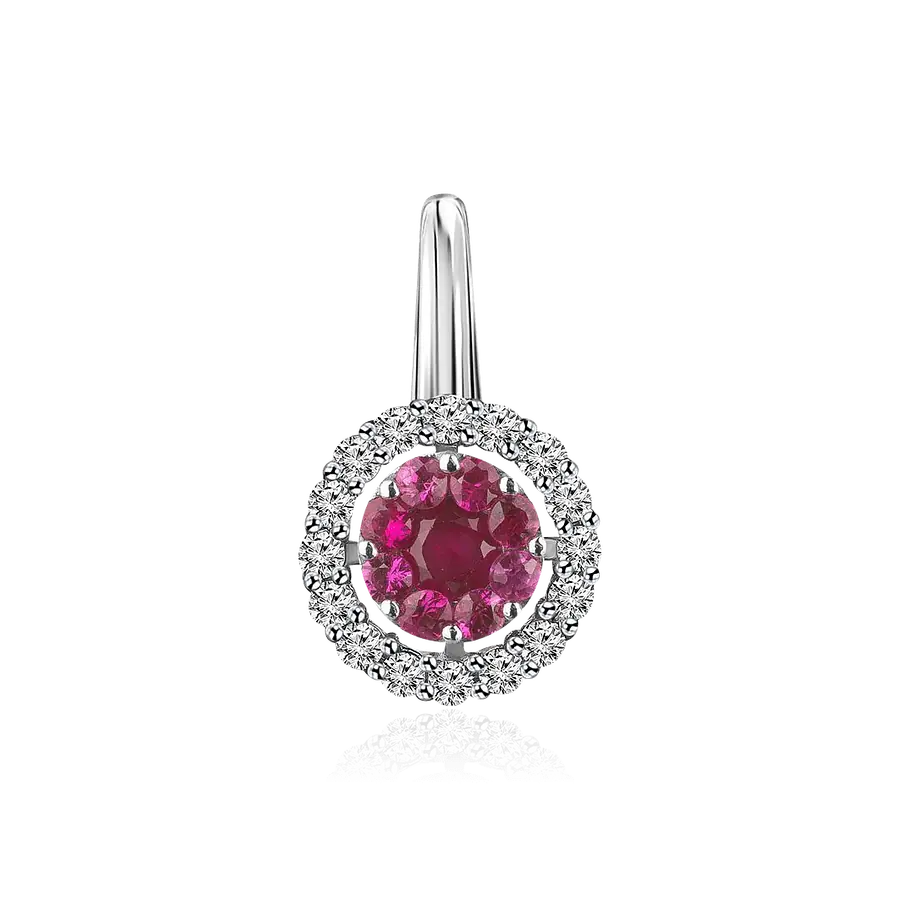
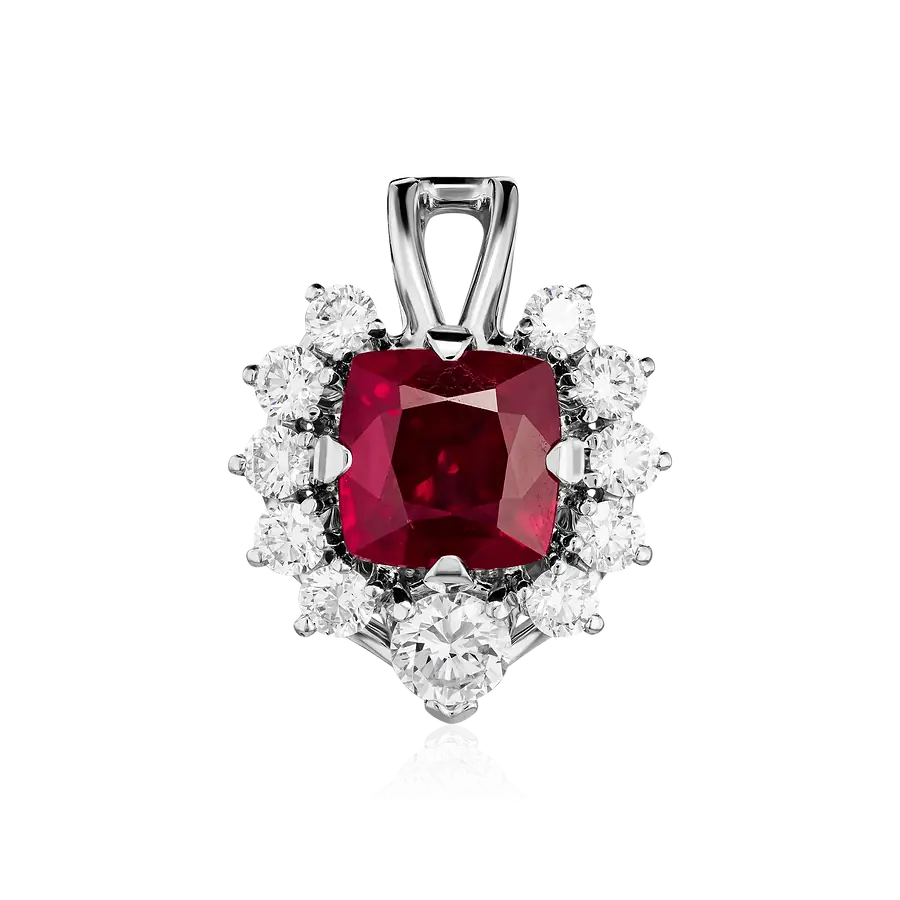
"Angel" pendant with rubies, sapphires, and diamonds in 585-grade yellow and white gold ( 28218)
In stock

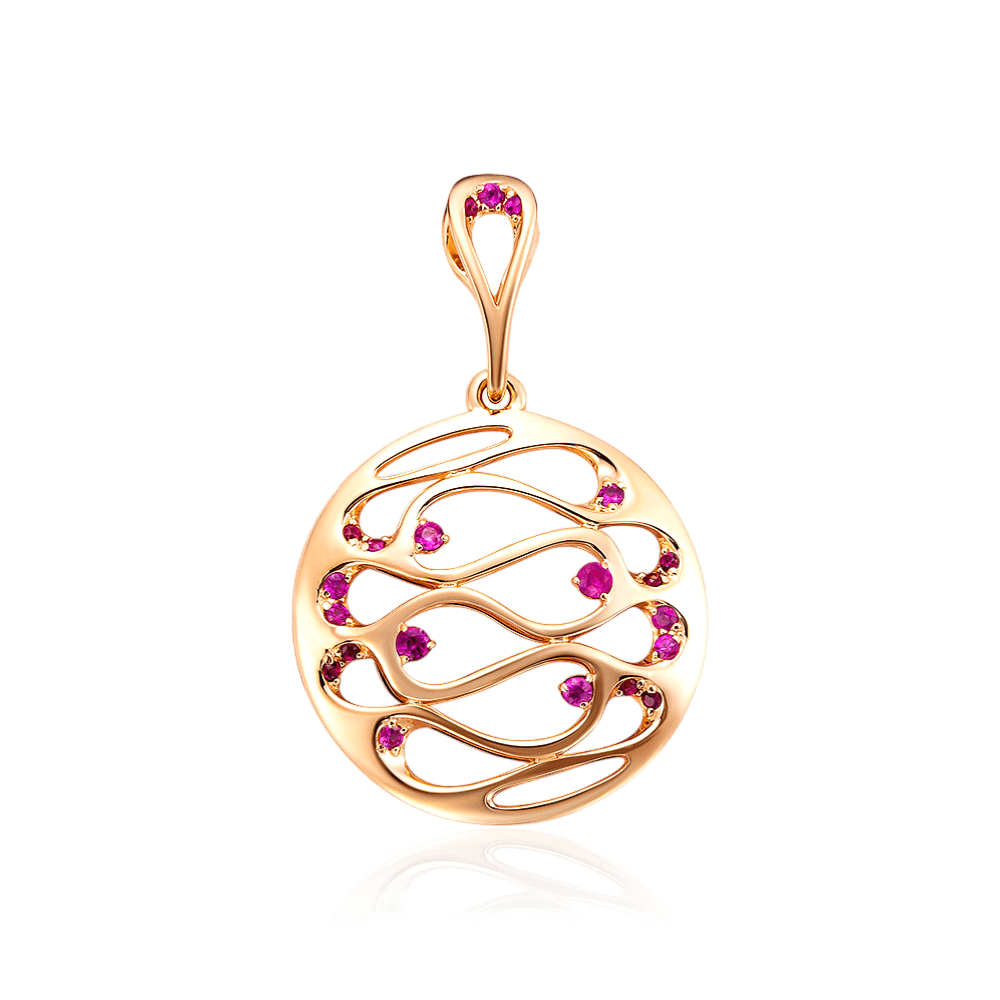
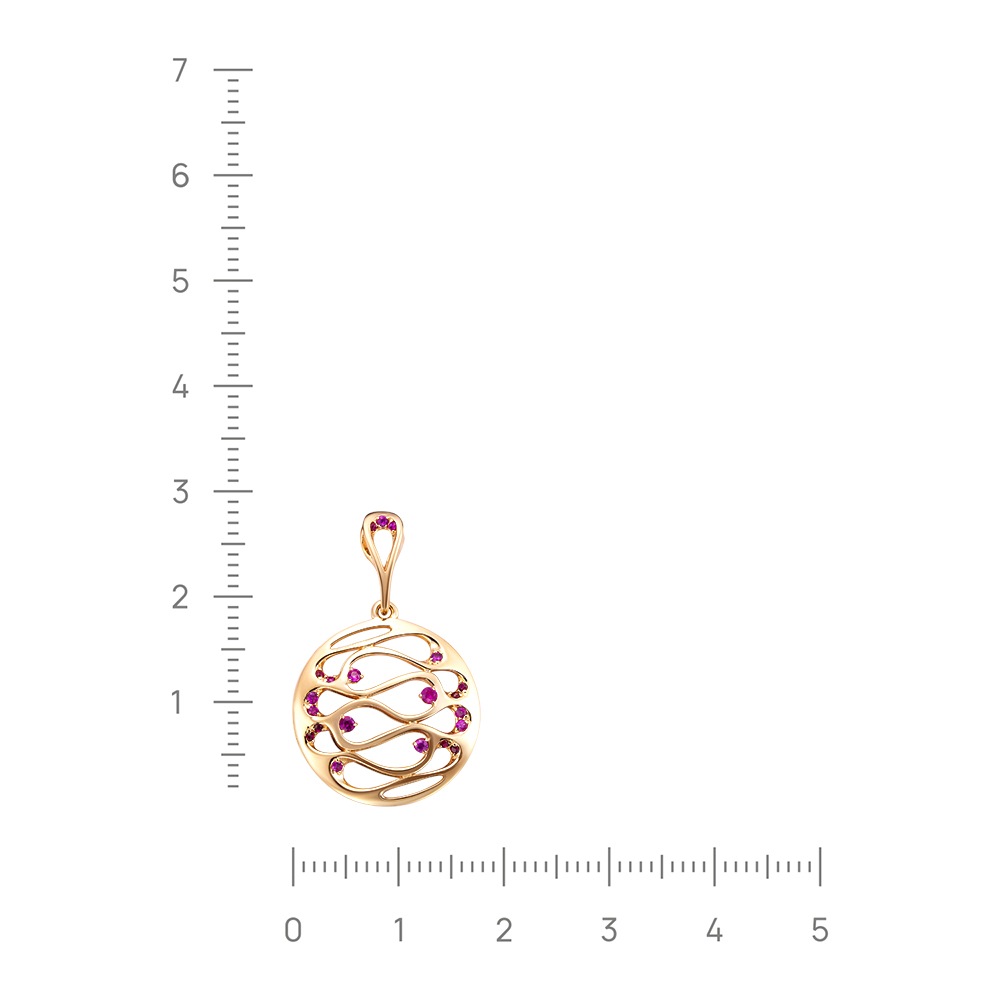
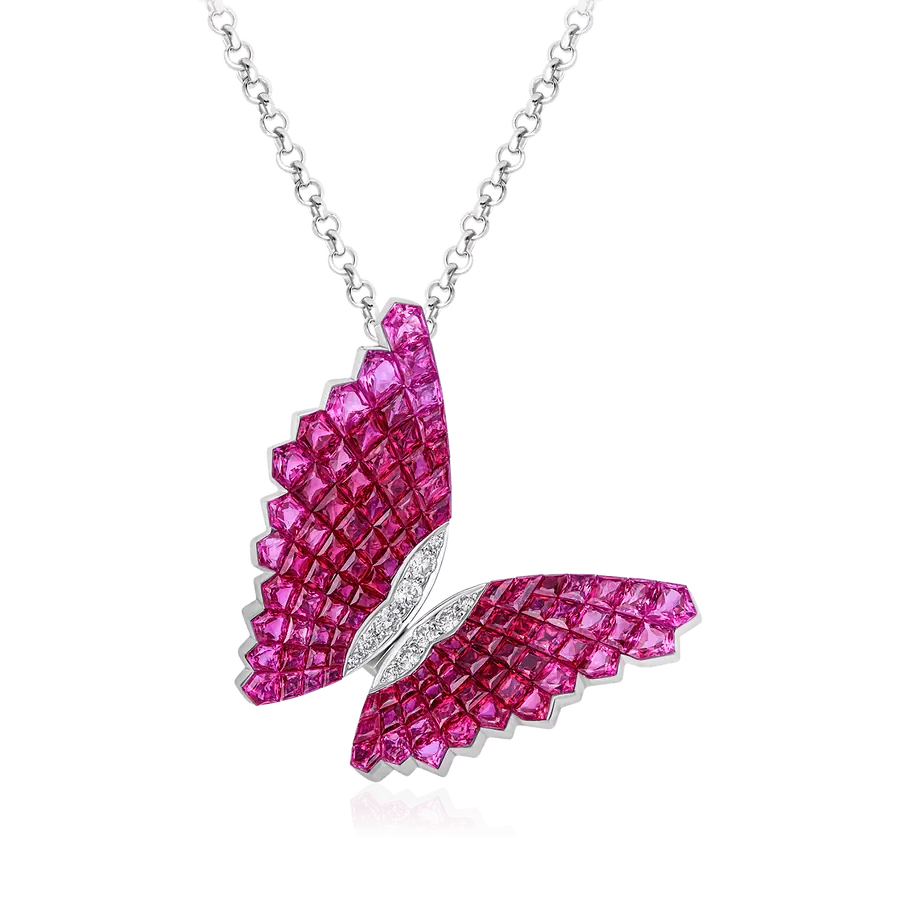
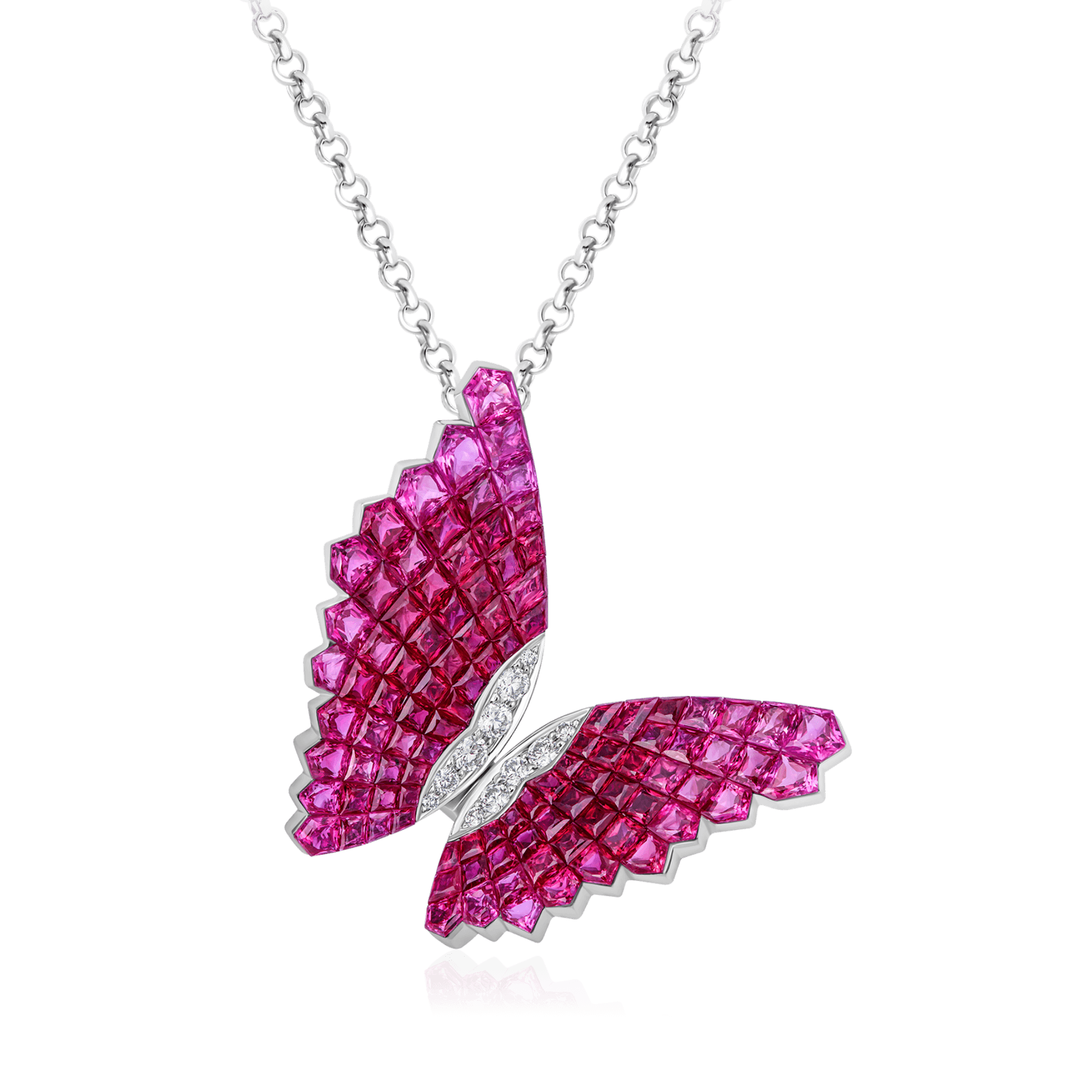
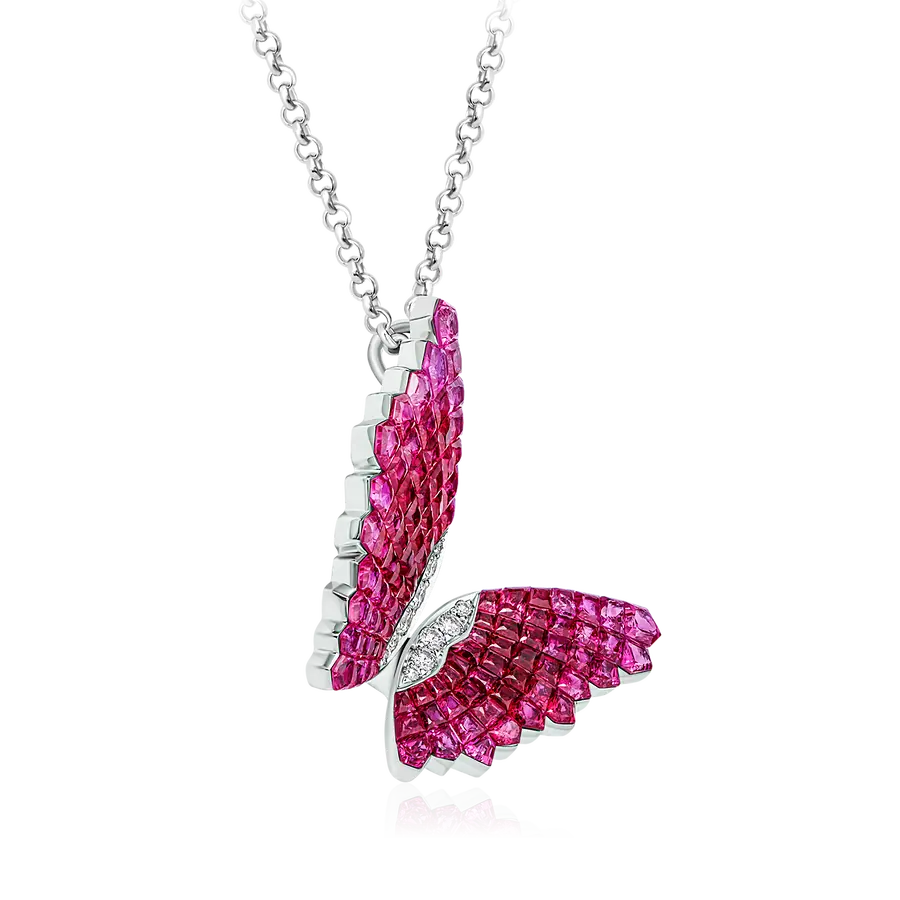
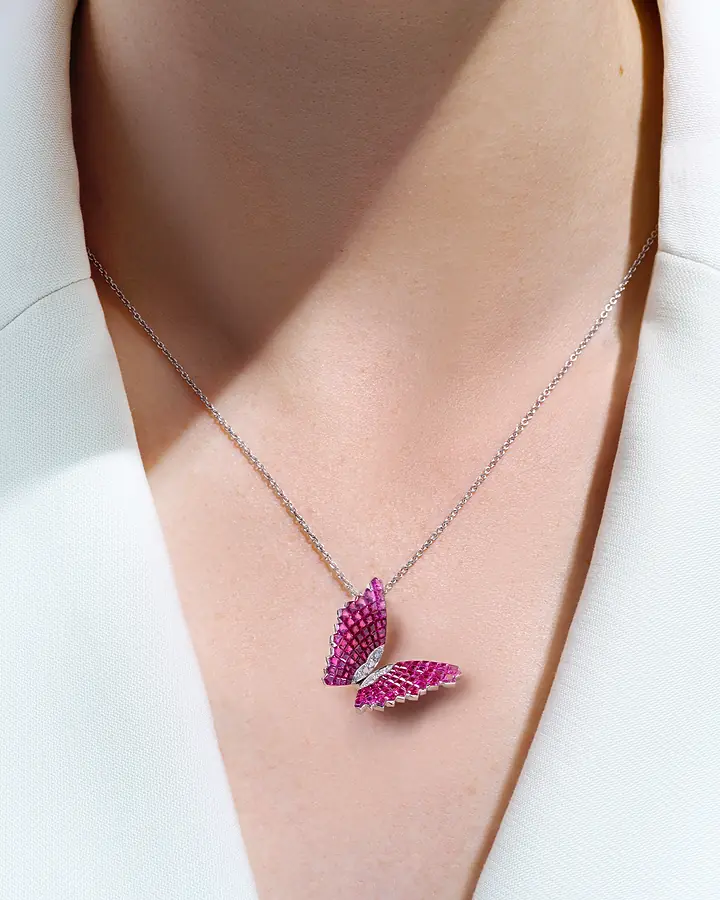
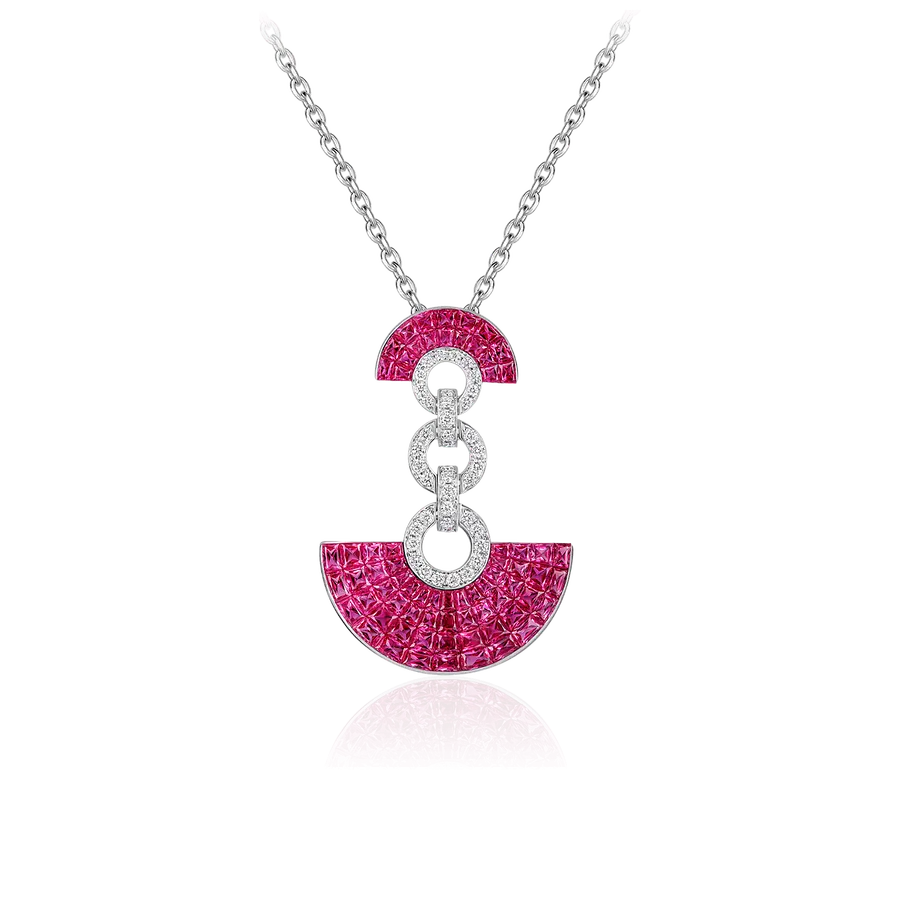
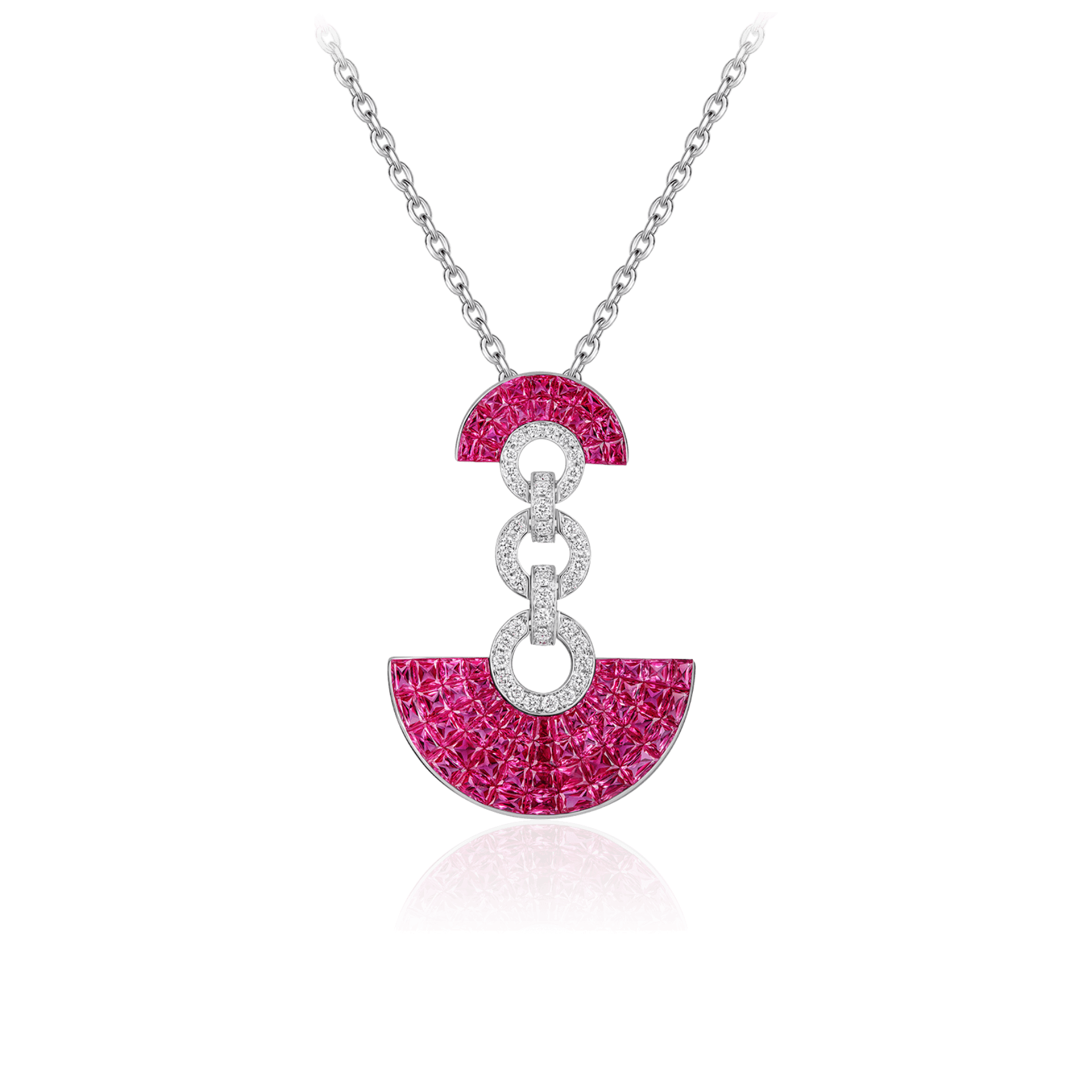
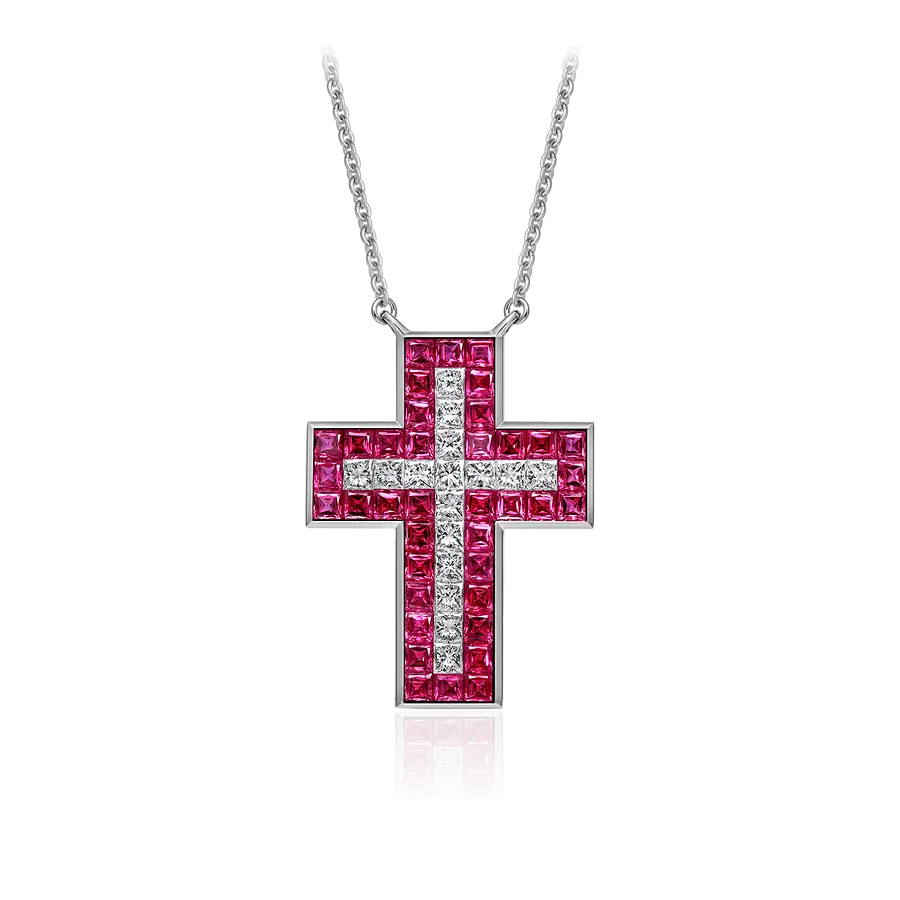
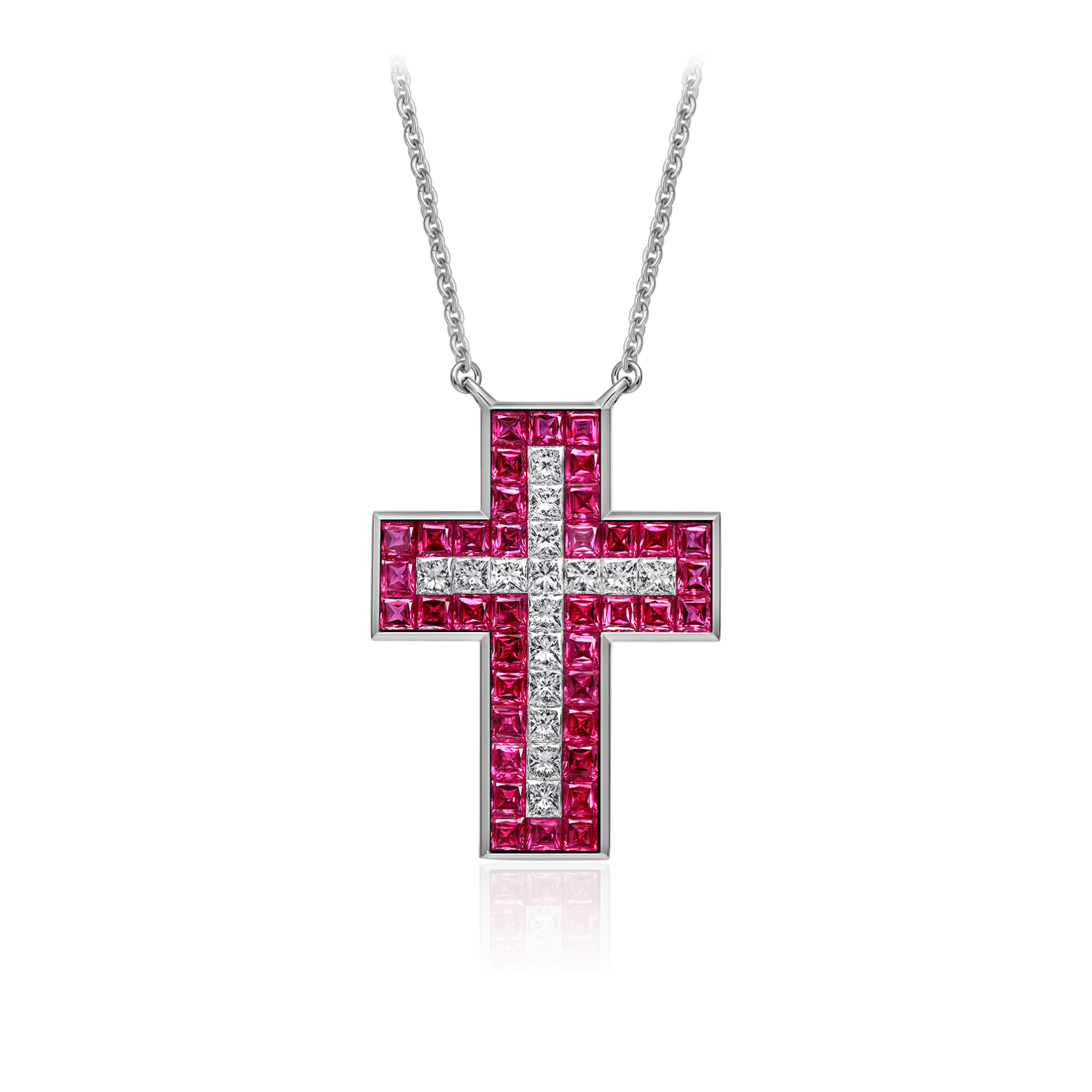
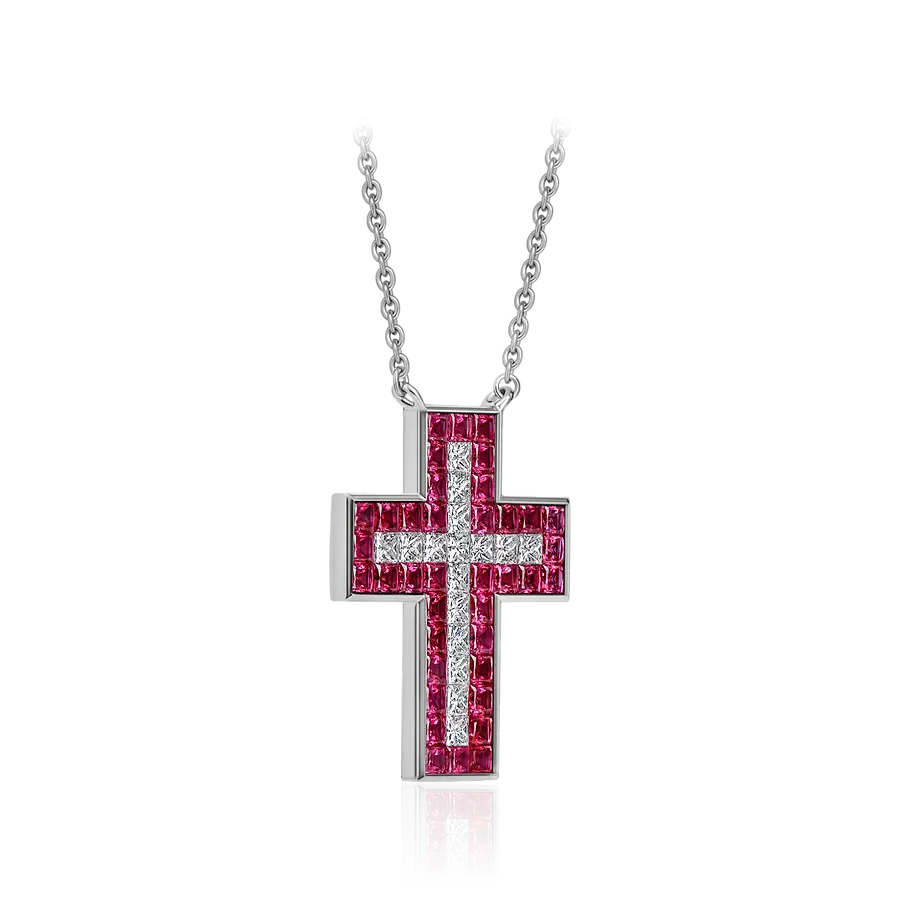

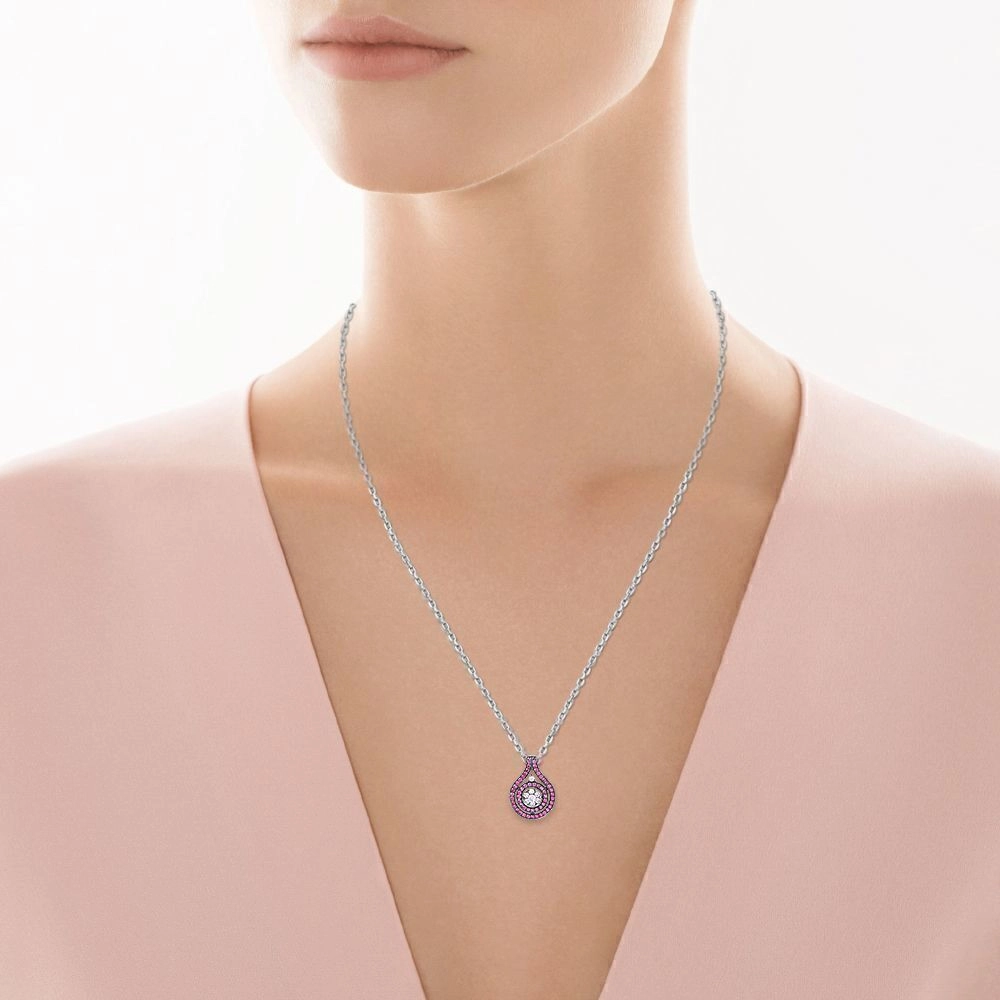
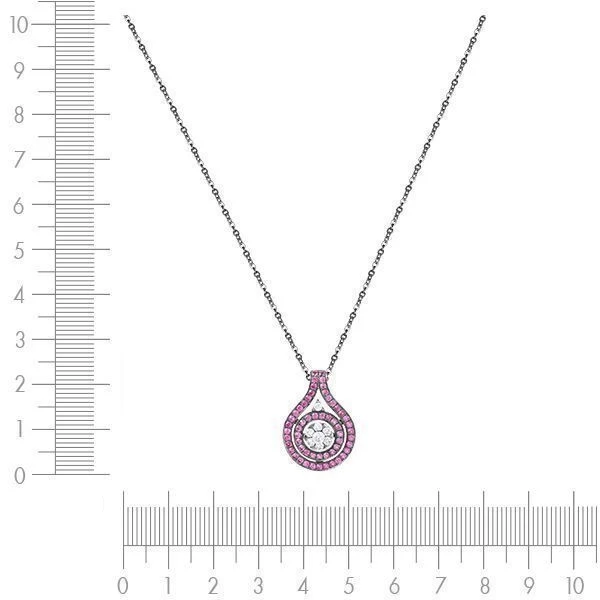


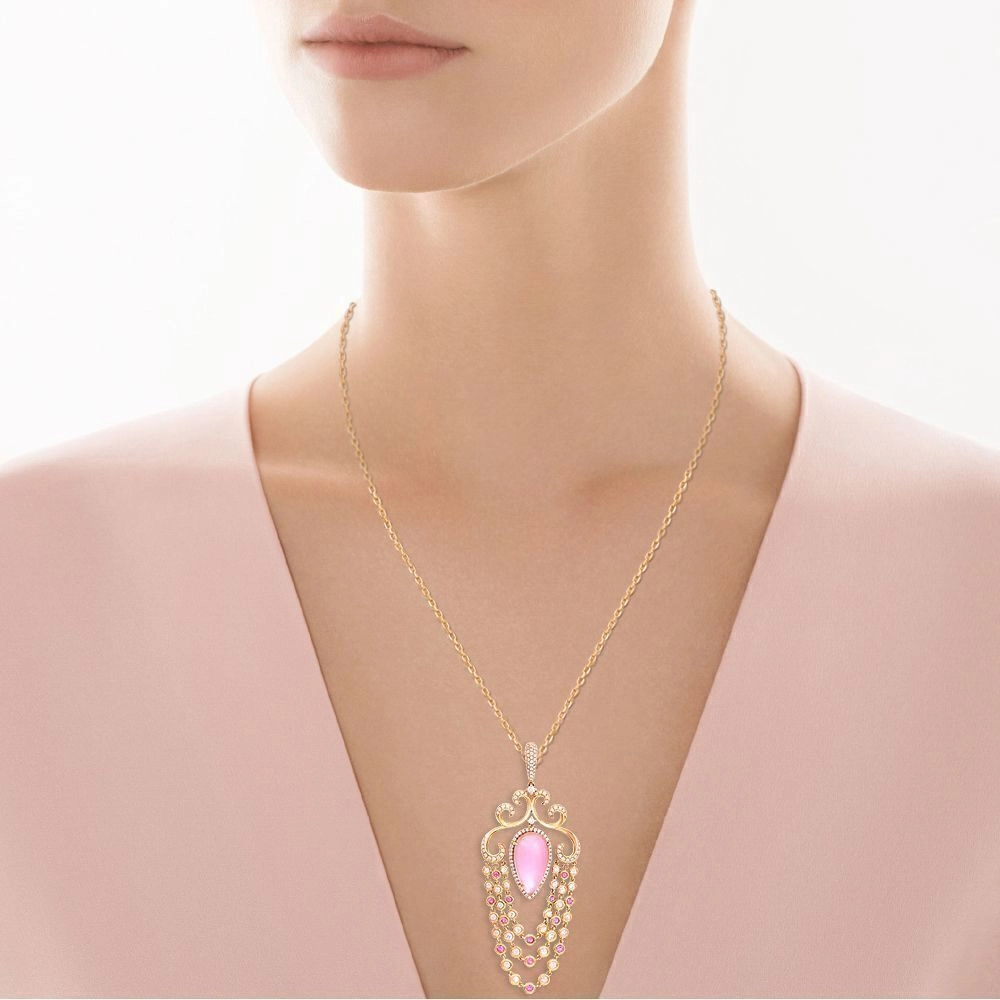
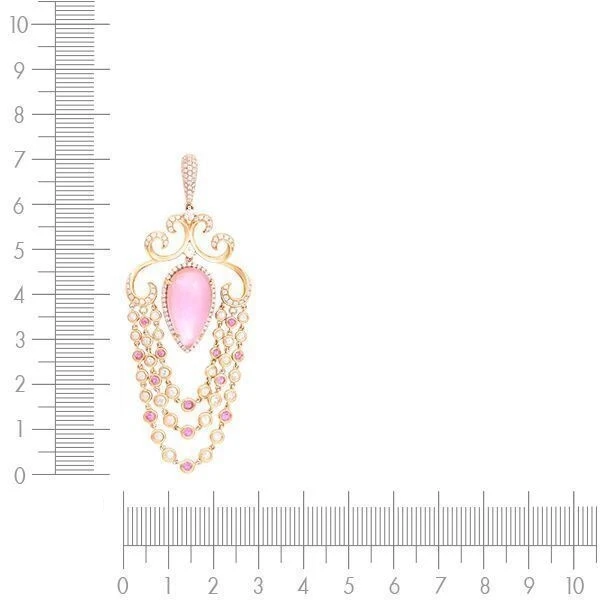

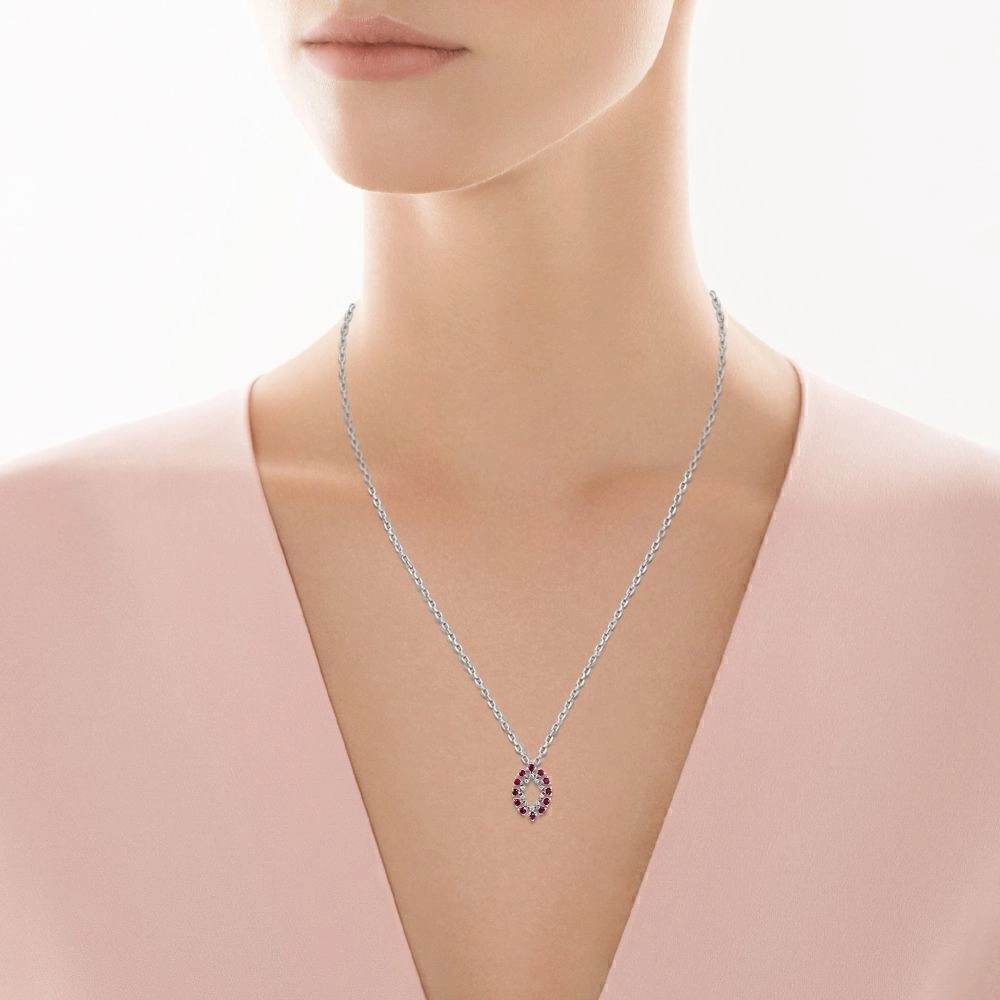
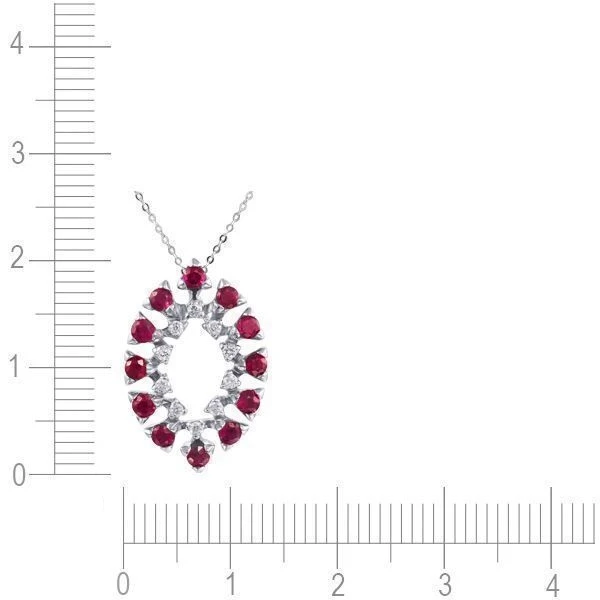
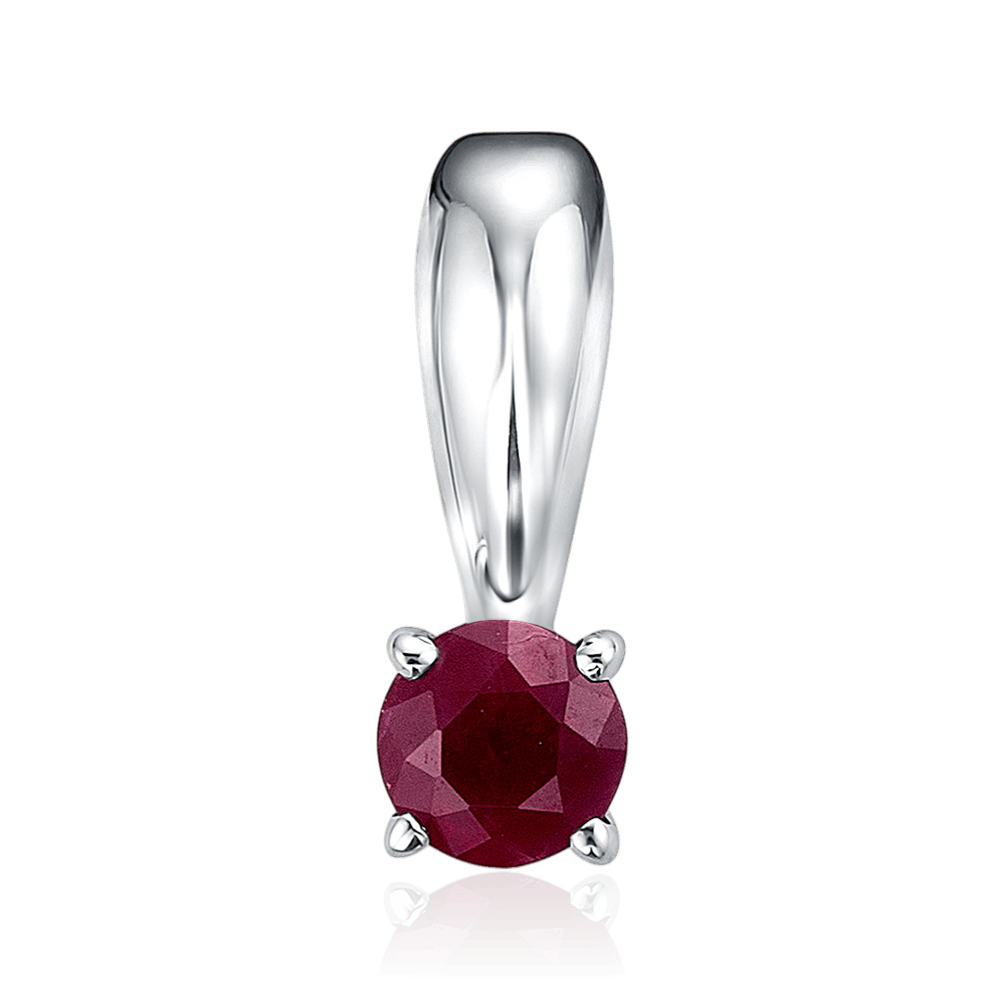
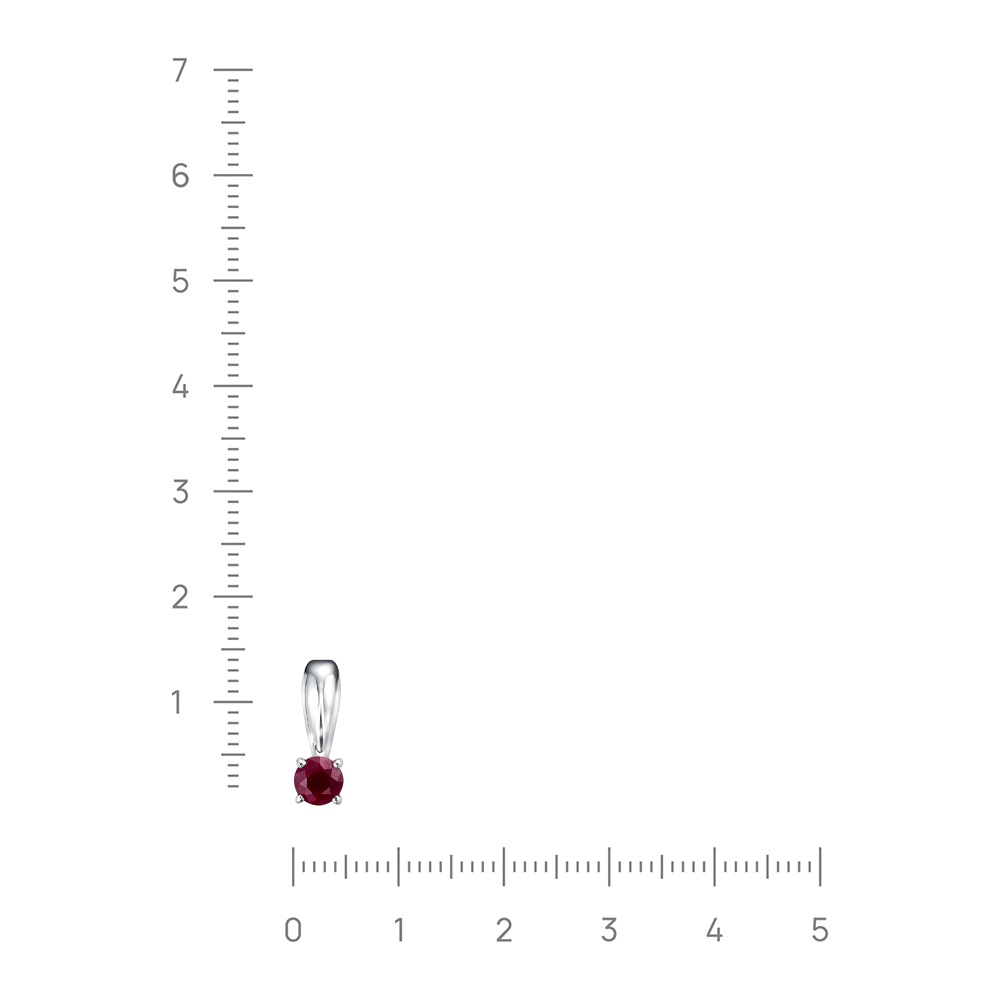

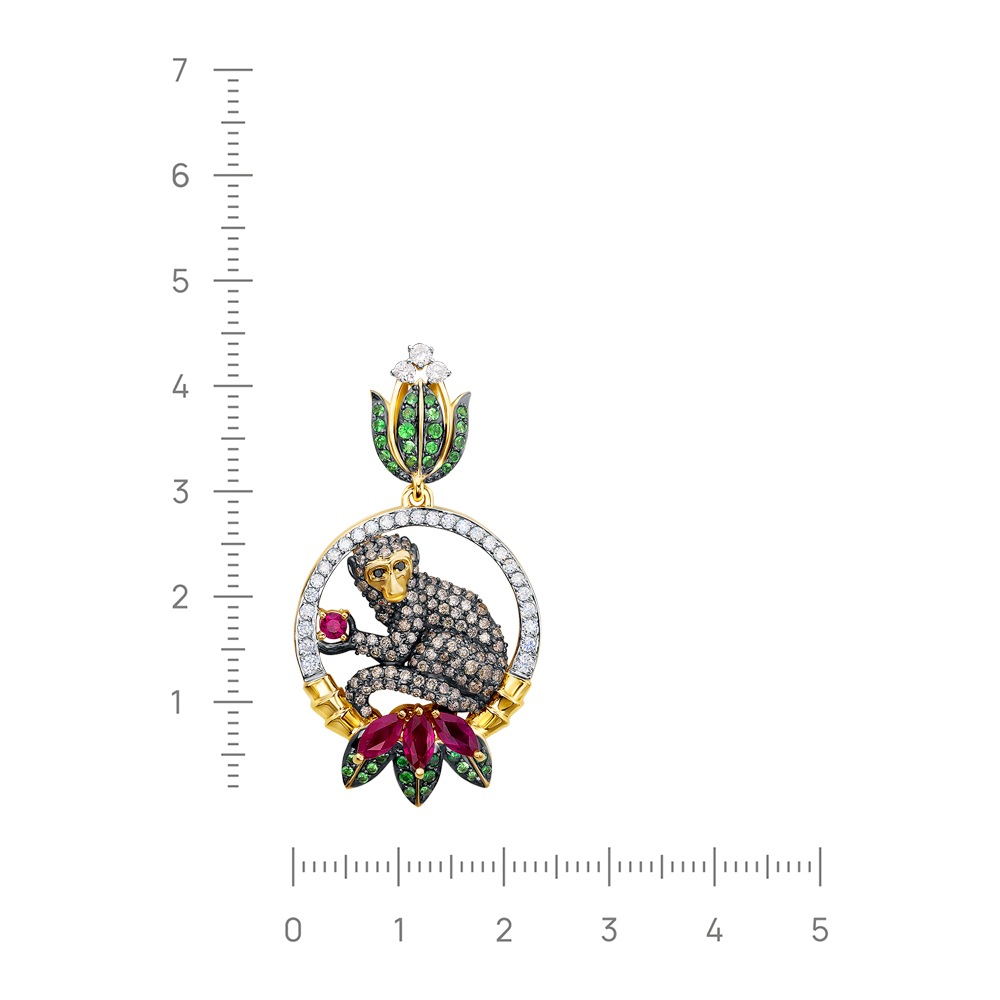


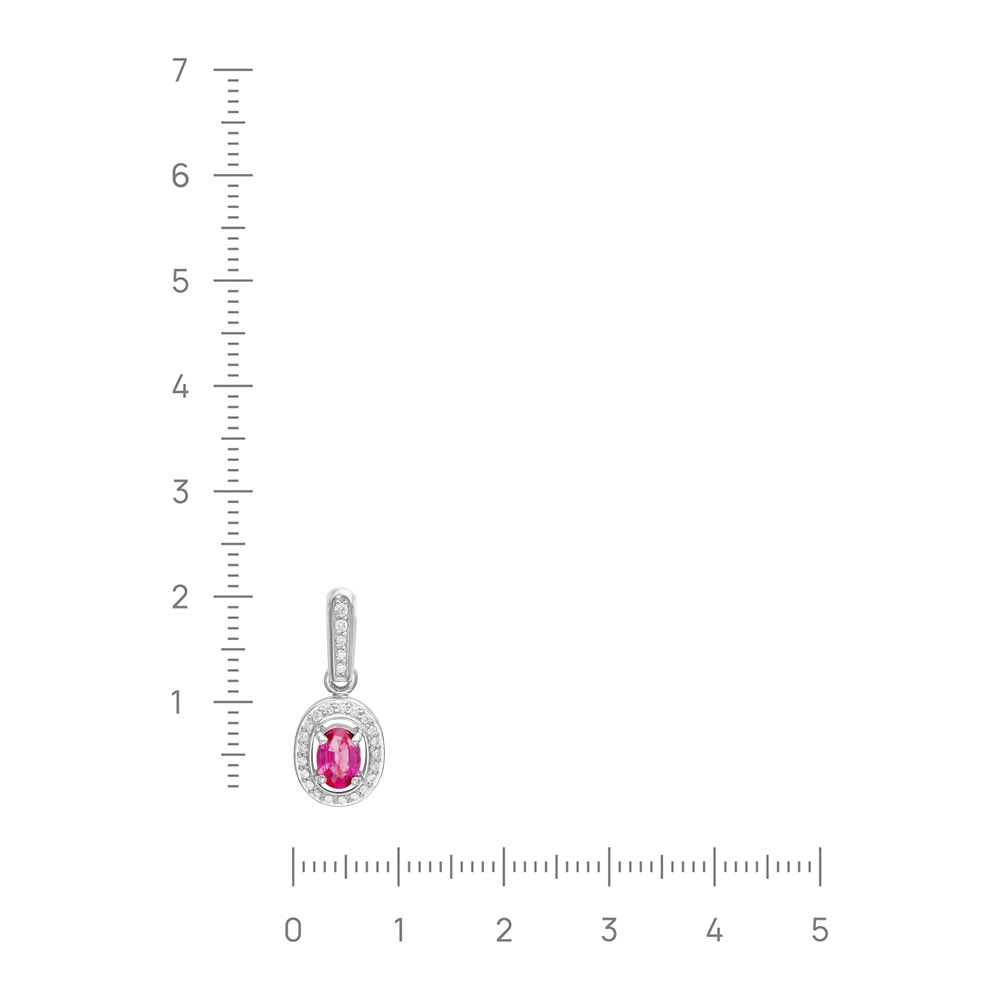

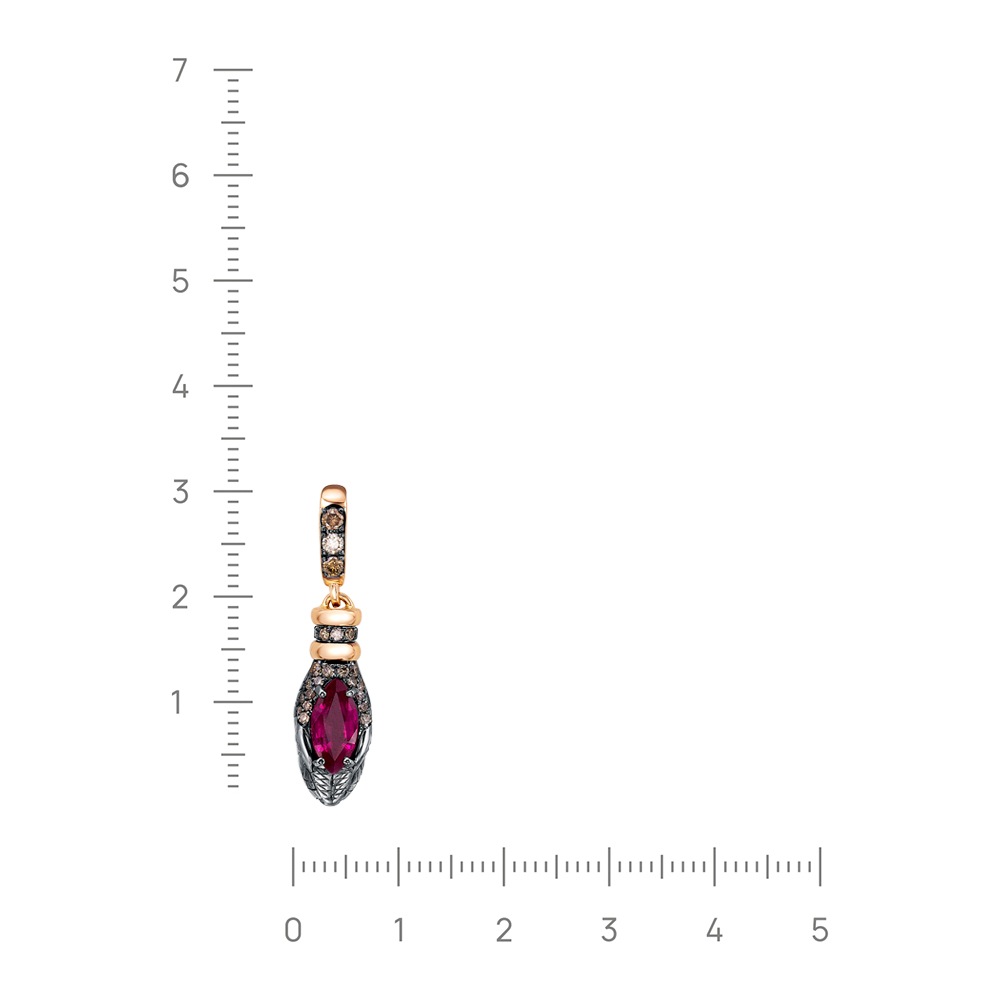
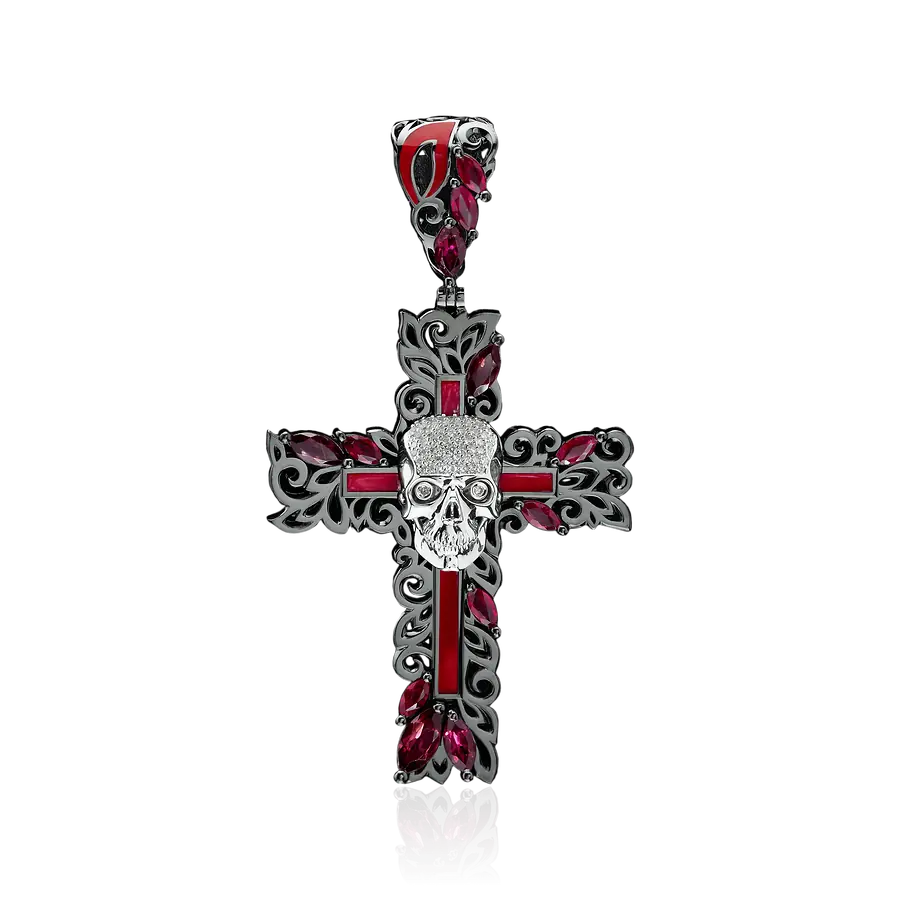


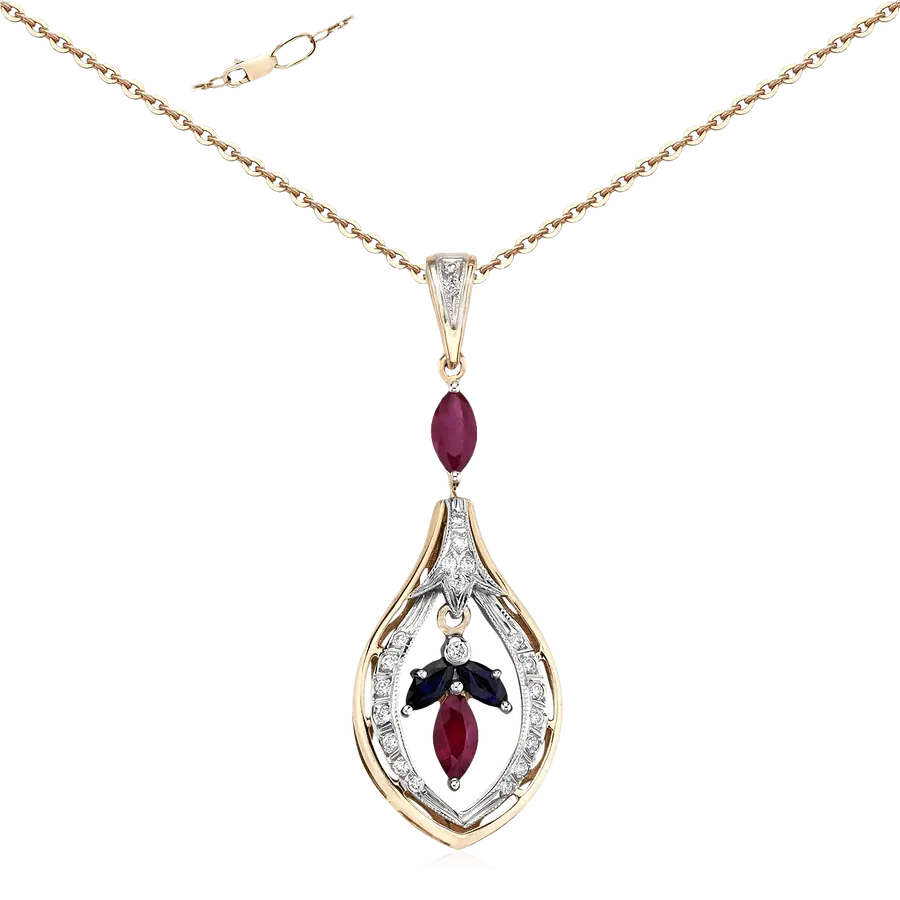


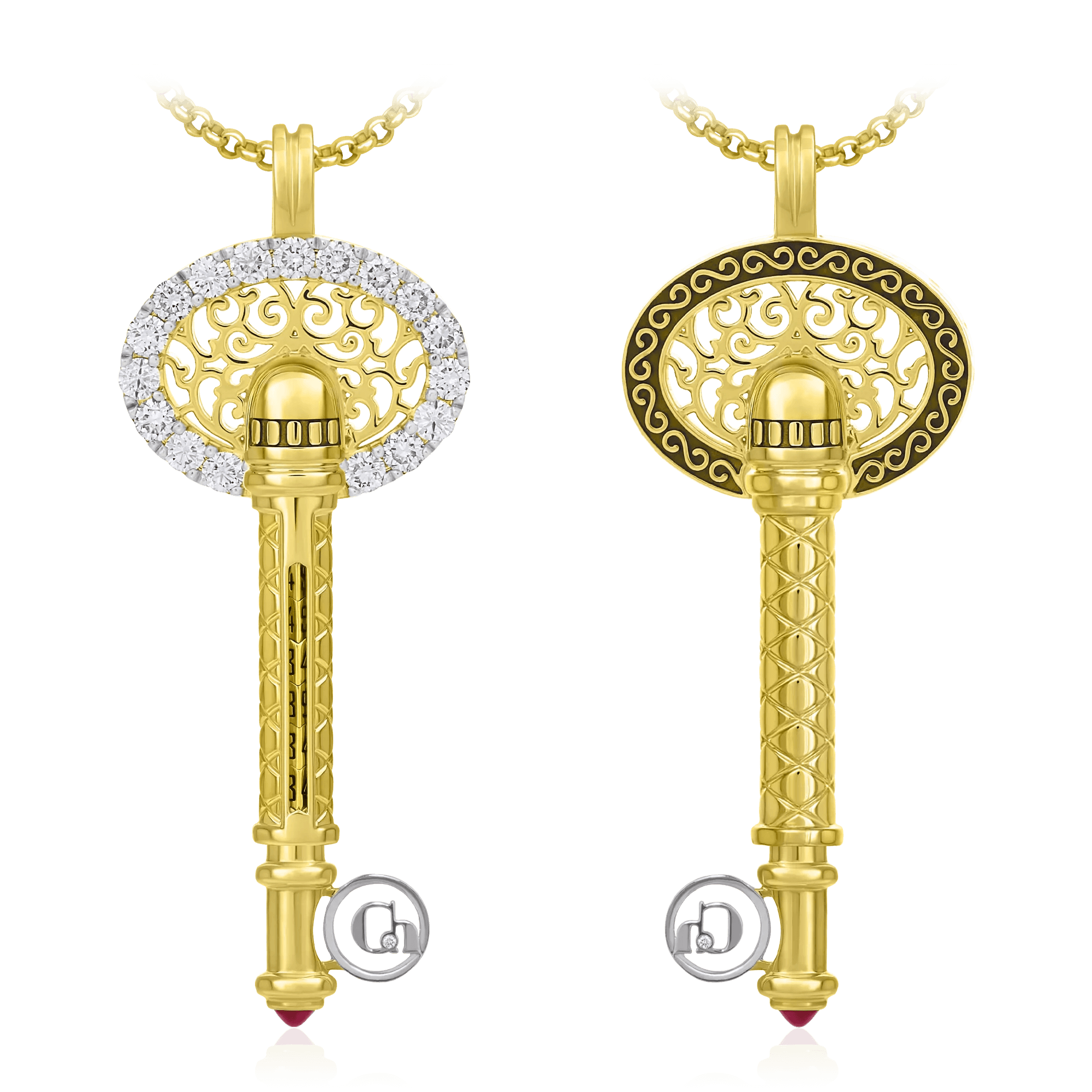
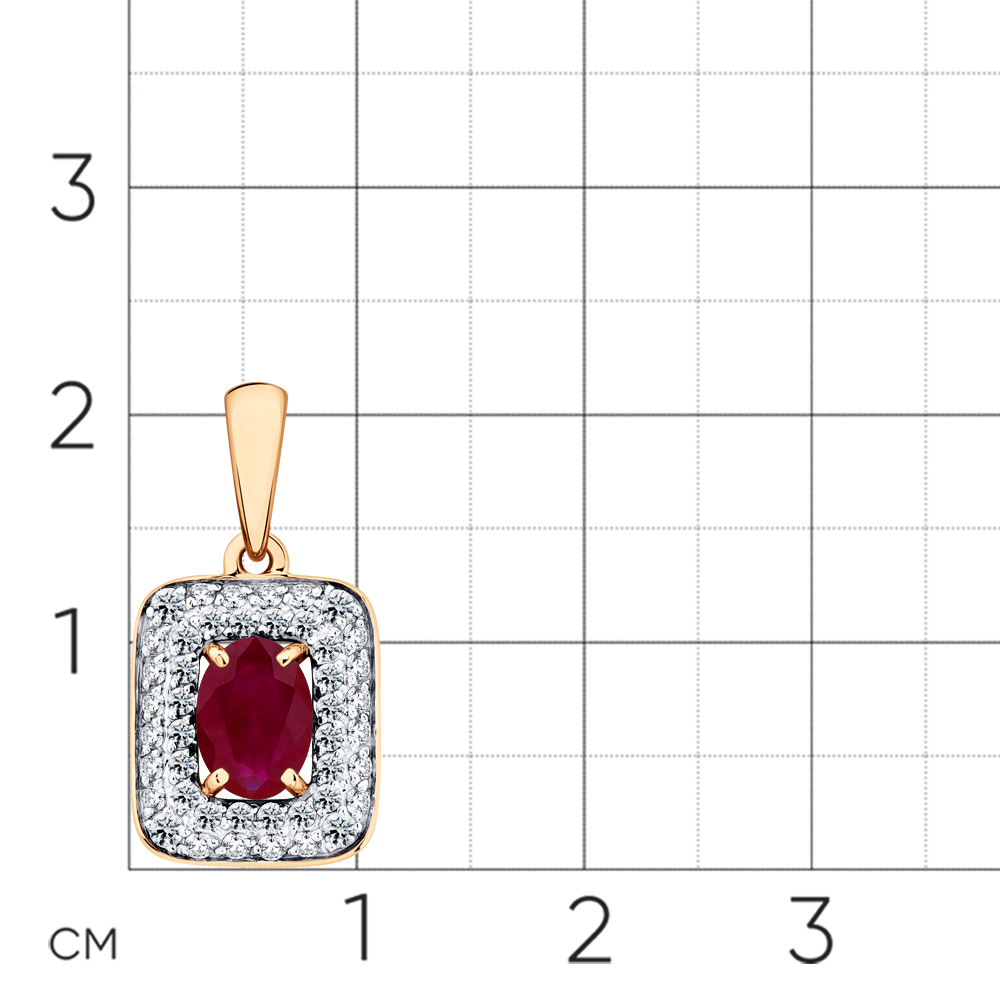
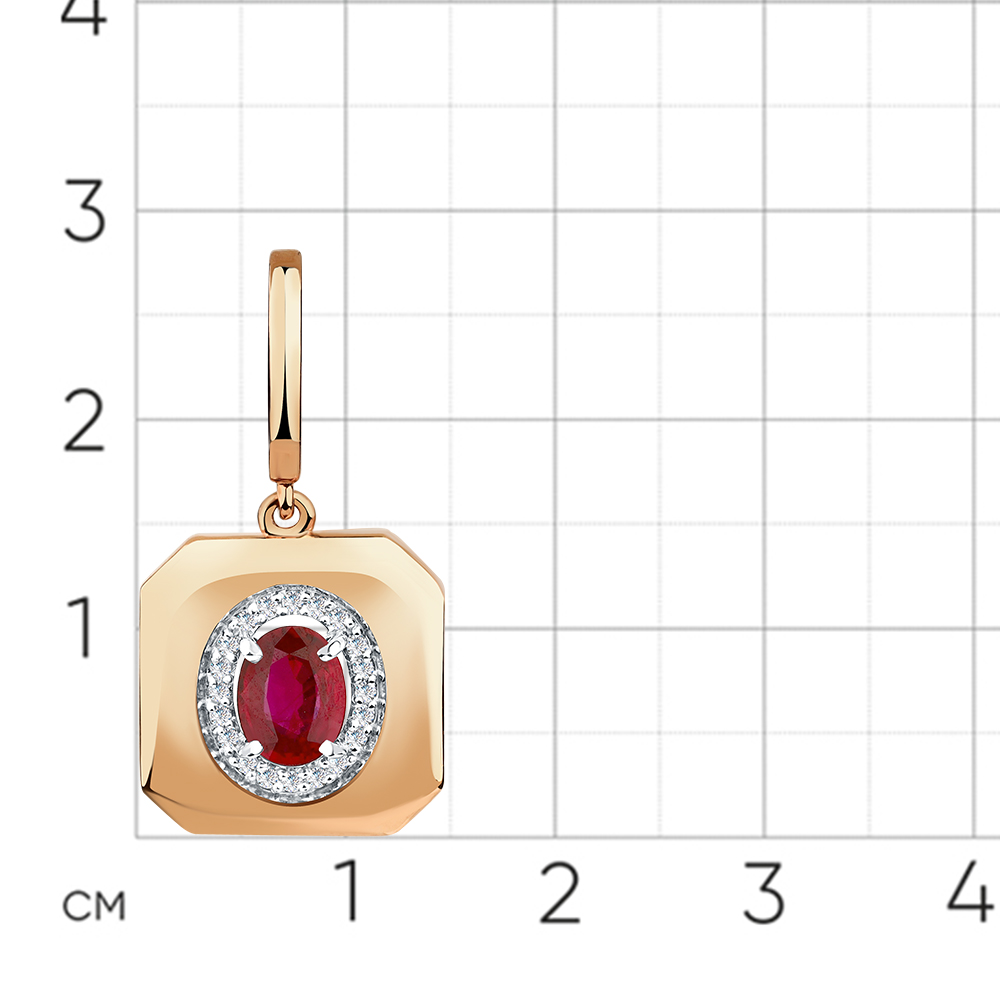
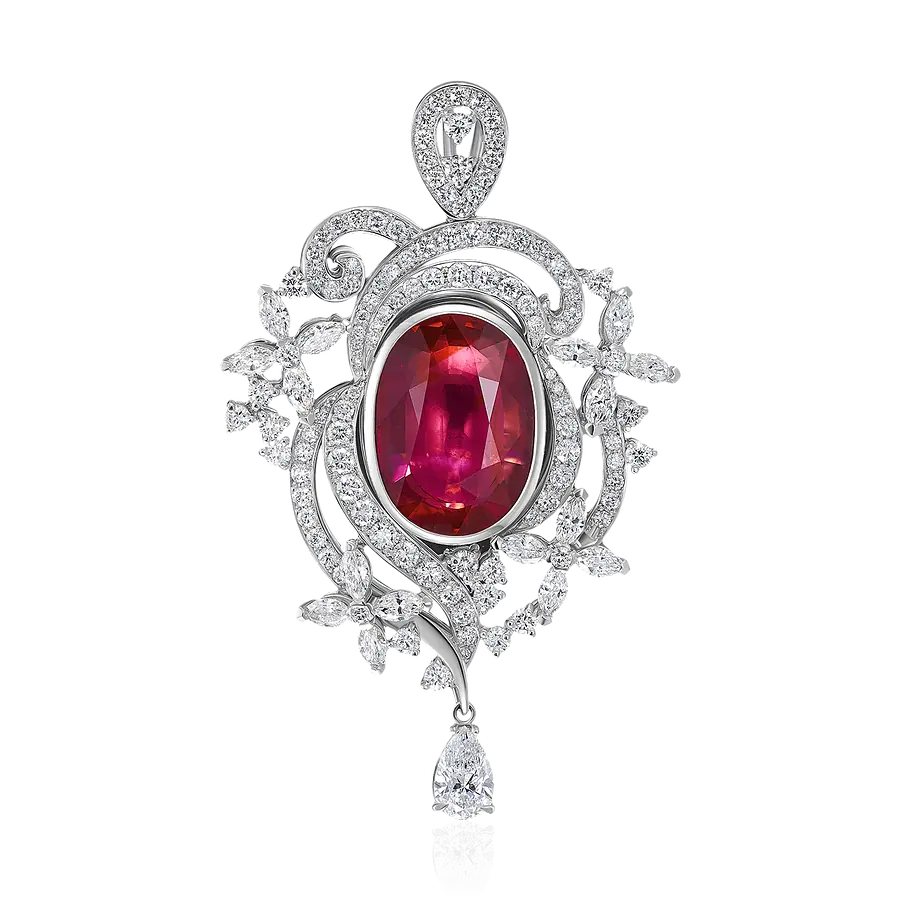
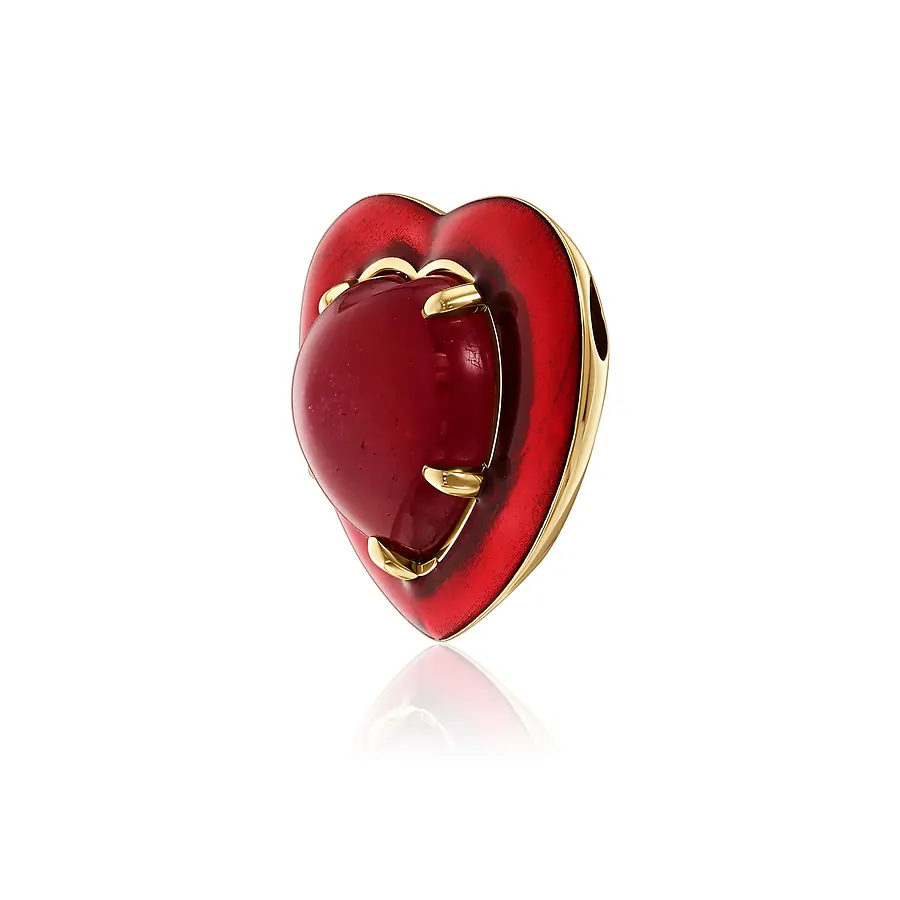
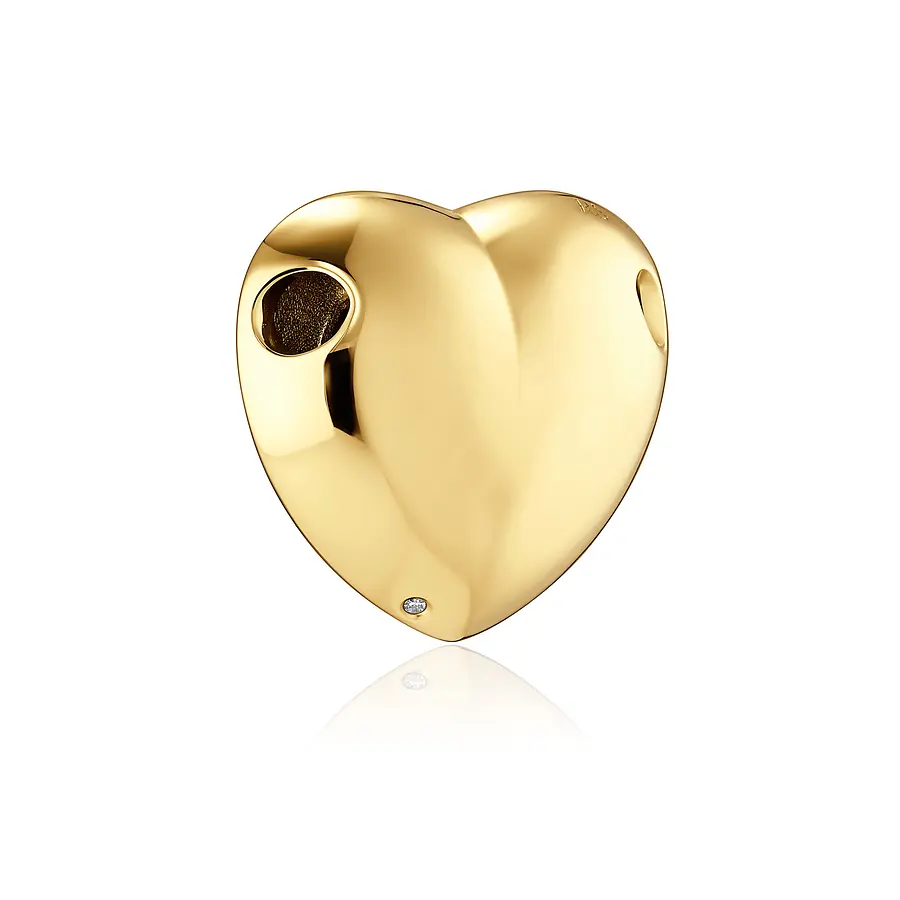
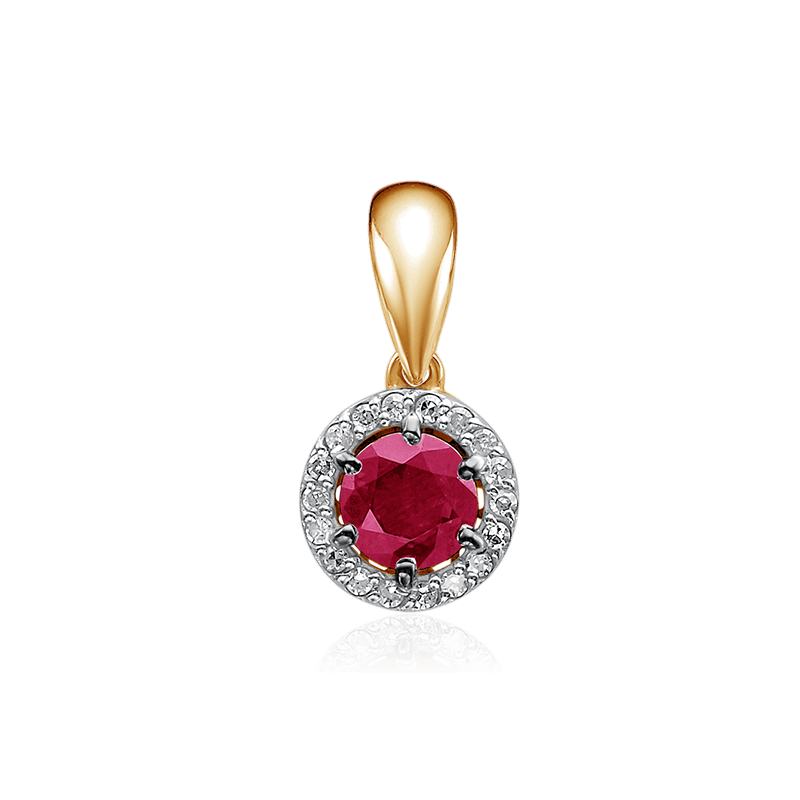
Ruby and sapphire are the same mineral: red corundum is called ruby, and corundum of any other color is called sapphire. Hence their characteristics: a hardness of 9 on the Mohs scale, second only to diamond, and a price that depends first of all on the depth of the red. The DAF catalog has 56 such pieces in 585 and 18K gold (750), starting at 23,900 ₽. A ruby pendant is available here in rose, white and yellow gold, and the stones come both faceted and as cabochons.
A gold pendant with ruby starts at 23 900 ₽, and half of the catalog falls within 101 950 ₽. The range here is wider than in other stone sections: five models cost less than fifty thousand, and twelve cost more than half a million.
We do have ruby pendants under fifty thousand, but there are only five of them. The breakdown is as follows: up to 50,000 ₽, five pieces; 50,000–100,000 ₽, twenty; 100,000–200,000 ₽, twelve; 200,000–500,000 ₽, seven. The largest group is from fifty to a hundred thousand, which accounts for more than a third of the section.
The spread is explained not by the gold but by the stone. A pendant with a ruby of a deep red tone costs several times more than a piece with a pale or brownish stone of the same weight: shade is the main price factor here, not carats. The second thing that pushes the price up is clarity: clean rubies of over a carat are rarer than emeralds of the same size. The third factor is the surround: a ruby pendant with a diamond halo costs more than one with a single stone, and the difference is not only in the cost of the diamonds themselves but also in the complexity of the setting.
Fineness is the share of pure gold in an alloy: 585 means 58.5%, 750 means three quarters. Most of the section is made in 14K gold (585). A ruby pendant in 18K gold (750) is less common: the alloy is softer, and for jewelry worn on a chain that is not always an advantage.
By metal color: red gold — 23 pieces, White — 20, yellow — 10, and one model in 18K black gold (750). Red gold is chosen most often for ruby, and not only out of tradition: the warm metal continues the red tone, while cool white gold gives contrast and makes the stone stand out. A ruby pendant in white gold looks more restrained, in red gold more festive.
White gold is plated with rhodium, and the plating wears away over time, so it is refreshed periodically, a procedure included in the store's service. Black gold is produced by darkening the surface: it is not a separate alloy but a coating, and it needs more careful handling than usual. It is best not to rub such a pendant with an abrasive cloth or leave it in a shared jewelry box.
A pendant (kulon) is a piece with its own loop or bail that is slipped onto a chain and can be taken off it; a drop pendant (podveska), strictly speaking, is permanently attached to the piece. In Russian retail the distinction has long since blurred, and the same item is called by both words.
We use them as synonyms. If you were looking for a kulon and found a pendant with ruby, it is the same piece of jewelry. A chain is not included and is chosen separately: for a light piece a 0.3 to 0.4 mm curb chain is enough, while for a heavy one you need an anchor or Bismarck weave. The average weight of a piece in this section is about two and a half grams, and almost any chain will hold such a pendant with ruby.
Corundum is the mineral that both rubies and sapphires are made of. The red variety is called ruby, and all the other colors, blue, pink, yellow and green, go by the name sapphire. The distinction is purely a trade one: mineralogically it is the same substance, with the same hardness and the same toughness.
The practical consequence matters more than the theory. The boundary between ruby and pink sapphire is a matter of convention: it runs along the depth of the red, and there is no single international standard. The same stone may receive different conclusions in different laboratories, and the difference in name changes the price several times over. So look at the specific shade on the product page, not at the word. A ruby pendant and a pink sapphire pendant may look almost identical yet differ in price by half.
The main cuts for ruby are round, oval, pear, “princess” and cabochon. The first four are faceted, they work for brilliance and suit transparent stones. A cabochon is a smooth dome without facets, used when the stone is opaque or contains inclusions that faceting would only emphasize. A pendant with a cabochon ruby looks calmer than a faceted one: it gives no flashes, but the color reads more evenly and deeply.
Asterism is a story of its own. Needle-like rutile inclusions inside corundum, when cut en cabochon, produce a six-rayed star on the surface that moves with the light source. Star rubies are valued separately from transparent ones and are judged by the sharpness of the star, not the clarity of the stone. Such pieces appear for sale irregularly, so availability is worth confirming with a manager.
The main signs of a natural stone are uneven color, inclusions inside, and cutting traces adapted to a particular crystal. A perfectly even, deep red with no flaws at all is a reason to ask about its origin: such stones are rare in nature and priced accordingly.
Heat treatment is a generally accepted worldwide practice, and most rubies on the market undergo it; it has a moderate effect on the price. Glass filling is another matter: the stone's cracks are filled with lead glass, which makes the ruby look clean and transparent, but in essence you are looking at a composite. Such stones cost several times less than untreated ones and require care with any heating or cleaning. When buying a ruby of a carat or more, it is worth asking directly whether the stone has been filled.
Every ruby pendant in our catalog is set with a natural stone. There are no synthetic rubies in the catalog, even though lab-grown corundum has been produced industrially since the early twentieth century, costs next to nothing, and cannot be told apart from a natural stone in a photo.
Three rules are enough for jewelry to last: take it off before using household chemicals, store it apart from soft stones, and clean it with a soft cloth and warm water. A ruby has a hardness of 9 on the Mohs scale, so in everyday life there is practically nothing that can scratch it except diamond.
It is precisely because of its hardness that it poses a danger to its neighbors in the jewelry box: ruby will easily mark gold, pearl, opal and emerald. A separate pouch or compartment solves the problem completely. Storing a ruby piece next to an emerald or pearl one is a sure way to damage the latter.
Most rubies tolerate ultrasonic cleaning well, but there is an exception: glass-filled stones. For them, an ultrasonic bath is not advised: the glass in the fractures reacts to vibration and temperature change. If the treatment history is unknown, it's safer to stick to hand cleaning.
Pendants with ruby can be ordered on the site with delivery across Russia or seen in person at the DAF boutique in central Moscow. Red is the color a camera captures worst: the warm light of a showcase makes the stone more saturated, while daylight makes it lighter and more transparent.
If visiting is not convenient, ask the manager to film a video in different lighting. It is also worth asking for the weight of the stone in carats and the type of treatment: these two parameters explain the price better than any description. If a pendant with ruby is being bought as a gift, it makes sense to find out in advance whether the recipient wears a chain and what length: the pendant and chain are chosen as a pair, and changing just one of them later is inconvenient.
Ruby is traditionally considered the birthstone of July, and its red color makes such jewelry a frequent anniversary gift; in particular, the fortieth wedding anniversary is called the ruby anniversary. Returns are accepted within fourteen days, and chain size exchanges within seven.
No. The catalog contains only 585 and 18K gold (750); we do not make silver pieces with ruby.
23,900 ₽. There are five designs in the section under fifty thousand, and twenty between fifty and one hundred thousand.
Only the color. It is one mineral, corundum: red is called ruby, and any other color goes by the name sapphire. Hardness, durability, and care are the same.
Yes, all stones are natural. There are no synthetic rubies in any model in the catalog.
This is a stone whose fractures are filled with lead glass. It looks cleaner than a natural one, but costs several times less and tolerates heat and ultrasound worse. When buying a large ruby, ask about the type of treatment separately.
A stone with needle-like rutile inclusions, cut as a cabochon: a six-rayed star is visible on the surface and moves with the light. It is judged by the sharpness of the star, not by transparency.
We will contact you shortly.
Unfortunately, we cannot deliver to this locality. Please choose another city nearest to you.
How to get them. 3% of every order on the site. Sign in with your phone number to receive bonuses.
How to spend them. Sign in, add jewelry to your cart and specify at checkout how much to redeem. Bonuses can pay up to 10% of the price.
Confirm that you are not a robot
Unfortunately, this item is currently out of stock. We can make the jewelry individually to your requirements. Our consultant will contact you
Our consultant will contact you shortly
Refresh the page and send the message again
Specify the size of the jewelry and try again
Enter your number and our manager will contact you about the price calculation
Refresh the page and submit the order again