587 000 ₽
We use cookies to improve the site and give you more options. By continuing to use the site, you agree to cookie usage terms.We use cookies. Learn more


By popularity


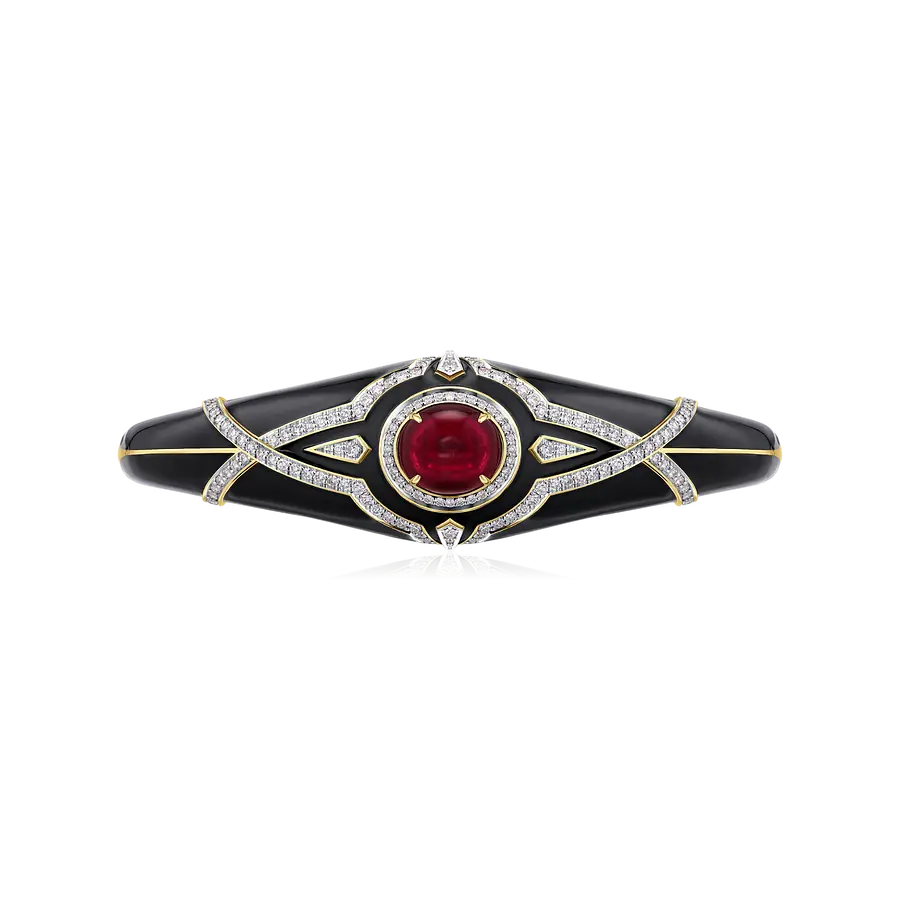
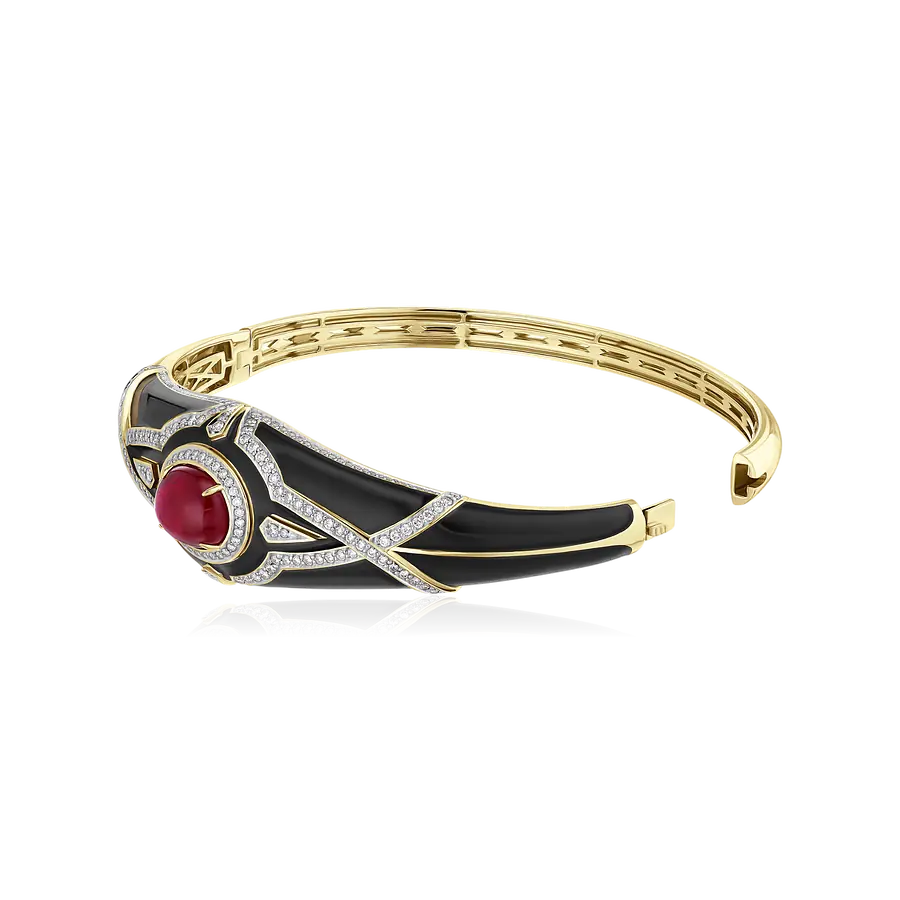
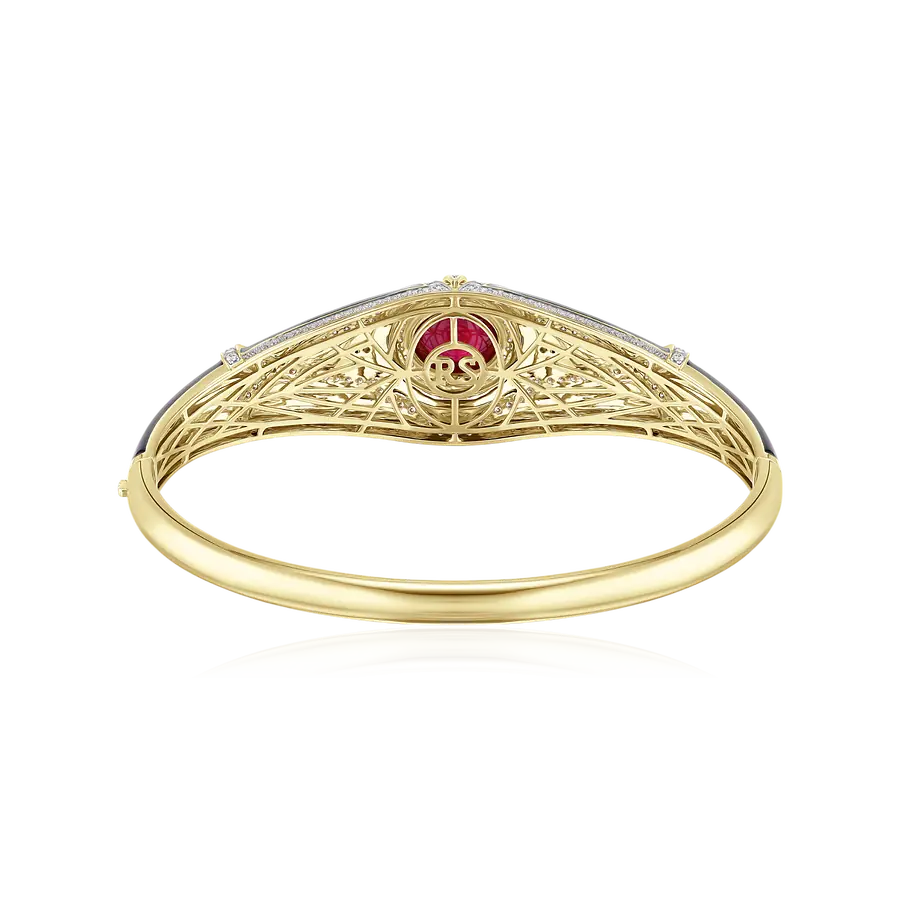




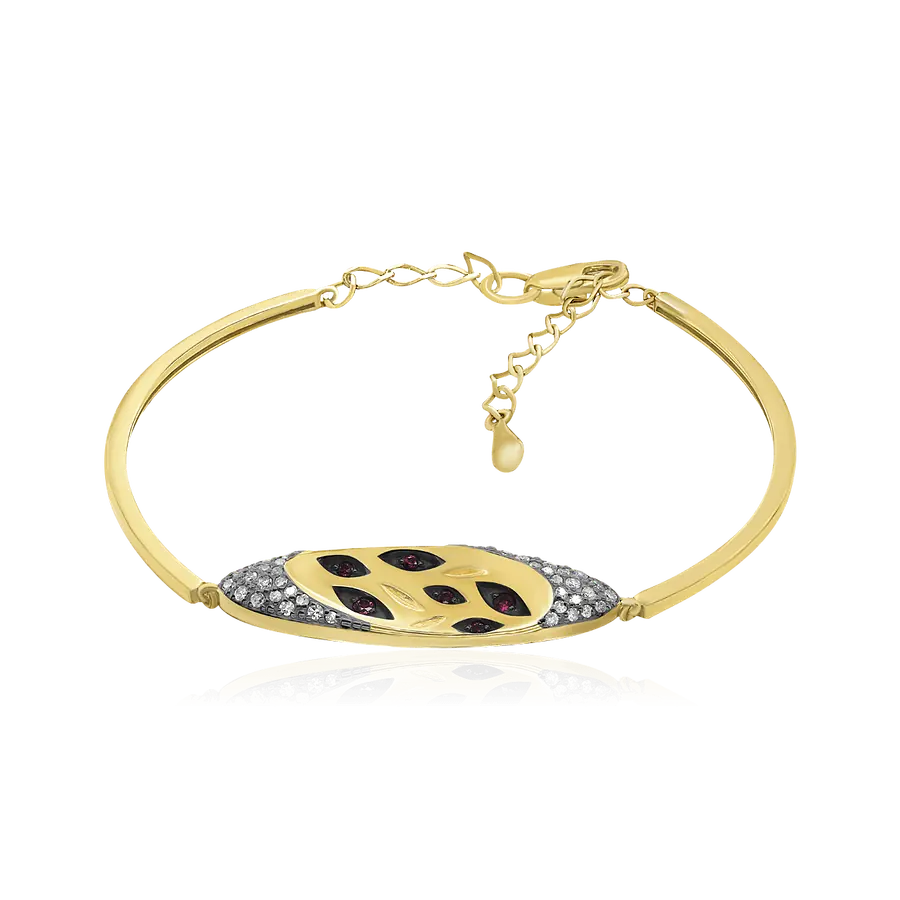

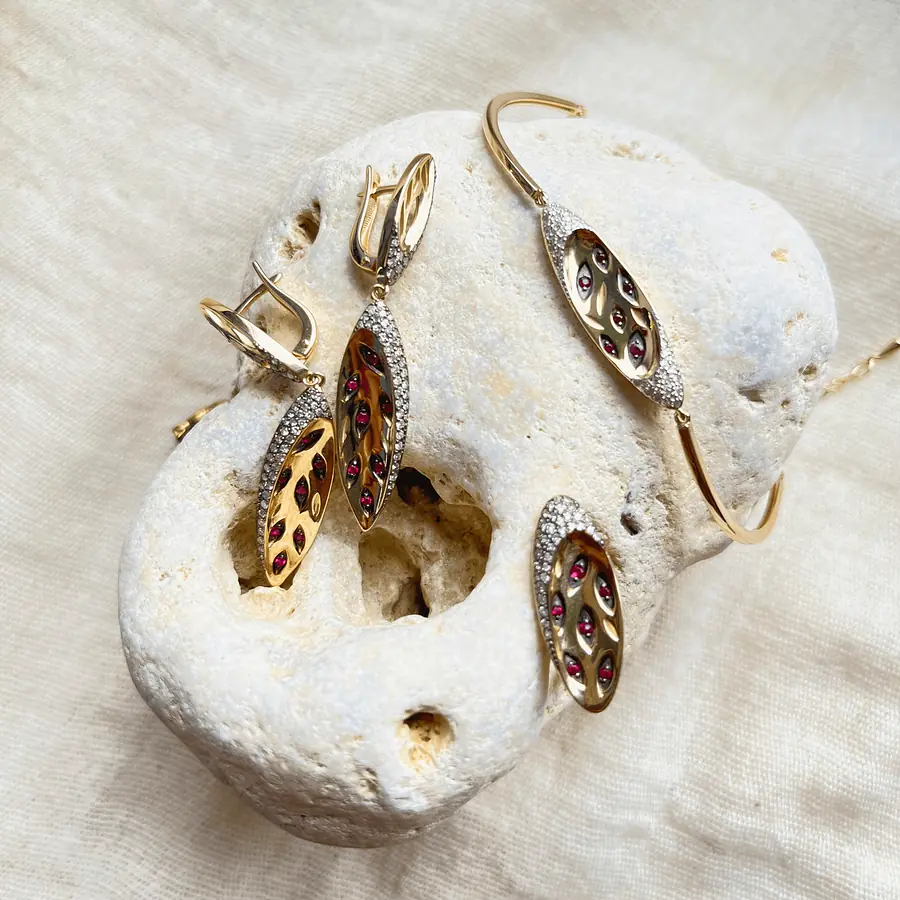
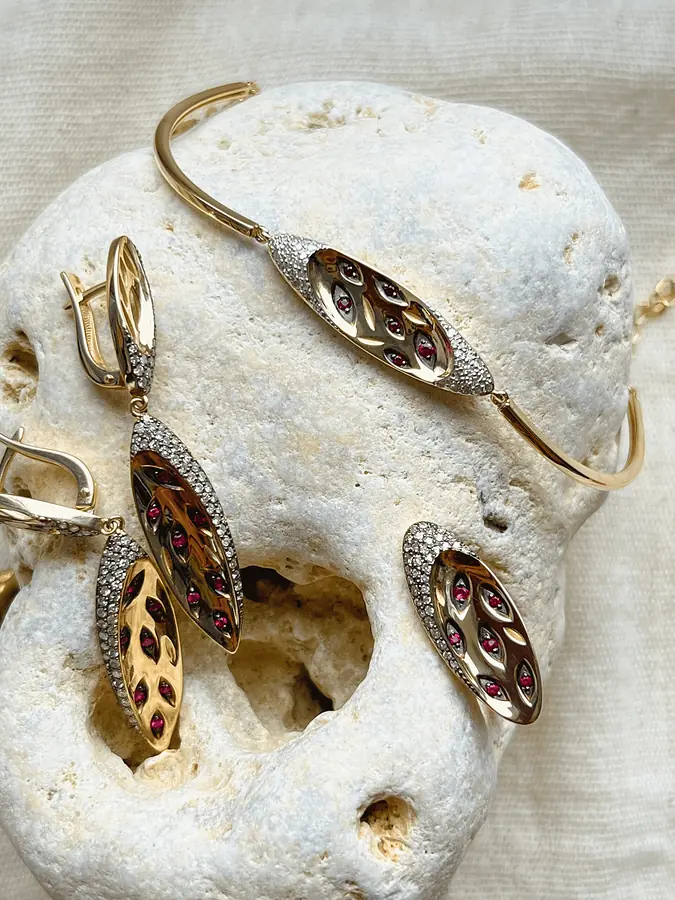
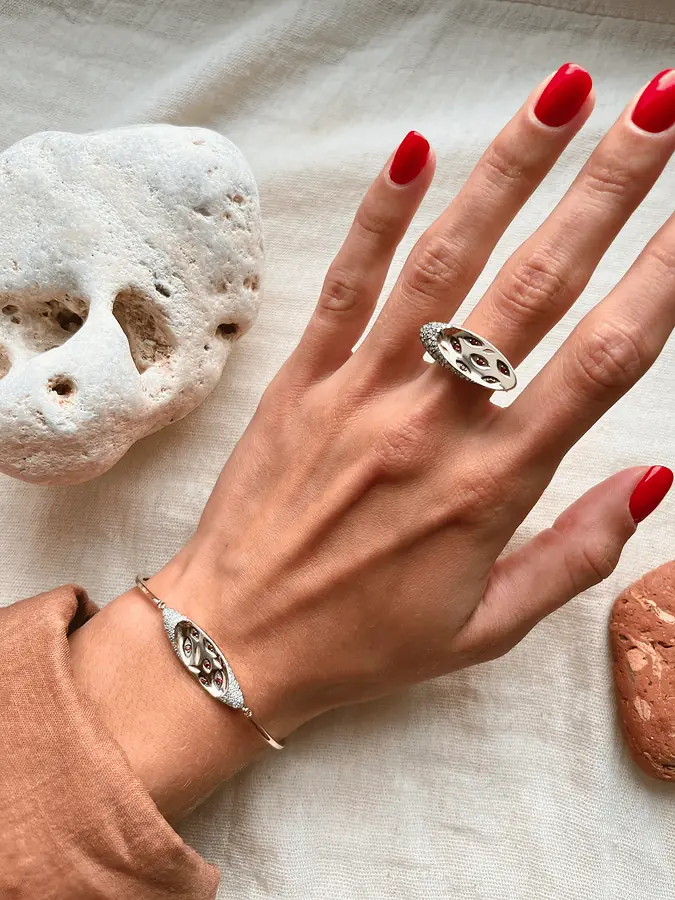
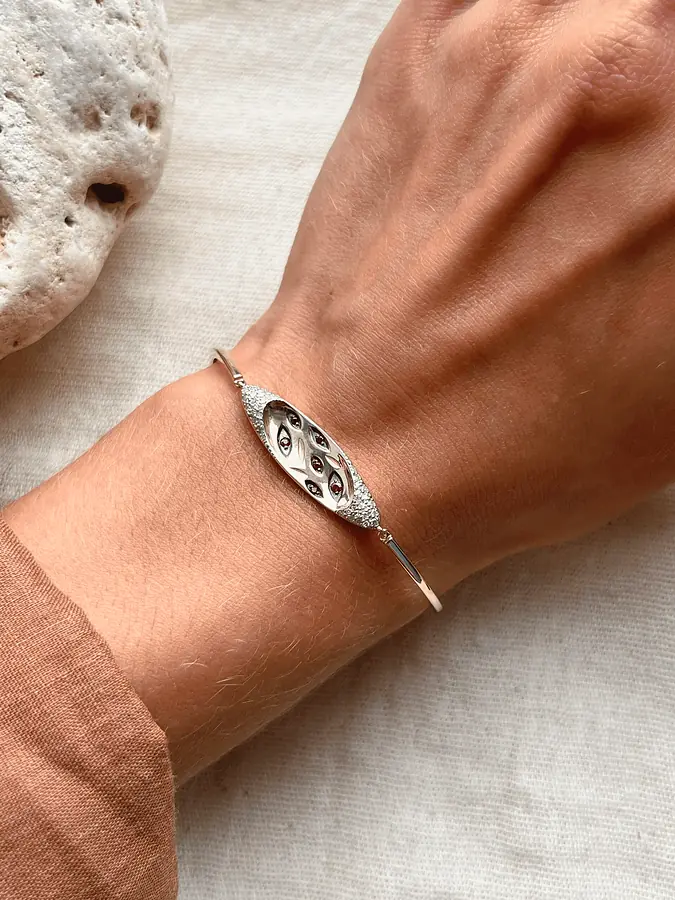

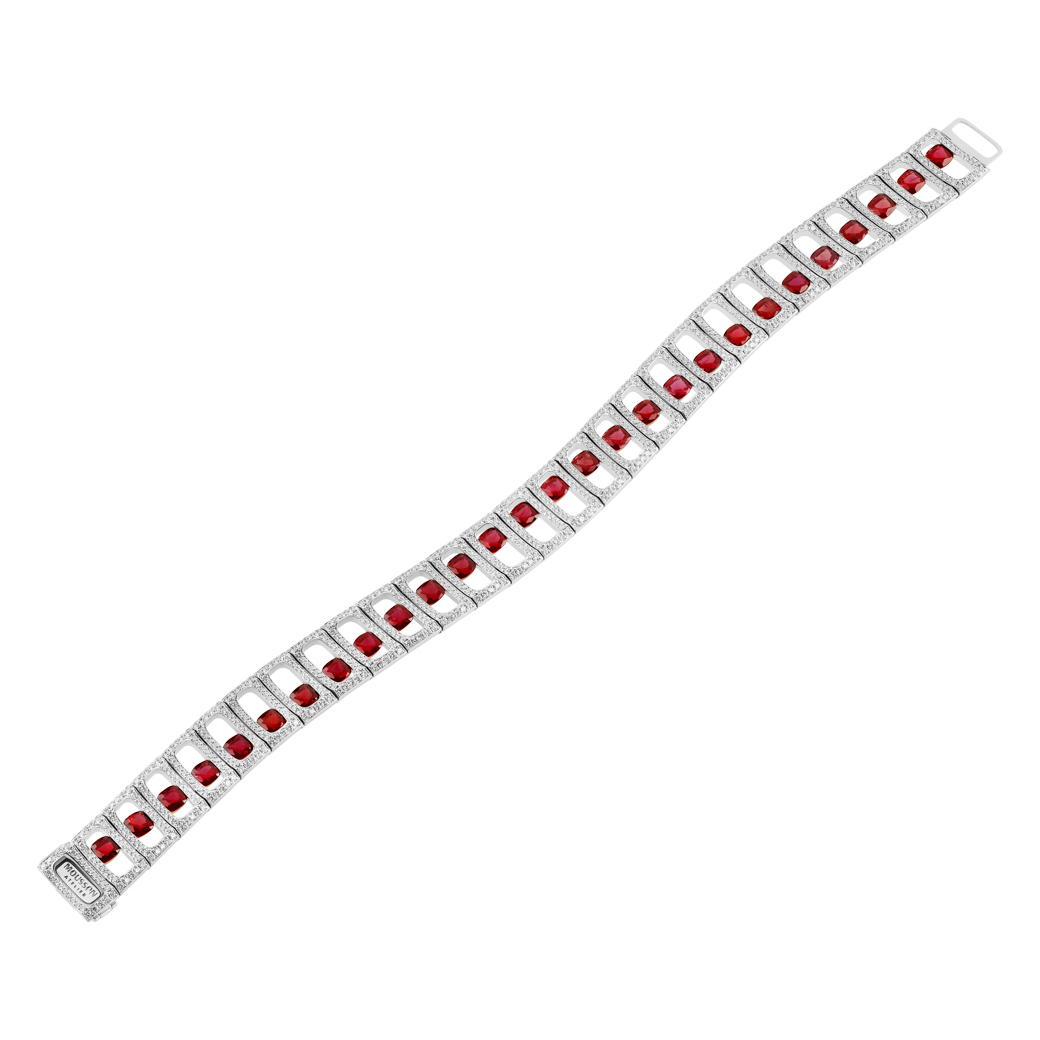
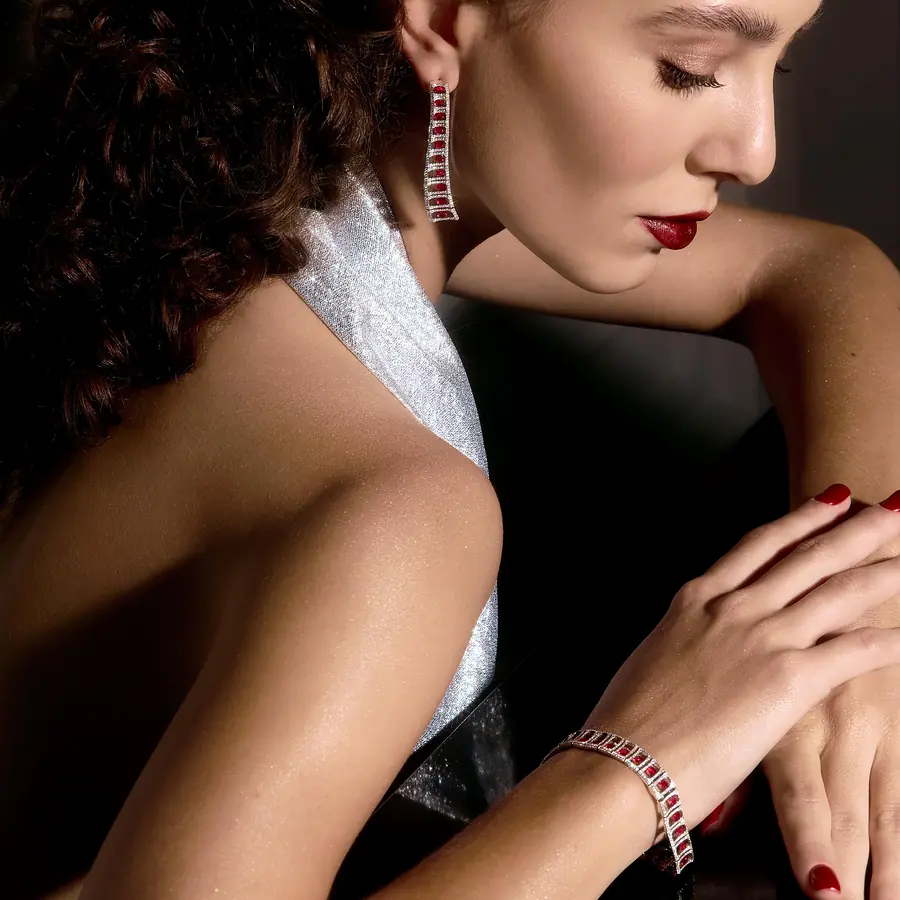
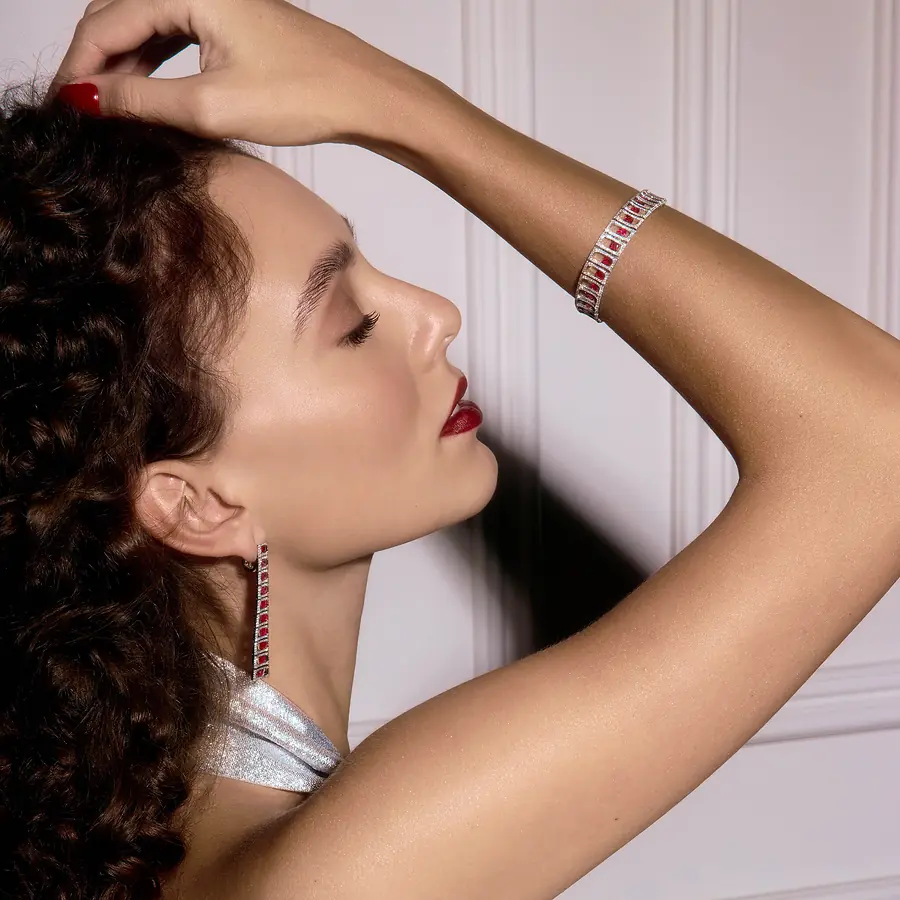

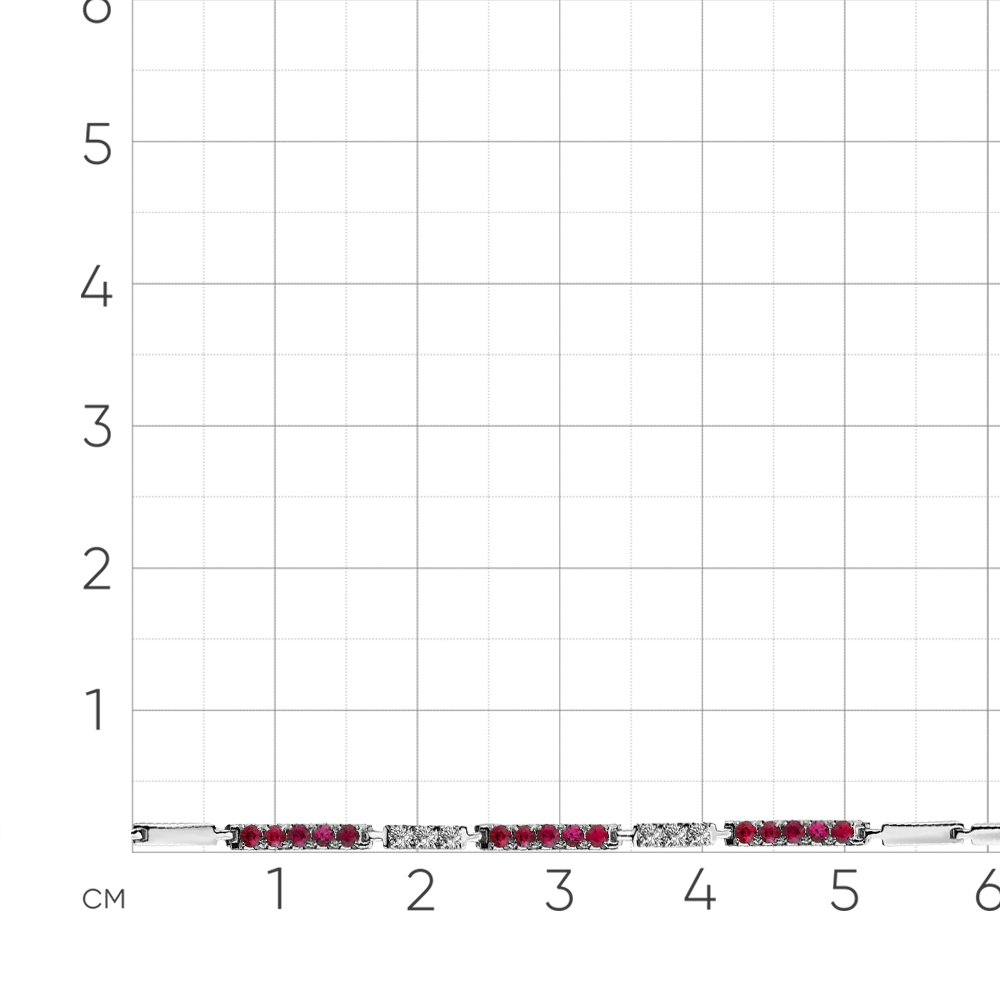


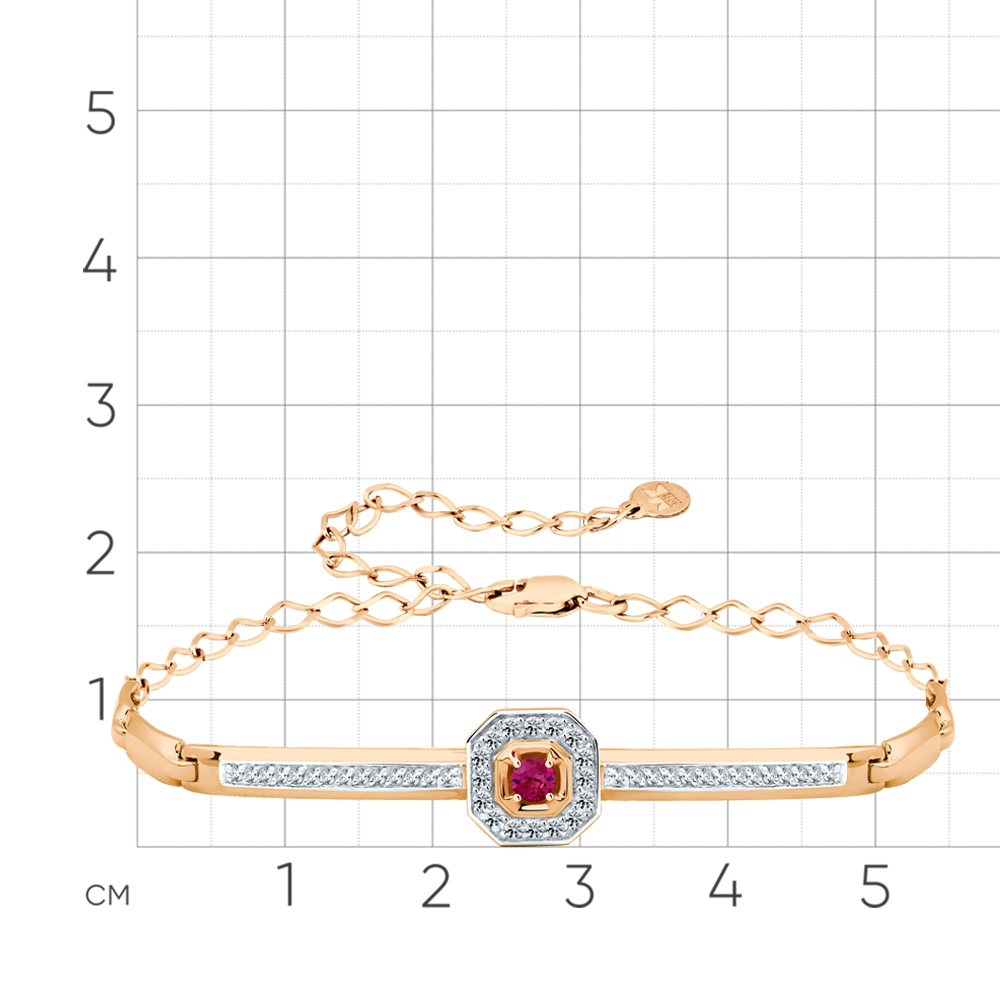


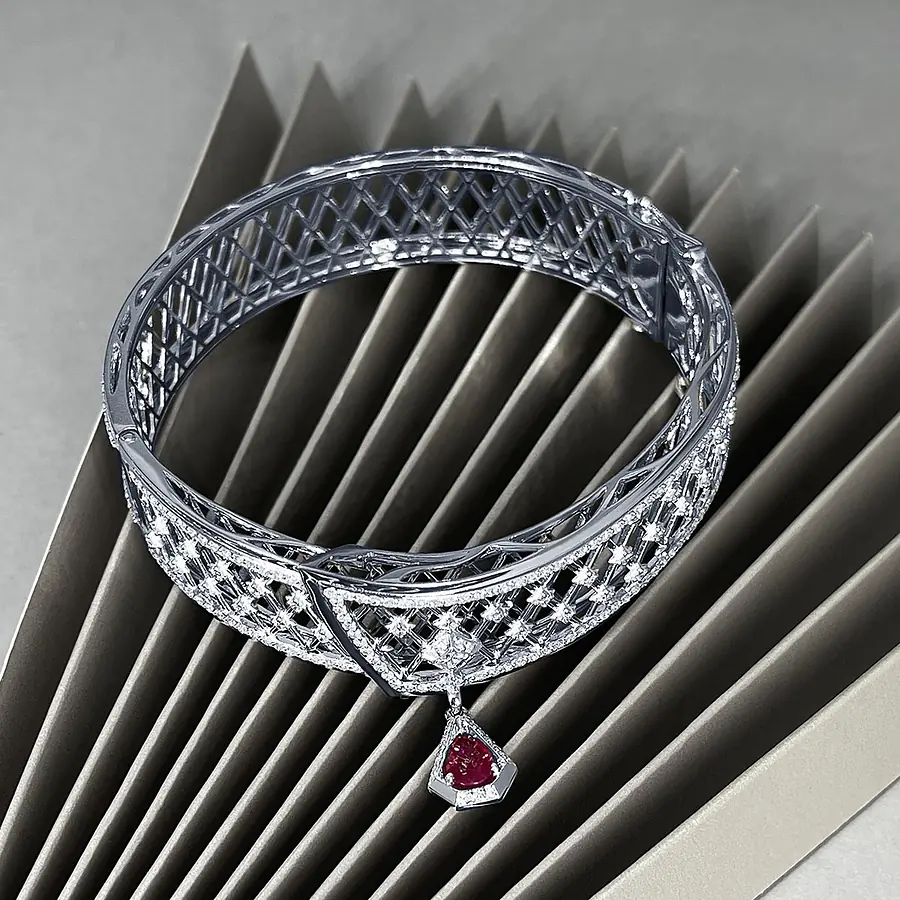
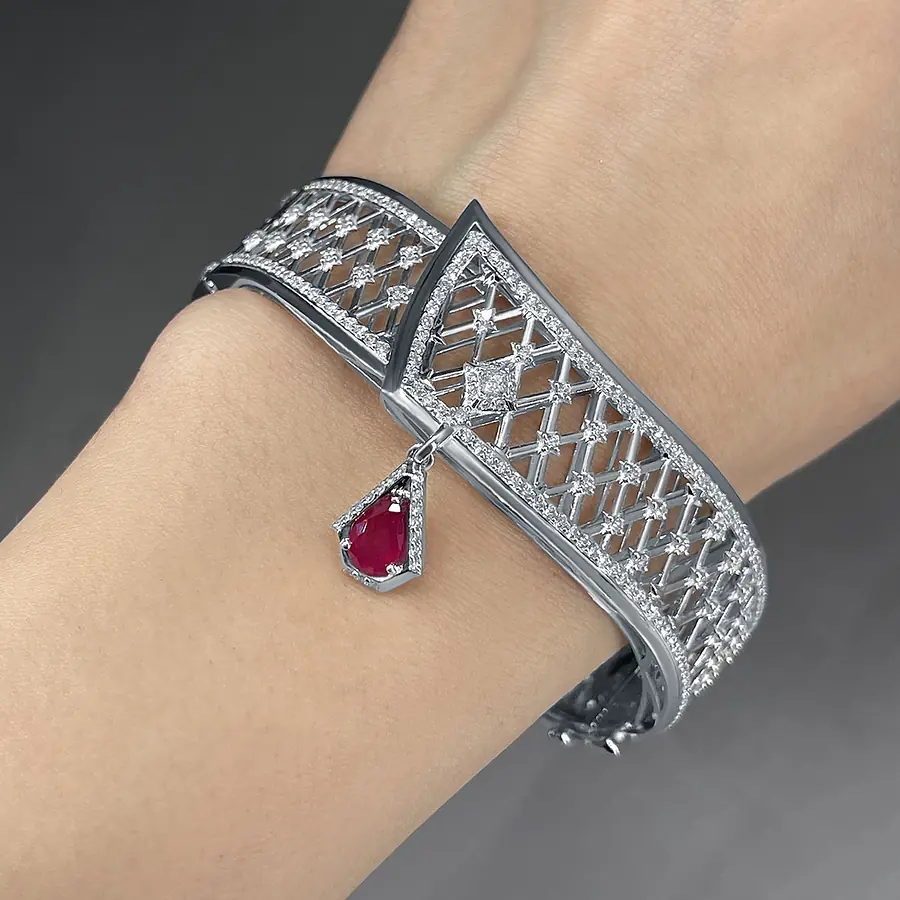

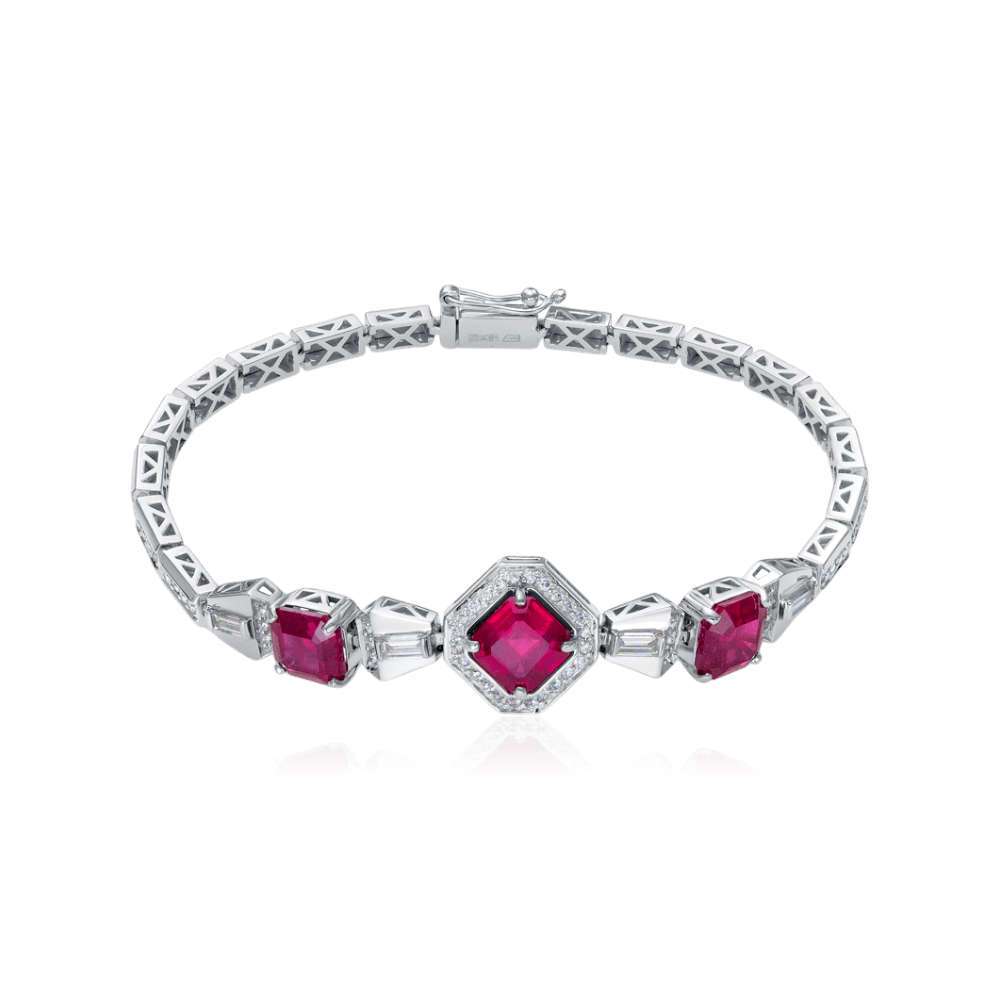
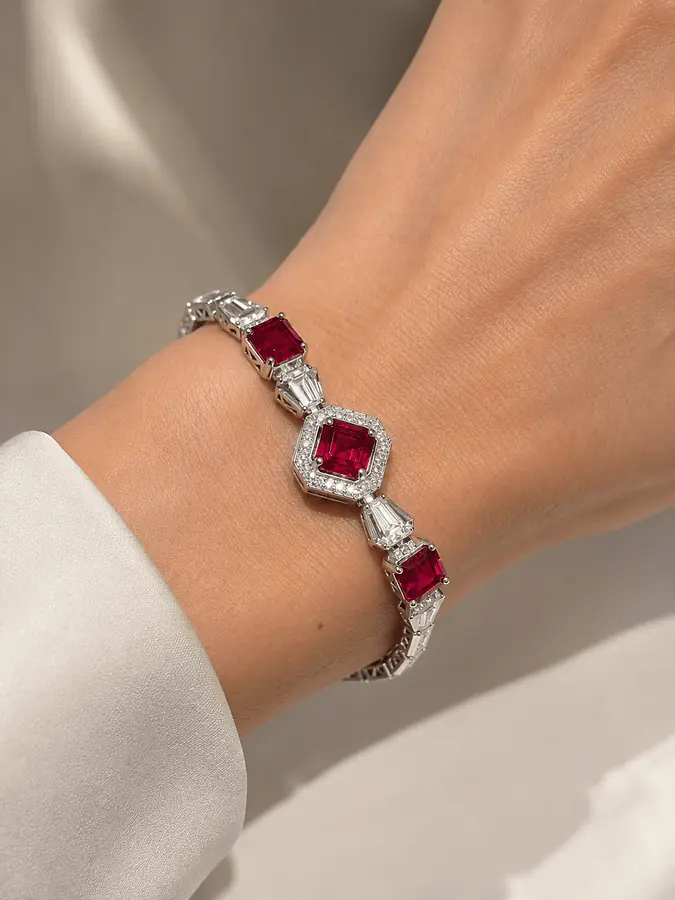

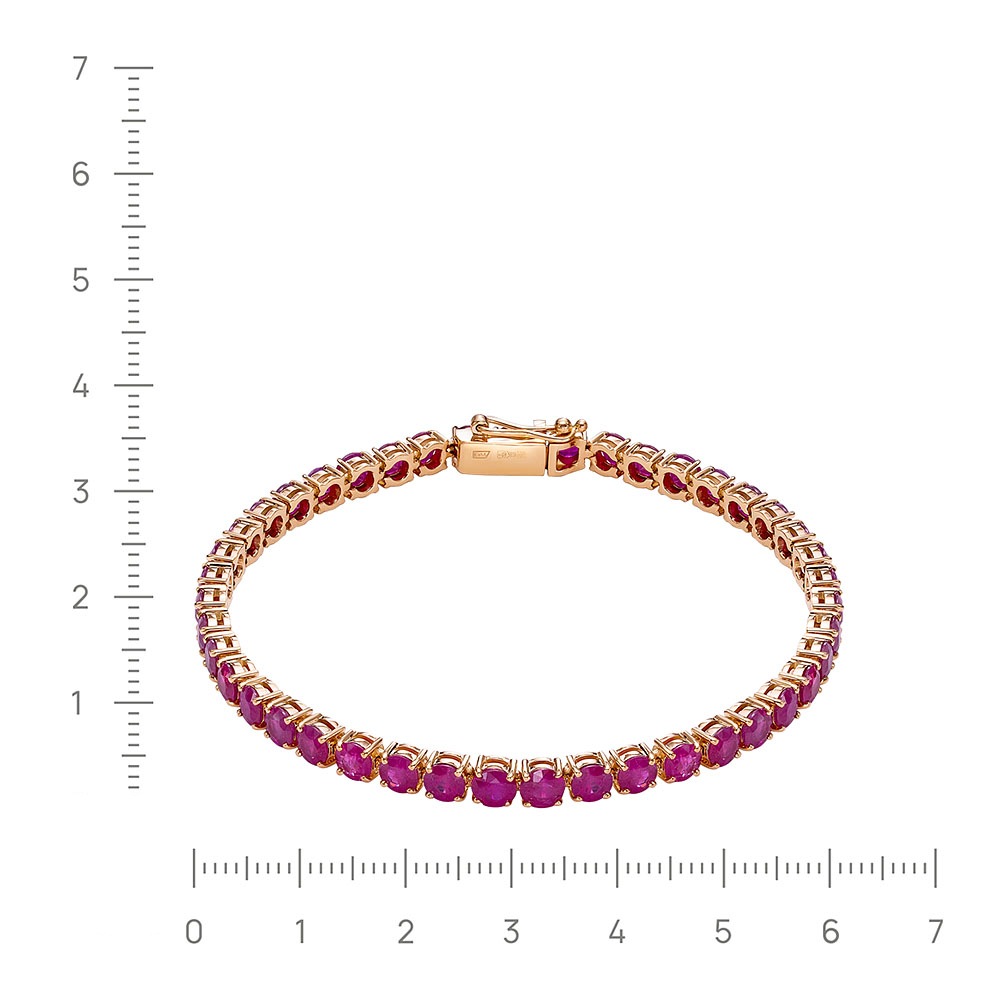
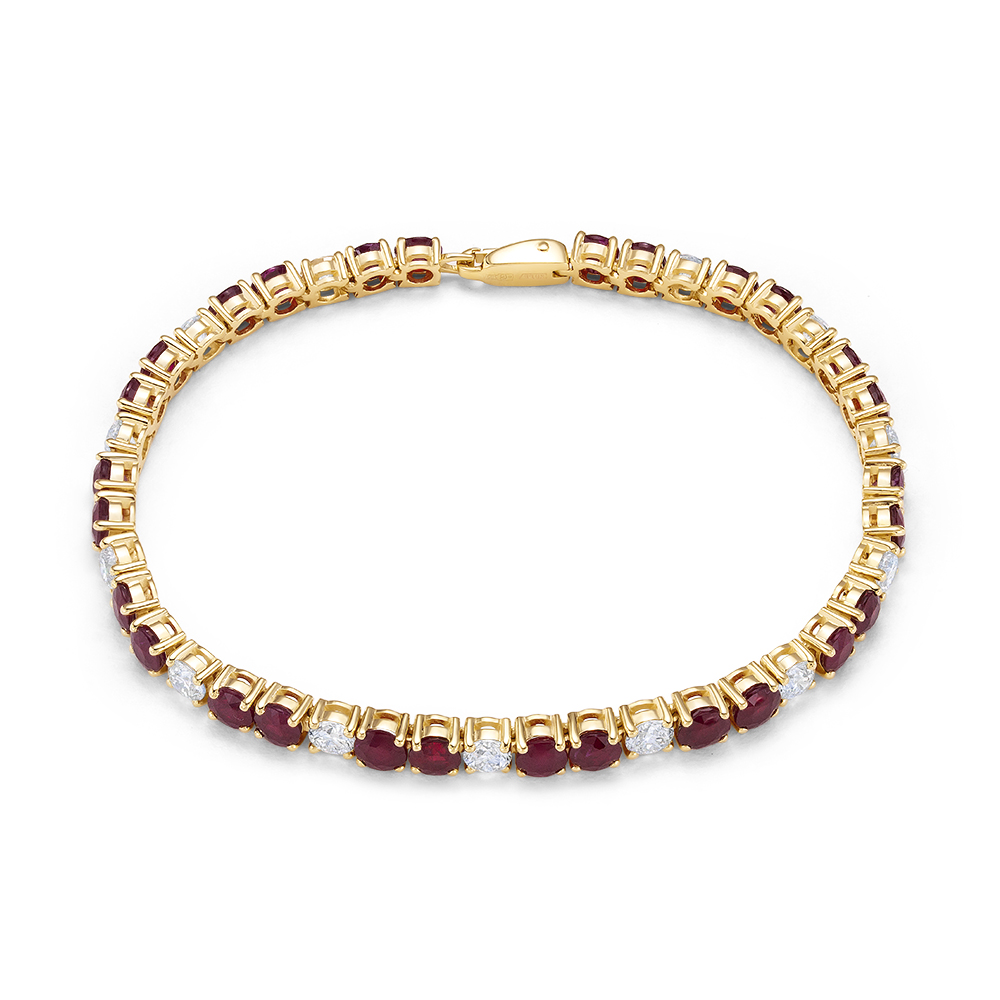
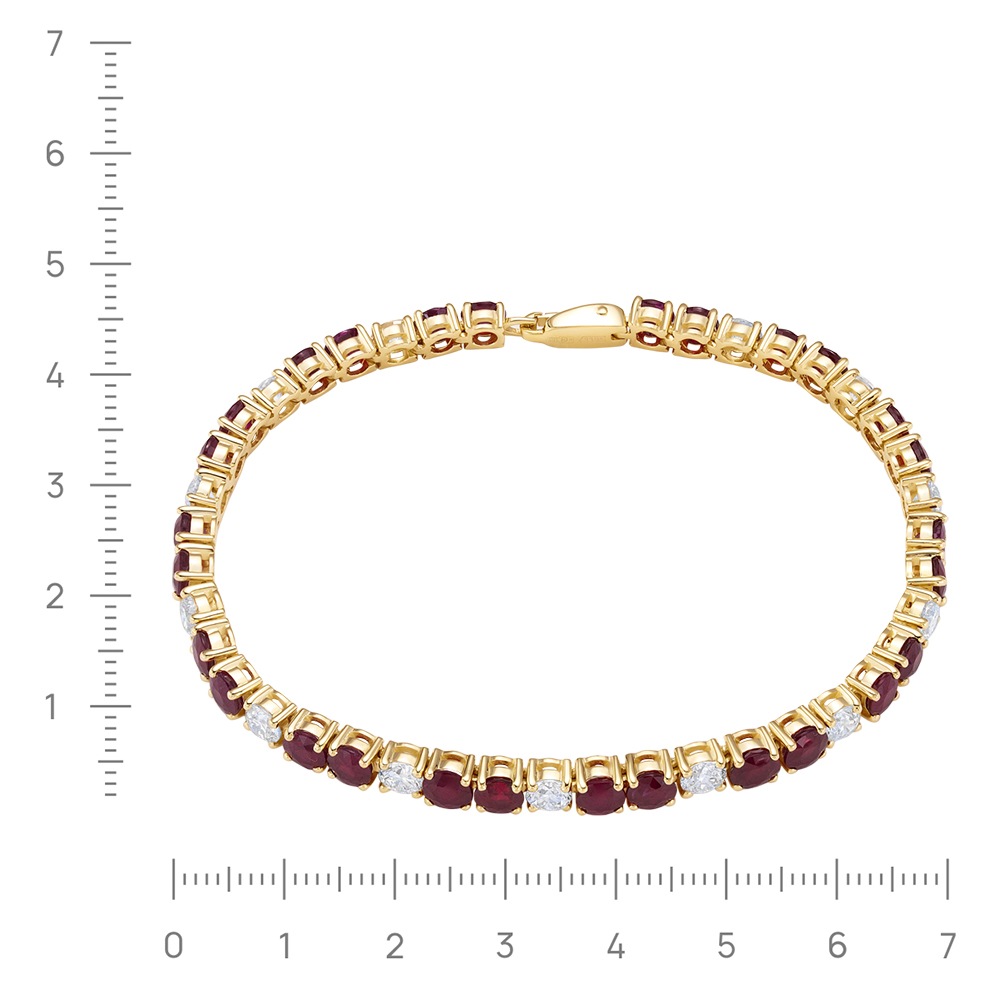

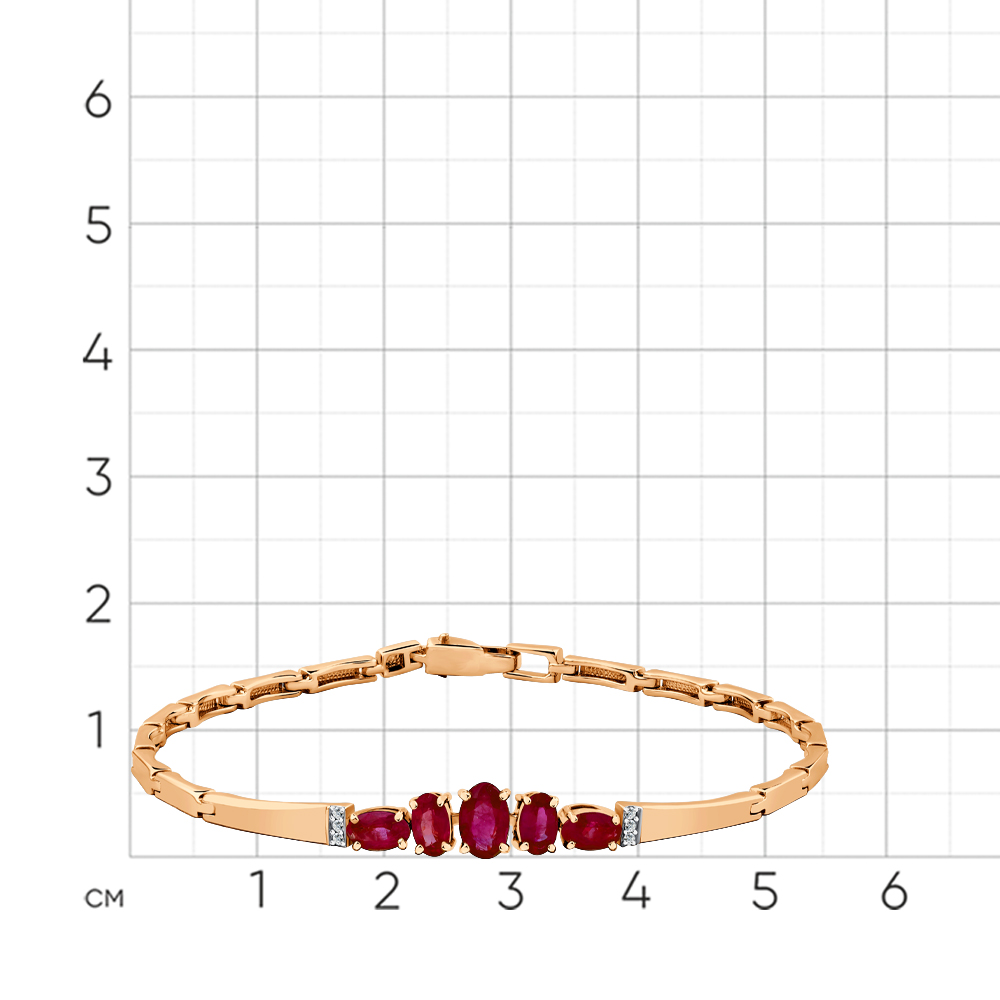

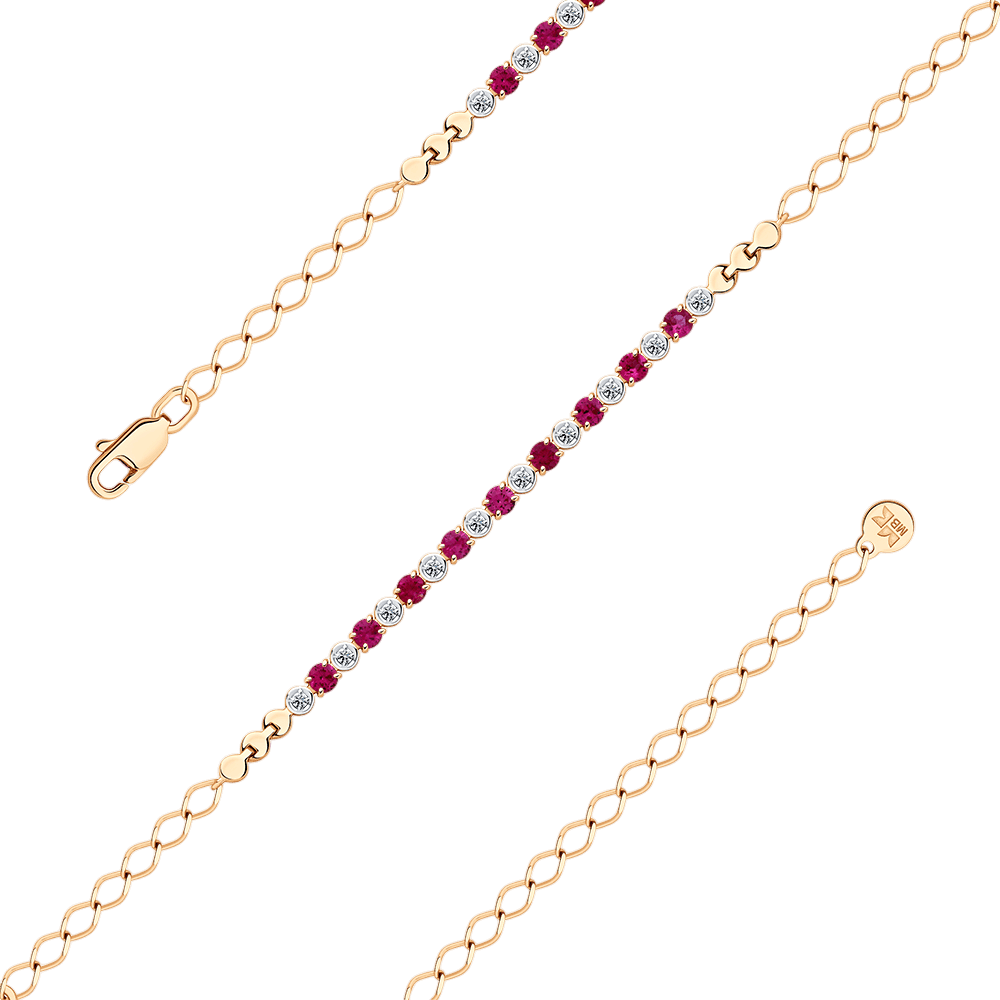
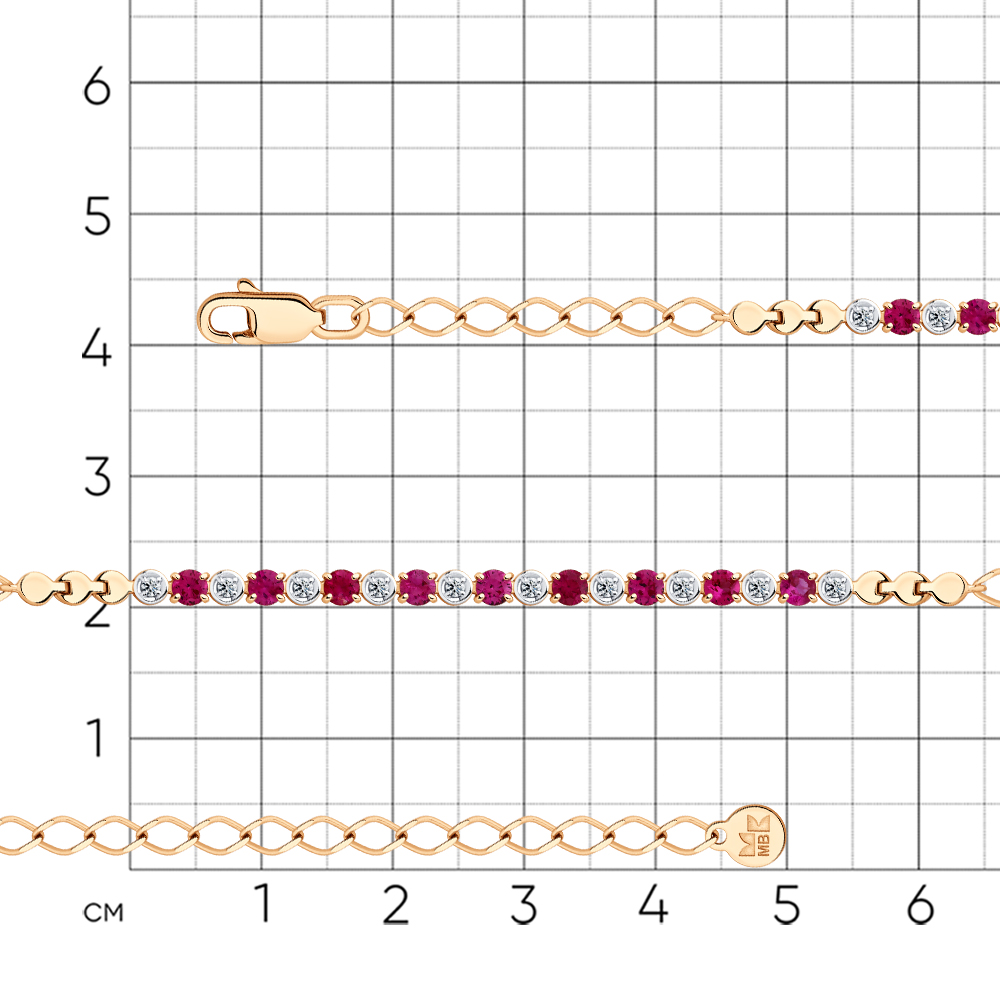


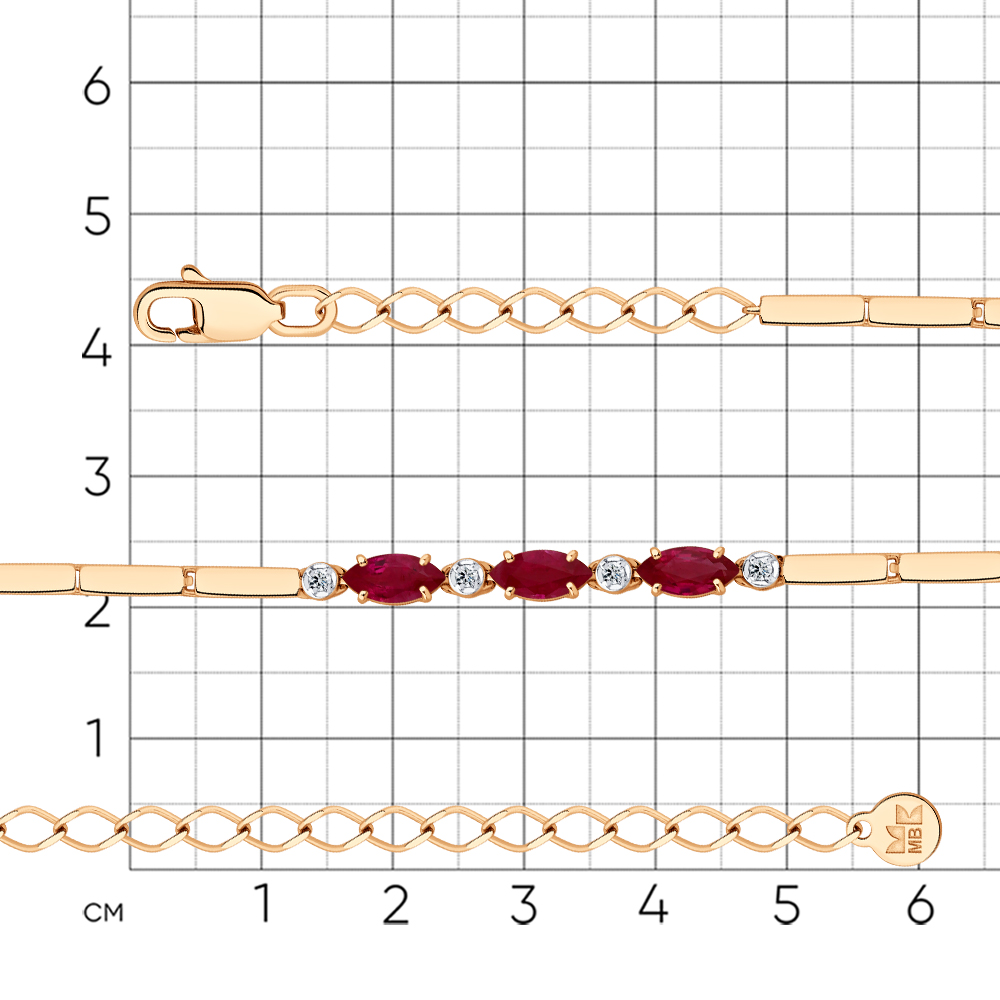

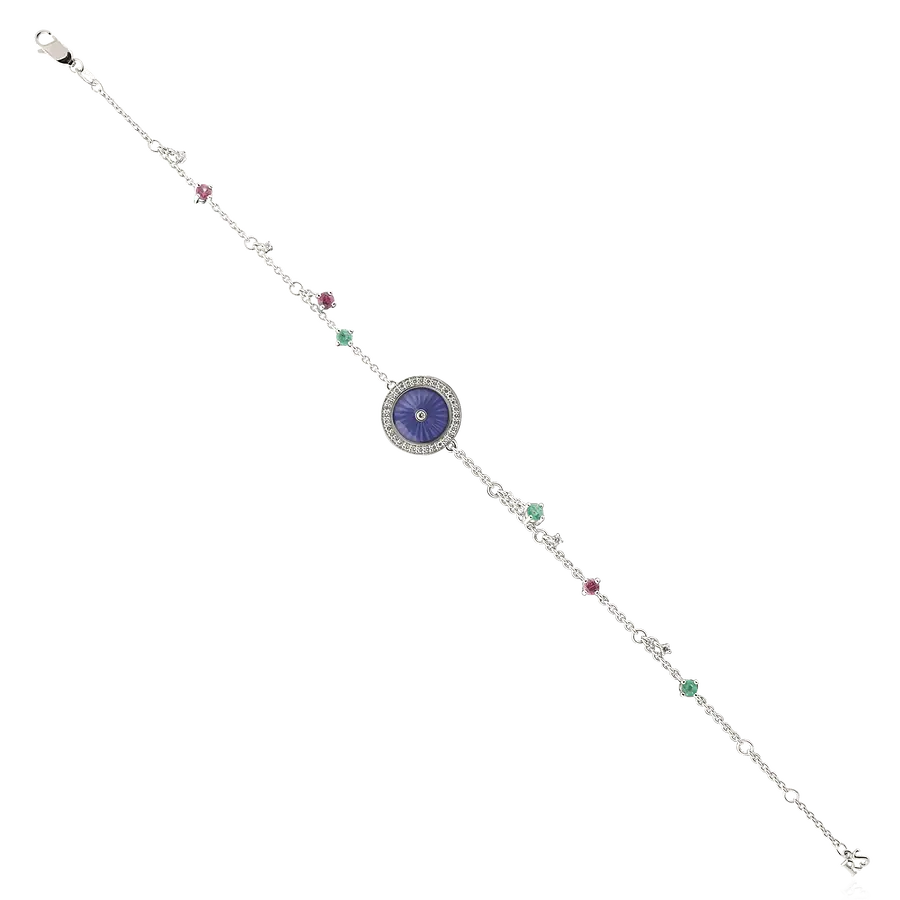

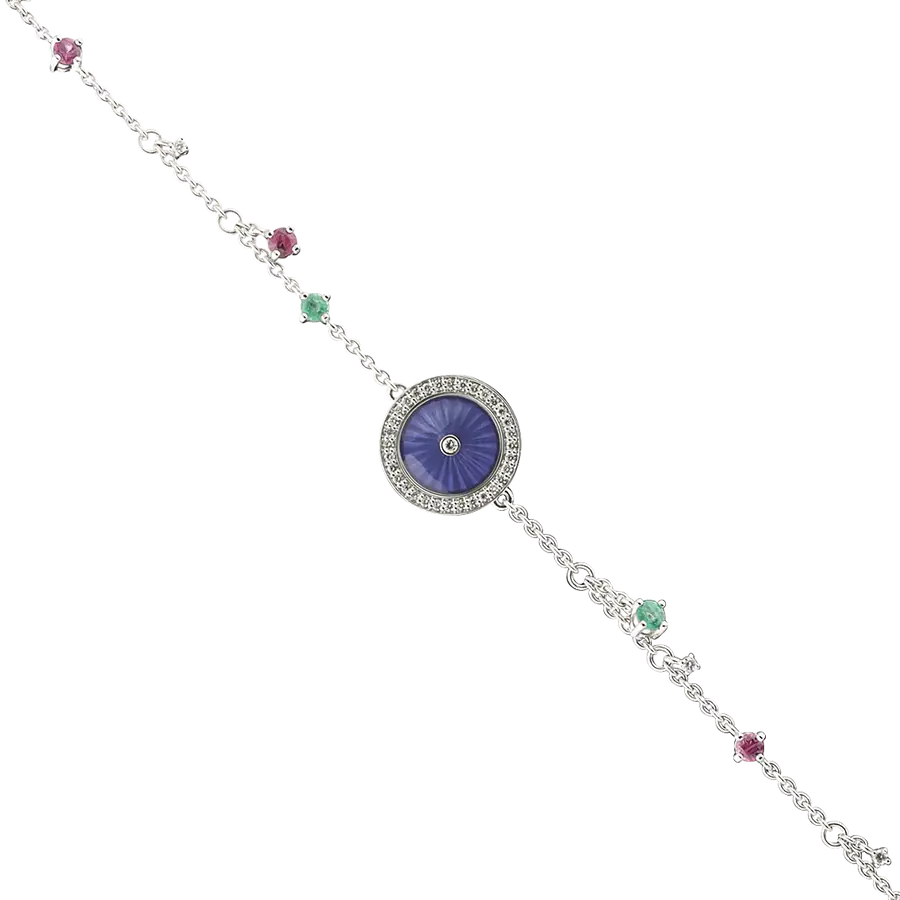

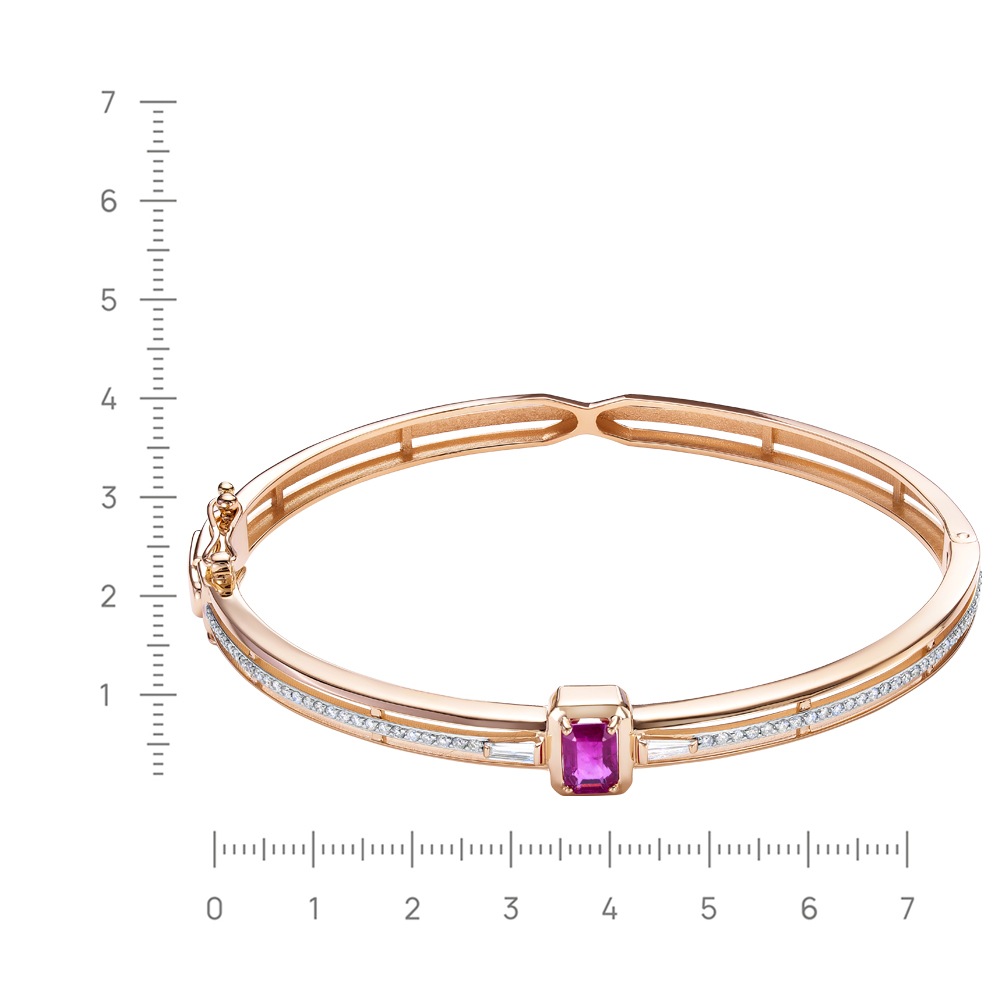


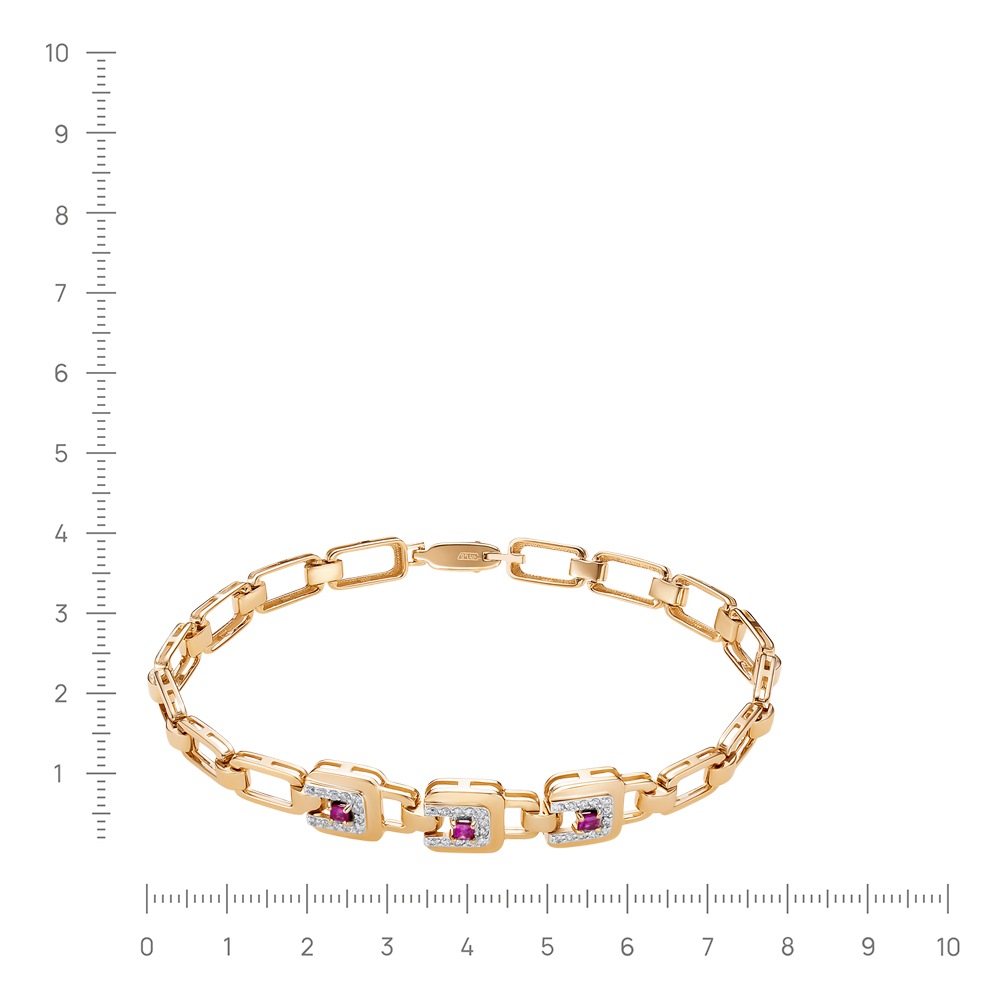
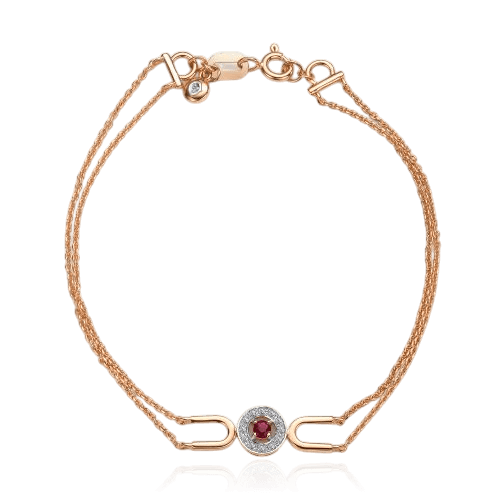
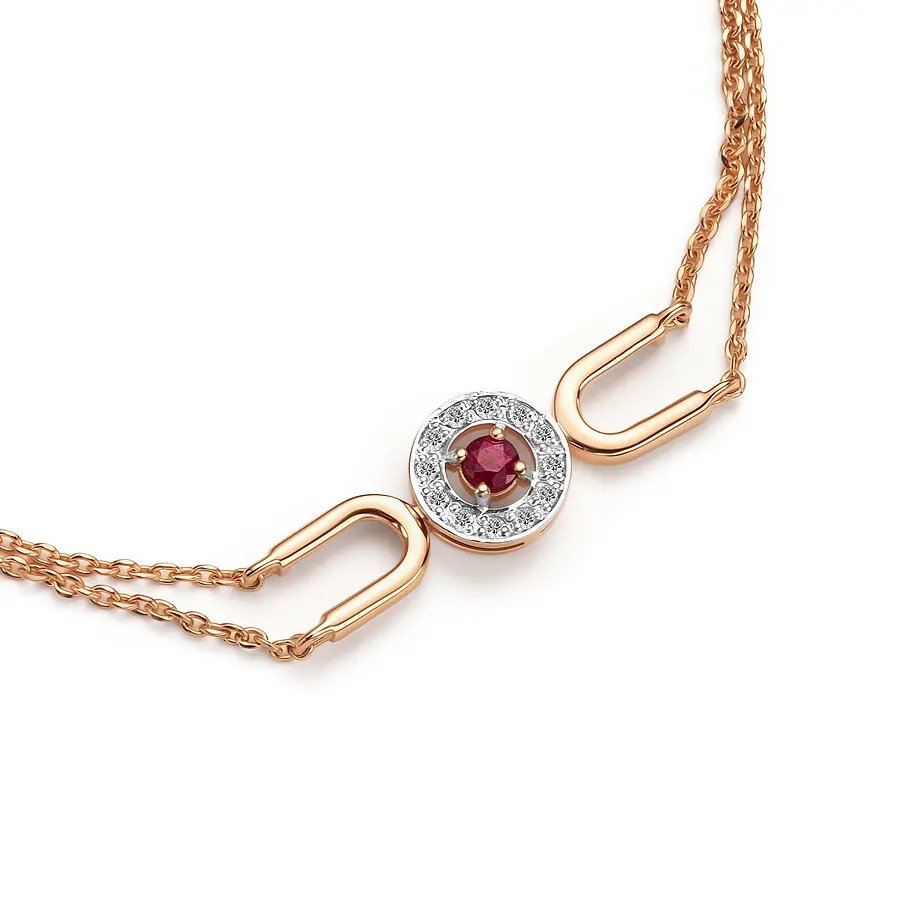
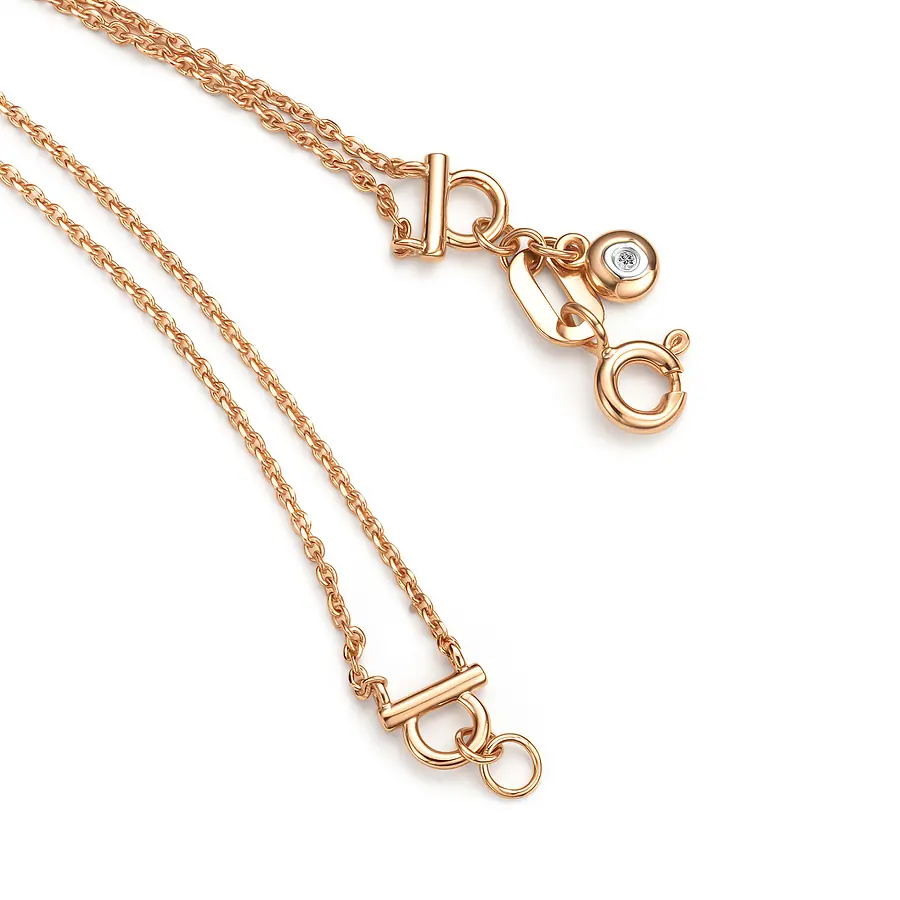
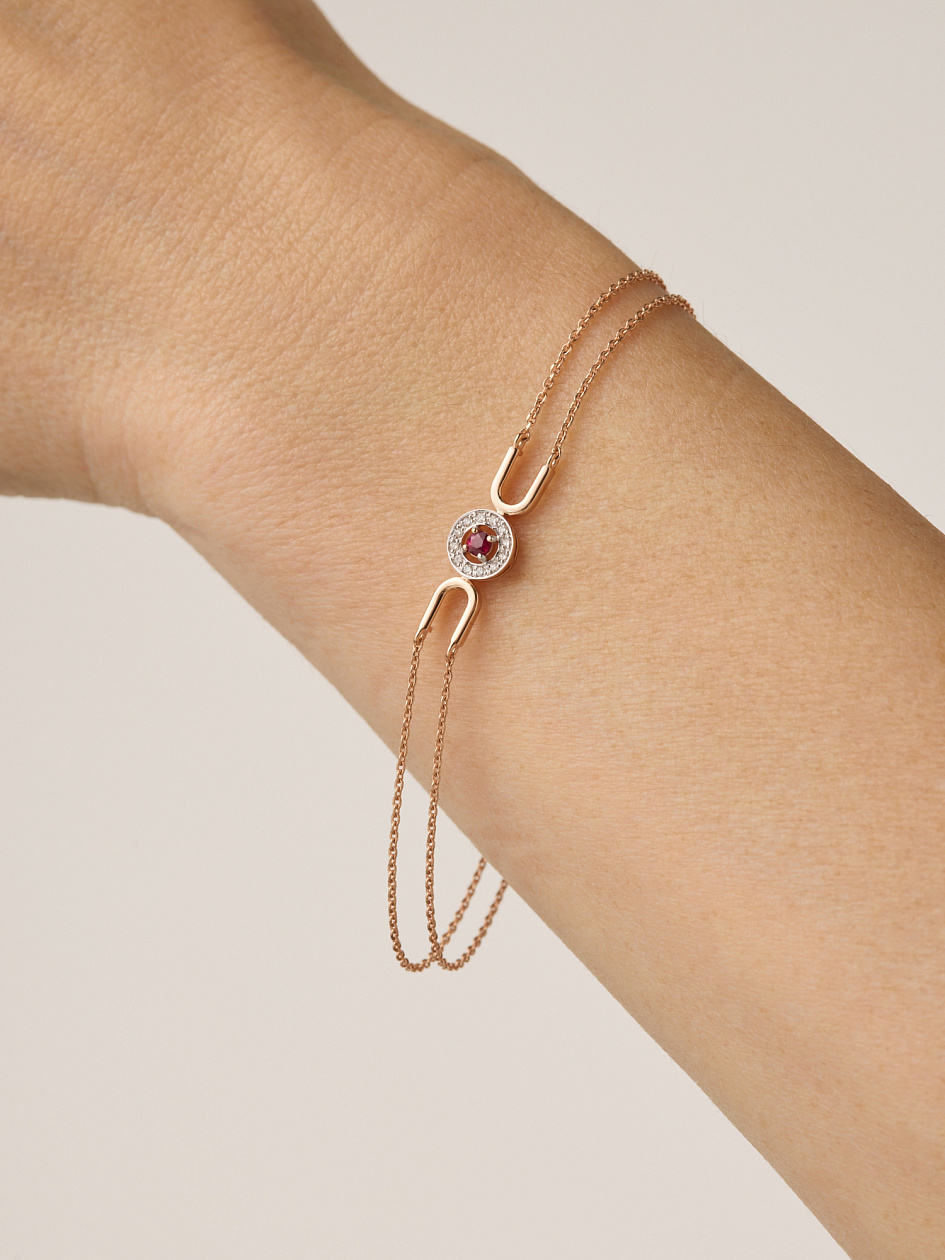
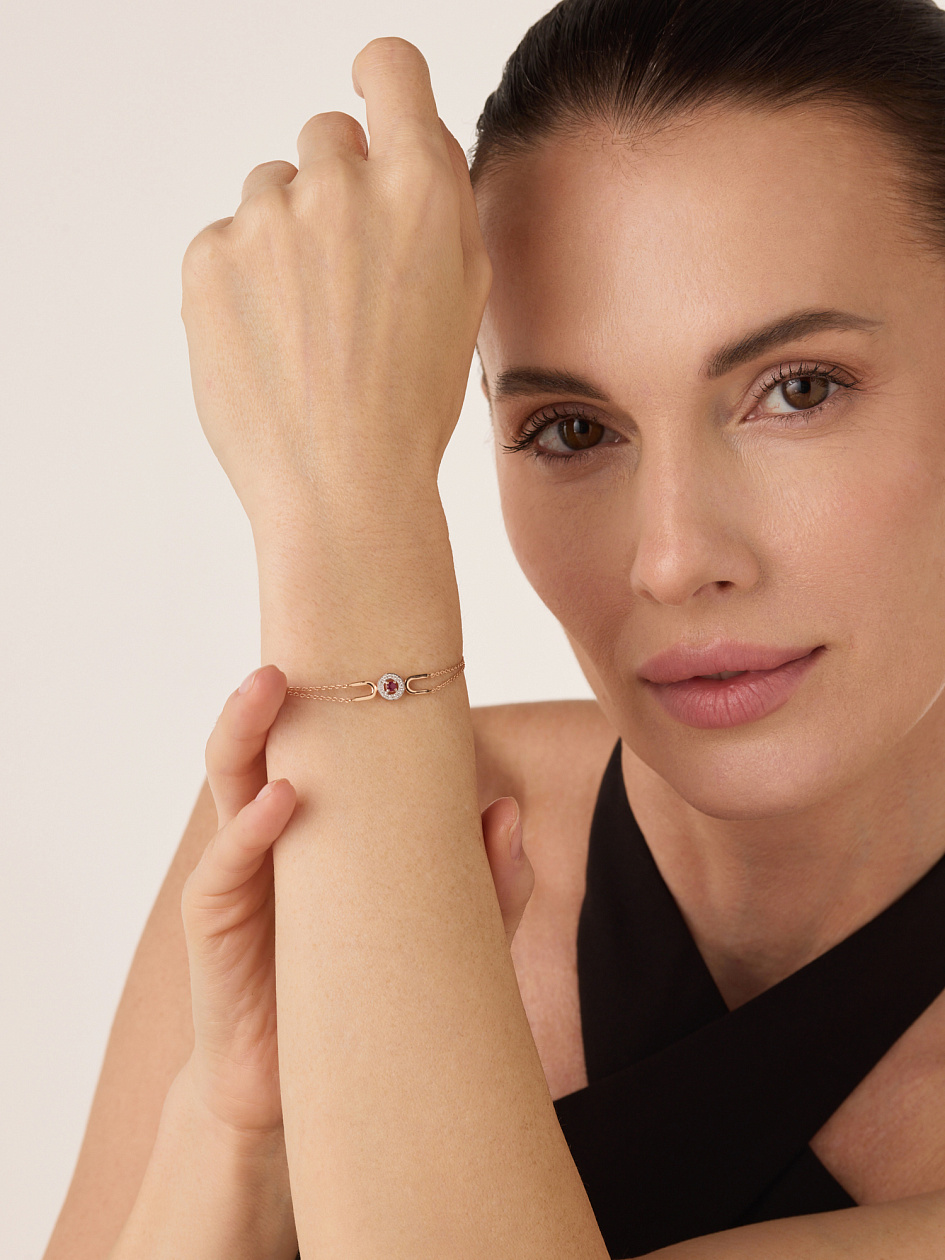

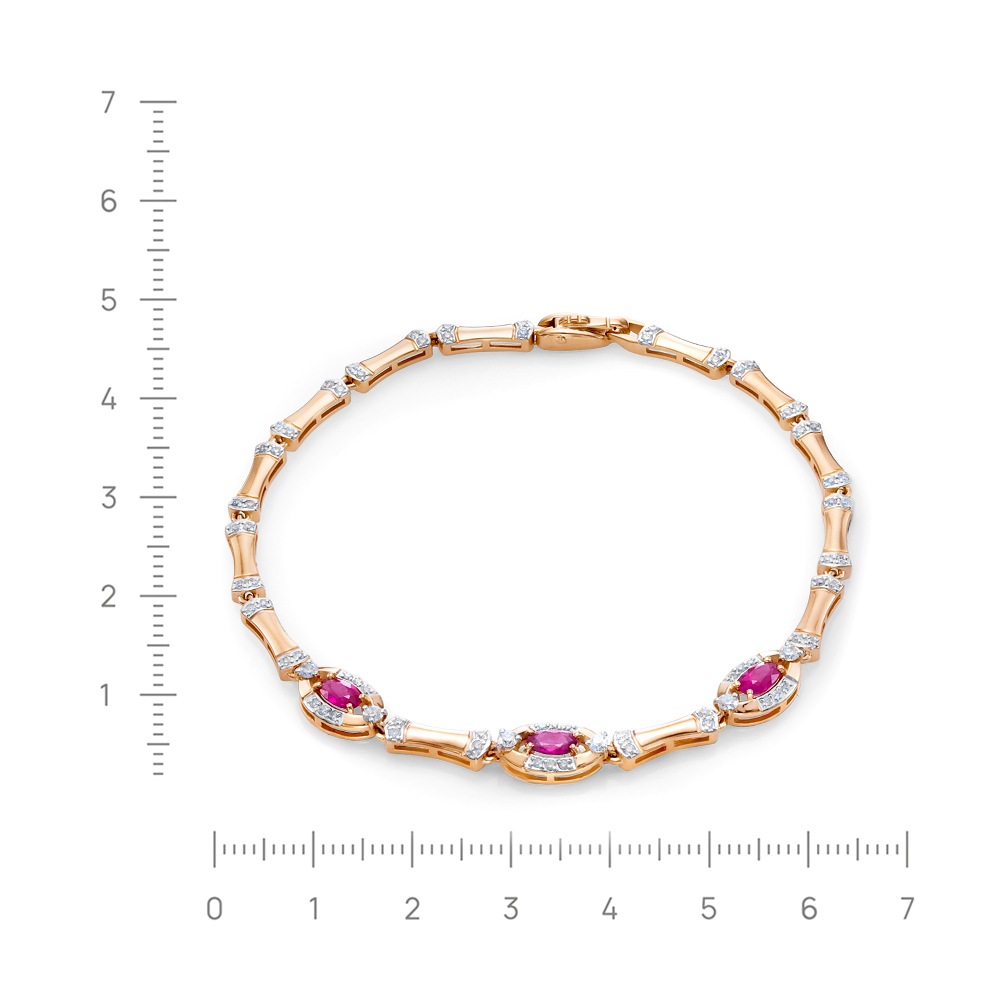

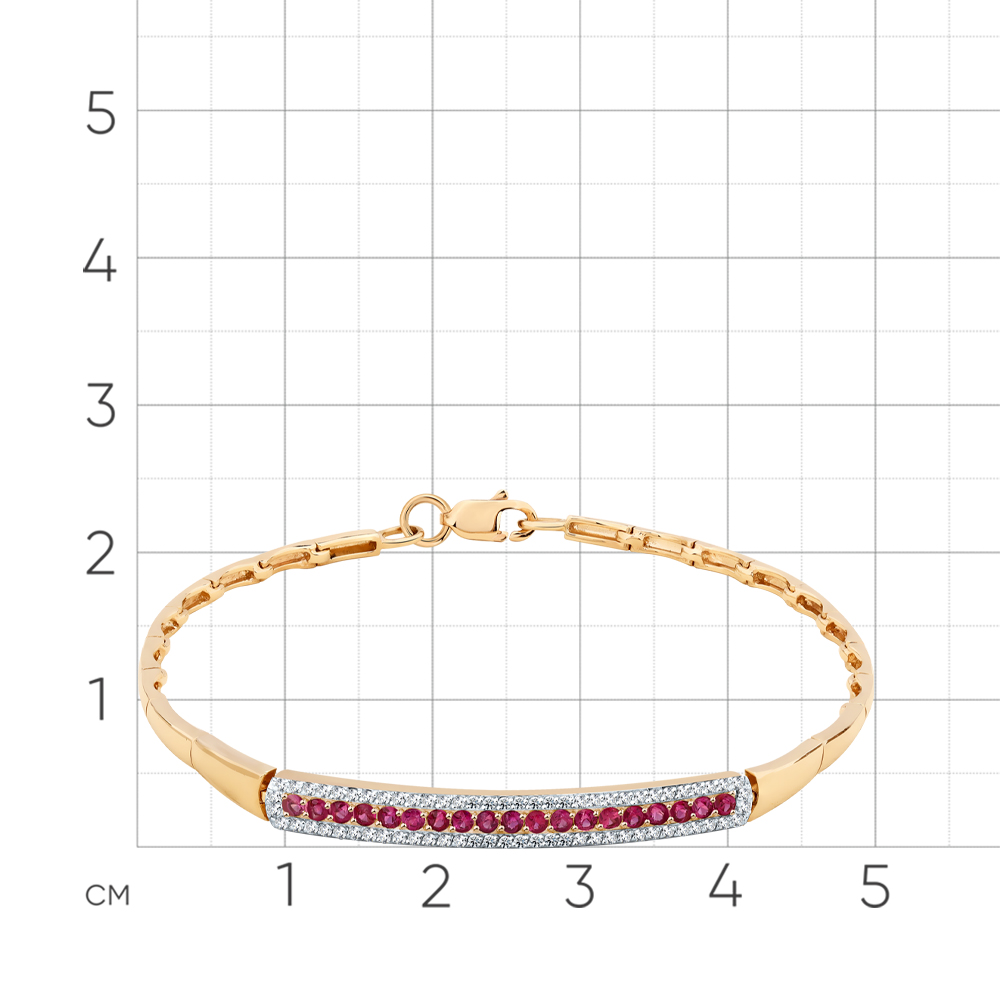

"Paisley" Bracelet with ruby, sapphire, diamonds, emerald in 14K yellow gold (585) ( 76661)
In stock
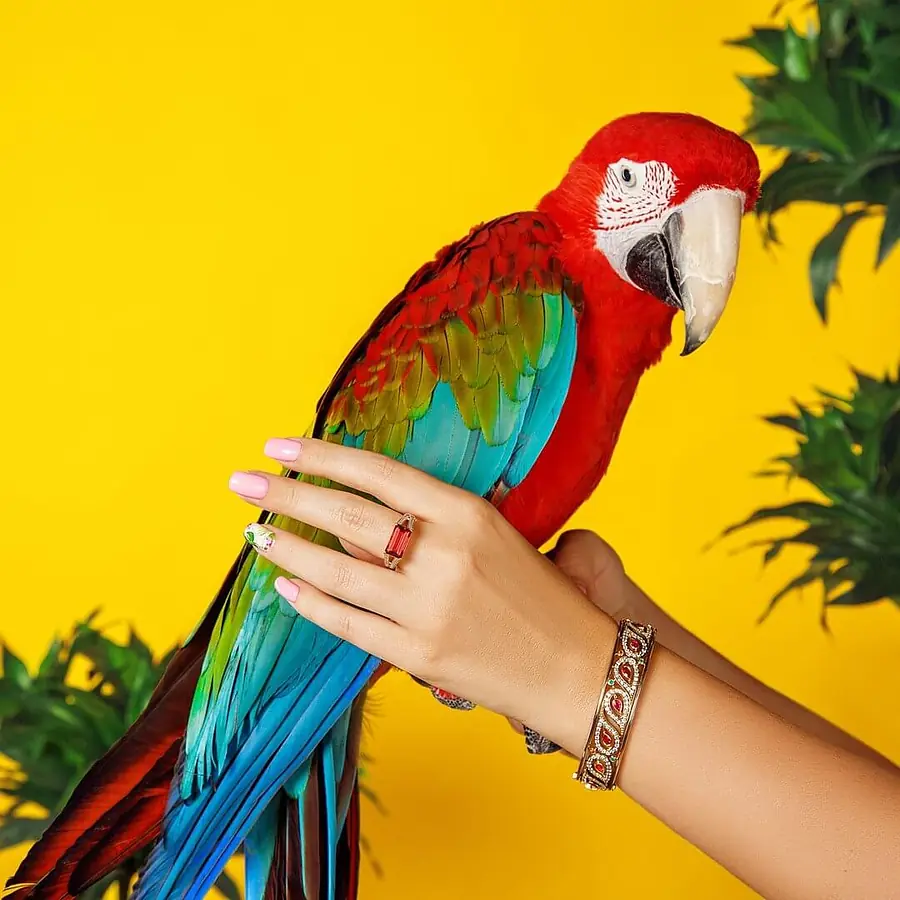


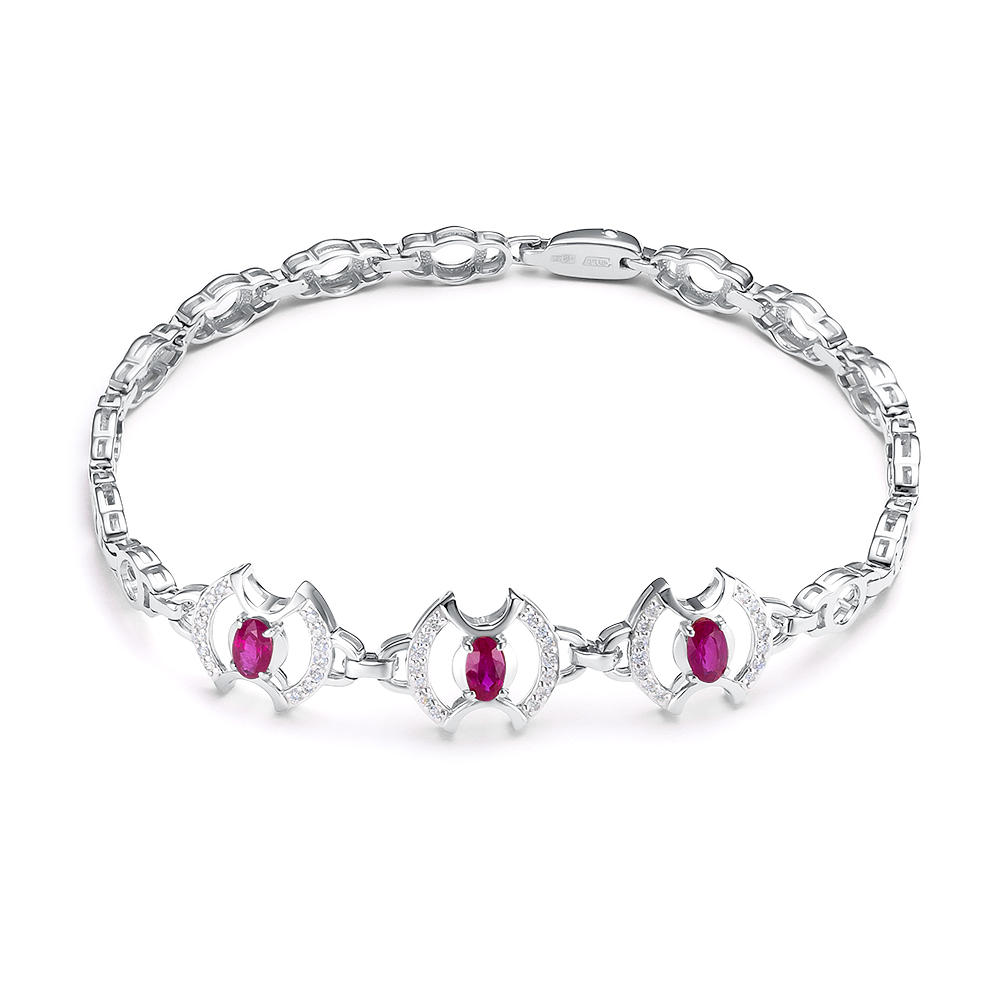

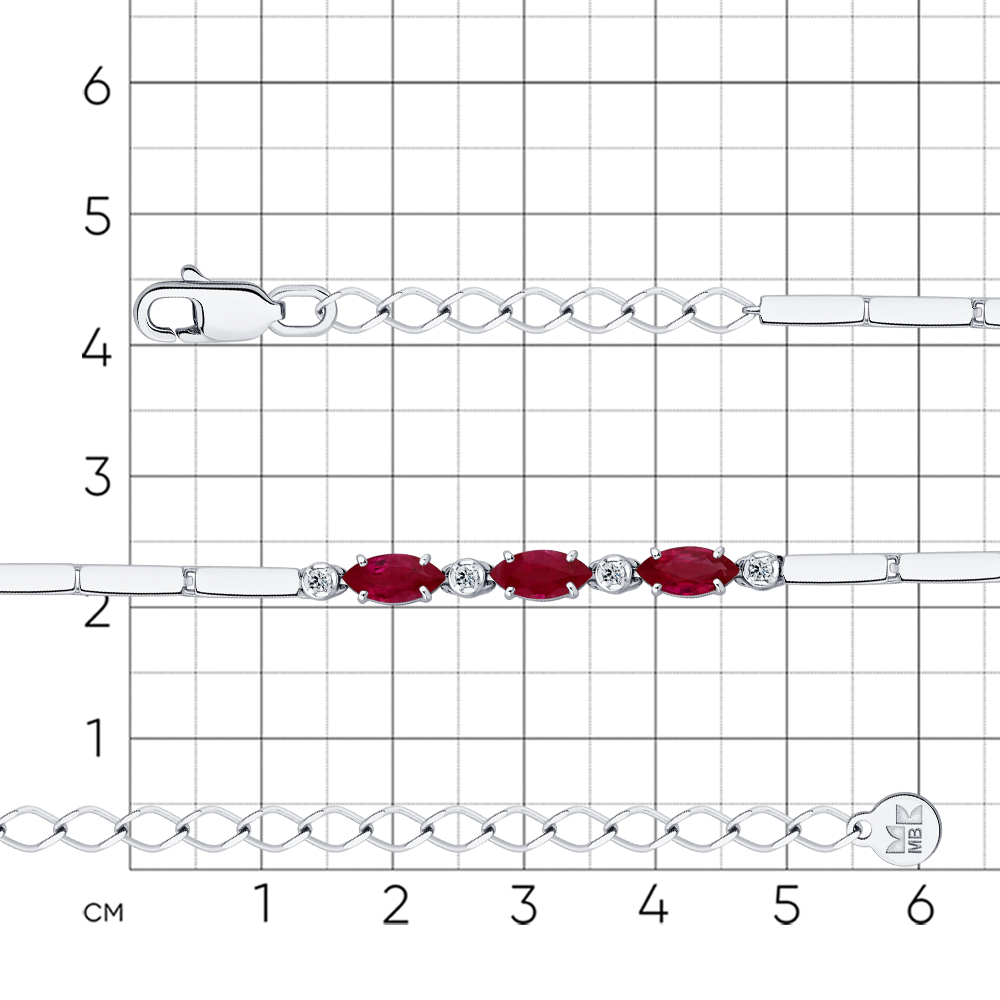

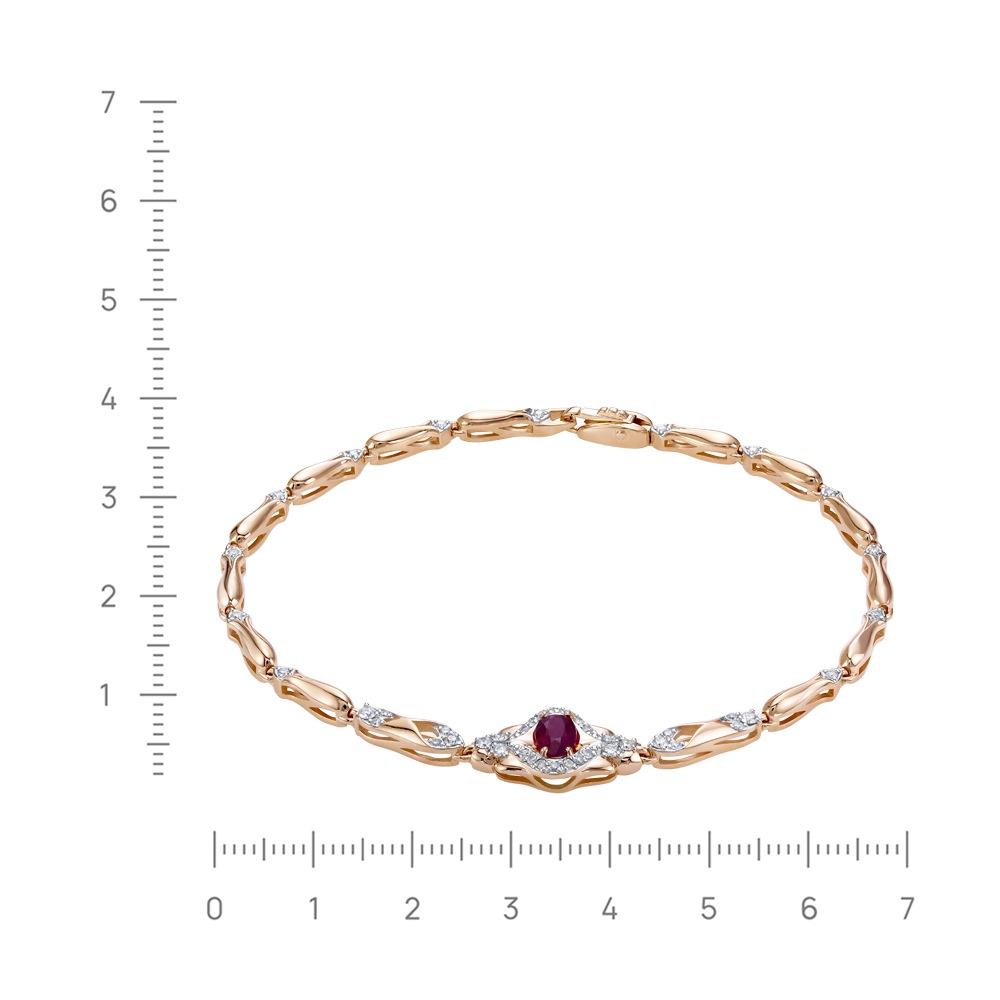
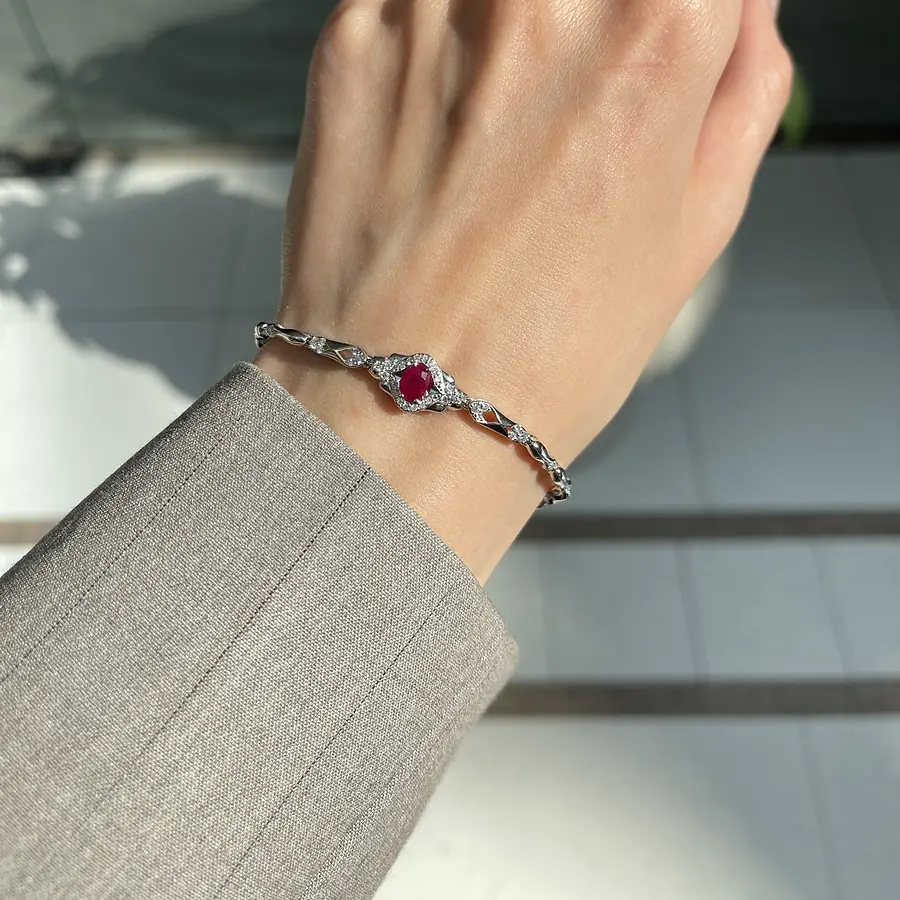

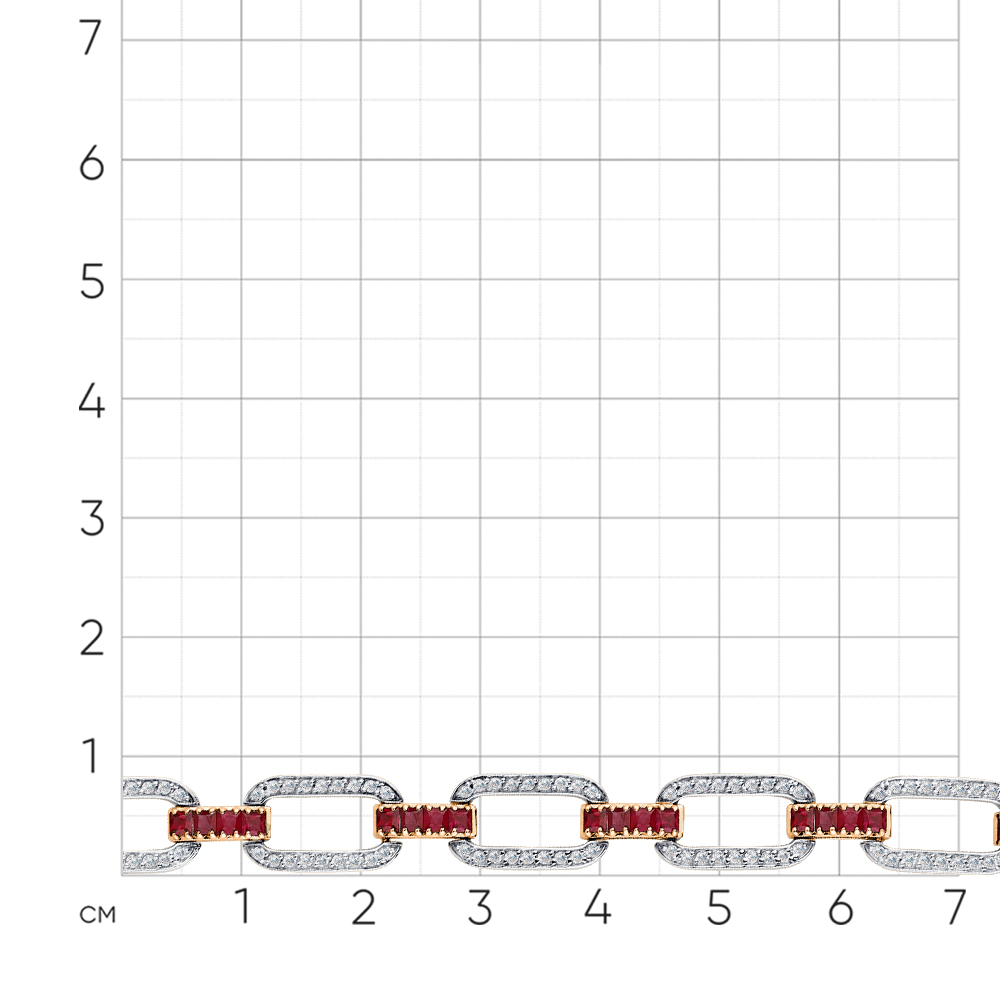

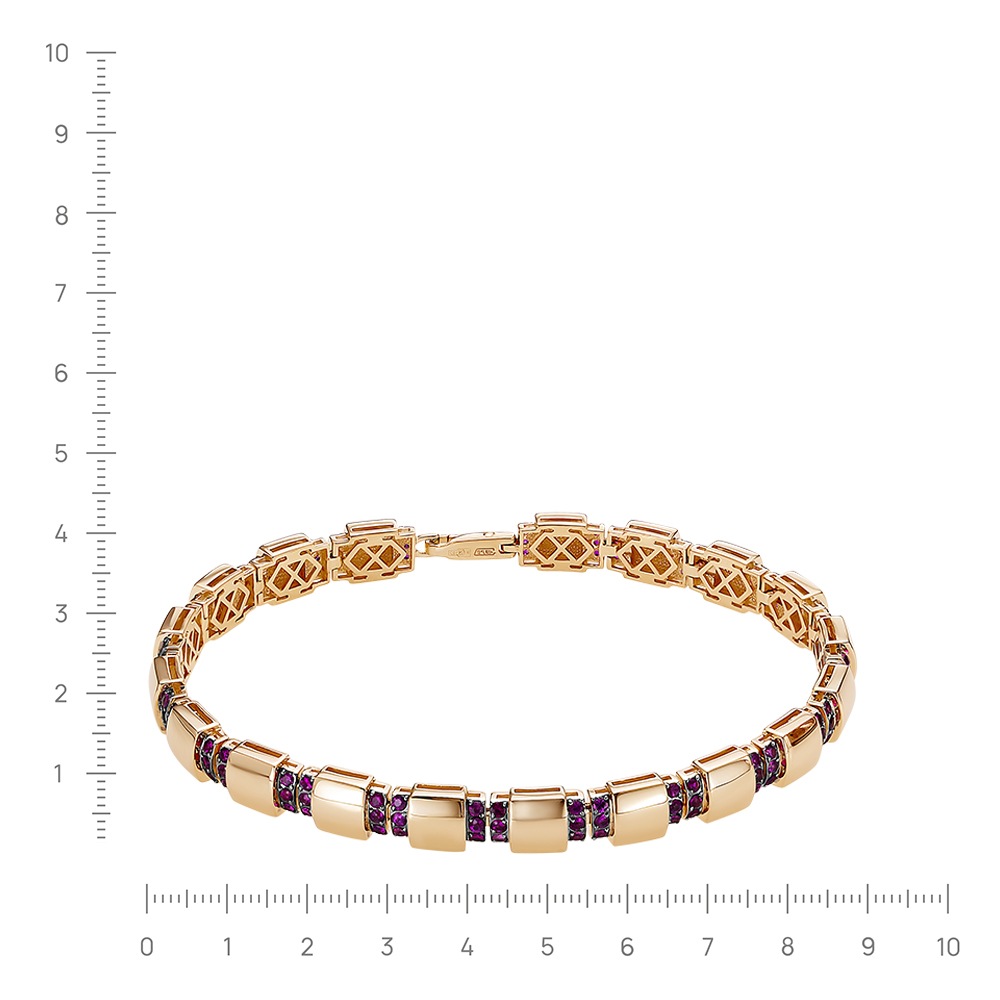

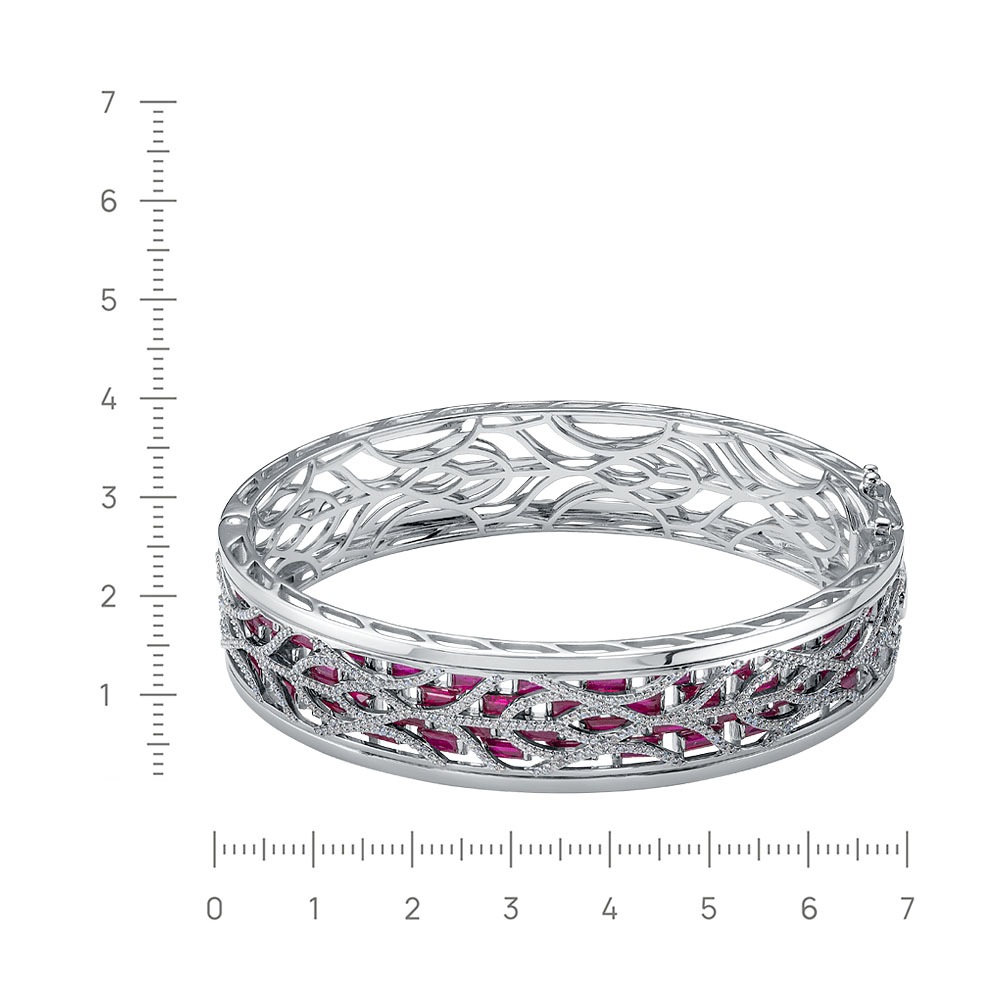

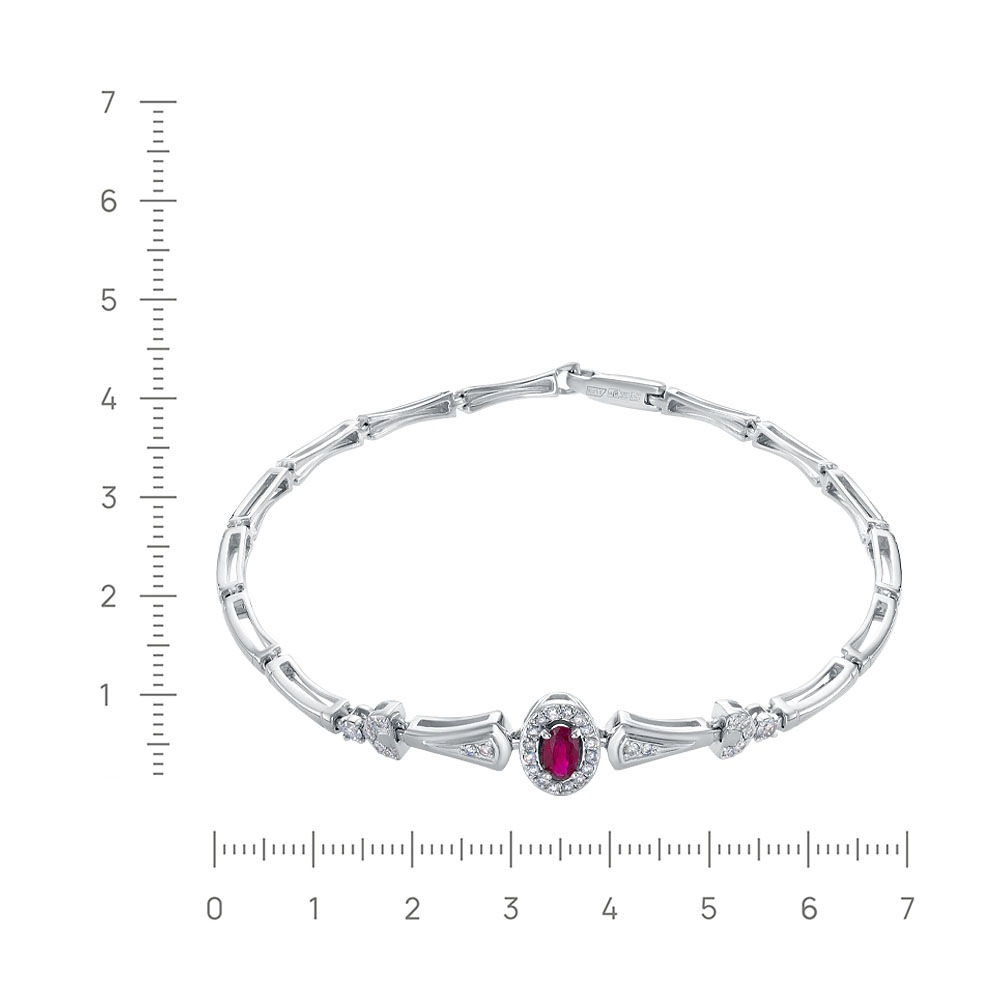

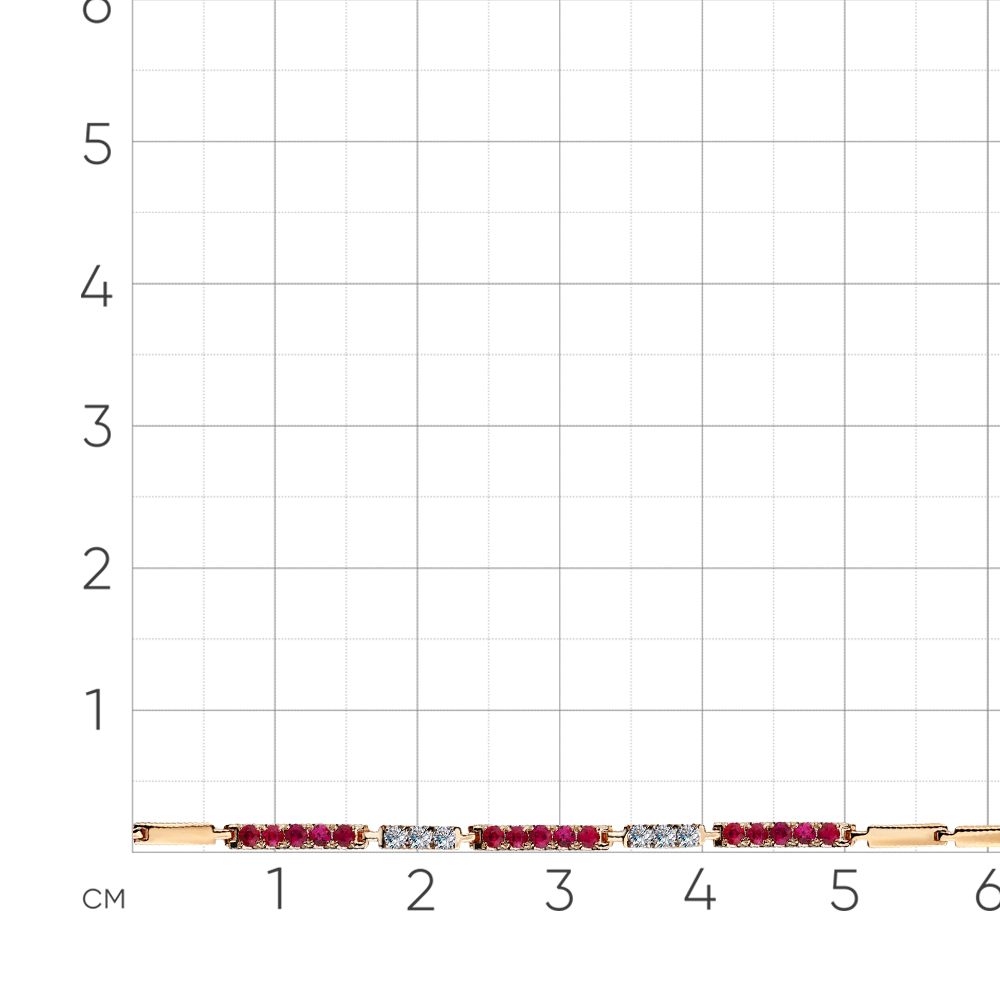


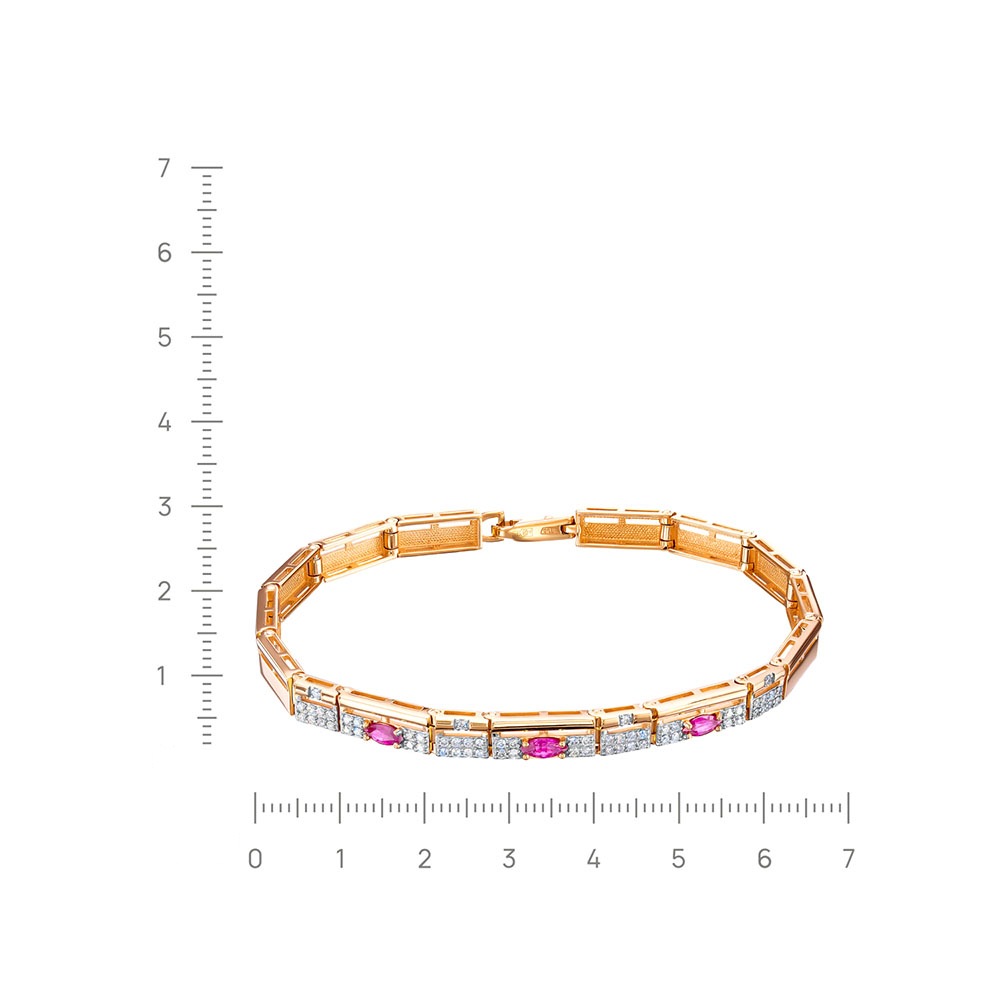

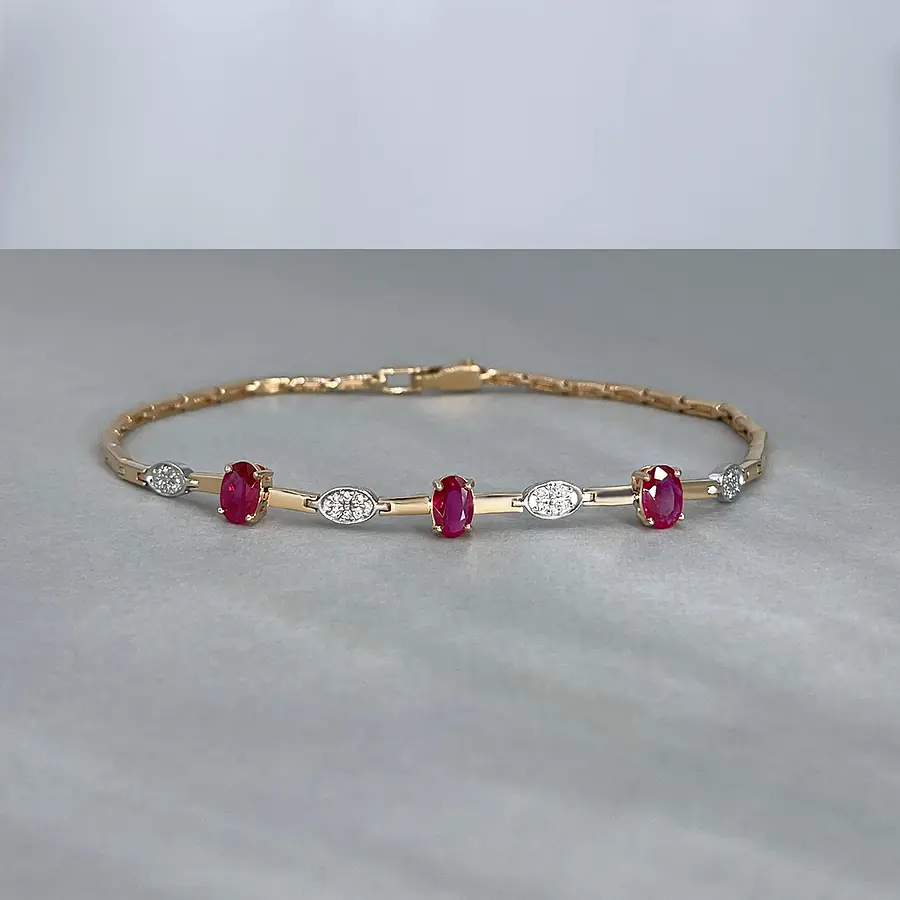

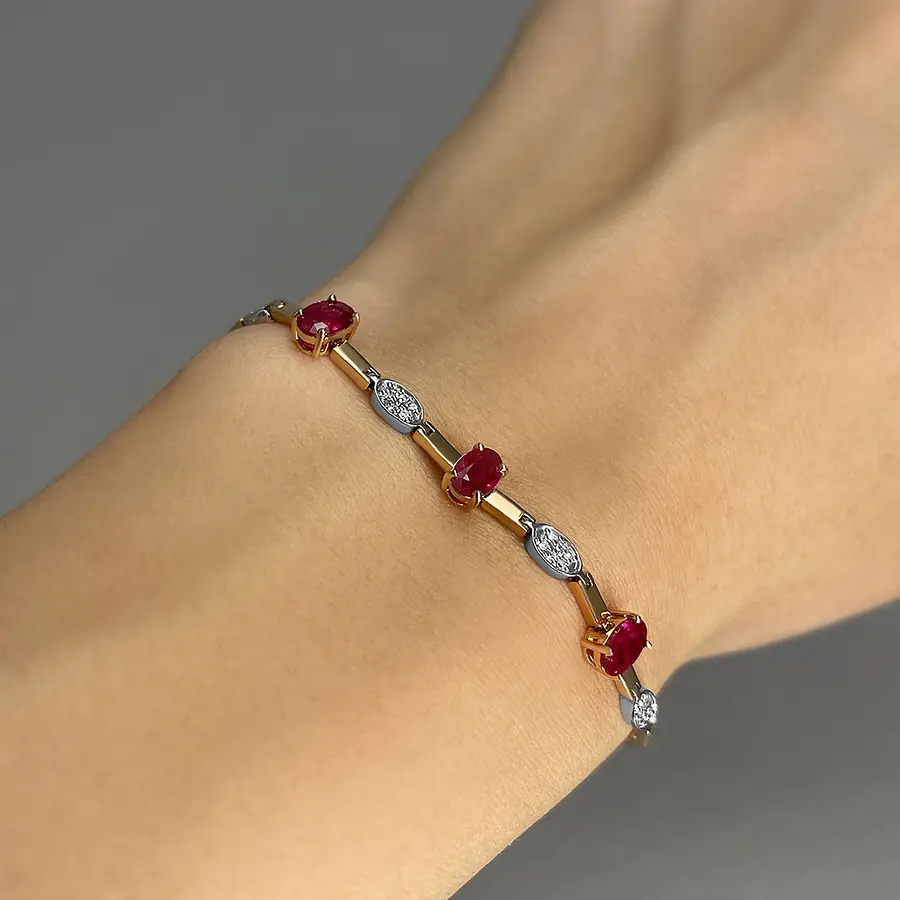


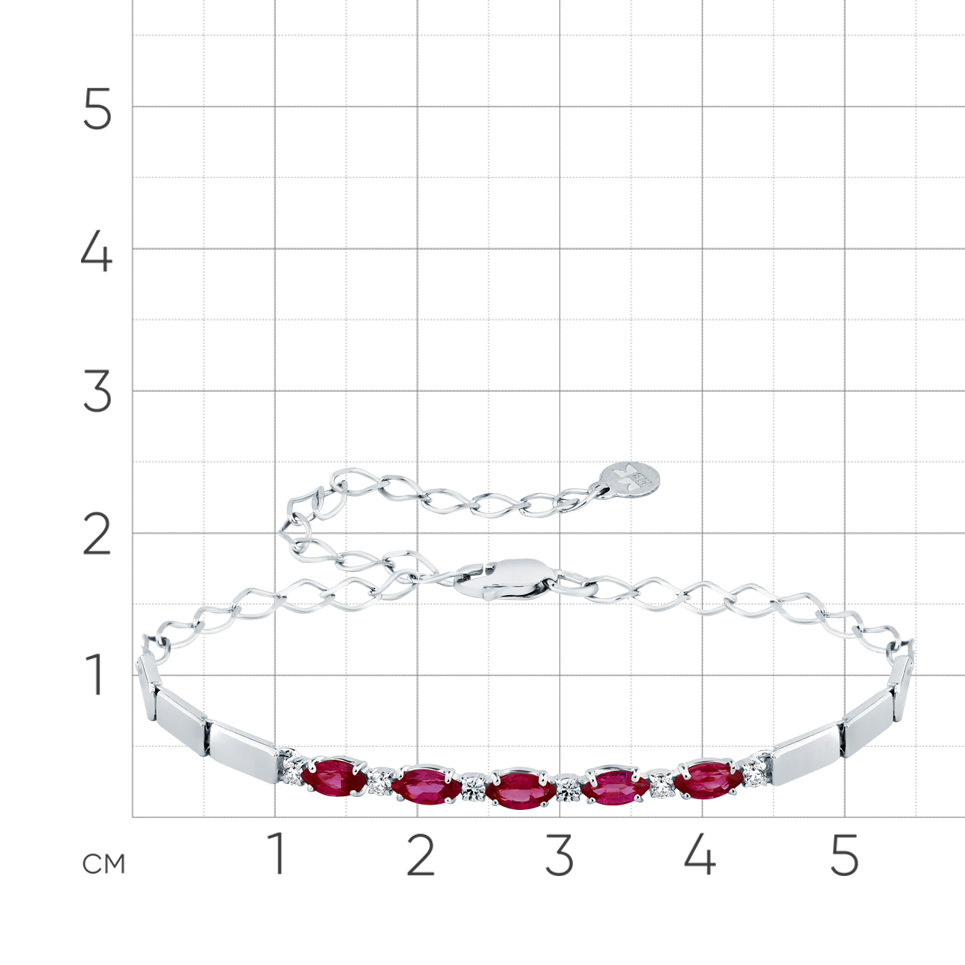


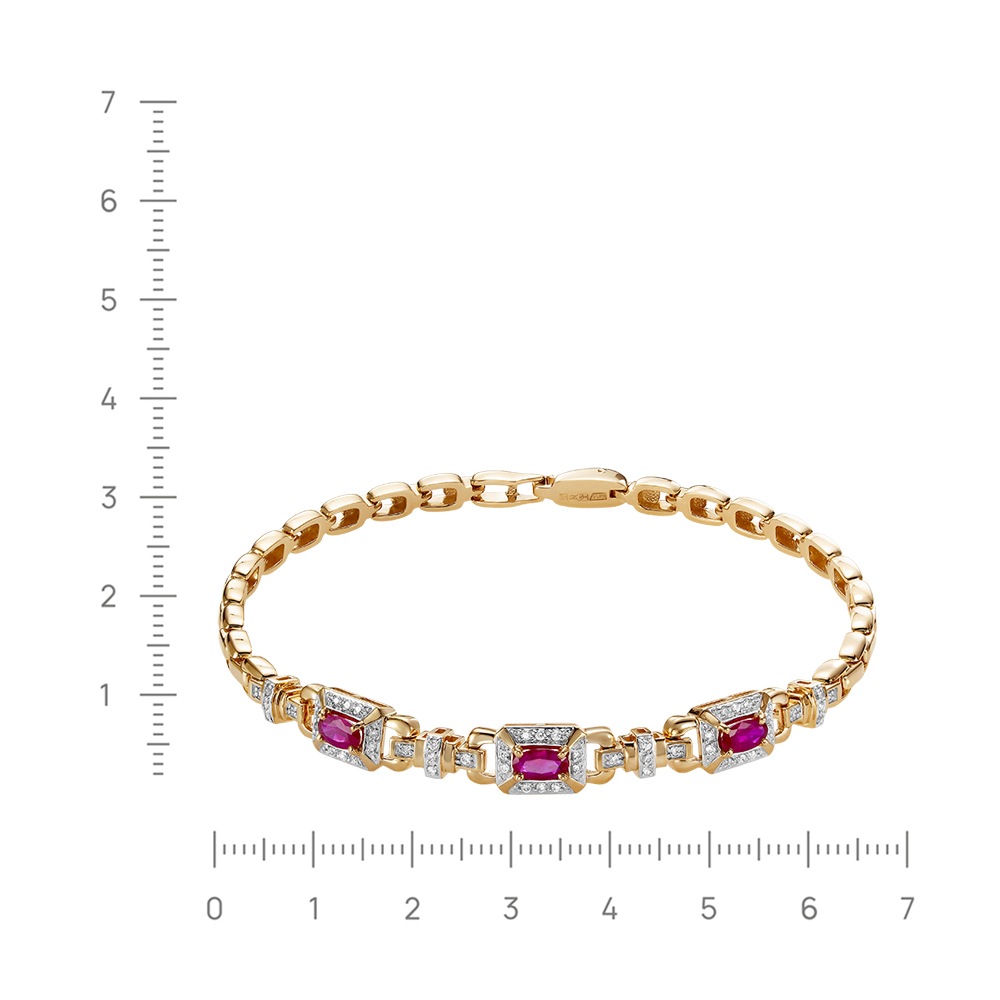

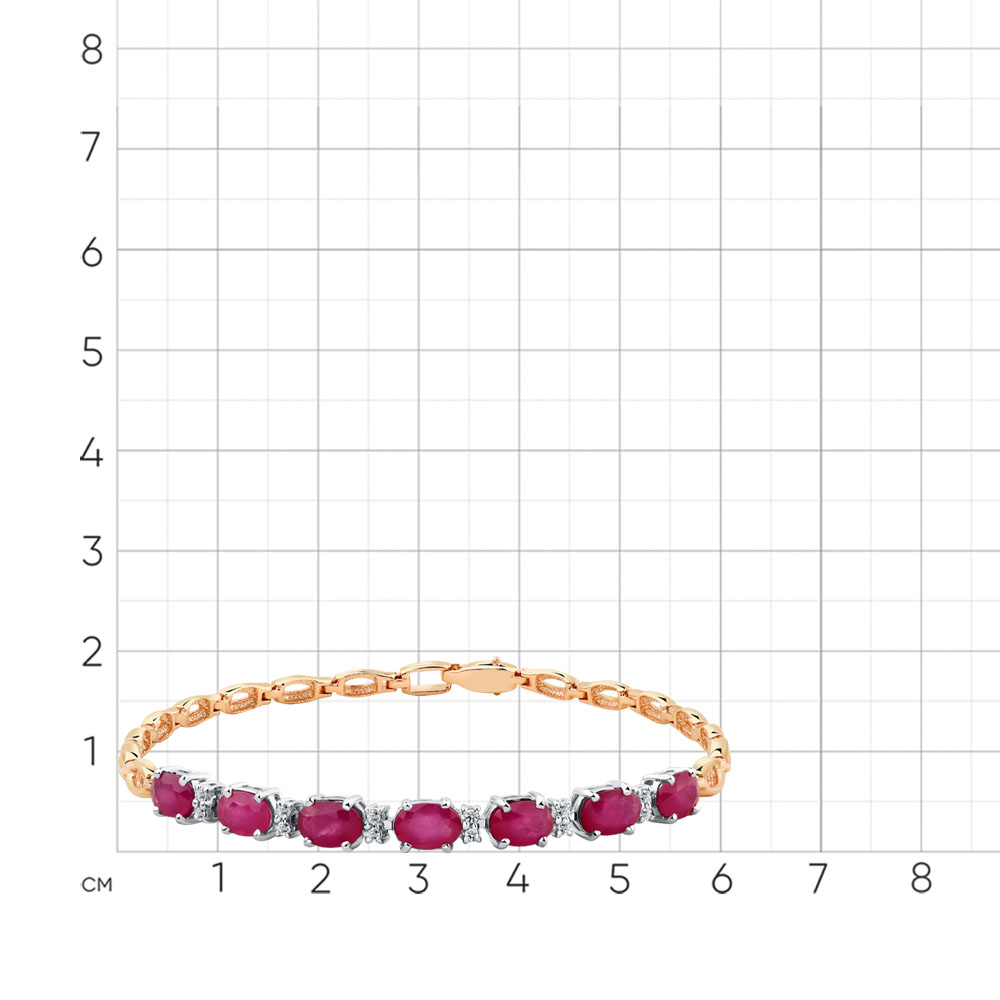

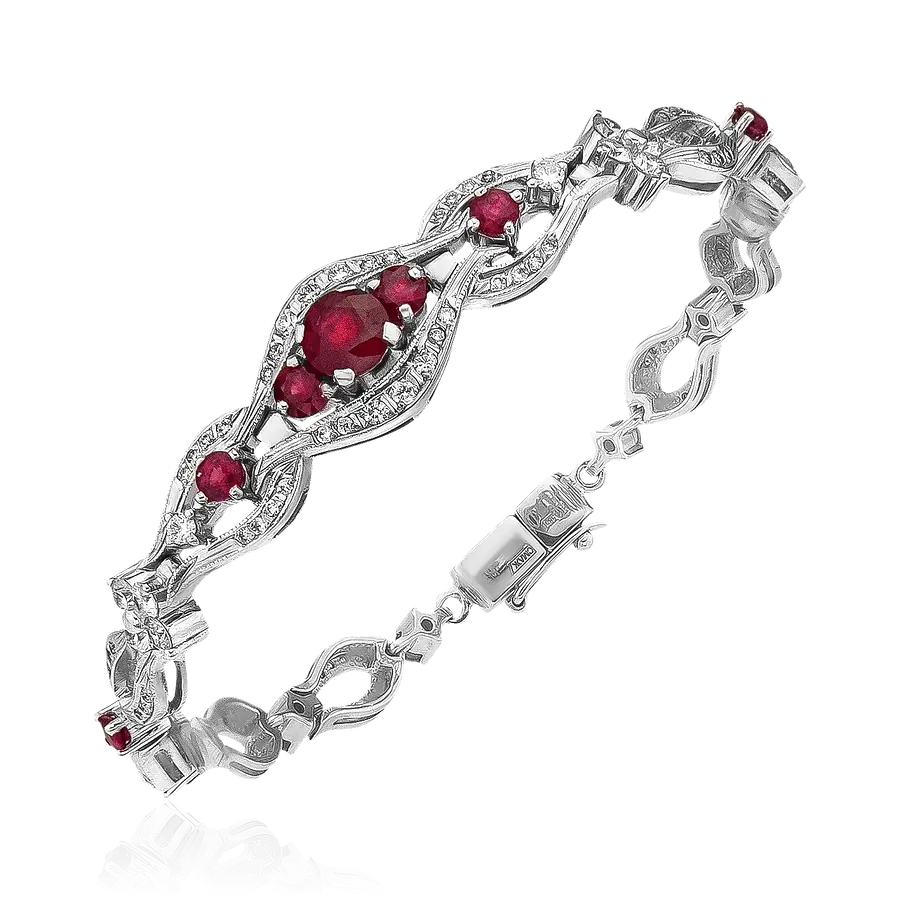

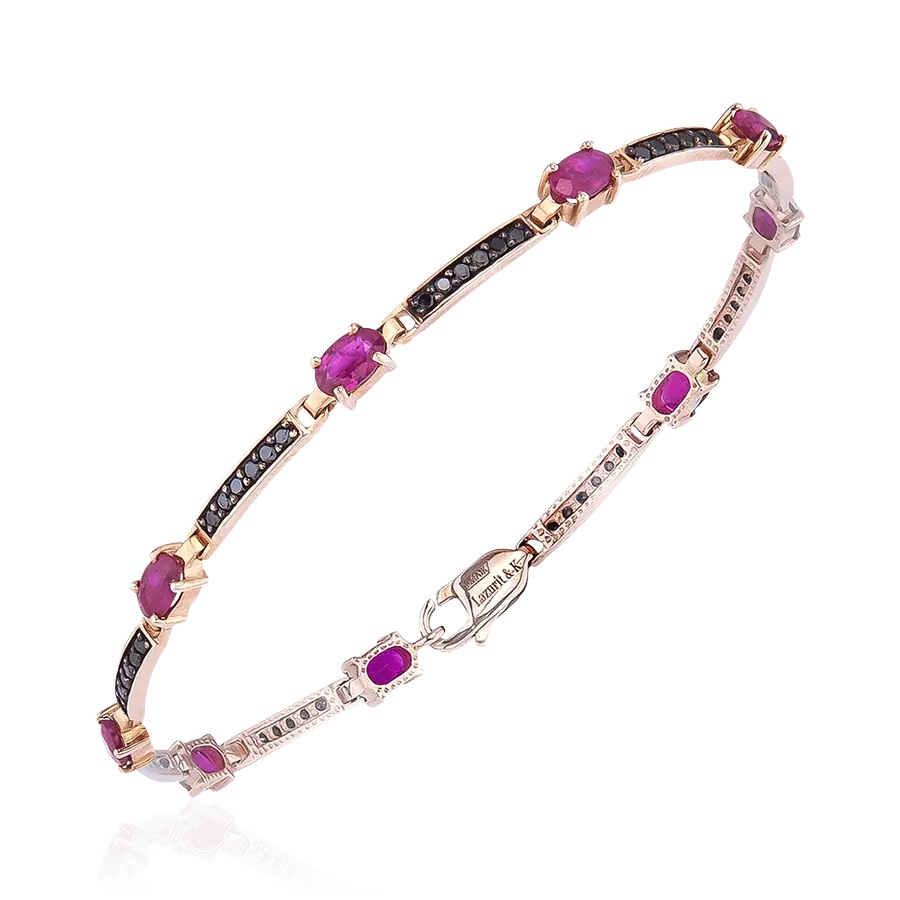

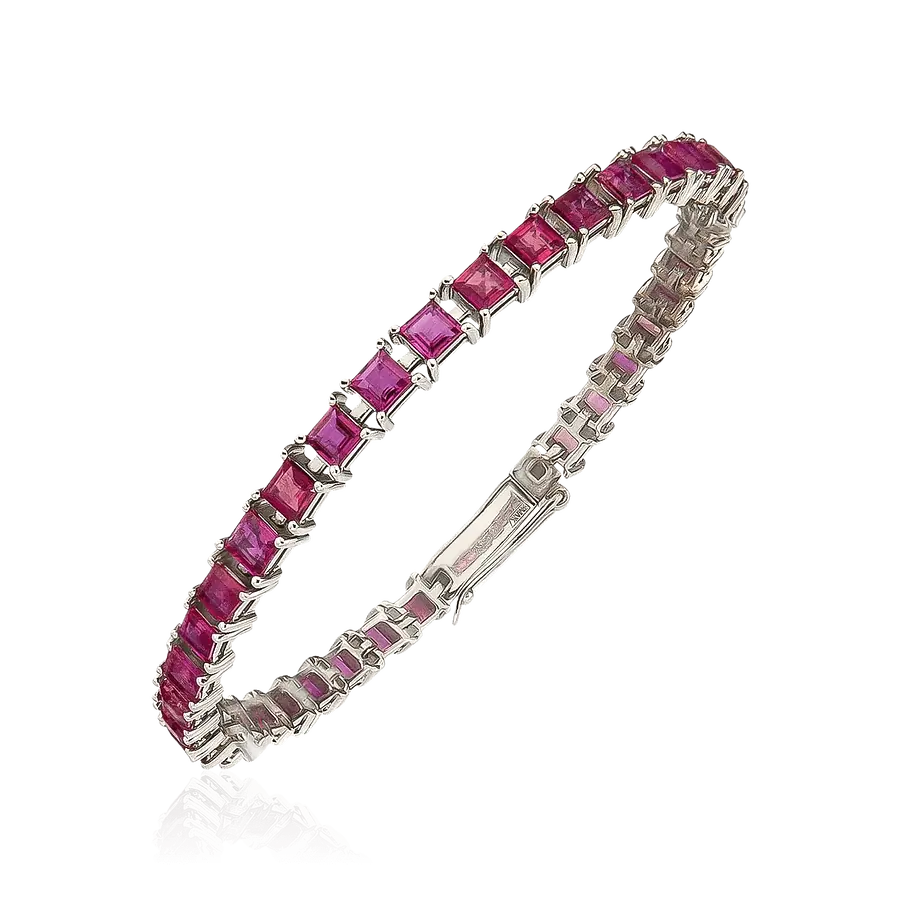

A gold bracelet with ruby starts at 75 900 ₽, and half of the catalog costs more than 315 000 ₽. There are no pieces under fifty thousand in the section. A ruby bracelet under one hundred thousand is a rarity, only five items out of sixty-eight.
Price distribution: 50,000 to 100,000 ₽ has five models, 100,000 to 200,000 ₽ has nine, 200,000 to 500,000 ₽ has thirty-nine, and above half a million has fifteen. The bulk of the section is concentrated in the range from two hundred to five hundred thousand, which is more than half of the range. A ruby bracelet in this price group is usually a track of several stones framed with diamonds.
The price is determined by the stone, not the gold. A rich red without a brownish or pink undertone costs many times more than a pale one at equal weight, and in a bracelet this factor is amplified: there are several stones in the piece, and they must be matched to one tone. A ruby bracelet with ten inserts of identical color costs more than a piece with one center stone, and not only because of the carats: the matching of the set is paid for separately.
Fineness is the share of pure gold in the alloy: 585 means 58.5%. The entire section is made in 14K gold (585). A ruby bracelet in 18K gold (750) does not appear in the catalog, since for a piece worn every day a softer alloy is not the best choice.
By metal color the picture is stark: red gold — 43 pieces, White - 17, yellow - 5. The share of red here is 63%, a catalog record: for emerald and sapphire bracelets it is half as high. The reason is the chemistry of the alloy: the copper that gives red gold its tint continues the red tone of the stone, and the boundary between metal and stone softens.
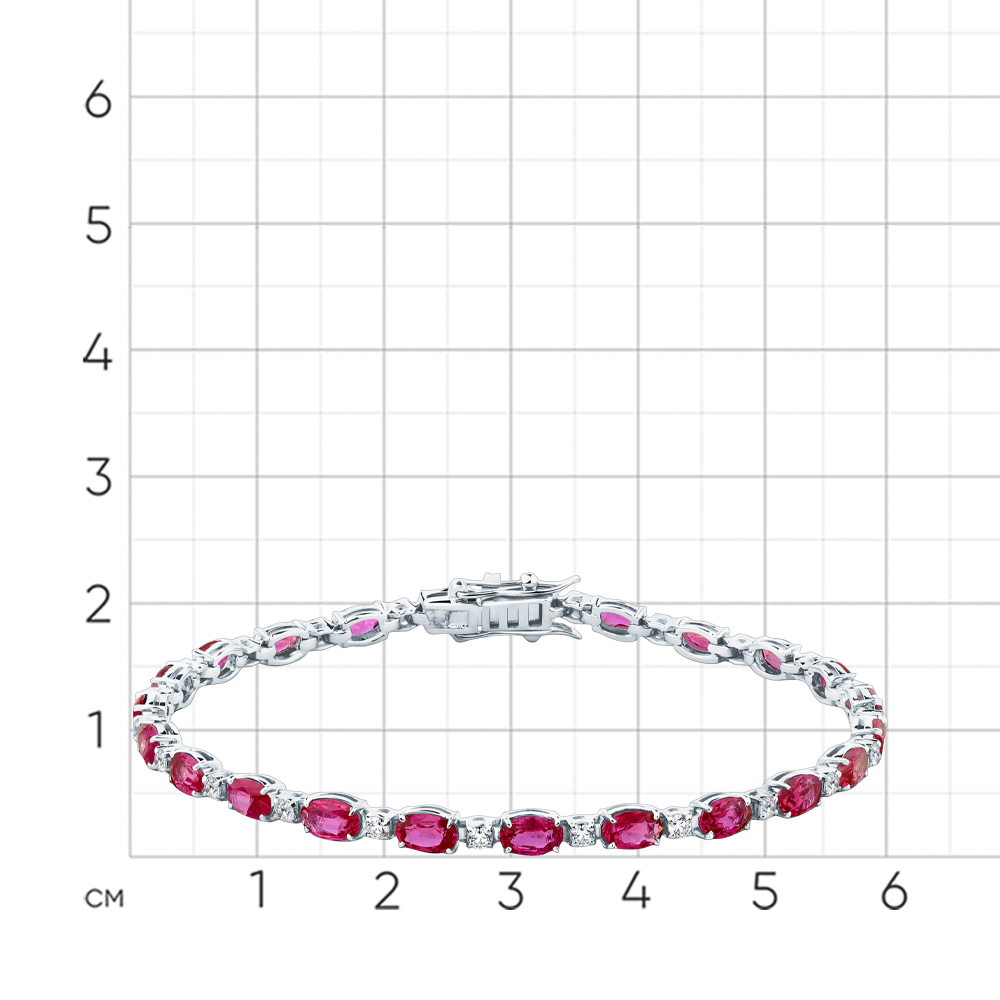
The standard length of a women's bracelet is 17–19 cm. The wrist is measured with a tape measure and 1.5–2 cm is added for freedom of movement. A ruby bracelet on a rigid base is chosen differently — by its inner diameter, with no allowance.
For this section fit matters for a different reason than usual. The stone here is durable, but 14K gold (585) is not: a ruby bracelet that is too loose constantly knocks against surfaces, and it is the links and the setting that suffer, not the stone. One that is too tight strains the hinges. The right fit is when a finger can pass between skin and piece, but the piece does not slide down onto the hand.
The clasp deserves a separate look. A box clasp with a safety figure-eight is more secure than a spring ring, and for a piece in this price range it is the better choice. Checking it once a month is enough: tug in different directions and make sure the catch holds.
Ruby's hardness is 9 on the Mohs scale, surpassed only by diamond. In everyday life there is practically nothing to scratch such a stone: neither sand, nor glass, nor steel objects can mark it. In this respect a ruby bracelet outperforms pieces with emerald, opal, and pearl all at once.
The second property matters more than the first and is hardly ever discussed. Corundum has no cleavage the direction along which a crystal splits on impact. Emerald, topaz, and tanzanite can chip along a plane if struck unluckily, while ruby does not break that way. That is exactly why a ruby bracelet withstands everyday wear more easily than a piece with any other colored stone.
The practical conclusion is simple: in this section you can choose a design by its looks rather than by how well the setting protects the stone. A bezel setting is not required here, and a prong setting is acceptable, which for an emerald bracelet would be a risky choice.
The main signs of a natural stone are uneven color, inclusions inside and traces of a cut adapted to a specific crystal. A perfectly even, deep red without a single flaw is a reason to ask about its origin. A bracelet with rubies in which every stone looks equally flawless deserves a separate question about the lot.
Heat treatment is standard market practice, most rubies undergo it, and it does not affect the durability of the stone. Glass filling is a separate matter: cracks are filled with lead glass, and the stone looks cleaner but in essence becomes a composite. Such a ruby costs many times less and tolerates heat and ultrasound poorly. When buying a large stone, ask directly about the type of treatment.
All stones in our jewelry are natural. There are no synthetic rubies in the catalog, even though lab-grown corundum has been produced since the early twentieth century, costs next to nothing, and cannot be told apart from a natural stone in a photo.
The share of pieces with diamonds is 93%: 56 models out of 60 in the current selection. The combination works through contrast: white sparks around the outline deepen the red, and the stone reads richer than in plain gold.
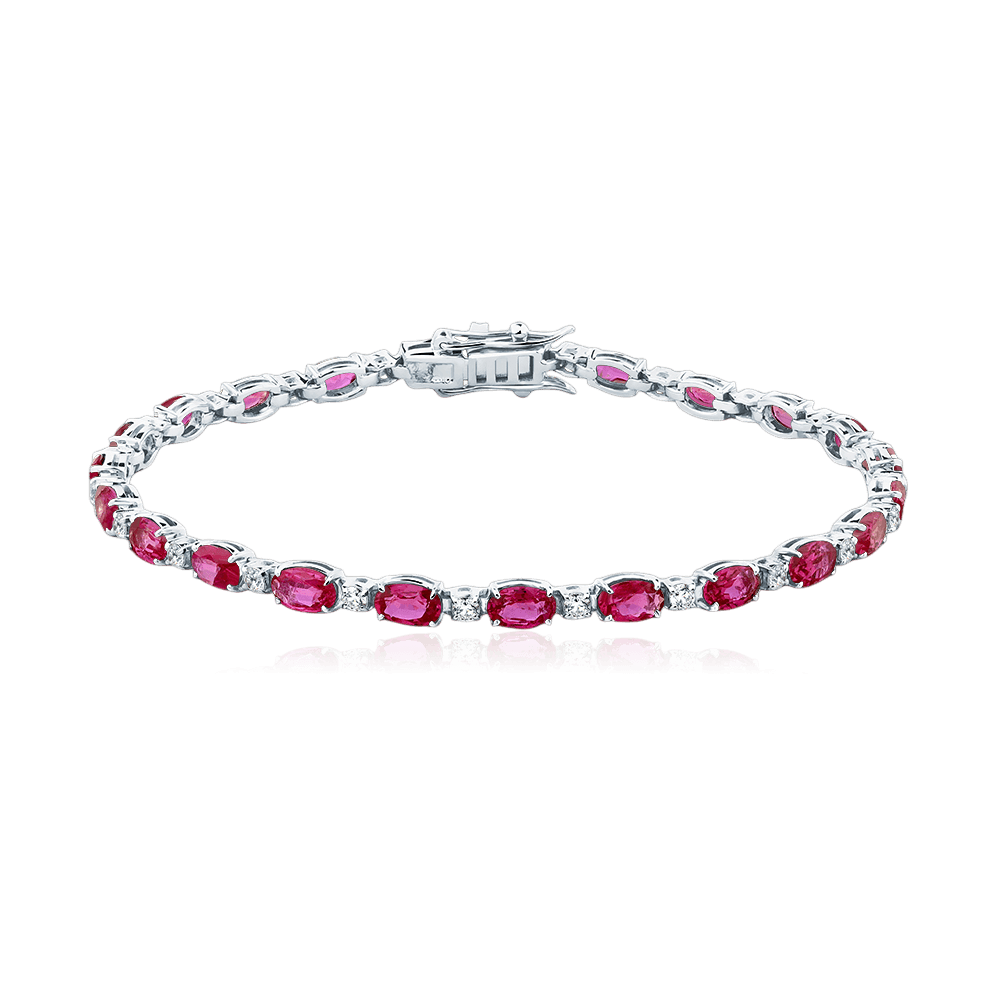
The most common design is alternating rubies and diamonds in a line. Less often there is a center stone in a diamond halo, where the ruby works as an accent. Four models come without diamonds altogether; there the whole effect rests on the stone itself, and the requirements for its clarity are higher. Such a piece looks more understated and goes better with other jewelry.
To make a bracelet last, look after the metal and the clasp rather than the stone. A ruby will outlast anything, but 14K gold (585) scratches, the links wear at the bends, and the setting loosens over time.
Because of its hardness, a ruby is itself a danger to its neighbors in the jewelry box: it will leave marks on gold, pearls, opal and emerald. A separate compartment or a soft pouch solves the problem completely. Storing it next to an emerald piece will end in a scratch on the emerald, not on the ruby.
What not to do: sleep in your jewelry, work with your hands while wearing it, or wear it in the pool, since chlorine darkens 14K gold (585). Most rubies tolerate ultrasonic cleaning well, but glass-filled stones do not: vibration and temperature change damage the glass in the fissures. If the treatment type is unknown, it is safer to stick with a soft cloth and warm water with a drop of soap.
Ruby bracelets can be ordered on the website with delivery across Russia or tried on at the DAF boutique in central Moscow. For a bracelet, trying it on is more useful than for any other jewelry: length and fit cannot be judged from a photo.
Red is also the color a camera captures worst: the warm light of a display case makes the stone look more saturated, and daylight makes it lighter. If it is inconvenient to visit, ask the manager to film it on a hand under different lighting.
If the bracelet is a gift, it is better to find out the length in advance: wrist size cannot be guessed from height and build. The easiest way is to measure a piece the recipient already wears and give that number to the manager.
Before ordering, it is worth settling four things: the length in centimeters, the type of clasp, the total weight of the rubies in carats, and the treatment of the stones. The ruby is traditionally the birthstone of July, and the fortieth wedding anniversary is known as the ruby anniversary, so these bracelets are often chosen for that occasion. Returns are accepted within fourteen days.
No. The catalog contains only 14K gold (585); we do not make silver pieces with ruby.
75,900 ₽. Up to a hundred thousand there are five models in the section, and nothing under fifty thousand.
Ruby is one of the most durable gemstones: hardness 9 on the Mohs scale and no cleavage. It does not chip along a plane the way emerald or topaz can. What needs attention is not the stone but the clasp and links.
Yes, all stones are natural. There are no synthetic stones in any model in the catalog.
63% of the section is red gold, and this is a deliberate choice: the copper in the alloy continues the red tone of the stone. White gold has the opposite effect: a contrast in which the ruby reads brighter. We have 17 designs in white.
An ordinary ruby, yes. If the stone has been glass-filled, no: vibration breaks the glass in the cracks. Check the type of treatment for the specific item number.
We will contact you shortly.
Unfortunately, we cannot deliver to this locality. Please choose another city nearest to you.
How to get them. 3% of every order on the site. Sign in with your phone number to receive bonuses.
How to spend them. Sign in, add jewelry to your cart and specify at checkout how much to redeem. Bonuses can pay up to 10% of the price.
Confirm that you are not a robot
Unfortunately, this item is currently out of stock. We can make the jewelry individually to your requirements. Our consultant will contact you
Our consultant will contact you shortly
Refresh the page and send the message again
Specify the size of the jewelry and try again
Enter your number and our manager will contact you about the price calculation
Refresh the page and submit the order again